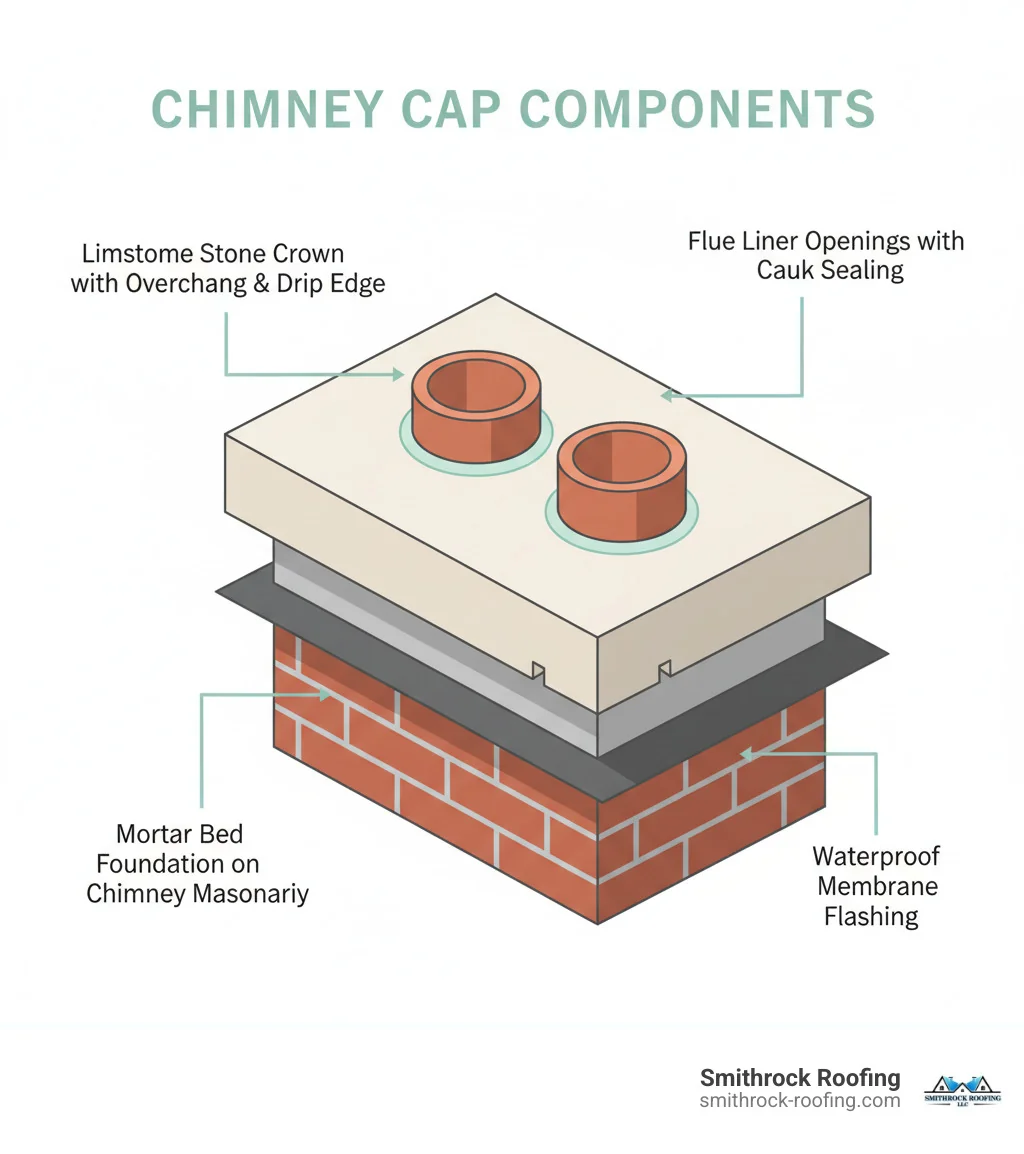
A limestone chimney cap is the solid, protective crown that sits atop your chimney, serving as the first and most critical line of defense against the relentless assault of water, debris, and animals. Far more than a simple metal cover, a true limestone chimney cap is a substantial, dense stone structure meticulously integrated into your home’s masonry. It provides not only superior, long-lasting protection but also a timeless, natural beauty that elevates your home’s entire aesthetic.
To understand its importance, it’s crucial to clarify the terminology. What many homeowners refer to as a single “cap” is often a system of two distinct components working in concert:
A premium limestone cap functions as the crown and is almost always paired with a high-quality stainless steel or copper flue cover for a complete, belt-and-suspenders protection system. When designed and installed by a skilled mason, the limestone crown’s sloped surface and carefully engineered edges actively direct water away from the vertical brick or stonework below. This simple function is the key to preventing widespread moisture intrusion and the devastating freeze-thaw damage that can crumble a chimney from the top down.
A properly fabricated limestone cap is a piece of architectural engineering. Its key features include:
Key Benefits of Limestone Chimney Caps:
Water is a chimney’s greatest enemy. Without a properly designed and installed cap, moisture penetrates the porous brick and mortar, leading to spalling, efflorescence, and eventually, costly structural failure. Limestone caps offer a refined, natural appearance that significantly improves curb appeal while providing the best possible protection. With over 15 years in exterior construction, I’m Jordan Smith, and I’ve repeatedly seen how a quality limestone chimney cap pays dividends in durability and aesthetic appeal for decades to come.
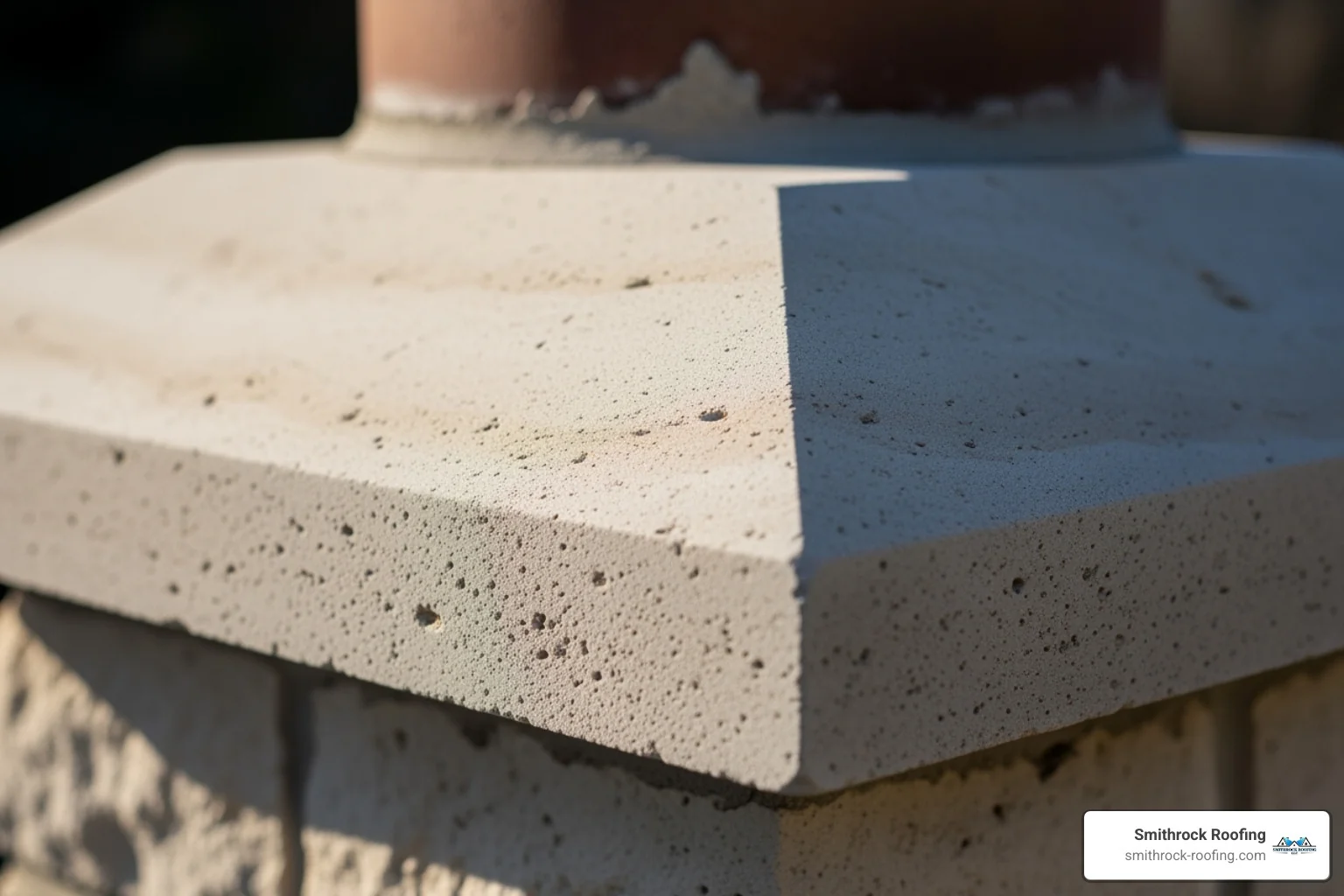
Installing a limestone chimney cap is a definitive statement about quality, permanence, and a deep appreciation for craftsmanship. It is not a temporary fix or a budget-minded patch; it is a conscious commitment to protecting your home with one of nature’s most durable and beautiful materials, adding genuine architectural character to your roofline.
Water is your chimney’s worst nightmare, and a limestone cap is its most stalwart defender. The dense, low-porosity nature of high-quality limestone creates an impenetrable barrier at the chimney’s most vulnerable point: the top. A properly designed cap with a sufficient overhang and a functional drip edge actively sheds water far away from the vertical surfaces, preventing moisture from ever reaching the porous brick and mortar joints below.
This comprehensive protection is critical in preventing a cascade of common chimney problems:
For comprehensive protection and expert installation, check out our full range of chimney services.
The natural beauty of limestone brings an unparalleled level of sophistication and authenticity to any home. Each piece is unique, bearing its own subtle history through variations in color, fossil traces, and texture that manufactured materials like concrete simply cannot replicate. Its fine, uniform grains create a soft, elegant appearance, with colors ranging from creamy off-whites and warm beiges to cool, sophisticated grays.
The light coloration of most limestone varieties, such as the famous Indiana Limestone, creates a beautiful and striking contrast against darker roofing materials like asphalt shingles or slate, as well as traditional red brickwork. This contrast highlights the chimney as a distinguished architectural feature rather than a purely functional afterthought. Unlike mass-produced concrete caps that come in standard sizes, every limestone cap is custom-cut to your chimney’s exact dimensions, allowing for a seamless, high-end, and fully integrated finish.
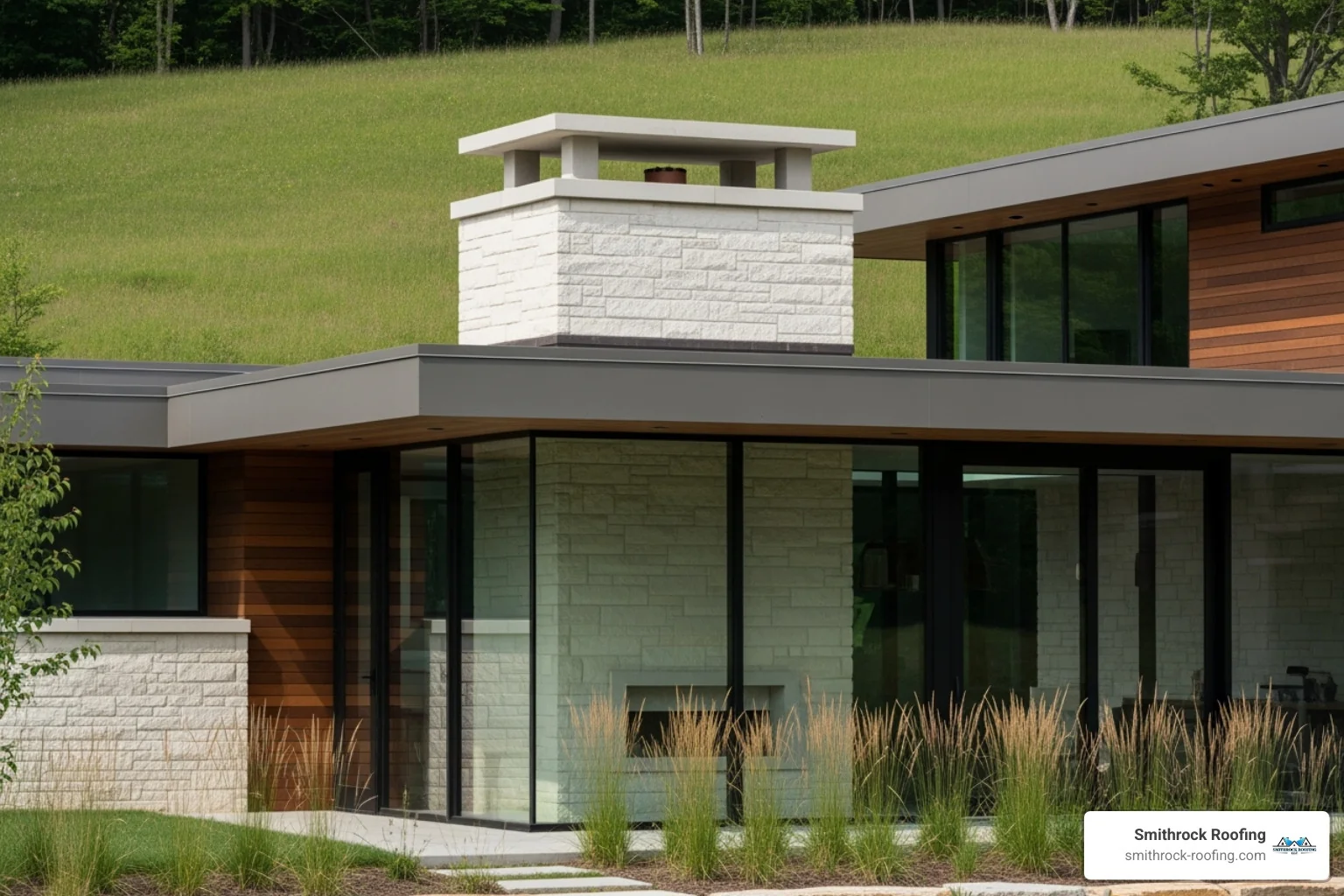
Limestone’s remarkable versatility allows it to complement a wide array of architectural exteriors, from traditional brick Colonials and stone-clad Tudors to sleek, modern farmhouses and minimalist designs. Its timeless appeal ensures it will remain beautiful and relevant for decades, gracefully weathering and developing a subtle patina that only enhances its character over time.
Limestone is a sedimentary rock formed over millions of years, primarily from the accumulation of marine organism skeletons (containing calcium carbonate) on the ocean floor. This geological origin gives it its unique properties, which are highly valued for exterior building applications:
Because limestone is a calcium-based stone, it is mildly alkaline. This means it can be etched by acid rain or damaged by acidic cleaners. To ensure maximum longevity, it should be protected with a high-quality, breathable, penetrating sealer, which helps it repel water and resist staining without trapping internal moisture.
When it comes to longevity, limestone is in a class of its own. Its dense stone properties provide exceptional resistance to weathering, UV radiation, and thermal expansion. This natural, solid composition means limestone is far less prone to the micro-cracking and eventual failure that plagues composite materials like concrete or the porous nature of brick.
Investing in a limestone chimney cap is a longevity investment. With a professional installation that accounts for proper drainage and expansion, and with minimal maintenance (primarily periodic resealing), these caps regularly last 50 years or more, with many historic examples lasting well over a century. This exceptional lifespan means fewer repairs, replacements, and worries, translating into significant long-term savings and peace of mind.
For more insights into proper chimney construction, you can read about proper chimney construction.
Need a hand with this in Winston-Salem, Greensboro and the NC Triad? Call (336) 971-0464 or request a free estimate. Honest answers, no pressure.
Selecting the right material for your chimney cap (or more accurately, the chimney crown) is a critical long-term investment in your home’s structural integrity and aesthetic value. While other options exist, a detailed comparison reveals why a limestone chimney cap is often the superior choice for homeowners seeking the ultimate combination of performance and beauty.
| Feature | Limestone Chimney Cap | Pre-Cast Concrete Cap | Brick Chimney Cap (Mortar Wash) | Metal Chimney Cap (Stainless Steel/Copper) |
|---|---|---|---|---|
| Durability | Excellent; Dense, weather-resistant natural stone. | Good; Can crack over time due to freeze-thaw cycles. | Fair to Poor; Porous, highly susceptible to water & cracking. | Good to Excellent; Varies by metal (SS > Copper > Galv). |
| Aesthetics | Superior; Natural beauty, unique texture, custom look. | Moderate; Utilitarian, uniform look; limited colors. | Good; Matches chimney brick, but can look monolithic. | Moderate to Good; Functional, can look industrial or modern. |
| Maintenance | Low; Periodic sealing recommended every 3-7 years. | Moderate; Requires sealing, frequent crack inspection/repair. | High; Requires frequent sealing, tuckpointing, and eventual rebuild. | Low; Cleaning, occasional patina management. |
| Avg. Lifespan | 50-100+ years (with proper maintenance) | 15-30 years | 5-20 years | 15-Lifetime (SS/Copper) |
| Cost | High (Premium) | Medium | Medium to High (labor-intensive) | Low (Galvanized) to High (Copper/Custom SS) |
| Structural Integrity | Excellent; Solid, monolithic slab. | Good; Prone to hairline cracks that compromise it. | Poor; Dozens of mortar joints create failure points. | N/A; Serves as a cover, not a structural crown. |
Pre-cast concrete is the most common alternative to a custom stone cap. While functional, concrete crowns have a uniform, industrial appearance that lacks the warmth and natural character of limestone. More importantly, concrete is more porous and has lower tensile strength, making it significantly more susceptible to developing hairline cracks from shrinkage and freeze-thaw cycles. Once a crack forms, water gets in, and the cap’s demise accelerates. Although concrete costs less upfront, limestone’s 50-100+ year lifespan makes it far more cost-effective over the life of your home compared to a concrete cap that will likely need replacement in 15-20 years. Furthermore, limestone allows for full customization in shape, size, and edge detail, whereas concrete caps are typically limited to standard molds.
Typical installed cost ranges:
A crown made of brick with a top layer of mortar (a “mortar wash”) is a traditional but deeply flawed method. Brick’s primary weakness is its porosity; it acts like a sponge, absorbing water and making it highly vulnerable to devastating damage from freeze-thaw cycles. The mortar wash on top is thin and brittle, almost guaranteed to crack within a few years, creating a direct funnel for water into the chimney structure. Each of the dozens of mortar joints in a brick crown is a potential failure point. A solid, monolithic limestone chimney cap eliminates these hundreds of potential vulnerabilities with a single, impenetrable surface. Aesthetically, the light, refined appearance of limestone provides a beautiful visual termination, complementing and highlighting the brickwork below rather than creating a heavy, monolithic brick-on-brick look. For more on moisture issues, learn about unlined chimney capping challenges.
This comparison can be confusing because the terms are often used interchangeably. It’s vital to distinguish their roles: a metal cap is a cover for the flue opening, while a limestone chimney cap is a structural crown protecting the entire top surface of the chimney masonry. The best systems use both. Aesthetically, metal offers a functional or modern look, while limestone provides a more substantial, classic, and natural elegance. High-quality 304 or 316 stainless steel and heavy-gauge copper are very durable but can be dented by falling branches. While cheap galvanized steel is an option, it is a temporary solution that will rust and fail relatively quickly. A solid limestone slab is far more resistant to physical impacts. The cost of a large, custom-fabricated copper crown can easily meet or exceed that of limestone, making limestone an attractive choice for its superior combination of natural beauty and structural durability.
For maximum performance and ultimate peace of mind, the best solution is a hybrid system. This approach combines a custom-fabricated limestone crown with a high-quality stainless steel or copper flue cap that incorporates a spark arrestor and animal screen. The limestone crown performs the heavy lifting of structural protection, shedding the vast majority of water away from the masonry. The metal flue cap provides targeted protection, stopping rain from going directly down the flue and preventing animals and embers from getting in or out. This two-part system delivers the longest possible service life and the most comprehensive protection for your entire chimney structure.
Investing in a limestone chimney cap is a premium solution that demands an equally premium level of professional expertise for installation. This is not a weekend DIY project. These caps are deceptively heavy, often weighing several hundred pounds, and positioning them safely and correctly atop a chimney requires skill, precision, specialized equipment, and a deep understanding of masonry principles.
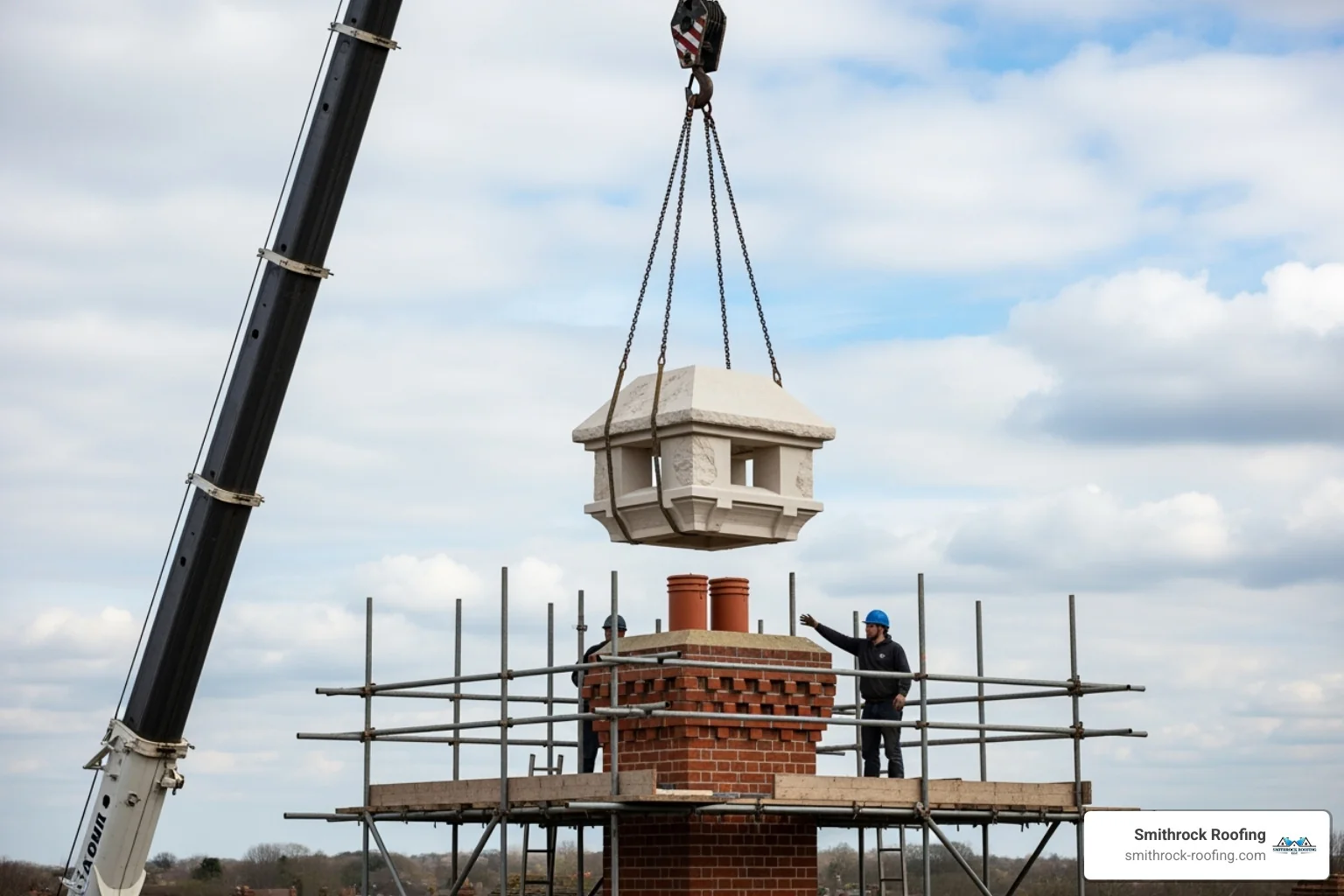
A proper, professional installation is a meticulous, multi-step operation designed for longevity:
The quality of the installation is only as good as the materials used:
One of the most significant advantages of a limestone chimney cap is its remarkably low maintenance requirements. A few simple, periodic checks are all that’s needed to ensure it lasts a lifetime:
For end-to-end care, our roof repair services can help keep your entire chimney system watertight and in perfect condition year-round.
Understanding the complete picture of a limestone chimney capincluding its true cost, vast design versatility, and potential challenges, is essential for making a confident and informed decision for your home. While it is a premium product, its value proposition becomes clear when viewed as a permanent architectural upgrade.
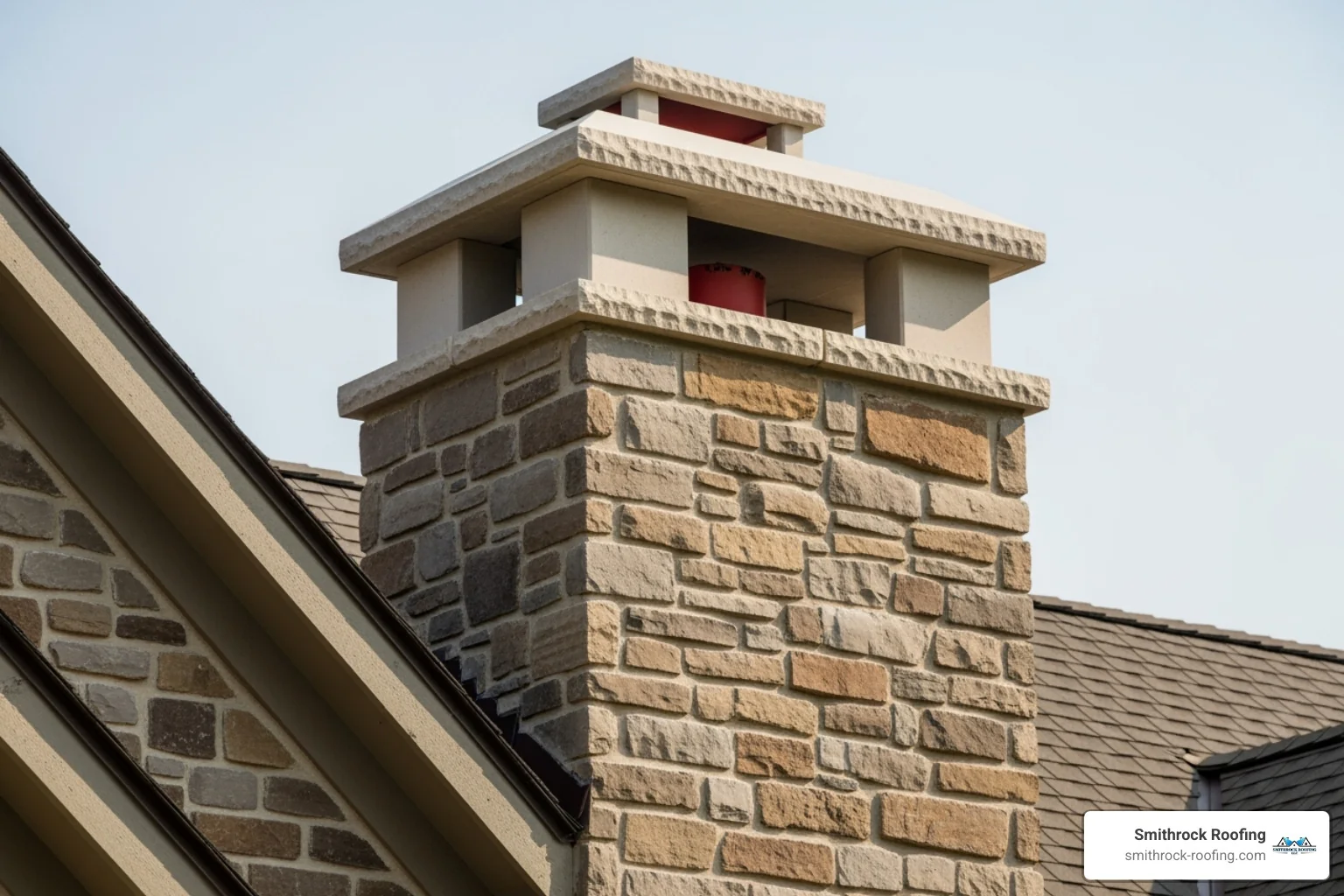
A limestone chimney cap is a premium product, and its price reflects the quality of the material and the skill required to install it. The upfront cost is higher than for concrete or simple metal covers, but its exceptional longevity makes it a superior long-term value. A limestone cap can easily last 50-100+ years, whereas cheaper alternatives may need to be replaced 3-5 times in the same period, ultimately costing more in money, time, and potential water damage. A custom limestone cap project generally starts around $2,000 and can increase significantly based on the following factors:
Limestone’s natural elegance and neutral palette allow it to enhance a remarkably diverse range of home styles:
Design Details to Consider:
To be fully informed, it’s important to consider the potential challenges associated with limestone and how a professional installation addresses them:
Homeowners considering a significant upgrade like a limestone chimney cap naturally have many questions. Here are clear, detailed answers to the most common inquiries to help you make an informed decision.
A professionally installed and properly maintained limestone chimney cap should be considered a permanent feature of your home. Its typical lifespan is 50 to 100 years or more. Its natural density and resilience to weathering allow it to far outlast all other crown materials. For comparison, a poured concrete cap may last 15-30 years before cracking, and a traditional brick-and-mortar wash often fails in as little as 5-10 years. The extreme longevity of limestone makes it a true lifetime investment.
Absolutely not. This is not a DIY project. Professional installation by a qualified mason is essential for several critical reasons:
These terms are often confused. Here’s the correct distinction:
Yes, absolutely and without exception. While dense, limestone is still a natural, porous stone. Sealing it with a high-quality silane-siloxane penetrating sealer is crucial. This type of sealer soaks into the stone and chemically repels water, preventing freeze-thaw damage, inhibiting mold and mildew growth, and resisting stains. The sealer should be reapplied every 3-7 years, depending on your climate.
It depends on the severity. Minor hairline cracks can sometimes be professionally repaired using specialized stone epoxies and fillers, followed by sealing. However, if the crack is structural, goes all the way through the slab, or has compromised the cap’s integrity, replacement is almost always the only safe and effective solution.
Light-colored limestone may show some soot staining directly around the flue openings over time, especially with wood-burning fireplaces. This is generally minimal and can be managed with regular cleaning using a pH-neutral stone cleaner. Proper sealing also helps make the surface easier to clean and more resistant to deep staining.
Yes, national and local building codes (like those from the NFPA – National Fire Protection Association) often dictate requirements for chimney construction, including flue clearances and the use of non-combustible materials. A professional mason will be familiar with all applicable codes in your area to ensure your installation is fully compliant and safe.
Yes, it is highly recommended. The limestone crown protects the chimney structure, while the metal flue cover protects the inside of the flue. The cover prevents rain, snow, animals, and debris from falling directly into your chimney flue, which could cause dangerous blockages or water damage from the inside out. The best systems use both.
A thorough visual inspection should be done annuallyideally as part of a routine roof or chimney sweep inspection. It’s also wise to check for any damage after severe weather events like hailstorms or high winds.
There is a deep and lasting satisfaction in seeing a custom limestone chimney cap crowning your home. It’s a visual confirmation of a job done right. It’s not just about the immediate, striking natural beauty it adds to your roofline; it’s about the quiet confidence of knowing you’ve made a smart, permanent choice to protect and enhance your most valuable asset for decades to come.
A limestone chimney cap is one of the few home improvements that delivers unequivocally on all fronts. It provides superior, uncompromising protection against the destructive forces of water and weather. It offers unparalleled natural beauty and architectural sophistication that complements any style of home. And it promises exceptional, multi-generational longevity that makes it one of the wisest investments you can make in your property’s infrastructure.
While the initial cost is higher than lesser alternatives and professional installation is non-negotiable, the long-term value is undeniable. A single limestone cap will protect your home for 50, 75, or even 100 years, outlasting cheaper concrete or mortar crowns many times over and saving you thousands in future replacement costs and potential water damage repairs.
With minimal, straightforward maintenance, just a professional inspection and a fresh coat of sealer every few years, this high-performance, elegant solution provides lasting peace of mind. At Smithrock Roofing, we’ve seen firsthand how the right chimney crown can transform not just the look of a home, but its long-term health. We take immense pride in our craftsmanship and in using enduring materials we would choose for our own families.
Whether you’re in Winston-Salem, King, Clemmons, or anywhere in our service area, our team is here to help you make the best possible choice for your home. A limestone chimney cap is more than a repair; it’s an investment in your home’s future, a testament to quality, and a legacy of protection that will serve you well for generations.
Ready to crown your chimney with lasting protection and timeless beauty? For an expert consultation, detailed proposal, and professional installation of your limestone chimney cap and all your chimney needscontact our team today. Let’s give your home the permanent, elegant protection it deserves.
A limestone chimney cap is a dense stone structure that sits atop your chimney, providing protection against water, debris, and animals, while adding aesthetic value to your home.
The system consists of the Chimney Crown (or Wash), which is a slab-like surface that sheds water, and the Flue Cover (or Rain Cap), typically a metal device that prevents rain, animals, and debris from entering the flue liner.
A limestone chimney cap offers unparalleled durability and elegance, with a sloped surface and engineered edges that direct water away from the chimney, preventing moisture intrusion and freeze-thaw damage.
Key features include proper thickness (2 to 3 inches), a positive slope (1/4" to 1/2" drop per foot) for water runoff, and a generous overhang (1.5 to 2.5 inches) to protect the chimney's masonry.
Need a local pro? Learn more about our chimney services in Greensboro.

Smithrock Roofing © Copyright 2026 • All Rights Reserved • Privacy Policy • Maintained by Mongoose Digital Marketing