Understanding the Threat of a Broken Roof Tile Leak
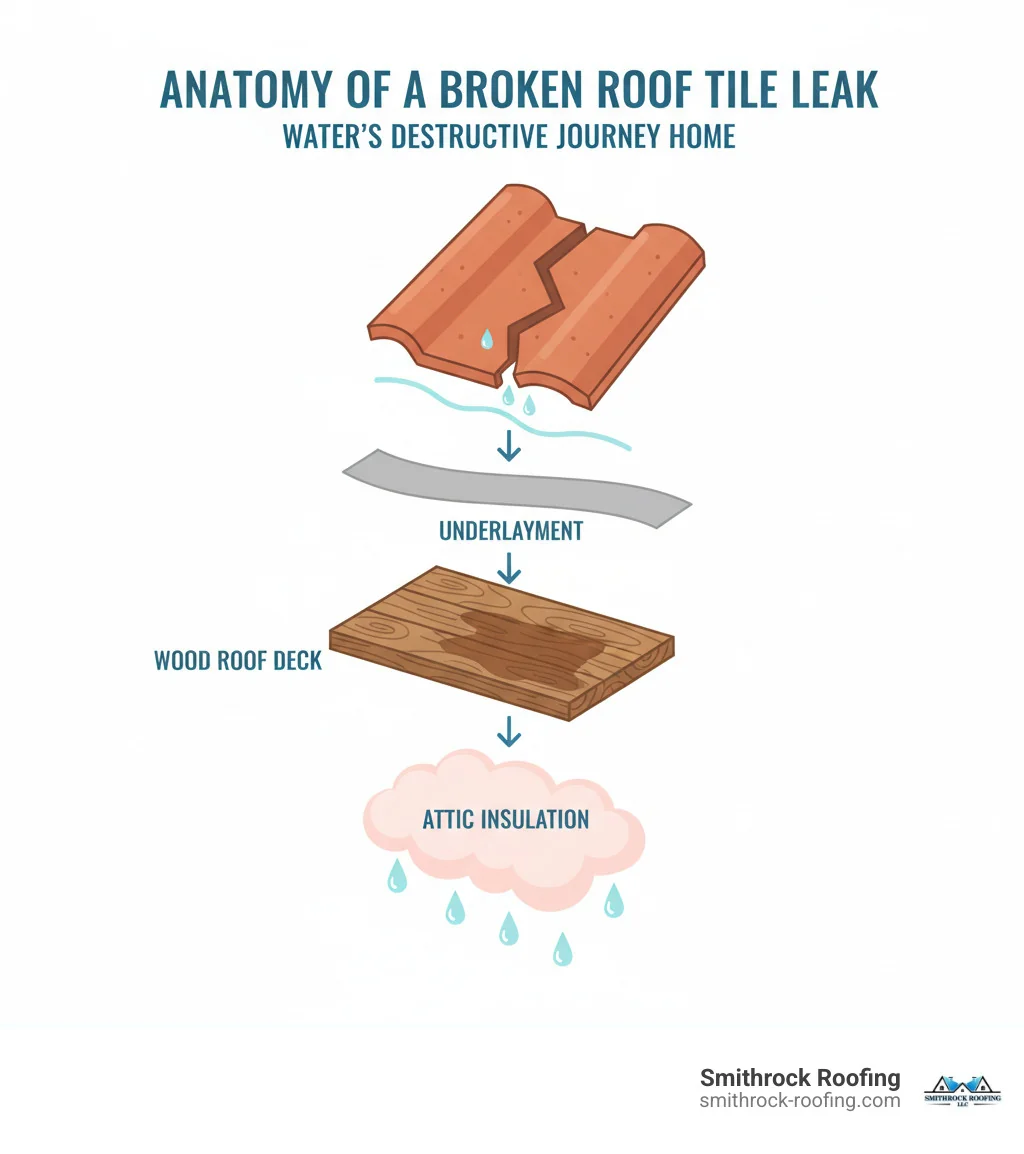
A broken roof tile leak is a deceptive problem that can escalate from a seemingly minor flaw to a major home emergency with surprising speed. That mysterious, growing water stain on your ceiling or the faint, musty odor in an upstairs room are not just cosmetic issues; they are urgent warning signs that water has penetrated your roof’s primary defenses and is actively damaging your home’s structure. Even a single hairline crack in a tile, barely visible from the ground, can create a pathway for wind-driven rain to work its way beneath the tile surface. Once inside, this water compromises the critical underlayment, travels along hidden framing members, and can appear as a drip or stain far from the original entry point.
To grasp why small defects lead to large-scale problems, it’s essential to understand the anatomy of a tile roof system. It’s not a single barrier but a multi-layered defense:
- Tiles: The visible layer of clay, concrete, or composite tiles is the roof’s main armor. They are designed to overlap and shed the vast majority of water downhill. However, their primary job is to channel water, not to create a perfectly watertight seal. The gaps between them are part of the design, allowing for air circulation and drainage.
- Underlayment: Beneath the tiles lies the true waterproofing hero of the system. This membrane is the last line of defense against water intrusion. Traditional systems use asphalt-saturated felt paper (often #30 felt), while modern, high-performance systems use durable synthetic underlayments made from polypropylene or polyester. These synthetics offer superior tear resistance, water repellency, and UV stability, which is crucial if a tile is broken or missing for some time.
- Flashing: These pieces of metal (typically galvanized steel, aluminum, or copper) are custom-fitted to protect the roof’s most vulnerable areas—the transitions. You’ll find flashing around chimneys, skylights, vents, where a roof meets a wall (sidewall and headwall flashing), and in the V-shaped channels where two roof planes meet (valley flashing). Improperly installed or corroded flashing is one of the most common sources of roof leaks.
- Battens and Fasteners: In many systems, tiles rest on a grid of wood or composite battens. These strips serve a dual purpose: they provide a secure attachment point for the tiles and create a crucial air gap that allows for drainage and ventilation, helping the roof deck stay dry. Tiles are secured with specialized nails, screws, clips, or, in some high-wind regions, foam adhesives.
How a small leak develops into a catastrophe:
- The Initial Breach: A tile cracks or breaks. This can happen from the impact of a falling tree limb, large hailstones, improper foot traffic from another contractor, or simply from the stress of age and repeated freeze-thaw cycles.
- Water Infiltration: Rain, especially when driven by wind, easily passes through the crack and reaches the underlayment.
- Underlayment Failure: If the underlayment is old, brittle, torn during installation, or punctured by a fastener, water finds a pathway to the roof deck below. UV exposure from a missing tile can rapidly degrade underlayment, turning a small problem into a major one.
- Hidden Water Travel: Water does not always drip straight down. It can run along the top of rafters, the underside of the roof deck, or even travel along pipes and conduits until it finds a low point or a seam in the drywall to emerge.
- Catastrophic Interior Damage: Once inside the attic or ceiling cavity, the damage accelerates. Insulation becomes a wet, compressed sponge, losing all its insulating R-value. Chronic moisture causes wood decking to delaminate and structural rafters to rot and sag. Within just 24-48 hours, the damp, dark environment becomes a perfect breeding ground for mold, which can colonize and pose serious health risks.
Quick Emergency Actions for a Broken Roof Tile Leak:
- Contain the Water: Immediately place buckets or pans under active drips. Use old towels to protect flooring and soak up any standing water.
- Locate the Source (If Safe): In the attic, look for damp insulation, dark water trails on the wood, or pinpricks of light. This helps a professional pinpoint the exterior issue faster.
- Apply a Temporary Sealant: If the roof is dry and you can safely access a small, single crack, applying roofing cement can be a stop-gap measure. This is not a permanent fix.
- Protect Utilities: If water is dripping near light fixtures, outlets, or an electrical panel, shut off the corresponding circuit breaker immediately to prevent a fire hazard.
- Call a Professional Roofer: For multiple broken tiles, a persistent leak, or if you are unsure of the source, schedule an emergency inspection. A tile roof leak will not fix itself and will only get worse.
Ignoring even a small leak is a costly gamble. It silently compromises your home’s structural integrity, reduces energy efficiency, creates electrical fire risks, and can lead to expensive mold remediation. Understanding these signs and acting with urgency will protect your home, your health, and your finances.
Spotting the Signs: Is Your Roof Leaking?
A broken roof tile leak rarely announces itself with a dramatic cascade of water. More often, it sends subtle signals both inside and outside your home. Because water can travel in unpredictable ways along your roof’s structure, a drip in your living room might originate from a damaged tile several feet away on a completely different roof plane. Catching a leak in its earliest stages is absolutely crucial to preventing the widespread, costly, and often hidden damage that follows.
Interior Warning Signs
When you see these signs inside your home, it means water has already breached your roof system and is making its way into your living space. Act immediately.
- Water Stains on Ceilings or Walls: These are the classic calling cards of a roof leak. They often appear as yellowish or brownish rings that may feel soft or cool to the touch. The stain might darken or appear to grow after a heavy rainstorm.
- Bubbling, Peeling, or Blistering Paint: Moisture trapped behind a layer of paint or wallpaper will cause it to lose adhesion. The paint may bubble up, crack, or peel away from the drywall or plaster underneath.
- Damp Spots or Discoloration on Walls: Pay close attention to the upper corners of rooms, areas around window frames, and walls adjacent to chimneys. These areas may feel damp or look slightly darker than the surrounding wall.
- A Persistent Musty or Earthy Smell: This distinct odor, especially noticeable in attics, closets, or rooms with poor ventilation, is a strong indicator of active mold or mildew growth in a damp, hidden area.
- Visible Mold or Mildew Growth: Do not ignore black, green, or white patches growing on surfaces. This signifies a chronic moisture problem that needs to be addressed at the source.
- Sagging Drywall or Ceiling Panels: If your ceiling appears to be drooping or bulging, it’s a sign of significant water accumulation. This is a serious structural hazard, as the waterlogged material could collapse at any moment.
How to safely inspect your attic for leaks:
- Choose the right time: Go into the attic during daylight hours so you can see better, but also bring a powerful flashlight or headlamp to inspect dark corners.
- Safety first: Use a sturdy ladder and let someone know you are going into the attic. Be careful to only step on the wooden joists or trusses; the drywall of the ceiling below cannot support your weight.
- Use your senses: Look for dark stains or blackish trails on the underside of the roof deck, rafters, and joists. Feel insulation with a gloved hand for dampness or cold spots. Listen for the sound of dripping during or after a rainstorm. Look for pinpoints of daylight, which indicate a direct hole through the roof deck.
- Focus on penetrations: Leaks are most common around anything that penetrates the roof deck, so pay extra attention to the areas around plumbing vents, exhaust fans, chimneys, and skylight wells.
Exterior Clues on Your Roof
You can spot many potential problems from the safety of the ground using a good pair of binoculars. A thorough visual inspection can reveal issues before they become major leaks.
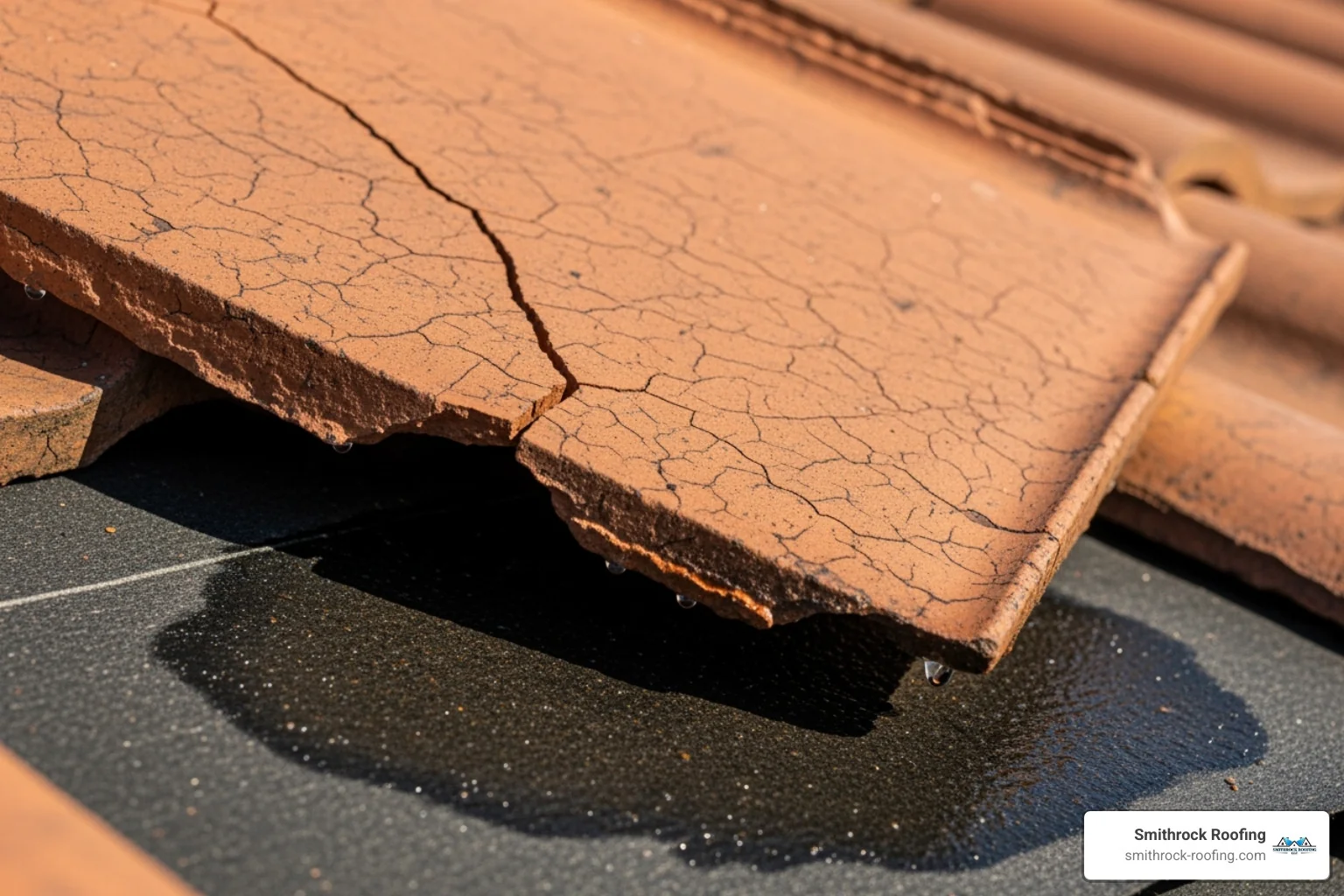
- Visibly Cracked, Chipped, or Broken Tiles: Scan the entire roof surface for any tiles that are obviously damaged. Even hairline cracks can allow significant water intrusion during a wind-driven rain.
- Slipped or Missing Tiles: Look for any gaps in the pattern of the roof tiles. A single slipped tile can expose the underlayment to direct sunlight, causing it to become brittle and fail in a matter of months.
- Debris in Gutters and Valleys: Piles of leaves, pine needles, and other debris act like a dam, causing water to pool and back up under the tiles, overwhelming the water-shedding system.
- A Sagging Roof Deck: Any noticeable dip, bow, or “saddleback” in the roofline is a major red flag indicating long-term moisture damage and potential rot in the underlying roof structure.
- Damaged or Corroded Flashing: Inspect the metal flashing around chimneys, walls, and vents. Look for signs of rust, corrosion, holes, or sealant that is cracked and pulling away from the masonry or siding.
- Efflorescence on Tiles: A white, powdery deposit on the surface of concrete or clay tiles is a sign of efflorescence. This indicates that the tile itself is absorbing water, which is then evaporating and leaving mineral salts behind. This is particularly damaging in freeze-thaw climates.
Neglecting these signs is a recipe for disaster. Water damage spreads silently and exponentially, creating the perfect environment for destructive black mold and causing structural rot that can compromise the safety of your home. If you observe any of these interior or exterior clues, it’s time to call a professional for a thorough inspection.
Why Roof Tiles Break and Lead to Leaks
Understanding the root causes of tile failure is the first step toward preventing a broken roof tile leak. While clay and concrete tiles are renowned for their durability and long lifespan, they are not invincible. A combination of environmental factors, physical stress, improper installation, and simple aging can lead to the cracks and breaks that compromise your roof’s integrity.
Common Causes of Tile Breakage
- Extreme Weather Events: Severe weather is a primary culprit. Large hailstones, especially those an inch or more in diameter, can create impact fractures and shatter tiles. High winds don’t just blow tiles off; they create powerful uplift pressure that can lift and rattle tiles, causing them to crack or dislodge over time. Our guide on Hail Damage Home Repair explains what to look for after a storm, and our article on Wind Damage to Tile Roof details the physics of wind uplift.
- Freeze-Thaw Cycles: In colder climates, this is a relentless enemy of tile roofs. Water from rain or melting snow seeps into the microscopic pores of the tiles. When temperatures drop, this water freezes and expands with immense force, widening the micro-cracks. Repeated cycles gradually break the tile apart from the inside out, a process known as spalling.
- Accidental Impact: Tiles are strong but brittle. A heavy, falling tree branch can easily shatter a tile. More commonly, damage is caused by improper foot traffic. Walking on tiles incorrectly—by stepping on the unsupported center instead of the reinforced lower edge over a batten—is a frequent cause of breakage, often done by inexperienced painters, gutter cleaners, or satellite dish installers.
- Natural Aging and Material Degradation: Over many decades, constant exposure to UV radiation and weathering takes a toll. Clay tiles can become more porous and brittle. The colored slurry coat on concrete tiles can wear away, exposing the aggregate and making the tile more susceptible to water absorption and freeze-thaw damage.
- Poor Installation Practices: This is a critical and often hidden cause of premature failure. A roof’s longevity is determined by the quality of its installation. Common errors include:
- Insufficient Headlap or Sidelap: Not overlapping the tiles enough leaves gaps for wind-driven rain.
- Improper Fastening: Over-driving nails can crack the tile, while under-driving them allows for excessive movement and “tile chatter” that leads to wear.
- Misaligned Tiles: Crooked courses disrupt the water-shedding pattern and create stress points.
- Inadequate Flashing: Cutting corners on flashing installation at walls, valleys, and penetrations creates guaranteed leak points.
How a Small Crack Becomes a Big Leak
A single broken tile acts as an open door, breaching the roof’s primary armor. Rainwater flows directly onto the underlayment, a layer that is not designed for constant, direct exposure. If the underlayment is old, torn, or has been degraded by UV rays shining through the crack, water passes through to the wooden roof decking. The plywood or OSB sheathing absorbs this water like a sponge, leading to swelling, delamination, and eventually, rot. From there, water follows the path of least resistance—gravity and capillary action pull it along rafters and trusses until it finds an escape route, appearing as a drip or stain on your ceiling, often far from the original broken tile.
- Capillary Action: This physical force can pull water uphill between two tightly spaced surfaces, such as between an improperly lapped piece of underlayment or flashing.
- Wind Pressure: During a storm, wind can create negative pressure (suction) that actually draws water uphill and underneath tiles.
- UV Damage: The synthetic or felt underlayment is the critical waterproofing layer, but it degrades rapidly when exposed to direct sunlight through a gap left by a broken or slipped tile.
TABLE: Clay vs. Concrete Roof Tiles: Lifespan, Durability, and Leak Susceptibility
| Feature | Clay Roof Tiles | Concrete Roof Tiles |
|---|
| Lifespan | 80-100+ years | 50-60 years |
| Durability | Excellent resistance to fire, insects, and rot. Extremely durable but can be brittle and prone to impact fracture. | Very durable with high resistance to fire and insects. Modern tiles are robust but can be more susceptible to surface wear. |
| Common Issues | Can be brittle and crack from impact or severe freeze-thaw cycles. Older, unglazed tiles can become porous and absorb water. Colors are baked-in and permanent. | Color is often a surface slurry coat that can fade or wear off over time. Can absorb water as they age, making them heavy and vulnerable to freeze-thaw cycles. Prone to cracking from impact. |
| Appearance | Classic, warm aesthetic with natural color variations. Available in barrel, S-tile, and flat profiles. | Highly versatile; can be manufactured to mimic clay, slate, or wood shake. More uniform in color and shape. |
| Weight | 600-1,200 lbs per square (100 sq ft) | 800-1,200 lbs per square (100 sq ft) |
| Repair Complexity | High. Finding exact profile and color matches for older tiles can be very difficult. Tiles are brittle and require careful handling. | Moderate to High. While newer profiles are available, matching faded colors is a challenge. Weight and brittleness still require professional handling. |
The key takeaway is that while a broken tile is the visible symptom, the true cause of a leak often involves a combination of factors, including the condition of the hidden underlayment, the integrity of the flashings, and the quality of the original workmanship.
How to Fix a Broken Roof Tile Leak: A Step-by-Step Guide
Discovering a broken roof tile leak demands swift, decisive action to minimize the cascading damage to your home’s interior and structure. While some minor issues might allow for a temporary DIY fix, a permanent, reliable solution almost always requires a professional roofer. Tile roof systems are heavy, surprisingly fragile underfoot, and involve complex flashing and underlayment details at transitions. Correct technique is not just recommended; it’s essential for safety and a lasting repair.
Before worrying about the roof, your first priority is to control the damage inside your home.
- Contain Interior Water: Place buckets, pans, or plastic tubs directly under any drips. For widespread leaks, use towels and tarps to protect flooring and furniture. If a ceiling is bulging with water, this is a collapse hazard. Place a large bucket underneath, then carefully puncture the lowest point of the bulge with a screwdriver to allow the water to drain in a controlled manner. Keep people and pets out of the area.
- Document the Damage: Before you move or clean anything, use your phone to take extensive photos and videos of the leak, the water stains, and any damaged belongings. This documentation is crucial for any potential homeowners insurance claim.
- Mitigate Damage: Move furniture, electronics, rugs, artwork, and any other valuable or sentimental items away from the affected area. If possible, roll up carpets or area rugs to prevent them from becoming saturated.
- Ensure Electrical Safety: Water and electricity are a lethal combination. If water is dripping near light fixtures, outlets, or switches, immediately turn off the power to that circuit at your home’s main breaker panel. Do not touch or unplug any wet electrical devices.
- Promote Drying: Start the drying process immediately to prevent mold growth. Run fans and a dehumidifier in the affected room to circulate air and pull moisture out. In the attic, if insulation is wet, carefully pull back the damp sections to allow air to reach the wet wood decking. Saturated insulation should be removed and discarded.
- Mark the Leak Location: In your attic, trace the water stains on the wood decking back to their highest point. Mark this spot with chalk or painter’s tape. This helps the roofer quickly locate the likely source of the leak on the exterior.
- Call for an Emergency Roofer: For major water intrusion, a rapidly growing leak, or a collapsing ceiling, you need immediate professional help. An emergency roofer can perform a temporary repair, such as tarping, to prevent catastrophic damage until a permanent fix can be scheduled.
DIY Temporary Fixes (When Safe to Do So)
A temporary fix can be a crucial stop-gap to prevent further water intrusion while you wait for a professional. However, working on a roof is inherently dangerous. Never attempt to get on your roof in wet, windy, or icy conditions, and never work alone. Avoid stepping on the center (mid-span) of tiles; your weight should be on the lower third of the tile, where it is supported by the one below it and the batten.
Essential tools for temporary repairs:
- High-quality roofing cement or clear, 100% silicone sealant
- Peel-and-stick butyl or asphalt repair tape
- Caulk gun, putty knife, wire brush
- Heavy-duty gloves and safety glasses
- A sturdy, properly angled and secured ladder with a helper to spot you
Temporary measures to consider:
- Applying Sealant to Small Cracks: For a single, hairline crack, you can apply a temporary seal. First, ensure the tile is completely dry. Clean the area around the crack with a wire brush to remove dirt and debris. Apply a thick bead of roofing cement or silicone into and over the crack, using a putty knife to smooth it out and feather the edges. This is a temporary patch that will likely fail under UV exposure and thermal expansion.
- Spot-Patching Underlayment: If a single tile is clearly broken and you can safely lift it without causing more damage, you may be able to apply a small piece of butyl-backed flashing tape over a visible tear in the underlayment. Do not force or pry tiles aggressively, as this can easily crack adjacent tiles.
- Using a Tarp: For larger leaks, a heavy-duty tarp is the most effective temporary solution. The tarp must be large enough to extend from the roof ridge down past the suspected leak area. Secure the tarp with sandbags or by wrapping the edges around 2x4s and fastening the wood to the roof eaves, not by nailing directly into the roof field, which creates more holes.
Important Disclaimer: These are emergency, temporary measures designed only to buy you time. They do not solve the underlying problem and are not a substitute for a professional, permanent repair.
What Professionals Do During a Permanent Repair
A professional repair is a systematic process that addresses the entire roofing system, not just the broken tile.
- Precise Diagnosis: A trained roofer will first confirm the true entry point, which may not be where the tile is broken. They will inspect the attic, trace water paths, and may use tools like infrared cameras or moisture meters to find hidden dampness. They will evaluate nearby flashings, tile laps, and underlayment condition.
- Access and Remove Damaged Components: Using specialized tools like tile lifters or slate rippers, the roofer will carefully disengage and remove the broken tile and surrounding tiles without causing further damage. They will remove any nails, clips, or other fasteners.
- Inspect and Repair Underlayment: This is the most critical step. The roofer will cut away the damaged or degraded underlayment back to sound material. A new patch of compatible underlayment is installed in \”shingle fashion\” (tucked under the upper layer, overlapping the lower layer) to ensure water sheds correctly. The patch is sealed according to manufacturer specifications.
- Evaluate Battens and Decking: Any water-damaged, soft, or rotted wood battens or roof decking are removed and replaced to ensure a solid substrate for the new tiles.
- Reinstall or Replace Tiles: The broken tile is replaced with a matching tile. Finding a perfect match for older roofs can be a major challenge, sometimes requiring sourcing from a salvage yard or \”bone yard.\” The new and existing tiles are reinstalled and fastened according to local building codes and manufacturer specifications, using appropriate fasteners or foam adhesives for high-wind zones.
- Rework Flashing if Necessary: If the leak is related to failed flashing, the roofer will remove the old metal, repair the underlying structure, and install new, properly integrated flashing to ensure a watertight seal.
- Water Test: In some cases, a controlled hose test may be performed to validate the repair. Water is run over the repaired area for a specific duration while a second person inside checks for any signs of water intrusion.
Safety Essentials for Any Roof Work
- Always use a stable ladder placed on level ground, extending three feet above the roofline and secured at the top and bottom. A spotter is highly recommended.
- Wear appropriate personal protective equipment (PPE), including non-slip, soft-soled footwear, gloves, and safety glasses.
- Be aware of your roof’s pitch and height. If you feel unsafe or unsure at any point, get down and call a professional. No repair is worth a life-altering fall.
Post-Repair Interior Recovery
- Dry Everything Thoroughly: Continue to run dehumidifiers and fans for several days after the repair is confirmed to be successful. Open closet and room doors to encourage airflow.
- Replace Damaged Insulation: Wet insulation loses its R-value and becomes a breeding ground for mold. It must be removed and replaced.
- Treat for Mold: For small areas of surface mold (less than 10 sq. ft.), you can clean the area with a detergent solution. For larger areas or if mold is suspected inside walls, you must hire a certified mold remediation specialist.
- Prime and Paint: Once the area is completely dry and the leak is verified as fixed, apply a high-quality stain-blocking primer over any water stains before repainting. This will prevent the stain from bleeding through the new paint.
Long-Term Prevention and Maintenance
The most effective way to handle a broken roof tile leak is to prevent it from ever happening. Proactive, regular maintenance is the single best investment you can make in your roof’s health. A consistent maintenance schedule not only extends the lifespan of your entire roofing system but also helps you catch minor issues before they evolve into the kind of catastrophic leaks that lead to expensive and disruptive interior repairs.
Creating a Proactive Roof Maintenance Plan
Consistent attention is the key to a long-lasting, leak-free roof. Integrate these practices into your annual home maintenance routine.
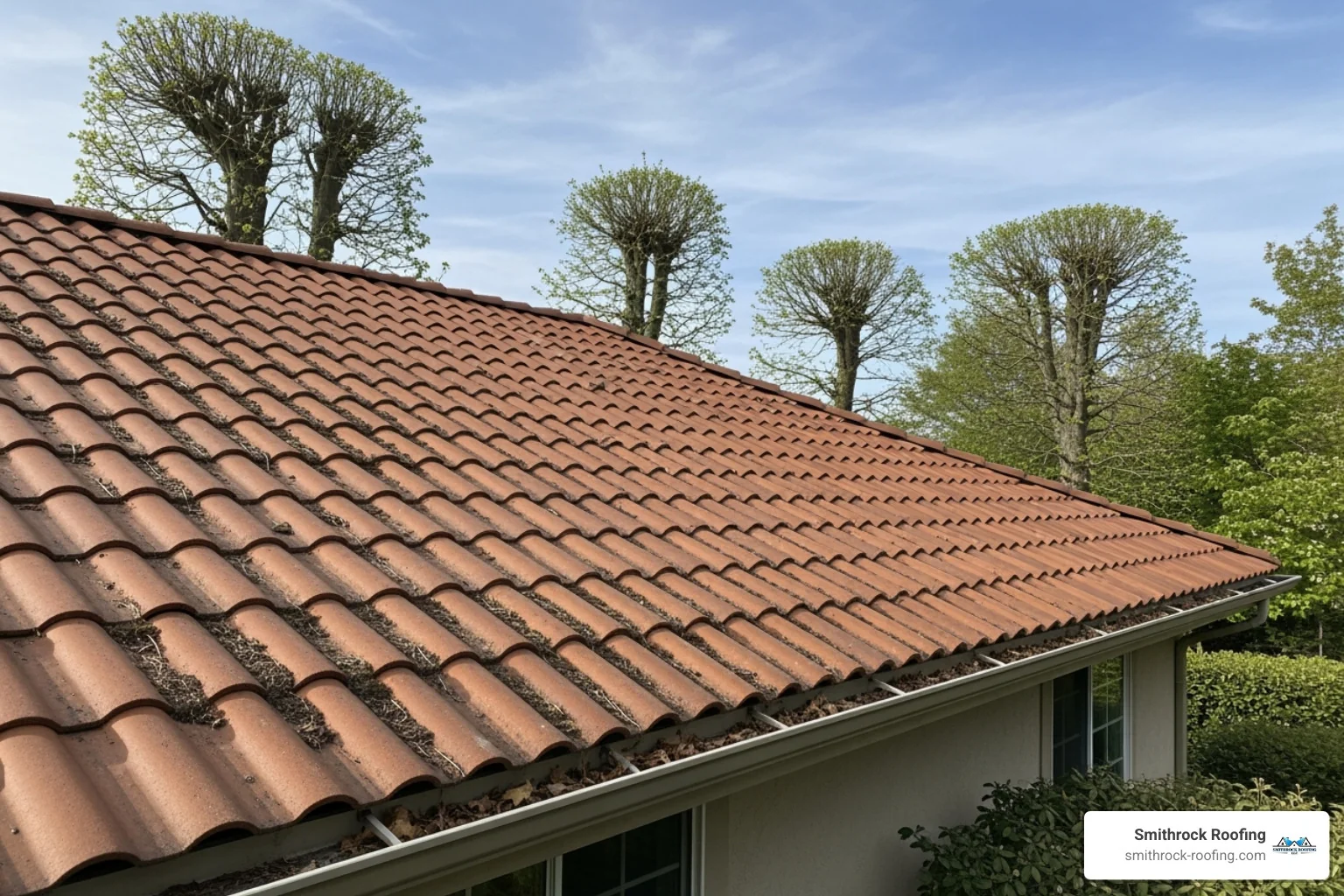
- Routine Visual Checks (Twice Yearly): Every spring and fall, use a pair of binoculars to safely inspect your roof from the ground. Look for any obviously cracked, chipped, slipped, or missing tiles. Pay close attention to areas around vents and chimneys.
- Annual Professional Inspections: A trained roofer sees things a homeowner can’t. They can identify subtle signs of stress, check the condition of hidden flashings, assess the state of mortar on ridges and hips, and spot underlayment degradation that may be visible from the eaves. This small annual investment can save you thousands in the long run.
- Keep Gutters and Downspouts Clear: Clean your gutters at least twice a year, in late spring and late fall. Clogged gutters cause water to back up and overflow, saturating the fascia boards and potentially seeping under the lower courses of tiles, leading to rot.
- Clear Roof Valleys of Debris: Valleys are natural channels for massive amounts of water. When they become clogged with leaves and pine needles, they create dams that force water to pool and move sideways, driving it under the tiles.
- Address Moss and Algae Growth: Moss, algae, and lichens are not just cosmetic issues. They hold moisture against the tile surface, which accelerates wear and can lead to spalling in freeze-thaw cycles. Their root-like structures can also lift tiles and create gaps. Use a zinc strip near the ridge or a professionally recommended cleaning solution. Never use a high-pressure washer, as it can strip the tile’s protective surface and force water into the underlayment.
- Trim Overhanging Trees: Keep all tree branches trimmed back at least six to ten feet from your roofline. This prevents branches from scraping against and damaging tiles during high winds, reduces leaf debris, and eliminates the risk of a heavy limb falling and shattering tiles.
- Ensure Proper Attic Ventilation: A well-ventilated attic helps to keep the roof deck dry from both sides. Balanced intake (at the soffits) and exhaust (at the ridge) ventilation prevents condensation from forming on the underside of the roof deck during winter, which can lead to rot and mold.
Seasonal Maintenance Checklist
- Spring: After winter, inspect for any tiles damaged by ice or freeze-thaw cycles. Check that all flashings and sealants are still tight and have not pulled away due to thermal contraction.
- Summer: Check for UV damage, especially on any exposed underlayment. Ensure attic ventilation is unobstructed to handle summer heat, which can bake and prematurely age underlayment.
- Fall: This is the most critical time. Clean all gutters and valleys before the winter rains begin. Inspect and repair any loose or damaged tiles to prepare for winter storms.
- Winter: After heavy snow, if you notice ice dams forming at the eaves, it’s a sign of poor insulation and/or ventilation that needs to be addressed by a professional.
Understanding Your Roof’s True Lifespan: Tiles vs. Underlayment
Even a perfectly maintained tile roof has a finite lifespan. While the tiles themselves can last for generations (80-100+ years for clay, 50-60 for concrete), the underlayment beneath them has a much shorter service life, typically 20-30 years. This means that many tile roofs will require a major overhaul long before the tiles themselves wear out.
Signs that spot repairs may no longer be sufficient:
- Widespread, systemic cracking or crumbling of tiles across multiple areas.
- Multiple, recurring leaks in different spots on the roof.
- Persistent leaks that reappear even after a professional repair.
- Visible evidence of brittle, disintegrating underlayment at the roof eaves.
When the underlayment reaches the end of its life, the most common and cost-effective solution is a \”lift and relay\” or \”remove and reset\” (R&R). In this process, a roofer carefully removes all the existing tiles, stacks and saves them, replaces the old underlayment, battens, and flashings with a modern, high-performance system, and then re-installs the original tiles. This preserves your home’s aesthetic and the value of your tiles while giving you a brand-new waterproofing system. A professional inspection is the only way to determine if your roof needs a simple repair or a more comprehensive R&R. Proactive care and smart, long-term planning are the wisest investments you can make in your home.
Frequently Asked Questions about Broken Roof Tile Leaks
Navigating a broken roof tile leak can be stressful, and homeowners often have many questions. Here are detailed answers to some of the most common queries we receive.
Can I repair a broken roof tile without replacing it?
For very small, hairline cracks, you can apply a high-quality roofing cement or 100% silicone sealant as a temporary fix. This can create a watertight seal for a short period. However, this is not a permanent solution. The sealant does not restore the tile’s structural strength, it’s an obvious cosmetic flaw, and it will eventually fail due to UV exposure and the natural expansion and contraction of the roof. For the long-term integrity and water-shedding performance of your roof, replacing the broken tile is always the correct and recommended approach.
How can I tell if the leak is from a broken tile or something else?
While a broken tile is a common culprit, leaks can originate from several other weak points in the roof system. A process of elimination is key:
- Visual Inspection: Look for obviously cracked, slipped, or missing tiles on the roof plane directly above the interior leak.
- Damaged Flashing: This is a very common source. Carefully inspect the metal seals around chimneys, vents, skylights, and where the roof meets a wall. Look for gaps, rust, holes, or failing sealant.
- Underlayment Failure: The waterproof barrier beneath your tiles may be old, torn, or degraded. This is difficult for a homeowner to diagnose as it requires removing tiles to inspect.
- Clogged Gutters or Valleys: Water backing up from a clog can be forced under the roof’s edge or out of a valley, creating a leak that has nothing to do with a broken tile.
- Professional Diagnosis: If the source isn’t obvious, a professional roofer is your best bet. They can perform a water test or use advanced tools like thermal imaging cameras and drone inspections to pinpoint the exact source of water intrusion without invasive measures.
How urgent is a small, occasional drip?
Any active leak, no matter how small, should be treated as urgent. That \”small, occasional drip\” is a sign that water is already saturating your insulation, staining your drywall, and creating a damp environment perfect for mold growth. A leak of just one drip per second can add up to over 3,000 gallons of water in a single year. Prompt assessment and mitigation will prevent a minor issue from becoming a major, expensive structural and health problem.
Can I walk on my tile roof to check for damage?
It is strongly advised against. Clay and concrete tiles are brittle and can easily crack under a concentrated load, especially older tiles. Walking on them improperly can cause more damage than you are trying to find. If you must access the roof, wear soft-soled shoes and only step on the bottom third of the tiles (the headlap), where they overlap and are supported by the structure below. Better yet, use binoculars from the ground or a drone for a safe, detailed inspection, and leave the walking to trained and insured professionals.
Will a temporary sealant fix last through a rainy season?
It is highly unlikely. Sealants are strictly short-term, emergency patches. The extreme temperature fluctuations on a roof cause materials to expand and contract, which quickly breaks the bond of most sealants. UV radiation from the sun also degrades the chemical compounds, making them brittle and ineffective. Consider a sealant a bridge that gives you a few days or weeks to schedule a proper repair, not a seasonal solution.
Why do leaks show up far from the damaged tile?
Water is governed by gravity and the path of least resistance. Once it penetrates the underlayment, it can travel horizontally along rafters, trusses, or the underside of the roof deck. It may follow a pipe or electrical conduit before it finally finds a seam or low point in your ceiling to drip through. This is why the visible interior stain is often many feet away from the actual exterior entry point.
Are leaks possible even if no tiles look broken?
Absolutely. Leaks can occur on a roof with perfectly intact tiles. The most common causes in this scenario are failed flashings around penetrations, tears in the underlayment from age or pests, improperly lapped membranes, or clogged valleys that force water to move sideways under the tiles.
What should I do with wet attic insulation?
Saturated insulation must be removed and replaced. Once wet, fiberglass and cellulose insulation compress and lose their insulating R-value permanently. More importantly, they act like a giant sponge, holding moisture against your wooden ceiling joists and drywall, which promotes rot and mold growth. Insulation that is only slightly damp can sometimes be dried in place with aggressive airflow from fans, but it must be monitored closely.
Do tile roofs need underlayment replacement even if tiles look fine?
Yes, this is a critical concept in tile roofing. The underlayment is the primary waterproofing layer and has a much shorter lifespan (20-30 years) than the tiles above it (50-100+ years). Many tile roofs will require a \”lift and relay\”—where the tiles are removed, a new underlayment system is installed, and the original tiles are put back—at least once or twice during their service life.
How do solar panels impact tile roofs?
Solar installations require dozens of penetrations into the roof structure. If not done correctly, each penetration is a potential leak. Poorly executed mounts can crack tiles, compress the waterproofing system, or use inadequate flashing. It is vital to work with a solar installer who has specific experience with tile roof mounting systems and to coordinate with a qualified roofer to ensure the roof’s integrity is maintained.
Does homeowners insurance cover a broken roof tile leak?
Coverage depends entirely on the cause of the damage and your specific policy. Most policies cover damage from sudden and accidental events, often called \”Acts of God,\” such as storms, hail, or falling trees. However, they almost always exclude damage resulting from:
- Wear and Tear: Gradual deterioration due to age.
- Lack of Maintenance: Damage resulting from neglect (e.g., not cleaning debris-filled gutters, which led to a backup and leak).
- Pre-existing Conditions: Issues that existed before your policy began.
Always review your policy, document all damage thoroughly with photos before repairs begin, and report the claim promptly.
How much does a tile roof leak repair cost?
The cost can vary dramatically based on several factors. A simple repair involving replacing one or two broken tiles with no underlayment damage might cost between $300 and $800. However, if the leak has been active for a while and requires removing multiple tiles, replacing a section of underlayment, and potentially repairing rotted decking, the cost can easily rise to $2,000 – $5,000 or more. The accessibility of the roof and the difficulty of matching the existing tile also play a significant role.
What is a ‘bone yard’ and why is it important for tile roof repairs?
A \”bone yard\” is a salvage yard that specializes in discontinued and reclaimed roofing tiles. Since tile manufacturers frequently change profiles and colors, finding an exact match for a roof that is 10, 20, or 30 years old can be impossible through normal suppliers. Bone yards are an invaluable resource for professional roofers to find the specific tile needed to perform a seamless, aesthetically pleasing repair on an older roof.
Conclusion: Protect Your Home with Expert Roof Care
A broken roof tile leak is more than just an inconvenience; it is a serious threat to your home’s structural integrity, your family’s health, and your financial well-being. As we’ve explored, the journey from a single cracked tile to a water-stained ceiling and a mold-infested attic is often swift and silent. Understanding that a tile roof is a complex, multi-layered system—where the tiles shed water and the underlayment provides the critical seal—is the key to appreciating the urgency of any leak.
From spotting the subtle initial signs of water intrusion to understanding the forces that cause tiles to break, this guide emphasizes that prompt, informed action is essential. While immediate DIY steps like containing water and documenting damage can limit the initial fallout, only a professional repair can provide a lasting solution. A true fix addresses the entire system: the broken tile, the compromised underlayment, the integrity of the flashings, and the overall water management of your roof.
Ultimately, your best defense against future leaks is a proactive maintenance strategy. Clean gutters, clear valleys, trimmed trees, and, most importantly, annual professional inspections will identify and resolve small issues before they become major disasters. Knowing when a localized repair is sufficient versus when the underlying underlayment requires a more comprehensive \”lift and relay\” will help you protect your investment and avoid the repeated stress and cost of recurring leaks.
At Smithrock Roofing, we specialize in comprehensive tile roofing solutions, from meticulous inspections and precise repairs to full-scale underlayment replacements. Our deep expertise in Winston-Salem and the surrounding North Carolina areas means we understand the unique challenges your roof faces from our climate. For a reliable, long-term solution to your roofing problems, contact us for a professional Roof Leak Repair in Winston Salem. Let our team provide the expert care needed to protect your home for decades to come.
Need a local pro? Learn more about our roofing services in Greensboro.