The cost to replace a chimney liner is a significant investment in your home’s safety and efficiency, with the final price varying widely based on several key factors. Understanding these variables is the first step toward making an informed decision. The primary elements influencing the overall cost include:
If you’ve ever curled up by a cozy fireplace on a cold evening, you understand the comfort and warmth it brings to your home. But behind that peaceful scene lies a critical safety component most homeowners rarely think about until something goes wrong.
A functional chimney liner is not just a nice-to-have feature. It’s your home’s first line of defense against house fires, carbon monoxide poisoning, and structural damage. This protective barrier channels dangerous gases safely outside, prevents heat from transferring to combustible materials, and protects your chimney’s masonry from corrosive byproducts.
When your liner cracks, deteriorates, or fails completely, the risks are real and immediate. You might notice smoke backing up into your home, excessive creosote buildup, or pieces of broken clay tile falling into your firebox. Some warning signs are less obvious, which is why many homeowners find liner problems only during a professional inspection.
The good news? Understanding what drives replacement costs helps you budget effectively and make informed decisions. Whether you’re dealing with an aging clay liner, considering an upgrade to stainless steel, or addressing damage found during an inspection, this guide breaks down everything you need to know.
From material choices and labor factors to hidden costs and professional versus DIY considerations, we’ll walk you through the complete picture of chimney liner replacement.
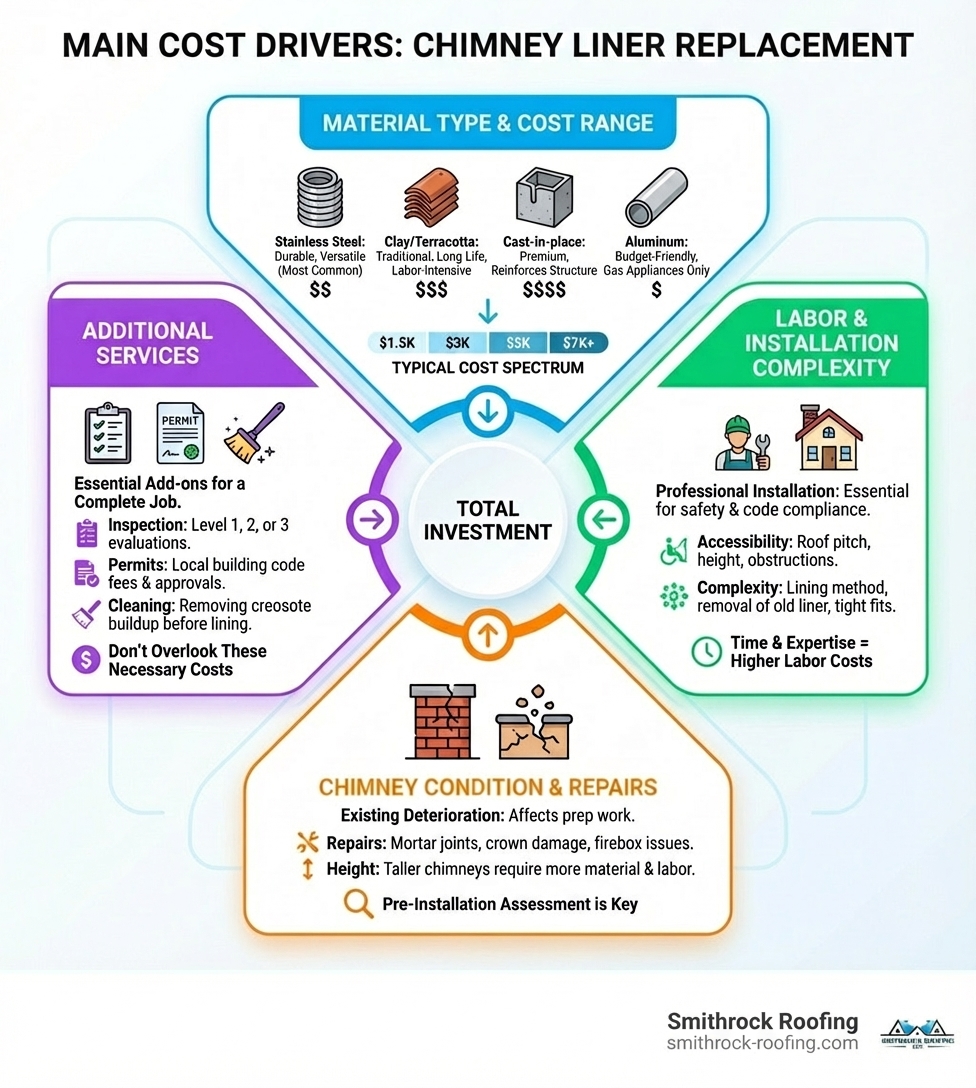
The cost to replace chimney liner can vary widely, with national averages often falling between $2,500 and $7,000, but some complex projects can exceed $10,000. Several key variables determine where your project will fall on this spectrum. Understanding these factors will help you budget accurately and make informed decisions.
When considering the cost to replace chimney liner, labor is a significant component, often accounting for 40-60% of the total project price. Professional installation ensures the job is done correctly, safely, and in compliance with all national and local codes, which is paramount given the critical role a chimney liner plays in your home’s safety. The cost of labor reflects the complexity of the project, the specific type of liner being installed, and the number of technicians required. For instance, a straightforward installation of a flexible liner in an easily accessible, straight chimney will be far less labor-intensive than a complex job involving a tall, offset chimney, multiple flue connections, or the extensive masonry work required for clay tile or cast-in-place liners. A project that takes a team of two a single day will cost significantly less than one requiring a multi-day effort with specialized equipment.
We always emphasize the importance of hiring trusted local professionals. Certified technicians from organizations like the Chimney Safety Institute of America (CSIA) or the National Fireplace Institute (NFI) bring invaluable expertise, ensuring adherence to safety protocols like the NFPA 211 standard and local building codes. While we serve the Winston-Salem NC and surrounding areas, including King NC, Clemmons NC, Lewisville NC, Pilot Mountain NC, and others, regional cost variations can occur due to differences in labor rates and market demand. However, our focus remains on providing transparent estimates that reflect fair rates for the specialized skills involved. Choosing a professional also means benefiting from their liability insurance and workers’ compensation, which offers crucial protection for you and your property in case of any unforeseen incidents during the installation process.
The existing condition of your chimney is a major determinant of the overall cost to replace chimney liner. An old, crumbling chimney will require significant preparatory work to make it structurally sound enough for a new liner. This can involve masonry repairs like tuckpointing—the meticulous process of grinding out and replacing deteriorated mortar joints to restore the integrity of the brickwork. In more severe cases, a partial or even complete rebuild of the chimney stack may be necessary, especially if there’s extensive water damage, spalling (flaking bricks), or structural shifting. If we find significant creosote buildup during the initial inspection—particularly glazed, third-degree creosote which is highly flammable and difficult to remove—a thorough, professional-grade cleaning using specialized tools or chemical treatments will be necessary, adding to the preparation work and overall cost.
The physical characteristics of your chimney also play a crucial role. Chimney height, for example, directly impacts the amount of material needed and the time and equipment required for installation. A 30-foot chimney will naturally cost more to reline than a 15-foot one. The flue’s diameter and shape—whether it’s a straight run or has offsets and bends—will dictate the type of liner that can be used and the ease of installation. Replacing an existing clay liner often requires demolition using specialized tools to break up the old tiles, which can significantly increase labor costs compared to simply relining an open, unlined flue. The presence of multiple flues within a single chimney structure can also add to the complexity and time required for the project, as each flue must be treated as a separate system.
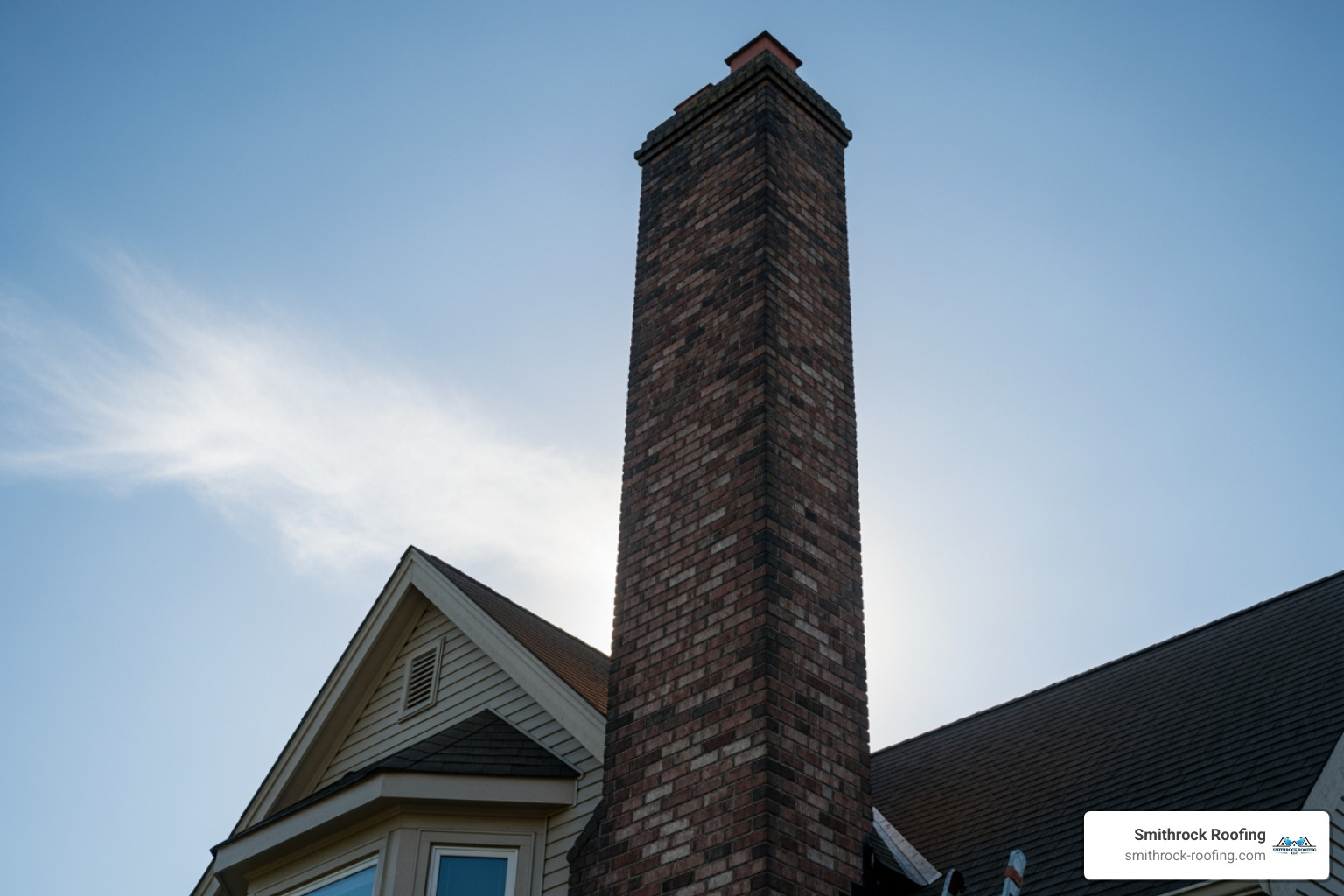
Getting to your chimney can sometimes be half the battle, and it directly impacts the cost to replace chimney liner. The pitch of your roof and the overall roof height significantly influence labor costs. A low-pitch, single-story roof is relatively easy to work on. However, a steep roof (e.g., a 12/12 pitch) or a tall chimney on a multi-story home often necessitates additional safety measures and equipment. This can include extensive scaffolding, safety harnesses with secure anchor points, or the rental of a man lift or bucket truck. These precautions are essential for the safety of our team members and for ensuring a secure installation, and their cost will be factored into the project total.
The type of appliance connected to your chimney also influences the liner choice and installation complexity. Whether it’s a traditional open-hearth fireplace, a high-efficiency wood stove, a gas furnace, or an oil boiler, each appliance has specific venting requirements for size, material, and insulation that must be met by the new liner. For example, a liner for a high-efficiency wood stove must be able to withstand extremely high temperatures and be highly insulated to maintain flue gas temperature for proper draft. A liner for a modern gas furnace must be resistant to acidic condensation. If different appliances share the existing chimney flue (a practice that is often against code and unsafe), you might expect an additional investment for each connection to ensure proper sealing, drafting, and performance, or a recommendation to vent them separately.
Beyond the liner itself, several preliminary and additional services can affect the total cost to replace chimney liner. These services are often crucial for a safe, effective, and long-lasting installation. Here’s a list of common additional services:
The material you choose for your chimney liner is perhaps the single largest factor in your total project cost. Each type has a different price point, lifespan, and suitability for various appliances, making it a crucial decision when calculating the cost to replace chimney liner. It’s essential to select a liner that is UL Listed (such as to the UL 1777 standard) and appropriate for the fuel type you use—wood, oil, gas, or coal—to ensure safety and longevity.
| Material Type | Material Characteristics | Lifespan | Best Use Case -|
| Stainless Steel | Durable, corrosion-resistant, and versatile. Available in flexible or rigid forms. Often comes with a lifetime warranty. -|
| Clay/Terracotta | Traditional, long-lasting, and heat-resistant. Labor-intensive to install and can crack under thermal stress. -|
| Cast-in-Place | Poured cement mixture that creates a seamless, highly durable flue. Reinforces the chimney structure. -|
| Aluminum | Lightweight and relatively inexpensive. Only suitable for specific low-heat gas appliances. -|
Stainless steel is the most popular and versatile choice for chimney relining today. It’s suitable for all fuel types—wood, oil, and gas—and offers an excellent balance of durability and performance. These liners are typically UL Listed, meaning they have been tested and certified to meet stringent safety standards. Most high-quality stainless steel liners come with a lifetime warranty, offering long-term peace of mind.
There are two main types of stainless steel liners:
Stainless steel liners also come in different alloys and thicknesses, which affects cost and durability. The most common alloys are 304L and 316Ti. 316Ti contains titanium and molybdenum, making it highly resistant to the corrosive acids produced by burning wood and coal, and it is the required standard for these fuels. 304L is a quality alloy but less corrosion-resistant, making it suitable for gas appliances or the occasional wood fire. Liner thickness, typically ranging from .005 to .006 inches, also plays a role; thicker liners offer greater durability and puncture resistance at a higher cost.
For centuries, clay or terracotta tiles have been the traditional material for lining masonry chimneys. They are known for their long lifespan, potentially lasting 50 years or more, and their ability to withstand very high temperatures. The material itself is relatively inexpensive compared to other options.
However, the installation process is extremely labor-intensive and therefore expensive. It involves carefully stacking individual tile sections (typically two feet long) one by one, ensuring each joint is perfectly sealed with high-temperature mortar. This process is slow and requires significant skill. Clay tiles are also brittle and highly susceptible to cracking from thermal shock (rapid temperature changes common in a chimney fire) or even from the house settling over time. Once cracked, they are very difficult to repair effectively, and the entire liner often needs to be removed and replaced, which is a messy and costly demolition job.
A cast-in-place liner is a premium, seamless option that involves pumping a specialized, lightweight cement-like slurry into the chimney around a temporary inflatable form. This method creates a smooth, round, and highly durable flue that perfectly conforms to the chimney’s interior. This method is excellent for older chimneys with significant structural damage, as the poured liner adheres to the inside of the masonry, reinforcing the entire chimney structure and sealing any gaps or cracks.
The result is a permanent, rock-solid liner that can last for 50 years or more. It’s highly insulated and resistant to corrosion and extreme heat. The installation process is complex, requires specialized equipment, and involves a curing period, making it one of the more expensive options upfront. However, its unparalleled structural integrity, longevity, and safety benefits can make it a worthwhile long-term investment, especially for restoring historic chimneys.
Aluminum liners are the most budget-friendly option, but their use is highly restricted and they are not a durable solution. They are lightweight and relatively easy to install, which helps keep labor costs down. However, aluminum is a soft metal that cannot withstand the high temperatures and corrosive byproducts produced by wood, coal, or oil-burning appliances. Using an aluminum liner for these fuels is a serious fire hazard and against all building codes.
These liners are only suitable for certain mid-efficiency (Category I) gas furnaces and water heaters that produce flue gases with low levels of acidic condensation. They are completely unsuitable for modern high-efficiency condensing gas appliances, as the acidic moisture they produce will corrode and destroy an aluminum liner in a very short time. Due to their susceptibility to corrosion and damage, they have a much shorter lifespan, typically 5 to 15 years, and will need to be replaced more frequently than other types.
While the idea of saving money on the cost to replace chimney liner by tackling it yourself might be tempting, chimney liner installation is a complex and high-stakes job that carries significant risks. For the safety of your home and family, professional expertise is not just recommended—it is invaluable and often mandated by local codes and insurance policies.
DIY chimney liner kits are available online and at some hardware stores, and at first glance, they might seem like a significant saving on professional labor costs. However, the true cost of a DIY project often extends far beyond the initial material purchase. The potential for catastrophic failure is immense.
First, you’ll need specialized tools like heavy-duty snips, pop rivet tools, grinders, and masonry tools, which can be expensive to buy or rent for a one-time job. More importantly, the safety risks are severe. Working on a roof, especially a steep or high one, presents a significant fall hazard. Without proper safety equipment like harnesses, roof anchors, and scaffolding, you could face life-altering injuries. Beyond personal safety, the risks of improper installation are numerous and dangerous:
Hiring a certified professional for your chimney liner replacement offers peace of mind and ensures the job is done right the first time. Our team of experts brings extensive knowledge and experience in sizing and selecting the correct liner for your specific appliance and chimney structure. We have access to high-grade, professional-quality materials and specialized equipment that ensures a safe, efficient, and durable installation.
Crucially, we are well-versed in local building codes and national safety standards in Winston-Salem NC and the surrounding areas, guaranteeing your installation is fully compliant and safe. Look for professionals certified by the Chimney Safety Institute of America (CSIA) or the National Fireplace Institute (NFI). These certifications require rigorous testing and ongoing education, ensuring technicians are up-to-date on the latest safety standards and techniques. We use proper safety equipment and are fully insured and bonded, protecting you and your property from liability. Our guaranteed workmanship, often backed by the manufacturer’s lifetime warranty on the liner, means you can trust the longevity and performance of your new system. Industry professionals and fire safety experts strongly advise against performing chimney work yourself due to the significant safety concerns. Leaving this challenging job to a professional ensures that your chimney liner isn’t putting you or your family at risk. We believe in providing the highest quality service for your chimneys, ensuring lasting safety and efficiency.
We understand that replacing a chimney liner can raise many questions. Here are some of the most common inquiries we receive from homeowners in Winston-Salem NC and the surrounding communities, along with detailed answers to help you make an informed decision.
Identifying a failing chimney liner can be tricky, as many issues are hidden from plain sight. However, there are several signs that should prompt you to call for a professional inspection. You might notice visible cracks in the chimney crown or exterior masonry, or find pieces of broken clay tiles (known as “shards”) falling into your firebox. Excessive creosote buildup, even after a recent cleaning, can be an indicator that your liner isn’t performing efficiently or is damaged, as the rough surfaces of a deteriorating liner allow creosote to accumulate more rapidly.
Other warning signs include drafting issues, where smoke struggles to rise up the chimney and instead spills back into your home, or you might detect unusual odors emanating from your fireplace. A persistent, acrid, or smoky smell, even when a fire isn’t lit, could indicate creosote saturation in the masonry due to a compromised liner. More subtle signs can include wallpaper staining or peeling on walls adjacent to the chimney, which can be caused by moisture or heat transferring through a damaged flue. The most definitive way to assess the condition of your chimney liner is through a professional Level 2 inspection. This is more than a basic visual check (a Level 1 inspection); it involves a specialized video camera that is fed through the entire length of the flue, allowing our certified technicians to thoroughly examine the interior for any cracks, gaps in mortar joints, corrosion, blockages, or other forms of deterioration. Without this internal view, crucial issues might go unnoticed, posing significant safety risks.
This is an excellent question, as a repair is often less expensive than a full replacement. The answer depends entirely on the type of liner and the extent of the damage.
A professional inspection is the only way to determine if your liner is a candidate for repair or if replacement is the only safe option.
The lifespan of a new chimney liner varies significantly depending on the material chosen, the quality of the installation, the type of fuel burned, and the level of maintenance it receives. Understanding these differences can help you make an informed decision when considering the cost to replace chimney liner.
Regardless of the material, consistent annual professional chimney inspections and cleanings are key to ensuring you get the longest possible lifespan out of your investment.
When you receive a quote for the cost to replace chimney liner, it should be a detailed, itemized document, not just a single number. We believe in transparent pricing, so our quotes typically itemize everything involved to avoid any surprises. A standard, professional quote will generally include:
We always recommend getting a detailed, written contract that clearly outlines all services, materials, costs, and warranties. This protects you and ensures there are no hidden fees.
Replacing a chimney liner is a significant investment in your home’s safety and value. While the cost to replace chimney liner can vary widely based on factors like material choice, chimney condition, and labor complexity, understanding these elements allows you to budget effectively and make informed decisions. Given the critical role a liner plays in preventing house fires and carbon monoxide poisoning, this is not a project to undertake lightly.
Due to the safety implications, specialized equipment, and technical complexity involved, this project is best left to certified professionals. Attempting a DIY installation can void warranties, lead to code violations, and, most importantly, compromise the safety of your home and family.
If you’re concerned about the state of your chimney system, taking action is the most important step. A professional inspection can accurately assess your liner’s condition and help you determine the best course of action. For expert assessment, high-quality materials, and reliable services related to your home’s exterior, including chimneys, trust the experienced team at Smithrock Roofing. We are dedicated to ensuring your home in Winston-Salem NC and the surrounding areas is safe, secure, and efficient for years to come. Contact us today for a consultation.
Smithrock Roofing © Copyright 2026 • All Rights Reserved • Privacy Policy • Maintained by Mongoose Digital Marketing