Stone veneer and vinyl siding are two of the most popular exterior cladding options, each offering distinct advantages for curb appeal, durability, and long-term value. Understanding how these materials compare is essential to making the right choice for your home’s siding upgrade.
Quick Comparison: Stone Veneer vs. Vinyl Siding
| Feature | Stone Veneer | Vinyl Siding |
|---|---|---|
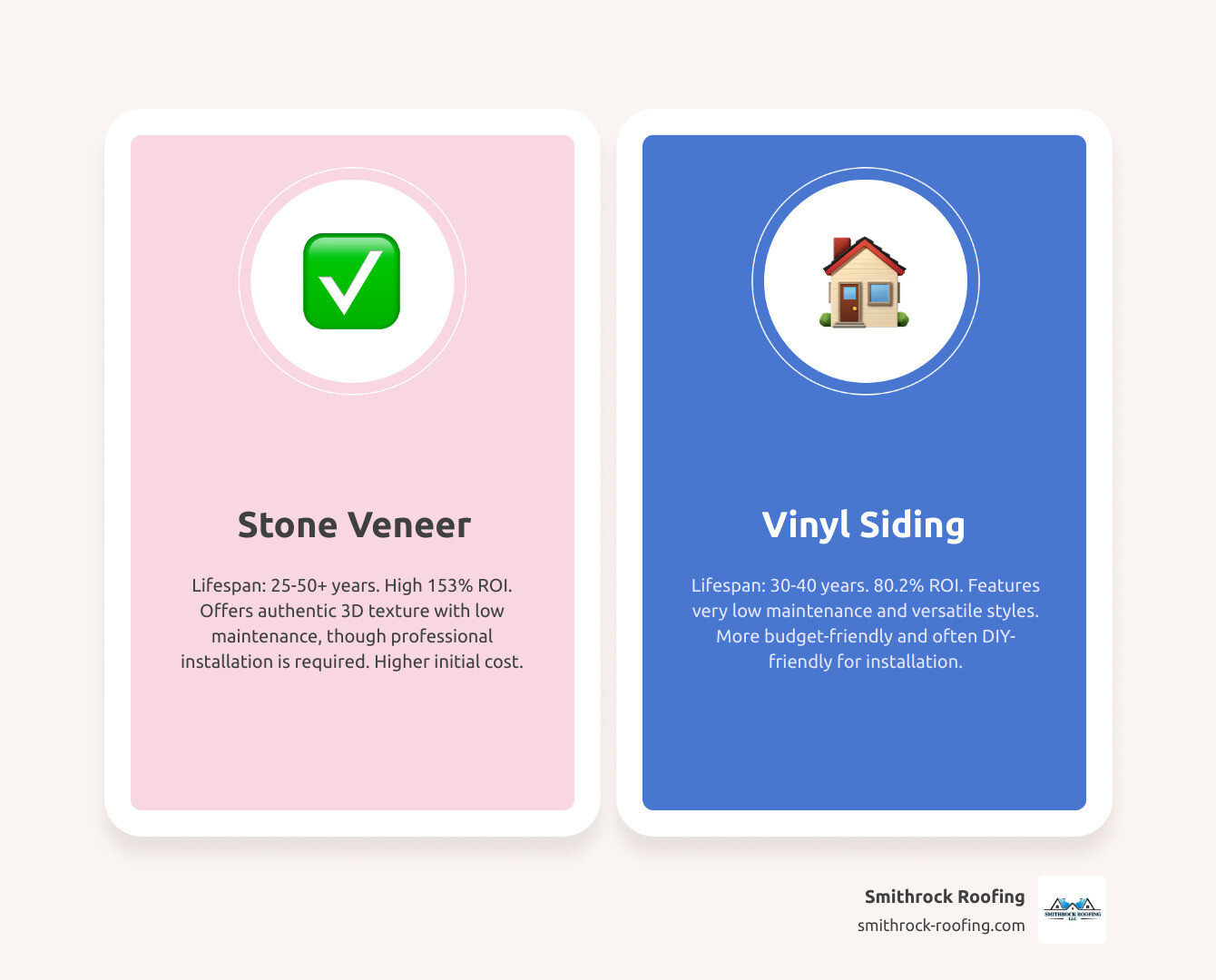
| Lifespan | 25-50+ years (potentially over 100) | 30-40 years |
| Return on Investment | 153% cost recouped | 80.2% cost recouped |
| Maintenance | Low (occasional cleaning, possible sealing) | Very Low (simple washing) |
| Aesthetic Appeal | Authentic stone look with 3D texture | Wide variety of styles, can mimic wood or stone |
| Installation Difficulty | Requires professional masonry skills | DIY-friendly for experienced homeowners |
| Cost | Higher initial investment | More budget-friendly upfront |
Your home’s exterior creates the first impression that defines its character and value. Whether you’re drawn to the timeless elegance of manufactured stone veneer or the versatile affordability of vinyl siding, each material brings unique strengths to the project.
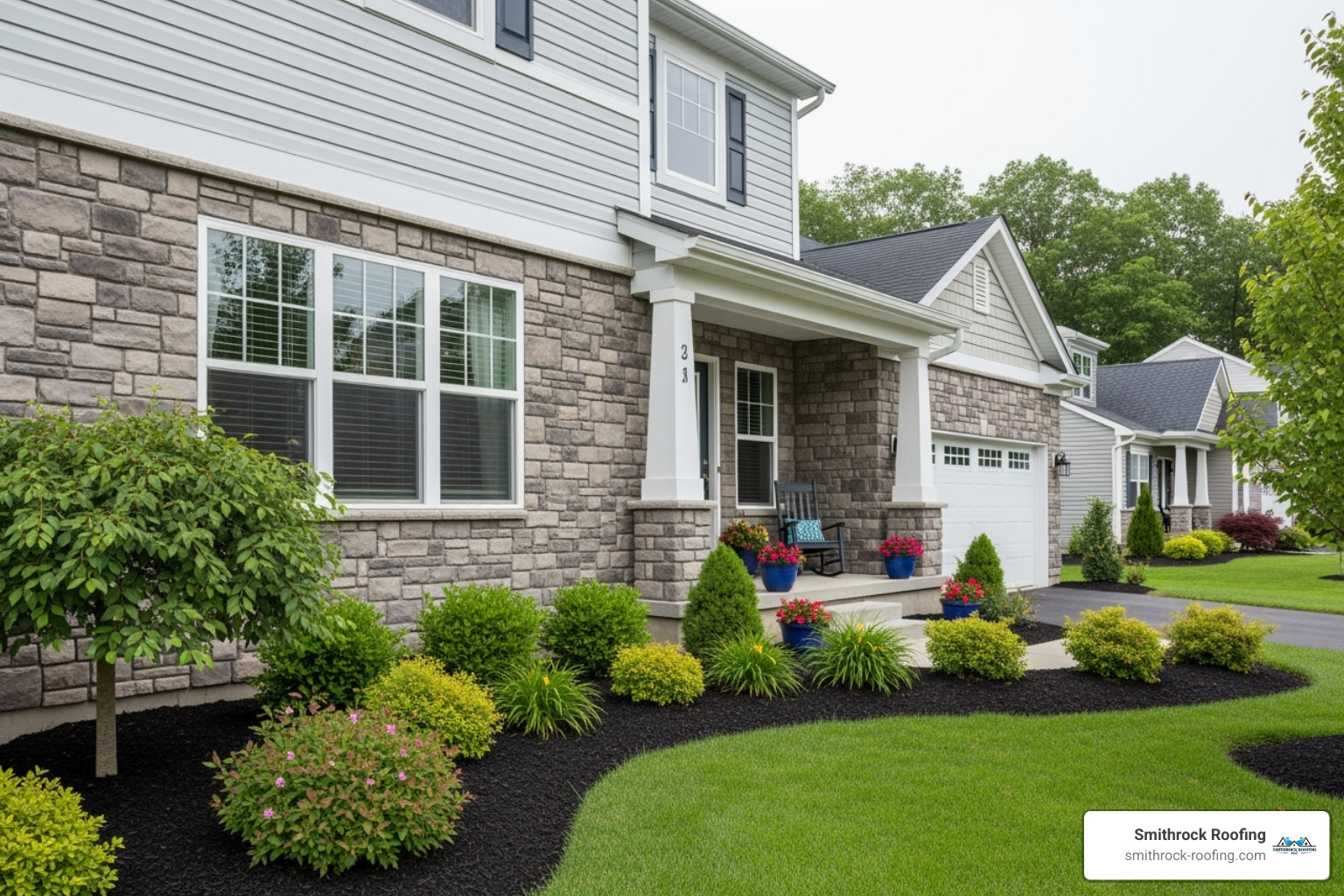
The good news is you don’t have to choose just one. Many homeowners find that combining stone veneer accents with vinyl siding creates a custom, high-end look that maximizes both aesthetic appeal and budget. Stone veneer can anchor entryways or wrap foundation areas while vinyl siding covers larger walls, delivering visual interest through contrasting textures.
Understanding the practical differences between these materials—from installation to long-term performance—helps you make a confident decision that aligns with your priorities, whether that’s maximizing resale value, minimizing maintenance, or achieving a specific architectural style.
Choosing the right exterior affects your home’s storm resilience, property value, and long-term appearance. When weighing stone veneer and vinyl siding, you’re deciding what matters most: authentic, high-end looks, budget-friendly practicality, or a smart combination of both. Let’s dig into what makes each material special, exploring the nuances that will define your home’s character for decades to come.
Your home’s exterior tells a story about your style. Manufactured stone veneer offers a look of authenticity that’s hard to beat. It replicates the natural beauty of quarried stone with realistic textures and 3D depth, creating shadows and highlights that add architectural weight. Because it’s cast in molds made from real stones, it captures the unique imperfections, clefts, and surfaces that make stone so appealing. It adapts beautifully to various styles, from rustic to modern, and is available in numerous profiles:
Vinyl siding offers beauty through versatility. Modern vinyl comes in a vast array of styles, colors, and finishes. Popular profiles include traditional clapboard (also called lap siding), Dutch lap (which has a decorative groove for added shadow), and board-and-batten (alternating wide and narrow vertical panels for a farmhouse or modern look). It can even mimic the appearance of wood grain or stone. While stone-look vinyl doesn’t have the same 3D texture as manufactured stone, it provides a clean, uniform appearance with limitless color options that remain vibrant for decades. For many, this predictable beauty and customization is ideal.
Interestingly, you don’t have to pick just one. Mixing siding types is a fantastic way to style your home’s exterior. Using vinyl for the main cladding and adding stone veneer accents around entryways or on foundation areas creates a luxurious appearance where it has the most visual impact, all while keeping the project budget-friendly.

Your siding must withstand sun, rain, hail, and temperature swings. Both stone veneer and vinyl siding are built to last, but they have different strengths when facing the elements.
Manufactured stone veneer is incredibly durable, with a lifespan of 25-50 years, but potentially over 100 years with proper installation. Made from a mixture of Portland cement, lightweight aggregates, and iron oxide pigments, it is exceptionally strong. It boasts a Class A fire rating, meaning it is non-combustible and offers excellent protection against fire. It stands up well to extreme weather, resists impact from hail, and won’t fade from UV exposure because the color is integrated throughout the product. However, its longevity is critically dependent on professional installation that includes proper moisture management, such as water-resistive barriers and weep screeds to prevent water from becoming trapped behind the stone.
Vinyl siding is a reliable workhorse, engineered to resist moisture, rot, and insects. Quality vinyl siding lasts 30-40 years. Modern formulas include impact modifiers to help it flex under stress and UV stabilizers to prevent fading. The thickness of the vinyl, typically ranging from .040 to .055 inches, plays a role in its rigidity and resistance to denting. Thicker panels often have higher wind-load ratings, making them a better choice in areas prone to strong storms. While it performs well, extreme cold can make it brittle, and severe impacts from hail or debris can cause cracks or holes. Proper installation is also key to prevent waving or buckling as the material expands and contracts with temperature changes.
For more information on how different siding options perform, our siding category page offers a deeper dive.
An exterior upgrade should add to your home’s value. The Remodeling 2024 Cost vs. Value Report provides eye-opening data on this front. Manufactured stone veneer delivers an exceptional 153% return on investment (ROI). This isn’t just a number; it reflects how buyers perceive stone as a signal of quality, permanence, and luxury. A home with stone accents stands out in listings, commands a higher asking price, and often sells faster because it has an immediate, high-end curb appeal that buyers are willing to pay a premium for.
Vinyl siding replacement offers a solid 80.2% ROI. While lower than stone, this is a smart, cost-effective upgrade that protects your home, improves curb appeal, and recoups most of its cost at resale. It makes perfect financial sense for those with tighter budgets or who plan to stay in their home for many years. For buyers, new vinyl siding signals a well-maintained, low-maintenance home, which is a major selling point. It removes a potential future expense from their minds and presents the property as move-in ready.
Your decision depends on balancing upfront cost with long-term gains. If you plan to sell soon, stone veneer’s high ROI may justify the expense. For long-term homeowners, vinyl offers excellent value and decades of worry-free performance. In either case, professional installation is crucial to maximize your return, as poor workmanship can hurt your home’s value.
| Metric | Manufactured Stone Veneer | Vinyl Siding |
|---|---|---|
| Average Lifespan | 25-50+ years (potentially over 100) | 30-40 years |
| Return on Investment (ROI) | 153% | 80.2% |
| Maintenance Level | Low (occasional cleaning, possible sealing) | Very Low (simple washing) |
Both materials are low-maintenance compared to wood, a feature that appeals to modern buyers and contributes to their strong resale value.
Beyond curb appeal and cost, it’s crucial to understand the installation process and long-term upkeep for stone veneer and vinyl siding. These practical considerations will affect your project’s timeline, budget, and future maintenance tasks, and the difference between the two materials is significant.
This is where the two materials truly diverge. Installing manufactured stone veneer is specialized work that demands masonry expertise. It is not a DIY project for the average homeowner. The process is multi-layered and must be done correctly to prevent catastrophic moisture damage. A typical professional installation includes:
Vinyl siding installation is more approachable for experienced DIYers. The system uses interlocking panels that are “hung” rather than fastened tightly. Key components include a starter strip at the bottom, J-channel trim around windows and doors, and corner posts. However, “DIY-friendly” doesn’t mean “foolproof.” The most common mistake is fastening panels too tightly, which prevents them from expanding and contracting with temperature changes, leading to warping, waving, and buckling. Nails must be centered in the nailing slots and left about 1/32″ loose. While vinyl is more forgiving than stone, professional installation ensures clean lines, proper water management, and the crisp details that create a polished, long-lasting finish that honors the manufacturer’s warranty.

The good news is that both stone veneer and vinyl siding are remarkably low-maintenance compared to materials like wood that require frequent repainting.
Vinyl siding is about as close to “set it and forget it” as cladding gets. Rain often handles most of the cleaning. Otherwise, a simple hosing down with a garden hose and a soft-bristle brush is usually sufficient. For stubborn dirt, mold, or mildew, a solution of water and mild detergent works well. Since the color runs through the material, vinyl never needs painting, and minor scratches are barely visible. If a panel is damaged, it can be removed and replaced by a professional using a zip tool to unlock it from the adjacent panels.
Manufactured stone veneer is also easy to maintain. It benefits from occasional hosing to remove dirt and dust. For tougher grime, a non-etching concrete cleaner and a stiff, non-metallic brush can be used. If using a pressure washer, it’s critical to keep the pressure low (under 500 PSI) and the nozzle at a wide angle and distance to avoid damaging the stone surface or mortar joints. The main difference is that sealing stone veneer is often a smart move, especially in areas with high moisture exposure, to provide an extra layer of protection against stains and efflorescence (white, powdery deposits). Additionally, it’s wise to periodically inspect mortar joints for any cracks that may need a simple tuckpointing repair. If a single stone is cracked, it can be carefully chiseled out and replaced with a new one, making spot repairs relatively seamless.
Beyond looks and cost, it’s important to consider how your siding choice affects your home’s energy efficiency and its environmental footprint. These factors work behind the scenes, impacting your utility bills, your home’s comfort, and the world around you.
Your home’s cladding plays a role in its energy performance. This is often measured by R-value, which indicates a material’s resistance to heat flow—a higher R-value means better insulation.
Manufactured stone veneer provides some natural insulative benefits due to its mass (a property known as thermal mass). It absorbs heat slowly and releases it slowly, which can help moderate indoor temperature swings. However, its R-value on its own is modest. The real energy efficiency comes from the complete wall system. Because it’s installed over a sheathed wall, there is ample opportunity to add high-performance continuous exterior insulation behind the stone. Some stone veneer products are even designed with built-in insulation, offering an R-value of up to 4.5 per inch, which significantly boosts a home’s thermal performance.
Standard vinyl siding offers little insulation on its own, with an R-value of less than 1. However, insulated vinyl siding is a game-changer. This product has a layer of rigid foam insulation (Expanded Polystyrene or EPS) bonded to the back of each panel. This creates a continuous thermal blanket over your home’s exterior, drastically reducing thermal bridging—the process where heat escapes through the wall studs, which are less insulated than the wall cavities. By covering the studs, insulated vinyl siding can increase the wall system’s overall R-value by R-2 to R-5, resulting in a more comfortable home with lower heating and cooling costs and even some sound-dampening benefits.
Every building material has an environmental impact, from sourcing raw materials to manufacturing and disposal. Both stone veneer and vinyl siding have made strides in sustainability.
Manufactured stone veneer is made from common, readily available materials: Portland cement, lightweight natural aggregates (like pumice or shale), and iron oxide pigments for color. It is much lighter than natural stone, which significantly reduces the fuel and carbon emissions associated with transportation from the factory to the job site. While cement production is energy-intensive, manufactured stone avoids the destructive quarrying process associated with natural stone, which can scar landscapes and disrupt ecosystems. Many modern products are made in facilities with advanced water recycling systems and may contain recycled materials. They also contain no volatile organic compounds (VOCs).
Vinyl siding is made from polyvinyl chloride (PVC), a plastic polymer. While its production is a chemical process, modern methods are more efficient and environmentally conscious than in the past. According to lifecycle assessment (LCA) studies, vinyl siding performs favorably compared to many other exterior claddings in terms of its environmental impact over its entire life, from production to disposal. A key advantage is that many vinyl products incorporate recycled materials, and the siding itself is recyclable at the end of its long 30-40 year lifespan, though recycling facilities may not be available in all areas. Its long service life and low maintenance needs (no paint, stains, or harsh cleaning chemicals required) also contribute to a smaller environmental footprint over time.
You don’t have to choose just one material for your home’s exterior. Thoughtfully blending stone veneer and vinyl siding is a popular and intelligent design strategy. It allows you to achieve a custom, high-end look without the cost of a full stone exterior. This approach lets you enjoy the cost-effectiveness and low maintenance of vinyl for the majority of your home while using the rich texture and visual weight of stone veneer to add architectural interest where it matters most.
Creating a harmonious look is about intentional placement, proportion, and color coordination. The secret is to use vinyl siding as the primary cladding and introduce manufactured stone veneer to highlight specific architectural features. Think of the stone as an accent that provides a strong visual anchor, making a statement without overwhelming the design.
Popular strategies include:
As design experts note when discussing mixing siding types, the contrast between the smooth, clean lines of vinyl and the rugged, organic texture of stone creates a visual interest that neither material can achieve alone. The key is to choose stone and vinyl colors that complement each other. You might select a neutral vinyl color and pull a specific accent color from the varied tones in the stone. For example, a warm beige vinyl pairs beautifully with a brown-toned fieldstone, while a cool gray vinyl can be stunning next to a charcoal-colored ledgestone. Proper transitions are also vital; professionals use specific flashing and trim pieces where the two materials meet to ensure a clean, watertight seal.
An exterior renovation can feel overwhelming. Here are the key factors to consider to make the best decision for your home:
We can help you steer these considerations. Our experience with both stone veneer and vinyl siding means we can guide you to the perfect combination for your vision, budget, and lifestyle. Explore our siding services to learn more.
It’s natural to have questions when planning a significant home investment. Here are answers to some of the most common questions we hear from homeowners about stone veneer and vinyl siding.
Yes, but with important caveats. Modern stone-look vinyl panels feature highly detailed, high-resolution printed patterns that can be quite convincing from a distance. They mimic the colors and general shapes of granite, slate, and other natural stones at a more accessible price point.
The key difference is texture and repetition. Stone-look vinyl has a 2D appearance—it’s a flat or slightly embossed surface with a printed design. Manufactured stone veneer, which is cast from molds of real stone, offers genuine 3D depth. This creates the natural shadows, varied contours, and tactile feel that we recognize as authentic. Furthermore, vinyl panels have repeating patterns, which can become noticeable on large walls. With individual stone veneers, every installation is unique. If you’re seeking a stone aesthetic on a tight budget, stone-look vinyl is a smart solution. If maximum realism and curb appeal are your goals, manufactured stone veneer’s authentic texture is best.
The numbers are clear. According to the Remodeling 2024 Cost vs. Value Report, manufactured stone veneer offers an exceptional 153% ROI, meaning you can recoup more than you spent. This is because buyers perceive stone as a luxury feature that signals quality, permanence, and structural integrity. It dramatically increases curb appeal, makes a home stand out in a competitive market, and can lead to a higher selling price and shorter time on the market.
Vinyl siding replacement also provides a solid return, with 80.2% of the cost recouped. This makes it a practical and financially sound upgrade. For potential buyers, new vinyl siding indicates that the home is well-maintained and protected from the elements, and it promises years of low-maintenance living. While vinyl is seen as a smart, durable choice, it doesn’t carry the same “wow factor” or luxury connotation as stone in the real estate market. If maximizing your return is the top priority, stone veneer is the clear winner.
Both materials are considered low-maintenance, especially compared to wood siding, but their upkeep differs slightly. Vinyl siding is the simpler of the two. Its simple wash-down needs usually require just a garden hose and perhaps a soft brush with mild detergent to remove dirt or pollen. It never needs painting or staining.
Manufactured stone veneer is also low-maintenance, requiring only occasional cleaning with a gentle spray from a hose to remove dirt. However, it differs in two ways. First, sealing is often recommended, especially in high-moisture areas or for lighter-colored stones, to provide an extra layer of protection against staining. This is a task that might be done every 5-10 years. Second, it’s wise to periodically inspect the mortar joints for any small cracks that might need a simple tuckpointing repair to prevent water intrusion. While both are easy to care for, vinyl requires slightly less attention overall.
This is a common concern based on older vinyl products from decades ago. Modern, high-quality vinyl siding is manufactured with advanced UV stabilizers and protective coatings designed to resist fading from sun exposure. The color is not just a surface layer; it’s blended throughout the panel (a technology called “through-color”). This means that even if minor surface fading occurs over many years, it will be uniform and barely noticeable. Furthermore, most reputable manufacturers offer extensive warranties that specifically cover significant fading, giving homeowners peace of mind that their chosen color will remain vibrant for decades.
Manufactured stone veneer offers the look of natural stone for a fraction of the cost. There are two main reasons for this. First, the material itself is less expensive to produce than quarrying, cutting, and transporting heavy, full-thickness natural stone. Second, and more significantly, the installation costs are much lower. Because manufactured veneer is lightweight, it does not require a foundational brick ledge or structural supports, which are mandatory for heavy natural stone. The installation process is also faster and requires less specialized equipment, reducing labor costs. Overall, you can expect manufactured stone veneer to cost 30-50% less than a comparable natural stone installation, making it a much more accessible way to achieve a high-end stone aesthetic.
Choosing between stone veneer and vinyl siding is a major decision, but understanding their differences empowers you to make the right choice for your home. There is no single “winner”—only the best fit for your unique situation.
If your priority is maximizing your home’s value with an authentic, high-end look, manufactured stone veneer’s 153% ROI is hard to ignore. If you’re seeking a durable, versatile, and budget-friendly upgrade with almost no maintenance, vinyl siding is an excellent match. And remember, you don’t have to choose just one. Combining stone veneer and vinyl siding offers a brilliant strategy to achieve a custom aesthetic that balances visual impact with smart budget management.
Both materials will protect your home for decades and significantly boost its curb appeal. The final decision comes down to balancing your aesthetic vision, budget, and long-term goals for your home in Winston-Salem, King, Clemmons, or the surrounding areas.
At Smithrock Roofing, we’re passionate about helping homeowners create exteriors that are not just beautiful but also built to last. Professional installation is the key to ensuring your investment performs as it should for years to come. Whether you need siding, roofing, windows, or gutters, we’re here to make your vision a reality with expertise and quality you can trust.
Ready to transform your home’s exterior? Explore our comprehensive siding services to see how we can help you create the home you’ve been dreaming about.
Smithrock Roofing © Copyright 2026 • All Rights Reserved • Privacy Policy • Maintained by Mongoose Digital Marketing