Metal roof estimates are far more than a simple price tag; they are comprehensive quotes detailing every facet of a new metal roofing system. A properly prepared estimate specifies the exact materials, labor processes, underlayment, flashing techniques, tear-off procedures, and other features unique to your roof’s design and structure. This document should function as a clear and binding roadmap for your project, showing precisely what will be installed, how the work will be carried out, and the standards the final product will meet. A vague estimate with a single bottom-line number is a significant red flag, as it leaves critical details open to interpretation and potential corner-cutting.
Understanding the nuances of metal roof estimates is essential because a roof replacement is one of the largest and most critical home improvement projects a homeowner will ever undertake. It is your primary defense against the elements. A well-prepared, detailed estimate empowers you to:
Quick Guide to Metal Roof Estimate Components:
The estimating process can feel overwhelming, especially when quotes from different contractors vary significantly in structure, detail, and price. These differences are not arbitrary; they often reveal how carefully a contractor has evaluated your roof and how committed they are to a high-quality, long-lasting installation.
A metal roof represents a substantial long-term investment. While it requires a higher initial outlay than asphalt shingles, its true value is realized over decades of superior longevity, resilience, and performance. A properly installed metal roof can last 40 to 70 years or more with minimal maintenance, whereas traditional shingle roofs may need replacement two or three times in the same period.
The gap between the lowest and highest estimates you receive often stems from crucial differences in quality and scope:
This guide will break down every major component of a metal roof estimate, empowering you to interpret contractor terminology, identify a thorough and professional proposal, ask informed questions, and accurately evaluate the long-term value of your investment. By the end, you’ll feel confident comparing metal roof estimates and selecting a solution that will protect your home reliably for decades to come.
Essential metal roof estimates terms:
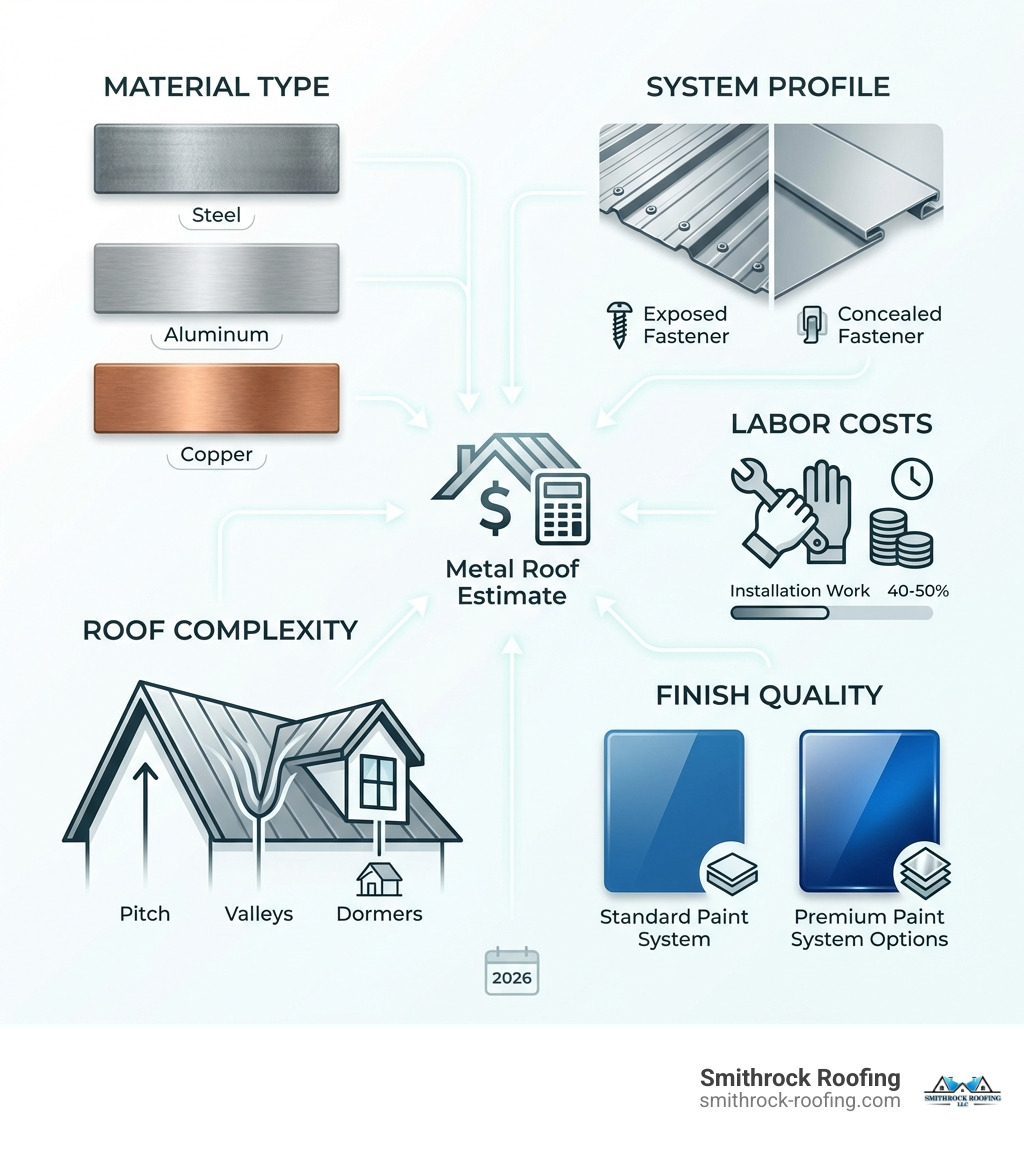
When we provide metal roof estimates, we conduct a thorough evaluation of numerous factors that determine what is required to complete your new roof properly and ensure its longevity. Understanding these individual components is the key to interpreting quotes effectively and recognizing whether a contractor has accounted for your home’s specific needs or is offering a generic, one-size-fits-all price.
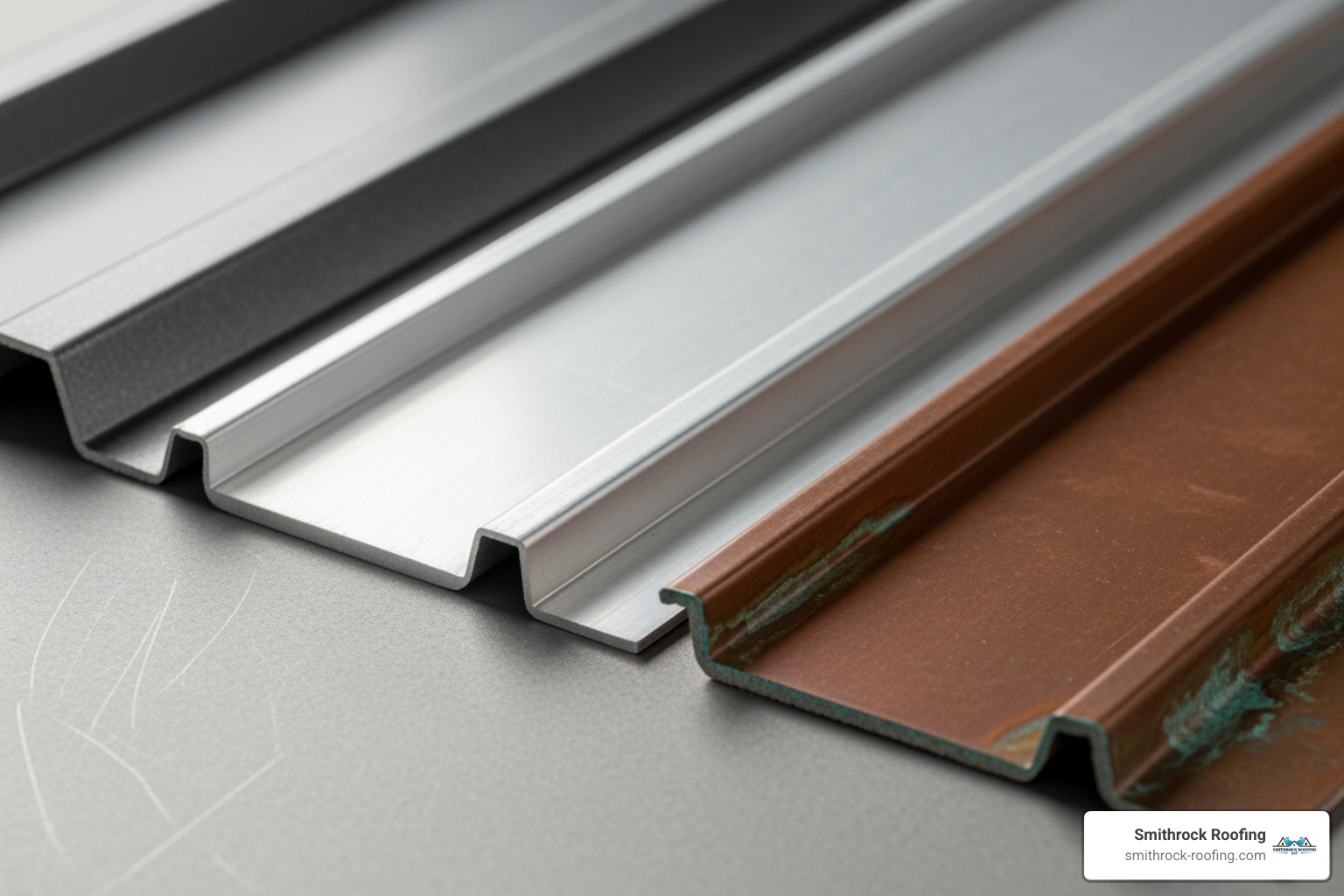
The type of metal you choose is the single largest driver of cost and significantly shapes your metal roof estimates. Each metal offers a unique balance of cost, durability, corrosion resistance, and aesthetics.
Steel Roofing (Galvalume and Galvanized): The most common choice for residential metal roofing, steel offers an excellent combination of strength, workability, and value.
Aluminum Roofing: Naturally rust-proof, aluminum is the ideal choice for coastal regions with high salt spray and humidity. It is also extremely lightweight, which can reduce structural load on the home. Estimates should specify the alloy (e.g., 3003 or 5052), which affects its strength and formability, as well as the thickness and paint coating.
Copper Roofing: A premium, legacy material, copper is valued for its stunning appearance and extraordinary longevity (often 100+ years). It weathers over time to a distinctive blue-green patina. Due to its high cost, it is often used as an accent on bay windows or porch roofs. Estimates must specify the use of compatible fasteners (copper or stainless steel) to prevent galvanic corrosion, a destructive reaction that occurs when dissimilar metals are in contact.
Zinc Roofing: Another architectural-grade material, zinc is prized for its soft, matte grey appearance and its remarkable ability to form a protective patina that “heals” itself from scratches over time. It is also 100% recyclable and requires less energy to produce than many other metals. Its softness requires highly skilled installers, which will be reflected in the labor portion of the estimate.
For more information on selecting materials, see our guide on the best roofing materials for your region.
The roofing system and panel profile significantly influence your metal roof estimates, affecting not only appearance but also weather performance, maintenance needs, and overall cost.
Exposed Fastener Systems: In these systems (e.g., corrugated, PBR-panel, 5V-crimp), screws are driven directly through the face of the metal panel into the roof deck. The screw heads, which have neoprene washers to create a seal, remain visible. While more economical and faster to install, these systems have thousands of roof penetrations. The washers will degrade over time from UV exposure, requiring periodic inspection and replacement to prevent leaks. Estimates should specify the type and quality of the fasteners used.
Concealed Fastener Systems (Standing Seam): Considered the premium choice, these systems feature panels that interlock along raised seams. Fasteners are hidden, either by using a clip system or an integrated fastening flange. This design eliminates almost all exposed penetrations, providing superior weather resistance and a clean, modern aesthetic. There are two main types:
Learn more about Snap Lock Standing Seam Metal Roofs.
The long-term durability and curb appeal of your roof depend heavily on the metal’s thickness (gauge) and its protective paint system.
Metal Gauge Explained: In the context of steel, a lower gauge number indicates thicker, stronger metal (e.g., 24-gauge is thicker and more robust than 26-gauge, which is thicker than 29-gauge). Thicker metal offers better resistance to denting from hail or foot traffic and is less prone to a visual imperfection known as “oil canning.” For residential standing seam, 24-gauge is a common high-quality standard, while 26-gauge is also widely used. Estimates must specify the exact gauge.
Paint System Types: The finish protects the metal and provides color. A quality estimate will name the specific system:
No two roofs are identical. Your home’s unique architectural characteristics heavily influence the labor and material calculations in metal roof estimates.
Roof Size and Pitch: The total surface area (often measured in “squares,” where one square equals 100 square feet) is the baseline for material cost. The roof’s pitch, or steepness, directly impacts labor costs. A low-slope roof may require a mechanical seam system, while a very steep roof (e.g., 9/12 pitch or greater) requires additional safety equipment and slower, more methodical installation, increasing labor hours.
Roof Complexity: A simple gable roof is far less expensive to cover than a complex roof with multiple hips, valleys, dormers, skylights, and chimneys. Each of these features requires intricate, time-consuming labor to cut, bend, and seal custom flashing pieces. A thorough estimate will specifically describe how these critical transition areas and penetrations will be handled to ensure a watertight seal.
For insights into larger projects, explore Roof Replacement Cost for a 2500 Sq Ft home.
Getting accurate and comparable metal roof estimates requires proactive preparation and clear communication with your potential contractors. By understanding the key details about your own roof and the installation process, you can ensure that the quotes you receive are comprehensive, reflect your home’s real-world conditions, and provide a solid basis for making an informed decision.
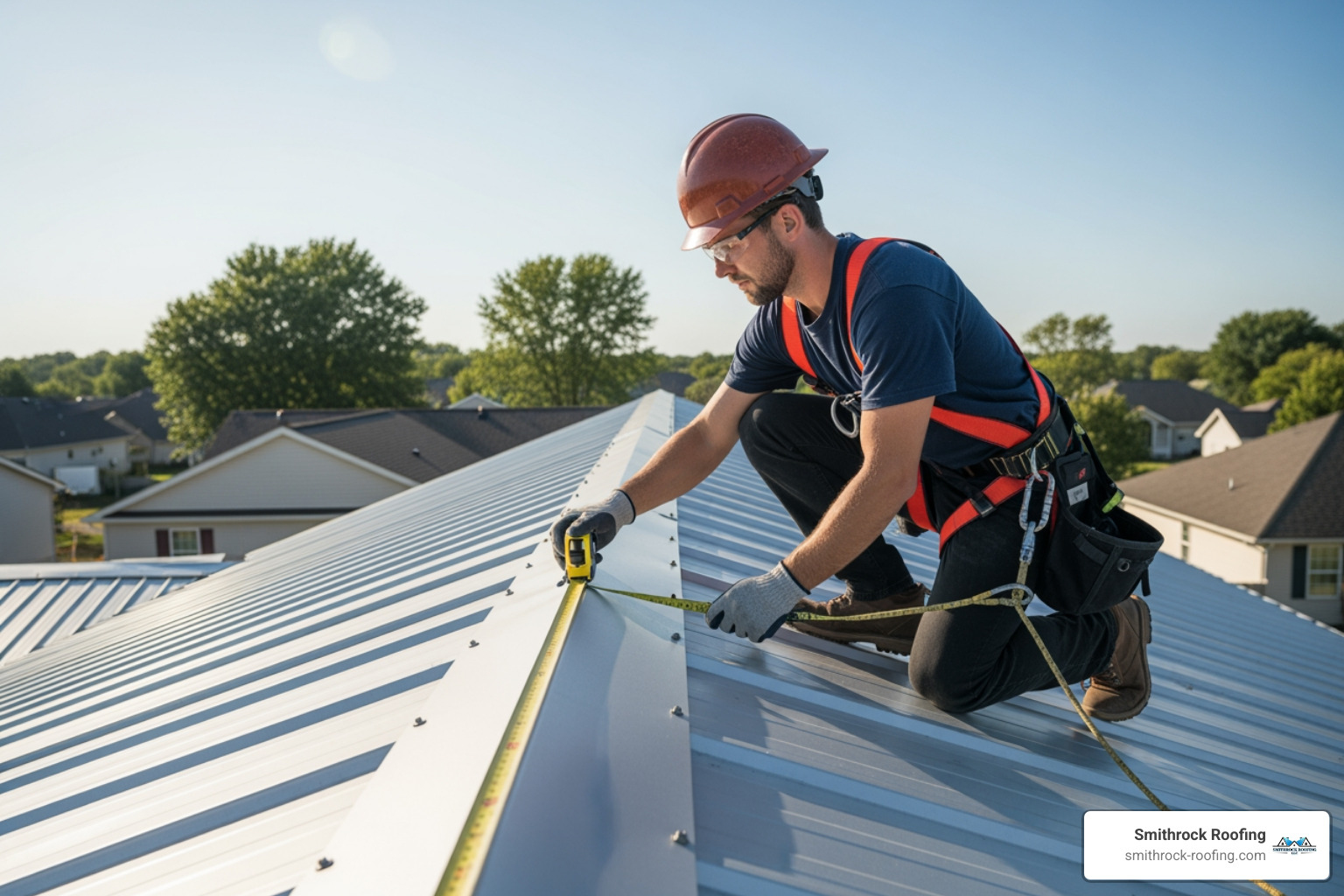
Knowing your roof’s total surface area is the fundamental starting point for all reliable metal roof estimates. While a contractor will perform their own precise measurements, having a good preliminary number helps you vet their calculations.
Estimating Roof Size: Accurate measurement involves calculating the area of each individual roof plane (length x width) and adding them together. Professional assessors will either measure the roof directly from a ladder or, more commonly today, use sophisticated aerial measurement software that provides highly accurate data on area, pitch, and lengths of hips, valleys, and eaves. While online calculator tools can give you a rough idea, they are no substitute for a professional assessment.
Accounting for Waste Factor: Every roofing project requires more material than the exact surface area of the roof. This additional material is known as the \”waste factor,\” and it accounts for material lost during cuts, overlaps, and trimming at hips, valleys, and eaves. A simple gable roof might have a waste factor of 5-10%, but a highly complex roof with many angles and dormers could require a waste factor of 15-20% or even more. This is a significant and necessary component of the material cost in your estimate.
For precise measurements, use our Roofing Calculator for help and always follow up with a professional on-site evaluation.
Professional installation by a skilled crew represents a major portion of your metal roof estimate, and for good reason. The long-term performance of a metal roof is critically dependent on the quality of the installation.
Investing in skilled labor ensures a correct installation that preserves manufacturer warranties. Learn more about Why you need Experienced Roofing Contractors.
Metal roof estimates are not universal; they are heavily influenced by your specific location and its unique environmental and regulatory conditions.
Obtaining quotes from established local contractors like Smithrock Roofing ensures your estimate is tailored to your home’s specific needs and complies with all regional requirements, rather than being based on generic assumptions.
While metal roof estimates often show a higher upfront cost compared to traditional materials like asphalt shingles, it’s crucial to analyze the investment through the lens of its full service life. A metal roof is an asset that provides decades of superior weather protection, significant energy efficiency benefits, and minimal maintenance requirements when properly installed. The initial price is only one part of the total cost of ownership.
Metal roofs are robust, resilient shields engineered to protect homes for exceptionally long periods, making them one of the most cost-effective solutions over time.
Extended Service Life: A professionally installed metal roofing system has a functional lifespan of 40 to 70 years, and materials like copper and zinc can last over a century. In contrast, a typical asphalt shingle roof may need to be replaced 2, 3, or even 4 times within the same timeframe. When you calculate the life cycle cost (total cost divided by years of service), metal is often the less expensive option.
Superior Weather Resistance: Metal roofs are built to withstand extreme weather conditions. They are non-combustible and typically carry a Class A fire rating, the highest available. They are also engineered to meet stringent wind uplift standards, with some systems rated for winds of 140 mph or more. For hail-prone areas, many metal roofing products have a UL 2218 Class 4 impact resistance rating, the highest possible, which can sometimes lead to discounts on homeowner’s insurance premiums.
Comprehensive Warranties: Reputable metal roofing systems come with two distinct types of warranties, and your estimate should clearly explain both:
Explore our Durable Roofing Solutions designed for regional weather conditions.
Beyond its durability, a metal roof actively contributes to your home’s efficiency and reduces ongoing maintenance burdens and costs.
Reflectivity and Thermal Performance: Many modern metal roofs are considered \”cool roofs.\” They are finished with reflective coatings that redirect a high percentage of solar energy, preventing it from being absorbed as heat into the attic. This can significantly reduce cooling loads on your HVAC system, leading to lower energy bills during warm months. The Solar Reflectance Index (SRI) is a measure of this performance. For maximum efficiency, some installations incorporate an air gap (above-sheathing ventilation) between the metal panels and the roof deck, creating a convective current that vents heated air out at the ridge, further improving thermal performance.
Low Maintenance Requirements: Unlike other materials, metal does not rot, crack, warp, or support the growth of algae and fungus. Its smooth, hard surface sheds rain, snow, and debris effectively. Routine care is minimal and typically involves periodic visual inspections of seams and flashing (especially around penetrations), ensuring gutters and valleys remain clear of leaves, and occasionally checking fastener tightness on exposed fastener systems. This stands in stark contrast to the ongoing repairs and eventual replacement cycle of less durable materials.
Increased Home Value: A high-quality metal roof is an attractive feature for potential home buyers. Its longevity, durability, and energy efficiency are strong selling points that can increase a home’s resale value. Studies have shown that homeowners can often recoup a significant portion of their investment in a metal roof at the time of sale, making it not just an expense, but an upgrade that adds tangible value to the property.
For moisture control guidance, refer to Moisture Control Guidance for Building Design, Construction and Maintenance.
Once you have a firm grasp of the components within metal roof estimates and appreciate the long-term value of this investment, the final step is to select the right contractor and transition from the planning phase to a successful installation. This stage requires diligence and clear communication.
Securing a high-quality metal roof begins with finding reputable, experienced contractors who provide accurate, transparent, and comprehensive estimates. This vetting process is critical to your project’s success.
Request Multiple Detailed Quotes: Always obtain at least three detailed estimates from qualified, local roofing contractors who specialize in metal. A legitimate estimate should be a multi-page document that itemizes the following: exact material manufacturer, name, gauge, profile, and finish; underlayment type; flashing materials and techniques (e.g., \”custom fabricated W-valley flashing from coil stock\”); ventilation plan; tear-off and disposal procedures; an allowance for deck repairs (e.g., price per sheet of plywood); and full warranty information.
Verify Credentials and Insurance: Ensure any contractor you consider is properly licensed and insured in North Carolina. Ask for a copy of their state license and verify it with the North Carolina Licensing Board for General Contractors. More importantly, request a Certificate of Insurance (COI) sent to you directly from their insurance agent. This document proves they carry adequate general liability insurance and, crucially, workers’ compensation coverage, which protects you from liability in case of an on-site accident.
Check Reputation and Past Work: Do your homework. Read online reviews from multiple sources, but also ask for a list of recent local references you can call. Drive by completed projects to see the quality of their work firsthand. Specifically ask for references for projects that used the same metal system you are considering.
Ask Specific Technical Questions: The answers to these questions will separate the true experts from the rest. Inquire about critical details:
Demand a Written Contract: Never proceed with a handshake or a simple one-page agreement. The final contract should incorporate all the details from the estimate, plus a clear scope of work, a payment schedule, a projected start and completion date, and procedures for handling unforeseen issues or change orders.
At Smithrock Roofing, we prioritize transparency in our estimates and contracts. Find Roofers With Free Estimates in your area.
Thoughtful financial planning can make a premium metal roof upgrade more accessible and affordable.
Financing Availability: Homeowners have several avenues for financing a new roof. These include personal loans from a bank or credit union, a home equity loan or Home Equity Line of Credit (HELOC), or financing programs offered directly by the roofing contractor. Carefully compare the interest rates, terms, and fees for each option to find the best financial structure for your budget.
Energy Efficiency Incentives and Insurance Discounts: A new metal roof may make you eligible for financial perks. Check for federal, state, and local energy efficiency programs or tax credits for installing \”cool roofing\” materials that meet certain reflectivity standards; the ENERGY STAR website and the DSIRE database are excellent resources. Additionally, contact your homeowner’s insurance provider. A new roof, especially one with a high impact resistance rating (UL 2218 Class 4), may qualify you for a significant premium discount.
By diligently selecting qualified contractors, meticulously reviewing detailed estimates, and planning your payment strategy, you can transition smoothly from a well-understood proposal to a successful, high-performance metal roof installation.
For the vast majority of homeowners seeking a long-term solution, the answer is a definitive yes. Although a metal roof typically requires a more substantial initial outlay than alternatives like asphalt shingles, its superior long-term performance and life cycle cost make it a financially sound investment. A metal roof can provide reliable service for 40 to 70 years or more, offering robust resistance to fire, wind, and hail when properly installed. To put it in perspective, you might replace an asphalt shingle roof 2-3 times during the lifespan of a single metal roof.
Consider the life cycle cost: An asphalt roof might cost $12,000 and last 20 years, equating to $600 per year of service life, not including repairs. A metal roof might cost $24,000 but last 50 years, equating to just $480 per year, all while providing better protection and potential energy savings. Their reflective surfaces can significantly improve your home’s energy performance by reducing cooling costs in warmer months. These combined characteristics of longevity, durability, low maintenance, and energy savings contribute to substantial long-term financial benefits and can enhance the overall resale value of your home.
A standing seam roof estimate is significantly more detailed and technically involved than an estimate for a corrugated or other exposed fastener system. This complexity stems from the nature of the system itself. Standing seam systems rely on concealed clips and interlocking seams that must accommodate the thermal expansion and contraction of the metal. The estimate must therefore account for engineered clip spacing for wind uplift, precise panel layout, and specialized installation techniques.
Furthermore, the labor component is much higher because all flashing details—at hips, valleys, eaves, rakes, and penetrations like chimneys and vents—are typically custom fabricated on-site from the same coil stock as the panels. This requires a high degree of craftsmanship and specialized tools (like brakes and seamers) that must be factored into the price. In contrast, an estimate for an exposed fastener system is simpler; it involves calculating panels and standard, pre-formed trim pieces, with labor being more straightforward, though it may need to mention long-term fastener maintenance.
While installing a metal roof over a single layer of existing asphalt shingles is technically possible in some jurisdictions, it is rarely the recommended practice for a high-quality, long-term installation. A professional contractor should advise against it for several critical reasons. First and foremost, a full tear-off is the only way to properly inspect the underlying roof deck for rot, water damage, or structural weakness. Covering up existing problems is a recipe for catastrophic failure down the road.
Second, installing metal directly over shingles can create a moisture trap. Condensation can form on the underside of the metal panels and become trapped by the non-permeable shingle layer, leading to mold growth and deck rot from the top down. A proper installation involves a tear-off followed by a high-temperature, breathable synthetic underlayment installed directly on the clean deck. This creates a proper drainage plane and allows the roof assembly to breathe. While a layover might seem to save a small amount on labor and disposal upfront, it compromises the integrity and longevity of your new roof, voids most manufacturer warranties, and can lead to far more expensive repairs in the future.
Understanding the intricate factors behind metal roof estimates—from the specific grade of steel and its paint finish to the complexity of your roof’s design, regional code requirements, and the system’s long-term performance benefits—empowers you to make a confident and informed decision for your home. A detailed, transparent estimate is far more than a simple price summary; it is a comprehensive blueprint that outlines how your new roof will be designed, specified, and installed to provide decades of protection.
By taking the time to meticulously review each component of your estimate, asking clarifying technical questions, and comparing proposals from qualified, vetted contractors, you can move forward with certainty. You are not just buying a roof; you are investing in a durable, energy-conscious, and visually appealing roofing system. A well-planned metal roof project, guided by a professional estimate and executed by skilled craftspeople, will safeguard your most valuable asset for decades to come.
For a professional assessment and a detailed quote tailored to your home’s specific conditions and your long-term goals, the experts at Smithrock Roofing can provide the clarity and guidance you need. Get a detailed estimate for your roof replacement.
Smithrock Roofing © Copyright 2026 • All Rights Reserved • Privacy Policy • Maintained by Mongoose Digital Marketing