Understanding the various chimney cap types is crucial for any homeowner. A chimney cap is a protective cover for your chimney, sitting at the top of the flue to keep your home safe. Its main job is to protect your chimney and home from several common problems:
Choosing the right type depends on your specific chimney setup. The main options include single-flue, multi-flue, outside mount, specialty, and stone caps. A chimney cap isn’t just an accessory; it’s an essential safety component that protects your chimney from weather, pests, and fire hazards, helping your fireplace work better and contributing to your home’s overall health.
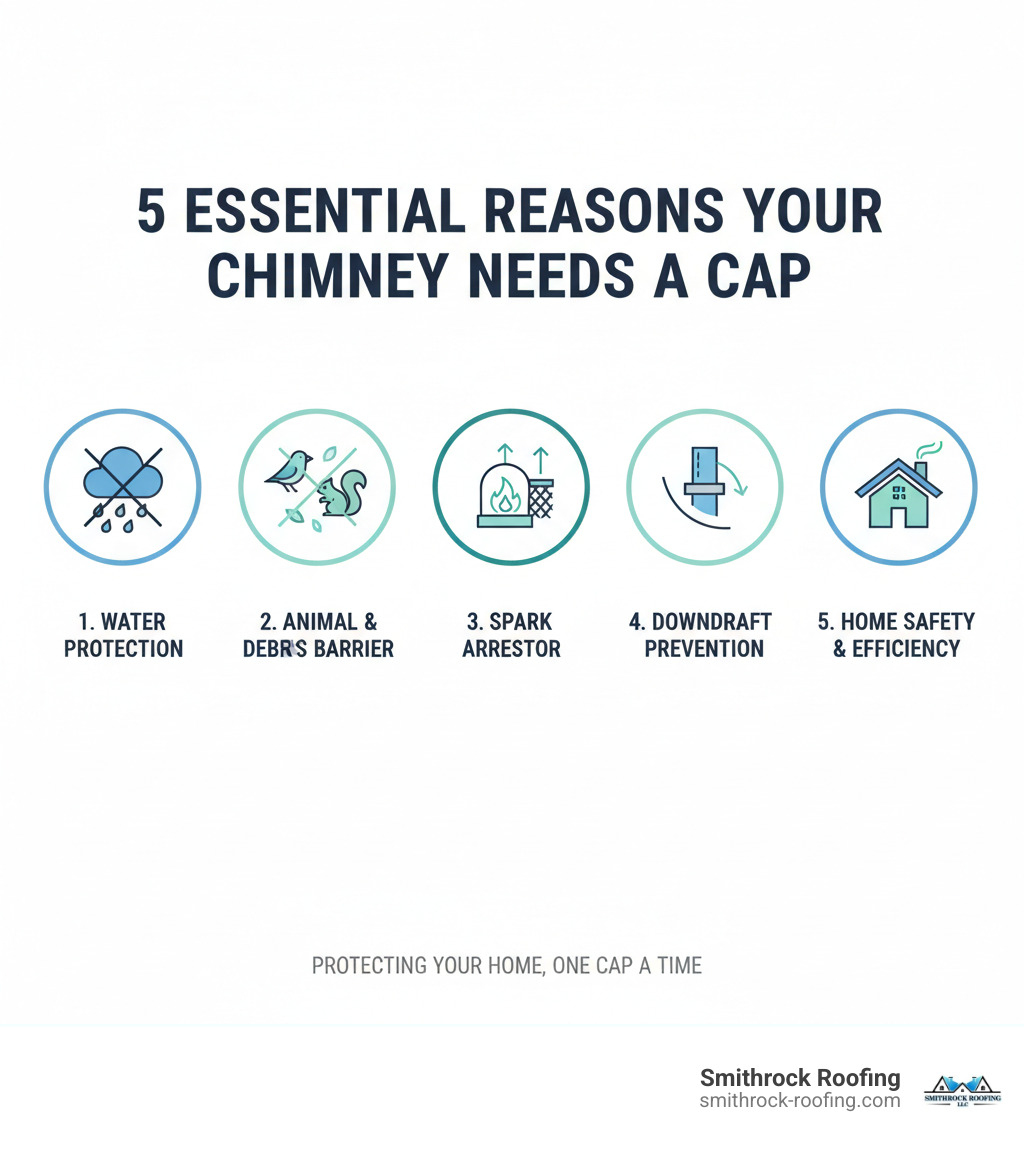
Your chimney cap is a critical component that quietly performs some of the most important safety jobs in your home. Let’s start with fireplace safety. When you burn wood, sparks and embers travel up the chimney. Without a cap acting as a spark arrestor, these hot particles can land on your roof or nearby dry leaves, creating a serious fire hazard. Installing the right chimney cap types provides essential protection and peace of mind.
Weather is another major factor. Rain and snow entering your chimney can deteriorate flue linings, rust dampers, and damage masonry from the inside out. This isn’t just a minor leak; it’s a slow, destructive process that can cost thousands of dollars in repairs to the flue, firebox, and surrounding walls. For brick chimneys, moisture that seeps into cracks and freezes will expand, causing the bricks and mortar to crumble over time. This freeze-thaw cycle leads to serious structural damage, a condition known as spalling. A properly fitted chimney cap sheds water away, protecting both your flue and the chimney crown.
Chimney caps also help prevent downdrafts and improve energy efficiency. Downdrafts occur when wind pushes air down your chimney, forcing smoke into your living room and pulling heated air out of your home. A well-designed cap redirects wind currents to maintain a proper updraft, keeping your home comfortable and your energy bills lower.
An uncapped chimney is an open invitation for birds, squirrels, and raccoons looking for a place to nest. These nests create dangerous blockages that can trap smoke and deadly, odorless carbon monoxide in your home and create a fire risk. A carbon monoxide leak is a silent threat that can cause serious illness or death, making a clear chimney flue an absolute necessity. The mesh screen on a chimney cap acts as a barrier to keep these uninvited guests out.
With all these critical functions—fire prevention, moisture protection, energy efficiency, and animal exclusion—a chimney cap is an essential part of your home’s safety system. That’s why we recommend professional installation and regular inspection by certified experts, like our team members who are National Fireplace Institute (NFI) certified.
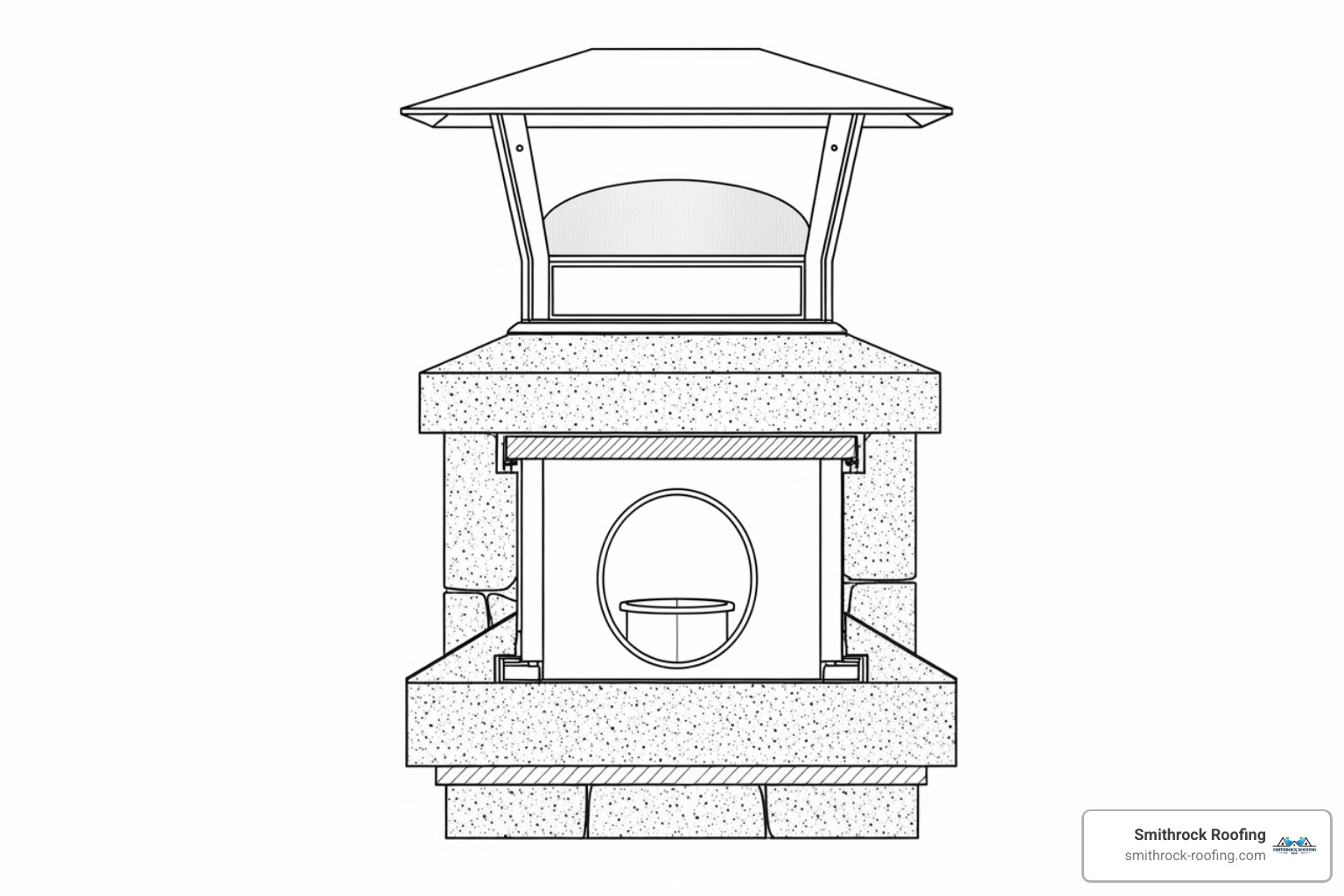
The chimney crown and cap work as partners. The crown is the concrete slab at the top of your chimney that slopes to shed water away from the flue. Over time, crowns can crack, allowing water to seep into the masonry and cause structural damage.
A chimney cap protects the flue opening from direct rain entry, but certain chimney cap types, like outside mount caps, extend over the crown to provide an extra layer of protection. This umbrella effect shields the crown itself from weather, helping it last longer. A healthy crown provides a solid base for the cap, and a good cap protects the crown. If either fails, the entire system is compromised, which is why regular inspections of both components are so important.
Choosing the right “hat” for your chimney is a key decision for your home’s safety and efficiency. Understanding the various chimney cap types helps you make the best choice for your North Carolina home.
Your chimney’s construction is the first factor. Masonry chimneys are built from brick and mortar, while prefabricated chimneys are factory-built metal systems, often enclosed in a wood-framed chase. The type of chimney determines how a cap will be installed.
Next is the flue configuration. Some chimneys have a single flue (one opening), while others have multiple flues for different appliances. This dictates whether you need a single-flue or multi-flue cap.
Finally, sizing and measuring are critical. An ill-fitting cap won’t work correctly and can even be blown off in a storm. For standard square or rectangular masonry flues, we measure the outer dimensions (length and width) of the clay tile. It’s also important to measure the height of the tile that extends above the crown to ensure the cap’s collar will fit properly. For round metal or clay flues, we measure the inside diameter of the pipe. While custom solutions exist for unusual shapes and sizes, many chimneys fit standard sizes like 13″x13″, 9″x9″, 9″x13″, and 13″x18″. A proper fit is non-negotiable; it ensures your cap can effectively protect against rain, animals, and sparks without compromising the chimney’s draft.
Now, let’s explore the main chimney cap types to find the perfect match for your chimney.
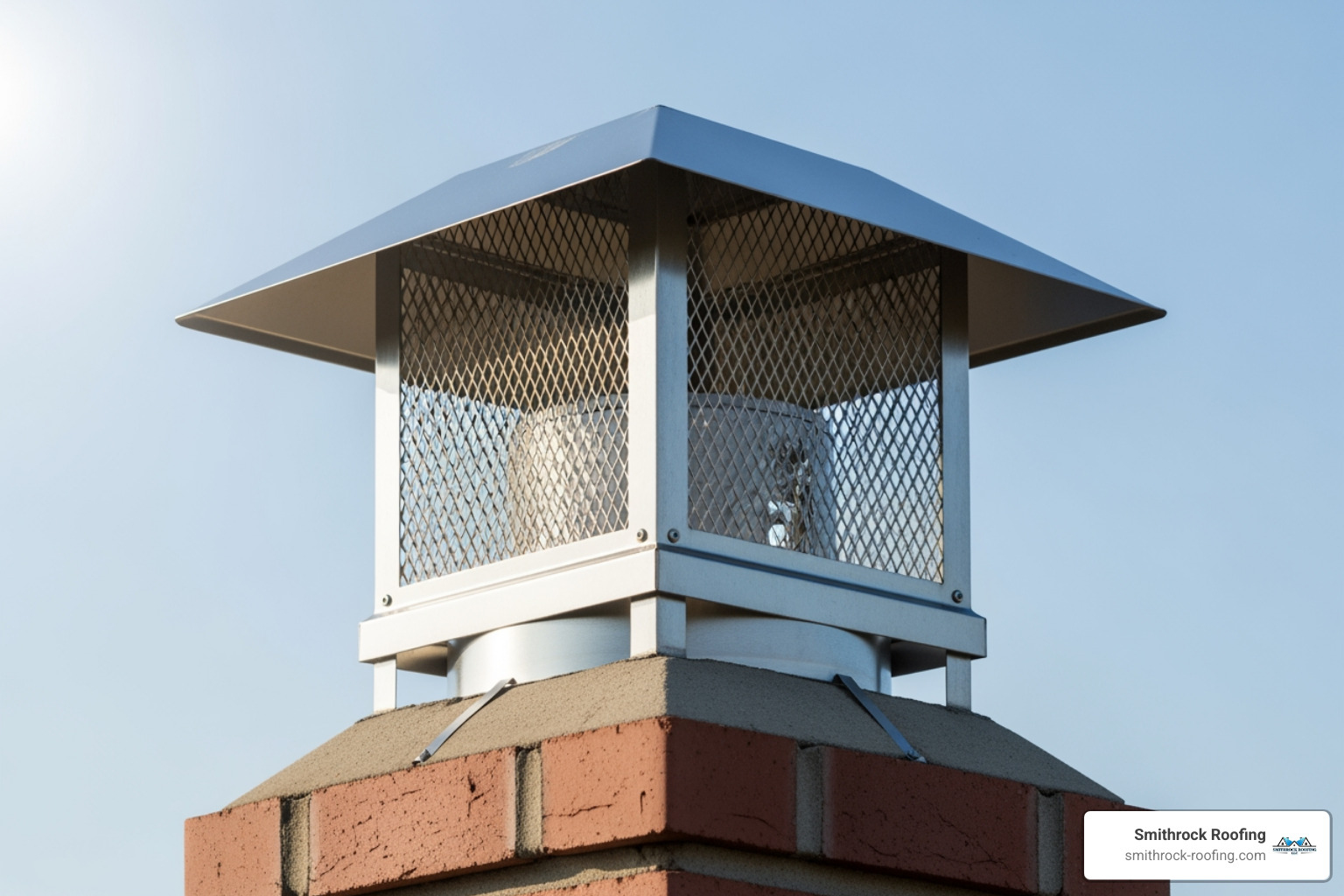
Single-flue caps are the most common of all chimney cap types, designed for chimneys with one clay flue tile. Their simple design includes a metal band that attaches to the tile, a mesh screen body, and a hood that sheds rain and snow.
Installation is straightforward, as the cap bolts or screws directly onto the exterior of the flue tile. However, due to the safety risks of working on a roof, professional installation is always recommended to ensure a secure fit.
One of the biggest advantages of single-flue caps is their affordability. They are the most budget-friendly option and are widely available in standard sizes like 9″x9″ and 13″x13″, which fit most residential flues. They provide excellent protection for the flue opening itself, keeping out water, animals, and sparks.
The main limitation is that they offer minimal crown protection. Because the cap only covers the flue, the surrounding chimney crown remains exposed to rain. If your crown is cracked or deteriorating, a single-flue cap alone won’t solve water intrusion issues. For a single flue with a healthy crown, however, these caps offer robust, reliable, and economical protection.
For chimneys with more than one flue opening, a multi-flue chimney cap is the ideal solution. Instead of installing several individual caps, a single multi-flue cap covers all openings, providing a unified and comprehensive protective barrier.
These caps mount directly onto the chimney crown and are often custom-sized to cover the entire chimney top, regardless of the number or arrangement of flues.
Pros of Multi-Flue Caps:
Cons of Multi-Flue Caps:
For homes with multiple fireplaces or appliances venting through one chimney, a multi-flue cap is an efficient and aesthetically pleasing choice.
These chimney cap types offer the highest level of protection by covering the entire chimney top. The term “chase cover” is typically used for prefabricated chimneys, while “outside mount cap” is used for masonry chimneys.
A chase cover acts as a lid for the wood-framed chase that encloses the metal flue pipes of a prefabricated fireplace. Many builders use inexpensive galvanized steel chase covers that are prone to rusting within a few years. Rust often starts around the nail holes or on the flat surface where water pools, eventually creating holes that allow water to seep into the chase. This leads to wood rot, mold growth, and costly structural repairs. It seals the top of the chase, preventing water from rotting the wood framing. High-quality chase covers made of stainless steel or copper have a skirt that wraps around the chase exterior and a cross-break (diagonal creases) to prevent water from pooling and add strength, effectively shedding water away.
For masonry chimneys, an outside mount cap serves a similar function. It mounts to the chimney crown but extends over the sides of the brickwork, providing an umbrella of protection for both the flue and a deteriorating crown.
Pros of Outside Mount & Full-Coverage Caps:
Cons of Outside Mount & Full-Coverage Caps:
If you have a prefabricated chimney or a masonry chimney with a damaged crown, a full-coverage cap is a wise investment for the longevity of your system.
Sometimes, standard chimney cap types aren’t enough to solve specific problems like wind-induced downdrafts or heightened fire risks. In these cases, specialty chimney caps offer purpose-built solutions.
Wind-Resistant and Vacu-Stack Caps: If wind pushes smoke back down your chimney (a downdraft), these caps are the answer. They use aerodynamic designs to redirect wind and create an updraft. Vacu-Stack caps are particularly effective at resolving stubborn downdraft issues because they use the Venturi effect: as wind passes over the cap’s curved shape, it accelerates, creating a low-pressure zone that actively pulls smoke and gases up and out of the flue.
Draft-Enhancing Caps: For chimneys that have a naturally poor draft, these caps are designed to create a vacuum effect that improves the flow of smoke up and out. For more serious issues, electric draft-inducing caps use a fan to actively regulate airflow, ensuring proper performance.
Spark Arrestor Caps: While most caps have spark guards, specialty spark arrestors feature a finer mesh to contain even the smallest embers. These are highly recommended for homes in wooded or wildfire-prone areas, providing an extra layer of fire protection.
Decorative and Custom Caps: For homeowners who value aesthetics, these caps combine function with style. This category includes elegant chimney pots, which add a classic, European look, and custom-fabricated chimney shrouds, which are metal enclosures that can be designed to hide unsightly pipes and match your home’s unique architecture. Often crafted from premium materials like copper or powder-coated steel, they can turn your chimney into an eye-catching feature and significantly boost curb appeal.
For homeowners seeking superior durability and a touch of elegance, stone and masonry chimney cap types are a distinguished choice. Crafted from materials like limestone or cast stone, these caps offer an aesthetic that seamlessly integrates with brick or stone chimneys.
These heavy, substantial caps sit atop the chimney crown, providing immense stability against high winds and severe weather. They offer a sophisticated finish that can significantly boost your home’s curb appeal.
Pros of Stone and Masonry Caps:
Cons of Stone and Masonry Caps:
We recommend stone or masonry caps for new custom homes, significant renovations, or for homeowners who prioritize extreme durability and a premium, maintenance-free solution.
Once you’ve selected from the chimney cap types, the next decision is the material. This choice affects your cap’s durability, lifespan, and appearance. In North Carolina, with our humid summers and wet winters, choosing a weather-resistant material is key. The four most common options are galvanized steel, aluminum, stainless steel, and copper.
Galvanized Steel: This is the most budget-friendly option but has the shortest lifespan. The protective coating wears away in our humid climate, leading to rust and stains on your chimney within 3-5 years. While cheap upfront, it requires frequent replacement.
Aluminum: A step up from galvanized steel, aluminum is rust-proof and lightweight. It offers a good balance of affordability and longevity, often lasting ten years or more. However, it’s a softer metal, making it more prone to dents from branches or damage in high winds.
Stainless Steel: This is the sweet spot for many homeowners, offering excellent durability and value. Stainless steel is highly resistant to rust and corrosion. Most quality caps use 304-grade stainless steel, which is perfect for most environments. For homes in coastal areas exposed to salt air, we recommend upgrading to 316-grade stainless steel, which includes molybdenum for superior corrosion resistance. Many manufacturers offer a lifetime warranty on stainless steel caps, and one can easily last 50 years or more, making it a fantastic long-term investment.
Copper: As the premium choice, copper offers superior corrosion resistance and the longest lifespan, often outliving the home itself. When first installed, it has a brilliant, shiny finish. Over time, exposure to the elements causes it to oxidize, developing a distinctive and beautiful blue-green patina that adds character and elegance. This natural protective layer means it will never rust or need painting. Though it has the highest upfront cost, its extreme durability and timeless aesthetic appeal make it a worthwhile investment for many. We offer specialized services for Copper Chimney Caps to improve your home’s beauty.
Even the best chimney cap types require proper installation and care to function correctly. The process begins with precise measurements of your flue to ensure a snug, effective fit. An ill-fitting cap can allow rain, animals, and sparks to get through, defeating its purpose.
While DIY installation might seem tempting, we strongly recommend professional installation. Working on a roof is dangerous without proper safety gear and experience. Our certified technicians ensure a secure, watertight fit that complies with local codes and withstands wind, maximizing your cap’s lifespan and protective benefits.
Regular maintenance ensures your cap continues to protect your home. We recommend an annual inspection as part of your chimney sweep service to check for damage or loosening. It’s also important to periodically clean leaves and debris from the mesh screen to prevent blockages and maintain proper airflow. If you notice rust or corrosion on steel or aluminum caps, it’s a sign that replacement is needed soon. Frequent screen clogging with creosote may indicate you’re burning unseasoned wood and should be addressed by a professional.
The lifespan of your chimney cap depends almost entirely on its material. Here’s a quick guide:
Investing in a quality material like stainless steel or copper means you’ll likely never have to replace your chimney cap again.
We’ve answered countless questions from homeowners about chimney cap types. Here are some of the most common ones.
The terms are often confused, but they refer to different components. A chimney cap attaches directly to the flue opening to keep out rain and animals while letting smoke escape. A chimney cover (often a chase cover on prefabricated chimneys) is a larger piece that seals the entire top of the chimney structure, protecting the crown and masonry from water damage. In short: a cap covers the flue, while a cover protects the entire chimney top. Our team can help with Chimney Chase Cover Installation if that’s what your system needs.
Yes, and using the correct one is crucial for safety. Different heating systems have specific venting requirements.
It’s essential to match the cap to your appliance. Our NFI-certified technicians can identify the correct cap for your system.
Absolutely. Downdrafts happen when wind pushes smoke back down your chimney. Even a standard chimney cap can help by breaking up wind gusts. For persistent problems, wind-directional caps and Vacu-Stack caps are specifically engineered to use wind to create an updraft, pulling smoke out. For the most severe cases, electric draft-inducing caps use a fan to create a consistent updraft, offering a definitive solution to downdraft problems. If you’re battling smoke in your living room, the right cap can make all the difference.
As we’ve explored, chimney cap types are far more than decorative toppers. They are essential guardians of your home’s safety, structural integrity, and efficiency. A quality cap protects against dangerous sparks, destructive moisture, and animal intruders, all while helping your fireplace perform better.
From single-flue caps to full-coverage chase covers, and from affordable galvanized steel to beautiful, long-lasting copper, there is a solution for every chimney and budget. However, even the best materials won’t perform correctly without proper, professional installation. A secure, watertight fit is essential for long-term protection, making expert installation a crucial investment.
A chimney cap is a smart, preventative measure that saves you from costly repairs, fire hazards, and animal infestations down the road. It’s an investment in peace of mind.
For expert advice on selecting and installing the perfect cap for your chimney, the team at Smithrock Roofing is ready to help protect your home in Winston-Salem, Greensboro, King, and our surrounding North Carolina service areas. Don’t leave your chimney unprotected—a small investment today can prevent major problems tomorrow.
Smithrock Roofing © Copyright 2026 • All Rights Reserved • Privacy Policy • Maintained by Mongoose Digital Marketing