Your home’s exterior color is its first impression—a visual statement of your style and a key component of its curb appeal. But what happens when that carefully chosen color begins to dull and wash out under the relentless sun? Fade resistant siding is the definitive answer, protecting your home’s aesthetic integrity and financial value by ensuring its color remains vibrant for decades, not just a few years. Investing in a siding material engineered with advanced UV protection can save you tens of thousands of dollars in future repainting and replacement costs, all while keeping your home looking as beautiful as the day the siding was installed.
When you choose siding, the color gives your house its unique personality. However, many homeowners are dismayed when the vibrant shade they fell in love with looks tired, chalky, and uneven just 10 or 15 years later. This isn’t merely a cosmetic issue. Faded siding signals aging and potential neglect to prospective buyers, which can significantly reduce your home’s market value. More critically, it indicates that the siding’s protective outer layer is failing, leaving your home’s underlying structure vulnerable to moisture, rot, and pests.
Key benefits of investing in fade-resistant siding:
The good news is that modern siding technology has effectively solved the fading problem. Advanced materials like cellular PVC composite siding and fiber cement with specialized factory-applied finishes are engineered to resist the sun’s damaging ultraviolet (UV) rays far more effectively than traditional options. These solutions are designed to maintain their color integrity through years of harsh weather, from intense summer sun to freezing winter storms.
For homeowners concerned about both long-term maintenance and energy efficiency, fade-resistant siding delivers powerful dual benefits. It helps maintain your home’s thermal envelope while completely removing the need for costly and disruptive repainting projects every few years. It’s a smart investment in your property’s future and your own peace of mind.
The vibrant color of your home’s exterior contributes immensely to its curb appeal, but over time, even the most beautiful siding can lose its luster. This degradation is not just an aesthetic problem; it’s the visible result of a microscopic battle between your home’s exterior and the elements. Understanding the scientific causes of siding fade is the first step toward choosing a material that can win this fight and protect your investment for the long haul.
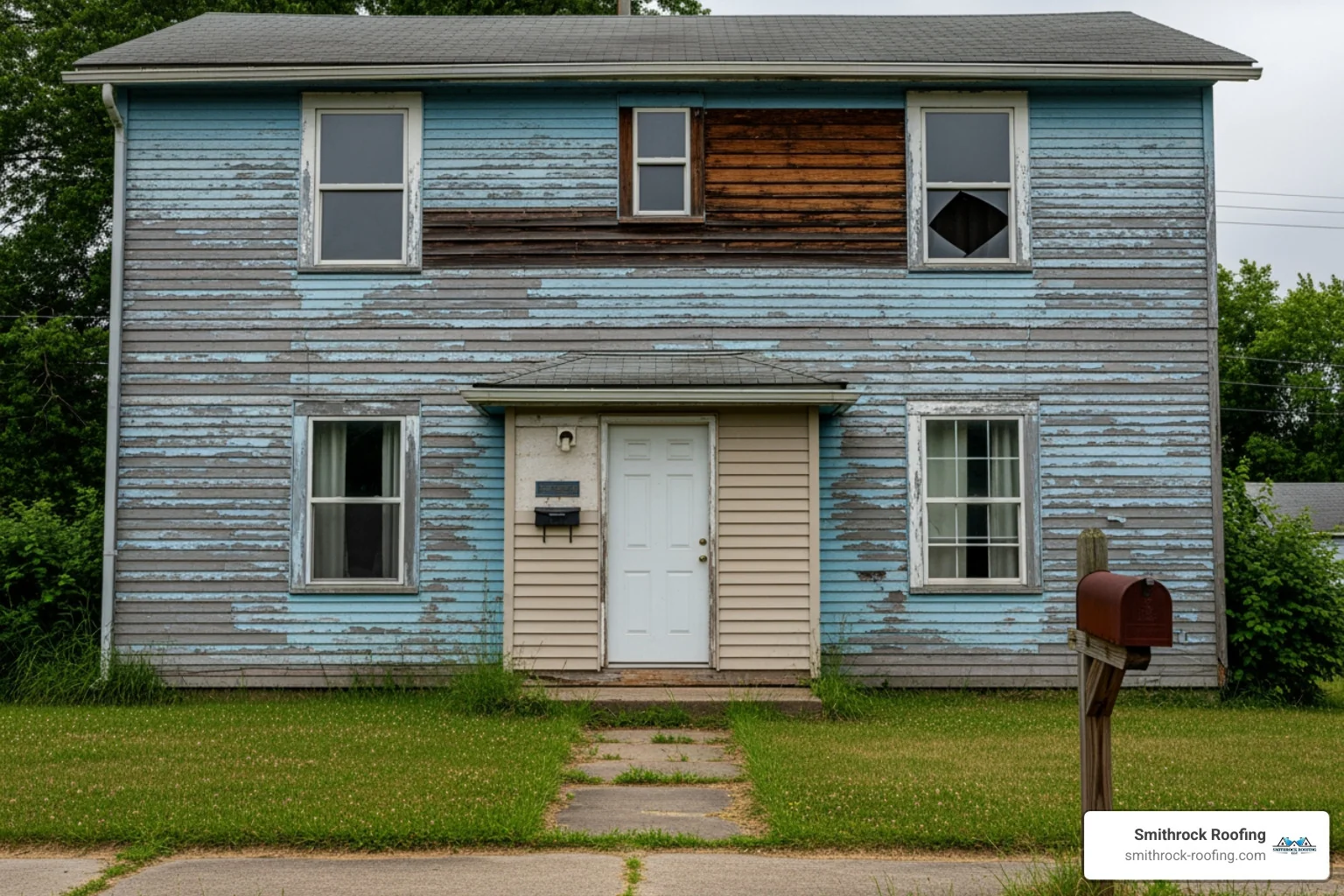
The primary culprit behind fading is ultraviolet (UV) radiation from the sun. Sunlight contains both UVA and UVB rays, which are high-energy photons that bombard your siding. These photons break down the chemical bonds within the pigments (the molecules that provide color) and the polymer resins that bind them together. This process, known as photodegradation, causes the color molecules to change structure, losing their ability to reflect light correctly. The result is a gradual loss of color, often leading to a chalky, bleached, or washed-out appearance. The presence of oxygen and water can accelerate this process through photo-oxidation, further degrading the siding’s surface.
Heat absorption significantly accelerates this chemical breakdown. Darker siding colors absorb more solar energy across the light spectrum, causing the surface temperature to rise dramatically. This increased heat provides the energy needed to speed up the chemical reactions of photodegradation. Furthermore, the constant cycle of heating and cooling causes the siding material to expand and contract. This thermal stress can create micro-fractures in the material and its protective coatings, making it even more vulnerable to UV damage and moisture intrusion.
Harsh weather also plays a significant role. Heavy rain, especially acid rain, can chemically etch the surface and slowly wash away protective layers. Wind-driven debris, such as dust, sand, and dirt, acts like a fine-grit sandpaper, physically abrading the surface. This erosion thins out protective coatings and exposes the underlying pigments to even more direct UV damage. In colder climates, freeze-thaw cycles can cause trapped moisture to expand, creating larger cracks and accelerating deterioration. Siding fade is a complex process driven by multiple factors, which is why choosing scientifically engineered fade resistant siding with advanced protective technologies is so critical for homeowners.
Homeowners frequently ask if faded siding is just a cosmetic problem or if it can lead to more serious structural issues. While the color change itself is aesthetic, it serves as a critical warning sign that the siding’s protective capabilities are diminishing, which can absolutely pave the way for structural damage.
When siding fades, it signifies that the material’s protective outer layer—be it a paint film, a capstock, or the resin itself—is breaking down. This layer is the first line of defense against moisture and pests. As this barrier weakens, the siding becomes more porous and vulnerable. A loss of the protective coating can lead to increased water absorption. If moisture penetrates the siding and becomes trapped in the wall cavity, it creates a perfect breeding ground for mold, mildew, and wood rot, a major concern in humid climates. This moisture can saturate wall sheathing, insulation, and even wooden structural framing, eventually compromising the structural integrity of your walls.
Furthermore, the same UV exposure that causes fading can also make certain materials, like older vinyl, brittle. Brittle siding is far more susceptible to cracking from impact (like from a stray baseball or hail) or thermal stress. These cracks become direct highways for water and pests to enter your wall system. Therefore, while the faded color won’t cause your house to collapse overnight, it’s a crucial indicator that your home’s primary shield is failing. Addressing faded siding promptly by repairing or replacing it is about safeguarding your home’s long-term structural health and preventing catastrophic, expensive damage down the road. Regular inspections and timely siding repair can help you catch these issues before they escalate.
Need a hand with this in Winston-Salem, Greensboro and the NC Triad? Call (336) 971-0464 or request a free estimate. Honest answers, no pressure.
When it comes to protecting your home and maintaining its aesthetic appeal, the choice of siding material is paramount. Each material has a unique chemical composition and physical structure that dictates its fade resistance, maintenance needs, and overall lifespan. In a region like ours, selecting a material that can withstand everything from intense summer sun to winter storms is a crucial financial and aesthetic decision.
| Siding Material | Fade Resistance | Maintenance Level | Typical Lifespan |
|---|---|---|---|
| Standard Vinyl | Moderate to Low | Low to Moderate | 20-40+ years |
| Advanced Polymer | High | Low | 40+ years |
| Fiber Cement | High | Low to Moderate | 30-50+ years |
| Engineered Wood | High | Low to Moderate | 30-50+ years |
| Steel | Very High | Very Low | 50+ years, indefinitely |
The table above offers a general comparison, but the real-world performance depends heavily on product quality and the specific protective technologies employed. For instance, while a budget-friendly standard vinyl may fade in 5-10 years, premium advanced polymer siding can maintain its original color for decades.
Not all siding materials are created equal in the fight against color degradation. Standard vinyl siding, particularly older or lower-quality products, is notoriously prone to fading. Made from polyvinyl chloride (PVC), its color is often only surface-deep. The pigments and plasticizers used in its formulation are susceptible to UV breakdown, leading to noticeable fading in as little as five to 10 years, especially in darker shades. This is a common issue we see with older vinyl siding and roofing installations.
Natural wood siding, while beautiful, also fades relatively quickly without constant maintenance. The natural pigments in wood are highly susceptible to UV degradation, which breaks down lignin and leads to a weathered, graying effect. To maintain its color, wood requires re-staining or repainting every 3-7 years. Similarly, field-painted fiber cement siding will experience the same fading issues as any exterior painted surface, as it relies on standard latex paint applied on-site. This necessitates a full repainting job every 10-15 years to restore its appearance.
Fortunately, modern manufacturing has produced a new generation of siding materials specifically engineered to stand up to the sun. For homeowners seeking a long-lasting, vibrant exterior, these options represent the best investment.
Advanced Polymer and Composite Siding: Materials like Everlast® Composite Siding represent a significant leap in fade resistance. They are not vinyl, but a composite of inorganic minerals, polymer resins, and acrylic colorants. The color is integrated throughout the material, and a durable, UV-resistant acrylic capstock is bonded to the surface. This multi-layered approach provides exceptional resistance to fading, warping, and chalking, often backed by lifetime fade-protection warranties.
Fiber Cement with Advanced Finishes: While standard fiber cement can fade if painted on-site, products featuring factory-applied, baked-on finishes offer exceptional color retention. James Hardie’s ColorPlus® Technology is a prime example. This proprietary process involves applying multiple coats of a specialized finish to the siding in a controlled factory environment and curing it between coats. This creates an incredibly durable, UV-resistant bond that is 30% more fade resistant than field-applied paint and is warrantied against peeling, chipping, and cracking for 15 years.
Engineered Wood with Integrated Protectants: This category, including leaders like LP® SmartSide®, offers superior durability and color fastness. The wood strands are treated with waxes, resins, and zinc borate for protection against moisture and pests. For color, these products are often finished by third-party specialists like Diamond Kote® using advanced paint systems. These finishes use high-performing acrylic paints with quality polymers that provide long-term color fastness against UV, heat, and moisture, often warrantied for 15 years against fading.
Steel Siding: For the ultimate in color retention and durability, steel siding is an outstanding choice. It typically features multi-layered, baked-on or powder-coated finishes. High-end steel siding uses PVDF (polyvinylidene fluoride) coatings, often known by the trade name Kynar 500®. This finish is renowned for its extreme resistance to UV degradation, chalking, and chemical damage, allowing the siding to hold its color for decades with minimal maintenance.
When considering options like vinyl vs hardie board vs everlast siding in winston salem which is best, understanding these advanced materials and their specific protective technologies is what truly makes a difference in long-term appearance and value.
Choosing fade resistant siding is a strategic investment in your home’s long-term value, structural protection, and your own peace of mind. The benefits extend far beyond simple aesthetics, impacting everything from your weekend maintenance routines to your home’s final resale price.
One of the most significant benefits is superior, long-term color retention. Imagine your home maintaining its vibrant, newly installed look for decades without the hassle and expense of repainting. This directly translates to drastically reduced maintenance. Fade-resistant siding eliminates the need for painting and prevents common paint failures like chipping, peeling, and cracking, offering a truly low-maintenance solution for busy homeowners in communities like Clemmons and Lewisville.
A home with a consistently attractive exterior commands higher curb appeal, a major factor in its market value. Faded, patchy, or chalky siding can make a home look neglected and dated, deterring potential buyers and leading to lower appraisals. Conversely, a home with crisp, vibrant siding signals quality, care, and modern construction, which can increase its resale value and help it sell faster.
Beyond the visible benefits, these advanced materials are engineered to withstand more than just UV rays; they offer superior resistance to impact, moisture, and extreme temperatures. This comprehensive protection means your home is better shielded from the elements, reducing the risk of costly repairs from hail, wind-blown debris, or water intrusion. Investing in fade resistant siding is about future-proofing your home and ensuring your design choices stand the test of time.
The remarkable ability of modern siding to resist fading is the result of sophisticated material science. Manufacturers employ several advanced technologies in tandem to ensure colors remain vibrant for decades.
By combining these scientific approaches, manufacturers create fade resistant siding that actively combats the sun’s damaging effects. Exploring different vinyl siding options will reveal varying levels of this advanced technology.
While fade resistant siding may have a higher initial cost than standard options, it offers significant long-term savings that make it a financially superior choice over time. Homeowners often focus on the upfront price tag, overlooking the substantial cumulative expenses of maintaining less durable materials.
Consider the cost of repainting. Siding that isn’t fade-resistant, like wood or field-painted fiber cement, requires repainting every 5 to 15 years. A professional paint job for an average-sized home can cost between $5,000 and $12,000. Over a 30-year period, you could face this expense two to four times, totaling $10,000 to $48,000 in repainting costs alone. With fade resistant siding, this cost is completely eliminated.
Beyond repainting, the superior durability of fade-resistant siding helps you avoid costly repairs from impact damage or moisture intrusion. Preventing a single instance of wood rot or mold remediation can save you thousands, far more than the initial cost difference of the siding. Furthermore, high-quality fade resistant siding comes with comprehensive warranties covering the finish for 15 years or more, providing invaluable financial protection and peace of mind. While the initial outlay is higher, the cumulative savings on maintenance and repairs, combined with the added home value, make it a financially savvy decision for any homeowner. Addressing small issues like those covered in a shingle siding repair complete guide can also prevent larger, more expensive problems.
Choosing the right color for your home is a deeply personal decision that reflects your style and significantly boosts curb appeal. However, the best choice is not just about what looks good today, but what will continue to look good for years to come. Homeowners consistently express immense satisfaction when their home’s exterior maintains its beauty without constant upkeep, a key factor in long-term pride and enjoyment of their property.
The impact of a durable, well-chosen color on curb appeal and homeowner satisfaction cannot be overstated. A long-lasting color palette can make your home a standout property in neighborhoods like Greensboro, Winston-Salem, or High Point, while a faded, chalky color can detract from its appeal and value.
Certain shades are inherently more susceptible to the sun’s damaging effects. Generally, dark and saturated colors—such as deep browns, rich reds, navy blues, and forest greens—tend to fade more quickly and noticeably than lighter hues. This is due to two main factors. First, dark colors absorb more light and heat from the sun, which accelerates the chemical breakdown (photodegradation) of the pigments. Second, any amount of color loss is simply more visible to the human eye against a dark or vibrant background.
This is where a color’s Light Reflectance Value (LRV) becomes important. LRV is a scale from 0 (pure black) to 100 (pure white) that measures how much light a color reflects. Colors with a low LRV absorb more light and heat, making them more prone to fading and causing more thermal stress on the siding material itself. Conversely, lighter, neutral colors like beige, light gray, cream, and off-white have a high LRV. They reflect more sunlight and absorb less heat, which slows the pigment degradation process. While all siding experiences some level of fading over decades, the change in lighter colors is often so gradual that it’s imperceptible.
When investing in fade resistant siding, knowing what specific features make a difference can guide you to the best long-term solution. Here are the key technical features we recommend homeowners prioritize:
By focusing on these features, homeowners in areas like Advance and Wallburg can choose fade resistant siding that is backed by science and solid guarantees.
The lifespan of siding color varies dramatically by material, technology, sun exposure, and color choice. For standard, builder-grade vinyl siding, homeowners can expect noticeable fading in five to 10 years, and sometimes as little as 3-5 years for dark colors on a south-facing wall in a sunny climate like North Carolina’s.
In contrast, advanced polymer and high-quality composite siding with fade-resistant technologies offer significantly longer color retention. These products often maintain their vibrancy for 15 to 20 years or more, frequently backed by lifetime warranties that cover fade protection.
Fiber cement siding with advanced factory-applied finishes (like James Hardie with ColorPlus® Technology) also boasts impressive color retention. Leading brands offer a 15-year limited warranty that specifically covers the paint and labor against peeling, cracking, and chipping.
Steel siding with a high-end PVDF (Kynar 500®) finish is often considered the champion of color retention. With these premium baked-on finishes, it can hold its color for 30 years or more with minimal maintenance.
In summary, while standard siding may fade within a decade, choosing modern fade resistant siding means you can realistically expect your home’s color to remain vibrant and beautiful for 15 years or much longer, often backed by robust manufacturer warranties that protect your investment.
We understand that choosing siding is a major decision with long-term consequences. To help you make an informed choice, we’ve compiled answers to some of the most common questions we receive about fade resistant siding.
Yes, you can technically paint faded vinyl siding, but it is a risky, labor-intensive, and often temporary solution. The process requires meticulous preparation, including a thorough cleaning to remove all chalking and grime, followed by the application of a special bonding primer. You must use a high-quality, 100% acrylic latex paint that is designated as “vinyl-safe.” Using a standard exterior paint can lead to peeling and flaking. Crucially, you must choose a color with a similar or lighter Light Reflectance Value (LRV) than the original siding. Painting vinyl a darker color can cause it to absorb excess heat, leading to irreversible warping, buckling, and panel distortion. Furthermore, painting your vinyl siding will almost always void any remaining manufacturer’s warranty. For a truly lasting and worry-free solution, replacing faded vinyl with a modern, fade resistant siding material is the superior long-term investment.
Yes, fade resistant siding typically has a higher initial material and installation cost than standard, builder-grade siding. This price difference reflects the superior raw materials, advanced pigment technology, complex manufacturing processes (like co-extrusion and factory finishing), and extensive research and development required to create a product that withstands decades of UV exposure. However, it is crucial to analyze the total cost of ownership over the life of the product. Fade-resistant siding offers significant long-term savings by:
While the initial sticker price is higher, fade resistant siding is a more cost-effective choice over its full lifespan, paying for itself through reduced maintenance and sustained property value.
Chalking is related to fading but is a distinct phenomenon. It is the formation of a fine, white powder on the surface of the siding. This powder is composed of degraded paint binder and released pigment particles. It occurs when UV radiation breaks down the resin that holds the paint or siding pigments together. While fading is the loss of color itself, chalking is the physical degradation of the surface layer. It is often a precursor to or a symptom of severe fading. You can test for chalking by wiping your hand across the siding; if a white, powdery residue comes off, the siding is chalking. This indicates the protective layer has failed and the siding is highly vulnerable to further color loss and moisture absorption.
Finding a qualified contractor is absolutely crucial to ensure your fade resistant siding performs as designed. Improper installation can void warranties and lead to premature failure. Here at Smithrock Roofing, we pride ourselves on our expertise and quality.
When searching for the best siding contractors in our service areas like Winston-Salem and Greensboro, follow these key steps:
By following these guidelines, you can find a qualified professional who will install your fade resistant siding correctly, ensuring its longevity and performance.
The choice of siding is one of the most critical investments you will make in your home’s protection, long-term value, and daily curb appeal. Throughout this guide, we’ve explored how relentless UV radiation, heat, and weather conspire to cause siding to fade, turning once-vibrant exteriors into dull, chalky facades. Fading is far more than an aesthetic inconvenience; it is a clear warning sign that your home’s primary protective envelope is weakening, potentially leading to costly and destructive issues like moisture intrusion, mold, and structural rot.
Fortunately, modern fade resistant siding offers a powerful and definitive solution. By embracing scientific advancements in polymer composites, factory-finished fiber cement, engineered wood, and coated steel sidings, you can select an exterior that is engineered to actively combat the elements. These materials are fortified with sophisticated UV inhibitors, stable inorganic pigments, and durable baked-on finishes designed to maintain their dazzling appearance for decades, not just years.
The benefits are clear and compelling: you gain superior, long-lasting color retention that keeps your home looking new. You drastically reduce maintenance by completely eliminating the costly and disruptive cycle of repainting. You enhance your home’s curb appeal, which directly boosts its resale value. And you gain the invaluable peace of mind that comes from robust, long-term manufacturer warranties.
While the initial investment for fade resistant siding may be higher than for standard materials, its long-term cost-effectiveness is undeniable. It is a financially prudent choice that saves you significant time, stress, and money over the life of your home.
At Smithrock Roofing, we understand the unique challenges of the North Carolina climate in areas like Trinity and Pfafftown. We are committed to providing our clients with the highest-quality, most durable siding solutions that exceed all expectations for longevity and beauty. Our expert team ensures your fade resistant siding is installed with meticulous precision, maximizing its performance and protecting your investment for years to come.
Ready to transform your home with a beautiful, enduring exterior that you can be proud of for decades? Contact us today to learn more about our siding services and discover how we can help you choose the perfect fade resistant siding that will keep your home looking its absolute best, decade after decade.
Need a local pro? Learn more about our siding installation and repair in Greensboro.

Smithrock Roofing © Copyright 2026 • All Rights Reserved • Privacy Policy • Maintained by Mongoose Digital Marketing