A roof cost calculator is an online tool that estimates your roof replacement expenses by analyzing key factors like roof size, material type, pitch, and location. Most calculators provide a ballpark figure in minutes, helping you set a realistic budget before contacting contractors.
How a Roof Cost Calculator Works:
Planning for a new roof is one of the biggest financial decisions a homeowner can make. The final cost depends on dozens of variables unique to your home and location.
You’re not alone in feeling overwhelmed. As one homeowner put it when seeking advice about quotes: “I am way too poor to buy cheap. I can’t afford to do this twice, so I need this roof replacement done right the first time!”
That sentiment captures exactly why understanding roof costs matters. A quality roof protects your home for decades, while a hasty decision can lead to leaks and costly do-overs.
The good news is you don’t have to go into this process blind. Online roof cost calculators provide a powerful starting point for budgeting, helping you understand what drives the price up or down. However, these tools provide estimates, not guarantees. Your actual cost will depend on factors that only an on-site inspection can reveal, like hidden deck damage. This guide will walk you through using a roof cost calculator effectively, from understanding the key price factors to moving from an online estimate to a professional quote.
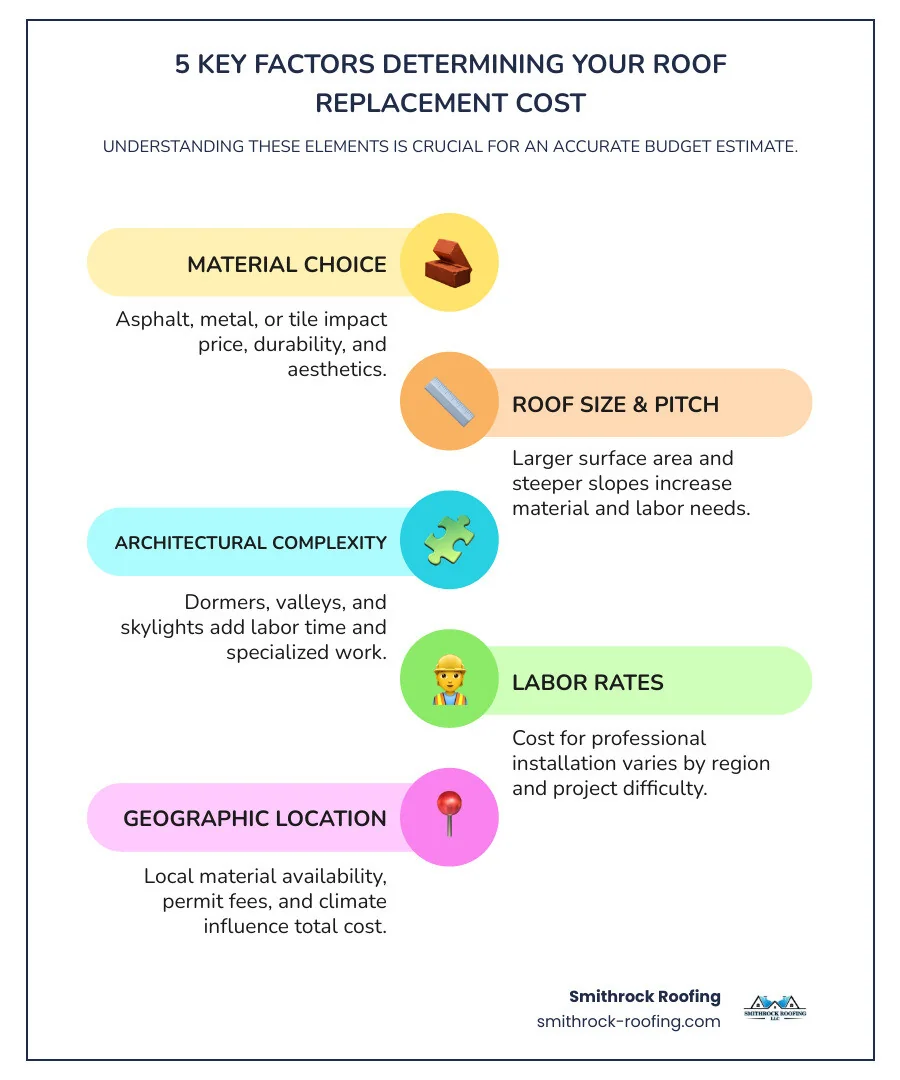
Understanding the components that make up your total roof replacement cost is the first step toward smart budgeting. It’s a complex combination of materials, labor, and the unique characteristics of your home. A figure from a roof cost calculator is a great starting point, but the final price tag is determined by on-the-ground realities. We’ll break down the primary elements that contribute to the final price of a new roof, helping you see beyond the initial estimate.
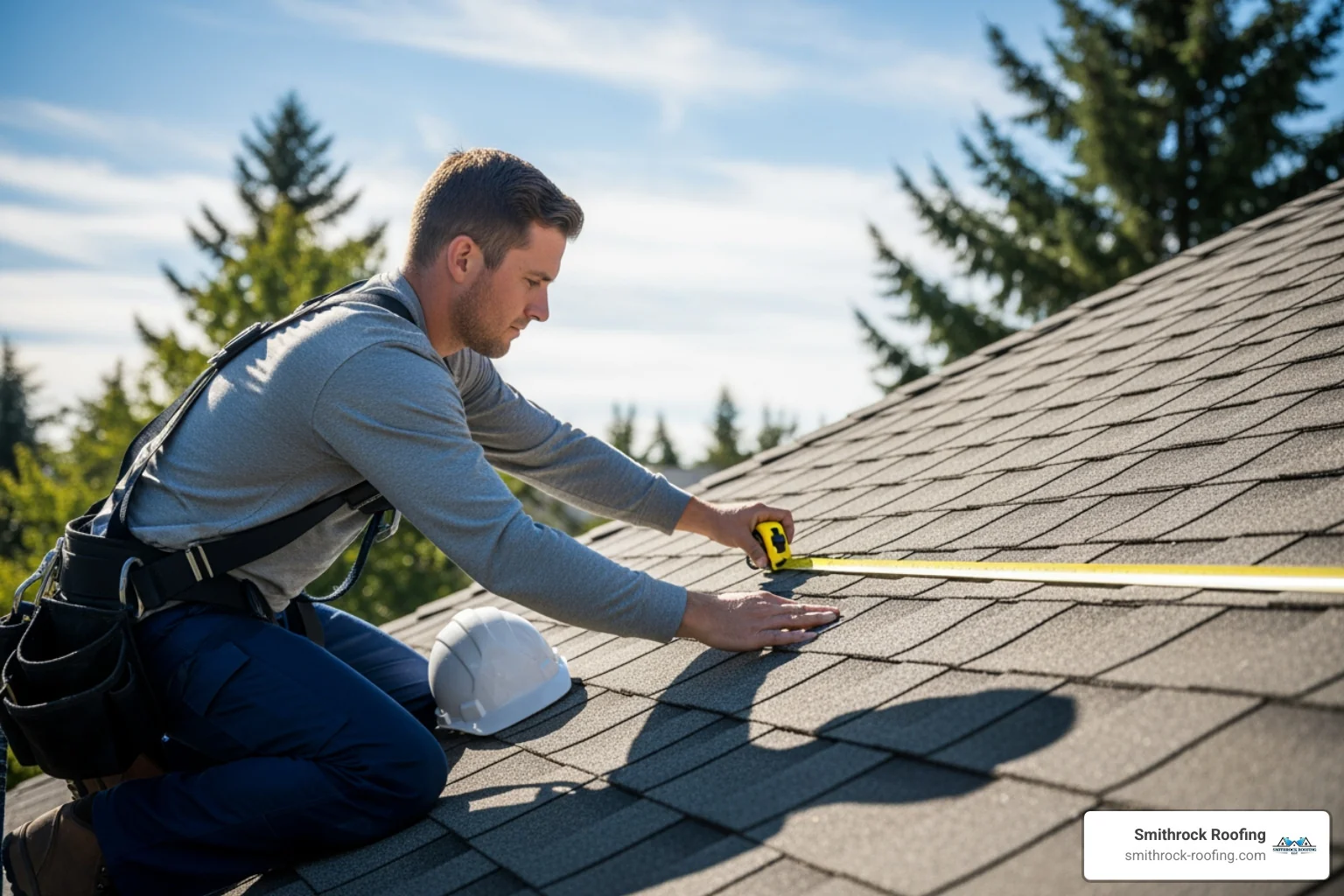
When we provide a roof replacement estimate, we consider several critical factors. These include material costs, labor, roof size, pitch (steepness), and complexity (e.g., dormers or skylights). We also factor in the tear-off and disposal of your old roofing, permit fees, and essential protective layers like underlayment and flashing. Each element plays a significant role in the overall expense, and understanding them empowers you to have more informed conversations with contractors. For more detailed information, please visit our page on More info about roof replacement cost.
Your roof replacement cost is largely divided between materials and labor. While your material choice significantly impacts the price, labor often accounts for a substantial portion of the project, typically 50-60% of the total cost. This percentage can fluctuate based on your roof’s complexity, the chosen material, and local labor rates. Material costs themselves are subject to market volatility, influenced by supply chain dynamics, oil prices (for asphalt shingles), and raw metal costs.
Professional installation is paramount for a long-term investment like a new roof. Labor costs don’t just cover the physical act of nailing shingles; they encompass the crew’s training and experience, liability and workers’ compensation insurance (which protects you), proper safety equipment, and project management. While DIY might seem tempting, specialized roofing materials require expert handling to ensure proper sealing, fastening, and stability. Installation errors can lead to costly repairs, invalidate manufacturer warranties, and reduce your home’s energy efficiency. Our experienced roofing contractors in areas like Winston-Salem and Greensboro are well-versed in various roofing systems, ensuring your roof is installed correctly and safely. For insights into roofer labor costs, the US Bureau of Labor Statistics provides valuable data on national and regional wages.
The physical characteristics of your roof—its total area, pitch, and complexity—are major cost drivers. A common mistake is using your home’s square footage; the actual roof surface is always larger due to overhangs and its slope. Roofing is measured in “squares,” where one square equals 100 square feet.
Roof pitch, a measure of steepness, is expressed as a ratio of vertical rise to horizontal run (e.g., 7/12, meaning the roof rises 7 inches for every 12 inches of horizontal distance). A low-slope roof (e.g., 3/12 or 4/12) is easier and safer to work on. A steeper pitch (anything over 6/12) not only increases the roof’s total surface area, requiring more materials, but also makes the installation more challenging, slower, and more dangerous. Roofs with a pitch of 8/12 or higher often require special safety harnesses and staging, significantly increasing labor costs. Beyond size and pitch, complexity adds to the cost. A simple, single-plane gable roof is the least expensive to replace. A roof with multiple angles, hips, valleys, dormers, skylights, chimneys, or turrets is far more complex. Each feature requires meticulous custom cutting, fitting, and sealing with flashing, which increases labor time and material waste.
Beyond core materials and labor, several other costs contribute to the final price. Overlooking these can lead to budget overruns and are often the reason an online estimate differs from a professional quote.
Choosing the right roofing material is one of the most significant decisions you’ll make, directly impacting your initial roof cost calculator estimate, as well as your home’s curb appeal, energy efficiency, and long-term durability. This section compares popular options based on their lifespan, maintenance requirements, and relative cost, helping you balance your budget with your performance expectations.
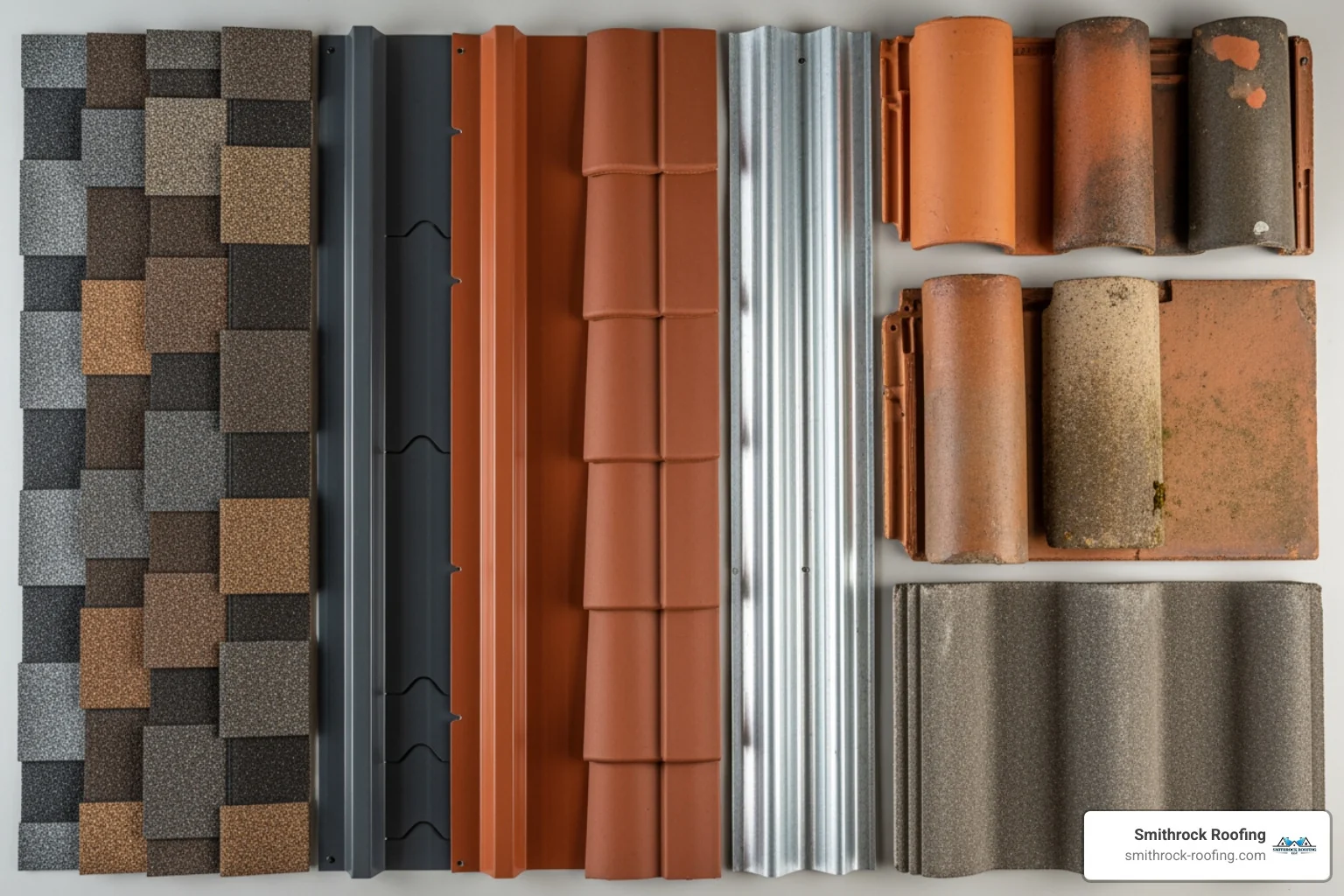
At Smithrock Roofing, we offer high-quality materials to suit diverse needs and budgets across Winston-Salem, Greensboro, and beyond. For more in-depth information, you can Learn about the best roofing materials.
| Material Type | Lifespan (Years) | Relative Cost | Maintenance Needs | Key Benefits |
|---|---|---|---|---|
| Asphalt Shingles | 15-30 | Low to Medium | Low | The most popular choice in North America, offering a great balance of affordability, style versatility, and reliable performance. Available in multiple tiers. |
| Metal Roofing | 40-70+ | Medium to High | Very Low | Exceptional longevity and durability. Highly energy-efficient, fire-resistant, and available in various styles from modern standing seam to traditional shingle profiles. |
| Tile Roofing | 50-100+ | High | Low to Medium | Extremely durable and fire-resistant with a distinct, premium aesthetic (e.g., Mediterranean, Spanish). Heavy material that may require structural reinforcement. |
| Slate Roofing | 100-150+ | Very High | Low | The ultimate in longevity and natural beauty. An extremely durable, fireproof, and prestigious material, but also the heaviest and most expensive roofing option. |
| Wood Shakes/Shingles | 20-40 | Medium to High | Medium to High | Provides a beautiful, rustic, and natural look with good insulation properties. Requires regular maintenance to prevent rot, moss, and insect damage. |
Asphalt shingles are the most common choice in the U.S., offering a fantastic balance of affordability, aesthetics, and performance. They come in three main categories: 3-Tab Shingles are the most economical, single-layer option but have a flatter appearance and a shorter lifespan. Architectural Shingles (or dimensional shingles) are the most popular choice today. They are thicker, constructed with multiple laminated layers, and create a rich, textured appearance that can mimic wood or slate. They offer superior durability, wind resistance, and longer warranties. Luxury/Premium Shingles are the highest tier of asphalt roofing, designed to replicate the look of natural slate or wood shakes with maximum dimensionality and durability, but at a lower cost than the real materials. Many architectural and luxury shingles are available with a Class 4 impact rating, which can withstand hail up to 2 inches in diameter and may qualify you for a discount on your homeowner’s insurance premium. Their durability and aesthetic appeal make them a popular upgrade for homeowners in areas like Clemmons and Kernersville. To explore various options for your home, visit our page on Residential Roofing.
Metal roofing is a durable, long-term investment known for exceptional longevity (40-70+ years) and superior energy efficiency, as it reflects solar heat and can lower cooling costs. While the initial cost is higher than asphalt, its lifespan and low maintenance often make it more cost-effective over time. The most common material is Galvalume-coated steel, which offers excellent strength and corrosion resistance. Aluminum is a great alternative for coastal areas due to its superior resistance to salt spray corrosion. Premium options like copper and zinc offer unparalleled longevity and a distinctive appearance. Styles include premium Standing Seam panels with a sleek, modern look and concealed fasteners, or more economical Exposed Fastener panels (like corrugated metal). Modern metal roofs are also available in shingle, shake, and tile profiles. Concerns about noise are largely a myth; when installed over a solid roof deck with proper underlayment, a metal roof is no louder than other materials during a rainstorm. Its high resistance to fire, wind, and hail is a key benefit for homes in areas like Mt. Airy and Pilot Mountain. For additional details on material choices, check out More on roofing materials.
For unique aesthetics and maximum longevity, homeowners might consider premium materials. Clay and Concrete Tiles offer a Mediterranean or Spanish look, are extremely durable (50-100+ years), and are completely fireproof. However, they are very heavy, and your home’s structure must be evaluated by a professional—and possibly reinforced—to support the weight. Natural Slate is the pinnacle of roofing, a natural stone that can last over 100 years with unparalleled beauty. It is the heaviest, most expensive, and most difficult material to install, requiring craftsmen with specialized expertise. Wood Shakes and Shingles provide a rustic, natural look but require the most maintenance. They must be periodically cleaned and treated to prevent moss, mold, and rot. While they can be treated with fire retardants, they are not recommended in areas with high wildfire risk. These premium materials demand significant expertise, which our team at Smithrock Roofing provides for homes in Trinity, Wallburg, and surrounding communities.
An online roof cost calculator is an excellent tool for creating an initial budget and understanding potential expenses. Follow these steps to get the most accurate preliminary estimate possible.
Using a calculator gives you a ballpark figure to help you prepare financially. It’s a starting point, not a final quote. For a hands-on experience, you can Try our roofing calculator.
The accuracy of your estimate depends on good data. Gather your roof’s approximate dimensions to calculate the square footage (roofing is measured in “squares” of 100 sq ft), remembering to account for overhangs. Next, determine the roof’s pitch (steepness), as a steeper pitch increases material and labor costs. You can estimate this from the ground or use online mapping tools like Google Earth for a quick preliminary measurement. To do this, you can Get a remote estimate with satellite imagery.
Once you have your basic information, plug it into the roof cost calculator. Each variable refines the estimate.
After inputting your details, the roof cost calculator will provide an estimated price range. It’s crucial to understand what this means.
The roof cost calculator is a powerful starting point. However, for a precise figure, you’ll need to transition to professional estimates. For a more direct approach, you can Get a roof estimate directly from us.
While a roof cost calculator provides an excellent starting point for your budget, a professional, on-site quote is the only way to secure a precise project cost. An online tool can’t see hidden deck damage, assess the condition of your flashing, or account for every nuance of your roof’s geometry. This is where a qualified contractor comes in. Opting for professional installation minimizes significant risks, including safety hazards, improper installation that leads to leaks, and the voiding of valuable material warranties. Finding experienced contractors in Winston-Salem and King who understand local building codes is crucial for a detailed quote that covers all aspects of your project. To find skilled professionals, you can Find experienced roofing contractors.
While a DIY roof replacement seems to save on labor costs, it carries significant financial and physical risks. Roofing is one of the most dangerous professions; working at heights without proper safety training and equipment can lead to severe injury. Beyond safety, the technical precision required is immense. Manufacturer warranties are contingent on strict installation protocols—improper nail placement, using the wrong starter strips, incorrect flashing techniques, or providing inadequate attic ventilation can all void the warranty instantly. An improperly installed roof often costs more in the long run due to persistent leaks, premature failure, and the need for a complete re-do by a professional. As one homeowner wisely noted, they “can’t afford to do this twice.” Furthermore, a professionally installed roof with a transferable warranty can be a significant asset when selling your home, whereas a DIY job can be a major red flag for potential buyers. Investing in a professional company like Smithrock Roofing ensures quality workmanship, code compliance, and peace of mind with warranties on both labor and materials. To connect with local experts, you can Find a professional roofing company near me.
Moving from an online estimate to a firm quote requires a strategic approach. Here are the steps to secure a reliable roof quote:
We pride ourselves on providing transparent and detailed estimates. We offer roofers with free estimates to help you get started.
An online roof cost calculator can’t see what a professional can. A thorough, on-site inspection is the most critical step for an accurate quote. A qualified inspector will get on your roof and in your attic to perform a comprehensive assessment. They will look for hidden issues like soft or rotted decking, water damage in the attic sheathing or rafters, and potential structural problems. They also assess the condition of all components, including flashing around chimneys and walls, pipe boot seals, and the state of your existing ventilation system (both intake and exhaust). The findings from this inspection directly inform the final quote, preventing costly surprises mid-project and ensuring all necessary work is included for a complete, long-lasting roofing system. This is the only way to move from a rough estimate to a reliable price for your home in areas like Lewisville and Pfafftown. At Smithrock Roofing, we offer comprehensive Roof Inspection services to provide you with an accurate assessment and a detailed quote.
Yes, location significantly influences cost in ways a simple zip code entry in a calculator cannot fully capture. Key factors include local labor rates, which vary between metropolitan and rural areas (e.g., costs in Winston-Salem may differ from surrounding counties). Material transportation costs and local sales tax also play a role. Most importantly, local building codes can dictate specific requirements that add cost. For example, coastal regions often mandate higher wind-rated shingles and corrosion-resistant fasteners. Northern climates may require ice and water shield to be installed on a larger portion of the roof deck to combat ice dams. A local contractor will be familiar with these specific requirements. The Cost of living data from the Bureau of Economic Analysis can offer insights into these regional variations.
Installing new shingles over an existing layer (a “roof-over” or “layover”) can save on tear-off labor and disposal costs, but we and most reputable roofers generally do not recommend it. First, it prevents a crucial inspection of the underlying roof deck, where hidden rot or damage may exist. Covering up a problem will only lead to more expensive repairs later. Second, the added weight can stress your home’s structure. Third, shingles installed over an uneven surface will not seal properly and will have a shorter lifespan. Finally, many building codes, including those in our service areas, prohibit more than two layers of roofing material. A complete tear-off is the best practice for a long-lasting, reliable roof and is required for most manufacturer warranties to be valid.
Homeowners insurance typically covers roof replacement if the damage is from a sudden, acute event like a storm, wind, hail, or a fallen tree (often called an “Act of God” or a covered peril). It generally does not cover replacement due to old age, deferred maintenance, or gradual wear and tear. It’s critical to understand your policy type. A Replacement Cost Value (RCV) policy will pay for the full cost of replacing your roof with similar materials, minus your deductible. An Actual Cash Value (ACV) policy will only pay for the depreciated value of your damaged roof, leaving you with a much larger out-of-pocket expense. After a storm, it’s wise to get a professional inspection to document any damage for your insurance claim. We can provide detailed assessments to assist with your claim. For assistance with storm-related damage, you can find help with Hail Damage Home Repair.
Since a roof replacement is a major expense, many homeowners explore financing options. Several avenues are available:
Using a roof cost calculator is an excellent first step in planning your new roof. It helps you set a budget by clarifying how material choice, roof size, complexity, and labor affect the price. However, for a truly accurate cost, nothing replaces a detailed, on-site evaluation from a trusted professional who can spot underlying issues. This ensures your quote is comprehensive and your investment is protected. For a precise and transparent estimate from a team dedicated to quality, contact Smithrock Roofing. Our experienced contractors will provide a thorough inspection and a detailed plan for your project.
Get a detailed cost breakdown for your 2500 sq ft roof replacement.
Need a local pro? Learn more about our roofing services in King.

Smithrock Roofing © Copyright 2026 • All Rights Reserved • Privacy Policy • Maintained by Mongoose Digital Marketing