See also: what a full gutter drainage system costs to install.
A downspout drain pipe carries rainwater from your gutters away from your home’s foundation. Choosing the right pipe material is crucial to prevent costly water damage and ensure a dry, stable foundation.
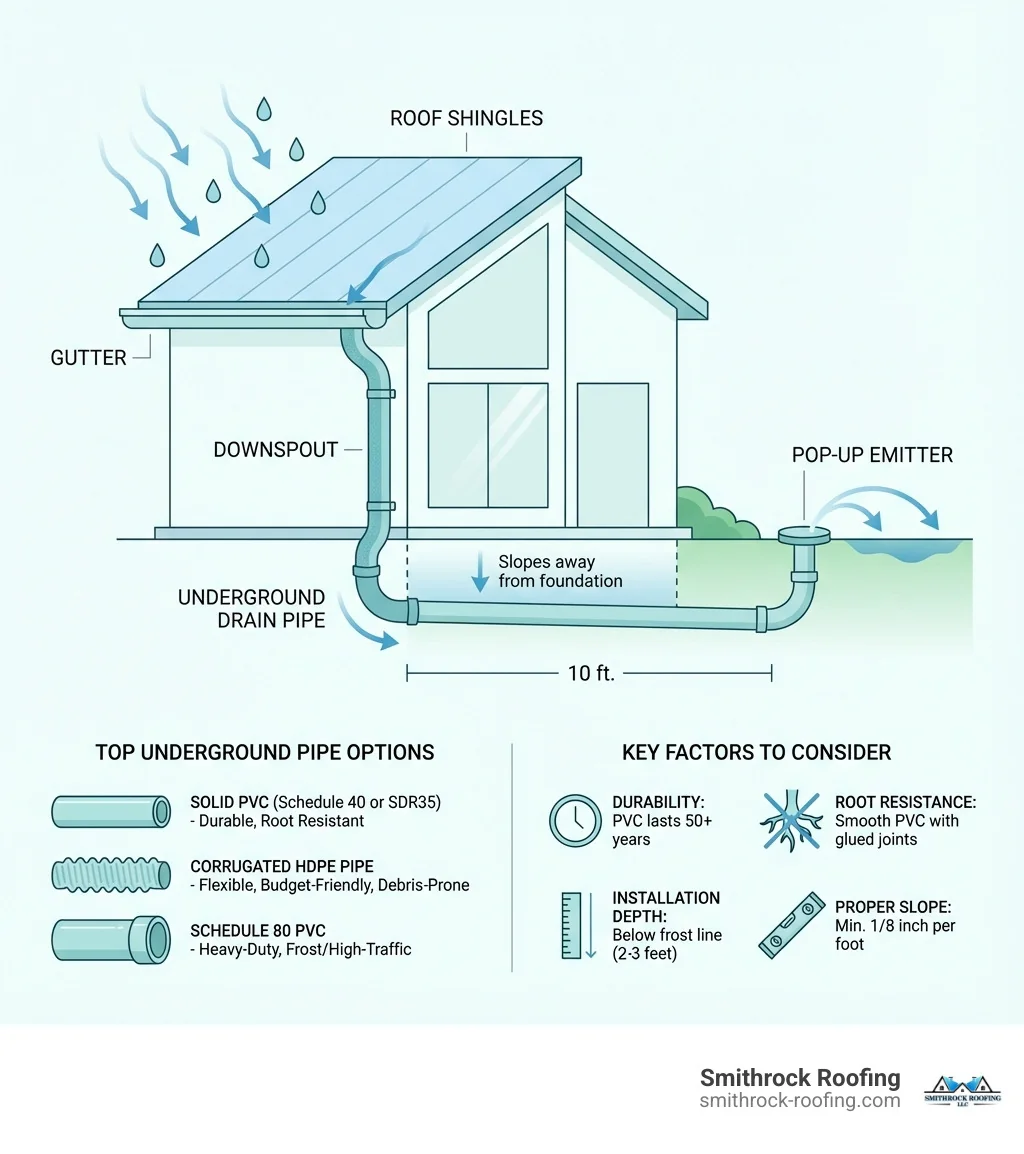
Top Underground Downspout Drain Pipe Options:
Key Factors to Consider:
Water damage costs homeowners billions annually, often starting with rainwater pooling near the foundation due to poor downspout drainage.
During a storm, gutters collect immense amounts of water. Without proper underground drainage, this water pools near your foundation, causing erosion, flooding, cracks, and landscape damage.
The pipe you choose determines if your system lasts for decades or fails in a few years. Soil conditions, climate, roots, and installation depth are all key factors in your selection.
This guide covers everything you need to know about underground downspout drain pipesfrom selecting materials and sizing your system to best installation practices for long-lasting performance.
A home’s drainage system is often overlooked until problems arise. However, your downspout drainage system is critical for your home’s health, especially in areas like Winston-Salem, Clemmons, and Kernersville, where heavy rain is common.
A downspout’s primary purpose is to channel water from your gutters to the ground, safely away from your foundation. This simple function is your home’s first line of defense against numerous potential issues.
During a heavy downpour, your roof collects a massive volume of water. Without gutters and downspouts, this water would saturate the ground around your foundation. These vertical pipes use gravity to transport rainwater from the gutters down the side of your house. This protects your foundation, fascia, and siding from water damage like rot and stains. Downspouts are essential for managing and directing water effectively. To learn more, explore our comprehensive gutter services.
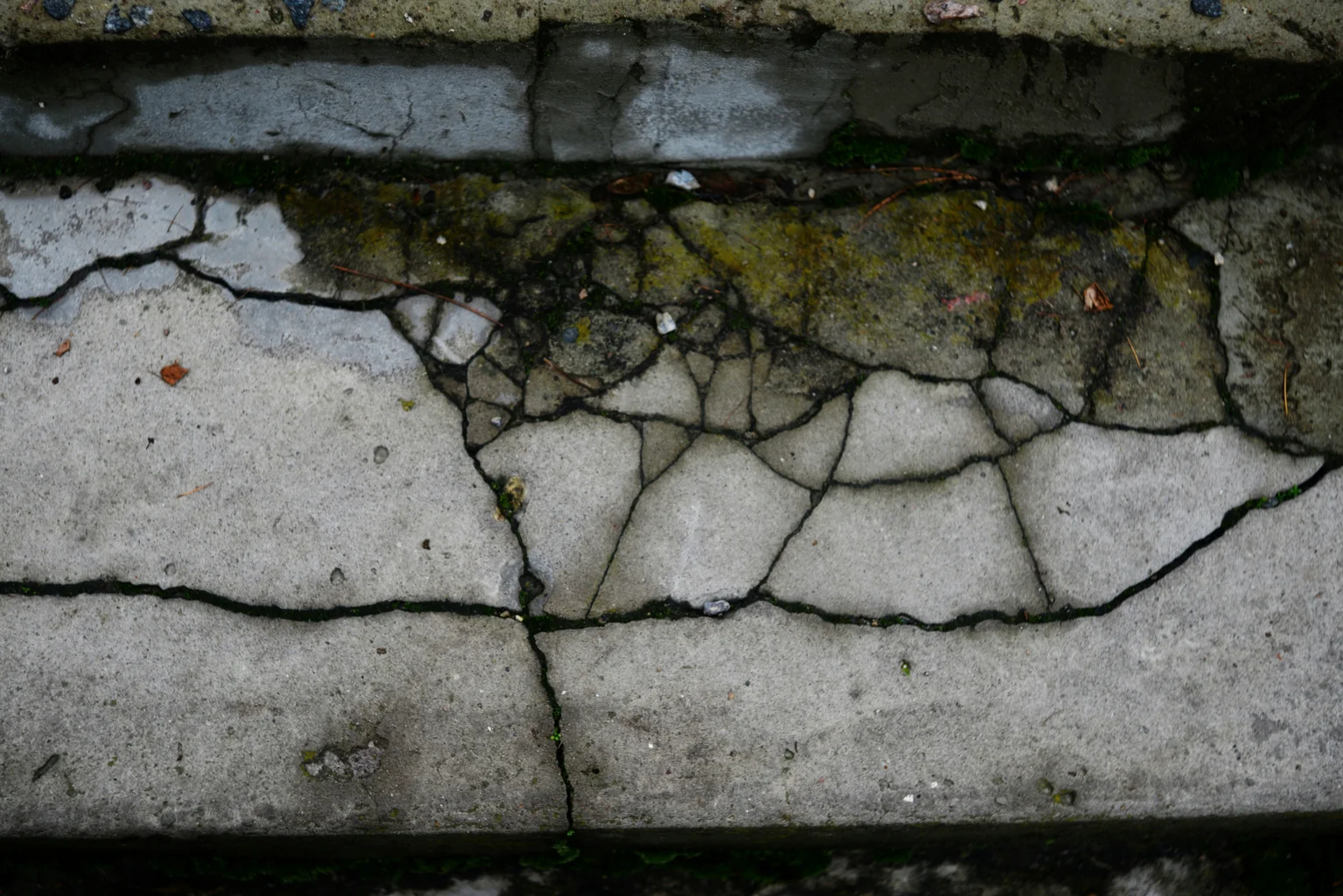
When a gutter downspout drainage system fails, the consequences can be severe, especially in North Carolina’s rainy climate:
These dangers show why an effective downspout system is a crucial investment in your home’s health and value.
Need a hand with this in Winston-Salem, Greensboro and the NC Triad? Call (336) 971-0464 or request a free estimate. Honest answers, no pressure.
A well-designed downspout system requires careful planning. You must calculate your roof’s drainage needs, select the right materials, and strategically place downspouts to handle heavy North Carolina rainfall.

Downspouts are an integral part of your home’s exterior, needing to be both functional and visually appealing. They are mainly round or rectangular; the choice is often aesthetic, depending on your home’s style.
The material you choose impacts durability, lifespan, and maintenance. Common options include:
Lifespans vary by material: vinyl (20-30 years), aluminum (20-50 years), steel (30-50 years), and copper (50+ years). Consider both upfront cost and long-term value.
Correct downspout sizing is crucial to prevent overflowing gutters during heavy rain. Sizing depends on roof area, rainfall intensity, and gutter size.
Here’s a general guideline for downspout capacity based on roof area:
A four-inch diameter downspout is common and sufficient for most homes in areas like High Point and Greensboro, NC. It’s vital to match downspout size to your gutter size (e.g., a 5-inch gutter needs a 3-inch downspout; a 6-inch gutter needs a 4-inch one). For more details, visit our gutter installation services page.
Strategic placement is as vital as size to avoid overwhelming any single point. A good rule of thumb is one downspout for every 30 to 40 feet of gutter, often one at each corner of the house. Other factors include:
Proper selection and placement are critical. We follow standards like those from the National Renewable Energy Laboratory (NREL) to ensure systems are sized correctly for the drained area, providing peace of mind for homeowners in Pinnacle and Rural Hall, NC. You can review these standard work specifications for more information.
After water flows down the downspout, an underground gutter drain pipe must carry it away from the foundation. Burying pipes improves aesthetics, protects the foundation by moving water farther away, and eliminates tripping hazards. Selecting the right pipe material is critical for long-term performance, especially considering root intrusion, soil conditions, and the North Carolina climate.
Solid PVC (Polyvinyl Chloride) pipes are the gold standard for underground drainage, offering excellent durability and a lifespan often exceeding 50 years. When homeowners ask what the best pipe is for underground gutter drainage, solid PVC consistently comes out on top, and for good reason.
A key advantage of solid PVC is its resistance to root intrusion. Properly glued, watertight joints create a sealed path that roots struggle to penetrate, which is vital for homes in treed areas like Pilot Mountain or Danbury, NC.
Corrugated HDPE pipe, with its ribbed exterior, is another option for underground gutter drain pipe installations.
However, corrugated pipe has significant drawbacks. The ribbed interior traps debris, leading to clogs. It’s less durable than solid PVC, susceptible to crushing, and its joints are more vulnerable to root intrusion. Its shorter lifespan and higher maintenance make it less ideal for long-term solutions.
Sizing is one of the most common questions homeowners have when planning an underground system. Getting this right matters, an undersized pipe will back up during heavy rain, while an oversized one may not maintain the flow velocity needed to stay clear.
For most residential applications, 4-inch PVC pipe is the standard recommendation for underground downspout drainage. Here’s a practical breakdown:
As a general rule, your underground drain pipe should be at least as large in diameter as the downspout feeding it, and ideally one size larger to accommodate debris and peak storm flow. If you’re asking what size PVC for a gutter drain on a standard two-story home in our area, 4-inch solid PVC is almost always the right call.
If you’re considering corrugated HDPE instead of PVC, sizing guidance follows a similar logic. Most residential downspout applications use 4-inch corrugated pipe. Some contractors use 3-inch for lighter-duty connections, but given corrugated pipe’s tendency to accumulate debris in its ridged interior, going with 4-inch provides a bit more margin before a clog becomes a problem. That said, if you’re weighing corrugated versus solid PVC for a long buried run, solid PVC’s smooth interior makes it the better long-term choice regardless of diameter.
Proper planning and installation are crucial for your underground system’s effectiveness.
| Feature | Solid PVC (Schedule 40/SDR35) | Corrugated HDPE Pipe |
|---|---|---|
| Durability | Excellent; highly resistant to crushing, long lifespan | Good; susceptible to crushing, shorter lifespan |
| Flexibility | Rigid; requires fittings for bends | High; easily steers obstacles |
| Installation | More labor for fittings; precise trenching | Easier to lay; less precise trenching |
| Root Resist. | Excellent with glued, watertight joints | Poor; joints are less secure, ribbed interior can trap roots |
| Flow/Clogs | Smooth interior, excellent flow, minimal clogging | Ribbed interior can trap debris, prone to clogging |
| Cost | Higher material cost | Lower material cost |
An underground downspout drain is the buried portion of your gutter drainage system, the pipe that takes over once water hits the ground and carries it well away from your home. Think of it as the final leg of the journey: water flows off your roof, into your gutters, down the downspout, and then into a buried pipe that routes it safely to a discharge point far from your foundation.
This buried component is often what separates a system that truly protects a home from one that simply moves water a few feet before it pools. Here’s what makes underground downspout drains so valuable:
The key components of a complete underground downspout drain system include the inlet adapter (which connects the downspout to the buried pipe), the underground drain pipe itself, any necessary bends or cleanouts, and a discharge point, typically a pop-up emitter, a daylight opening, or a connection to a French drain or dry well.
When installed correctly with proper slope and watertight joints, an underground system is largely set-it-and-forget-it, just flush it out once a year and inspect the discharge point seasonally.
North Carolina’s climate, with heavy spring rains, occasional tropical storm remnants, and clay-heavy soils that don’t absorb water quickly, makes choosing the right underground rainwater drainage pipe more important than it might be in drier regions. Clay soil holds water near your foundation longer, which means your underground system has to actively move water away, not just redirect it a few feet.
Here’s how the main options stack up for NC conditions specifically:
Solid Schedule 40 PVC remains the most recommended underground drainage pipe for homes across Winston-Salem, Greensboro, High Point, and surrounding communities. The combination of a smooth interior, rigid structure, and watertight glued joints makes it highly resistant to both root intrusion from the region’s mature hardwood trees and the soil shifting that comes with NC’s clay-heavy ground composition.
A PVC downspout pipe run buried at proper depth handles the volume demands of even a significant rain event without sagging, crushing, or accumulating the sediment that corrugated pipe tends to trap. For most homeowners, this is the material we’d recommend without hesitation.
Corrugated HDPE has its place, particularly in short runs where navigating around existing landscaping, tree roots, or utility lines makes flexibility genuinely useful. If the trench path is relatively straight and the run is short, corrugated pipe can get the job done at lower material cost. Just understand the trade-off: you’ll likely need to clear it more often and may face a shorter service life.
In situations where a pipe runs under a driveway, patio, or other heavily loaded surface, Schedule 80 PVC provides additional wall thickness and crush resistance. It’s overkill for a standard yard installation, but it’s the right call when the pipe will bear significant overhead weight.
No matter which material you select, the installation fundamentals remain the same: adequate depth, consistent slope, glued or secured joints, and a properly designed discharge point.
After selecting your downspout drain pipe material, meticulous installation and consistent maintenance are key. This ensures your system functions flawlessly for decades, protecting homes in Winston-Salem, King, and other NC locations.
Adhering to best practices is paramount for both DIY and professional jobs. Extending downspouts underground requires more precision than a simple surface installation.
For complex systems or to ensure professional-grade results, we recommend consulting experts. Our team specializes in gutter and downspout installation and can ensure your underground system is installed correctly.
Several accessories can maximize the efficiency and longevity of your system:
Even a perfect system requires regular maintenance to prevent clogs and ensure efficient drainage.
Burying downspouts improves aesthetics and safety but can make installation and repairs more complex. With proper materials and maintenance, the benefits usually outweigh the drawbacks. If you suspect a problem, our team can help with gutter repair near you.
Your downspout system can do more than prevent water damage; it can aid in water conservation and boost curb appeal. Understanding these applications and spotting signs of failure is crucial for homeowners in Advance and Wallburg, NC.
Your downspout system can be a key part of a sustainable home.
While functional downspout drain pipes are the focus, it’s worth considering aesthetic alternatives like rain chains.
The choice depends on your priority: maximum protection (downspouts) or visual appeal (rain chains). For robust protection, we recommend traditional downspouts.
Even the best systems require attention to last. Material lifespans vary: vinyl (20-30 years), aluminum (20-50 years), steel (30-50 years), and copper (50-100+ years). Underground PVC can last 50+ years, while corrugated pipe has a shorter lifespan of 10-25 years.
Homeowners across the NC Triad, from Kernersville to Clemmons, ask us similar questions when planning or troubleshooting their underground drainage systems. Here are straightforward answers to the most common ones.
Solid PVC, either Schedule 40 or SDR35, is the best pipe for underground gutter drainage in most residential applications. It offers a smooth interior that resists clogs, rigid walls that resist crushing, and watertight glued joints that keep roots out. Its lifespan of 50+ years makes it a genuinely long-term solution. Corrugated HDPE is cheaper upfront and easier to install in winding paths, but its ribbed interior accumulates debris and its joints are more susceptible to root infiltration over time.
For most homes, 4-inch PVC pipe is the correct size for an underground gutter drain. It accommodates the flow from a standard residential downspout, handles peak storm volumes without backing up, and is large enough that occasional debris won’t immediately cause a clog. If you’re tying multiple downspouts into a single underground run, stepping up to 6-inch PVC for the collector line is a smart move. As a minimum baseline, your underground pipe diameter should match, and ideally exceed, the diameter of the downspout feeding it.
In North Carolina’s climate, burying your underground drain pipe at least 12 inches deep is generally sufficient to protect it from surface traffic and routine yard activity. For runs under driveways or other heavily loaded surfaces, 18 to 24 inches is more appropriate. Depths of 2 to 3 feet are sometimes recommended in climates with deep frost lines, but in the NC Triad, the primary concern is protecting the pipe from physical damage rather than freeze protection.
The underground drain pipe should carry water at least 5 to 10 feet from your foundation before discharging. In areas with heavier clay soils, common throughout the NC Triad, extending the run further is worthwhile, since clay holds moisture near the surface and the water needs more distance to discharge away from the structure safely.
Yes, multiple downspouts can tie into a single underground collector line, but the collector pipe needs to be sized up to handle the combined flow. If two 4-inch downspouts feed into one underground run, that run should be at least 6 inches in diameter. Every tie-in also adds potential clog points, so installing a cleanout at each junction is strongly recommended.
A pop-up emitter is a discharge device installed at the end of an underground drain pipe. It sits flush with the ground when dry, then opens under water pressure during rain to release water at the surface, away from your foundation. It prevents backflow, keeps pests and debris out of the pipe, and is far cleaner than an open pipe end. For most residential underground downspout drain systems, pop-up emitters are the preferred discharge method.
Common signs include gutters overflowing even though the downspout itself looks clear, water pooling near the foundation during or after rain, a pop-up emitter that never opens during a storm, or soggy ground directly over the buried pipe run. If you notice any of these, flushing the system with a garden hose from the downspout inlet is a good first step. Persistent backups often indicate a root intrusion or a collapsed section, at that point, calling a professional is the right move.
The journey of rainwater from your roof away from your foundation is critical, and the underground downspout drain pipe is a key component. We’ve explored how downspouts protect your home’s structure, prevent water damage, and aid in water conservation.
Choosing the right pipe material is crucial. Solid PVC stands out for its durability and root resistance, making it a preferred long-term choice. While flexible and cheaper, corrugated HDPE is more prone to clogs and crushing, making it less ideal for buried applications. When it comes to sizing, 4-inch PVC is the standard for most homes, large enough to handle peak flow, practical enough to work with standard downspout hardware.
Proper installation, with adequate slope, watertight connections, and strategic discharge points, is the linchpin of an effective underground drainage pipe system. Diligent maintenance will ensure your system protects your home for decades.
At Smithrock Roofing, we understand the drainage challenges faced by homeowners in North Carolina, from Pfafftown to Belews Creek. We’re committed to providing high-quality gutter and downspout solutions that safeguard your investment.
Protect your home with our expert gutter services
Need a local pro? Learn more about our gutter installation and repair in Clemmons.
Choosing the right underground pipe for downspouts is crucial to prevent costly water damage and ensure a dry, stable foundation by effectively carrying rainwater away from your home.
Top options include Solid PVC (Schedule 40 or SDR35) for durability and root resistance, Corrugated HDPE Pipe for flexibility and budget-friendliness, and Schedule 80 PVC for heavy-duty needs in areas with frost heave or high traffic.
Consider durability, with PVC lasting over 50 years, root resistance, installation depth (below frost line), and proper slope for gravity drainage.
Improper downspout drainage can lead to water pooling near the foundation, causing erosion, flooding, cracks, and landscape damage, potentially costing homeowners billions annually.
The primary purpose of a downspout is to channel water from the gutters to the ground safely away from the foundation, protecting the home from water damage.

Smithrock Roofing © Copyright 2026 • All Rights Reserved • Privacy Policy • Maintained by Mongoose Digital Marketing