Is a Prefab Chimney Chase Cover Right for You?

Your Guide to Prefab Chimney Chase Covers

Prefab chimney chase covers are metal sheets that fit over the top of a prefabricated (factory-built) chimney chase to protect it from water, debris, and animals. If you have a newer home with a factory-built fireplace, you likely have a chimney chase—a wood or siding structure that encloses the metal flue pipe—and it needs a properly fitted chase cover to stay protected.

Quick Answer: What You Need to Know About Prefab Chimney Chase Covers

  • Primary Function: Keeps rain, snow, debris, and critters out of your chimney system
  • Where They’re Used: On prefabricated (factory-built) chimneys, not masonry chimneys
  • Common Materials: Galvanized steel (rusts quickly), stainless steel (most durable), or aluminum (rust-resistant but softer)
  • Warning Signs: Reddish-brown stains on siding, water in your firebox, or visible rust mean replacement is needed
  • Expected Lifespan: 5-10 years for galvanized steel, 15-25 years for aluminum, lifetime for quality stainless steel

If your prefab chimney isn’t properly protected at the top, it becomes an easy entry point for water damage that can cost thousands to repair. Many homeowners don’t realize their chimney chase cover is failing until they see rust stains on their siding or find water in their fireplace. Unfortunately, many builders install cheap galvanized steel covers that can start rusting in as little as seven years, leading to water infiltration, rotted wood framing, and potential mold growth.

Understanding what a prefab chimney chase cover does, which materials last longest, and when to replace yours can save you from expensive structural repairs. This guide walks you through everything you need to know.
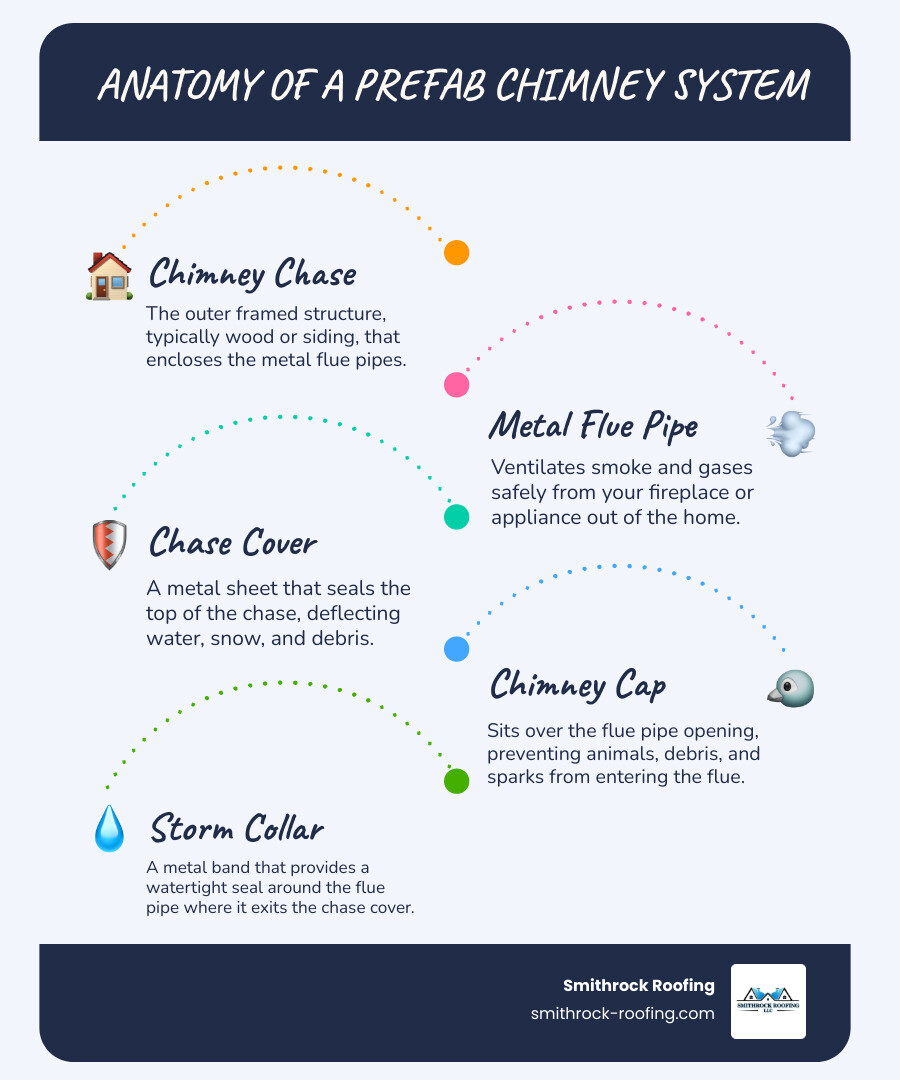
infographic showing the anatomy of a prefabricated chimney system with labels for the chase structure, metal flue pipe, chase cover on top, chimney cap over the flue opening, and storm collar sealing the gap, with arrows indicating how water is directed away from the chimney - prefab chimney chase covers infographic infographic-line-5-steps-blues-accent_colors

What is a Prefab Chimney Chase Cover and What Does It Do?

A chimney chase is the wood-framed structure, often finished with siding, that encloses the metal flue pipe of a factory-built chimney. The prefab chimney chase cover is the metal pan that sits on top of this chase. Think of it as a protective hat for your chimney.

Its primary functions are to:

  1. Deflect Water: Its most crucial job is to channel rain and snow away from the chase opening, preventing moisture from seeping into your home and damaging the chimney’s internal components.
  2. Block Debris: It acts as a shield against leaves, twigs, and other airborne debris that could obstruct the flue and create a fire hazard.
  3. Prevent Animal Entry: A sturdy chase cover, used with a chimney cap, keeps birds, squirrels, and raccoons from nesting inside your chimney.

In short, the chase cover is the first line of defense for your factory-built chimney, safeguarding its structural integrity and ensuring your fireplace operates safely.

Chase Cover vs. Chimney Cap vs. Chimney Crown: Understanding the Difference

These terms are often confused, but they refer to distinct components:

  1. Prefab Chimney Chase Cover: A metal sheet covering the entire top of a prefabricated, wood-framed chimney chase. It protects the internal structure from the elements.
  2. Chimney Cap: A smaller cover installed over the opening of the individual flue pipe(s). Its main purpose is to keep rain out of the flue, stop sparks from escaping (spark arrestor), and block animals from nesting inside the pipe. Homeowners often choose decorative copper chimney caps or stone chimney caps for aesthetic appeal. Learn more about the best types of chimney caps and chimney cap replacement.
  3. Chimney Crown: A concrete or stone slab found only on traditional masonry (brick) chimneys. It performs a similar water-shedding function as a chase cover but is made for a different chimney type.

While a chase cover and a crown both protect the top of a chimney, they are not interchangeable. A chimney cap, however, is used with both chase covers and crowns for added protection at the flue opening. Understanding your chimney system is key to proper maintenance.

Are There Different Types for Different Chimneys?

Yes, prefab chimney chase covers are not one-size-fits-all. They must be custom-fabricated to fit the specific dimensions of the chase and the number of flue pipes.
  • Single Flue Designs: The most common configuration, about 89% of chase covers are made for a single flue pipe, typical for homes with one fireplace.
  • Multiple Flue Designs: For homes with multiple appliances venting through one chase, the cover will need multiple holes. Around 9% of covers require two holes, and about 2% need three. Custom fabrication is essential to ensure each hole is perfectly positioned.
  • Customization: Beyond the number of flues, chase dimensions vary significantly, meaning most covers are custom-made. At Smithrock Roofing, we create covers with custom features like diagonal creases for strength and water runoff, and drip edges to direct water away from siding. These can be fabricated in various sizes and metal gauges to ensure a precise fit for any factory-built chimney in Winston-Salem, Greensboro, Kernersville, or the surrounding areas.

Choosing the Right Material for Your Chase Cover

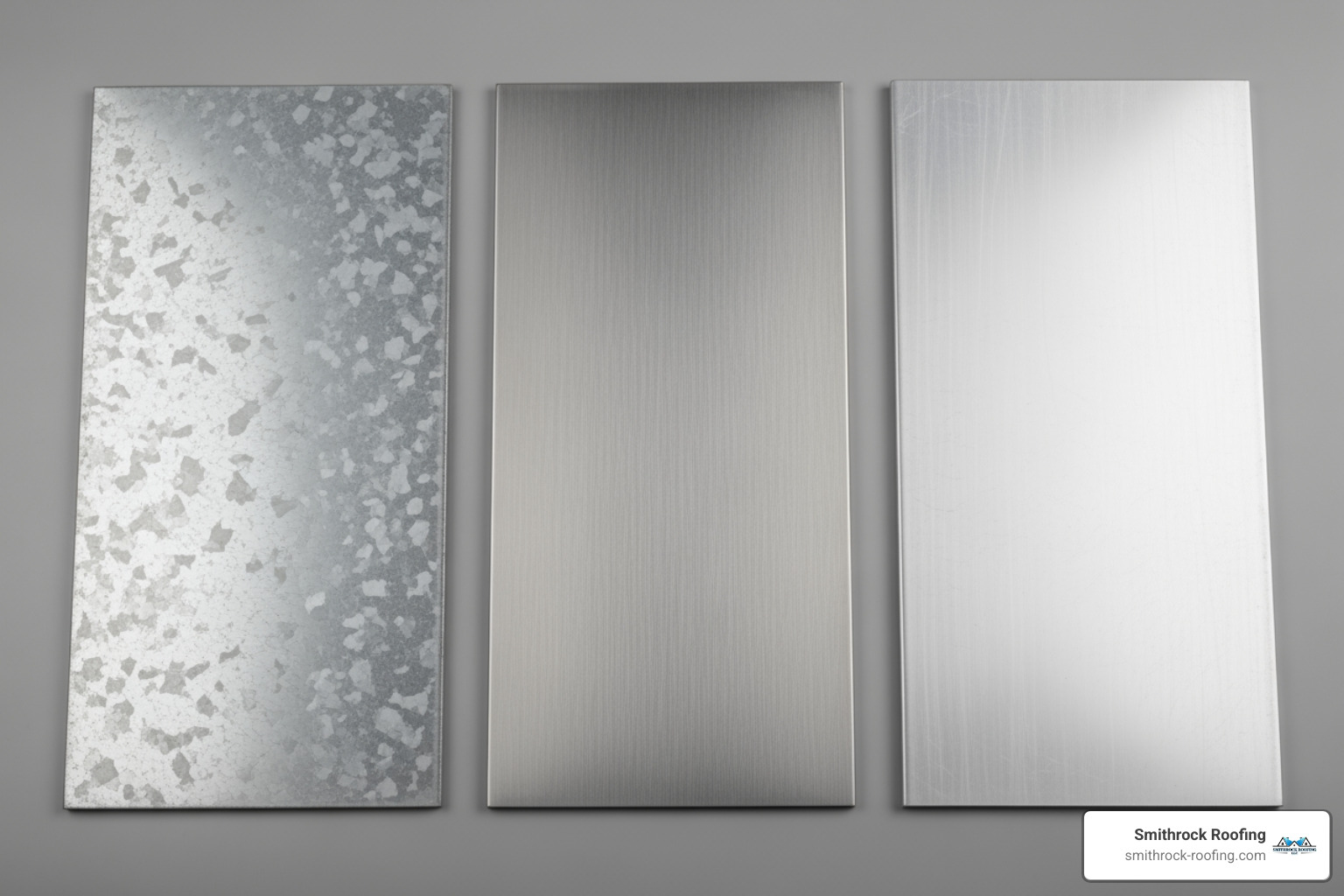
different chase cover materials including galvanized steel, stainless steel, and aluminum - prefab chimney chase covers

When it comes to protecting your chimney chase, the material of your prefab chimney chase cover is paramount. It determines its durability, lifespan, and maintenance needs. At Smithrock Roofing, we help clients choose the best option based on climate, budget, and long-term value. The most common materials are galvanized steel, stainless steel, and aluminum.

Galvanized Steel

Often the default choice for builders due to their low initial cost, galvanized steel chase covers are widely available but come with significant drawbacks.

  • Pros: Low upfront cost, readily available.
  • Cons: Highly prone to rust and corrosion. Galvanized steel can show rust in as little as seven years, especially in the humid North Carolina climate. This leads to unsightly reddish-brown stains on your chimney siding and compromises the cover, allowing water to infiltrate. It is a short-term solution that often requires frequent replacement.

Stainless Steel

For homeowners seeking superior protection and longevity, stainless steel is an excellent investment for their prefab chimney chase cover. It’s a dense, strong, and highly rust-resistant metal.

  • Pros: Exceptional durability and resistance to rust and corrosion. Stainless steel covers, particularly those made from 22-gauge 304 stainless steel (which accounts for 85% of manufactured chase covers), can last a lifetime with proper installation. They maintain their appearance, prevent rust stains, and often come with a lifetime warranty against rust.
  • Cons: The main drawback is a higher upfront cost compared to galvanized steel. However, its extended lifespan and reduced risk of water damage provide far greater long-term value.

Aluminum

Aluminum offers a compelling middle-ground option for a prefab chimney chase cover, providing rust resistance without the higher cost of stainless steel.

  • Pros: Lightweight and inherently rust-proof. Aluminum will not rust, making it a good choice for preventing reddish-brown stains. It is also a mid-range option in terms of cost.
  • Cons: While it won’t rust, aluminum is a softer metal than stainless steel, making it more prone to denting from hail or falling debris. It may not offer the same resilience as a thicker gauge stainless steel cover in harsh weather.

The best material for your prefab chimney chase cover depends on your priorities. For unparalleled durability and a lifetime of protection, stainless steel is our top recommendation.
Signs of a Failing Chase Cover and the Risks of Neglect

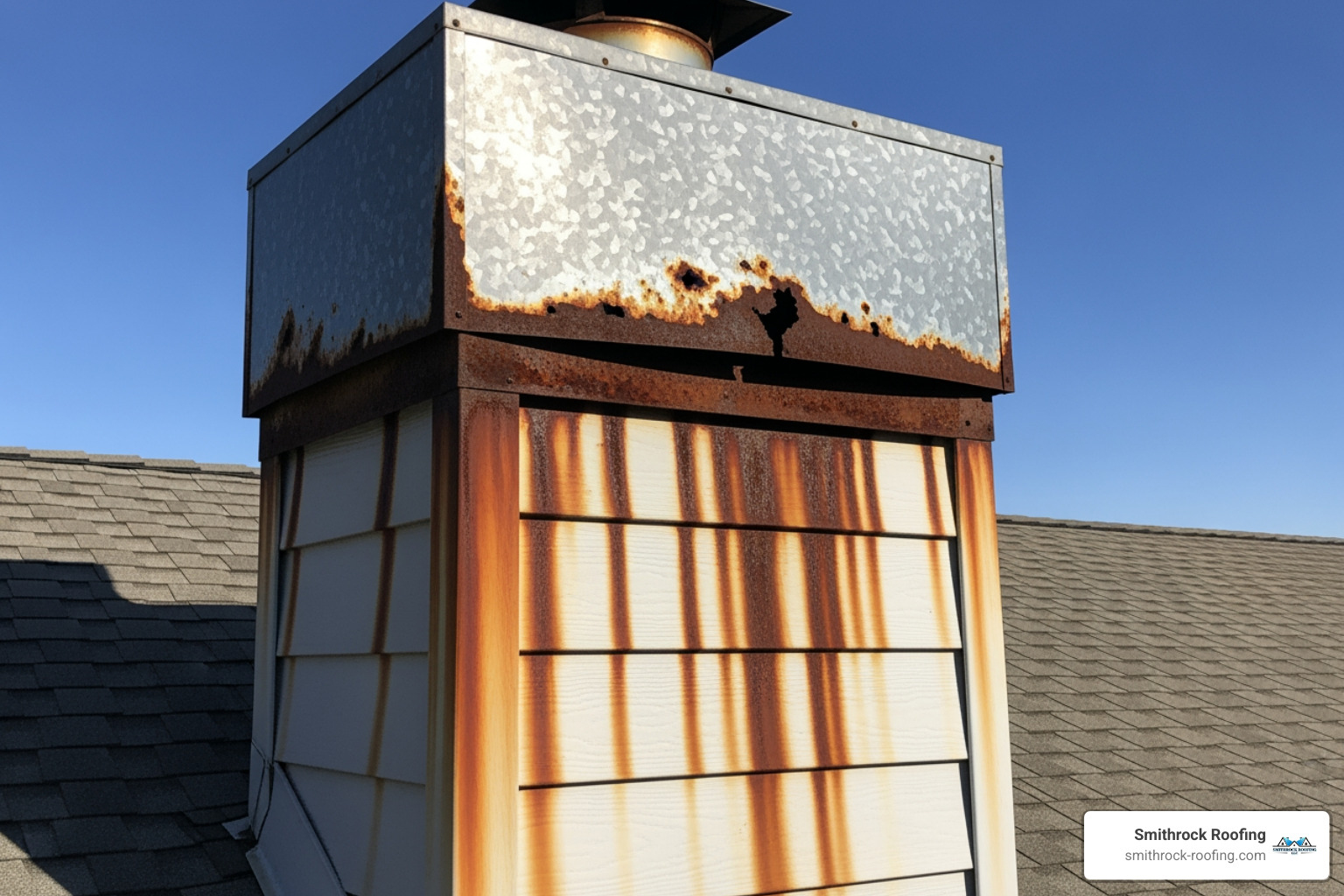
chimney chase with long, reddish-brown rust stains running down the siding from a corroded chase cover - prefab chimney chase covers

Like any exterior component, your prefab chimney chase cover endures constant exposure to the elements. Ignoring warning signs can lead to significant and costly damage. That’s why annual inspections by a qualified professional are so important for preventative maintenance and catching problems early.

Telltale Signs Your Chase Cover Needs Replacement

Be vigilant for these common indicators that your prefab chimney chase cover needs professional attention:

  • Visible Rust or Corrosion: This is the most obvious sign, especially on galvanized steel covers. You may see rust patches directly on the cover.
  • Reddish-Brown Stains on Chimney Siding: A classic symptom of a rusting cover. As rain washes over the corroding metal, it carries rust particles down the side of your chimney, leaving ugly streaks.
  • Dents, Holes, or Warping: Physical damage from weather or falling branches can create entry points for water. Warping can also allow water to pool or seep underneath.
  • Pooling Water on the Cover: A properly designed cover should shed water. If water consistently pools on its surface, it may be warped or improperly installed.
  • Loose or Poor Fit: The cover should fit snugly. If it appears loose, shifted, or has visible gaps, water and animals can easily get inside.
  • Water in Your Fireplace: Finding water on the floor of your fireplace after rain is a definitive sign of a compromised chimney system and an urgent call for inspection.

The Consequences of a Damaged or Missing Cover

A failing prefab chimney chase cover can cause far more than cosmetic issues. Continuous water leaks can lead to structural damage, turning a simple repair into an expensive ordeal. The consequences include:

  • Internal Chimney Damage: Water rusts metal flue pipes, dampers, and other internal components, compromising their integrity and safety.
  • Rotted Wood Framing: Since prefab chimneys are wood-framed, prolonged water exposure causes the framing to rot, weakening the entire structure.
  • Interior Damage: Water can leak into your home, staining and damaging drywall and ceilings, especially in the attic or on upper floors.
  • Mold and Mildew Growth: Persistent moisture creates a perfect breeding ground for mold and mildew, which can pose health risks to your family.
  • Expensive Structural Repairs: Unchecked water damage can lead to extensive and costly structural problems that compromise the safety of your home.

At Smithrock Roofing, we understand these risks. Protecting your chimneys is vital. If you notice any of these signs, don’t delay. A professional assessment can identify the problem and prevent further deterioration.

Measuring and Installing Prefab Chimney Chase Covers

Measuring and installing a prefab chimney chase cover requires precision and safety. An improperly measured or installed cover will inevitably lead to water intrusion. While some experienced DIYers might consider this task, we at Smithrock Roofing strongly recommend professional installation to ensure a perfect, watertight fit and to mitigate the risks of working at heights. Our Chimney Chase Cover Installation services are designed to provide this peace of mind.

How to Accurately Measure for a New Chase Cover

Accurate measurements are the foundation of a successful replacement. Here is a guide to measuring your chimney chase for a new cover:

  1. Measure the Chase Length and Width: Using a tape measure, measure all four sides of the chase top. Always use the longest measurement for both length and width, measuring to the nearest 1/8 inch. Add an additional 1/4 inch to each dimension to ensure the new cover slides on easily.
  2. Measure Flue Pipes: For each metal flue pipe, measure its outside diameter. Add 1/2 inch to this measurement to allow for expansion and contraction. For square flues, add 1/2 inch to each dimension.
  3. Measure Hole Placement: For each flue, measure the distance from all four edges of the chase to the center of the flue pipe. This ensures the holes are perfectly aligned.
  4. Determine Skirt Height: The “skirt” is the vertical edge of the cover that hangs over the sides of the chase. A 3-inch skirt is the industry standard (used on 68% of covers), but it should be long enough to cover any exposed wood and allow for secure fastening.
  5. Consider Optional Features: Think about features like diagonal creases for added strength and drip edges to direct water away from the chimney siding.

To ensure these measurements are exact, we recommend consulting with our professionals, who can provide guidance and ensure a perfect fit.

An Overview of the Installation Process

Once your custom prefab chimney chase cover is ready, the professional installation process involves these steps:

  1. Removal: The old, damaged cover is safely removed.
  2. Cleaning and Inspection: The top of the chase is cleaned of debris and old sealant. The wood framing is inspected for any rot or damage.
  3. Sealant Application: A high-quality, weather-resistant sealant is applied to the top edges of the chase to create a watertight barrier.
  4. Placement: The new cover is carefully positioned over the chase, ensuring the flue pipes pass through their holes without obstruction.
  5. Fastening: The skirt is securely fastened to the chase with corrosion-resistant screws to prevent it from lifting in high winds.
  6. Storm Collar Installation: A storm collar is installed and sealed around each flue pipe just above the cover to prevent water from running down the pipe and into the chase.
  7. Final Sealing: Additional sealant is applied around the base of the storm collar to ensure a completely watertight seal.

An improper installation can lead to leaks and void warranties. Our certified technicians have the expertise to ensure your new chase cover is installed correctly, protecting your home for years to come.

Lifespan, Durability, and Finding a Professional

Investing in a high-quality prefab chimney chase cover and professional installation is an investment in the long-term protection of your home. Just as you maintain your roofing and gutters, your chimney components require professional attention to safeguard against water damage and prevent costly repairs.

What Factors Influence the Longevity of Your Chase Cover?

The lifespan of your prefab chimney chase cover depends on several factors:

  • Material Type: As explored, galvanized steel has the shortest lifespan (5-10 years), aluminum lasts longer (15-25 years), and high-quality stainless steel can last a lifetime.
  • Metal Gauge: Thicker gauge metals are more rigid and resistant to damage and warping, contributing to a longer life.
  • Custom Features: Diagonal creases and drip edges improve the cover’s ability to shed water, reducing wear from standing water.
  • Quality of Installation: This is the most critical factor. A professional ensures a proper fit, secure fastening, and watertight sealing, which is essential for longevity.
  • Regional Climate: The North Carolina climate, with its humidity and occasional severe weather, can impact material longevity. Coastal areas with saltwater in the air make rust-resistant stainless steel an even more critical choice.

Lifespan and Durability Factors

To summarize the typical lifespans based on material:

  • Galvanized Steel: 5-10 years, with rust often appearing sooner.
  • Aluminum: 15-25 years, offering good rust resistance but susceptible to denting.
  • Stainless Steel: 30+ years, often backed by a lifetime warranty, making it the most durable and long-lasting option.

Regular inspections are key to maximizing the lifespan of any material.

Why Professional Certification Matters

When it comes to your chimney’s protection, hiring qualified professionals is non-negotiable. At Smithrock Roofing, our team is committed to upholding the highest industry standards for solutions that perform flawlessly for decades.

Professionals certified by organizations like the Chimney Safety Institute of America (CSIA) or the National Chimney Sweep Guild (NCSG) bring unparalleled expertise. They adhere to strict safety standards, use the proper tools, and ensure code compliance. Professional installation also protects your investment with a warranty. We stay current with best practices from leading groups like the National Fireplace Institute (NFI) and maintain high standards, as reflected by our standing with the Better Business Bureau (BBB).

A professional assessment can also identify underlying issues, ensuring your new prefab chimney chase cover is installed on a sound structure. For any questions about chimney cap replacement parts or general chimney maintenance, our team is ready to assist.

Frequently Asked Questions about Prefab Chimney Chase Covers

We understand that homeowners have many questions about their chimney systems. Here are some of the most common inquiries we receive about prefab chimney chase covers:

How long does a prefab chimney chase cover last?

The lifespan of a prefab chimney chase cover largely depends on the material it’s made from and the quality of its installation. Galvanized steel covers typically last 5-10 years, with rust often appearing as early as seven years. Aluminum covers offer a better lifespan of 15-25 years due to their rust-resistant properties. However, high-quality stainless steel chase covers, especially those made from 304-grade stainless steel, are designed to last a lifetime with proper care and professional installation. This is why we often recommend stainless steel for its superior durability and long-term value.

Can I install a chase cover myself?

While it might be tempting to save costs by installing a prefab chimney chase cover yourself, it’s a task best left to professionals. Working on a roof presents significant safety risks due to heights and potential fall hazards. More importantly, precise measurement and a watertight installation are crucial. An improperly installed cover, even if it’s made from the best material, can lead to leaks, water damage, and voided warranties. Our experienced technicians ensure a perfect fit and a secure, watertight seal, giving you peace of mind. We have dedicated services for Chimney Chase Cover Installation to ensure it’s done right.

Does a chase cover stop animals from getting in my chimney?

A prefab chimney chase cover is an excellent first line of defense, as it covers the entire large opening of the chimney chase, preventing larger animals from entering the framed structure. However, it’s not the final barrier for the flue itself. Critters like birds, squirrels, and raccoons can still enter the actual flue pipe if it’s not protected. For complete animal exclusion, you will also need a properly fitted chimney cap installed over the top of each individual flue pipe. The cap prevents animals from nesting inside the flue and also acts as a spark arrestor. You can learn more about chimney covers to stop birds and other pests on our website.

Secure Your Home with the Right Chimney Protection

Understanding the importance of your prefab chimney chase cover is the first step toward safeguarding your home against costly water damage and structural issues. From choosing the right material to recognizing the signs of wear, every detail contributes to the longevity and efficiency of your chimney system. While options like galvanized steel and aluminum offer varying levels of protection, high-quality stainless steel stands out as the superior choice for its unparalleled durability and resistance to rust, offering a lifetime of peace of mind.

Don’t wait for rust stains to appear or water to drip into your fireplace before taking action. For professional assessment and expert installation of your chimney components, it’s crucial to partner with experienced professionals. Our team at Smithrock Roofing serves communities across North Carolina, including Winston-Salem, Greensboro, Kernersville, and many surrounding areas, bringing our expertise right to your doorstep. We’re dedicated to providing durable solutions that protect your home for years to come.

Ready to ensure your chimney is fully protected? Contact Us today for a consultation or to learn more about our Chimney Chase Cover Installation services. We’re here to help you secure your home, one chimney at a time.

Share:

Categories

Follow us

You can find us on Facebook, Instagram, and Google.
Smithrock Roofing LLC logo featuring stylized rooftops with chimneys and arched windows
Smithrock Roofing proudly services the cities of Winston-Salem, King, Clemmons, Lewisville, Pilot Mountain, East Bend, Mt. Airy, Kernersville, Siloam, Danbury, High Point, Trinity, Pfafftown, Tobaccoville, Greensboro, Walnut Cove, Belews Creek, Rural Hall, Pinnacle, Bethania, Advance, Wallburg, Horneytown, Union Cross, and Midway, NC.

Newsletter

Sign up to receive important tips, special offers, and discounts.

Smithrock Roofing © Copyright 2025 • All Rights Reserved • Privacy Policy • Maintained by Mongoose Digital Marketing