Why Finding the Right Chimney Cap Installer Near Me Matters
Finding a qualified chimney cap installer near me is about safeguarding your home from water, animals, wind, sparks, and premature chimney deterioration. The right pro will size, select, and secure the cap correctly, align with local code, and verify that the top of your chimney is sound before any hardware goes on.
Quick Guide to Hiring a Local Chimney Cap Installer:
- Credentials: Prefer CSIA-certified sweeps or firms with specialized chimney training. Ensure the company is licensed as required in your state and fully insured.
- Experience: 5-10+ years specifically working on chimneys. Ask how many caps they install each season.
- Product Knowledge: They should confidently explain material choices (galvanized, stainless grades 304/316, copper), screen openings, and brand-specific requirements.
- Detailed Quotes: Written estimates should specify cap type, material grade, sizing method, attachment method, and warranty terms.
- Code and Listing: The installer should reference NFPA 211 standards, local building codes, and manufacturer listings for factory-built chimneys.
- Warranties: Look for written warranties covering both the product and workmanship (commonly 1-5 years).
What a Professional Chimney Cap Prevents:
- Water Intrusion: Rain and snow infiltration into the flue, firebox, and smoke chamber
- Animal Intrusion: Nesting birds, squirrels, raccoons, or bats that block flues
- Ember Discharge: Spark arrestor screens help keep embers off the roof
- Wind-related Problems: Caps reduce downdrafts and wind-driven rain entry
- Debris Accumulation: Leaves, twigs, and debris that obstruct airflow
Costs and Value at a Glance:
- Typical installed cost: $250-$900 for single-flue stainless
- Material lifespan: Galvanized 3-10 years; stainless 20+ to lifetime; copper 50+ to lifetime
- ROI: Preventing one water intrusion or animal-removal event can offset the entire project cost
I’m Jordan Smith. With 15+ years in exterior construction, I’ve seen the long-term difference between a bargain cap hastily fastened to a cracked crown and a properly selected, properly mounted cap on a sound, sealed chimney top.
What to Expect During a Site Visit:
- Measurement: Flue interior and exterior dimensions, crown or chase cover footprint
- Condition Check: Crown cracks, spalling brick, deteriorated mortar joints, rusted chase covers
- Draft and Appliance Review: Wood, gas, pellet, or furnace venting
- Access Plan: Ladder placement, roof pitch and height, safety gear
Estimated Timeline:
- Assessment and Estimate: 30-60 minutes on-site
- Fabrication/Ordering: Off-the-shelf single flue caps can be same day; custom multi-flue or copper caps may take 1-3 weeks
- Installation: 30-90 minutes for a single flue
Bottom Line: If you’re searching for a chimney cap installer near me, select a professional who will do a complete top-of-chimney assessment, specify the right product for your system, and stand behind both the cap and the installation.
Why a Chimney Cap is a Non-Negotiable Home Asset
A chimney cap is a small component with outsized importance. It keeps weather, wildlife, and embers where they belong—outside—and it helps your fireplace or heating appliance perform as intended.
The First Line of Defense Against Weather
Water is the leading cause of chimney deterioration. Without a cap, rain can pour straight down the flue and into the smoke chamber and firebox. The damage pathway looks like this:
- Masonry Damage: Moisture seeps into brick and mortar, freezes in cold weather, and expands (freeze-thaw cycles), causing spalling and cracking.
- Liner Deterioration: Clay tile liners can crack from thermal shock and moisture; steel liners can corrode when exposed to acidic condensate.
- Firebox and Damper: Water stains, rust on dampers, and efflorescence on masonry are common signs of a wet flue.
- Attic and Interior: Wind-driven rain can find pathways around the flue into the attic, staining drywall and inviting mold.
In climates with summer thunderstorms and winter ice storms, caps dramatically reduce the volume of water entering the system.
Keeping Wildlife and Debris Out

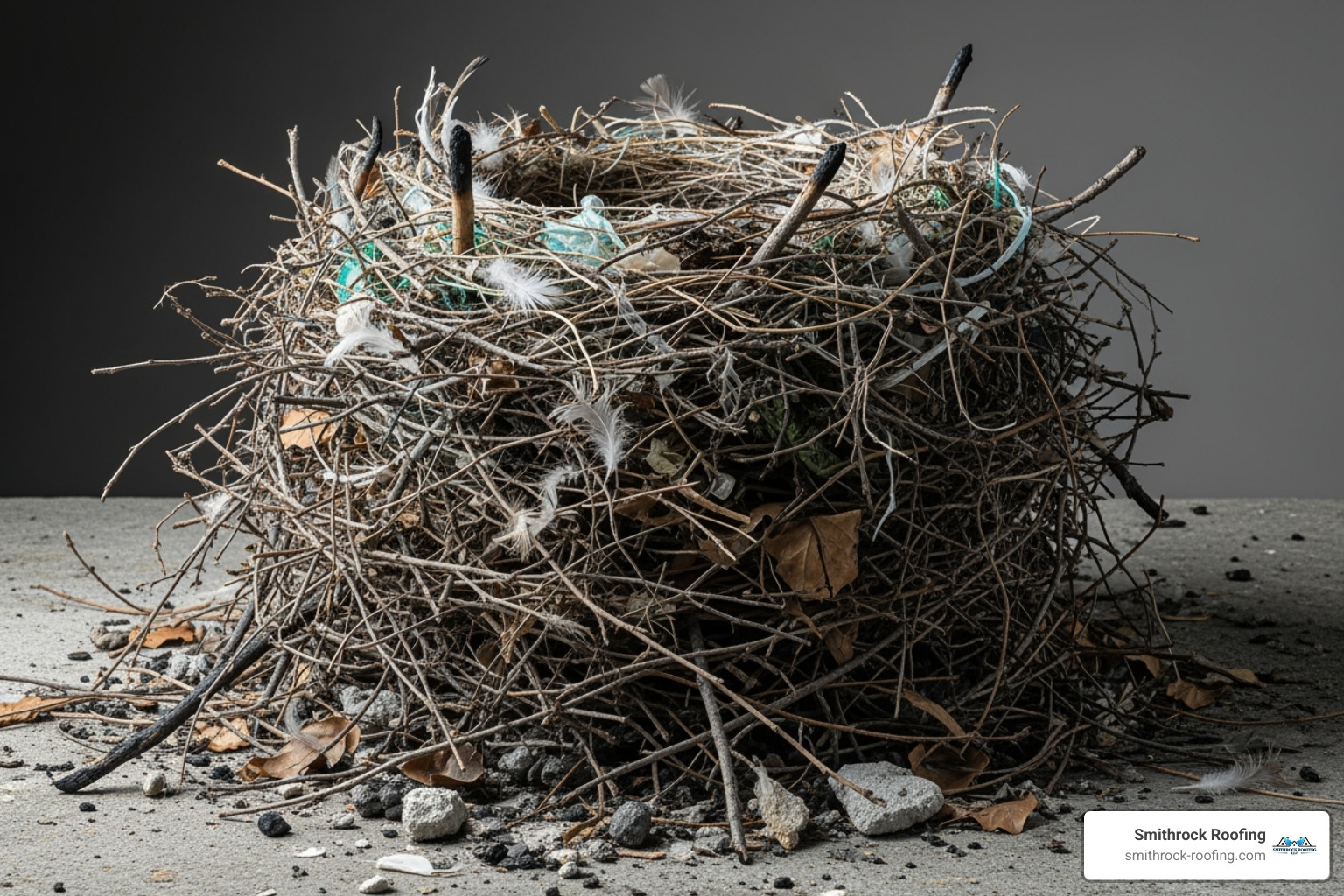
Uncapped flues are ideal nesting sites. Common invaders include chimney swifts, starlings, squirrels, and raccoons. Nests can block the flue, forcing smoke and carbon monoxide back into living spaces. In many regions, chimney swifts are protected by federal law (Migratory Bird Treaty Act), which prohibits disturbing active nests.
Beyond animals, wind-blown leaves and twigs lodge at the first ledge inside the flue. Combined with creosote in wood-burning systems, this is a significant fire hazard. A cap with a properly sized mesh screen keeps animals and debris out while maintaining airflow.
Enhancing Fireplace Safety and Efficiency
- Spark Control: A cap’s mesh acts as a spark arrestor, catching embers before they can land on the roof or landscaping.
- Downdraft Reduction: Wind moving across the chimney top can push air down an open flue. A well-designed cap helps deflect wind and stabilize draft.
- Cleaner Burns: More stable draft helps wood fires burn hotter and cleaner, which can reduce creosote formation.
- Energy Savings With Top-Sealing Dampers: A top-sealing damper can dramatically reduce conditioned air loss up the flue when the fireplace is not in use.
Important Distinctions by Appliance Type
- Wood-Burning Masonry Fireplaces: Need a cap with a spark arrestor and adequate clearance above the flue.
- Wood Stoves/Inserts: The termination must match the liner system and appliance listing.
- Gas Fireplaces and Furnaces: Gas exhaust is more acidic and moist; stainless steel (often 316) is preferred.
- Factory-Built (Prefab) Chimneys: Only use caps listed for that brand/model.
What a Cap Can and Cannot Do
- Can: Keep rain, animals, and debris out; reduce downdrafts; stop sparks; improve system longevity.
- Cannot: Repair existing flashing or crown cracks; mask severe draft problems caused by design errors.
For a small fraction of what a water-damaged liner or raccoon cleanup might cost, a chimney cap protects your home every day—quietly and constantly.
Choosing the Right Chimney Cap: A Breakdown of Types, Materials, and Costs
Selecting the correct cap starts with identifying your chimney type, appliance, and environment. The right choice balances safety, longevity, performance, and curb appeal.
Types of Chimney Caps and Their Applications
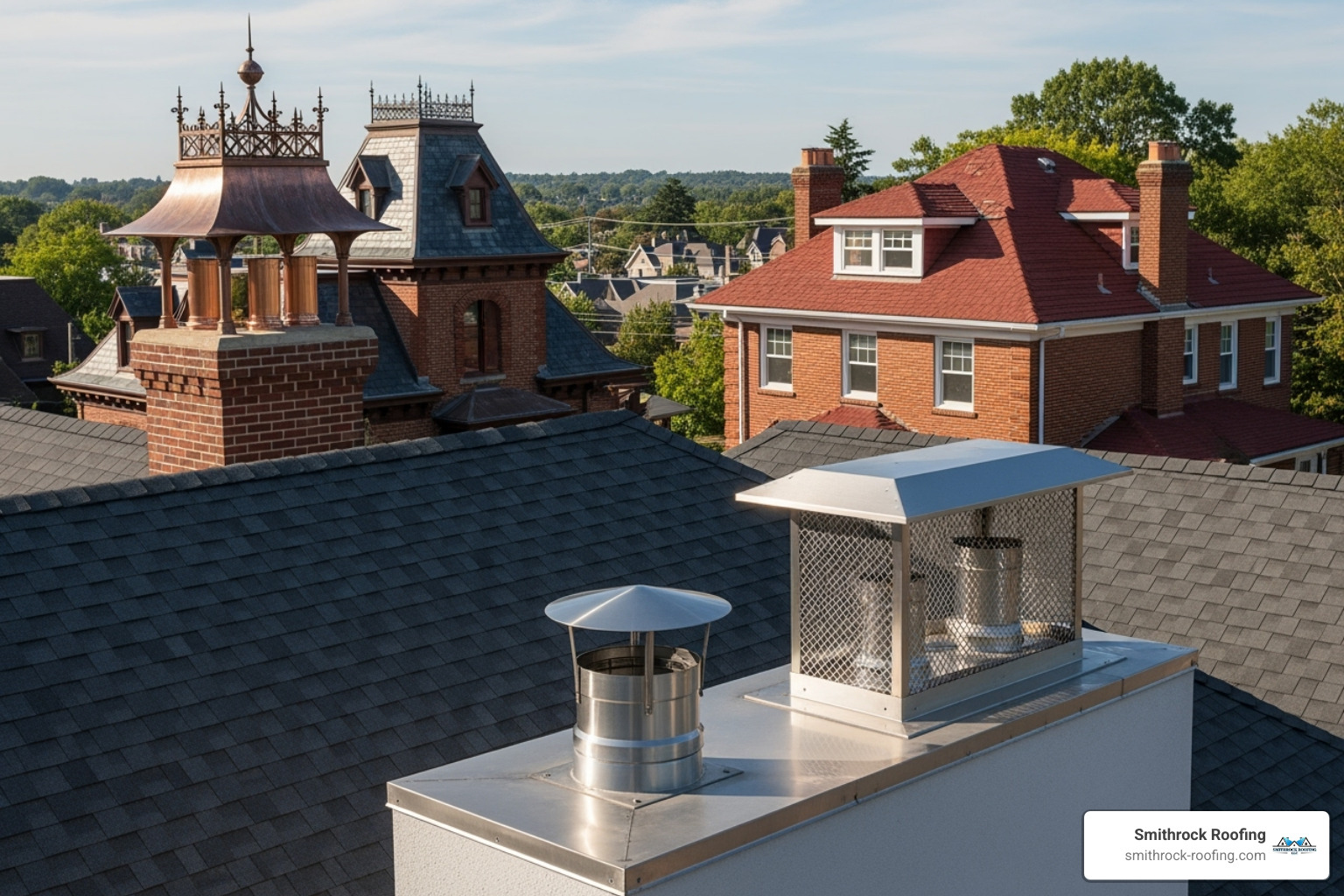
- Single-Flue Caps: Clamp or screw to a single clay tile flue or metal liner. Most common and cost-effective option.
- Multi-Flue Caps: Cover multiple flue openings on one chimney. Mounted to the crown with legs/angles.
- Chase Covers with Termination Caps: For factory-built chimneys in framed chases.
- Top-Sealing Dampers: Serve as an energy-saving damper at the top, paired with a cap for weather/animal protection.
- Decorative Shrouds: Architectural covers that improve aesthetics while integrating proper ventilation.
Key Sizing and Design Considerations
- Flue Dimensions: Measure interior and exterior dimensions of the flue tile or liner.
- Height and Clearance: Most caps perform best with 5-8 inches of space between the flue exit and the cap lid.
- Screen Opening Size: Many codes in wildfire-prone regions require spark arrestor screens with openings between 3/8 inch and 1/2 inch.
- Wind Exposure: In high-wind areas, choose a cap with reinforced lids and robust attachment hardware.
- System Compatibility: Prefabricated chimney systems have listed caps and terminations.
Material Options, Pros and Cons
- Galvanized Steel: Lowest initial cost but prone to rust. Expect 3-10 years.
- Aluminum: Rust-resistant and lightweight; can dent more easily.
- Stainless Steel (304): Excellent all-around corrosion resistance for most inland environments.
- Stainless Steel (316): Superior corrosion resistance, recommended for coastal areas.
- Copper: Premium, exceptionally durable, and visually striking. Often lifetime performance.
Cost Ranges and What Drives Price
- Single-Flue Stainless Caps: $150-$450 for the cap, $250-$600 installed.
- Multi-Flue Stainless Caps: $300-$1,200 for the cap, $500-$1,500+ installed.
- Copper Caps: $400-$2,500+ depending on size and custom detailing.
- Top-Sealing Dampers: $350-$800 for the product, $500-$1,200 installed.
Factors that add cost include steep roofs, tall chimneys, masonry repairs, and custom fabrication.
Choosing by Environment and Fuel Type
- Coastal or Heavy Rain Exposure: 316 stainless or copper is preferred.
- Wood-Burning: Ensure spark arrestor screens meet local code.
- Gas Appliances: Favor 316 stainless and only use listed terminations.
- Cold Climates: Top-sealing dampers paired with caps can significantly reduce heat loss.
Done right, material and design selection are a one-time decision. A quality cap paired with a sound crown or chase cover can deliver decades of protection with minimal maintenance.
When to Repair or Replace Your Chimney Cap
Even robust caps face wind, rain, heat, creosote, and wildlife pressure. Recognizing early signs of distress prevents water damage, draft problems, and safety hazards.
Telltale Signs of a Damaged Chimney Cap
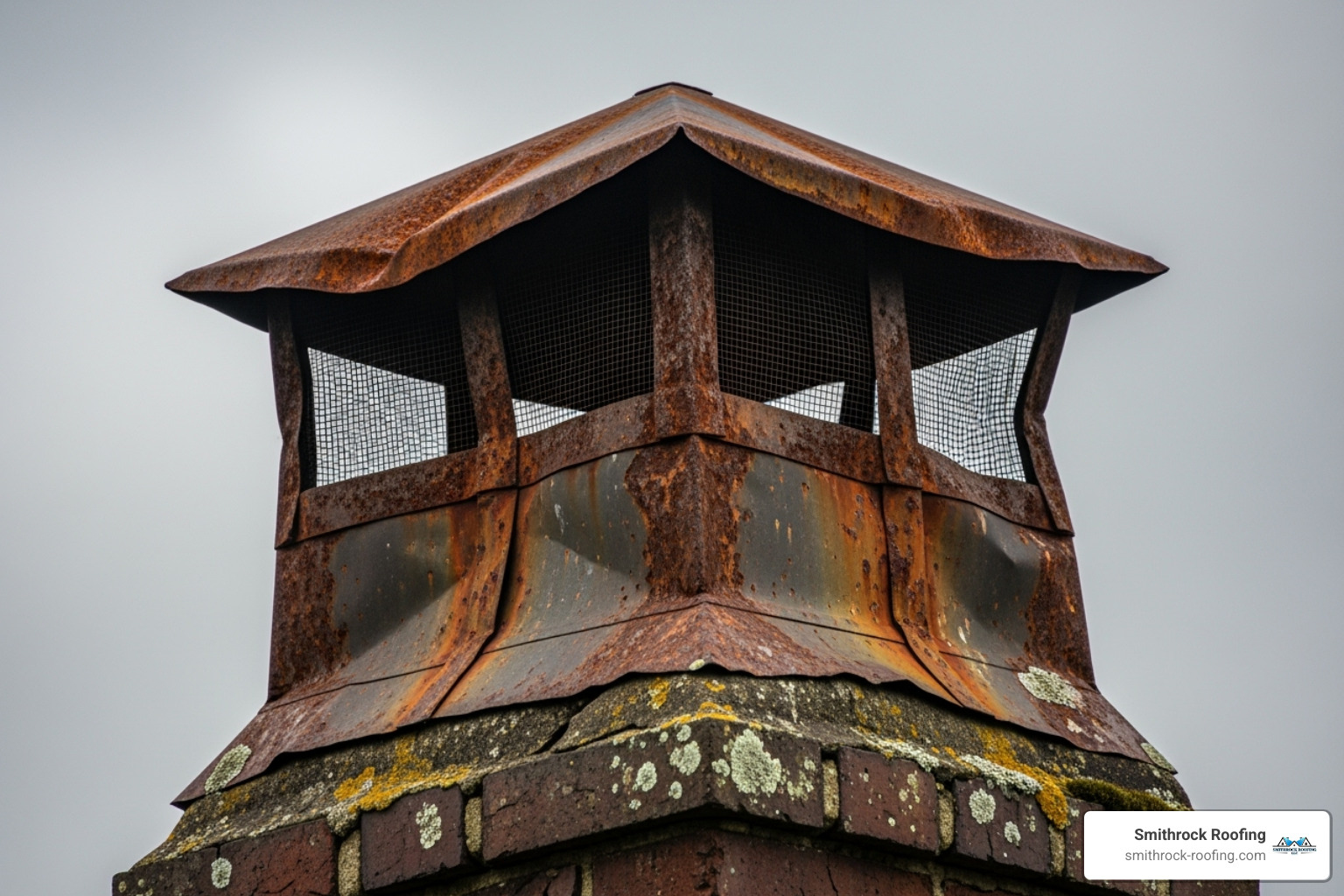
- Rust or Corrosion: Orange streaks down masonry or tea-staining on stainless indicate corrosion.
- Dents or Bent Lids: Storm damage can reduce water shedding and introduce rattling in wind.
- Loose, Tilted, or Missing Cap: High winds can lift poorly secured caps.
- Clogged Mesh: Creosote, soot, leaves, or animal nesting material can reduce airflow.
- Water Stains or Drips: Moisture in the firebox or musty odors indicate a leaky top.
- Animal Activity: Scratching, chirping, or droppings suggest the screen has failed.
Quick Owner Checks (From the Ground)
- Use binoculars to inspect the cap and chimney top after storms.
- Look for discoloration trails, a tilted lid, or torn mesh.
- Check for new indoor odors, staining, or damper rust.
When to Repair vs. Replace
- Repair: Minor loose fasteners or replaceable mesh when the cap and crown are otherwise sound.
- Replace: Severe rust, crushed lids, broken welds, or repeated clogging due to undersized design.
Inspection Frequency and Standards
The Chimney Safety Institute of America (CSIA) recommends annual chimney inspections. This includes checking the cap’s attachment, screen, clearances, crown/chase cover, and flashing. Schedule a check after major wind or hail events.
If Your Cap Is Missing or Blown Off
- Avoid Burning: Don’t use the fireplace or appliance until the flue is protected again.
- Temporary Weather Cover: Request an urgent temporary cover if heavy weather is forecast.
- Fast-Track Replacement: Ask your installer to prioritize quick turnaround.
Maintenance Tips for Long Life
- Clean the Screen: During annual service, have technicians remove creosote/smoke residue.
- Rinse and Inspect: In coastal areas, occasional fresh-water rinses can slow corrosion.
- Monitor Adjacent Materials: Ensure the crown remains sealed and chase covers remain rust-free.
Pro Tip: If odors or smoke spillage increase after installing a new cap, ask your installer to verify the cap’s free area and clearance height relative to your flue size and appliance requirements.
Finding a Qualified Chimney Cap Installer Near Me
Hiring the right pro ensures your cap is compatible, secure, and compliant. It also ensures underlying problems are caught early.
DIY vs. Hiring a Chimney Cap Installer Near Me
- Safety: Roof work involves fall hazards. Pros bring ladders, roof anchors, harnesses, and training.
- Proper Sizing: Accurate flue and crown/chase measurements are essential. A cap that’s too small can restrict flow; too large may catch wind or trap exhaust.
- Compatibility: Factory-built chimneys require specific listed terminations and sometimes brand-specific adapters. Pros know what’s acceptable.
- Warranty and Code: Many product warranties assume professional installation; code compliance is easier to document with a pro.
What to Look For in an Installer
- Licensing and Insurance: Verify active license (where required), general liability, and workers’ compensation. Ask for certificates from the insurer.
- Certification: CSIA Certified Chimney Sweep, NFI certifications for gas/solid fuel, or documented manufacturer training for specific systems.
- Experience: Ask how many caps they install yearly and whether they do both masonry and prefab systems.
- References and Reviews: Look for consistent feedback on punctuality, cleanliness, and communication.
- Photo Documentation: Before-and-after photos from the roof are a must.
- Clear Proposals: The estimate should specify cap type, material grade (304 vs. 316 stainless, copper thickness), screen opening size, attachment method, sealants, expected lead time, and warranties.
- Local Code Knowledge: Ensure familiarity with local building codes and recognized standards like NFPA 211.
Questions to Ask Before You Hire
- Which cap materials do you recommend for my fuel type and location, and why?
- For my prefab system, are you installing a listed termination that matches the brand/model?
- How will you attach the cap and seal the base without restricting the flue?
- Can you show me the screen opening size and confirm it meets local spark arrestor requirements?
- What’s your workmanship warranty, and what’s covered by the product warranty?
- Will you inspect and document the condition of the crown/chase cover and flashing while you’re up there?
- What’s the plan if you find additional issues (e.g., a cracked crown) on install day?
Local Considerations for Winston-Salem and the Piedmont Triad
While the principles of chimney safety are universal, hiring an installer familiar with the specific challenges of the Winston-Salem area provides an extra layer of protection. A local expert will factor in:
- Piedmont Climate: Our region experiences a full spectrum of weather that puts stress on chimney tops. Hot, humid summers can accelerate corrosion on low-quality metals. Heavy spring and summer thunderstorms deliver torrential rain, testing the water-shedding capabilities of your cap and crown. Winter brings the risk of freezing rain and ice storms, which can add significant weight to a cap and exploit any weaknesses in its mounting hardware. An installer from the area will recommend materials and attachment methods proven to withstand these cycles.
- Abundant Wildlife: The lush, wooded landscape around Pfafftown, East Bend, and the greater Forsyth County area is home to determined wildlife. Gray squirrels, raccoons, and various bird species are constantly seeking secure, sheltered nesting spots. A local professional knows the common culprits and will ensure the cap’s mesh is strong enough and the attachment secure enough to repel them season after season.
- Heavy Tree Debris: With our beautiful deciduous trees comes a significant amount of leaf, twig, and pollen debris, especially in the fall. An uncapped chimney is a direct chute for this flammable material to accumulate on top of the smoke shelf and damper. A professional installer will emphasize the importance of a cap with properly sized mesh to block this debris without impeding draft.
- North Carolina Residential Code: A qualified local installer will be up-to-date on the North Carolina Residential Code as it applies to chimney terminations. This includes regulations on minimum chimney height above the roof, clearance from combustible materials, and any specific requirements for spark arrestors, ensuring your installation is not just effective but also fully compliant.
Red Flags to Avoid
- Vague quotes without material grade, brand, or sizing details
- Pressure tactics (“today only” pricing) and requests for large upfront payments
- No proof of insurance, no references, or refusal to provide roof photos
- Suggesting unlisted aftermarket parts for factory-built systems
What a Professional Installation Looks Like
- Arrival and Safety Setup: Ladder stabilizers, tie-offs, and traffic cones as needed
- Condition Survey: Photos of crown/chase cover, flue tiles, flashing, and surrounding roof
- Measurements and Fit Check: Dry-fitting the cap or verifying custom dimensions
- Attachment: Stainless fasteners/clamps; proper sealant at the base where appropriate; no obstruction of flue opening
- Finishing: Rinse down dust/debris; ensure mesh is straight and lid level; apply corrosion inhibitors if specified
- Final Documentation: Before-and-after photos, product documentation, warranty registration, and maintenance tips
For homeowners from Pfafftown to Tobaccoville, East Bend to Wallburg, and throughout the Winston-Salem area, it’s reasonable to expect an installer who treats your chimney top like part of a system. If the crown or chase cover needs attention, a good contractor will present options before mounting the cap. Quality installation is not just putting on a lid—it’s delivering a leak-resistant, code-compliant, long-term solution.
Frequently Asked Questions about Chimney Caps
Homeowners often share similar questions. Clear answers help you choose the right product and maintenance plan.
What is the difference between a chimney crown and a chimney cap?
- Chimney Crown: The sloped concrete or mortar surface atop a masonry chimney that sheds water away from the flue(s) and exterior brick.
- Chimney Cap: The metal cover that sits over the flue opening to keep out rain, animals, and debris, and to arrest sparks. Both are essential and serve different functions.
How tall should a chimney cap be?
- Most manufacturers specify 5–8 inches of vertical clearance between the flue outlet and the cap lid to maintain free exhaust and reduce wind-driven rain. Follow your cap manufacturer’s instructions for your flue size and appliance.
Are chimney caps required for all types of fireplaces?
- While not always mandated, caps are strongly recommended for wood, gas, and coal appliances. Factory-built units use listed terminations that function as caps. In wildfire-prone regions, caps with spark arrestor screens may be required by code or insurance.
Will a chimney cap stop all rain from entering?
- Caps greatly reduce direct rainfall, especially wind-driven rain. However, under extreme wind angles, some moisture can still enter. A properly sized cap, adequate lid overhang, and a sound crown/chase cover minimize entry.
Do caps affect draft or cause smoke to back up?
- A correctly sized and installed cap generally stabilizes draft. Draft problems typically arise from undersized caps, clogged screens, or fundamental chimney design issues (height, offsets, negative pressure indoors). If smoke rollout begins after adding a cap, have a pro check cap clearance, flue size, and airflow balance in the home.
What mesh size should my cap have?
- Many jurisdictions specify spark arrestor openings between 3/8 inch and 1/2 inch. Smaller openings resist ember ejection but may clog faster with creosote. Follow local code and your installer’s guidance.
Is stainless steel or copper worth the upgrade?
- Yes for long-term performance. Stainless (304 inland, 316 coastal/gas) offers decades of service; copper can last a lifetime and adds curb appeal. Upfront costs are higher, but replacement frequency is much lower compared with galvanized steel.
Do gas fireplaces and furnaces need caps?
- Yes, but only listed terminations for factory-built and direct-vent systems. For masonry chimneys venting gas appliances, stainless (often 316) is recommended to resist acidic condensate. Never cover or modify direct-vent terminations without manufacturer approval.
Can I use a top-sealing damper with gas logs?
- Often no if the gas logs have a standing pilot or require continuous venting, because closing the damper could trap combustion gases. Follow the gas log manufacturer’s instructions and consult a certified pro.
How often should I clean or inspect the cap?
- Annually at minimum, and after major storms. Wood-burning systems may need more frequent checks if creosote accumulates quickly.
Will a cap eliminate fireplace odors?
- It helps by reducing moisture and animal intrusion, but odor can also result from negative indoor pressure, creosote deposits, or weather conditions. A full chimney inspection and cleaning may be needed.
Are birds or bats in my chimney a legal concern?
- Yes. Some species, such as chimney swifts, are protected and cannot be removed during nesting season. A cap prevents nesting; if animals are already present, consult a wildlife professional and follow applicable laws.
Can I paint a stainless cap black to match my roof?
- Avoid painting stainless unless it’s a factory-applied, high-temperature coating. Paint can trap moisture and cause premature corrosion. If you want color, consider powder-coated stainless from the manufacturer.
Do copper caps stain masonry?
- Copper can leave verdigris streaks on light-colored masonry as it patinas. Proper design with drips/overhangs reduces staining; your installer can discuss mitigation strategies.
Do I need a cap for an unused chimney?
- Yes. Even if not in use, the flue is vulnerable to water, animals, and freeze–thaw damage. A cap preserves the structure and prevents interior moisture problems.
What about pellet stoves and wood stoves?
- These appliances often require specific liners and listed caps/adapters. Follow the liner/appliance manual and use compatible terminations.
Does insurance require a cap?
- Some insurers encourage or require spark arrestors in wildfire zones and may inquire about chimney maintenance. While policies vary, a cap is universally considered a best practice.
Can a cap reduce noise from wind?
- Many caps reduce wind noise by stabilizing flow at the flue top. If noise persists, specialized wind caps may help. Ask your installer about designs suited to your exposure.
What maintenance should I plan for?
- Annual inspection, cleaning the mesh as needed, checking fasteners, and monitoring crown/chase cover condition. In coastal zones, periodic rinsing helps slow corrosion.
How long will installation take?
- Single-flue caps often install in 30–90 minutes. Multi-flue caps or chase cover replacements can take several hours, especially with steep roofs or tall chimneys.
What if I have multiple flues on one chimney?
- A multi-flue cap often protects all flues and more of the crown surface. Sizing and standoff height are critical to avoid restricting any flue. Your installer will measure and design accordingly.
Can I use one cap brand on a different factory-built system?
- Generally no. Factory-built chimneys must use listed, compatible terminations. Mixing brands can void the listing and potentially create a hazard.
Will a cap fix a smoky fireplace?
- A cap can help reduce wind-induced downdrafts, but it will not correct major design issues (flue too small/short, negative pressure in the home). A full evaluation may reveal the need for a liner resize, makeup air, or height adjustment.
What are common warranties?
- Many stainless and copper caps carry lifetime product warranties, typically against rust-through. Workmanship warranties vary (often 1–5 years). Keep proof of purchase and installation documentation for claims.
Secure Your Home with Expert Chimney Services
Your chimney cap is a key line of defense against water, wildlife, sparks, and wind. The right cap, professionally installed, extends the life of your chimney and improves everyday safety and comfort.
What We Do During a Chimney Cap Project
- Listen and Inspect: We discuss your appliance (wood, gas, pellet), performance concerns, and preferences. Then we inspect the crown or chase cover, flashing, flue tile or liner, and surrounding roof conditions.
- Measure and Match: We size the cap to your flue(s) and system, confirm listing requirements for factory-built units, and recommend materials best suited to your environment (304 vs. 316 stainless, copper, or coated options).
- Provide Clear Options: You receive a line-item estimate with product details, lead times, and workmanship/product warranties.
- Install with Care: We use fall protection, stainless fasteners, appropriate sealants, and manufacturer-approved methods. We never obstruct the flue. We photograph the work before and after.
- Maintain and Support: We recommend a maintenance schedule, including annual inspection and screen cleaning, and we stand behind our workmanship.
Serving the Winston-Salem Area
We help homeowners across the region, including Pfafftown, Tobaccoville, East Bend, Wallburg, and neighboring communities. Whether your chimney is masonry or prefabricated, single-flue or multi-flue, we’ll specify the correct solution and install it right.
About Smithrock Roofing
With 15+ years focused on roofs, gutters, and chimney tops, we understand how these systems work together to keep your home dry and safe. When we install your chimney cap, we also check the crown or chase cover and flashing so you have a complete picture of your chimney’s condition. If we find issues, we present clear options before proceeding.
Next Steps
- Schedule a Visit: We’ll measure, photograph, and assess your chimney top.
- Choose Your Cap: Select from durable stainless (304/316) or copper, with the right screen size and profile for your home.
- Enjoy Peace of Mind: A properly installed cap protects day one and for years to come.
Your home deserves quiet, dependable protection at the top. Contact Us today for a professional inspection and a free estimate to keep your home safe, dry, and critter-free.