How much does it cost for a chimney cap installation is a common question for homeowners noticing a rusty cap, water in the fireplace, or animal activity. While there’s no single price, the cost is influenced by materials, labor for professional installation, chimney size, and any necessary prep work like cleaning or repairs.
A simple cap on an accessible, single-flue chimney will cost less than a custom copper cap on a steep, multi-story roof. However, this small expense is a smart investment that prevents much larger problems, including water damage to the chimney liner, animal infestations, and roof fires from stray sparks.
Before you budget for this project, it’s crucial to understand what drives the cost. Material choice, installation complexity, and your chimney’s current condition all play a significant role. This guide will break down every factor influencing your final bill, helping you see why this investment pays for itself by protecting your home’s structural integrity.
When people search for chimney cap cost or want to know how much to cap a chimneythey’re usually hoping for a simple number. The honest answer is that chimney cap installation cost varies quite a bit depending on your specific situation, but understanding the variables makes it easy to anticipate where your project will fall.
At the lower end, you’re looking at a straightforward single-flue chimney on an accessible roof with a standard prefabricated cap. At the higher end, you have custom-fabricated copper caps on steep, multi-story homes that also require crown repair or cleaning before installation. Most projects fall somewhere between those two extremes.
The chimney cap installation cost typically breaks down into three components:
The best way to know exactly what you’ll pay is to get a custom quote from a professional who can assess your chimney in person. Every chimney is different, and a thorough on-site evaluation ensures there are no surprises once work begins.
Need a hand with this in Winston-Salem, Greensboro and the NC Triad? Call (336) 971-0464 or request a free estimate. Honest answers, no pressure.
One of the most common points of confusion for homeowners is the difference between a chimney cap and a chimney crown, and the costs associated with each. They’re two separate components that work together to protect your chimney, and mixing them up can lead to unexpected surprises in your budget.
The chimney crown is the concrete or mortar surface that covers the top of the chimney structure itself, surrounding the flue opening. It slopes slightly outward to direct water away from the masonry below. The crown is essentially the “floor” that the chimney cap sits on.
The chimney cap is the metal cover, with a solid top and mesh sides, that fits over the flue opening and is often anchored to the crown. It keeps rain, animals, and debris out of the flue.
When you’re getting a quote for chimney cap installation, a professional inspection will always evaluate the crown’s condition at the same time. If the crown is cracked, deteriorated, or structurally compromised, it needs to be repaired before a new cap can be properly installed. Installing a cap on a damaged crown is like putting a new roof on a rotting deck, the cap won’t perform correctly, and the underlying problem will continue to worsen.
Chimney crown repair or replacement adds to your overall project cost, but it’s a necessary investment. A cracked crown allows water to penetrate the masonry, leading to freeze-thaw damage, spalling bricks, and interior leaks that are far more expensive to fix down the road. Addressing the crown at the same time as the cap is almost always the smarter financial decision.
At Smithrock Roofingour team inspects both the cap and the crown during every chimney evaluation, giving you a complete picture of what your chimney needs and a comprehensive quote that covers everything, no surprises.
When homeowners ask how much does it cost for a chimney cap installationwe explain that the answer depends on several interconnected factors. The material, your chimney’s specific characteristics, and the complexity of the installation all determine the final investment. Understanding these variables helps you make informed decisions, whether you’re in Winston-Salem NC, Greensboro NC, or surrounding areas. Let’s break down each factor.
The material you choose is the biggest factor in both upfront cost and long-term performance.
When choosing, consider the long-term value. A higher-quality stainless steel or copper cap may cost more initially but often saves money over time by avoiding premature replacement and potential staining.
The size and configuration of your chimney directly impact the cost.
At Smithrock Roofingwe take precise measurements to ensure the recommended cap is perfect for your specific chimney.
The choice between a stock or custom cap depends on your chimney’s design.
Our team at Smithrock Roofing has extensive experience with both and will recommend the best approach for your home’s needs and budget.
The cost of labor is influenced by the challenges of accessing and working on your roof.
Professional labor isn’t just about attaching a cap; it’s about doing it safely and correctly. At Smithrock Roofingwe prioritize safety and precision to ensure your installation provides lasting protection. For more details, visit our Chimney Services page or see additional pricing insights from sources like How Much Does a Chimney Cap Cost to Install?.
If you already have a cap on your chimney, the question isn’t always about new installation, sometimes it’s about whether to repair what you have or invest in a full chimney cap replacement. Understanding chimney cap replacement cost in context helps you make the right call for your home and your budget.
The short answer: replacement almost always makes more financial sense than repair, unless the damage is truly minor.
Here’s why. Most chimney caps that reach the point of noticeable damage, visible rust, bent mesh, a cracked or separated seam, are already past their useful life. Patching or sealing a heavily corroded galvanized steel cap is a temporary fix at best. The underlying deterioration will continue, and you’ll find yourself back on the phone scheduling another service call within a year or two. Meanwhile, water may still be finding its way into your flue.
When replacement is the right call:
When repair may be sufficient:
The cost of chimney cap replacement should always be weighed against the cost of the water damage, masonry deterioration, or animal intrusion that a failing cap allows. In nearly every case, replacement is the more economical long-term choice, especially when you upgrade to stainless steel or copper, which carry substantially longer lifespans and better warranty protection.
We apply the same honest, homeowner-first thinking here that we use when helping customers decide between roof repair and replacement. You can read more about that approach in our guide on Roof Repair vs Replacement in Winston Salem: What Homeowners Need to Know.
When you’re budgeting for how much does it cost for a chimney cap installationthe cap itself may only be one part of the project. A professional inspection can reveal underlying issues that must be addressed to ensure the new cap functions correctly. Addressing these problems now prevents more expensive repairs later.
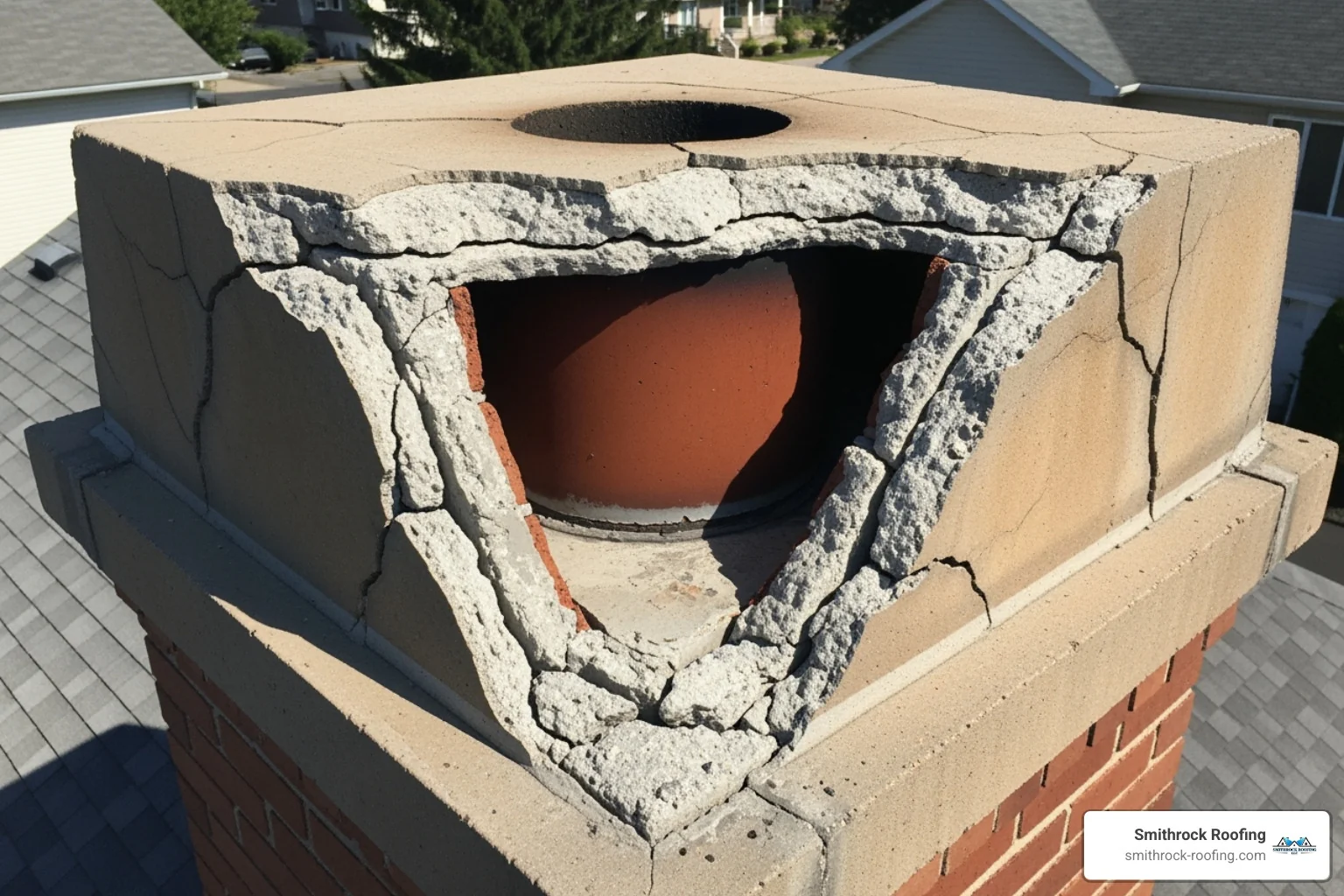
Before installing a cap, a professional chimney inspection is essential to assess the system’s safety and condition. Key issues we look for include:
This preparatory work is a crucial investment in the long-term performance of your chimney cap. Our Roof Repair Services team can handle all these steps.
If you have an existing cap, you’ll need to decide whether to repair or replace it. The best choice depends on the extent of the damage.
We consider the cost-effectiveness of repair versus replacement. Repairing an old, cheap cap near the end of its lifespan isn’t a good investment. A new stainless steel or copper cap offers a long-term warranty and peace of mind, which often provides better value, a principle we also apply in our guide on Roof Repair vs Replacement in Winston Salem: What Homeowners Need to Know.
For a simple chimney cap replacement, a permit is usually not required. However, local regulations can vary, especially in historic districts. If your project involves more extensive work, like a chimney rebuild or is part of a full Roof Installationpermits will likely be necessary.
As a professional contractor, we ensure full compliance with all local building codes for every Roofing project. We handle any required paperwork, so you can be confident the work is done correctly and to code.
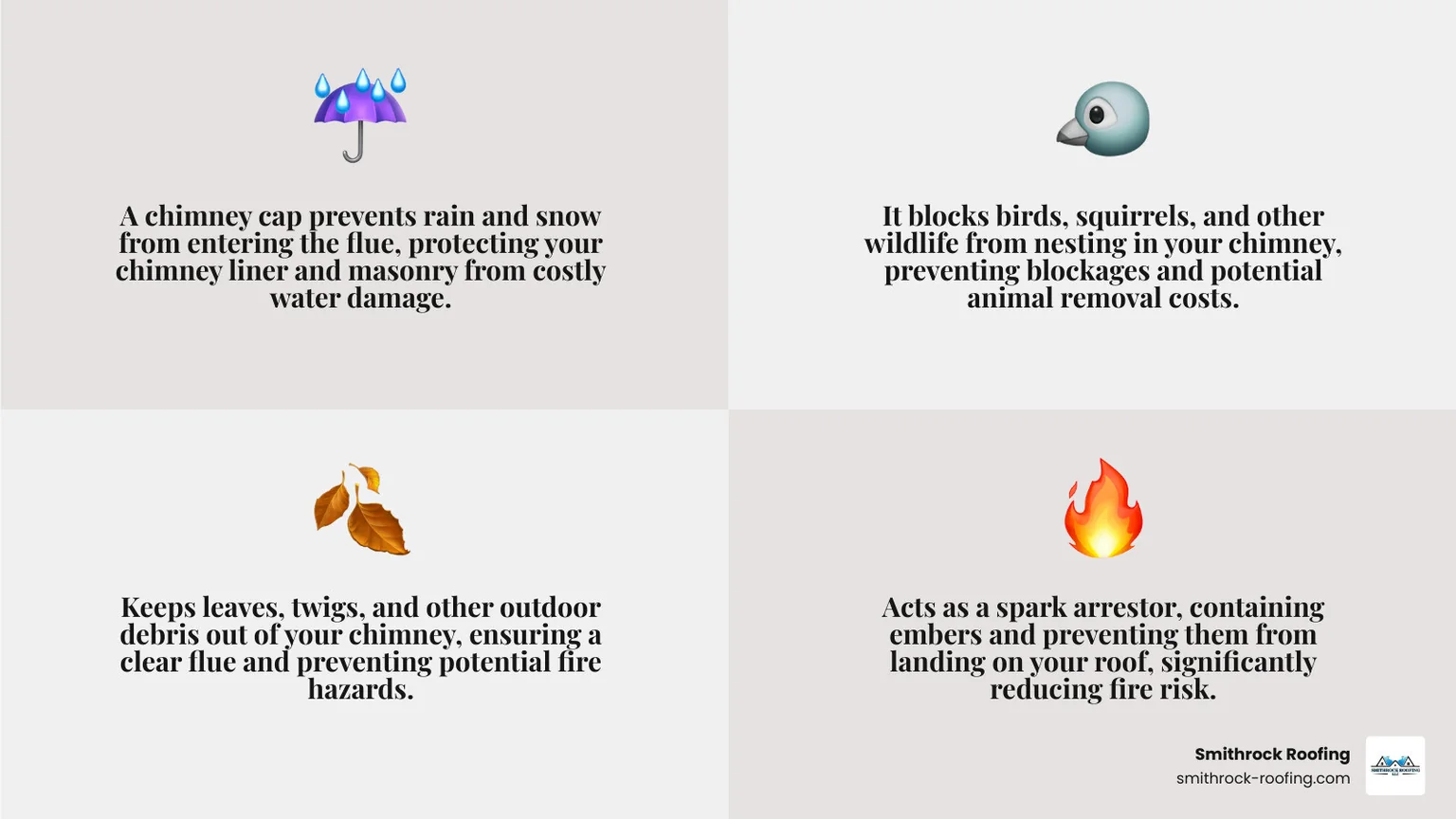
When homeowners ask how much does it cost for a chimney cap installationthey’re also asking if it’s worth it. The answer is yes. A chimney cap is a small upfront investment that pays for itself by preventing problems that would be far more expensive to fix. It’s an insurance policy against water damage, animal invasions, and fire hazards.
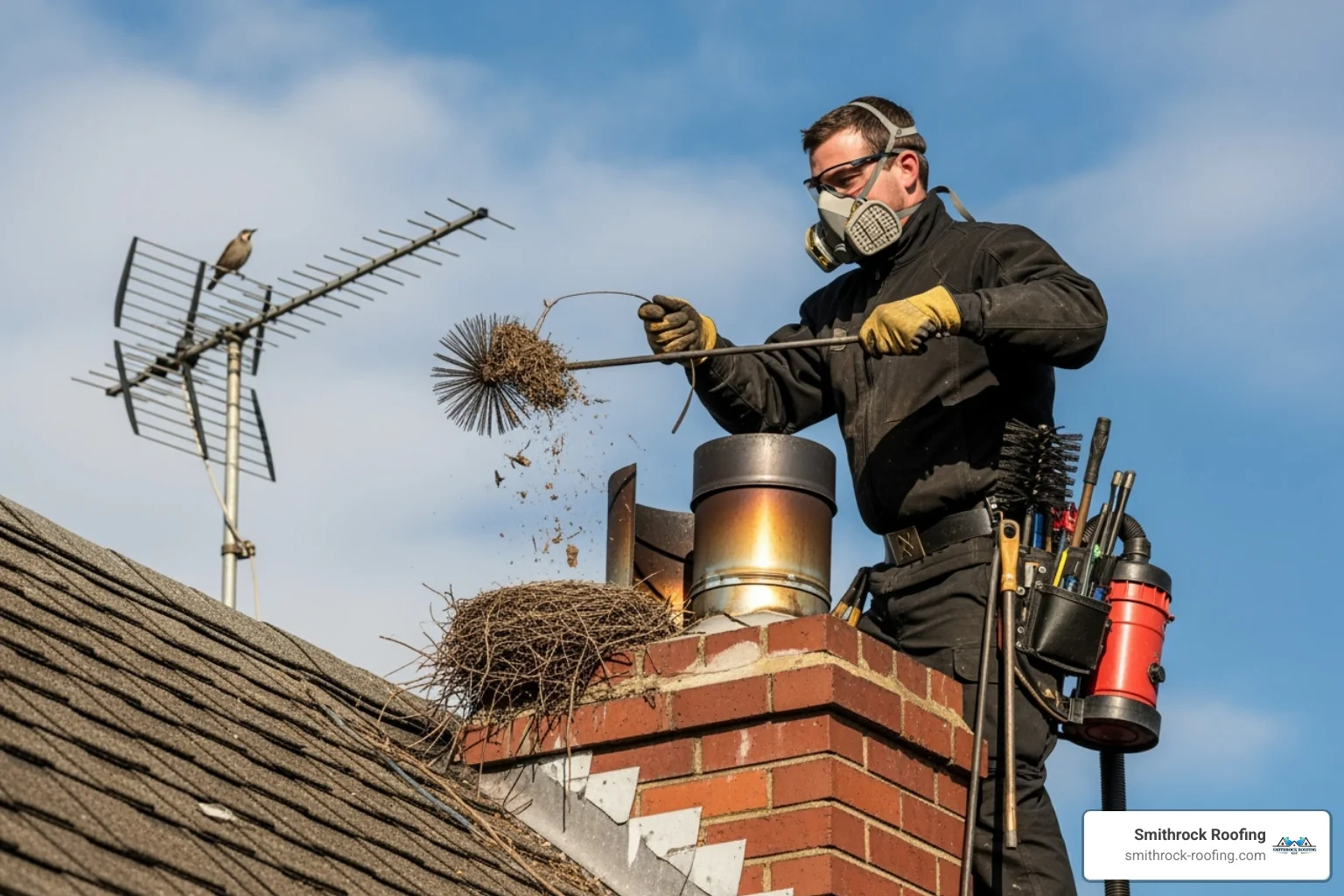
An uncapped chimney is an open invitation for trouble.
A quality chimney cap with mesh screening effectively blocks both water and animals, saving you from these costly and complicated problems.
A chimney cap also improves your home’s safety and efficiency.
These benefits align with our commitment to Residential Roofing best practices, ensuring every part of your home’s exterior works to protect your investment. A chimney cap creates a safer, more comfortable, and more efficient home.
When you’re staring at a chimney that needs a new cap, the DIY route might start looking pretty tempting. After all, how hard can it be to put a metal cap on top of a flue, right? You could save some money on labor, maybe even make it a weekend project. But before you grab your ladder and head to the roof, let’s have an honest conversation about what DIY chimney cap installation really involves, and why most homeowners in Winston-Salem NC, King NC, and Greensboro NC ultimately decide that professional installation is the smarter choice.
The truth is, while installing a chimney cap might look straightforward in online videos, there’s a significant gap between watching someone do it and actually doing it yourself, especially when you’re working several feet off the ground on a sloped surface.
We get it, the idea of saving money is attractive. When you look at how much does it cost for a chimney cap installationyou might think, “Well, if I just buy the cap and do it myself, I’ll only pay for materials.” And yes, you’ll avoid the labor portion of the bill. But here’s what that calculation often misses.
The hidden costs start with your safety. Working on a roof isn’t like working in your garage or backyard. Bob Ferrari, director for education for the National Chimney Sweep Guild, puts it bluntly: “Accessing the roof is one of the most dangerous things we do. Ladders are involved in most of the fatal falls or in serious injuries within the construction trades.” This isn’t meant to scare you, it’s meant to give you the full picture. Even on what seems like an easy single-story roof, accidents happen, and they happen fast. One moment of distraction, one misplaced foot, one unexpected gust of wind, and you’re facing a trip to the emergency room.
Then there’s the reality of working at heights. If your chimney is on a multi-story home or a roof with a steep pitch, you’re not just dealing with basic ladder work, you’re navigating a genuinely hazardous environment. Professional chimney technicians use specialized fall protection equipment, harnesses, and safety systems that most homeowners don’t own and haven’t been trained to use properly. Without this gear and training, you’re taking a serious risk every time you step onto that roof.
Roof damage is another concern that DIY installers often overlook. It’s surprisingly easy to damage shingles when you’re not experienced in walking on roofs. Improper ladder placement can dent gutters or crack roof edges. A dropped tool can puncture your roofing material. Suddenly, your money-saving project has turned into an expensive roof repair job, the kind we handle regularly at our Roof Repair Services.
Getting the installation right is trickier than it looks. A chimney cap needs to be properly sized, securely fastened, and correctly sealed. If the seal isn’t right, water will still get in, defeating the entire purpose of the cap. If it’s not secured properly, the first strong wind might send it tumbling off your roof. If you’ve measured wrong and bought the wrong size, you’ll need to start over with a new cap. These mistakes don’t just waste money, they leave your chimney unprotected and vulnerable to the very problems you were trying to prevent.
There’s also the warranty question. Many chimney cap manufacturers require professional installation to honor their product warranties. Some homeowners insurance policies have similar requirements. If something goes wrong with a DIY installation, you might find yourself without coverage, holding the bag for whatever damage results.
We’re not trying to discourage handy homeowners from tackling projects around the house. But this particular job combines working at dangerous heights with the need for precise installation, a combination that makes professional help worth every penny.
Here at Smithrock Roofing, we’ve seen the aftermath of DIY chimney cap installations gone wrong, and we’ve also seen the relief on homeowners’ faces when they realize they made the right choice by calling professionals. Let us walk you through why professional installation makes so much sense.
Safety comes first, always. Our team has the training, experience, and specialized equipment to work safely on roofs of all heights and pitches. We use proper fall protection systems, secure our ladders correctly, and follow strict safety protocols on every job. This isn’t something we take lightly, it’s the foundation of everything we do. When you hire us, you’re not just paying for installation expertise; you’re investing in a safe job site where no one gets hurt.
We bring genuine expertise to your project. Our technicians understand chimney systems inside and out. We know how different cap materials perform in different conditions. We can look at your specific chimney and immediately identify the best solution, whether that’s a standard prefabricated cap or a custom-fabricated one. We measure accurately the first time, ensuring a proper fit that will protect your home for years to come. This knowledge comes from years of experience serving homeowners throughout our service area, from Pilot Mountain NC to Pinnacle NC and everywhere in between.
We have the right tools for the job. Professional chimney cap installation requires more than just a ladder and a screwdriver. We arrive with specialized equipment that ensures secure installation, proper sealing, and a finished product that looks as good as it performs. These aren’t tools most homeowners have sitting in their garage, and buying them just for one project doesn’t make financial sense.
The installation will be done right. When we install a chimney cap, it’s going to be properly sized, securely fastened to your flue or crown, and sealed against water infiltration. We understand the nuances, how much overhang is needed, how to account for different flue materials, how to ensure the mesh screening is taut enough to keep out small animals but won’t impede airflow. These details matter, and they’re the difference between a cap that lasts decades and one that needs replacement in a few years.
You get warranty protection and peace of mind. Professional installation typically comes with a workmanship warranty, meaning if anything goes wrong due to how the cap was installed, we’ll make it right. Combined with the manufacturer’s warranty on the cap itself, you’re fully protected. That peace of mind is priceless, you can stop worrying about your chimney and get back to enjoying your home.
The smart money is on professional installation. Yes, you’ll pay for labor, but you’re getting value that far exceeds that cost: guaranteed safety, expert knowledge, proper tools, correct installation, and warranty protection. You’re avoiding the risk of injury, preventing potential roof damage, and ensuring your chimney cap actually does its job of protecting your home.
Our team of experienced Roofing Contractors in Winston Salem is ready to help, bringing the expertise and professionalism you deserve for this important home protection project.
If you’ve searched for chimney cap installation cost near me and landed here, you’re likely a homeowner in the Winston-Salem, Greensboro, High Point, or broader NC Triad area. That’s exactly who we serve, and we want to give you a realistic picture of what to expect when you reach out for a quote.
Local pricing is influenced by the same factors outlined throughout this guide, cap material, chimney size, roof pitch, home height, and any preparatory work needed. What varies regionally is mostly labor rates and the cost of materials through local supply chains. As a contractor with deep roots in this area and 60+ combined years of experience, we price our work fairly and transparently, without padding estimates or pushing unnecessary services.
Here’s what the process looks like when you contact Smithrock Roofing for chimney cap installation in the Triad:
Whether you’re in Kernersville, Clemmons, Rural Hall, King, or anywhere else in our service area, getting a local expert on-site is the only reliable way to nail down your actual chimney cap installation cost. We make that process easy. Request your free estimate and we’ll take it from there.
Here are answers to some of the most common questions homeowners have about chimney cap installation.
The cost is highly variable and depends on several factors: the material (galvanized steel, stainless steel, copper), the chimney’s size and number of flues, whether a standard or custom cap is needed, and the installation complexity (roof height and pitch). Any required prep work, like cleaning or crown repair, will also affect the final price. Because of this, a custom quote is necessary for an accurate price. We are always ready to provide a detailed Roof Estimate for your project.
The chimney cap replacement cost is generally similar to a new installation, since the work involves removing the old cap, preparing the flue or crown surface, and installing and sealing the new cap. The key variable is whether the old cap left any damage that needs addressing, for example, corrosion stains on the masonry, fastener holes that need sealing, or crown deterioration that was masked by the failing cap. In most cases, upgrading to a higher-quality material during replacement adds relatively little to the overall cost while dramatically extending the new cap’s lifespan.
These two terms refer to different parts of the chimney. The chimney crown is the concrete or mortar surface that covers the top of the entire chimney structure, sloping outward to shed water away from the masonry. The chimney cap is the metal cover that fits over the flue opening itself, typically featuring a solid top and mesh sides. Both work together to protect your chimney, the crown handles moisture at the masonry level, while the cap protects the flue opening. Both should be inspected whenever you’re dealing with chimney moisture issues or scheduling a cap installation.
A cap’s lifespan is tied directly to its material.
A more durable cap may cost more upfront but saves money by avoiding frequent replacements.
Yes, a chimney cap is an essential component for protecting your home. It serves several critical functions:
There are several signs that your chimney cap has reached the end of its useful life and needs attention. Visible rust or corrosion on the cap itself is the most obvious indicator, especially with older galvanized steel caps. You might also notice water in your firebox after rain, animal noises or debris coming from your chimney, or staining on the exterior masonry below the cap. A cap that’s visibly bent, has holes in the mesh, or has separated from the flue opening is no longer doing its job. When in doubt, a professional inspection will give you a clear answer and help you understand your options.
So, how much does it cost for a chimney cap installation? As you now know, the final cost depends on a combination of factors: your choice of material, your chimney’s specific size and shape, the complexity of the installation, and any necessary preparatory work. From budget-friendly galvanized steel to lifetime-durable copper, the right choice balances your budget with long-term protection. Don’t forget that chimney crown cost may factor into your project as well, a damaged crown needs to be addressed alongside any cap work to ensure your chimney is truly protected.
We’ve also highlighted that a proper installation may involve more than just the cap itself, including essential repairs to the chimney crown or cleaning the flue. While a DIY approach might seem cheaper, the significant safety risks and potential for improper installation make hiring a professional the smarter, safer investment. You’re not just paying for a product; you’re investing in expertise, safety, and the peace of mind that comes with a job done right.
At Smithrock Roofing, we believe a quality chimney cap is one of the wisest investments you can make for your home. It’s a modest expense that prevents costly water damage, keeps animals out, stops dangerous sparks, and even improves energy efficiency. We are proud to serve homeowners throughout Winston-Salem NC, King NC, Clemmons NC, Lewisville NC, Pilot Mountain NC, East Bend NC, Mt. Airy NC, Kernersville NC, Siloam NC, Danbury NC, High Point NC, Trinity NC, Pfafftown NC, Tobaccoville NC, Greensboro NC, Walnut Cove NC, Belews Creek NC, Rural Hall NC, Pinnacle NC, Bethania NC, Advance NC, Wallburg NC, Horneytown NC, Union Cross NC, and Midway NC.
The best way to get a clear answer on cost is with a custom estimate. Our team will assess your chimney, discuss your options, and provide a comprehensive quote with no surprises.
Don’t wait to protect one of your home’s most vital systems. Contact Us today to schedule your consultation and receive a detailed Roof Estimate for your chimney cap installation.
See also: Gutter Installation Cost: What Quotes Don’t Tell You
See also: Average Roof Replacement Cost: What You’ll Really Pay
Investing in a chimney cap prevents larger problems such as water damage to the chimney liner, animal infestations, and roof fires from stray sparks, thereby protecting the home's structural integrity.
Material options for chimney caps include galvanized steel (budget-friendly but short lifespan), stainless steel (durable and rust-resistant with lifetime warranties), and copper (durable with an elegant appearance and can last a lifetime).

Smithrock Roofing © Copyright 2026 • All Rights Reserved • Privacy Policy • Maintained by Mongoose Digital Marketing