When a homeowner in the NC Triad starts researching a trenton roof project or evaluating exterior contractors for a major repair, the first question is rarely “which company has the nicest website.” It is usually one of three things: Do I need a repair or a full replacement? What does that certification badge actually mean for my project? And who is going to be accountable if something goes wrong after the crew leaves? These are the questions that actually settle the decision, and they deserve straightforward answers.
Every roofing company lists “repair” and “replacement” as separate services. Very few explain how a homeowner is supposed to know which one they actually need. Here is the decision logic that matters.
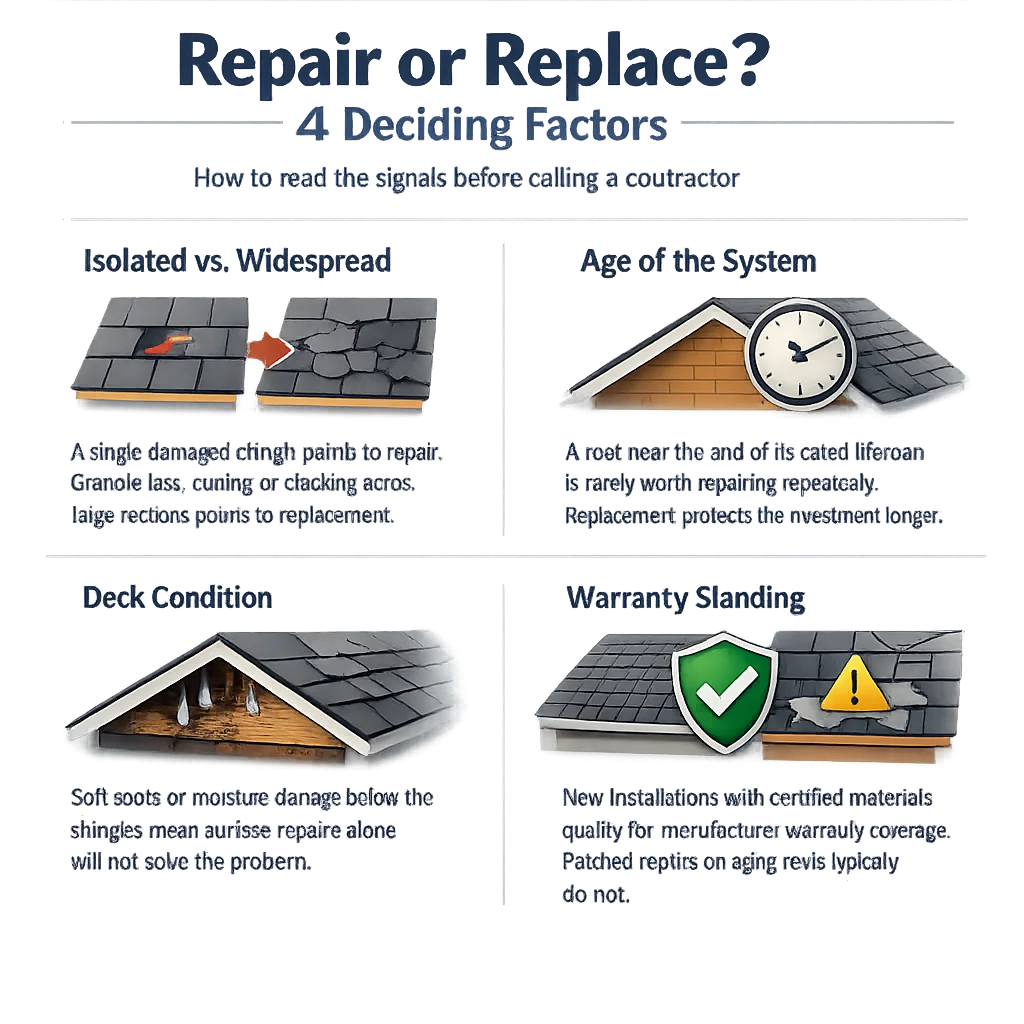
A repair is appropriate when damage is genuinely isolated. A missing shingle after a windstorm, a single failing pipe boot collar, or a small section of compromised flashing are all situations where targeted repair makes sense and preserves the remaining service life of an otherwise sound roof.
Replacement becomes the right answer when any of the following apply:
The honest answer is that this decision should come after a professional inspection, not before. A contractor who tells you what you need before walking your roof is skipping the step that makes the recommendation credible. For a clearer picture of what to expect before work begins, the Roof Estimate: Costs, Materials & What to Expect article walks through how estimates are built and what variables drive the numbers.
The roofing industry uses certification designations heavily in marketing, but the operational meaning for your specific project is almost never spelled out. Here is what it actually changes.
Smithrock Roofing holds CertainTeed PREMIER ShingleMaster certification. To earn and maintain this designation, a contractor must meet CertainTeed’s requirements for installation quality, continuing education, and business standards. The certification is not a one-time achievement. It requires annual renewal, which matters for a reason most homeowners never hear explained.
If a contractor earned a certification two years ago but has not renewed it, their current installation may not qualify for the highest warranty tier the manufacturer offers, even if the physical materials are brand-name products. The manufacturer warranty tier you are eligible for is tied to the certified status of the contractor at the time of installation and warranty registration, not at the time of your initial research.
This means the right question to ask is not “are you certified?” but “is your certification currently active?” At Smithrock, it is. That active status is what allows us to back installations with a limited lifetime manufacturer warranty alongside our own 5-year labor warranty.
Most homeowners leave a contractor conversation knowing they have “a warranty” without understanding they actually have two, and that the two cover different things.
| Warranty Type | What It Covers | Who Backs It | What Can Void It |
|---|---|---|---|
| Manufacturer (Materials) | Defects in the shingles and roofing products themselves | CertainTeed | Non-certified installer, improper installation, unapproved modifications |
| Labor (Workmanship) | Installation errors made by the contractor’s crew | Smithrock Roofing | Damage caused by unrelated third parties or homeowner modifications |
The manufacturer warranty covers the product if it fails due to a defect in the material itself. The labor warranty covers the installation: flashing, sealing, fastening, and every other decision the crew makes during the project. A homeowner who has only a manufacturer warranty and not a workmanship warranty is unprotected if a leak traces back to how the roof was installed rather than what it was made of.
Smithrock provides both, and we explain both before the project starts.
Need a hand with this in Winston-Salem, Greensboro and the Triad? Call (336) 971-0464 or request a free estimate. Honest answers, no pressure.
Choosing a roofing material should not come down to which manufacturer a contractor happens to prefer. It should reflect the actual conditions of your home and your long-term goals.
The key variables that should drive material selection:
A contractor who advocates for a single product line without explaining why it fits your specific situation is doing the easy part of the job, not the complete part. Our roofing service covers the full range of material options and configurations appropriate for homes across the NC Triad.
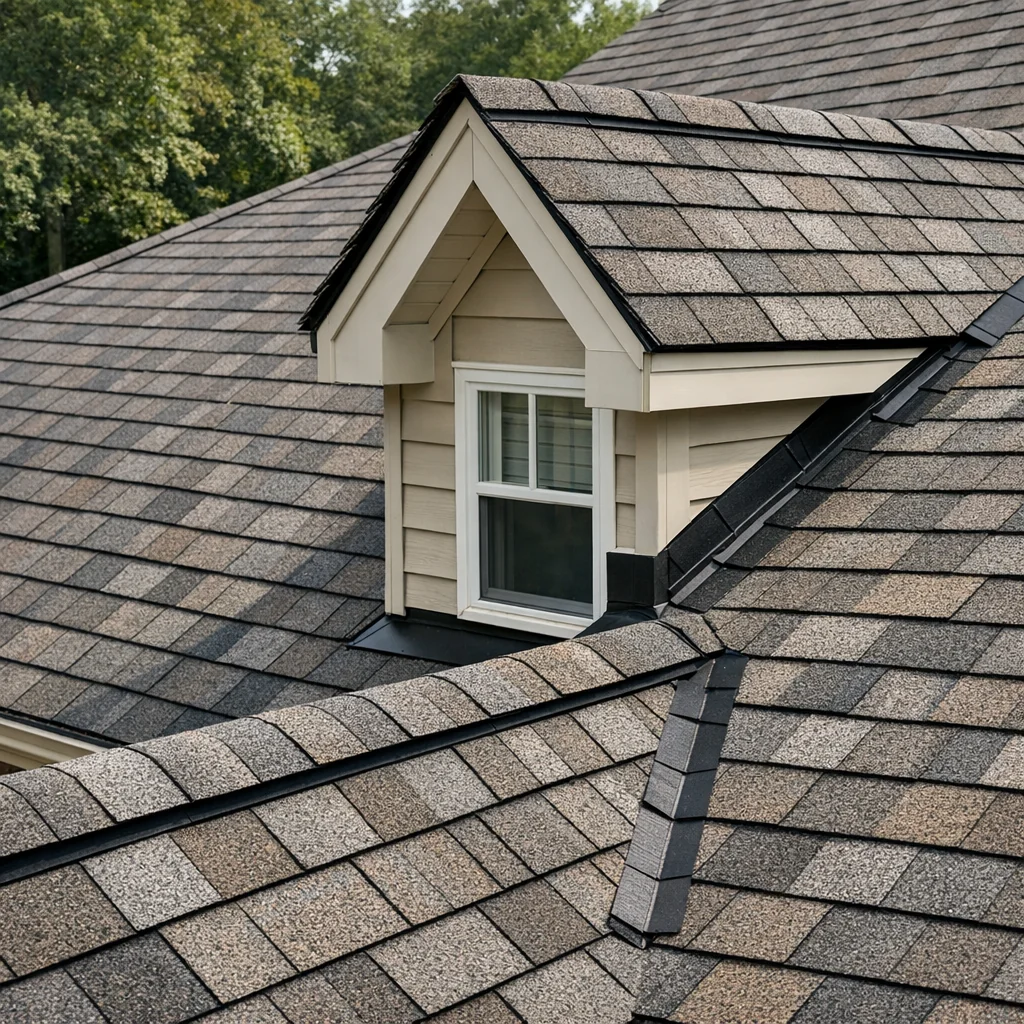
When Smithrock conducts a roof inspection, it is not a visual walk-around. A professional inspection covers:
The findings from this inspection are what drive the repair-versus-replacement recommendation. Without it, any estimate is a guess. Homeowners who want to understand what warning signs to watch for before scheduling an inspection can review the Signs of Roof Damage You Can’t Ignore article for a practical overview.
This is a point competitors rarely make explicit, but it matters. A homeowner with a single failing section of shingles needs a skilled roofer. A homeowner planning to replace windows, update siding, and address gutters alongside a roof replacement benefits from a contractor with verified expertise across all of those systems.
Smithrock serves both needs. We handle roofing, siding, gutters, windows, and custom chimney caps, which means a homeowner undertaking a broader exterior project has a single accountable point of contact across every trade involved. That accountability is not incidental. It is the reason more than 350 five-star reviews consistently mention communication and follow-through as the defining experience.
Homeowners across Winston-Salem, roofing in Greensboro, High Point, Kernersville, Clemmons, Rural Hall, King, and Mount Airy have trusted Smithrock for exactly that reason: the work is done right, explained clearly, and backed fully.
A Trenton roof is a hybrid roof style that combines elements of a gable roof with additional structural features at the eaves, creating a distinctive profile that offers both aesthetic character and practical benefits. Unlike a straightforward gable roof, the Trenton configuration typically involves a change in pitch or a flared lower section, which affects how water sheds, how dormer intersections are handled, and how flashing must be installed to maintain a weathertight seal.
The answer depends on findings from a professional inspection rather than surface appearance alone. Factors like the age of the existing shingles, the condition of the decking beneath them, the integrity of flashing at all penetrations, and whether granule loss has advanced to the point of compromising the shingle mat all contribute to that determination. A thorough inspection by a qualified roofing contractor is the only reliable way to get an honest answer.
Yes, in most cases. The intersecting planes, varied pitches, and additional flashing requirements involved in a Trenton roof mean installation and repair work typically take longer than work on a simpler roofline. Proper execution at every transition point is what determines long-term performance, so the additional time spent on detail work is directly tied to the quality of the finished result.
Smithrock handles roofing, siding, gutters, windows, and custom chimney caps, which means homeowners undertaking a broader exterior project have a single contractor accountable for every trade involved. This is particularly practical for Trenton-style homes where roof work often intersects with siding transitions, gutter placement, and chimney detailing that all need to be coordinated correctly from the start.
Smithrock Roofing brings the inspection depth, craftsmanship, and full exterior expertise that a Trenton roof demands, whether a homeowner in Winston-Salem needs targeted repairs or a property in Greensboro is ready for a complete replacement. The complexity of this roof style rewards working with a contractor who understands every plane, transition, and flashing point rather than one treating it like a standard job. If your roof is ready for an honest evaluation, call (336) 971-0464 or Get a Free Estimate and let Smithrock show you what thorough, accountable work actually looks like.

Smithrock Roofing © Copyright 2026 • All Rights Reserved • Privacy Policy • Maintained by Mongoose Digital Marketing