A stone chimney cap is a natural stone covering placed on top of a chimney to protect it from water, animals, debris, and downdrafts while adding significant aesthetic value and durability to your home. These caps are typically crafted from single, solid slabs of bluestone, granite, limestone, or sandstone ranging from 2″ to 3″ thick. This single-piece construction offers unparalleled strength, eliminating the seams and joints that are common weak spots in other materials.
Your chimney is a complete system, and the cap is its first and most important line of defense. Many homeowners only think about their chimney when a major problem arises—water dripping into the fireplace, animal noises from within the flue, or a persistent, musty smell that won’t go away. These issues are often the final symptoms of a long-term problem originating from a missing or inadequate chimney cap. While standard metal and concrete caps provide basic, minimal coverage, they are a temporary fix. A stone chimney cap elevates this protection, offering the toughest defense against the elements, the longest possible lifespan, and a timeless beauty that actively increases your home’s value.
Key benefits of stone chimney caps:
While stone caps have a higher upfront cost and require professional installation due to their significant weight, the investment is undeniably sound. A quality stone cap will outlast multiple metal or concrete replacements, making it the most cost-effective choice for homeowners seeking a permanent, high-end solution. This guide will cover everything you need to know about stone chimney caps, from how they work and outperform other materials to stone selection, design, and the critical installation process.
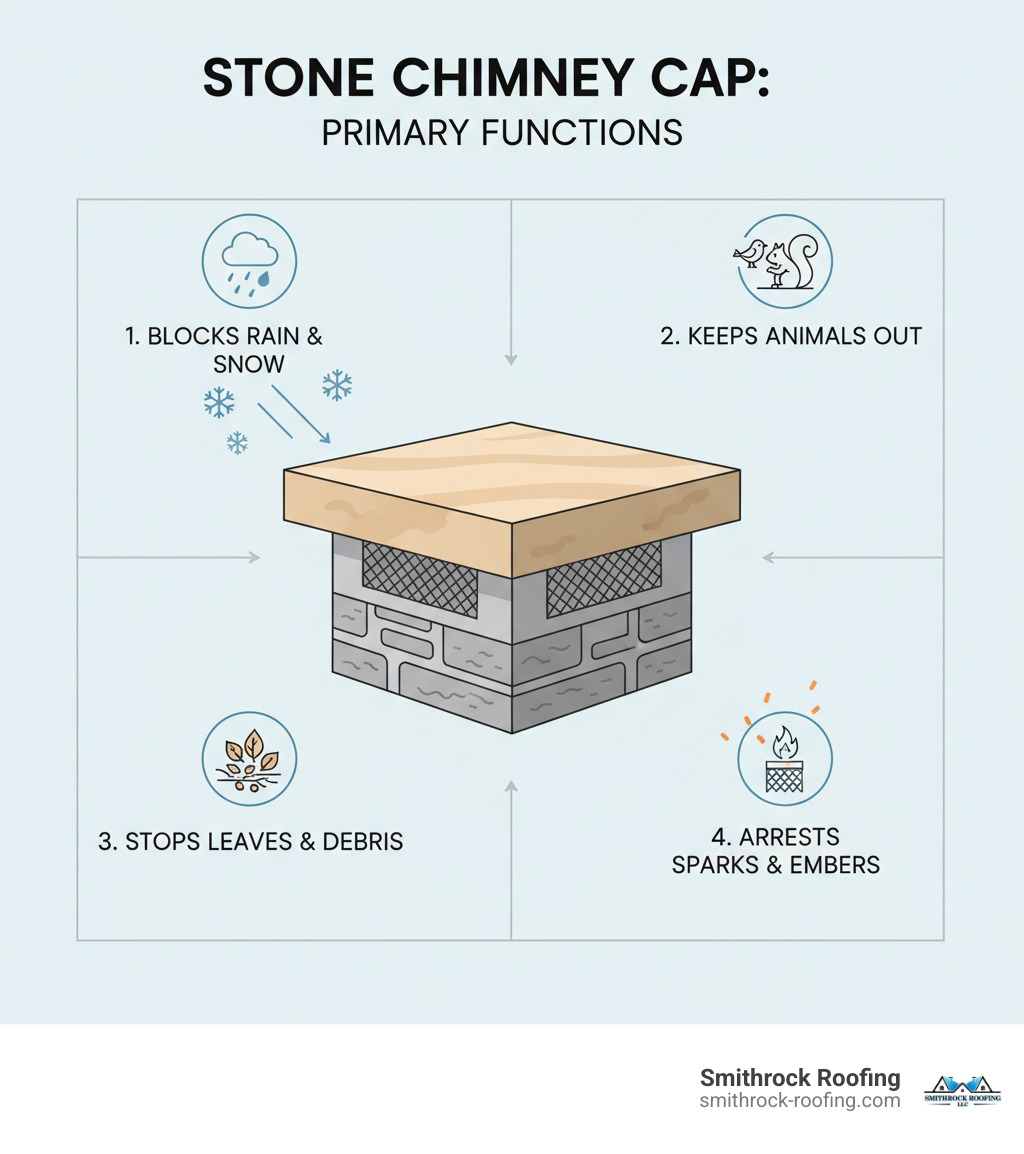
Your chimney cap is the unsung hero of your roof, working around the clock to protect your home from water damage, pests, and fire hazards. A stone chimney cap improves this protection with a level of durability that outlasts nearly any other material, ensuring these critical functions are performed without fail for decades.
Water Damage Prevention is the most critical function. An uncapped chimney is essentially an open hole in your roof. Rain and snow pour directly into the flue, where they begin a cascade of destruction. This moisture rusts the damper assembly, making it difficult or impossible to operate. It saturates the mortar joints from the inside out, causing them to decay and crumble. The water also degrades the flue liner—terracotta clay tiles can crack and spall, while metal liners can corrode and fail. Eventually, this moisture can seep into your attic and walls, leading to widespread structural damage, wood rot, and costly Roof Repair Services.
One of the most visible signs of water intrusion is efflorescence, a white, powdery stain on the chimney’s brick exterior. This occurs when water soaks into the masonry, dissolves natural salts within the bricks, and then evaporates, leaving the salt deposits behind. Even more destructive is the freeze-thaw cycle. Water absorbed by the bricks and mortar freezes in winter, expands, and creates cracks. When it thaws, more water enters these new cracks, and the cycle repeats, causing the brick faces to pop off (spall) and the structure to weaken. A properly sloped stone cap with a drip edge, as required by building codes referenced in resources like Chimney Caps | UpCodes, directs all water away from the masonry, protecting the entire chimney system from this relentless attack. A missing cap doesn’t just invite minor repairs; it invites catastrophic structural failure and serious health risks from mold and mildew growth in the attic.
Animal and Debris Blockage is another key role. Chimneys offer a warm, sheltered space that is highly attractive to birds, squirrels, and raccoons looking to nest. These animals bring in flammable nesting materials like twigs and leaves, which can create a dangerous blockage in the flue. Falling leaves and branches can also accumulate and form an obstruction. When the flue is blocked, smoke and deadly, odorless carbon monoxide can back up into your home instead of venting safely outside. Furthermore, the acidic droppings from birds can eat away at the mortar and metal components inside your chimney. A cap with a built-in mesh screen keeps these unwelcome guests and debris out while allowing smoke to escape, ensuring your fireplace operates safely and efficiently.
Fire Safety and Performance are also significantly improved. The mesh screen on a chimney cap acts as a spark arrestor, a critical safety feature that contains hot embers and sparks from a wood fire, preventing them from escaping and landing on your roof or nearby combustible materials. This drastically reduces the risk of a house fire. Additionally, a well-designed cap can prevent downdrafts caused by strong winds, which can push smoke back down the chimney and into your living space. By keeping the entire flue system dry and clear of obstructions, a cap ensures your fireplace drafts properly, allowing for a more efficient burn and preventing the buildup of flammable creosote.
Leaving a chimney uncapped is a serious and costly risk. It’s an open invitation for structural damage, moisture problems, mold, and the silent danger of carbon monoxide. The first sign is often water dripping into your fireplace and rusting the damper, but by then, the damage has already begun. A chimney cap isn’t an optional accessory; it’s a fundamental component for your home’s safety and integrity. A stone chimney cap provides the highest level of protection, as it doesn’t rust like metal or crack like concrete, standing strong for a lifetime.

Every chimney needs a cap, but the material you choose makes a significant difference in performance, longevity, and aesthetics. While basic metal or concrete caps are functional, a stone chimney cap transforms a necessary component into a beautiful architectural statement. It’s where superior durability meets sophisticated design, offering a permanent solution rather than a temporary fix.
Your chimney is a highly visible feature of your home’s silhouette. Topping it with a piece of custom-fabricated natural stone brings an elegance and sense of permanence that manufactured materials simply cannot replicate. Each stone cap possesses unique variations in color, grain, and texture, signaling a commitment to quality and craftsmanship that enhances your entire property. While stone costs more upfront, it’s a long-term investment that can last for the life of your home, increasing its value and providing unparalleled protection. For homeowners who want the best performance and a refined look, stone is the clear choice. To learn more, explore more info about our chimney services.
Stone’s primary advantage is its incredible, almost timeless longevity. A stone chimney cap is typically carved from a single, solid slab of bluestone, granite, or limestone, usually two to three inches thick. This monolithic, single-piece construction is its greatest strength—there are no seams to separate, no joints to crack, and no welds to fail. This eliminates the inherent weak points found in multi-piece concrete caps and seamed metal alternatives. Natural stone is inherently tough, withstanding severe weather, high winds, hail, and impacts that would dent, puncture, or crack lesser materials. It is also highly resistant to UV degradation, which can make other materials brittle over time. Dense, properly sealed stone also masterfully resists the destructive freeze-thaw cycle that cripples other masonry. With proper professional installation, a quality stone cap can last for decades, potentially outlasting your roof, siding, and even you.
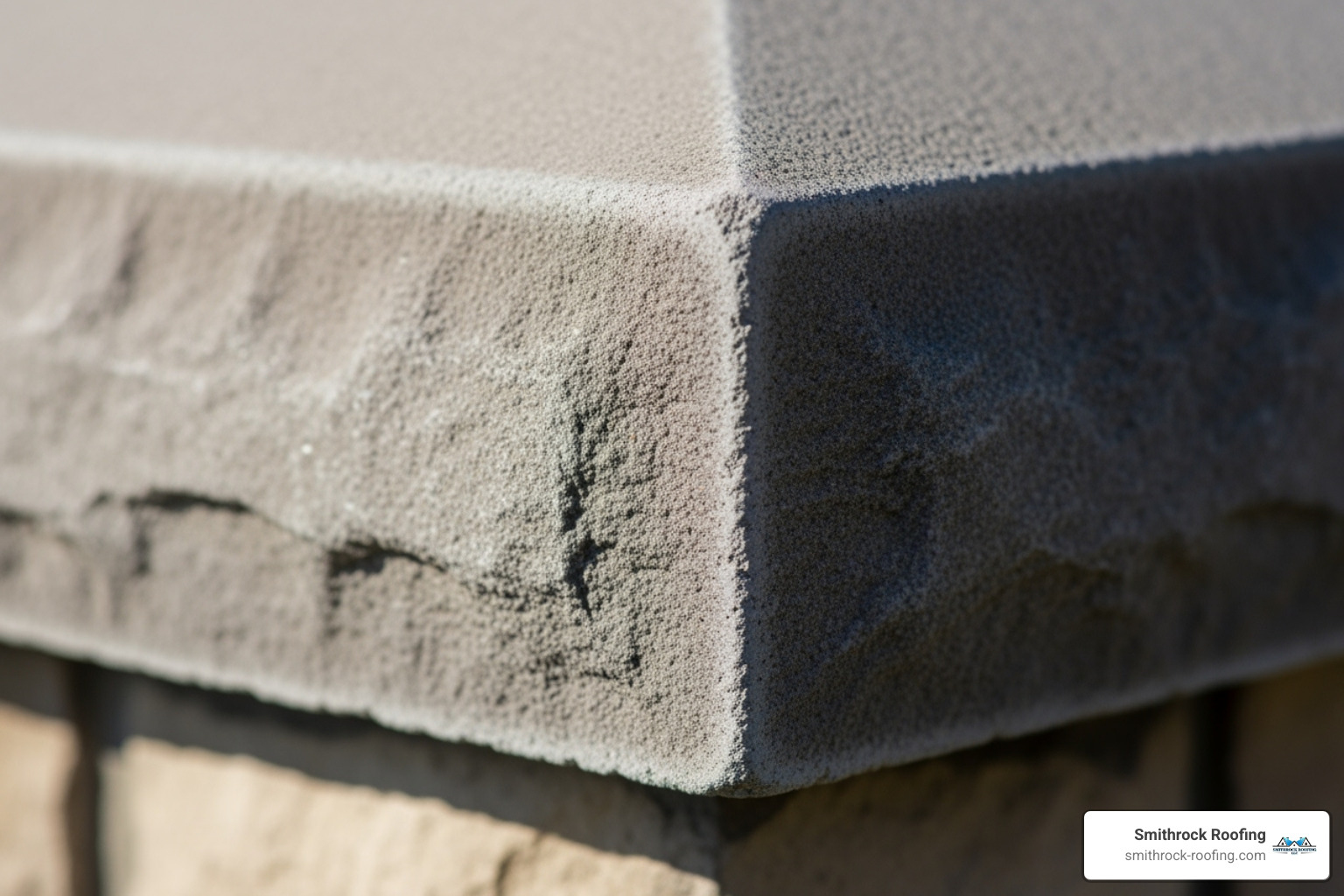
Natural stone possesses a timeless beauty that complements any architectural style, from historic Colonial and rustic Craftsman to sleek, modern designs. Each stone chimney cap is custom-cut to your chimney’s exact dimensions, giving it a bespoke, tailored quality that speaks to a higher standard of construction. This attention to detail significantly improves your home’s curb appeal and is immediately recognized by potential buyers as a premium, high-value feature. A stone cap can visually anchor your home’s exterior, creating a cohesive look by complementing existing stone foundations, walkways, or brickwork. While most chimney caps are designed to go unnoticed, a stone cap becomes a subtle yet powerful focal point, adding architectural interest and a polished, finished look that completes your home’s design.
Let’s directly compare stone to its common alternatives to understand its superior value.
Metal Caps: These are the most common type due to their low initial cost and light weight. However, their lifespan is limited. Galvanized steel, the cheapest option, often begins to rust within a few years, leading to ugly stains running down the chimney. Stainless steel offers better longevity but is still susceptible to denting from hail or falling branches and can be noisy in high winds. Copper is beautiful and long-lasting but comes at a premium price and develops a green patina that may not suit all homes. Most metal caps require replacement every 5 to 15 years, making them a recurring expense.
Concrete Caps: Pre-cast concrete caps are more durable than basic metal but are highly susceptible to cracking, especially in climates with harsh freeze-thaw cycles. They are porous, and once a small crack forms, water intrusion begins, accelerating deterioration from within. They generally last 10 to 20 years before needing replacement and have a purely utilitarian appearance that adds little to no aesthetic value to a home.
Stone Caps: A stone chimney cap offers superior durability that outlasts both metal and concrete by decades, if not a lifetime. They require minimal maintenance and provide unparalleled aesthetic appeal and value. The main considerations are the initial cost and the weight, which requires a structurally sound chimney and mandatory professional installation. However, when you factor in the elimination of future replacement costs, a stone cap proves to be the wisest financial investment. For homeowners seeking a permanent, high-value solution that enhances their property, a stone chimney cap is the clear winner.
Choosing a stone chimney cap is about selecting a piece of natural art that will crown your home for decades. The process involves considering the right stone and design to complement your home’s style, withstand your local climate, and provide flawless function. Before selecting a stone, it’s vital to consider your home’s architectural style, your regional weather patterns (e.g., heavy rain, freeze-thaw cycles, intense sun), and your chimney’s structural capacity. The goal is to create a cohesive, harmonious look that integrates perfectly with your home’s existing materials and character.
Several types of natural stone are popular for chimney caps, each offering a unique blend of aesthetics, durability, and maintenance requirements.
Bluestone: A dense, durable sandstone, bluestone is a true workhorse material. It is renowned for its classic blue-gray color and exceptional resistance to chipping and cracking. Geologically a sedimentary rock, its fine-grained texture provides a subtle, natural appearance. Its color palette can range from deep blues and grays to hints of green and lilac, adding to its organic charm. It’s a favorite for stone chimney caps due to its proven performance in harsh, four-season climates.
Limestone: Offering a softer, more refined aesthetic, limestone is available in creamy whites, soft grays, and warm buff tones. It lends a classic, old-world elegance that is perfect for traditional, formal, and European-style architecture. While geologically softer than granite, high-density, properly sealed limestone is a durable and beautiful option. It is crucial to seal limestone to protect it from acid rain and staining.
Granite: As the heavyweight champion of durability, granite is an igneous rock formed from cooled magma, making it extraordinarily hard and dense. It is virtually impervious to scratches, staining, and temperature extremes, making it a zero-maintenance option in many cases. Available in a stunning range of colors—from whites and grays to dramatic blacks, reds, and blues—granite is the premium choice for absolute longevity and a bold, powerful statement.
Sandstone: With its warm, earthy tones of red, brown, and tan, sandstone is an excellent choice for rustic, Southwestern, or Craftsman aesthetics. It is more porous than other stones and requires diligent and repeated sealing with a high-quality penetrating sealer to prevent moisture absorption and freeze-thaw damage. When properly maintained, it provides a beautifully natural, textured look that blends seamlessly with natural landscapes.

Proper design is as important as the stone itself for ensuring your stone chimney cap functions correctly and looks architecturally proportional.
Sizing and Overhang: The cap must extend beyond the chimney’s masonry footprint by at least 2 to 4 inches on all sides. This overhang is crucial for directing water far away from the brick or stone walls, preventing staining, efflorescence, and mortar erosion. Too little overhang fails to protect the chimney face, while too much can look top-heavy and catch wind.
Drip Edge: This is a non-negotiable feature. A drip edge is a groove (or kerf cut) on the underside of the overhang. It works by breaking the surface tension of water, forcing it to drip cleanly to the ground instead of wicking back underneath the cap and running down the chimney face.
Slope: Building codes require a sloped top to ensure water and melting snow run off efficiently. A minimum pitch of 1/4 inch per foot is recommended to prevent pooling, which can lead to staining, algae growth, or destructive ice dams in winter.
Flue Openings: For chimneys with one or more flues, the cap must be custom-cut with precise openings for each flue pipe. These openings must be large enough to allow for proper ventilation but small enough to maintain full coverage and protection for the chimney crown below.
Edge Profile and Finish: The finish of the stone and the profile of its edge contribute significantly to the overall style. A rough, rock-faced edge suits a rustic home, while a smooth, bullnose or chamfered edge complements a more formal or modern design. The top surface can be honed (matte), thermal (textured), or polished (glossy, typically for granite), each offering a different look. At Smithrock Roofing, we help you design a cap that is both beautiful and built to last.
Installing a stone chimney cap is a specialized task that demands professional expertise, precision masonry skills, and a rigorous focus on safety. A stone cap can weigh several hundred pounds, and lifting and positioning it at roof height is absolutely not a DIY project. Attempting to do so poses a significant risk of serious injury and property damage. At Smithrock Roofing, we have the certified training, specialized equipment, and years of hands-on experience to ensure your cap is installed correctly, safely, and in full compliance with all building codes. Our approach is about creating a permanent, watertight seal and ensuring long-term structural integrity. The skills required are developed through rigorous programs, like those found via resources such as Find a Local Training Center. For more on our commitment to quality, visit More info about our professional roof installation.
Professional installation is essential for several critical reasons. The sheer weight of a stone cap (ranging from 300 to over 500 pounds) requires a coordinated team and specialized lifting equipment like scaffolding, hoists, or even cranes for safe handling. Beyond safety, creating a permanent watertight seal requires deep masonry expertise. The mortar must be the correct type (e.g., Type N or S) and consistency, applied to a properly prepared surface to create a level, durable, and impermeable bond. Professionals also understand and strictly adhere to building codes, such as the ASTM C1283 standard that mandates a flexible, caulked bond break around flue liners. This prevents stress cracks caused by the different rates of thermal expansion between the hot flue and the cooler stone cap. Finally, and crucially, professional installers carry comprehensive liability insurance and workers’ compensation, protecting you and your property from any financial liability in the unlikely event of an accident during the project.
Our installation process for a stone chimney cap is methodical, precise, and refined through years of experience to ensure a flawless result.
Structural Assessment and Precise Measurements: We begin with a thorough inspection of the chimney structure to confirm it can support the weight. We then take careful measurements of the chimney crown and flue openings to ensure a perfect, custom fit with the correct overhang on all sides.
Custom Fabrication: Based on these measurements and your stone selection, the slab is custom-cut by skilled stonecutters using specialized saws and equipment. This includes cutting the drip edge on the underside and creating any necessary flue openings.
Crown Preparation: The existing chimney crown surface is meticulously prepared. This involves cleaning off all debris, grinding down any high spots, and repairing any cracks or deterioration in the old crown to create a structurally sound and perfectly level foundation for the new cap.
Mortar Application and Setting: A full bed of high-quality, weather-resistant mortar is expertly applied to the prepared crown. The heavy stone cap is then carefully lifted into place and set onto the mortar bed. We use levels and shims to ensure it is perfectly centered and sloped correctly for drainage.
Flue Liner Bond Break: As required by building codes (ASTM C1283), we create a flexible bond break by applying a high-temperature sealant or caulk in the space between the stone cap and the clay flue liner. This crucial step allows the flue and cap to expand and contract independently, preventing stress cracks and premature failure.
Final Sealing and Cleanup: After the mortar has had time to set, we tool the joints for a clean, compressed finish that enhances water resistance. We inspect all joints and apply any final sealant as needed. The entire work area is then cleaned thoroughly. Your new stone chimney cap will be the only evidence of our visit, standing as a testament to quality craftsmanship that will protect your home for decades.
A stone chimney cap is a significant investment in your home’s future, offering a combination of longevity, performance, and beauty that few other Roofing components can match. While natural stone is remarkably low-maintenance compared to other materials, a small amount of preventative care will ensure it performs at its best and looks beautiful for its entire lifespan.
Maintaining your stone chimney cap is simple and primarily involves preventative inspections and care.
A stone chimney cap has a higher upfront cost than basic metal or concrete options. This is due to the premium material cost, custom fabrication labor, and the specialized professional installation required. The weight of the stone also necessitates a professional structural assessment to ensure your chimney can support it. However, this initial cost should be viewed as a long-term investment, not an expense.
Consider a 30-year cost analysis: A standard galvanized metal cap might cost $500 to install but needs replacement every 10 years, totaling $1,500 over 30 years, not including price increases. A concrete cap might cost $1,000 and need replacement once, totaling $2,000. A stone chimney cap might cost $2,000 – $4,000+ upfront but will last for 50+ years. It eliminates the cost, time, and hassle of future replacements, making it the superior value proposition over the life of your home. While natural stone has variations in color and texture, most homeowners see this as a key part of its authentic charm and beauty.
Choosing the right professional is as important as selecting the right stone. An improper installation will compromise the performance and longevity of even the finest material, wasting your investment.
Deciding on a stone chimney cap is a significant choice for your home, representing a long-term investment in both protection and aesthetics. Here are detailed answers to some of the most common questions we receive to help you make an informed decision.
The weight of a stone chimney cap varies significantly based on the stone type, its overall dimensions, and its thickness (typically between 2″ and 3″). As a rule of thumb, most stone weighs between 13-20 pounds per square foot per inch of thickness. For example, a modest 24″ x 24″ chimney with a 2-inch thick bluestone cap could weigh 150-200 pounds. A larger 36″ x 48″ chimney crowned with a 3-inch thick granite cap could easily exceed 600 pounds. This substantial weight is precisely why a professional structural assessment of your chimney is a mandatory first step, and why installation requires specialized equipment and a trained crew.
Almost, but not all. Most well-built masonry chimneys (constructed from brick, block, or natural stone) can support a stone chimney cap. However, a professional evaluation is absolutely essential to confirm the structural integrity of the chimney’s foundation, stack, and crown. We must verify that it can safely handle the significant, permanent load for decades to come. Stone caps are specifically designed for masonry chimneys and are not suitable for prefabricated metal chimneys. These factory-built systems are lightweight and have their own specific, UL-listed cap components that cannot be altered or substituted for safety and warranty reasons.
This is where the true value of a stone chimney cap becomes undeniable. With professional installation and minimal routine maintenance, a natural stone cap can last for many decades—often for the entire life of your home. This exceptional longevity far surpasses that of any alternative. Metal caps may last 5-15 years before needing replacement due to rust, corrosion, or storm damage. Pre-cast concrete caps typically last 10-20 years before they begin to crack and deteriorate from water intrusion. A solid stone cap resists weathering, UV degradation, and corrosion, making it a permanent, one-time investment in your home’s protection and beauty.
This depends entirely on the porosity of the stone. Very dense stones like granite have extremely low porosity and often do not require sealing. However, more porous stones like limestone and sandstone should absolutely be sealed. We recommend using a high-quality penetrating, breathable (silane/siloxane) sealer. This type of sealer soaks into the stone to repel water from within, rather than just forming a surface film that can trap moisture. Sealing prevents staining, inhibits organic growth, and provides crucial protection against the destructive freeze-thaw cycle.
It depends on the severity of the crack. Minor surface-level or hairline cracks can sometimes be repaired by a skilled mason using specialized stone epoxies. However, if a crack runs through the full thickness of the cap, it has compromised the structural integrity and its ability to be waterproof. In these cases, replacement is almost always the only safe and effective solution. This is why proper initial installation, including the critical bond break around the flue, is so important—it is the best way to prevent stress cracks from ever forming.
A properly designed and installed stone chimney cap can actually improve your chimney’s performance. By preventing downdrafts on windy days, it can help the chimney maintain a consistent, upward draft, leading to a more efficient and less smoky fire. However, an improperly designed cap—for instance, one that sits too close to the flue opening or doesn’t allow for enough ventilation—could potentially hinder the draft. This underscores the importance of working with a professional who understands the physics of chimney ventilation and can design a cap that is both beautiful and highly functional.
When you look at your home, every detail should reflect quality, care, and thoughtful design. A stone chimney cap is a crowning touch that does just that, signaling an unwavering commitment to excellence from the foundation to the very highest point.
As we’ve explored, stone caps offer an unparalleled level of protection against the relentless assault of rain, snow, animals, and debris. Their solid, single-piece construction provides uniform strength that holds firm against the elements for decades, not just years. Beyond this superior protection, a stone chimney cap adds a timeless elegance and architectural integrity to your home’s appearance. The natural beauty of custom-fabricated bluestone, granite, or limestone improves curb appeal, creates a polished look, and can tangibly increase your home’s market value.
While the upfront cost is higher than that of temporary alternatives, a stone cap is one of the wisest long-term investments you can make in your property. Its exceptional longevity means you avoid the recurring expense, disruption, and hassle of replacing lesser materials every decade. It is the definition of a ‘do it once, do it right’ solution. For homeowners who value lasting quality, peak performance, and sophisticated style, stone is the premier and most logical choice.
At Smithrock Roofing, our expert team of masons and roofers understands the nuances of chimney systems. We know how to properly assess your chimney’s structure, help you select the right stone for your home and climate, and execute a flawless, code-compliant installation. We treat this precision work with the respect it deserves, ensuring your investment serves you well for a lifetime.
If you’re ready to determine if a stone chimney cap is the right permanent solution for your home, we’re here to help. We’ll answer your questions, provide honest guidance, and help you protect and beautify your home.
Contact us today to discuss your chimney project. We proudly serve homeowners across Winston-Salem, King, Clemmons, Lewisville, Pilot Mountain, East Bend, Mt. Airy, Kernersville, Siloam, Danbury, High Point, Trinity, Pfafftown, Tobaccoville, Greensboro, Walnut Cove, Belews Creek, Rural Hall, Pinnacle, Bethania, Advance, Wallburg, Horneytown, Union Cross, and Midway, NC.
Smithrock Roofing © Copyright 2026 • All Rights Reserved • Privacy Policy • Maintained by Mongoose Digital Marketing