Why does snow melt on my roof? (But sticks to my neighbor’s roof) is a common and insightful question many homeowners ponder after a winter storm. The visual contrast between your bare roof and your neighbor’s snowy one isn’t a matter of luck; it’s a clear indication of your home’s thermal performance. The answer almost always points to significant heat loss from your living space into your attic, which then warms the roof sheathing from below.
Quick Answer:
After a fresh snowfall, a simple walk around your neighborhood provides a surprisingly accurate \”report card\” for your home’s energy efficiency. Roofs blanketed in a uniform layer of white are passing with flying colors. Those that are bare, patchy, or showing strange melt patterns are signaling underlying problems that are actively costing you money and compromising your home’s integrity.
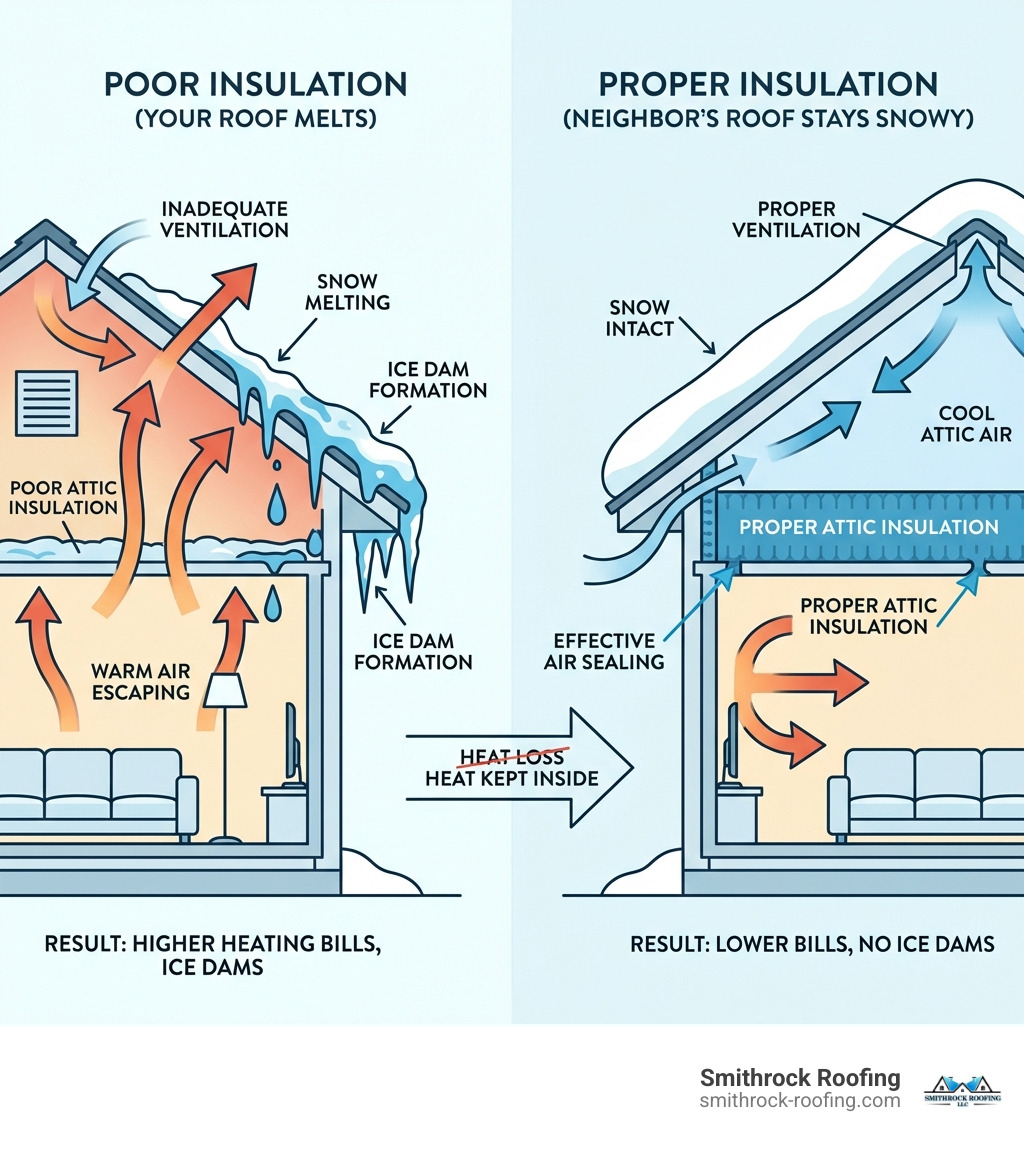
The science is straightforward: warm air rises. If the barrier between your living space and your attic—your ceiling—is not properly insulated and air-sealed, this buoyant warm air infiltrates the attic. It heats the underside of your roof deck, raising its temperature above freezing and melting the snow from the bottom up. This meltwater then trickles down to the colder roof edges and eaves (which are not heated from below), where it refreezes into destructive ice dams. Meanwhile, your neighbor’s snow-covered roof demonstrates that they are successfully keeping their conditioned air inside, resulting in lower heating costs and avoiding the perilous cycle of ice dam formation.
This comprehensive guide will delve into the building science behind this phenomenon. We will explore exactly why your roof is melting snow, detail the serious and often hidden dangers this poses to your home, and provide a clear, actionable plan to diagnose and permanently fix the problem. By the end, you’ll understand how to turn your roof from an energy liability into a well-performing shield that protects your home and your wallet.
Terms related to Why does snow melt on my roof? (But sticks to my neighbor’s roof):
A roof that prematurely sheds its snow cover is a flashing red light for heat loss, a problem that compromises your home’s energy efficiency, its long-term structural integrity, and your family’s comfort. This heat makes a journey from your heated living spaces into the unconditioned attic, where it warms the roof surface and melts snow. This transfer of thermal energy occurs through three primary mechanisms:
Insulation’s ability to resist this heat flow is measured by its R-value. The higher the R-value, the better the material is at insulating. When heat loss occurs, it warms the roof deck from below, melting the snow. To learn more about creating a thermally resistant home, you can explore more about home insulation.
The number one culprit behind a warm roof and premature snow melt is inadequate attic insulation. Your attic is designed to be a thermal buffer between the conditioned, heated envelope of your home and the cold exterior. When this buffer is compromised, heat has an easy escape route to your roof.
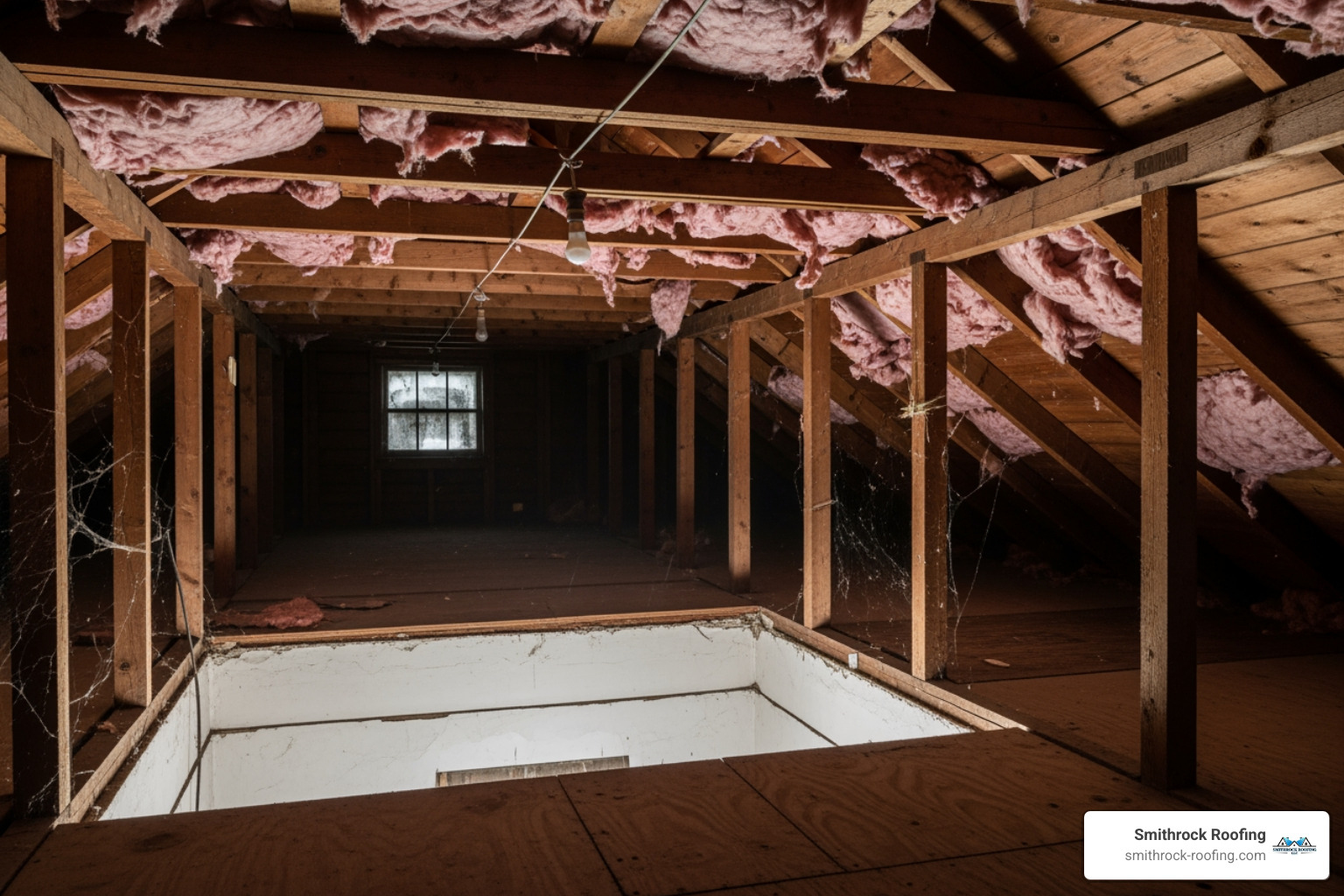
A simple visual check can often reveal the problem: if you can clearly see the tops of your attic’s ceiling joists, you do not have enough insulation. The insulation should be deep enough to completely bury them. The U.S. Department of Energy provides recommendations for insulation levels based on climate zones. For homes in Winston-Salem, NC, and the surrounding Piedmont Triad area (Climate Zone 4), the recommendation is R-49 to R-60 for an attic, which translates to approximately 16-22 inches of fiberglass or cellulose insulation.
Insufficient insulation allows for rapid heat transfer via conduction, warming the entire attic space and, consequently, the roof deck. This melts snow even when the outdoor temperature is well below freezing. This constant heat transfer represents a significant source of wasted energy, directly inflating your heating bills. As wood technologist Paul Fisette points out, a uniform snow cover is a sign of a well-functioning thermal envelope. Snow itself even provides a small amount of extra insulation (about R-1 per inch), a free benefit that a home with a bare roof is missing out on.
While insulation is critical for stopping conduction, a complete attic system must also address heat transfer from air movement (convection). This is where attic ventilation and air sealing become essential.
Proper attic ventilation is designed to keep the attic cold in the winter. It works by creating a continuous flow of cold, dry outdoor air through the attic space. This is typically achieved with a balanced system of intake vents (soffit vents located under the eaves) and exhaust vents (ridge vents at the peak of the roof or gable vents). This airflow flushes out any warm, moist air that may have leaked into the attic, keeping the roof deck temperature close to the outdoor temperature. If vents are blocked by insulation, debris, or improper installation, this airflow stops. Warm air becomes trapped, heating the roof deck and melting snow.
Even more impactful than poor ventilation are air leaks. These are unintended gaps and holes in the boundary between your living space and the attic. They allow warm, conditioned air to bypass your insulation entirely and flow directly into the attic. Common air leak culprits include:
This leaking air not only carries heat but also a significant amount of moisture. When this warm, moist air hits the cold surfaces in the attic (like the underside of the roof sheathing), the moisture condenses. This condensation can lead to frost, mold, mildew, and rot, causing serious damage over time. This is why meticulous air sealing is just as crucial as adding insulation. For more insights on preventing these issues, see our guide on roof leak prevention.
The stark difference in snow cover between your home and your neighbor’s is a direct reflection of how well each house retains its heat. It’s a real-time, large-scale diagnostic test for energy efficiency, and the results are written in the snow.
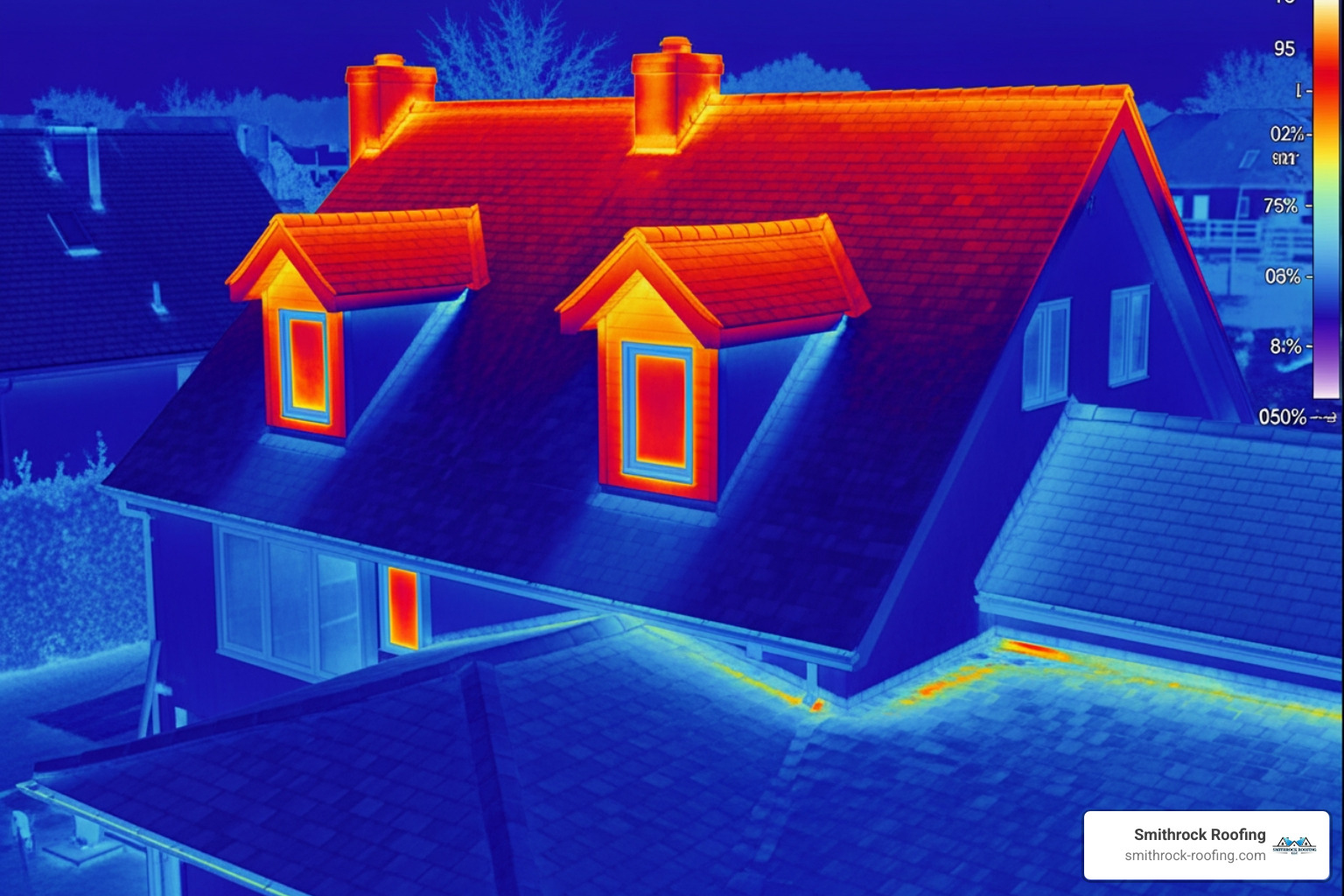
Your roof after a snowstorm is the most honest energy auditor you’ll ever have. The snow tells a simple story: an even, pristine blanket of white means your insulation and air sealing are effectively keeping heat inside your living space. A bare, patchy, or striped roof, however, is a clear sign of significant heat loss, pointing to costly inefficiencies in your home’s thermal envelope. As building science expert Paul Fisette explains, \”An even covering of snow on the roof means that the insulation inside is working well.\”
Let’s analyze the tale of two roofs—yours and your neighbor’s—to understand what’s happening.
Your Roof (Melting Snow): A roof that quickly melts snow is known as a \”hot roof.\” This indicates that a substantial amount of heat is escaping from your living space into the attic, warming the roof deck from below. This process has multiple negative consequences: it wastes a tremendous amount of energy, drives up your heating bills, creates uncomfortable drafts in your home, and, most critically, sets the stage for the formation of destructive ice dams.
Neighbor’s Roof (Snow Sticking): A snow-covered roof is a \”cold roof,\” which is the ideal scenario in winter. Their attic is properly isolated from the living space below due to a combination of deep insulation and meticulous air sealing. This keeps the attic temperature close to the outdoor temperature. As a result, heat stays inside the home where it belongs, leading to lower energy bills, enhanced comfort, and the prevention of common winter roofing problems. The snow itself even provides an additional layer of natural insulation, further improving efficiency.
Here are the most common reasons your neighbor’s roof is outperforming yours:
While internal heat loss is the primary culprit for a \”hot roof,\” it’s important to recognize external factors that can also influence snow melt. Differentiating between these natural processes and signs of a problem is key.
To accurately diagnose your roof, observe it on a cold (below 32°F), overcast day, or early in the morning after a cold night. Under these conditions, the influence of the sun is removed. Any melting you see is a direct result of heat escaping from your house. For homeowners in Winston-Salem, King, and Clemmons, understanding these nuances helps us recommend the most effective and durable roofing solutions.
A prematurely melting roof is far more than a sign of wasted energy; it’s a critical warning of impending and potentially severe damage to your home. The relentless cycle of melting and refreezing initiated by heat loss creates a host of risks that can lead to thousands of dollars in repairs if left unaddressed.
The most immediate and well-known danger is the formation of ice dams. However, the consequences ripple outward from there, threatening your home’s structural framework, promoting hazardous mold growth, and damaging everything from your gutters to your interior finishes. In acute cases, these issues can escalate to the point of needing emergency roof repair.
An ice dam is a thick ridge of solid ice that builds up along the eaves of a roof. It forms when heat escaping from your attic warms the upper portion of your roof, melting the snow. This meltwater runs down the roof slope until it reaches the cold overhangs (eaves and soffits), which are not heated by the attic below. Here, the water refreezes, creating a small ledge of ice. As the cycle continues, this ledge grows into a large, thick \”dam.\”
This dam blocks the path for any further meltwater to drain off the roof. The water pools behind the ice dam, creating a small reservoir on your roof. As This Old House explains, \”An ice dam forms when snow begins melting from the upper parts of the roof, but re-freezes once it hits the overhang at the bottom of the roof. Ice builds up, creating a dam. Water from melting snow gets blocked behind it and leaks into your home.\” This standing water, often several inches deep, then works its way under the shingles and through the roof deck into your home.
Key signs that you have an ice dam problem include:
Recognizing these signs early is crucial. If you see an ice dam forming, it’s important to understand how to get rid of ice dams safely, as improper removal can cause even more damage.
Ignoring the warning signs of a hot roof and the resulting ice dams can lead to a cascade of destructive and expensive long-term problems:
These issues are not merely cosmetic. They represent a direct threat to the safety, health, and financial value of your home. Addressing the root cause—heat loss—is the only way to protect your investment.
Now that you understand the causes and severe risks associated with a \”hot roof,\” it’s time to create an action plan. The good news is that these problems are entirely preventable and fixable with a systematic approach. A successful plan involves a combination of your own visual inspections and, crucially, a professional assessment to pinpoint the exact sources of heat loss.
While you can spot the symptoms on a snowy day, the most effective way to diagnose the root causes is with a professional home energy audit. An energy auditor or a qualified roofing contractor uses specialized tools to get a precise map of your home’s thermal weaknesses.
These diagnostic tests take the guesswork out of the equation, providing a scientific roadmap for the most effective repairs. There are many benefits of regular roof inspections that can be combined with these energy assessments.
Your own observations are a valuable part of the diagnostic process. After the next snowfall, take a walk around your property and look for these specific clues:
These visual cues are your home’s way of highlighting its weakest points. For a detailed guide on what to look for, refer to our comprehensive roof inspection services.
Fixing roof heat loss involves creating a robust thermal boundary at your attic floor. This is a multi-pronged attack focused on insulation, air sealing, and ventilation.
By implementing these solutions, you’re not just stopping snow melt—you’re creating a more comfortable, healthy, and energy-efficient home while protecting your roof from long-term damage. When considering materials, it’s also wise to learn about choosing the best roofing materials for overall performance.
Homeowners often have many questions when they notice their roof behaving differently from their neighbors’. Here are answers to some of the most common ones.
Patchy or localized snow melt is a very specific indicator of targeted heat loss. Instead of a uniformly under-insulated attic, these patterns act like a treasure map, leading you directly to the weak points in your home’s thermal boundary. The most common culprits include:
While a dark roof does contribute to faster snow melt, it is almost never the sole reason for a dramatic difference, especially when compared to a neighbor’s roof on a cold day. Here’s the breakdown:
In short, a dark roof might explain a slight difference on a sunny afternoon, but it doesn’t explain a bare roof on a cloudy 20-degree day.
This is a common and costly misconception. The answer is almost always no. A standard roof replacement involves removing old shingles and underlayment and installing new ones. This process does not address the root causes of heat loss, which are located below the roof deck in your attic. The problem lies with insufficient insulation, air leaks from your living space, and poor ventilation. You can install the most expensive, high-end shingles on the market, but if your attic is still leaking heat, the snow will still melt, and ice dams will still form. A comprehensive solution must address the entire roof and attic system: insulation, air sealing, and ventilation first, then the roof covering itself.
The financial impact of a poorly performing attic can be staggering. According to the U.S. Environmental Protection Agency’s ENERGY STAR program, air leaks and inadequate insulation can account for 20% to 40% of a home’s total energy loss. For the average homeowner, this can translate to hundreds or even thousands of dollars in wasted heating and cooling costs every year. By properly air sealing and insulating your attic to recommended levels, you can often save up to 20% on your total energy bills. While there is an upfront cost to these improvements, the return on investment is significant, not only in energy savings but also in preventing costly repairs from ice dams and water damage.
Generally, a uniform blanket of snow is a positive sign. However, there are situations where an excessive amount of snow can pose a risk:
The mystery of why does snow melt on my roof? (But sticks to my neighbor’s roof) is, in the end, not a mystery at all. It is a clear and visible lesson in building science. A uniformly snow-covered roof is nature’s own energy audit, a sign of a well-sealed and insulated home that efficiently retains its heat. Conversely, a patchy or prematurely bare roof is a red flag, a definitive indicator of costly heat loss. This escaping heat not only inflates your energy bills and diminishes your comfort but also initiates the destructive cycle of ice dam formation, which can lead to catastrophic water damage and structural decay.
However, this is a problem with a clear solution. By understanding the core principles of heat loss—conduction, convection, and thermal bridging—you can take targeted, effective action. The path to a high-performing home involves a systematic approach: first, diagnosing the specific points of failure through professional tools like blower door tests and infrared imaging, and then implementing the critical trifecta of solutions: meticulous air sealing, upgrading insulation to modern standards, and ensuring balanced attic ventilation.
Viewing these improvements not as an expense, but as a long-term investment in your home’s health and value is key. A properly sealed and insulated attic pays you back year after year with lower energy bills, a more comfortable and draft-free living environment, and enhanced protection against moisture and mold. Most importantly, it safeguards your most valuable asset from the costly and preventable damage caused by winter’s wrath.
For a professional evaluation of your roof’s performance and a comprehensive plan to address heat loss, trust the experienced roofing contractors at Smithrock Roofing. We are dedicated to providing durable, energy-efficient solutions for homeowners across Winston-Salem, King, Clemmons, Lewisville, Pilot Mountain, East Bend, Mt. Airy, Kernersville, Siloam, Danbury, High Point, Trinity, Pfafftown, Tobaccoville, Greensboro, Walnut Cove, Belews Creek, Rural Hall, Pinnacle, Bethania, Advance, Wallburg, Horneytown, Union Cross, and Midway, NC. Contact us today to ensure your home is ready for every season, with a healthy, efficient roof for many winters to come.
Smithrock Roofing © Copyright 2026 • All Rights Reserved • Privacy Policy • Maintained by Mongoose Digital Marketing