Better home insulation is one of the most effective and foundational upgrades you can make to reduce energy bills, maintain consistent indoor temperatures, and dramatically increase your home’s comfort. If your energy costs are climbing, certain rooms feel perpetually drafty or stuffy, or temperatures vary wildly from one area to another, inadequate insulation is the most likely culprit. It’s the invisible framework that dictates how your home feels and performs every single day.
Quick Answer: Key Benefits of Better Home Insulation
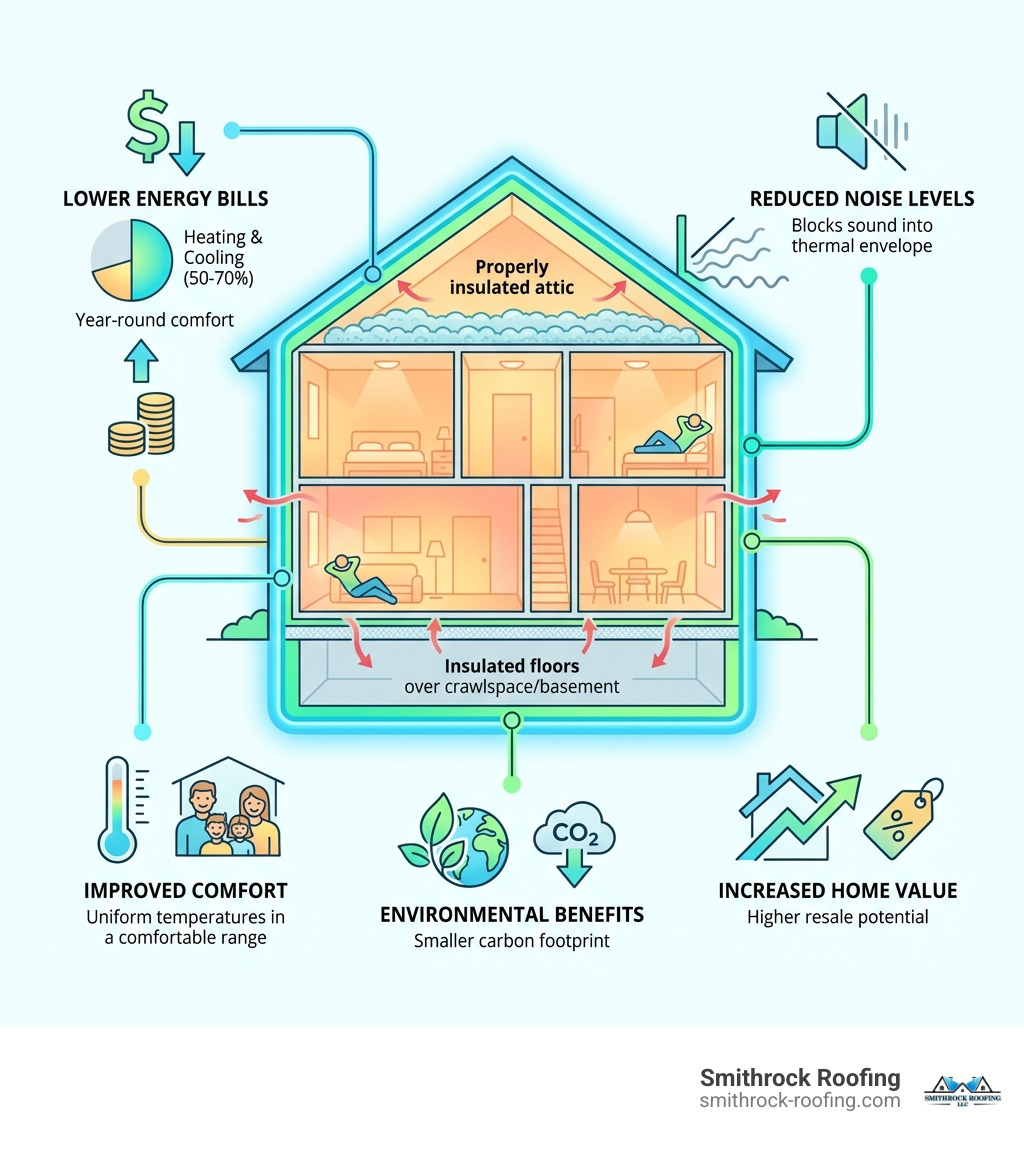
Many homes, especially those built before the widespread adoption of modern energy codes in the 1980s and 90s, lack sufficient insulation. In these older properties, conditioned air—the air you’ve paid to heat or cool—easily escapes through under-insulated floors, ceilings, and walls. This forces your heating and cooling systems to run constantly, working overtime just to maintain a target temperature. A well-insulated home, however, creates a tight thermal envelope that holds conditioned air inside, maintaining uniform temperatures and making every room comfortable year-round. You’ll notice fewer drafts, warmer walls and floors in winter, a cooler and less humid home in summer, and a significant reduction in outdoor noise.
High energy bills, cold surfaces, and a constantly running HVAC system are all red flags pointing to insulation deficiencies. The good news is that improving your home’s insulation is one of the most cost-effective upgrades available. The investment often pays for itself through lower utility bills in just a few years, all while providing a more comfortable, quieter, and healthier living environment for your family.
At its core, insulation is about controlling heat flow. In physics, heat naturally moves from warmer areas to colder areas until a temperature equilibrium is reached. In your home, this means heat flows out during the winter and in during the summer. This transfer happens through three primary mechanisms:
Insulation works by resisting these forms of heat transfer. Its effectiveness is measured by its R-value, or “resistance to heat flow.” The higher the R-value, the greater the insulating power. A wall with R-13 insulation will resist heat flow better than one with R-7. It’s important to note that R-value is most effective when insulation is installed without gaps, voids, or compression, as these defects can create pathways for heat to bypass the insulation and significantly reduce its overall performance.
The primary benefits of robust insulation are clear and far-reaching:
For more in-depth information, explore A Consumer Guide to Home Insulation from ENERGY STAR.
An energy-efficient home is a system, and insulation and ventilation must work in harmony. This relationship is most critical in the attic. Throughout the day, your family’s activities—cooking, showering, even breathing—release warm, moist air into your home. This air rises and, if not properly managed, will infiltrate the attic. In winter, it can condense on the cold underside of the roof sheathing, leading to moisture that can ruin insulation, encourage mold growth, and damage the roof structure.
Proper attic ventilation creates a balanced airflow, typically with intake vents at the lowest part of the roof (soffits) and exhaust vents at the highest point (ridge or gable vents). This allows moist air to escape while also preventing extreme heat buildup in the summer. A well-ventilated attic protects your insulation’s R-value and the integrity of your roof, and it stops super-heated attic air from radiating down into your living space, which keeps your AC from working overtime. It is absolutely crucial that attic vents are never blocked by insulation, as this would defeat the entire purpose of the ventilation system.
Sometimes, the signs that your home needs better home insulation are obvious, while other times they are more subtle. Rooms that are always too cold in winter or too hot in summer are often the first clue that your home’s thermal envelope isn’t performing as it should. Paying attention to these signals can help you decide if it’s time for an upgrade.
Here are common signs of inadequate insulation, explained in more detail:
While a professional audit is the most thorough method, you can perform a basic assessment yourself. Visually inspect your attic insulation—is it below the top of the floor joists? If so, you almost certainly need more. On a cold day, you can use an incense stick or smoke pen near windows, outlets, and plumbing penetrations to see if the smoke flickers, indicating a draft. These simple checks can help you identify problem areas.
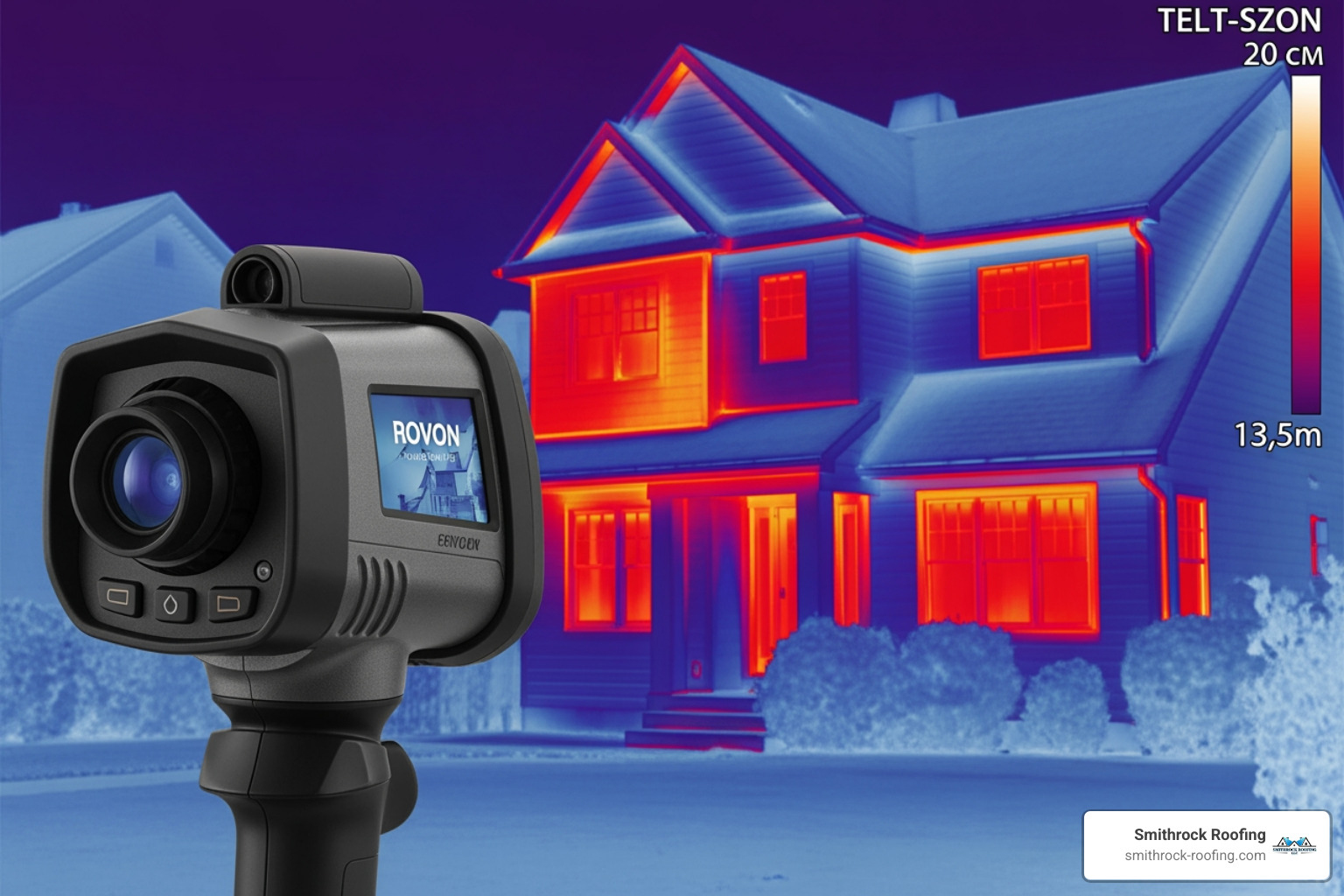
For a definitive diagnosis, nothing beats a professional home energy audit. Technology like thermal imaging cameras helps us pinpoint exactly where your home is losing energy. Also known as infrared thermography, this technology allows us to “see” heat differences across surfaces. An infrared camera displays a visual spectrum where warmer colors (red, orange, yellow) show heat escaping and cooler colors (blue, purple) show cold spots or moisture.
Our technicians use thermal cameras to visualize air leaks and insulation gaps that are completely invisible to the naked eye. We can see the “thermal bridging” where heat moves through wall studs, identify where cold air is infiltrating around windows, or find areas where attic insulation has settled or is missing. This precision ensures that our recommended upgrades are targeted, effective, and provide the best return on investment.
A professional energy audit often combines thermal imaging with a blower door test. This involves mounting a powerful fan in an exterior doorway to depressurize the home. This makes it easier to find air leaks with smoke pens or thermal cameras. The test also provides a quantitative measurement of your home’s overall leakiness, often expressed as Air Changes per Hour at 50 Pascals (ACH50). This data allows us to benchmark your home’s performance and track improvements after air sealing and insulation work is complete.
When upgrading your home’s defense against the elements, you have several insulation materials to choose from. Selecting the right “armor” involves considering the required R-value, the installation location (attic, walls, crawl space), budget, and specific material properties like moisture resistance and air sealing capability.
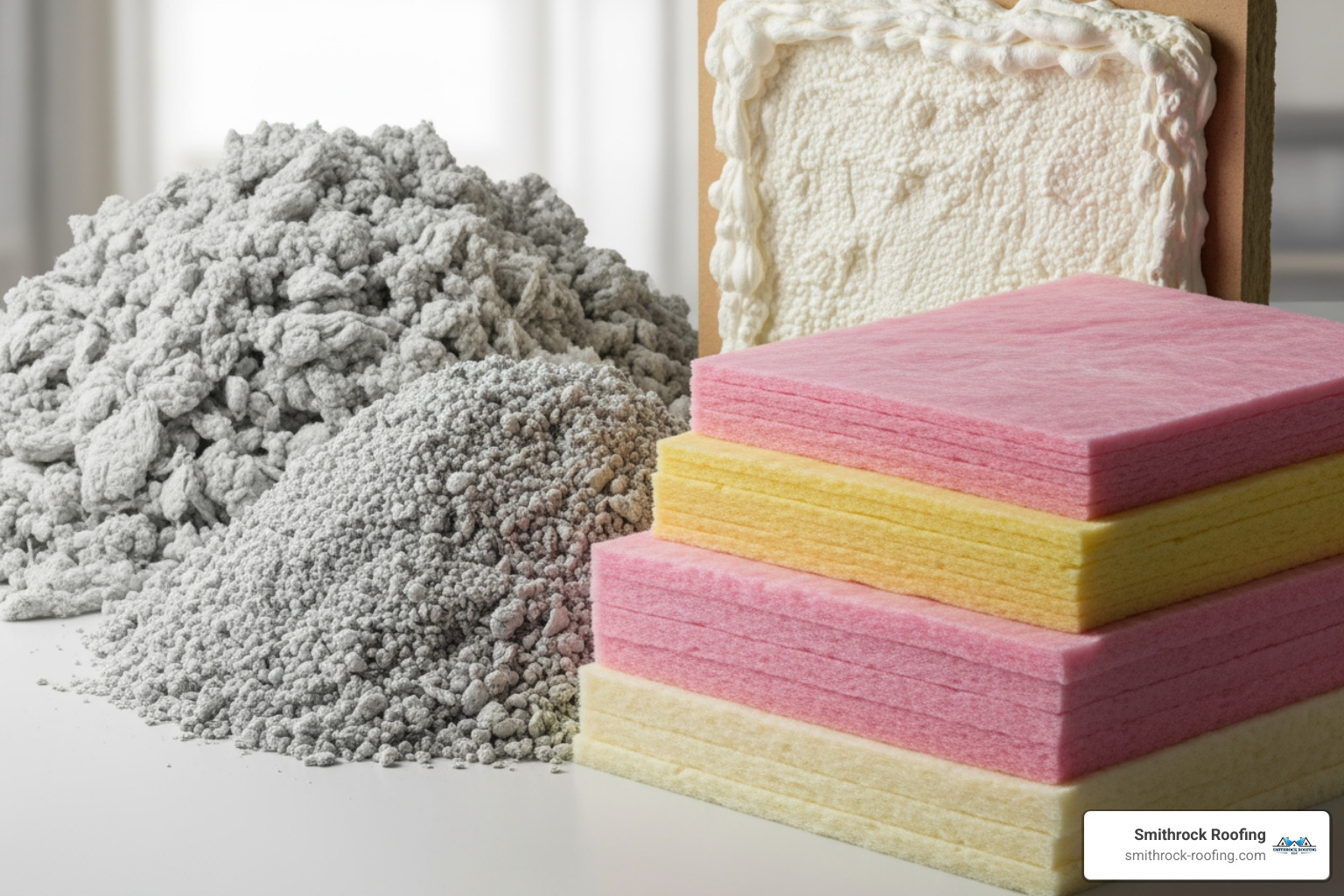
Commonly made from fiberglass, mineral wool, or natural fibers, this is the most recognizable type of insulation. It comes in large rolls or pre-cut batts designed to fit standard stud and joist spacing. It’s affordable and widely available, with typical R-values of R-13 to R-15 for 2×4 walls and R-19 to R-21 for 2×6 walls.
This type of insulation consists of small particles of material—most commonly cellulose (recycled paper fiber treated for fire resistance), fiberglass, or mineral wool—that are blown into place using specialized equipment. This method allows the material to conform to any space, filling gaps and creating a seamless thermal blanket.
Applied as a two-part liquid that reacts and expands on-site, spray foam insulation creates a continuous, monolithic barrier that provides both high R-value and superior air sealing in a single step. It adheres to nearly any surface and can add structural rigidity.
These board-like products offer high thermal resistance in a thin profile, making them ideal for applications where space is limited or where a continuous layer of insulation is needed to stop thermal bridging.
Achieving better home insulation is a manageable and highly rewarding project. To get the most value for your investment, we advocate for the “fabric first” principle. This approach prioritizes improving the home’s building envelope—the shell separating the conditioned indoors from the unconditioned outdoors—before upgrading mechanical systems like your furnace or air conditioner. A high-efficiency HVAC system in a leaky, poorly insulated house is like pouring water into a bucket full of holes; you’re just wasting energy. By improving the fabric first, you reduce the heating and cooling load, which may even allow you to install smaller, less expensive mechanical systems.
Prioritizing upgrades is key. For guidance, ENERGY STAR offers excellent resources, including their comprehensive guide: Seal and Insulate with ENERGY STAR.
Before you add a single inch of new insulation, the most crucial and cost-effective step is to seal air leaks. Insulation is not an air barrier. Think of it like a wool sweater: it keeps you warm, but on a windy day, you need a windbreaker jacket over it. Air sealing is that windbreaker for your house. Air leaks allow conditioned air to escape and unconditioned air to enter, completely bypassing your insulation and wasting energy. Sealing these leaks provides an immediate improvement in comfort and energy savings.
Common air leakage paths to target include:
Sealing these gaps with the right materials—caulk for small gaps, expanding spray foam for larger ones, and weatherstripping for movable components like doors and windows—ensures your new insulation can perform at its maximum potential.
Once leaks are sealed, focus on the areas with the greatest potential for heat loss and the best return on investment:
Different areas of your home require different solutions and present unique challenges.
Achieving truly better home insulation means thinking beyond just the insulation material itself. The goal is to create a complete, continuous thermal envelope. Imagine putting on a high-tech winter coat; it’s not just the puffy filling but also the windproof shell, the zipper flap, and the snug cuffs that work together to keep you warm. Similarly, your home’s thermal envelope is a continuous boundary of insulation and air sealing that wraps around the entire conditioned space—including ceilings, walls, floors, windows, and doors—to control heat flow and stop air leakage. When all components are properly installed and integrated, your home becomes a fortress against energy waste and discomfort.
While insulation in your walls and attic is the core of your thermal envelope, other exterior components play a critical supporting role. At Smithrock Roofing, we understand how these elements must integrate to create a truly high-performance home:
Beyond comfort and savings, better home insulation offers crucial health and environmental benefits that are often overlooked.
The R-value you need depends on your climate zone, the specific area of the home you’re insulating, and local building codes. North Carolina is primarily in Climate Zone 3 or 4, which requires robust insulation to handle both hot, humid summers and cold winters. The Department of Energy’s ENERGY STAR program provides these general recommendations:
We can perform an energy assessment on your home to provide a personalized recommendation that meets or exceeds building codes and maximizes your energy savings and comfort.
While some insulation tasks, like rolling out batts in an open and accessible attic, can be a DIY project, we strongly recommend professional installation for most upgrades to ensure performance and safety. Proper installation is just as important as the R-value of the material itself.
If you do attempt a DIY project, you must follow all manufacturer instructions, check local building codes in Winston-Salem and surrounding areas, and wear appropriate personal protective equipment (PPE), including gloves, eye protection, and a respirator or dust mask. You must also be careful not to block ventilation, compress the insulation, or leave gaps.
However, jobs like blown-in insulation, spray foam, or retrofitting walls require specialized equipment and expertise. Improper installation can lead to a significantly reduced R-value, air gaps, moisture issues, and even fire hazards. A professional ensures the job is done correctly, safely, and to code, maximizing your home’s performance and your return on investment.
When installed correctly and protected from damage, most common insulation materials like fiberglass, cellulose, and spray foam are designed to last for 80-100 years—effectively the lifetime of your home. They are passive materials that do not degrade on their own.
However, the effectiveness of insulation can be compromised by several factors:
Regular inspections, especially in the attic and crawl space, can catch these problems early.
The cost of an insulation project varies widely based on several factors: the size of the area being insulated, the type and R-value of the insulation material chosen, the accessibility of the space, the amount of prep work required (like air sealing or removing old insulation), and local labor rates. Spray foam is typically the most expensive material, while fiberglass batts and blown-in cellulose are more budget-friendly. While it’s a significant investment, it’s one with a proven return through energy savings. We can provide a detailed estimate tailored to your home’s specific needs.
Yes, often there are! Many federal, state, and local utility programs offer financial incentives to encourage homeowners to improve their home’s energy efficiency. These can include tax credits, rebates, and low-interest loans. For example, the Inflation Reduction Act of 2022 includes significant tax credits for insulation and air sealing. These programs change frequently, so it’s essential to check for current incentives. We recommend visiting the ENERGY STAR website and the DSIRE database (Database of State Incentives for Renewables & Efficiency) for the most up-to-date information.
Insulation removal is sometimes necessary if the existing material is damaged, contaminated, or insufficient. This is almost always a job for professionals. Old insulation may be contaminated with mold, pest droppings, or even hazardous materials like asbestos (found in some vermiculite insulation, particularly Zonolite). Professionals use high-powered vacuums with HEPA filtration to safely and cleanly remove the old material without introducing harmful particles into your home’s air. After removal, the area is typically sanitized before new insulation is installed.
Investing in better home insulation is one of the smartest, most impactful decisions you can make for your North Carolina home. It is not merely an expense but a long-term investment in your property and quality of life. It’s a foundational upgrade that delivers a powerful trifecta of benefits: significantly improved year-round comfort, substantial and immediate energy savings, and a healthier, quieter living environment. We believe it’s an investment that pays dividends for years to come, increasing your property value while simultaneously reducing your environmental impact.
While insulation is the heart of an efficient home, true peak performance comes from a holistic, whole-home approach. A complete thermal envelope—where high-performance roofing, insulated siding, and energy-efficient windows work in concert with a robust insulation and air sealing plan—offers the most comprehensive solution. For example, a cool roof reduces the initial summer heat load on your attic, allowing your R-60 insulation to perform even better. New windows prevent drafts that would otherwise undermine your well-insulated walls. At Smithrock Roofing, we specialize in these critical, interconnected components. We don’t just see a roof, siding, or an attic; we see an entire building system and understand how each part must integrate to create a comfortable, efficient, and resilient home.
For a professional, comprehensive assessment of your home’s entire building envelope, you need an expert who understands how these systems work together. The team at Smithrock Roofing can provide a detailed consultation to evaluate your insulation, roofing, siding, and windows. We’re here to help you navigate the options and create a customized, prioritized plan for your home in Winston-Salem, King, Clemmons, or any of our surrounding service areas. Ready to transform your home’s efficiency and unlock a new level of comfort? Contact us today to learn more about our energy-efficient upgrade services.
Smithrock Roofing © Copyright 2026 • All Rights Reserved • Privacy Policy • Maintained by Mongoose Digital Marketing