The chimney cap purpose is to protect your home from water damage, prevent animals and debris from entering the flue, stop downdrafts, and reduce fire risks by acting as a spark arrester. This small metal covering at the top of your chimney performs multiple critical functions that safeguard both your chimney system and your home’s interior.
The 5 Essential Functions of a Chimney Cap:
When maintaining a safe and efficient chimney, the chimney cap is a component that often gets overlooked. Without a cap, your chimney is an unprotected opening that invites problems, much like leaving a door or window open in your home.
Water is masonry’s worst enemy. Without protection, a single season of rain and freeze-thaw cycles can cause thousands of dollars in damage to your chimney liner, mortar joints, and interior walls. Add in the risk of animals nesting or debris blocking the flue, and you face potential carbon monoxide exposure and fire hazards.
A properly installed chimney cap provides comprehensive protection against these threats while improving your home’s energy efficiency by preventing heat loss.
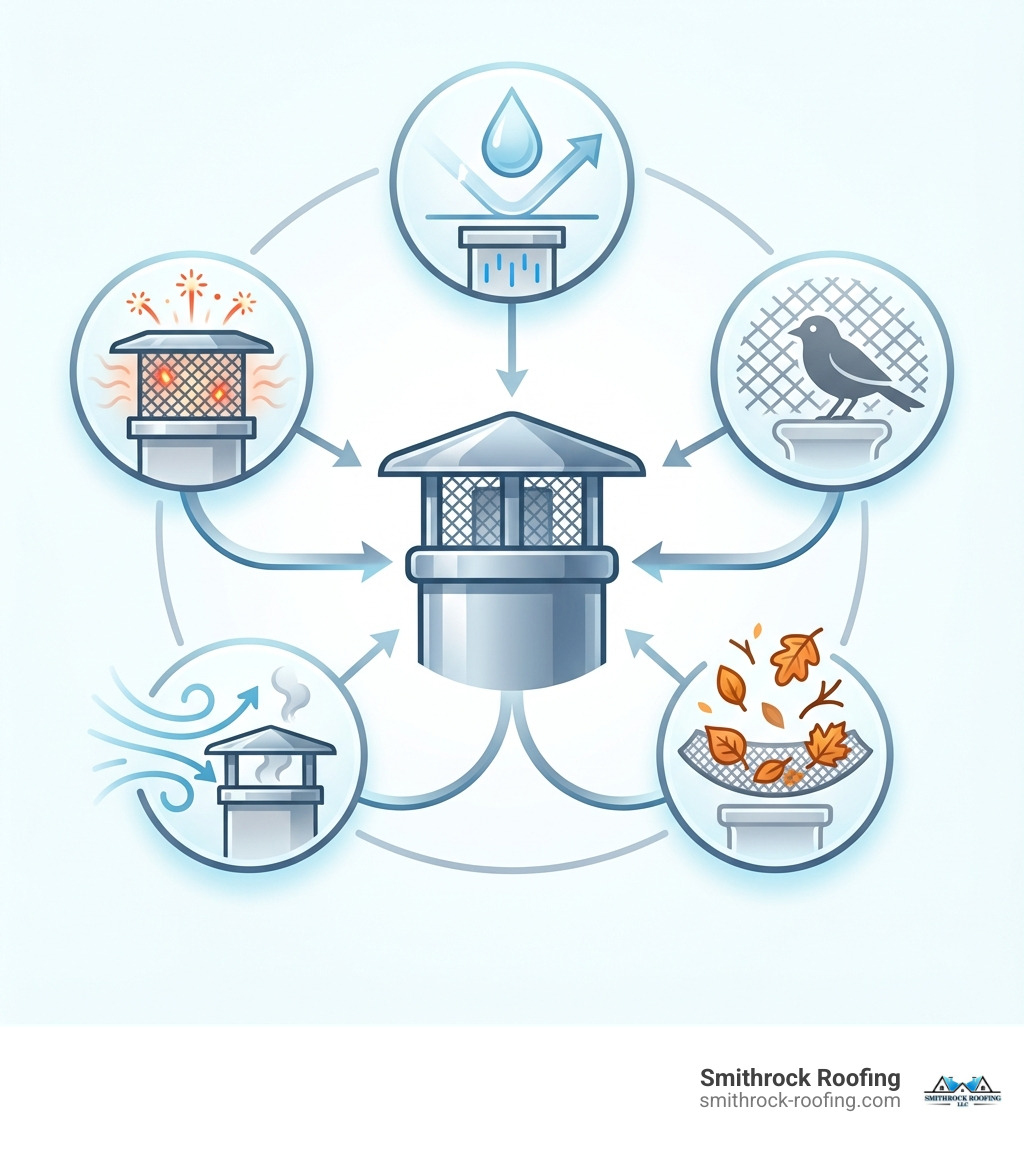
Simple guide to chimney cap purpose:
Many homeowners are surprised to learn how vital this seemingly simple fixture is. Let’s explore what a chimney cap is and how it differs from other chimney components.
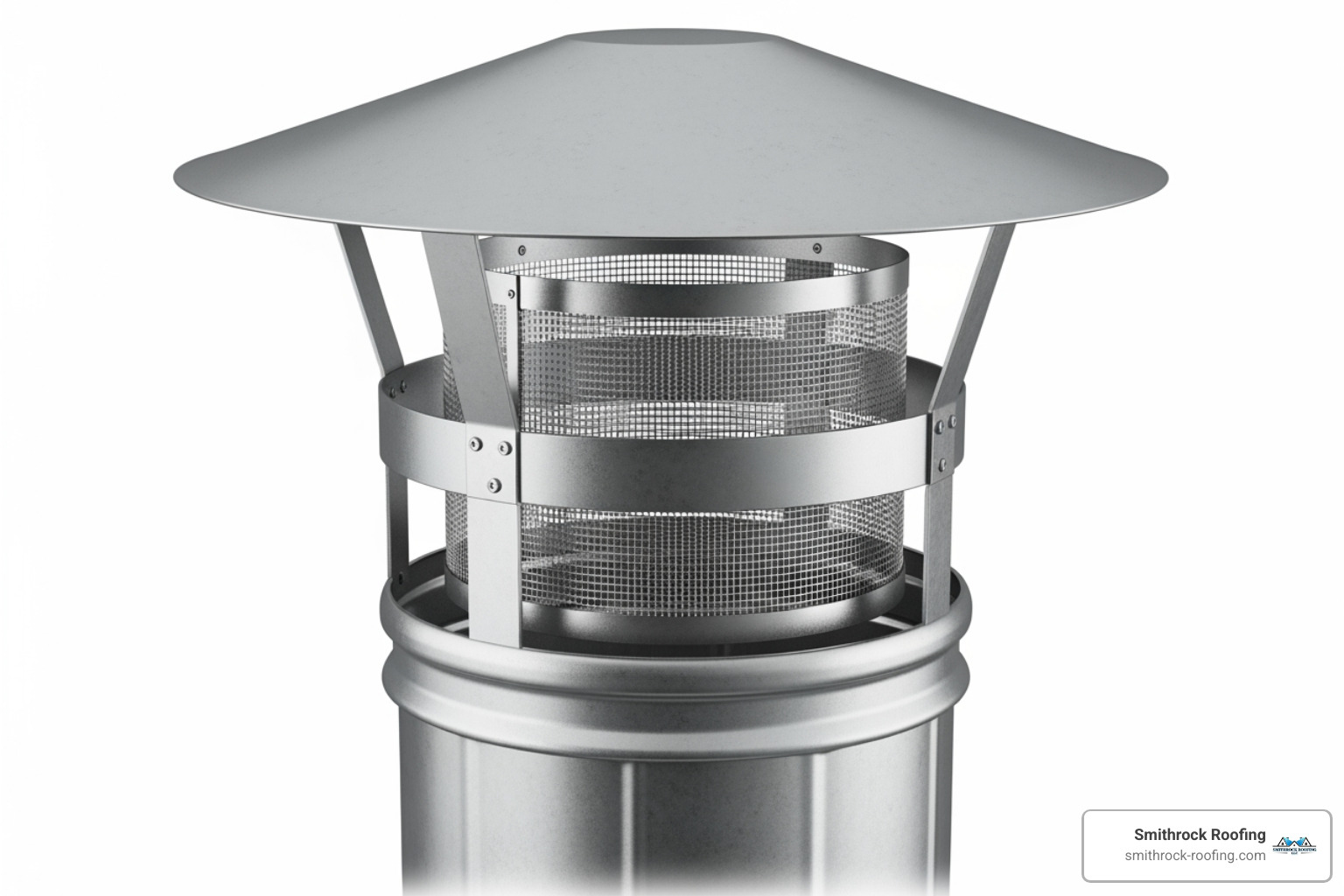
A chimney cap is a protective covering installed at the very top of your chimney flue. Think of it as a small, sturdy hat for your chimney, designed to shield the opening while allowing smoke and combustion gases to exit. Our team at Smithrock Roofing knows this metal construction typically consists of a few main components:
This appliance acts as a primary defensive barrier for your home in Winston-Salem, King, Clemmons, and our other service areas.
It’s easy to confuse a chimney cap with a chimney cover, also known as a chimney crown. While both are critical, they serve distinct roles. Think of it this way: your chimney cap is the hat, and your chimney crown is the roof of your chimney structure.
The chimney cap purpose is to attach directly to the flue pipe or tile. Its main function is to protect the interior of the flue opening from weather, animals, and debris while allowing exhaust gases to escape.
A chimney cover, or chimney crown, is the concrete, metal, or stone slab that covers the entire top of your chimney’s masonry. The flue pipe(s) pass through openings in this crown. The crown’s primary function is to protect the brick-and-mortar structure from water damage by directing it away from the mortar joints. A well-maintained crown prevents water from seeping into the masonry, which can lead to costly structural damage.
For comprehensive protection, you need both. A robust chimney cap protects the flue, and a well-built chimney crown protects the masonry. Together, they form a powerful shield against the elements. Without both working in harmony, your chimney system in North Carolina is vulnerable to expensive damage.
For more information on ensuring your chimney’s top is fully protected, explore our guide on Chimney Chase Cover Installation.
Now that we understand what a chimney cap is, let’s dive into why it’s an indispensable part of your home’s defense system. Its primary functions are all about protecting your chimney, your home, and your family from preventable damage and hazards.
Water is a chimney’s worst enemy. An uncapped chimney is an open invitation for rain and snow to pour directly into your flue, leading to a cascade of problems for homeowners in Winston-Salem, Greensboro, and surrounding areas.
Here’s why preventing moisture ingress is a paramount chimney cap purpose:
A chimney cap acts as a reliable umbrella, diverting precipitation away from the flue and safeguarding your entire chimney system. This small investment can save you thousands in future structural repairs, liner replacement, and water damage remediation.
For more on protecting your chimney’s interior, check out our guide on Chimney Liner Installation Cost.
Beyond water, an open chimney flue is a highway for unwelcome visitors and debris. This is another crucial chimney cap purpose that directly impacts your home’s safety and comfort.
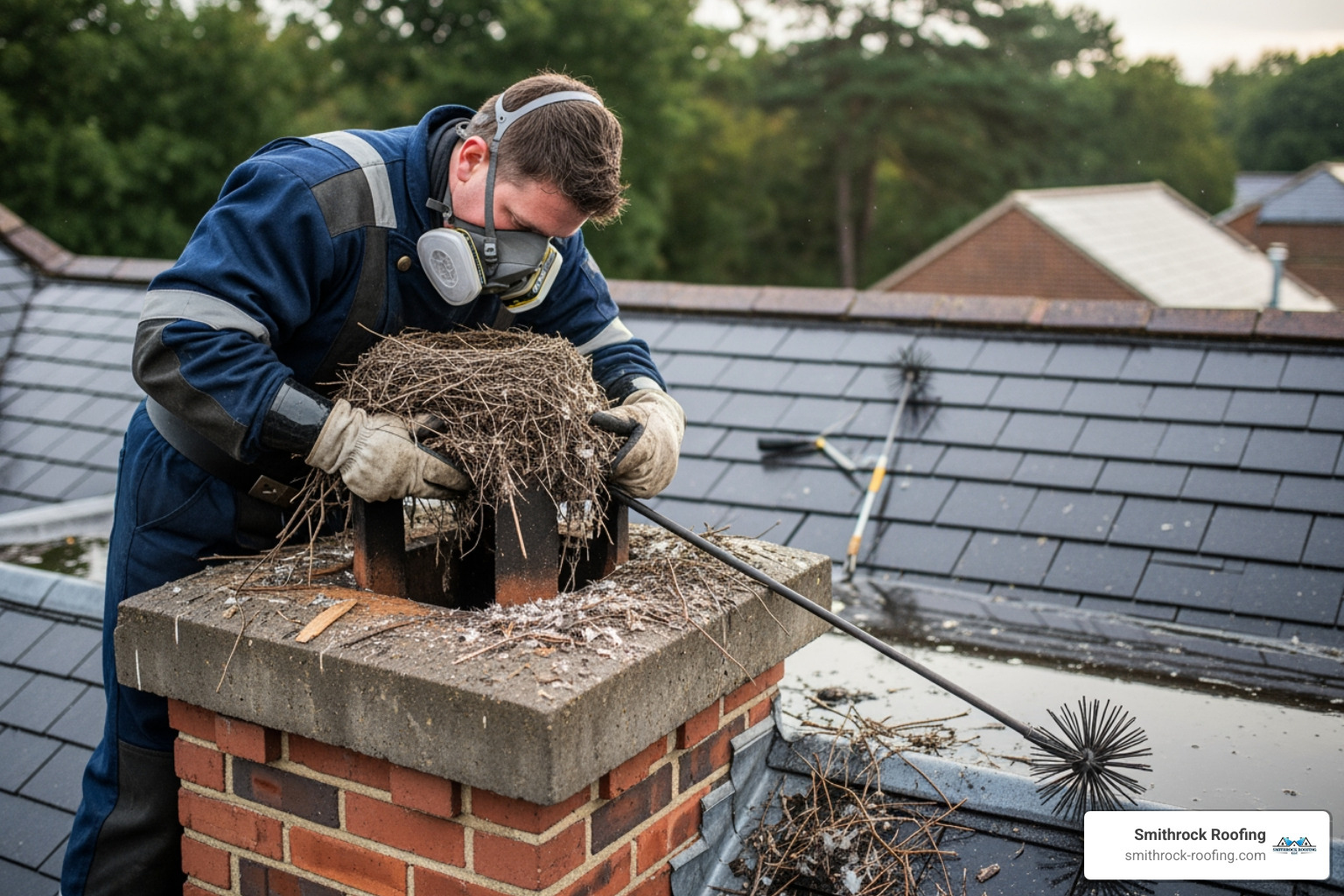
The mesh screen on a quality chimney cap serves as an effective animal guard. Without it, your chimney becomes an attractive, sheltered nesting site for creatures like:
Nests built by animals can severely obstruct the flue, preventing smoke and dangerous gases like carbon monoxide from venting properly. This can cause smoke to back up into your home and poses a serious fire hazard, as dry nesting materials are highly flammable. Furthermore, animals can carry diseases, and if one gets trapped and dies, the decomposition creates a horrendous, difficult-to-remove odor. It’s important to note that species like Chimney Swifts are protected by the Migratory Bird Treaty Act, making it illegal to remove them or their nests without proper permits. A cap prevents this problem before it starts.
Beyond animals, the cap also blocks leaves, twigs, and branches. This debris can accumulate and block the flue, hindering proper ventilation and increasing the risk of carbon monoxide entering your living space, even if you don’t have an animal nest.
To learn more about how we help keep your chimney critter-free, visit our page on Chimney Covers to Stop Birds.
Have you ever had smoke billow back into your living room on a windy day? You’ve likely experienced a downdraft, and addressing this is another key chimney cap purpose.
A chimney operates on the “stack effect,” where hot, less dense air from the fire rises. A downdraft occurs when strong winds blow across the top of the chimney, creating a pressure differential that pushes air down the flue. This reverses the natural upward flow, forcing smoke, soot, and dangerous carbon monoxide back into your home. Chimney caps are designed to deflect this wind, disrupting problematic air patterns and helping to maintain a consistent upward draft. Specialized wind-directional caps are even more effective in windy locations.
Beyond safety, a chimney cap also improves your home’s energy efficiency:
By regulating airflow and preventing unwanted air exchange, a chimney cap contributes to a more stable indoor temperature and noticeable savings on your utility bills.
One of the most critical safety aspects of a chimney cap purpose is its role as a spark arrester. When you burn wood, hot embers and sparks can travel up the flue with the smoke. Without a cap, these sparks can fly out and land on your roof, in your yard, or on a neighbor’s property, presenting a significant fire risk.
The mesh screen on a chimney cap acts as a guardian, catching these hot embers before they can escape. This simple feature drastically reduces the risk of a chimney fire igniting your roof or surrounding property in areas like Pilot Mountain or East Bend. In many jurisdictions, especially those in wildfire-prone areas or for homes with combustible roofing materials like wood shakes, spark arresters are required by local building codes. This function is absolutely essential for homes surrounded by trees or in areas prone to dry conditions.
By containing embers, the cap protects your home and community. For more information on comprehensive fire safety, we recommend consulting resources like the Chimney Safety Institute of America.
Just as there are different hats for different occasions, there are various types and materials for chimney caps. Understanding these options is key to choosing the best protection for your North Carolina home, balancing functionality, durability, and aesthetics.
The type of cap you need often depends on your chimney’s construction and specific performance needs.
In addition to standard configurations, there are specialty caps engineered for specific problems:
Our experts at Smithrock Roofing can help you navigate these choices to find the perfect fit for your home.
For a deeper dive into selecting the ideal cap, explore our guide on the Best Types of Chimney Caps.
The material of your chimney cap is the primary factor in its durability, lifespan, and appearance. We offer a range of options to suit various budgets and styles for homes in Trinity, Pfafftown, and beyond.
The most common materials include:
Here’s a quick comparison:
| Material | Durability | Lifespan | Appearance |
|---|---|---|---|
| Galvanized Steel | Good | 5-10+ years | Grey, can rust over time |
| Stainless Steel | Excellent | 50+ years | Bright, metallic silver |
| Copper | Superior | 50+ years (lifetime) | Shiny new, develops green patina |
We also offer specialized options, such as a Stone Chimney Cap for those seeking a unique and durable aesthetic that complements stone or brick masonry.
For more detailed information on our premium options, explore our resources on Copper Chimney Caps.
Understanding the chimney cap purpose is one thing, but ensuring it fulfills that purpose for its entire lifespan requires proper installation and routine care. Let’s discuss what it takes to install your cap correctly and keep it in top shape.
While installing a simple clamp-on cap might seem like a straightforward DIY project, we strongly recommend professional installation for several critical reasons.
Risks of DIY:
The most significant risk is personal safety. Working on a roof, especially a steep one, presents serious fall hazards that professionals are trained and equipped to handle. Beyond safety, an incorrectly sized or improperly installed cap is ineffective. A poor fit won’t seal out water or animals, and a loose attachment can result in the cap being blown off by strong winds, leaving your chimney completely exposed.
Benefits of Professional Installation:
Choosing a professional ensures the job is done right from the start:
Both certified chimney sweeps and professional roofing contractors like us at Smithrock Roofing are excellent choices for this job.
For specialized installation needs, such as for a fireplace, trust our experts. Learn more about Fireplace Cap Installation.
Once installed, you’ll want to ensure your cap continues to serve its chimney cap purpose for years. The lifespan varies significantly based on material and maintenance.
Typical Lifespan:
Maintenance Requirements:
Chimney caps are low-maintenance, but they are not “no-maintenance.” We recommend an annual chimney inspection, which should always include the cap. During this check, a professional will look for:
The mesh screen also requires regular cleaning to remove creosote, soot, and debris, which is typically done with a stiff wire brush during a chimney sweep. This buildup can restrict airflow, causing smoke to back up into your home and creating a fire hazard, as the creosote on the mesh is itself flammable.
Knowing when to replace your cap can save you from costly damage and ensure your home remains protected.
Best Time for Installation or Replacement:
Late summer or early fall is the perfect window for installing or replacing a chimney cap. This timing ensures the job is done in good weather, well before the colder months arrive and fireplace usage increases in areas like Greensboro and High Point.
Signs You Need a Replacement:
Even durable caps don’t last forever. Here are clear indicators it’s time for a replacement:
Don’t wait for a problem to become a catastrophe. If you spot any of these signs, contact us for an assessment.
For more information on the various options available when replacing your cap, consult our Chimney Cap Replacement Types Guide.
We often get questions from homeowners about their chimney caps. Here are some of the most common inquiries regarding the chimney cap purpose and functionality, with detailed answers to help you make informed decisions.
An uncapped chimney is an open portal to your home, leaving it vulnerable to a multitude of problems we’ve seen in communities like Lewisville and Advance. Without a cap, your chimney is exposed to:
In short, an uncapped chimney is a significant liability that invites preventable deterioration, health risks, and costly repairs.
Yes, absolutely. This is a critical point we emphasize to homeowners. Even if you never use your fireplace, an unused chimney is still a direct opening to the outside. It remains just as vulnerable to the elements and unwanted intrusions as an active chimney.
Capping an unused chimney prevents:
Capping an unused chimney is a simple, proactive step to prevent it from becoming a source of moisture problems, pest infestations, or energy waste.
Yes, a chimney cap’s mesh screen can get clogged, which can be very dangerous. While the chimney cap purpose is to protect, its effectiveness can be compromised by blockages.
The mesh can become obstructed by:
When a chimney cap gets clogged, it restricts airflow out of the flue. This will cause smoke and toxic gases, including carbon monoxide, to back up into your home, create poor fire performance, and increase the risk of CO poisoning. This is why regular inspection and cleaning of your chimney cap are essential parts of annual chimney maintenance.
Yes, a chimney cap is still highly recommended for a chimney serving a gas fireplace. While you don’t have to worry about sparks, all the other functions are just as important. A cap will prevent costly water damage to the metal burner assembly and gas logs, stop animals from nesting in the flue, block debris, and prevent downdrafts that can extinguish the pilot light or interfere with the flame.
The cost of a chimney cap varies widely based on material, size, and type. A small, standard-sized galvanized steel cap that you could buy at a hardware store might be under $100. However, for a professionally installed, high-quality cap, you can expect to pay more. A durable stainless steel cap, properly installed, might range from $300 to $700. A large, custom-made multi-flue cap or a premium copper cap can cost $1,000 or more, depending on the complexity and size of the chimney.
The chimney cap purpose extends far beyond a simple aesthetic addition. It is a critical component for the health, safety, and efficiency of your home. A properly installed and maintained chimney cap is a necessity for every home with a chimney in our North Carolina communities, from Winston-Salem to Rural Hall.
This unassuming fixture acts as your home’s first line of defense. It improves safety by stopping sparks and downdrafts, preserves your chimney’s structural integrity by blocking water, and saves you money by preventing costly repairs and improving energy efficiency.
Don’t let your chimney be an unprotected opening. We strongly encourage all homeowners to inspect their chimney and ensure it is properly protected with a high-quality chimney cap. If you’re unsure about the condition of your current cap, or if your chimney lacks one entirely, now is the time to act.
At Smithrock Roofing, we are dedicated to providing comprehensive chimney services to ensure your home is safe and secure. From expert installation to thorough inspections and replacements, our team is here to help protect your most valuable asset.
For more information about our comprehensive chimney services and how we can help safeguard your home, please visit our Chimneys page.
Smithrock Roofing © Copyright 2026 • All Rights Reserved • Privacy Policy • Maintained by Mongoose Digital Marketing