Why Your Chimney Cap Matters for Winston-Salem Homeowners
Chimney cap repair Winston-Salem is a critical service that protects your home’s value, safety, and structural integrity from water damage, pest intrusion, and dangerous fire hazards. As a homeowner in the Piedmont Triad, you understand that our weather can be unpredictable. From intense summer thunderstorms and high humidity to the occasional winter ice storm, your chimney is constantly exposed to the elements. Whether you’re dealing with rust from humidity, wind damage from a storm, or a cap that’s simply missing, addressing this small but vital component can prevent thousands of dollars in costly structural repairs and ensure your fireplace operates safely and efficiently.
Quick Answer for Winston-Salem Homeowners:
- Common issues: Rust and corrosion, storm damage (dents or missing), loose fit, animal nesting, and debris buildup.
- Signs you need repair: Water in your firebox, visible rust streaks on the chimney, animals heard in the chimney, smoke backing up into the room (downdrafts), or a cap that is visibly crooked or gone.
- Typical materials: Stainless steel, copper, galvanized steel, and aluminum, each with different lifespans and benefits.
- Expected lifespan: Varies widely from 3-5 years for cheap galvanized steel to over 50 years for high-quality stainless steel or copper.
- Professional services include: A comprehensive inspection, precise measurement, safe removal of the old cap, professional installation of the new one, and waterproofing services.
- Key benefit: A properly installed cap is your first line of defense against water damage, pest entry, escaping sparks, and significant energy loss.
Many Winston-Salem homeowners overlook this essential piece of equipment until a problem becomes impossible to ignore. If you’ve noticed water stains on the ceiling near your fireplace, heard the telltale scratching of a squirrel, or felt a cold draft coming from your hearth, it’s time for a professional inspection.
Your chimney cap works hard 24/7, shielding your home from rain, snow, leaves, and animals. When it fails, the consequences can range from water-damaged walls and rusted dampers to unwanted pests and higher energy bills. The good news is that chimney cap problems are highly fixable when caught early by experienced professionals who understand the specific weather challenges and building styles in the Winston-Salem area.
The Unsung Hero: Why Your Chimney Cap is Crucial for Home Safety and Efficiency
It’s easy to overlook something that sits quietly at the very top of your roof. But your chimney cap is a frontline defender for your home, especially for those of us in Winston-Salem and surrounding communities like King, Clemmons, and Pfafftown. From the heavy, humid rains of summer to the gusty winds of a passing cold front, your chimney cap takes a constant beating while performing several vital functions that protect your property and family.
How a Damaged Cap Compromises Your Winston-Salem Home
A damaged, improperly sized, or missing cap is like leaving a main artery to your home wide open. Water intrusion is the most immediate and destructive threat, leading to a cascade of expensive and hazardous problems:
- Water and Masonry Damage: Water is the number one enemy of masonry. It seeps into porous bricks and mortar, where it can freeze and expand during our winter cold snaps. This freeze-thaw cycle causes the masonry to crack, flake, and crumble—a process called spalling. This deterioration compromises your chimney’s structural integrity and leads to costly rebuilding. Internally, water rusts out critical metal components like the damper assembly and the firebox, potentially rendering your fireplace unusable and unsafe.
- Mold, Mildew, and Odors: The damp, dark, and unventilated environment inside a wet chimney is a perfect breeding ground for toxic mold and mildew. These fungi can release spores into your home’s air, causing musty odors, triggering allergies, exacerbating asthma, and posing other long-term health risks to your family.
- Pest Intrusion: Without a cap, your chimney becomes a hollow tree, offering an inviting shelter for birds, squirrels, raccoons, and other wildlife seeking a safe place to nest. Our professional-grade chimney covers are designed with strong mesh to stop animals from making your chimney their home, preventing the noise, messes, fire hazards from nesting materials, and the potential for animal-borne diseases and parasites to enter your home.
- Increased Fire Risk: Most quality chimney caps include a spark arrestor, a durable mesh screen that contains floating embers and sparks, preventing them from escaping and landing on your roof, a nearby tree, or dry leaves. A missing or damaged cap dramatically increases the risk of a devastating roof or brush fire, especially during dry conditions.
- Higher Energy Bills: An open flue acts like a massive, un-closable window. In the winter, it allows heated air to escape (a phenomenon known as the stack effect), and in the summer, it lets hot, humid air in. This forces your HVAC system to work much harder to maintain a comfortable temperature, leading to significantly higher energy bills year-round. A properly sealed cap helps regulate your home’s thermal envelope.
- Downdraft and Flue Protection: A well-designed cap helps prevent dangerous downdrafts that can push smoke, soot, and lethal carbon monoxide back into your living space. It also shields the flue liner—whether clay tile, metal, or cast-in-place—from rain and debris, which extends its lifespan and prevents costly liner replacement.
Ignoring a damaged chimney cap will only lead to more extensive and expensive problems down the road. A timely chimney cap repair Winston-Salem is a minor investment compared to the potential cost of structural masonry repairs, water damage restoration, mold remediation, and pest removal.
Is Your Chimney Cap Crying for Help? 8 Telltale Signs
Your chimney cap gives off clear signals when it’s in distress. Regular visual checks from the ground, especially after severe weather events common in Winston-Salem and nearby areas like Kernersville and High Point, are key to catching problems before they escalate into major repairs.

Here are the eight telltale signs that your chimney cap needs professional help:
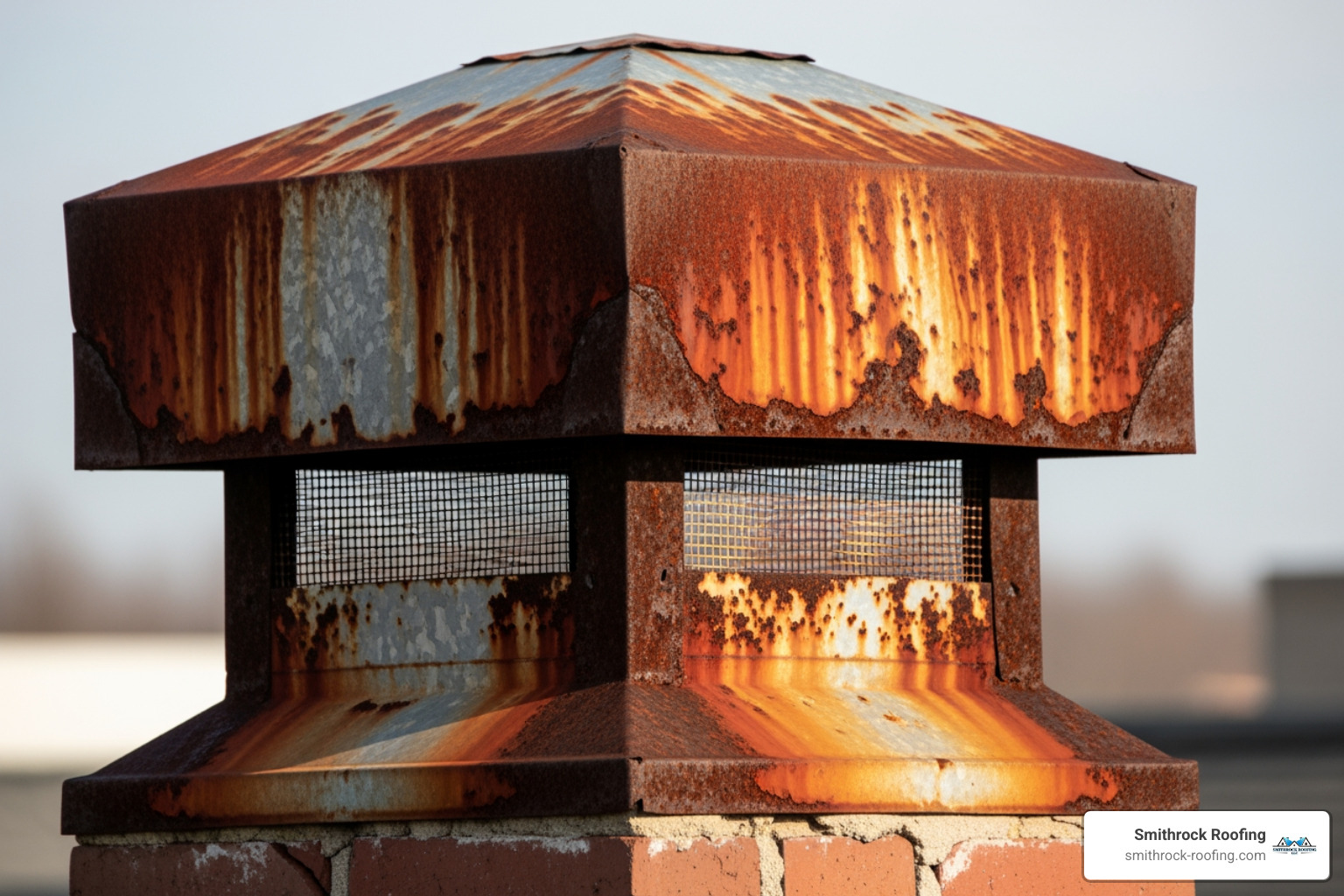
- Visible Rust or Corrosion: Reddish-brown rust streaks running down your chimney’s masonry or a flaky, orange-colored cap are the most obvious signs of deterioration. This is especially common with older, cheaper galvanized steel caps whose protective zinc coating has worn away.
- Dents and Physical Damage: Hail, falling tree limbs, or even high winds can dent, bend, or deform your cap. This damage isn’t just cosmetic; it can compromise the cap’s seal, weaken its structure, and impede proper airflow.
- Missing Cap After a Storm: This is a chimney emergency. High winds can tear a poorly secured cap right off the chimney, leaving your flue completely exposed to the elements. If you find your cap in the yard or notice it’s gone, call for a replacement immediately.
- Water Leaks in the Firebox: This is a definitive sign of failure. If you see water pooling in your fireplace, notice dampness, or see water stains on the walls and ceiling around the fireplace, it’s a clear indication your cap (or crown) is not keeping moisture out.
- Animal Sounds or Nesting Material: Scratching, chittering, or chirping sounds from your chimney are clear signs that uninvited guests have moved in. You may also see twigs, leaves, or droppings in your firebox, which are hazardous nesting materials.
- Debris in the Fireplace: If you find leaves, twigs, or other outdoor debris in your clean firebox, your cap is likely missing, has a hole in its mesh, or is not covering the flue opening properly.
- Downdrafts and Smoke Issues: If smoke backs up into your home when you try to start a fire, a damaged, obstructed, or improperly sized cap could be impeding proper airflow. This can also be a sign of a flue blockage, which is why a professional inspection is critical.
- Stains on Chimney Masonry: Dark streaks or black staining running down the sides of your chimney below the cap can indicate it’s not shedding water correctly, or it could be a sign of excessive creosote buildup, pointing to drafting problems.
When to Repair vs. When to Replace
The decision to repair or replace your chimney cap depends on the extent and type of damage. Our team can provide a thorough, honest assessment, but here are some general guidelines:
- Repair: A repair may be feasible for minor issues like a loose fit that just needs to be re-secured with new fasteners, or small dents on a high-quality cap that don’t affect its function or seal. Sometimes, very light surface rust on a thick steel cap can be treated and repainted, but this is often a temporary fix.
- Replace: Replacement is almost always the recommended course of action for widespread corrosion, holes in the lid or mesh, severe storm damage, or a missing cap. It’s also the perfect opportunity to upgrade an old, failing galvanized steel cap to a much more durable and long-lasting material like stainless steel or copper. Our chimney cap replacement services and chimney cap replacement types guide can help you explore your options.
Your Guide to Chimney Cap Repair Winston-Salem: Process, Materials, and Considerations
When it comes to chimney cap repair Winston-Salem, a professional assessment and installation are crucial to ensure the safety, effectiveness, and longevity of your entire chimney system. A shoddy installation can be just as bad as having no cap at all. We adhere to strict safety protocols and local building codes to get the job done right the first time.
The Professional Repair and Replacement Process
With over 40 years of experience serving the Piedmont Triad, Smithrock Roofing follows a meticulous, step-by-step process to deliver optimal, long-lasting results.
- Comprehensive Safety & Structural Inspection: We begin by assessing the entire chimney top-down. This includes the cap’s condition, the integrity of the chimney crown (the concrete slab at the top), the flashing where the chimney meets the roof, and the visible masonry. We identify the root cause of the problem, not just the symptoms.
- Precise Measurements: One size does not fit all. If a replacement is needed, we take detailed on-site measurements of the flue opening(s) and the chimney crown to ensure a perfect, weatherproof fit. This is critical for both standard-sized caps and those that require custom fabrication.
- Safe Removal and Thorough Cleaning: We carefully remove the old, damaged cap. We then clear away any accumulated debris, such as animal nests, leaves, and soot, from the flue opening and the chimney crown to ensure the new cap can be seated properly and the flue is not obstructed.
- Crown and Chase Cover Assessment: Before installing the new cap, we closely inspect the chimney crown for cracks or deterioration. A cracked crown will allow water into the masonry even with a new cap. For prefabricated chimneys, we inspect the metal chimney chase cover for rust and proper drainage, recommending repairs to ensure total protection.
- Secure, Professional Installation: The new cap is securely anchored to the chimney using durable, corrosion-resistant fasteners. We ensure it is perfectly level and attached in a way that withstands high winds while maintaining proper ventilation. Our fireplace cap installation services guarantee a perfect, secure fit.
- Final Sealing and Quality Check: As needed, we apply high-grade elastomeric sealants to any joints to create a waterproof barrier. We perform a final inspection of the installation to confirm the work meets our high standards and provides your home with maximum protection.
Choosing the Right Material for Durability and Style
The material of your chimney cap plays a huge role in its lifespan, performance, and appearance. We help you choose the best option for your budget and home style.
| Material | Durability | Corrosion Resistance | Aesthetics | Lifespan (Years) |
|---|
| Galvanized Steel | Good | Moderate | Basic, industrial, can be painted | 3-25 |
| Stainless Steel | Excellent | High | Clean, modern, can be powder-coated black | 20-50+ |
| Aluminum | Very Good | Excellent | Lightweight, rust-proof, often painted | 10-30 |
| Copper | Superior | Excellent | Elegant, develops a beautiful green patina | 50-100+ |
- Galvanized Steel: This is the most economical, builder-grade option. However, its protective zinc coating eventually wears down or gets scratched, leading to inevitable rust and failure, especially in North Carolina’s humid climate.
- Stainless Steel Benefits: A fantastic long-term investment. It offers exceptional durability and high resistance to rust and corrosion, providing excellent longevity with minimal maintenance. Many of our best types of chimney caps are made from high-quality 304-grade stainless steel.
- Aluminum: A lightweight, corrosion-proof mid-range option. It won’t rust, but it is a softer metal, making it more susceptible to damage from hail or tree limbs. It’s often available in various powder-coated colors.
- Copper Chimney Caps: For superior protection and exquisite aesthetics, copper chimney caps are an unparalleled choice. They are highly durable, will never rust, and develop a beautiful, distinctive green patina over time that protects the metal and adds character to your home. Our copper chimney cap cost guide provides more details on this premium investment.
We also offer prefabricated chimney caps and custom-fabricated options to perfectly match your home’s unique architecture.
Understanding the Factors of Chimney Cap Repair in Winston-Salem
Several factors influence the scope and cost of a chimney cap repair Winston-Salem project:
- Material Choice: Copper and stainless steel have a higher upfront cost but a much lower lifetime cost than replacing a galvanized cap every few years.
- Chimney Size and Type: Larger chimneys or those with multiple flues require larger, more complex, and more expensive caps.
- Accessibility: Steeply pitched roofs, very tall chimneys, or difficult access points require more extensive safety equipment and labor, which can affect the cost.
- Underlying Damage: If our inspection reveals that the chimney crown, masonry, or flue liner also needs repair, this will add to the project’s scope and cost but is essential for a complete, long-lasting solution.
DIY vs. Professional Chimney Cap Services: A Safety-First Comparison
While the appeal of a quick DIY project is understandable for many home maintenance tasks, we strongly advocate for professional chimney cap repair Winston-Salem services. This is not a simple task; it involves significant risks to both your personal safety and your home’s structural integrity.
The Significant Risks of DIY Chimney Cap Work
Attempting to repair or replace a chimney cap yourself carries significant risks that can lead to injury or more expensive repairs down the line:
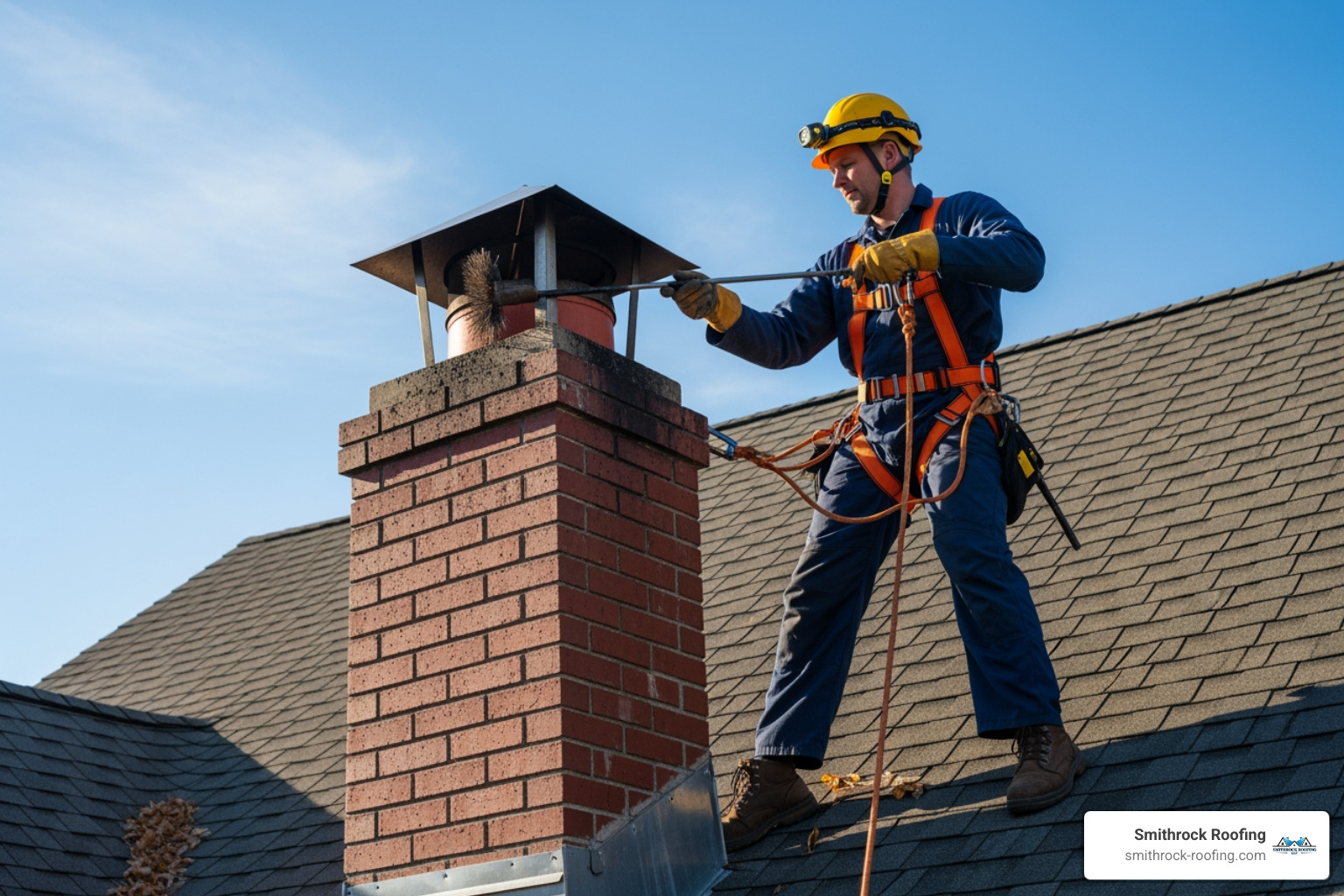
- Serious Roof Safety Hazards: Working on a roof, especially a sloped one, is inherently dangerous. Without proper training, safety harnesses, and equipment, there is a serious risk of falls and life-altering injuries. It is the number one reason to leave this job to trained and insured professionals.
- Improper Installation: A cap that is not securely and correctly fastened can blow off in the next storm, creating a dangerous projectile and leaving your chimney exposed again. An improper seal can also funnel water underneath the cap, worsening leaks.
- Incorrect Measurements or Sizing: A slight mismeasurement can result in a cap that doesn’t fit, leaving gaps for pests and water to enter. An incorrectly sized cap can also restrict airflow, leading to dangerous downdrafts and smoke issues.
- Missing Hidden, Critical Issues: An untrained eye will almost certainly miss underlying problems like hairline cracks in the chimney crown, deteriorating mortar joints, or early-stage flashing failure. Fixing the cap without addressing these issues is a temporary patch that allows the core problem to worsen.
- Damaging the Chimney Structure: It’s easy to accidentally crack the chimney crown or damage the flue tiles while attempting to remove an old cap or install a new one, leading to much more complex and costly repairs.
Why a Professional is the Smart and Safe Choice in Winston-Salem
Choosing a licensed and insured professional ensures a safe, effective solution and provides long-term peace of mind.
- Expertise and Local Experience: Our team has over 40 years of experience. We have a deep understanding of chimney systems and how the specific climate in Winston-Salem affects them. We know what to look for and how to fix it right.
- Proper Tools and Safety Equipment: We use specialized tools and, most importantly, professional-grade safety gear (harnesses, ladders, etc.) to access your chimney safely and perform the work efficiently and correctly.
- Liability Insurance and Accountability: As a reputable professional company, we carry comprehensive liability insurance. This protects you, the homeowner, from any financial responsibility in the unlikely event of an accident on your property.
- Guaranteed Results and Warranties: We stand behind our work. Our installations are done to last, and we often provide warranties on both the materials used and the craftsmanship of our fireplace cap installation.
- Comprehensive System Knowledge: We don’t just see a chimney cap; we see the entire chimney system. We are trained to identify and address related issues with the crown, masonry, and flashing, ensuring the longevity and safety of your whole chimney.
- Ensuring Proper Ventilation and Code Compliance: We ensure your new cap allows for proper airflow, which is crucial for efficient burning and preventing smoke and carbon monoxide issues. All our work is performed in adherence to national standards like NFPA 211 and local Winston-Salem building codes.
Proactive Maintenance and Selecting Your Winston-Salem Chimney Pro
Investing in a high-quality chimney cap repair Winston-Salem is a smart move, but proactive care and choosing the right professional are equally important for ensuring your cap’s longevity and your home’s continued protection. Think of your chimney cap as the guardian of your flue—it needs regular check-ups to stay strong and perform its duties effectively.
Chimney Cap Maintenance and Inspection Schedule
Even the highest quality chimney cap benefits from regular attention to extend its lifespan and catch potential issues before they escalate. A little proactive maintenance goes a long way.
- Annual Professional Inspections: We strongly recommend an annual professional chimney inspection, ideally in the late summer or early fall before the heating season begins. This allows a trained technician to perform a thorough assessment of the cap, crown, flashing, and flue to catch and address minor issues early.
- Post-Storm Visual Checks: After a severe thunderstorm, high winds, or a hail event, take a moment to visually inspect your chimney from the ground with binoculars. Look for any obvious signs of damage, like a crooked cap, dents, or missing pieces. If you have any concerns, schedule a professional check.
- Keep the Area Clear: Ensure tree limbs are trimmed back at least 10 feet from your chimney to prevent damage during storms and to stop animals from having an easy access point to your roof.
- Maximizing Lifespan: A chimney cap’s life can range from a mere three years for cheap galvanized steel to a lifetime for copper. You can maximize its life by starting with a durable material like stainless steel or copper, ensuring it’s professionally installed, and having it inspected annually.
Matching the Cap to Your Chimney Type
The best cap for your home depends on your specific chimney system. Our chimney cap replacement types guide offers an in-depth look, but here are the basics:
- Masonry Chimneys: These traditional brick or stone chimneys often use top-mounting caps that attach to the chimney crown and can cover a single flue or multiple flues.
- Metal (Prefabricated) Chimneys: These factory-built systems require specific caps designed to attach directly to the metal flue pipe or a metal chase cover.
- Single vs. Multi-Flue Caps: Single-flue caps are designed to cover one opening. For chimneys with several flues, a larger multi-flue cap provides more comprehensive protection for the entire chimney crown, acting like a roof for your chimney.
- Specialty Caps: In some cases, such as persistent downdrafts, a special draft-enhancing cap may be needed. For homeowners seeking a specific look, custom decorative caps or shrouds can be fabricated to match the home’s architectural style, like a stone chimney cap design.
How to Choose a Provider for Chimney Cap Repair in Winston-Salem
Selecting the right professional for chimney cap repair Winston-Salem is the most critical step for ensuring your home’s long-term protection.
- Proven Local Experience: Choose a company with a long, established reputation in Winston-Salem and the communities we serve, like Clemmons, Lewisville, and Greensboro. Local experts understand our region’s specific weather challenges, architecture, and Forsyth County building codes.
- Proper License and Insurance: Never hire anyone who cannot provide proof of current liability insurance and any required local licenses. This is your primary protection against liability and shoddy work.
- Verified Customer Reviews: Check independent online reviews on platforms like Google, Angi, and the Better Business Bureau. Look for consistent positive feedback regarding professionalism, communication, punctuality, and the quality of the finished work.
- Detailed Written Estimates: A reputable provider will never give you a vague quote over the phone. They will provide a clear, itemized written estimate after an on-site inspection, so you understand the full scope of work and all associated costs.
- Material Quality and Warranties: Ask specifically about the quality and grade of the materials they use (e.g., 304 stainless steel) and the warranties they offer on both the products and their installation labor.
- Certified Expertise: While we handle comprehensive exterior solutions, the best companies have a deep understanding of the entire chimney system. For complex internal issues, they may recommend a specialist certified by the CSIA (Chimney Safety Institute of America) for tasks like flue cleaning or liner repair.
Frequently Asked Questions about Chimney Caps
We often hear similar questions from homeowners in Winston-Salem and across the Piedmont Triad region. Here are clear, straightforward answers to some of the most common inquiries about chimney cap repair and replacement.
How long does a typical chimney cap last?
The lifespan of a chimney cap varies significantly, from 3 to over 50 years, depending on several key factors:
- Material: This is the biggest factor. A cheap, thin-gauge galvanized steel cap might rust out in 3-5 years. A high-quality, powder-coated galvanized cap could last up to 15 years. A professional-grade stainless steel or aluminum cap can last 20-50 years, and a copper cap can easily last a lifetime (50-100+ years).
- Climate: North Carolina’s humid summers accelerate rust on unprotected steel, and winter freeze-thaw cycles can stress installation points. Higher-quality materials are essential for longevity in our climate.
- Installation Quality: A professionally installed cap using proper fasteners and sealants will last significantly longer than one that is poorly secured.
Can a new chimney cap really lower my energy bills?
Yes, absolutely. A properly installed chimney cap acts as a crucial seal at the top of a massive hole in your home’s thermal envelope.
- Prevents Air Leakage: An uncapped chimney creates a “stack effect,” allowing expensive conditioned air (warm air in winter, cool air in summer) to escape 24/7. It also allows unconditioned outside air to infiltrate your home.
- Reduces HVAC Workload: By blocking this constant air exchange, a cap helps your HVAC system maintain your desired indoor temperature more easily and efficiently, reducing its runtime and lowering your monthly energy bills. Sealing air leaks in a home can reduce annual energy costs by up to 20%, and the chimney is often a primary source of that leakage.
What is the difference between a chimney cap and a chimney crown?
This is a common point of confusion. These are two distinct but equally important components that work together to protect the top of your chimney.
- Chimney Crown: The crown is the concrete or mortar slab built on top of the chimney’s brick structure. Its job is to shed water away from the flue opening and prevent it from soaking into the masonry below. It is, essentially, the roof of your chimney.
- Chimney Cap: The cap is the metal device installed on top of the crown, directly over the flue opening. Its purpose is to block rain, snow, animals, and debris from going down inside the flue itself. It also includes a spark arrestor to stop embers from getting out.
- Teamwork is Key: A perfect cap cannot stop water from entering through a cracked crown, and a perfect crown cannot stop rain from going straight down an uncapped flue. Both must be in good condition for complete protection.
How much does chimney cap replacement cost in Winston-Salem?
The cost can range from a few hundred dollars to over a thousand dollars, depending on several variables. A basic, single-flue galvanized cap on an easily accessible chimney will be on the low end. A large, custom-fabricated copper cap for a multi-flue chimney on a steep roof will be on the high end. Key cost factors include:
- Material: Galvanized is cheapest, stainless steel is mid-range, and copper is the premium option.
- Size & Style: Larger and multi-flue caps cost more than small, single-flue caps.
- Custom vs. Standard: Custom-fabricated caps cost more than standard stock sizes.
- Accessibility: Difficult-to-access chimneys require more time and safety equipment, affecting labor costs.
- Additional Repairs: The cost will increase if the chimney crown or masonry also needs to be repaired.
Do I need a chimney cap if I don’t use my fireplace?
Yes, 100%. An unused chimney needs a cap just as much, if not more, than a used one. All the problems unrelated to fire—water damage, mold growth, pest intrusion, and energy loss—will still occur in an uncapped, unused chimney. Capping it is a crucial piece of preventative maintenance for your home.
Protect Your Investment with Expert Chimney Cap Services
Your chimney cap is a small but mighty guardian for your Winston-Salem home. It works tirelessly, day and night, to prevent destructive water damage, deter costly pest infestations, guard against dangerous fire hazards, and improve your home’s energy efficiency. Neglecting its condition is an open invitation for moisture to compromise your home’s structure, leading to expensive masonry repairs, mold remediation, and unnecessarily high utility bills.
At Smithrock Roofing, we understand the unique needs of homes throughout the Piedmont Triad region. With over four decades of hands-on experience, we offer expert chimney cap repair Winston-Salem services that homeowners can trust for quality and durability. Our dedicated team provides thorough inspections to diagnose the true source of any problem, uses only high-quality materials like long-lasting stainless steel and elegant copper, and ensures every installation is performed with precision to meet the highest safety and performance standards.
Don’t wait for a small issue to become a major catastrophe. A failing chimney cap is a problem that will only get worse—and more expensive—over time. Protect your home, your family, and your peace of mind. For expert guidance on your home’s complete exterior protection system, from the roof to the foundation, the team at Smithrock Roofing provides durable and reliable solutions built to withstand the North Carolina climate.
Contact us today to schedule your professional chimney inspection and receive a detailed estimate for our comprehensive chimney services!