Think of your chimney cap as the unsung guardian of your home. This small, often overlooked metal cover stands guard atop your chimney, tirelessly defending against a constant barrage of threats. It’s your home’s first and most critical line of defense against torrential rain, nesting animals, airborne embers, and accumulating debris. When it fails, the consequences can cascade through your entire home, turning a minor issue into a major financial catastrophe. A missing $100 cap can easily lead to thousands of dollars in water damage, structural repairs, or even a house fire.
Understanding the different types of chimney cap replacement is crucial for choosing the right shield for your home. The options fall into several main categories, each designed for a specific chimney structure and purpose.
The main types include:
Choosing a replacement can seem daunting, but this guide is here to simplify the process. We’ll break down the different types of chimney caps in detail, explain how to measure for a perfect fit, and clarify when to call a professional, ensuring you can make an informed and confident decision for the long-term health of your home.

That metal cover at the top of your chimney is working tirelessly to protect one of your home’s most vulnerable entry points. A properly installed and functioning chimney cap serves as the first line of defense for your entire chimney system. It shields the flue opening, preserves the masonry crown, and protects the delicate flue liner. This relatively small investment is one of the most cost-effective preventive measures you can take, potentially saving you from thousands of dollars in complex and expensive future repairs. Catching issues early is why regular roof inspections, which should always include a thorough look at your chimney, are so valuable. Learn more about the Benefits of Regular Roof Inspections.
A high-quality chimney cap performs several critical jobs simultaneously:
Prevents Catastrophic Water Damage: Moisture is the number one enemy of any masonry structure. Without a cap, rain and snow pour directly down the flue, saturating the bricks and mortar from the inside out. In winter, this trapped moisture freezes and expands, then thaws and contracts. This destructive freeze-thaw cycle acts like a wedge, creating and widening cracks in the masonry and crown. Furthermore, water mixes with the creosote deposits inside your flue to form a highly corrosive sulfuric acid that eats away at the flue liner, compromising the structural integrity of the chimney and creating a serious fire hazard.
Blocks Animals and Pests: An uncapped chimney is a wide-open invitation to wildlife. Squirrels, raccoons, and birds see it as a warm, sheltered, and predator-free den. These animal and pest visitors can cause a host of problems. Their nesting materials can completely block airflow, leading to dangerous smoke and carbon monoxide backup. They can carry diseases and parasites like fleas and ticks into your home. And if they become trapped and perish inside the chimney, the resulting odor is incredibly unpleasant and difficult to remove. Some species, like chimney swifts, are federally protected, making their removal complicated and illegal without professional help.
Stops Debris Accumulation: Leaves, twigs, and other airborne debris can easily fall into an uncapped chimney, accumulating at the bottom on the smoke shelf or in the firebox. This blockage severely restricts airflow, causing smoke to pour back into your home instead of exiting properly. More dangerously, this dry, combustible material creates a significant fire hazard, essentially turning the base of your chimney into a tinderbox that can be ignited by a single stray spark.
Arrests Sparks and Embers: A quality chimney cap is equipped with a mesh screen that acts as a spark arrester. It traps hot embers and sparks from your fire, preventing them from escaping the chimney and landing on your roof, nearby trees, or your neighbor’s property. This is a critical fire prevention feature, especially for homes with combustible roofing like wood shakes or in wooded areas around Winston-Salem and King.
Reduces Downdrafts and Improves Airflow: On windy days, air currents can blow down an uncapped chimney flue, creating downdrafts that push smoke, soot, and cold air back into your living space. A properly designed cap deflects these wind currents, helping to maintain the natural upward draft (known as the stack effect) and ensuring that smoke and combustion gases travel safely up and out of your home.
Knowing when your cap is failing is the key to addressing types of chimney cap replacement before minor issues escalate into major structural problems.
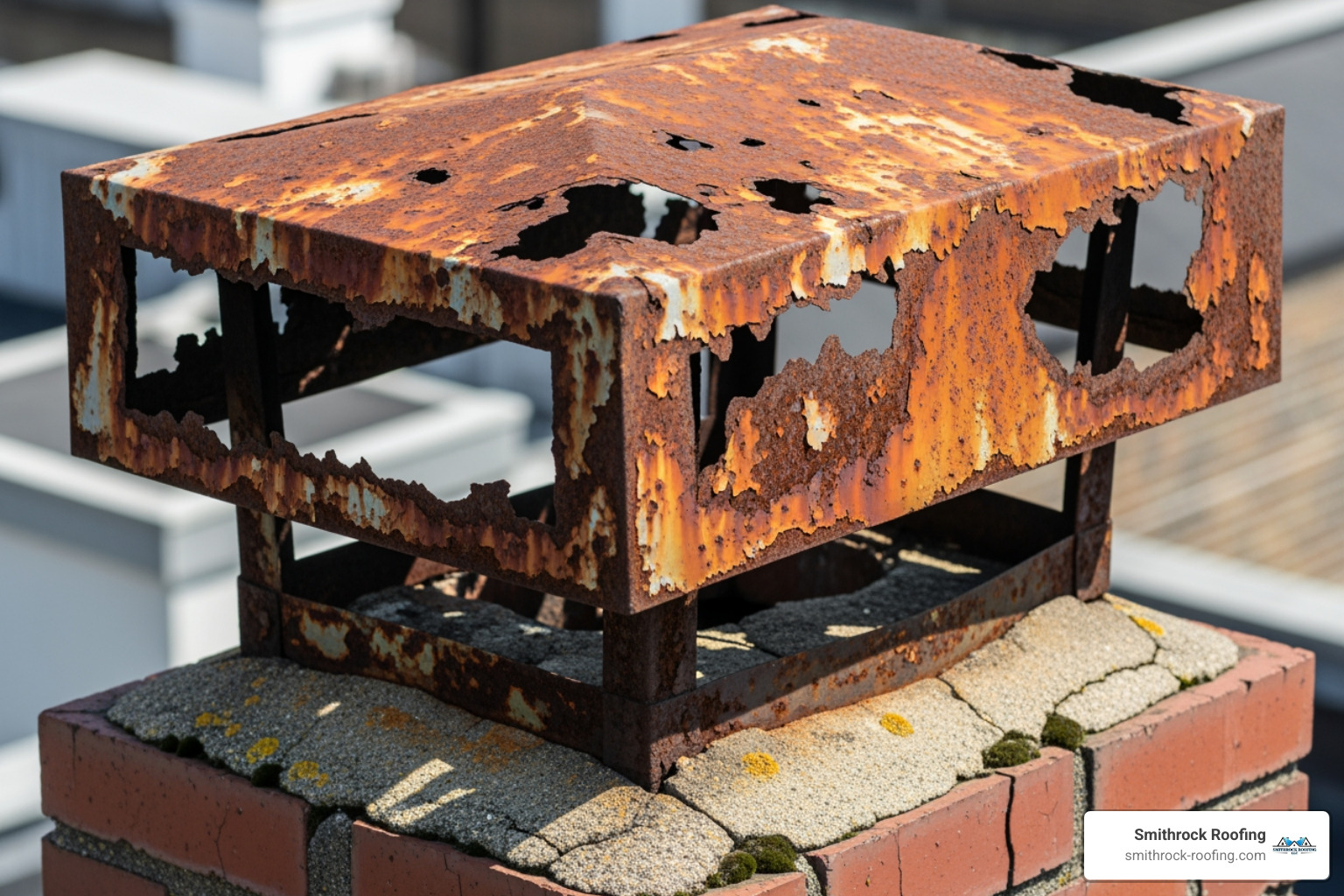
Visible Damage: Obvious signs like cracks, large dents from falling branches, or holes in the lid or mesh are clear indicators that the cap’s protective barrier has been breached, allowing water and animals to enter.
Rust and Corrosion: Orange-brown streaks running down the sides of your chimney are a dead giveaway that your cap is deteriorating. This is most common with galvanized steel caps, as their protective zinc coating wears away. The rust not only weakens the cap’s structure but also causes permanent, unsightly stains on your masonry.
A Missing or Loose Cap: It’s not uncommon for high winds to blow a poorly secured cap completely off the chimney or leave it dangling precariously. A wobbly, tilted, or missing cap leaves your chimney completely exposed to the elements. This type of Wind Damage to Roof is a serious problem that needs immediate attention.
Water in the Fireplace: Finding puddles of water in your firebox, hearing dripping sounds inside the chimney during a storm, or seeing water stains on the walls around your fireplace are all signs that your cap has failed its primary job of keeping water out.
Animal Noises or Nesting Evidence: If you hear scratching, chirping, or chittering sounds coming from your chimney, it’s a sure sign that critters have gotten past your cap. Seeing nesting materials like twigs and leaves on the roof around the chimney opening is another clear indicator of an animal intrusion.
Excessive Debris in the Flue: If your chimney sweep reports that your flue is constantly full of leaves and twigs despite regular cleanings, it likely means the cap’s mesh screen is damaged, has holes, or the cap itself is improperly sized for the flue.
Age and Material of the Cap: Different materials have vastly different lifespans. Inexpensive aluminum caps may only last a few years, while standard galvanized steel often fails within five years. If you know your cap is old or made of a less durable material, it’s wise to consider a proactive replacement with a long-lasting option like stainless steel or copper.
Choosing the right chimney cap is not a one-size-fits-all decision. The ideal choice depends on your chimney’s specific structure, the number of flues it contains, your aesthetic goals, and any persistent problems (like downdrafts) you need to solve. A single-flue brick chimney in a calm, wooded area has very different needs than a multi-flue stone chimney on a windy hill or a modern prefab metal chimney. We offer comprehensive chimney services to help you navigate these options and find the perfect fit for your home.
The first major decision in types of chimney cap replacement is determining how the cap will attach to the chimney. This choice fundamentally affects the level of protection, durability, and cost.
Flue-mounted caps, also known as single-flue caps, are designed to attach directly to an individual flue tile that extends above the chimney crown. They are a simple and economical option for chimneys with a single, well-defined flue. These caps secure to the tile with pressure screws or heavy-duty clamps and are effective at keeping water, animals, and debris out of that specific flue. However, their primary drawback is that they offer no protection for the chimney crown itself.
Crown-mounted caps, also called multi-flue caps, provide a far superior level of protection by covering the entire top surface of the chimney, including all flues and the concrete crown. The crown is a wide, flat mortar surface that is highly susceptible to water pooling and cracking from freeze-thaw cycles. A crown-mounted cap acts like a permanent umbrella, shielding the entire crown from moisture and extending its life significantly. For chimneys with multiple flues, a single crown-mounted cap is a much smarter, more effective, and often more aesthetically pleasing solution than installing multiple individual flue caps. It secures directly to the concrete crown, creating a complete, weatherproof barrier. For proper draft, the cap’s lid must sit at least 5 to 6 inches above the top of the tallest flue tile.
Your chimney’s construction material is a non-negotiable factor that dictates the type of cap you must use.
Masonry chimneys, which are typically built from brick, block, or stone, use clay flue tiles to vent smoke. Caps for these chimneys are designed to fit over standard square, rectangular, or round clay tile dimensions. While most homes use common sizes (e.g., 13″x13″, 9″x13″), older homes or custom builds may have non-standard flue sizes or shapes. In these cases, custom fabrication is the best option to ensure a perfect, weatherproof fit that provides maximum protection.
Metal chimneys (also known as prefabricated or factory-built systems) are engineered units that often feature air-cooled, double or triple-wall pipe construction. These systems are safety-tested by organizations like Underwriters Laboratories (UL) as a complete unit. Therefore, caps for these systems are strictly manufacturer-specific. Using a generic or incorrect cap is not just ineffective; it is extremely dangerous. It can void the manufacturer’s warranty, compromise the chimney’s safety features by blocking critical cooling air channels, and create a serious fire hazard. To find the correct replacement, you must locate the brand and model number of your venting system, which is usually found on a metal plate attached to the chimney pipe near the firebox or in the attic.
Beyond standard protection, specialized types of chimney cap replacement are engineered to solve specific performance issues or to elevate your home’s architectural style.
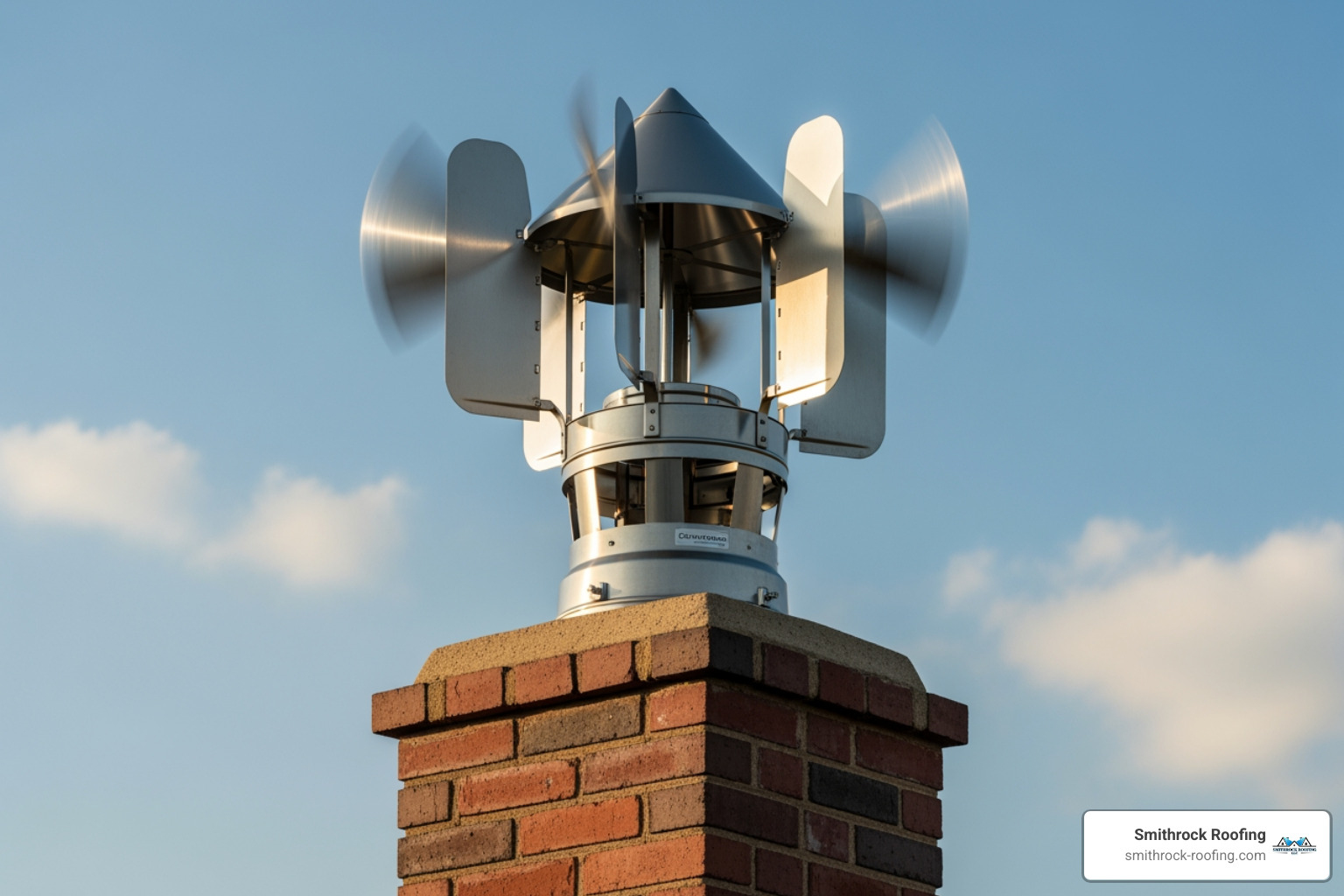
High-Wind and Wind-Directional Caps: If your home is in a windy location and you frequently experience downdrafts that push smoke back into your room, these caps are the solution. Stationary high-wind caps are designed to deflect wind over the top of the flue regardless of its direction. Wind-directional (or turbine) caps feature a pivoting hood that rotates with a vane, ensuring the opening always faces away from the wind, which creates a vacuum effect that pulls smoke out.
Vacuum and Draft-Inducing Caps: For persistent draft issues not solved by other means, these caps provide an active solution. Vacuum caps (like the Vacu-Stack) use the Venturi effect, where wind passing over a series of vents creates a partial vacuum, actively sucking smoke up and out of the chimney. For the most severe draft problems, a draft-inducing fan cap can be installed. This is a motorized fan that sits atop the flue and can be turned on to force a proper draft, ensuring smoke is pulled out of the home regardless of weather conditions or chimney design flaws.
Decorative Caps and Custom Shrouds: For homeowners who view their chimney as an architectural statement, decorative caps and custom shrouds combine elite function with high style. Copper caps are a popular premium choice, prized for their exceptional durability and the beautiful, classic green patina they develop over decades. Beyond copper, shrouds can be fabricated from stainless steel or powder-coated metal in various colors and styles—from Tudor to Modern—to perfectly match your home’s architecture. These custom pieces completely enclose the top of the chimney, hiding unsightly pipes or damaged masonry while providing the ultimate in protection and curb appeal.
Selecting the right chimney cap is a critical investment in your home’s safety, longevity, and appearance. The best choice is a balance of factors, including your local climate, how often you use your fireplace, your budget, and your aesthetic preferences. The humid summers and repeated winter freezes in areas like Winston-Salem, Greensboro, and High Point demand materials that can withstand significant moisture and temperature swings without failing. For expert guidance on chimney safety standards, professionals often consult resources from organizations like the Chimney Safety Institute of America.
The material you choose for your cap will directly dictate its durability, resistance to corrosion, appearance, and overall lifespan. Here’s a detailed breakdown of the most common options:
| Material | Durability | Rust Resistance | Appearance | Typical Lifespan |
|---|---|---|---|---|
| Galvanized Steel | Moderate | Low | Gray, can be painted black, prone to rust stains | 3-5 years |
| Aluminum | Moderate | High | Silver, can corrode in certain environments | 5+ years |
| Stainless Steel | High | Very High | Shiny silver, can be painted black | 10+ years (often lifetime) |
| Copper | Very High | Very High | Shiny reddish-brown, develops a green patina | 10+ years (often lifetime) |
An improperly sized cap is almost as bad as no cap at all. It will fail to protect your chimney and can even create dangerous drafting problems. Getting accurate measurements is an essential step for any types of chimney cap replacement project.
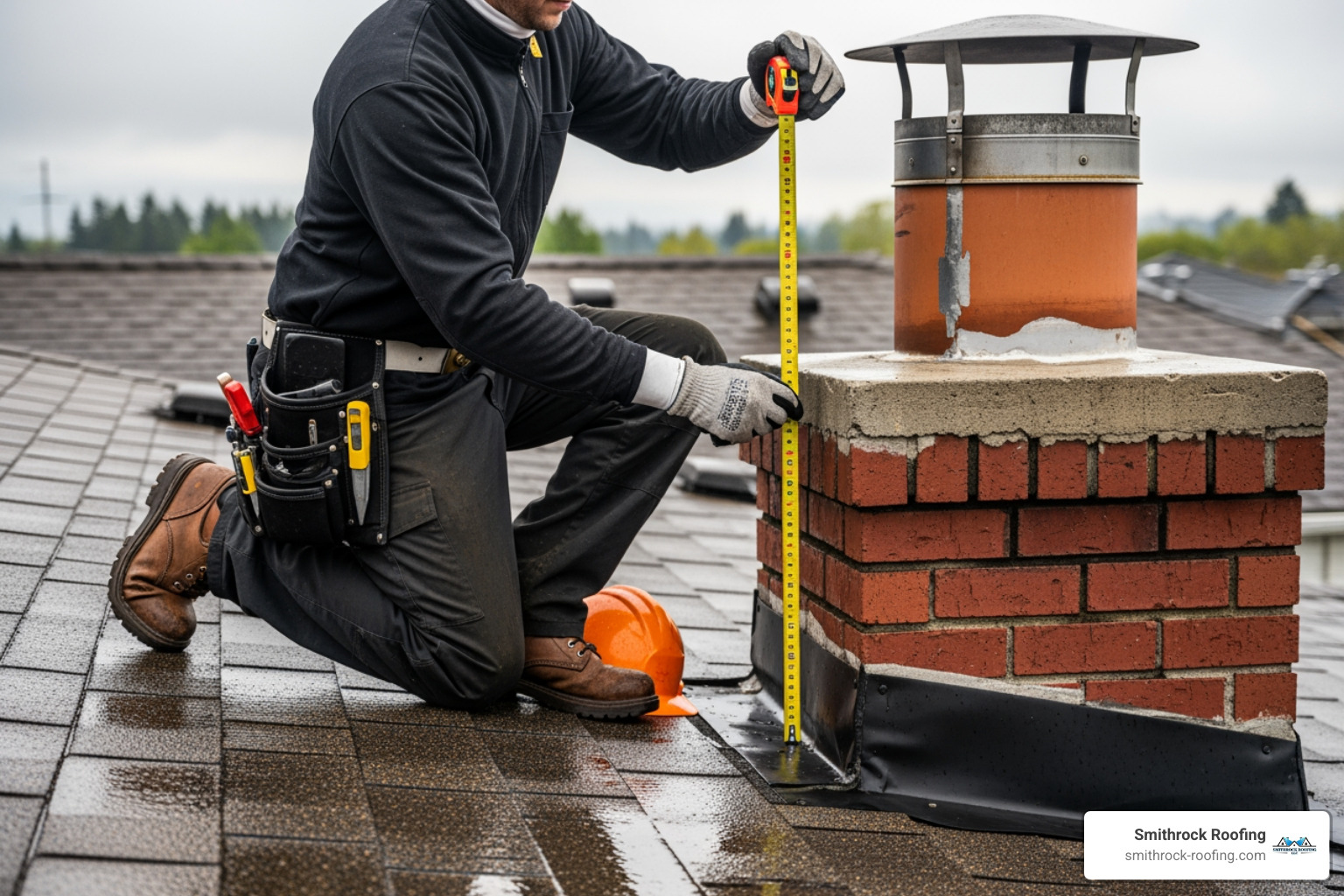
Safety First: Working on a roof is inherently dangerous. Never attempt to measure your chimney without proper safety precautions. Always use a sturdy, correctly positioned ladder, wear shoes with excellent traction, and consider using a safety harness, especially on steeper roofs. If you are not completely comfortable with heights, please call a professional.
Before you purchase a cap, it’s wise to check your local building codes. Many municipalities, especially those in areas with a higher risk of wildfire, have specific requirements for chimney caps.
The most common regulation involves spark arrestors—the wire mesh screen that prevents hot embers from escaping your chimney. The National Fireplace Institute (NFI) standards and the National Fire Protection Association (NFPA) 211 code often inform these local regulations.
Mesh size regulations are critical. The standard typically specifies mesh openings between 1/2-inch and 5/8-inch. This size is scientifically determined to be small enough to contain dangerous sparks but large enough to prevent soot and creosote from quickly building up and blocking airflow. Mesh that is too small can clog easily, creating a draft and carbon monoxide hazard. Always verify your local ordinances with your city or county building department, or work with a certified chimney professional who is familiar with the requirements in areas like Winston-Salem, King, and Clemmons.
Whether you’re a seasoned DIYer or prefer to hire a professional, understanding the chimney cap replacement process is key to a successful outcome. At Smithrock Roofing, we handle chimney cap replacements regularly and know that a proper, secure installation is just as important as the quality of the cap itself. The decision to do it yourself or hire a pro is similar to choosing between Roof Repair vs Replacement in Winston Salem: What Homeowners Need to Know; it requires an honest assessment of the job’s complexity and your own capabilities.
Before starting, gather your safety gear (non-skid footwear, gloves, safety glasses, and a safety harness for steep roofs) and tools (a sturdy ladder, drill with appropriate bits, screwdrivers, tape measure, wire brush, and a caulk gun with high-temperature exterior silicone).
Installing a simple, single-flue cap on a low-pitch, easily accessible roof can be a manageable DIY project for someone with solid home repair experience and a high comfort level with heights. However, the risks involved should not be underestimated.
Consider these factors before deciding: the roof pitch (anything over a 4/12 pitch gets dangerous quickly), the chimney’s location on the roof, and whether you have the right tools and safety equipment. The potential risks of improper installation are significant. A poorly secured cap can become a projectile in a high wind, damaging your roof or property as it comes loose. An improperly sealed crown-mounted cap can trap water instead of repelling it, accelerating damage. A cap installed too low can severely restrict airflow, causing dangerous smoke and carbon monoxide to back up into your home. Over-tightening screws can easily crack a brittle clay flue tile, requiring a much more complex repair.
For many homeowners, professional installation is the safest, most effective, and most logical choice. The peace of mind alone is often worth the cost.
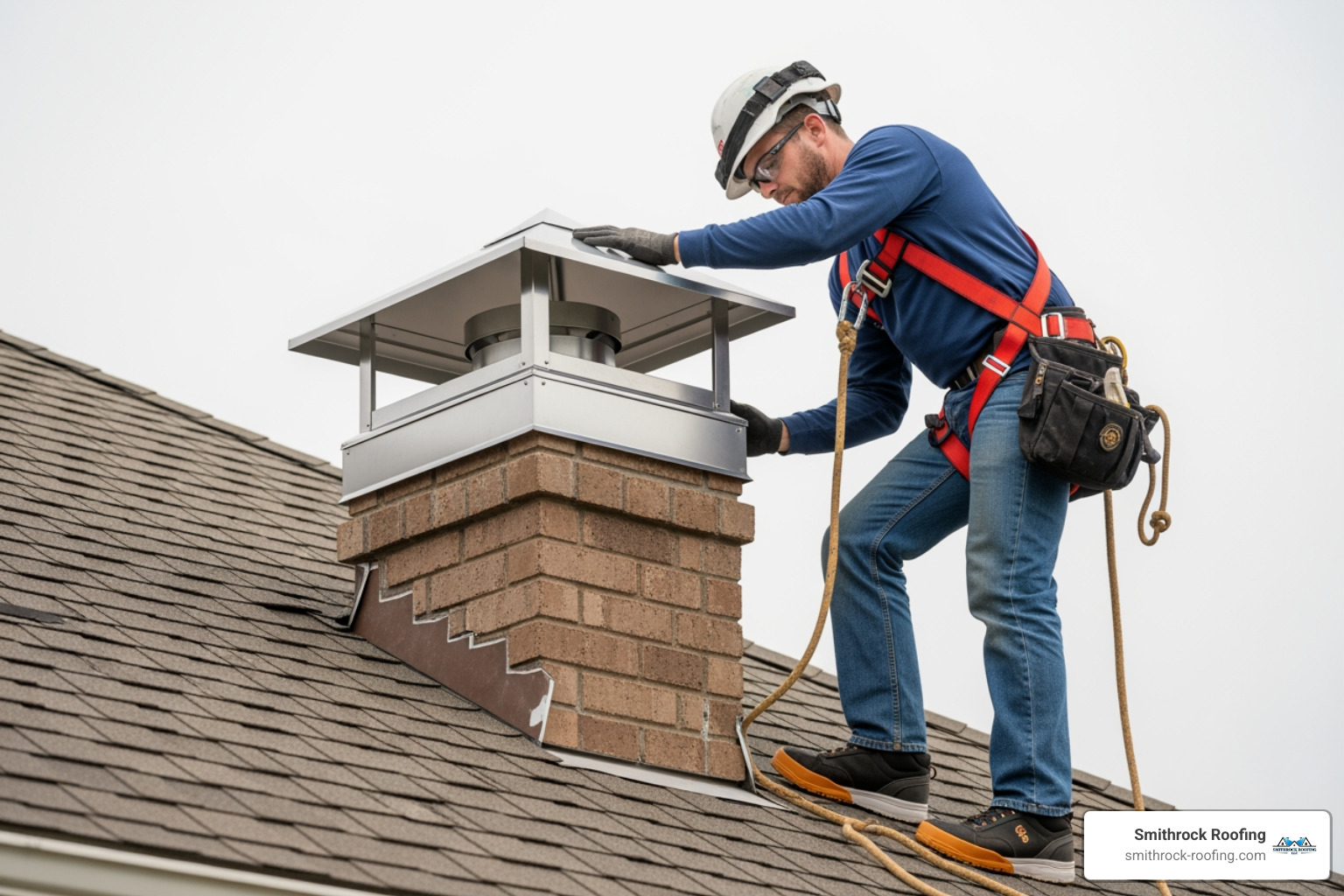
It is highly recommended to call a professional if you have:
A professional installation is backed by a warranty on workmanship and liability insurance. During the installation, a trained eye can also identify other potential issues with your chimney masonry, flashing, or crown, much like during a comprehensive Roof Inspection, saving you from costly surprises down the road.
This process outlines the fundamental steps for most types of chimney cap replacement:
When we talk with homeowners in Winston-Salem, Greensboro, and High Point, certain questions about types of chimney cap replacement come up time and again. Here are detailed answers to some of the most common concerns.
A cap’s lifespan depends almost entirely on its material and the local climate. A budget-friendly galvanized steel cap will typically last only 3-5 years before its protective coating wears off and it begins to rust. Aluminum caps offer better corrosion resistance and can last 5 years or more, but are softer and more prone to physical damage. For the best long-term value and peace of mind, stainless steel and copper caps are the superior choice. They are highly resistant to corrosion and damage, and can easily last for decades—often for the lifetime of the home—with minimal maintenance.
Yes, a chimney cap has a significant impact on draft. A properly sized and installed cap actually improves draft. It acts as a windbreak, preventing downdrafts from pushing smoke back into your house and helping to create a consistent updraft. Conversely, an improperly sized, installed, or clogged cap will severely hinder draft. If the cap sits too low on the flue (less than 5 inches of clearance), it can obstruct the flow of smoke. If the mesh screen becomes blocked with creosote and soot, it will choke off the chimney, causing smoke to back up into your home and creating a dangerous carbon monoxide risk.
The cost can vary widely based on material, size, type, and whether you hire a professional. A small, standard-size galvanized steel or aluminum single-flue cap might cost $50 – $150 for the part alone. A high-quality stainless steel single-flue cap could range from $150 – $400. Crown-mounted caps are larger and more complex, with prices often starting at $400 and going up to $1,000+ for stainless steel models. Custom decorative shrouds in copper can cost several thousand dollars. Professional installation typically adds $200 – $500 to the total cost, depending on the complexity of the job and roof accessibility.
Yes, absolutely. Capping an unused or decommissioned chimney is just as important as capping an active one. An uncapped chimney is essentially a large, open hole in your roof that serves as a direct entry point for three major problems:
Capping an unused chimney is a small, one-time investment that protects your home from significant damage and saves you money in the long run.
Yes. While a gas fireplace doesn’t produce sparks, a cap is still essential. It performs all the other critical functions: it keeps out rain and moisture that can damage the metal components of your gas fireplace system, it blocks animals from nesting in the vent pipe, and it prevents debris from causing blockages that could interfere with proper venting of combustion fumes.
While both are located at the top of the chimney, they serve different functions. A chimney cap is a protective cover that is always open for ventilation and has a mesh to stop sparks and animals. A top-sealing damper is a device with a gasket that creates an airtight seal at the top of the flue when the fireplace is not in use. It’s operated by a cable running down the chimney. Many modern solutions combine both, featuring a full chimney cap that incorporates a top-sealing damper mechanism, giving you the best of both worlds: protection when the chimney is in use and an energy-efficient seal when it’s not.
Your chimney cap is a small but mighty component of your home’s protective envelope. It is the critical guardian that stands between your chimney system and the damaging effects of water, animals, sparks, and debris. Throughout this guide, we’ve covered the various types of chimney cap replacement, from simple flue-mounted caps to comprehensive crown-mounted systems, and explored the crucial differences in materials, from short-term galvanized steel to lifetime investments like stainless steel and copper.
The most important takeaways are to choose the right type of cap for your chimney’s structure, select a material that suits your climate and budget for the long term, and ensure the cap is perfectly sized and securely installed. An undersized or improperly installed cap can be as detrimental as having no cap at all. While a simple, single-flue replacement may be a manageable DIY task for a confident homeowner with the right safety gear, professional installation provides invaluable peace of mind. A pro guarantees a secure, weatherproof seal that complies with local codes and ensures optimal chimney performance and longevity.
At Smithrock Roofing, we understand that your chimney cap is an integral part of your home’s complete roofing system, not an afterthought. We have helped countless homeowners throughout Winston-Salem, King, Clemmons, and the surrounding communities protect their properties with high-quality chimney solutions. Proactive maintenance is always less stressful and less expensive than reactive emergency repairs. Whether you need a simple, durable replacement or a custom-fabricated architectural solution, we are here to ensure the job is done right the first time. Contact us for your chimney needs and let’s work together to keep your home safe, dry, and sound for years to come.
Smithrock Roofing © Copyright 2026 • All Rights Reserved • Privacy Policy • Maintained by Mongoose Digital Marketing