Why Deciding on Professional Help for Your Chimney Cap Matters
Do I need a contractor to replace a chimney cap? Many homeowners ask this when their chimney cap is damaged or missing. The answer depends on your comfort with heights, your DIY skills, and the complexity of your chimney.
While a basic replacement on a single-story home with a low-pitch roof might seem like a DIY project, the risks are significant. Working on a roof is inherently dangerous, and improper installation can lead to water leaks, wind damage, or even carbon monoxide entering your home.
For a deeper background on why capped chimneys are now considered a standard safety feature in modern construction, resources like the Chimney Safety Institute of America explain how caps protect against water intrusion, animals, and fire hazards.
You should hire a contractor if:
- Your roof is steep or your home is multi-story.
- You lack proper safety equipment (harness, ladder, non-skid footwear).
- Your chimney has multiple flues or needs a custom cap.
- You see damage to the chimney crown, bricks, or flashing.
- You are uncomfortable working at heights.
A chimney cap is more than a simple metal cover; it’s a critical component that protects your home from water damage, fire hazards, and pests. That’s why most experts, including certified chimney technicians and roofing contractors, recommend professional installation. Professionals have the right equipment, training, and insurance to do the job safely and can spot other potential issues with your chimney structure that a homeowner might miss.
This guide will help you understand when to call a professional, the risks of DIY installation, and how to choose the right expert for the job.

Understanding the Role and Importance of Your Chimney Cap
Your chimney cap is a non-negotiable safety feature for your home. It’s not just a decorative piece; it’s a vital component that protects your chimney, fireplace, and family from fire, water damage, and pests.
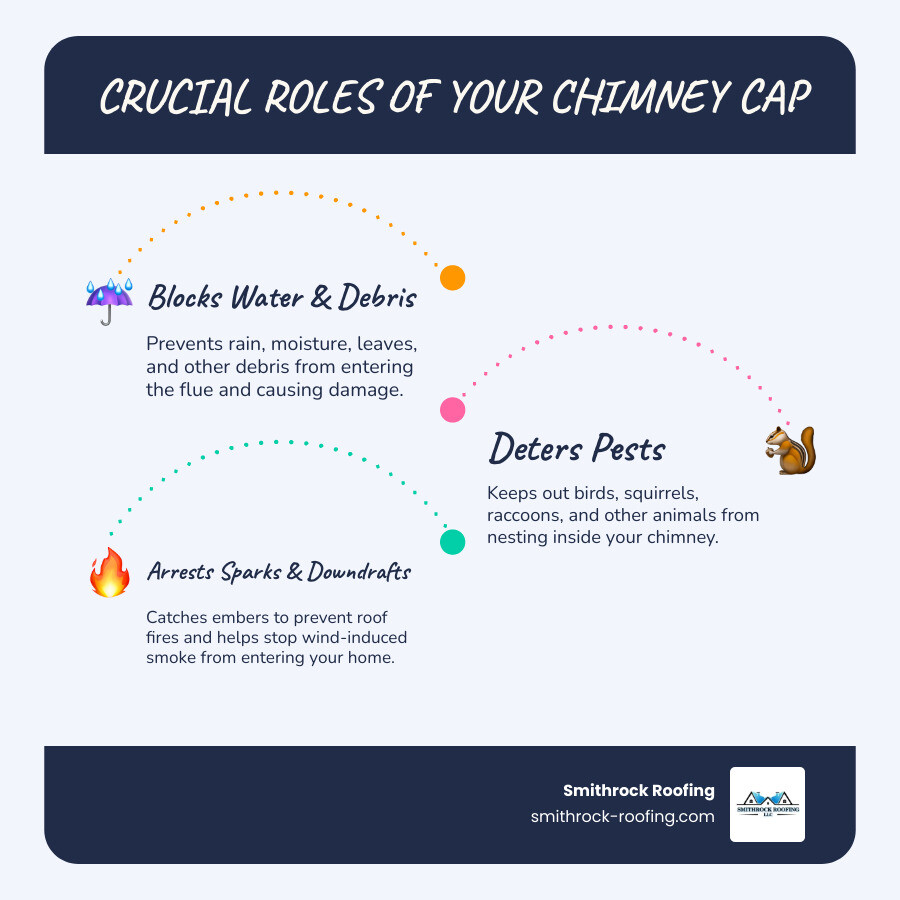
Its primary functions are multifaceted. As a spark arrestor, it catches hot embers that travel up the flue, preventing them from landing on your roof and starting a fire. It also provides critical protection against water damage by blocking rain, snow, and ice from pouring into the flue. This prevents rust, mortar deterioration, and mold growth. Finally, a cap blocks animals and debris. Critters like birds, squirrels, and raccoons often see an open chimney as an invitation to nest, creating blockages and fire hazards. Leaves and twigs can also accumulate, impairing ventilation and increasing the risk of carbon monoxide poisoning.
A missing or damaged cap can lead to rapid deterioration of your chimney system, resulting in costly repairs or even a complete rebuild. The safety risks, from chimney fires to carbon monoxide exposure, make a functional chimney cap essential.

The Chimney Cap vs. The Chimney Crown
It’s easy to confuse a chimney cap with a chimney crown, but they serve distinct, complementary roles. Understanding the difference is key to proper maintenance.
The chimney crown is the concrete or mortar slab on top of the chimney’s brick structure. Its job is to shed water away from the masonry, preventing moisture from seeping into the bricks and mortar joints. A well-made crown has an overhang to direct water away from the chimney’s sides.
The chimney cap is the metal cover attached to the flue opening at the very top. It specifically blocks rain, animals, and debris from entering the flue while allowing smoke to exit. It usually includes a mesh screen to act as a spark arrestor.
Essentially, the crown protects the chimney structure, while the cap protects the flue opening. Both are critical for the safety and longevity of your chimney system.
Consequences of a Damaged or Missing Chimney Cap
A compromised chimney cap exposes your home to numerous problems:
- Moisture Infiltration: Unprotected, the flue acts like a funnel, channeling rain and snow directly into the heart of your chimney. This moisture soaks into the porous bricks and mortar, creating a cascade of damage that can extend into your home’s attic and ceilings.
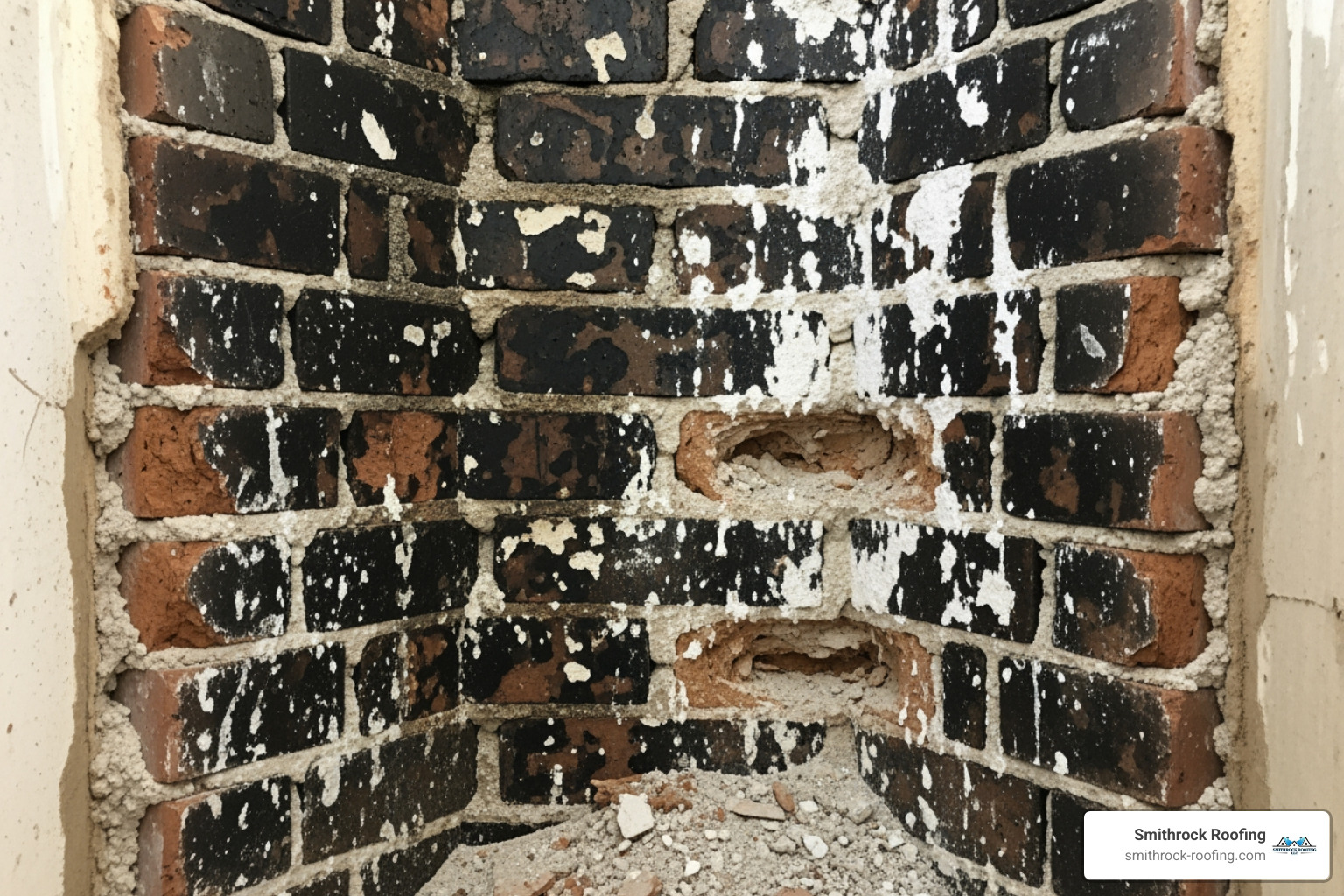
- Mortar Joint Deterioration: When water saturates the masonry, it freezes and expands in cold weather, then thaws. This relentless freeze-thaw cycle exerts immense pressure from within, causing mortar joints to crack, crumble, and fall away. This process, known as spalling, can cause bricks to flake and eventually destabilize the entire chimney structure.
- Flue Liner Damage: The flue liner is your home’s primary defense against intense heat and corrosive byproducts of combustion. Water infiltration, especially when combined with freeze-thaw cycles, can cause clay tile liners to crack. A compromised liner creates a direct path for extreme heat to reach the combustible wooden framework of your house, posing a severe fire risk. It also allows toxic gases like carbon monoxide to seep into your living spaces.
- Rusting Damper Assembly: The damper, a metal plate inside the chimney that controls airflow, is highly susceptible to rust when exposed to constant moisture. A rusted damper can become stuck in an open or closed position, making it difficult to start a fire or impossible to prevent conditioned air from escaping up the chimney, leading to higher energy bills.
- Mold and Mildew Growth: The dark, damp environment inside an uncapped chimney is a perfect breeding ground for mold and mildew. These fungi can release spores into your home’s air, triggering allergic reactions, asthma attacks, and other respiratory problems. Remediating a widespread mold issue can be an extensive and costly process.
- Unwanted Pests: An open chimney is a welcome sign for wildlife. Birds (like chimney swifts), squirrels, raccoons, and even bats can enter to nest. This leads to unpleasant odors from droppings, loud and disruptive noises, and the potential for animals to get trapped or enter your home.
- Nesting Material Fire Risk: Animal nests are built from highly flammable materials like dry twigs, leaves, and grass. When you light a fire, stray embers can easily ignite this tinder-dry material, causing a sudden and intense chimney fire that can quickly spread to the rest of your home.
- Flue Blockages: Nests, along with falling leaves and other debris, can create a dense blockage in the flue. This obstruction prevents smoke and combustion gases from escaping properly. As a result, deadly carbon monoxide, smoke, and soot can be forced back down the chimney and into your home.
- Reduced Fireplace Efficiency: A proper draft is essential for a fireplace to work efficiently. A damaged cap, or a flue blocked by debris, disrupts the natural upward flow of air (the “stack effect”). This leads to poor combustion, a smoky room, and a fire that struggles to stay lit, wasting wood and providing little heat.
DIY vs. Professional: Do I Need a Contractor to Replace a Chimney Cap?
The big question remains: do I need a contractor to replace a chimney cap? While saving money with a DIY approach is tempting, weigh that against the benefits of professional installation, especially concerning safety, quality, and warranties.
Working on a roof is inherently risky. Professionals are trained in roof safety and have the specialized equipment to perform the job securely. A professional also ensures the cap is correctly sized, installed, and sealed for optimal protection. Improper installation can lead to leaks, wind damage, and ventilation issues that could cause carbon monoxide to enter your home.

Can a Homeowner Replace a Chimney Cap Themselves?
If you’re asking, “Can I replace my chimney cap myself?”, the answer is a qualified maybe. It’s feasible only if you have significant DIY proficiency and, most importantly, experience with safe roof work. You must be confident working at heights and have the right tools.
Essential tools for a DIY replacement include:
- An extension ladder that reaches at least 3 feet above the roofline
- A safety harness, especially for steep roofs
- Non-skid footwear
- Measuring tape
- Drill with appropriate bits
- Stainless steel self-tapping screws
- Caulk gun and high-quality roof sealant
If you have a simple, single-flue chimney on an easily accessible, low-pitched roof and possess all the necessary skills and safety gear, you might consider it. However, safety must always be your top priority.
The Critical Risks of a DIY Chimney Cap Replacement
While saving money is appealing, the risks of a DIY chimney cap replacement are substantial.
The most severe risk is personal injury from falls. According to safety experts like the Chimney Safety Institute of America (CSIA), working at heights without proper training and equipment is extremely hazardous. Even a minor slip can result in serious injury.
Beyond personal safety, there’s the risk of improper installation, which can cause:
- Incorrect measurements: An ill-fitting cap offers inadequate protection and can be dislodged by wind.
- Poor sealing: Improper sealing can lead to water leaks, causing costly structural damage over time.
- Wind damage: A poorly secured cap can become a dangerous projectile in a storm, leaving your chimney exposed.
- Damage to the chimney or roof: You could accidentally damage shingles, flashing, or the chimney crown, leading to more expensive repairs.
- Voiding warranties: Some roofing or chimney warranties are voided if work is not performed by a certified professional.
A DIY attempt gone wrong can easily cost more in repairs and medical bills than the initial price of a professional installation.
When to Absolutely Call a Professional for Chimney Cap Replacement
There are clear situations where calling a professional is not just a suggestion—it’s a necessity for safety and proper function.
You should absolutely call a professional if:
- You have a steep-pitched roof or multi-story home: The risk of falling increases dramatically with height and roof pitch. Professionals have the training and equipment to work safely in these conditions.
- There’s visible chimney damage: If you see a cracked crown, flaking bricks (spalling), missing mortar, or damaged flashing, these indicate deeper issues that require an expert diagnosis and repair.
- You have a custom or multi-flue chimney: Chimneys with multiple flues, common in homes across Winston-Salem NC and Greensboro NC, often need custom-fabricated caps for a proper fit. A standard cap will not work effectively.
- You lack proper safety equipment: Without a proper ladder, safety harness, and appropriate footwear, the risk of injury is too high.
- You’re unsure about the right cap type: A professional can recommend the best cap material and design for your specific chimney, climate, and usage.
A professional not only installs the cap safely but also inspects the entire chimney system, identifying potential problems that could otherwise go unnoticed.
Hiring the Right Professional for Your Chimney Cap Installation
Choosing the right professional for your chimney cap installation is an investment in your home’s safety and durability. It ensures a precise fit, proper ventilation, and lasting protection from the elements. Entrusting this task to a qualified expert provides peace of mind that the job is done correctly.
Who is Qualified to Install a Chimney Cap?
Several types of professionals are qualified to install a chimney cap, each with specific expertise:
- Certified Chimney Technicians: These are specialists in all aspects of chimney function, from mechanics to ventilation, making them ideal for assessing your needs.
- Roofing Professionals: As an experienced roofing company, we at Smithrock Roofing understand how chimney components integrate with the entire roofing system, ensuring the installation doesn’t compromise your roof or flashing.
- Masonry Experts: If your chimney is brick or stone, a masonry contractor can handle the installation, especially if repairs to the crown or brickwork are also needed.
- Chimney and Roofing Service Companies: Companies like ours offer a comprehensive solution, understanding the entire system from the shingles to the flue for a cohesive and effective installation.
When evaluating professionals, look for those who understand the entire roof system, not just the cap itself.
What to Look for in a Chimney Service Contractor
To ensure you hire a reputable and skilled professional, look for the following qualifications:
- Licensing and Insurance: This is non-negotiable. Verify that the contractor holds all required state and local business licenses. More importantly, ask for proof of insurance. This should include both general liability insurance, which covers any damage to your property, and worker’s compensation insurance, which covers injuries to the crew while on your property. Without worker’s comp, you could be held financially responsible for medical bills if a worker is injured.
- Verifiable Experience and Reputation: Look for a company with a long, proven track record of quality work, like our 30+ years of experience at Smithrock Roofing. Don’t just rely on their website; check third-party online reviews on platforms like Google, Yelp, and Angi. Ask for a portfolio of past projects and a list of local references you can contact. When speaking to references, ask about their satisfaction with the work, the professionalism of the crew, and whether the project was completed on time and on budget.
- Detailed Written Estimates: A trustworthy contractor will provide a clear, itemized estimate, not just a verbal quote or a single number on a piece of paper. This document should detail the full scope of work, including the specific type and brand of chimney cap to be installed, a breakdown of material and labor costs, the project timeline, payment terms, and warranty information for both the materials and the workmanship. Be wary of any estimate that seems unusually low, as it may indicate subpar materials or hidden costs.
- Knowledge of Local Building Codes: The contractor must be well-versed in local and national building codes, such as those from the National Fire Protection Association (NFPA). These codes dictate requirements for things like cap height above the flue, mesh size for spark arrestors, and proper clearance from combustible materials. A knowledgeable contractor ensures your installation is not only effective but also fully compliant and safe.
Taking these steps will help you choose a contractor who will provide a safe, high-quality, and lasting solution for your chimney.
A Homeowner’s Guide to Chimney Caps
Understanding your chimney cap options helps you make the best decision for your home’s protection and aesthetic. From materials to styles, choosing correctly is key.
Signs Your Chimney Cap Needs to Be Replaced
Your chimney cap endures constant exposure to the elements. Knowing the signs of wear can help you act before minor issues become major problems. Here’s what to look for:
- Visible Rust or Corrosion: Rust, especially on galvanized steel caps, weakens the metal and can create holes that let water in.
- Cracks, Holes, or Dents: Physical damage from weather or falling debris compromises the cap’s integrity and allows entry for water, animals, or sparks.
- Loose or Missing Fasteners: A cap that is not securely fastened can rattle, become dislodged in high winds, or fail to provide a proper seal.
- Water Stains in the Firebox: Stains on the firebox walls or damper are a strong sign that water is getting into your flue, likely from a failing cap.
- Animal Sounds from the Chimney: Scratching or chirping noises mean your cap is missing, damaged, or improperly fitted, allowing animals to get inside.
- Debris in the Fireplace: Finding leaves, twigs, or nesting material in your fireplace indicates the cap is no longer blocking them.
- Downdrafts and Smoke Issues: If smoke backs up into your home, a damaged or poorly designed cap could be disrupting the chimney’s draft.
If you notice any of these signs, it’s time for a replacement to prevent more extensive and costly chimney repairs.
Choosing the Right Chimney Cap: Materials and Types
Selecting the right chimney cap involves choosing the best material and type for your needs and ensuring a proper fit.
Here’s a comparison of common materials:
| Material | Lifespan | Durability | Maintenance |
|---|
| Galvanized Steel | 3-5 years | Moderate, prone to rust | Regular inspection for rust, eventual replacement |
| Aluminum | 25+ years | Good, rust-resistant | Low, occasional cleaning |
| Stainless Steel | 25+ years | Excellent, corrosion-resistant | Low, occasional cleaning, virtually lasts forever |
| Copper | 25+ years, often lifetime | Superior, highly weather-resistant | Very low, develops a patina over time |
Investing in higher-quality materials like stainless steel or copper pays off with a longer lifespan and less maintenance. While galvanized metal is cheaper, it rusts quickly and is not suitable for gas logs. For more on copper options, see our Copper Chimney Cap Cost Guide.
Chimney caps also come in different types:
- Single-flue caps: These cover a single flue opening and are the most common type.
- Multi-flue caps: These are designed to cover multiple flues with one unit and often require custom fabrication for a perfect fit over the entire chimney crown. You can learn more about Prefabricated Chimney Caps.
- Top-sealing dampers: Also known as top-mount dampers, these are a combination of a chimney cap and a damper that seals the flue at the very top. Operated by a cable that runs down the chimney, they create a much tighter, more effective seal than traditional throat dampers located just above the firebox. This superior seal significantly improves your home’s energy efficiency. It prevents conditioned air (both heated and cooled) from escaping up the chimney when the fireplace is not in use, potentially lowering your energy bills. It also stops cold downdrafts in the winter, eliminating a common source of drafts in the room.
The importance of proper measurement and fit cannot be overstated. An improperly sized cap won’t work effectively. A good rule of thumb is to set the cap at least eight inches above the top of the flue to ensure a strong draft and prevent smoke from backing up into your home. Accurate measurements are critical for a secure, leak-proof fit.
Frequently Asked Questions about Chimney Cap Replacement
What is the difference between a chimney cap and a chimney crown?
A chimney crown is the concrete or mortar slab at the top of the chimney structure that sheds water. A chimney cap is a metal cover installed over the flue opening to prevent rain, animals, and debris from entering the flue itself. They work together to protect the entire chimney system.
How long does a chimney cap last?
The lifespan depends heavily on the material. A basic galvanized steel cap might last 3-5 years, while aluminum and stainless steel caps can last for decades. High-end copper caps can last a lifetime with proper care.
What maintenance does a chimney cap need after installation?
A chimney cap requires minimal maintenance. It should be visually inspected annually as part of a routine chimney inspection. Check for signs of rust, damage from weather, and ensure it is still securely fastened. Clear away any leaves or branches that may have accumulated around it.
Conclusion
When asking, “do I need a contractor to replace a chimney cap?“, the safest answer is almost always yes. While a DIY replacement might seem to save money upfront, the risks of working on a roof and the potential for improper installation can lead to far costlier damage, safety hazards, and a lack of protection for your home.
Your chimney cap is a critical defense against water damage, pests, chimney fires, and carbon monoxide. Its correct installation is essential for your safety and your home’s longevity. This is a job best left to experienced professionals.
At Smithrock Roofing, we understand the vital connection between your chimney, its cap, and your roof’s overall integrity. Serving Winston-Salem NC, King NC, Clemmons NC, and surrounding areas, our team has the expertise, tools, and safety protocols to ensure a perfect installation.
For a secure and professional installation that protects your home for years, trust the experts at Smithrock Roofing for all your chimney and roofing needs. Contact us today for a consultation.