Using Bondo for aluminum siding can be an effective and cost-saving solution for fixing cosmetic damage like dents, scratches, and small holes, helping you avoid replacing entire panels. Here’s a quick overview:
Quick Answer: Can You Use Bondo on Aluminum Siding?
Aluminum siding is durable, but impacts from hail or accidents can leave it looking imperfect. As one forum user noted: “I used Bondo on my garage door 10 years ago, then auto primer and exterior latex paint. No problems through Indiana temperature cycles.”
For minor cosmetic damage, body filler products like Bondo offer a practical DIY solution that can save you money over professional replacement. However, success depends on knowing when to use it and how to apply it correctly. Aluminum expands and contracts with temperature, and poor preparation can lead to failed repairs. This guide will walk you through the potential and limitations of this approach.
Bondo for aluminum siding terms explained:
Before reaching for a can of Bondo, it helps to understand the full landscape of aluminum siding repair. Not every problem calls for the same fix, and choosing the right approach from the start will save you time, money, and frustration.
Aluminum siding has been a popular choice for decades because it’s lightweight, resistant to rot and insects, and holds paint reasonably well. But it isn’t invincible. Common issues that prompt homeowners to start researching repairs include:
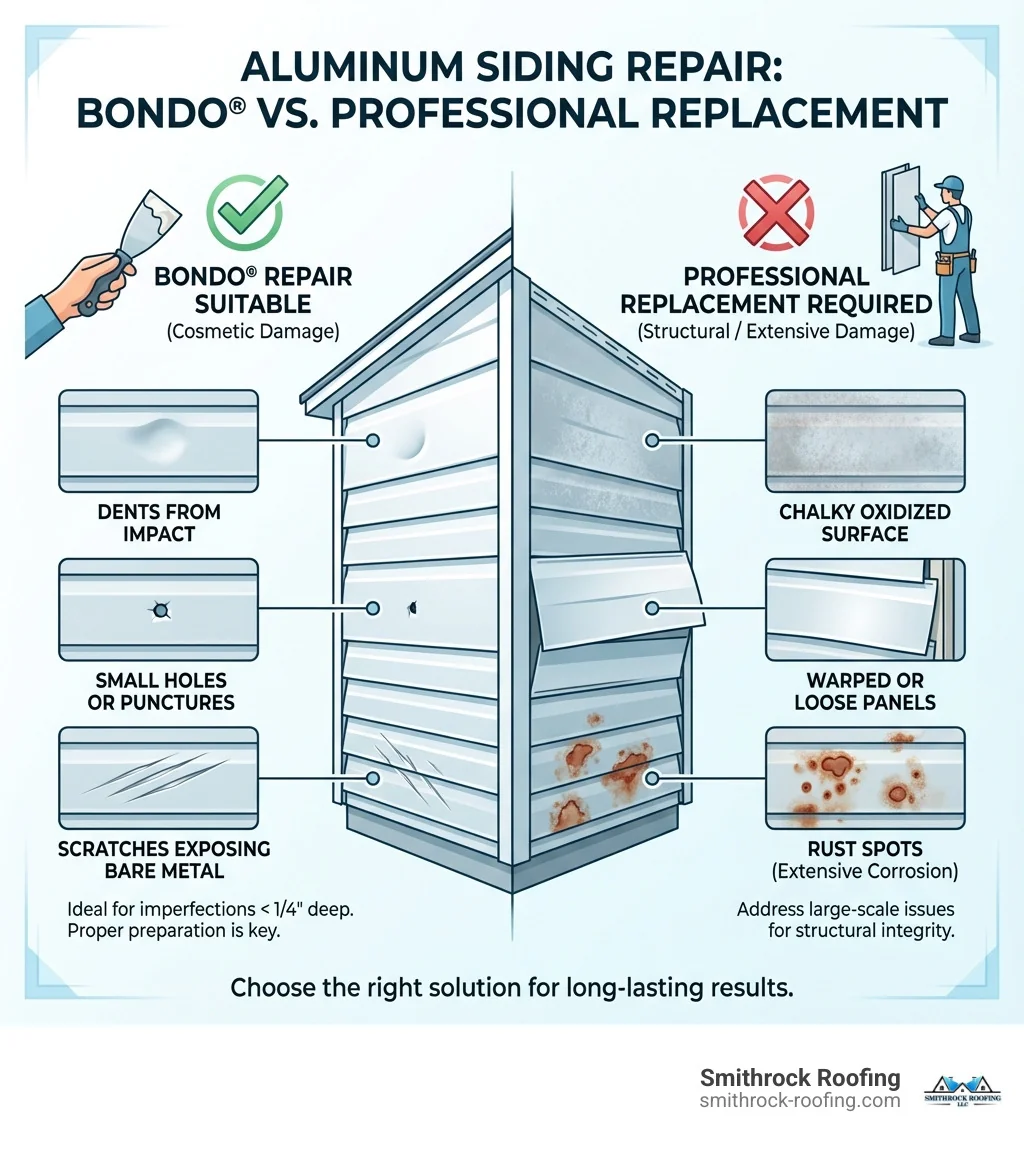
The repair strategy depends entirely on which of these you’re dealing with. Minor cosmetic issues — dents, scratches, and holes smaller than roughly a quarter-inch — are strong candidates for a DIY filler repair using a product like Bondo. More serious structural problems, widespread corrosion, or large sections of damaged siding typically warrant professional panel replacement.
It’s also worth thinking about the age and condition of your siding overall. If your aluminum siding is still in solid shape aside from one isolated area of damage, a targeted patch repair makes good sense. If the siding is showing its age across large sections of the house, it may be worth getting a professional assessment to weigh repair versus full replacement — especially if you’re in an area like Winston-Salem or Greensboro where seasonal weather puts ongoing stress on exterior surfaces.
Need a hand with this in Winston-Salem, Greensboro and the NC Triad? Call (336) 971-0464 or request a free estimate. Honest answers, no pressure.
Before patching any cosmetic damage, it’s critical to check whether the affected panel — or any panel nearby — has come loose from the wall. Loose aluminum siding repair is a separate problem from filling dents and holes, and applying Bondo over a panel that isn’t properly secured is a recipe for a failed repair.
Aluminum siding panels interlock along their top and bottom edges. When they pull away from the wall, it’s usually due to one of the following:
For panels that are simply unlocked or slightly pulled away, a siding zip tool (also called an unlocking tool) can be used to re-engage the bottom locking edge of the panel above it and snap everything back into place. This is a relatively straightforward fix if the panel itself is undamaged and the fasteners are still sound.
If the fasteners have backed out, drive new roofing nails or siding nails through the nailing hem at the top of the panel into solid sheathing. Aluminum siding must be nailed loosely — not driven tight — to allow for thermal movement. A nail driven too firmly will buckle the panel over time.
If you discover soft or spongy sheathing, water damage, or mold behind the loose panel, stop there. Those are signs of a deeper moisture problem that needs professional attention before any surface repair makes sense. At Smithrock Roofing, we frequently find that what looks like a simple loose panel repair uncovers water infiltration that has been quietly damaging a home’s structure. It’s always better to know.
Once any loose panels are properly secured, then you can move forward with filler repairs for dents or holes in the stabilized panel.
Homeowners sometimes wonder whether the same techniques that apply to aluminum siding carry over to other types of metal siding repair. The short answer is: mostly yes, with some important distinctions.
Aluminum and steel are the two most common metal siding materials found on homes in the NC Triad. Both can be patched with body filler, but there are differences worth knowing:
The preparation steps — cleaning, sanding to bare metal, applying filler in thin layers, priming, and painting — are essentially the same for both materials. The key difference is product selection: always confirm the filler and primer you choose are rated for the specific type of metal you’re working with.
If you’re unsure what type of metal siding you have, a quick visual inspection or a call to a professional siding contractor can clear that up quickly. At Smithrock Roofing, we work with all types of exterior siding and can help you identify the right repair approach for your specific situation.
Patching steel siding follows many of the same principles as aluminum siding repair, but the material’s properties demand a few additional precautions. Understanding those differences will help you get a repair that actually holds up over time.
Steel siding is denser and harder than aluminum, which means it’s more resistant to denting from everyday impacts. When it does get damaged, however, the consequences can be more serious. Unlike aluminum, steel will rust when its protective coating is breached — and once rust takes hold, it spreads. That makes timely repair especially important on steel.
Here’s what to do differently when patching steel siding:
For large areas of rusted or deeply pitted steel siding, professional panel replacement is almost always the right call. A surface patch over compromised steel gives rust a place to continue working underneath where you can’t see it.
When aluminum siding takes a hit, replacing an entire panel for a small dent seems excessive. This is where using Bondo for aluminum siding becomes an attractive option. For cosmetic issues like shallow dents, small holes, or surface scratches, Bondo can be an excellent choice. Metal-reinforced varieties are designed to adhere strongly to metal, providing a durable, sandable finish that can be painted to match your siding.
However, Bondo is a cosmetic fix, not a structural one. It cannot repair severely warped panels, extensive corrosion, or large holes. Meticulous surface preparation is essential for a lasting repair, and its weather resistance depends entirely on a high-quality primer and paint topcoat.
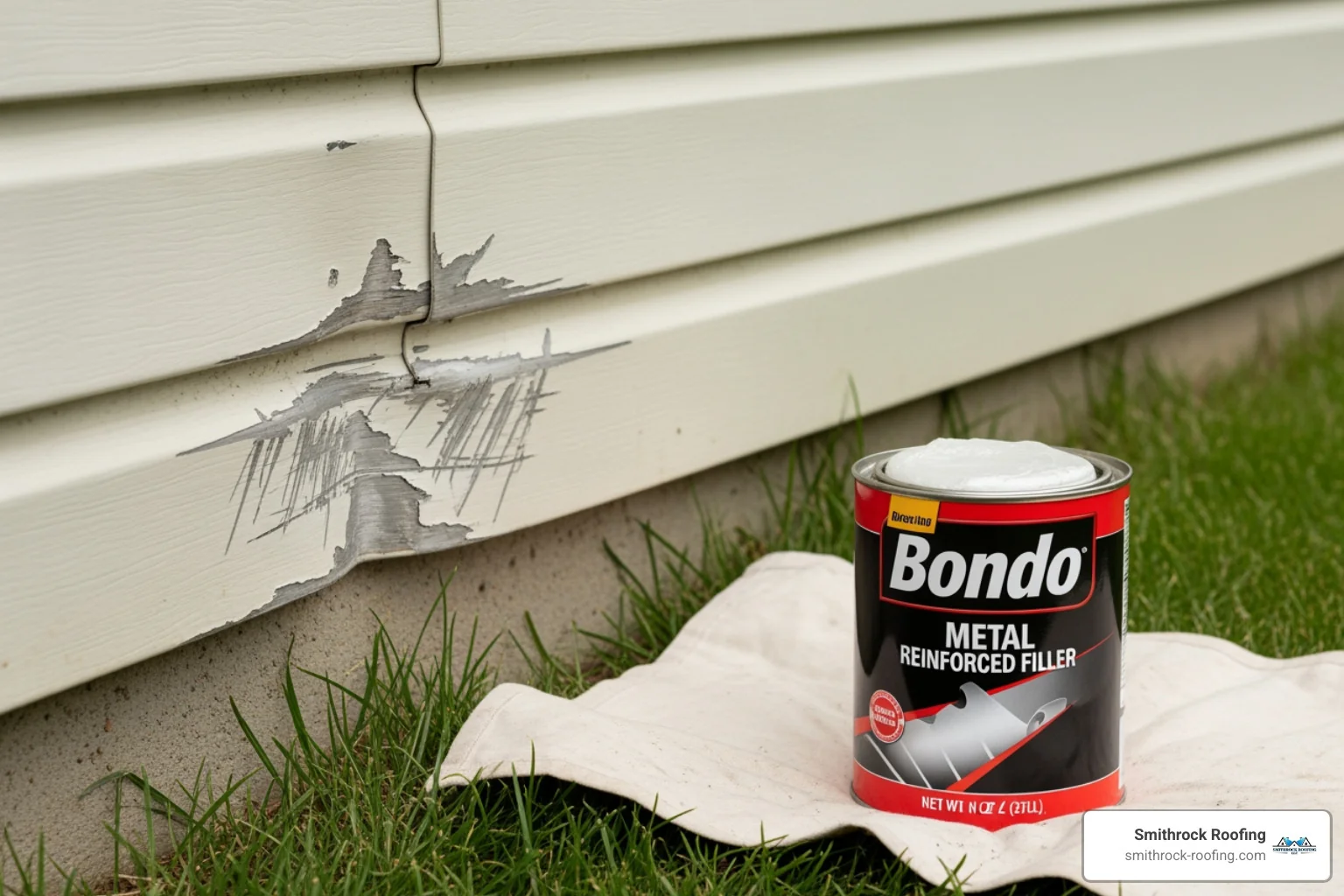
For minor cosmetic issues, using Bondo for aluminum siding offers a practical, DIY-friendly solution. For more extensive damage, or if you’re unsure about tackling the repair yourself, it’s always wise to consult with professionals who specialize in siding repair.
For a successful Bondo for aluminum siding repair, gathering the right products and tools is essential. This guide focuses on materials specifically designed for metal and exterior use to ensure a durable finish.
Here’s a comprehensive list of essential tools and materials you’ll want to have on hand:
Having these items ready will streamline the process. For detailed product specifications, refer to the manufacturer’s documentation, such as the Technical Data Sheet for Bondo Extreme Metal Reinforced Filler.
For Bondo for aluminum siding repairs, we highly recommend Bondo Metal Reinforced Filler. This formulation is engineered with aluminum particles, making it exceptionally strong and ideal for metal surfaces. The aluminum reinforcement improves durability and helps it resist cracking. A key advantage is that it’s rust-proof, which is crucial for any exterior application exposed to moisture. The two-part formula creates a permanent chemical bond with the aluminum surface, ensuring a robust, long-lasting repair that is strong enough to be drilled or tapped once fully cured.
After shaping the main filler, you may notice tiny pinholes or fine scratches. This is where Bondo Glazing & Spot Putty is used to achieve a flawless finish on your Bondo for aluminum siding repair. This one-part putty requires no mixing and is applied as a thin topcoat over the cured body filler to smooth out any remaining imperfections. It fills the smallest defects and sands down easily with fine-grit sandpaper (320-400 grit), creating a perfectly uniform surface that is ready for primer and paint. It’s the essential final touch for a professional-looking repair.
If you prefer a more self-contained solution, you may come across products marketed as an aluminum siding repair kit. These kits typically bundle some combination of filler, mesh backing, a spreader, and occasionally primer into a single package. They can be a convenient starting point for first-time DIYers.
That said, not all kits are created equal. Before purchasing, check that any included filler is specifically formulated for metal — not just generic plastic or wood filler — and that the kit includes sufficient mesh or backing material for holes larger than a pinhole. Many experienced contractors prefer to assemble their own kit from individual components (as listed above) because it gives them more control over product quality and quantity. Whether you go the kit route or build your own supply list, the preparation and application steps remain exactly the same.
With the right products and tools, you can begin the application process. Using Bondo for aluminum siding is a manageable DIY project if you follow each step carefully. Patience and attention to detail are key to achieving a professional result.
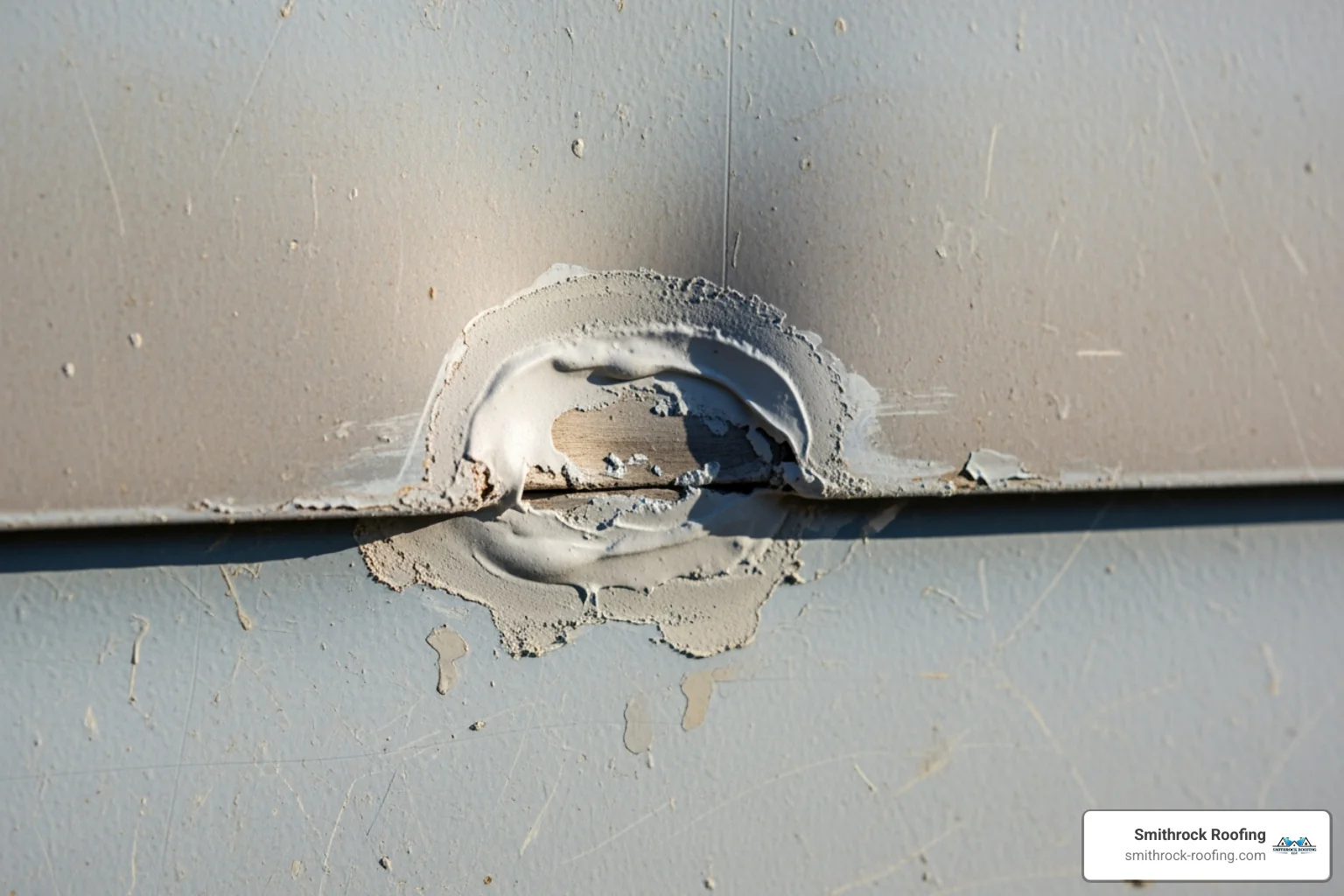
This guide will ensure your technique is sound and your repair is durable and seamless.
Thorough surface preparation is the most critical step for a lasting Bondo for aluminum siding repair. First, clean the damaged area with warm, soapy water or a TSP solution to remove all dirt, grime, and chalky oxidation. Rinse thoroughly and let it dry completely.
Next, use 80-grit sandpaper to aggressively sand the damaged area, extending 1-2 inches beyond the damage. Your goal is to remove all paint and primer down to the bare, shiny aluminum. This creates a rough surface for the Bondo to grip. Feather the edges of the sanded area to create a smooth transition.
Finally, wipe the area with a wax and grease remover on a clean rag to eliminate any sanding dust or oils. Allow the surface to dry completely before applying filler.
For holes larger than a pinhole, you’ll need to create a backing before applying filler — otherwise the Bondo has nothing solid to bridge across and will sag or fall through. Cut a piece of aluminum mesh tape or self-adhesive fiberglass mesh slightly larger than the hole and press it firmly over the opening from the front. Make sure the edges adhere cleanly to the surrounding bare metal. This mesh acts as a substrate for the filler and distributes stress across the patch, reducing the risk of cracking over time. For very small pinholes, this step can be skipped and filler applied directly.
With a clean surface, you can mix and apply the Bondo. Prioritize safety: work in a well-ventilated area and wear chemical-resistant gloves, safety goggles, and a NIOSH-approved respirator. On a clean mixing board, scoop out a 3-inch diameter puddle of Bondo Metal Reinforced Filler and add the specified amount of liquid hardener (check product instructions, often around 35 drops).
Using a plastic spreader, mix the two components quickly and thoroughly for about one minute until the color is uniform. You only have a working time of 3 to 4 minutes before the filler begins to harden. Immediately apply a thin, firm layer to the repair area to ensure strong adhesion. Build up with additional layers if needed, keeping each layer no thicker than 1/4 inch to prevent cracking and ensure proper curing.
After applying the filler, allow it to cure. Bondo Metal Reinforced Filler typically hardens in about 20 minutes at room temperature (around 77°F/25°C). Once cured, begin rough shaping with 80-grit sandpaper on a sanding block. Your goal is to contour the patch to match the siding’s original profile, removing excess filler.
Next, switch to 180-grit sandpaper for finish sanding. This step refines the surface, removing scratches from the coarser grit. Continue sanding until the repair feels perfectly smooth and flush with the surrounding siding, paying close attention to the feathered edges. The transition should be undetectable by touch. Wipe away all sanding dust with a clean cloth.
The final stage is priming and painting for a seamless, protected finish. Inspect the sanded patch for any pinholes or minor scratches. If you find any, apply a thin layer of Bondo Glazing & Spot Putty, let it dry, and sand it smooth with 320 or 400-grit sandpaper.
Next, apply 2-3 thin coats of a high-quality acrylic bonding primer designed for metal. Primer is essential as it seals the Bondo from moisture and ensures the paint will adhere properly. Allow each coat to dry according to the manufacturer’s instructions.
Finally, apply two coats of a 100% acrylic exterior paint that has been color-matched to your siding. Apply the paint in smooth, even strokes, feathering the edges slightly to help it blend with the older, faded siding.
For more information on selecting the right colors and types of siding for your home, explore our siding options.
The long-term performance of a Bondo for aluminum siding repair depends heavily on proper application. While these repairs can last for many years, it’s important to understand Bondo’s limitations and know when to consider professional panel replacement.
Here’s a comparison to help you decide:
| Feature | Bondo Repair (for cosmetic damage) | Panel Replacement (professional) |
|---|---|---|
| Cost | Generally lower (DIY materials only) | Higher (materials + professional labor) |
| Skill Level | Moderate DIY (requires patience and attention to detail) | Professional (requires specialized tools and expertise) |
| Appearance | Excellent for small, cosmetic fixes if done correctly and painted to match | Flawless, factory-fresh appearance |
| Durability | Good for cosmetic. Longevity depends heavily on prep, sealing, and climate | Long-lasting, restores full structural integrity and weather protection |
| Damage Type | Dents, scratches, small holes (up to 1/4 inch deep) | Large holes, widespread damage, structural issues, severe warping, corrosion |
| Time Frame | Can be completed in a day or two for small repairs | Can take longer depending on project scope |
The durability of a Bondo for aluminum siding repair is directly tied to the quality of the work. Homeowner anecdotes suggest that well-executed repairs can last a decade or more, even in climates with significant temperature swings. The keys to this longevity are meticulous preparation (sanding to bare metal) and proper sealing. The primer and paint topcoats create a vital shield against moisture and UV rays. If this barrier fails, the Bondo can be exposed to the elements, potentially leading to cracking or swelling. While a Bondo patch is a durable cosmetic fix, it is not as flexible as the original aluminum panel, so extreme temperature changes over many years can put stress on the repair.
While Bondo for aluminum siding is excellent for minor flaws, it is not a cure-all. Avoid using Bondo in the following situations:
For any of these issues, it’s best to call in experts. Our team at Smithrock Roofing can provide an accurate assessment and high-quality repair or replacement. When in doubt, contact our siding contractors for guidance.
DIY repairs with Bondo are a smart, practical choice for isolated cosmetic damage. But there are situations where handing the project off to a professional siding contractor is clearly the better call — not just for appearance, but for the long-term health of your home.
Consider reaching out to a professional if:
At Smithrock Roofing, we’ve been helping homeowners across the NC Triad — from Winston-Salem and Greensboro to High Point, Kernersville, Clemmons, and King — make confident, informed decisions about their siding. Our team can assess the full scope of the damage, recommend the right course of action, and handle the repair or replacement with the same professionalism and craftsmanship we bring to every project. Sometimes a patch is the right answer. Sometimes replacement is. We’ll give you an honest read either way.
Here are answers to common questions about using Bondo for aluminum siding to help you prepare for your project.
Yes — Bondo does stick to aluminum, provided the surface is properly prepared. The key is sanding the aluminum down to bare, shiny metal before applying any filler. This gives the product a rough, clean surface to bond to. Bondo Metal Reinforced Filler is specifically formulated with aluminum particles to maximize adhesion to metal surfaces, making it a significantly better choice than standard body filler for this application. Skip the prep work and the repair will likely peel or crack within a season or two. Do it right and the bond can hold for years.
Not reliably. Bondo needs to bond directly to the metal, not to a painted surface. Applying filler over existing paint dramatically increases the risk of delamination — where the repair lifts away from the siding over time. Always sand down to bare aluminum in and around the repair area before applying any filler. This extra step is what separates a repair that lasts a decade from one that fails within a year.
The process for filling holes in aluminum siding depends on the size of the hole. For very small pinholes, Bondo Metal Reinforced Filler can be applied directly over bare, sanded metal. For larger holes — anything bigger than about a quarter-inch — you’ll want to apply an aluminum mesh tape or self-adhesive fiberglass mesh patch over the hole first. This gives the filler something to bridge across without sagging. Once the mesh is in place, apply filler in thin layers, sand smooth after curing, apply a quality metal primer, and finish with color-matched exterior paint. The full step-by-step process is covered in detail in the guide above.
For most homeowners, Bondo Metal Reinforced Filler is the go-to aluminum siding filler for dents and small holes. It’s widely available, formulated specifically for metal surfaces, rust-proof, and sandable to a smooth finish. For the final surface smoothing before paint, Bondo Glazing & Spot Putty fills in any remaining pinholes or fine scratches. Together, these two products cover most cosmetic repair needs on aluminum siding. Whatever filler you choose, confirm it’s rated for exterior metal use — generic wood fillers and spackling compounds are not appropriate for aluminum and will fail quickly when exposed to weather.
Bondo for aluminum is not limited to siding — the same principles apply to other aluminum surfaces around the home and vehicle. Aluminum garage doors, gutters, trim, and even automotive body panels made of aluminum can all be repaired with Bondo Metal Reinforced Filler using the same preparation and application process described in this guide. The critical factors are always the same: sand to bare metal, apply thin layers, seal with a compatible primer, and topcoat with the right paint for the environment. The product works wherever bare aluminum is properly exposed and cleaned, making it a versatile option for a range of exterior repair projects.
Safety is paramount. Bondo products contain chemicals that require careful handling. Always follow these precautions:
Always review the official Safety Data Sheet (PDF) for the specific product for comprehensive safety information.
While regular Bondo Body Filler might adhere to aluminum, we strongly recommend using Bondo Metal Reinforced Filler. The standard filler is designed for steel, whereas the metal-reinforced version is specifically engineered with aluminum particles. This provides superior compatibility and adhesion to aluminum surfaces, improved strength, and rust-proof properties crucial for outdoor applications. For the best and most durable results on aluminum siding, always choose the product designed for metal.
Matching the subtle wood-grain texture of aluminum siding is one of the most difficult parts of a Bondo for aluminum siding repair and is often beyond the scope of a typical DIY project. Bondo cures to a hard, smooth surface.
While some professionals attempt to tool a pattern into the semi-cured filler, this requires precise timing and skill and can easily result in a messy finish. For most DIY repairs, the best approach is to focus on creating a perfectly smooth, contoured patch. Once primed and painted with a carefully matched color, the smooth patch will blend in well from a normal viewing distance, even if the texture isn’t an exact match up close.
Loose aluminum siding panels need to be re-secured before any cosmetic repair work begins. Start by identifying why the panel came loose. If the bottom locking edge has simply unsnapped from the panel below, a siding zip tool can re-engage it without removing the panel. If nails or screws have backed out, drive new fasteners through the nailing hem into solid sheathing — but leave a small gap so the panel can move with temperature changes. Never nail aluminum siding tight to the wall. If multiple panels are loose or you find damage to the sheathing or housewrap underneath, that’s a job for a professional. Moisture that has worked its way behind loose panels can cause far more damage than the visible siding problem itself.
Using Bondo for aluminum siding is a viable, cost-effective DIY solution for cosmetic damage like dents, scratches, and small holes. A successful, long-lasting repair depends on meticulous execution, from thorough surface preparation and proper application to a high-quality primer and paint seal.
While Bondo is an excellent tool, it’s important to recognize its limitations. It is not intended for large holes, structural damage, or severe corrosion — and it won’t resolve loose panels or underlying moisture problems. For these more extensive issues, or if you simply prefer the peace of mind that comes with professional expertise, our team at Smithrock Roofing is ready to help. We provide professional assessments and high-quality siding solutions across Winston-Salem, King, Clemmons, and surrounding areas.
Explore your siding options with our team today!
Need a local pro? Learn more about our siding installation and repair in Greensboro.
See also: Siding Winston-Salem NC | Expert Installation & Repair

Smithrock Roofing © Copyright 2026 • All Rights Reserved • Privacy Policy • Maintained by Mongoose Digital Marketing