A roof and attic inspection is a comprehensive, professional evaluation of two of your home’s most critical systems — the outer roof structure and the attic space directly beneath it. This process is designed to identify damage, leaks, ventilation deficiencies, and structural vulnerabilities before they escalate into catastrophic failures or expensive repairs. While many homeowners view the roof and attic as separate entities, they actually function as a single, integrated system. A problem in the attic, such as poor ventilation, will directly shorten the lifespan of the shingles above it. Conversely, a minor leak in the shingles can lead to massive mold growth and structural rot in the attic long before a water stain appears on your living room ceiling.
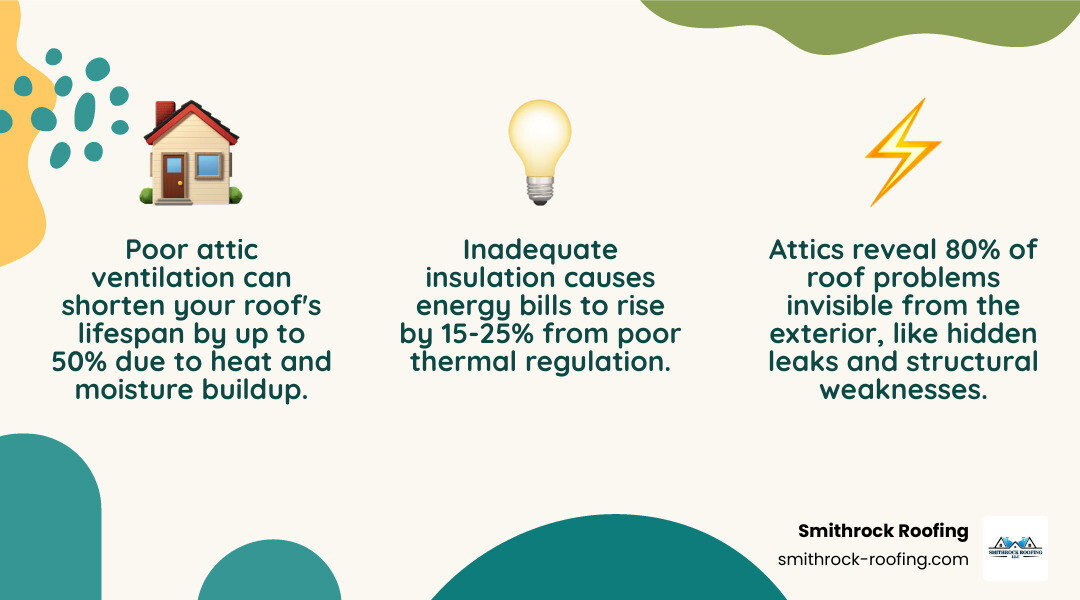
This inspection is not merely a visual check; it is a forensic analysis of the home’s building envelope. When an inspector climbs onto your roof or crawls into your attic, they are looking for the “story” of the house. They are looking for how the house handles heat, how it sheds water, and how it breathes. In the humid climate of North Carolina, where temperature swings can be dramatic, this balance is even more precarious. A failure to inspect these areas annually can lead to a 30% reduction in the total lifespan of your roofing materials, potentially costing you tens of thousands of dollars in premature replacement costs.
Here’s a detailed overview of what these inspections cover:
| Inspection Type | What It Covers | Why It Matters |
|---|---|---|
| Roof Inspection | Shingles, flashing, gutters, fascia, drip edges, valleys, and penetrations | Protects against water intrusion, UV damage, and structural failure from external elements. |
| Attic Inspection | Insulation levels, ventilation balance, framing (rafters/trusses), moisture levels, and pest activity | Directly affects energy efficiency, indoor air quality, and the long-term structural integrity of the roof deck. |
| Combined Inspection | Both interior and exterior systems together | Provides a holistic view of the home’s building envelope, ensuring that the “breathing” of the house is balanced with its “protection.” |
Key facts at a glance:
Most homeowners don’t think about their roof until a crisis occurs — a sudden leak during a storm, a spike in heating costs, or shingles scattered across the yard. By the time these symptoms are visible, the underlying damage is often extensive. Your attic might seem like nothing more than a dusty storage space, but it is the engine room of your home’s climate control. Poor ventilation, compressed insulation, or an undetected leak in the attic can quietly cost you thousands in energy waste and structural degradation.
A professional roof and attic inspection catches these problems in their infancy. By understanding the relationship between the exterior armor and the interior environment, you can make informed decisions that protect your investment and your family’s comfort. This proactive maintenance is the difference between a simple $300 repair and a $20,000 total roof replacement.
Simple guide to roof and attic inspection:
When we talk about your home’s “building envelope,” we are referring to the physical separator between the conditioned interior (where you live) and the unconditioned exterior environment. The roof and attic are the most vital components of this envelope. They work in tandem to regulate thermal energy, manage moisture migration, and protect the structural integrity of the entire building. A failure in one part of this system inevitably leads to a failure in the other. This is why a “roof-only” inspection is often insufficient; without looking at the attic, an inspector is only seeing half of the picture.
A thorough roof and attic inspection is more than just a quick glance at shingles from the driveway. It is a deep dive into the physics of how your home breathes and stays dry. For homeowners in areas like Winston-Salem or Greensboro, the changing seasons bring varied and intense challenges. Humid North Carolina summers can trap moisture in a poorly ventilated attic, creating a literal sauna that rots wood from the inside out. Conversely, winter freezes test the limits of your insulation and can lead to dangerous ice damming if heat is allowed to escape into the attic space.
The attic acts as a vital buffer zone. In the summer, a poorly ventilated attic can reach temperatures exceeding 150 degrees Fahrenheit. This heat doesn’t just stay in the attic; it radiates down through the ceiling into your living spaces, forcing your air conditioning system to work significantly harder and shortening its mechanical lifespan. This is known as “heat gain,” and it can account for up to 25% of your summer cooling costs.
In the winter, the “stack effect” (or chimney effect) causes warm air to rise. If your attic floor isn’t properly sealed and insulated, that expensive heat escapes into the attic. This creates a two-fold problem: first, your furnace runs constantly to replace the lost heat. Second, the escaped heat warms the roof deck, melting snow on the roof. This melted snow then flows down to the colder eaves, where it refreezes, forming ice dams. These dams back up under shingles and cause massive interior leaks that are often not covered by standard warranties if the cause is determined to be poor ventilation. Regular inspections ensure that your thermal regulation is balanced and that your home isn’t losing energy through the roof.
Moisture is the primary enemy of any home. A roof and attic inspection focuses heavily on how moisture enters and exits the system. This includes checking for “bulk water” (leaks from rain) and “vapor moisture” (humidity from the home). In a typical household, activities like showering, cooking, and laundry release gallons of water vapor into the air every day. If this vapor isn’t properly vented out of the attic, it will condense on the cold underside of the roof deck.
If moisture is trapped in the attic, it leads to the delamination of plywood roof decking, the weakening of structural rafters, and the growth of mold. Mold spores in the attic can eventually find their way into the living space, compromising indoor air quality and causing respiratory issues for sensitive individuals. By maintaining a documented history of inspections, you ensure that these moisture issues are caught before they compromise the safety of the structure or the health of your family.
Whether you are staying in your home for decades or selling your house, a documented history of professional inspections is a massive asset. Real estate transactions often hinge on the condition of the roof; having a recent, clean inspection report can prevent last-minute price negotiations or the dreaded “buyer’s credit” request. A roof that has been professionally maintained is a signal to buyers that the entire home has been cared for.
Furthermore, insurance companies are becoming increasingly stringent. Many providers now require professional inspections to validate claims after a storm or to maintain coverage on homes with roofs older than 15 years. In some cases, insurance companies may even deny coverage for a new policy if the roof hasn’t been inspected within the last 12 months. Keeping up with the benefits of regular roof inspections ensures you stay in compliance with both manufacturer warranty requirements and insurance policy mandates, protecting you from out-of-pocket expenses when disaster strikes.
An attic is often the “truth teller” of a home. While the exterior of a roof might look pristine from the curb, the underside of the decking in the attic may tell a different story of slow leaks, structural stress, and poor airflow. When we perform a roof and attic inspection, we follow a rigorous attic inspection checklist that covers every square inch of the space, from the floorboards to the ridge peak.
We check the condition, type, and depth of your insulation. Over time, insulation can settle, lose its R-value (its resistance to heat flow), or become compressed by storage or foot traffic. We look for:
The “bones” of your roof are found in the attic. We examine the rafters and trusses for signs of structural distress. This includes looking for:
Attics are prime real estate for squirrels, raccoons, bats, and insects. These pests don’t just create a mess; they can be dangerous to the structure and your health. We look for:
One of the primary goals of an attic area roof inspection is to find leaks that haven’t reached your ceiling yet. Water is patient; it can travel along a rafter for ten feet before finally dripping onto your drywall.
Proper ventilation is a delicate balance between intake (usually at the soffits or eaves) and exhaust (at the ridge or through gable vents). If this balance is off, your roof is essentially “suffocating.”
Moving to the outside, the roof-maintenance process shifts to the “armor” of your home. A professional roof inspection guide focuses on the materials and workmanship that keep the elements at bay. This is a systematic evaluation of every component, from the peak of the ridge to the bottom of the downspouts, ensuring that the exterior shell is watertight and resilient.
We look for the “big four” of shingle aging and failure. Asphalt shingles are engineered with a layer of granules that protect the underlying bitumen from the sun’s ultraviolet rays. When these granules are lost, the shingle becomes brittle and fails. We evaluate:
Flashing is the metal transition material used to direct water away from areas where the roof meets a vertical surface, such as a chimney or a wall. It is the most critical part of the roof’s waterproofing system and the most common site of leaks.
Your gutters are your roof’s drainage system. If they fail, water will pool around your foundation or rot your eaves. We check for:
In regions prone to severe weather, hail damage is a major concern. Hail doesn’t always leave a hole; it often “bruises” the shingle, knocking off granules and creating a soft spot in the asphalt mat. Over time, the sun expands these bruises into leaks. We look for the “10 hits in a 10-square-foot area” standard, which is the industry benchmark used by insurance adjusters to determine if a full roof replacement is warranted. We also check for wind-creased shingles, where the shingle has been folded back by the wind, breaking the internal fiberglass mat. These creases are often invisible from the ground but are a clear sign of structural failure in the shingle.
Can you perform a basic roof and attic inspection yourself? To some extent, yes. A homeowner can use binoculars to spot missing shingles from the safety of the ground or take a high-powered flashlight into the attic to look for obvious water stains. However, there are significant risks and technical limitations to the DIY approach that can lead to missed problems and dangerous accidents. A professional brings a level of expertise and a suite of tools that a standard homeowner simply doesn’t have access to.
Roofing is consistently ranked as one of the most dangerous professions in the United States. Professional inspectors are trained in ladder safety, fall arrest systems, and roof navigation. According to NACHI Standards of Practice, inspectors are not required to walk on a roof if it is too steep, wet, or fragile, but they have the specialized gear to do so safely when possible. This includes high-traction, soft-soled shoes that provide grip without damaging the shingles, and roof stabilizers that prevent ladders from slipping or crushing the gutters. Attempting to walk on a roof without training can result in serious injury or damage to the roof itself, as walking on brittle shingles in the heat can cause them to tear or lose granules.
While a homeowner has a flashlight, a professional inspector uses a suite of high-tech tools to see what is invisible to the naked eye. This technology allows for a non-invasive look into the health of your home:
A trained inspector knows the subtle signs of trouble. They can distinguish between a manufacturing defect (like “shingle blistering”) and environmental damage (like hail). They understand the nuances of different roofing materials, from asphalt and metal to cedar shakes and tile. Furthermore, a professional can identify if your roof has multiple layers of shingles. An average 1,700 sq. ft. roof with two layers of shingles can weigh over 11,000 lbs, putting immense stress on your home’s framing. A professional knows how to evaluate if your structure can handle that load or if a full tear-off is required for safety. This experience is what prevents small issues from becoming catastrophic failures.
If you’ve scheduled a roof inspection, understanding the process can help you get the most value out of the visit. A professional inspection typically takes between 45 minutes and two hours, depending on the size and complexity of the home. It is a collaborative process where the inspector acts as a consultant for your home’s health.
After the roof and attic inspection, you will receive a detailed written report, often accompanied by high-resolution photos and digital scans. It can be overwhelming to see a list of 15 or 20 items, but it is important to remember that not all findings are emergencies. A professional will help you categorize the findings into three main buckets:
When it comes to prioritizing repairs, the goal is always to protect the integrity of the building envelope. If you are working with an insurance claim, our detailed reports provide the objective, third-party evidence needed to support your case. We include “before and after” photos and technical descriptions that ensure you receive a fair settlement for storm damage. Our goal is to provide you with a roadmap for your home’s maintenance, giving you peace of mind that your investment is protected.
We recommend a professional roof and attic inspection at least once a year. The best times are spring (to check for damage caused by winter ice and snow) and fall (to ensure the system is ready for the coming cold). Additionally, you should schedule an assessment immediately following any major weather event involving winds over 50 mph or hail larger than 0.5 inches. Early detection is the key to avoiding expensive emergency repairs.
You should not wait for a scheduled visit if you notice any of the following:
In the real estate market, a “clean” roof and attic report is a powerful selling point. It provides the buyer with peace of mind and prevents the “inspection contingency” from killing the deal at the last minute. For insurance purposes, regular inspections prove that you are performing “due diligence” in maintaining the property. If a storm hits and you can show that your roof was in excellent condition six months prior, your claim process will be much smoother. Some insurance providers even offer premium discounts for homes that have been certified as having high-wind or hail-resistant roofing systems.
Absolutely. This is one of the most common causes of premature roof failure. If you install brand-new, high-quality shingles but your attic has no ventilation, the heat will build up and literally bake the shingles from the underside. This causes the asphalt to become brittle and the shingles to curl within just a few years, often voiding the manufacturer’s warranty. A proper inspection ensures the entire system is balanced, protecting your new investment for its full rated lifespan.
For a standard single-family home, a comprehensive roof and attic inspection takes between 60 and 90 minutes. Larger homes or those with complex rooflines (multiple gables, dormers, or steep pitches) may take up to two or three hours. We take the time necessary to ensure every potential failure point is documented and analyzed.
No. A general home inspection covers the entire house but often only includes a basic visual check of the roof from the ground or a ladder. A specialized roof and attic inspection goes much deeper, using tools like moisture meters and thermal cameras to find hidden issues that a general inspector might miss. If you are concerned about your roof, a specialist is always the better choice.
Your roof and attic are the silent guardians of your home. They work 24 hours a day, 365 days a year, to protect you from the elements and keep your living environment comfortable. However, because they are often “out of sight, out of mind,” they are frequently neglected until a major problem arises. This neglect can lead to a cascade of failures that compromise your home’s structure, your family’s health, and your financial security.
A roof and attic inspection is one of the smartest and most proactive investments you can make as a homeowner. It is a process that goes far beyond simple aesthetics; it is about preserving your property value, ensuring your family’s safety, and saving significant money on energy costs and long-term repairs. By catching a small leak or a ventilation imbalance today, you avoid the massive headache of a structural failure tomorrow. In the long run, the cost of regular inspections is a fraction of the cost of a single major repair.
At Smithrock Roofing, we pride ourselves on providing the most thorough, honest, and technologically advanced assessments for homeowners throughout Winston-Salem, Greensboro, and the surrounding North Carolina communities. Our team doesn’t just look at shingles; we look at the health of your entire home. We understand the local climate and the specific challenges it poses to roofing systems. Whether you need a routine annual check-up, a post-storm evaluation, or a comprehensive assessment for a real estate transaction, we are here to provide the expert guidance and peace of mind you deserve.
Don’t wait for the next heavy rain or the next utility bill to find out if your roof is up to the task. A small investment in prevention today can save you from a disaster tomorrow. Schedule Your Professional Roofing Service with Smithrock Roofing today and ensure your home remains the safe, dry, and efficient sanctuary it was meant to be. Our experts are ready to help you protect what matters most.
Smithrock Roofing © Copyright 2026 • All Rights Reserved • Privacy Policy • Maintained by Mongoose Digital Marketing