If you’re tired of high energy bills and uncomfortable rooms, your windows are likely the culprit. Research shows that 70 percent of a home’s energy loss occurs through windows and doors, with 90 percent of window heat loss happening through the glass itself. This forces your HVAC system to work harder, driving up energy costs.
The solution is insulated low e glass. This advanced glazing system manages heat, light, and UV radiation in a carefully controlled way, dramatically improving comfort and efficiency.
Standard windows have several weaknesses:
Insulated Low-E glass tackles energy loss through:
“Low-E” stands for “low-emissivity,” meaning the glass emits very little radiant heat. The coating acts like a thermal mirror – reflecting heat back into your home in winter and reflecting solar heat away in summer.
Look for these indicators:
Must-know insulated low e glass terms:
Low-E glass features a transparent, microscopic metallic coating designed to reflect heat. The sun’s energy contains UV light, visible light, and infrared light (felt as heat). Standard glass lets most energy pass through, but Low-E coating acts as a selective filter – reflecting heat-carrying IR and damaging UV light while allowing visible light through.
Think of Low-E glass like a thermos bottle for your home. Just as a thermos reflects heat to maintain temperature, Low-E glass reflects radiant heat back toward its source.
For detailed insights, explore How Low-E Glass Works.
Heat moves through:
Emissivity measures how efficiently materials emit heat (scale 0-1):
By lowering emissivity, the coating creates a radiant heat mirror while remaining transparent to visible light.
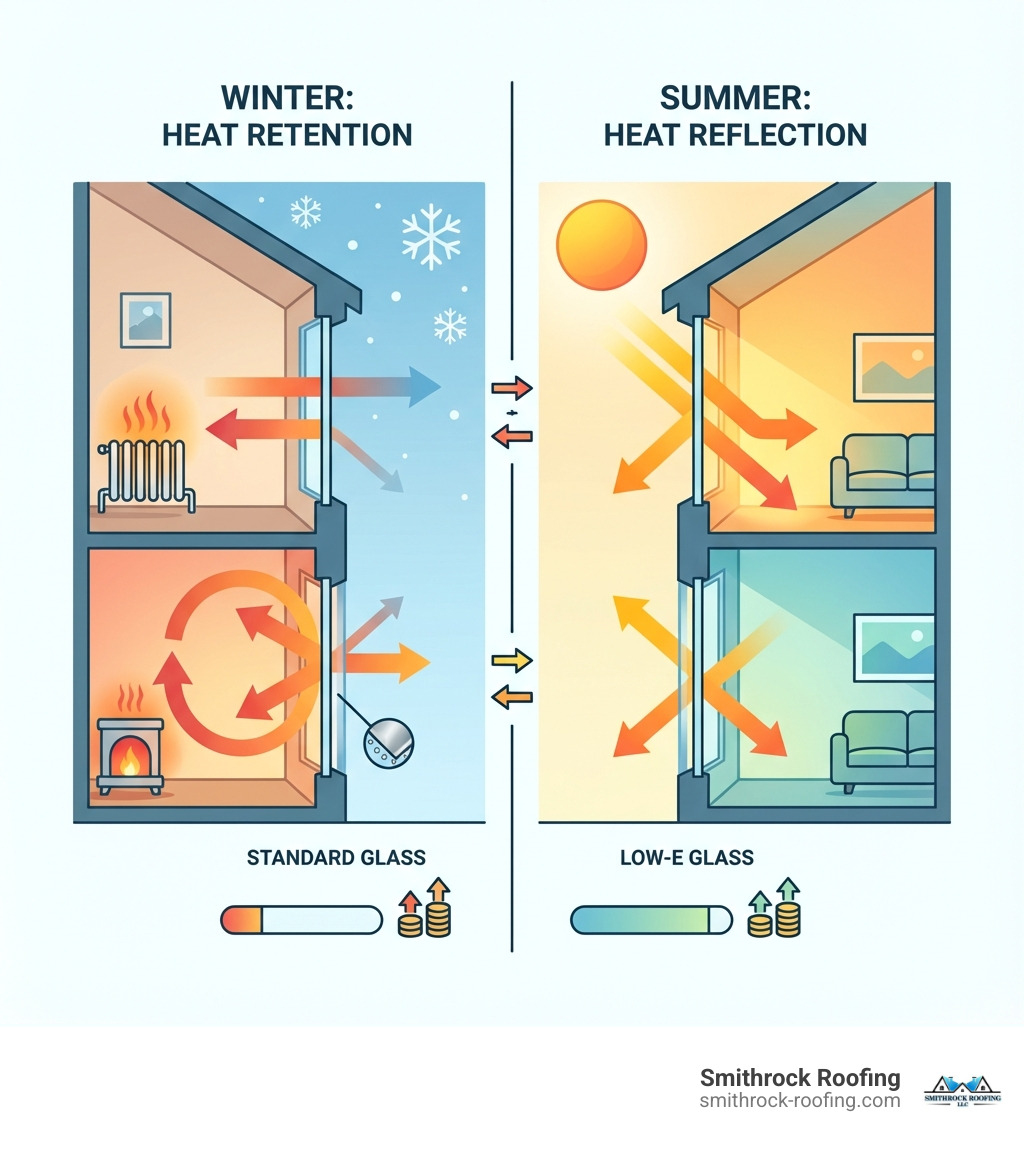
Winter: Low-E coating reflects interior radiant heat back into rooms, maintaining warmth and reducing heating demands.
Summer: The coating reflects solar infrared energy away before it enters, keeping rooms cooler and reducing AC loads.
Modern Low-E coatings offer spectral selectivity – differentiating between light types:
This smart reflection makes these windows ideal for Energy Efficient Upgrades.
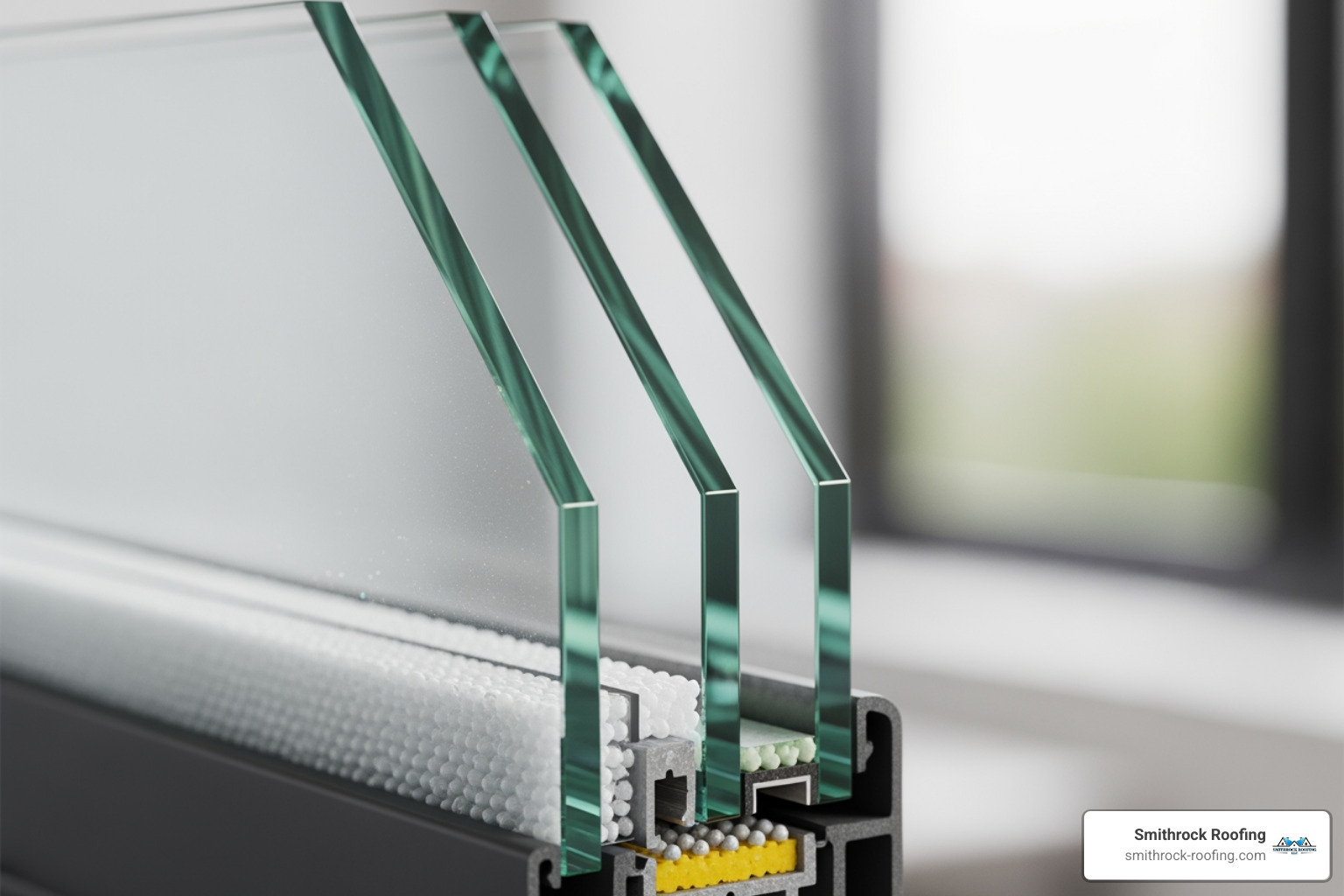
The Low-E coating is part of an Insulated Glass Unit (IGU), the foundation of modern energy-efficient windows. An IGU consists of two or three panes sealed together with a space between, creating a thermal barrier.
A typical double-pane IGU includes:
Spacers maintain consistent gaps between panes. Modern warm-edge spacers use materials like stainless steel or composites instead of aluminum, reducing thermal bridging and condensation risk.
The space between panes is often filled with argon gas instead of air:
For homeowners in Winston-Salem and surrounding areas, combining dual-pane glass, Low-E coating, and argon gas dramatically improves efficiency.
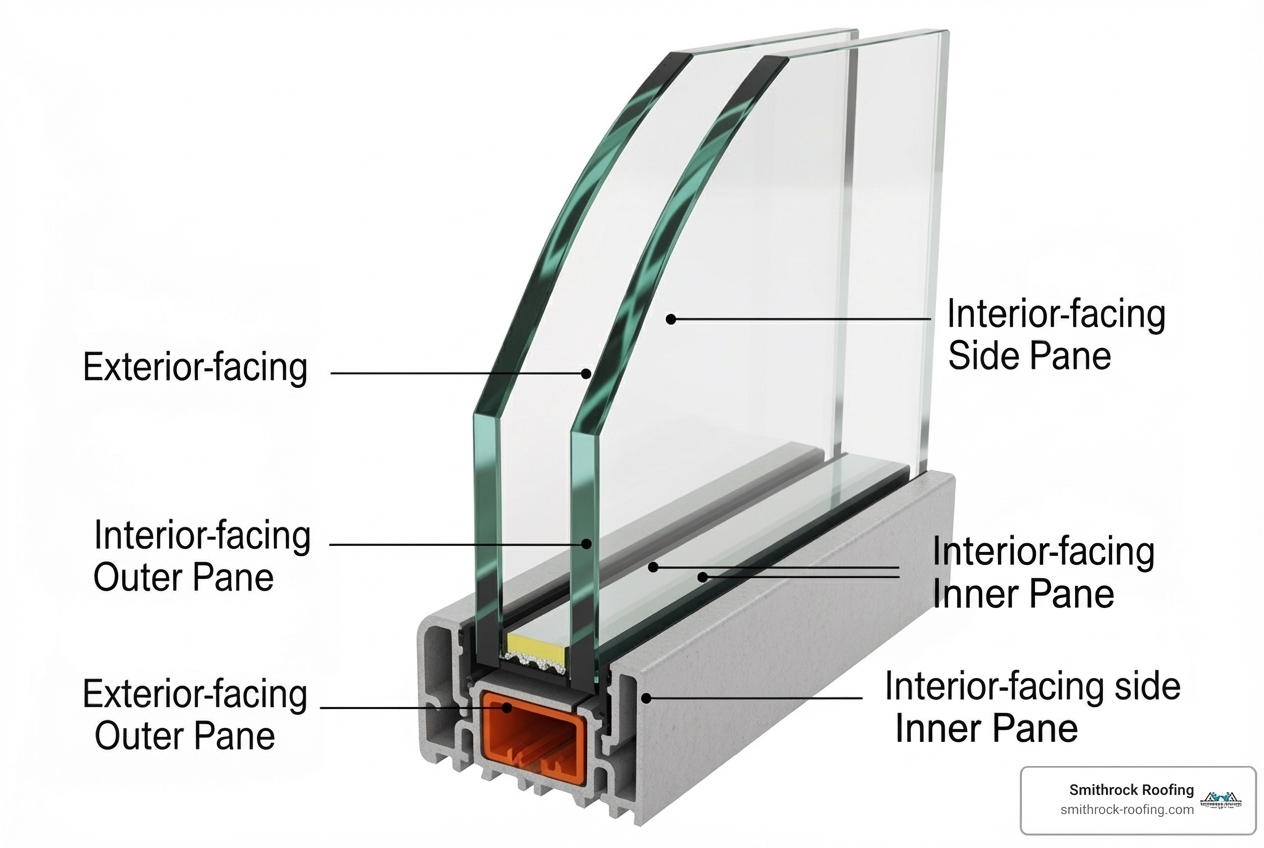
Double-pane units have four surfaces, numbered outside to inside:
Placement depends on climate:
Learn more about Insulated Windows.
Not all Low-E coatings are identical. Understanding the differences helps you choose glass matching your climate and goals.
| Feature | Hard-Coat Low-E | Soft-Coat Low-E |
|---|---|---|
| Process | Applied during manufacturing | Applied after in vacuum chamber |
| Durability | Very durable | Must be sealed in IGU |
| Performance | Good emissivity | Excellent emissivity |
| Appearance | Slight tint possible | Nearly invisible |
Hard-Coat (Pyrolytic): Fused to hot glass during production. Extremely durable but moderate performance.
Soft-Coat (MSVD): Applied via Magnetron Sputter Vacuum Deposition. Superior performance but requires protection within sealed IGU.
Passive Low-E: Maximizes solar heat gain for cold climates. Higher SHGC allows beneficial winter sun.
Solar Control Low-E: Limits solar heat gain for warm climates. Lower SHGC blocks excess summer heat.
For North Carolina’s mixed climate, balanced performance coatings work best. See our Energy Efficient Window Upgrades Guide.
Key NFRC ratings:
Different coatings affect these ratings, allowing customization for specific needs and orientations. Learn more at the Vitro Glass Education Center.
Investing in insulated low e glass improves finances, comfort, and environmental impact. For homeowners from Mt. Airy to Kernersville, benefits are immediate and tangible.
Explore our Best Windows for Insulation guide.
Cold climates: Reduced heat loss and warmer interior surfaces
Hot climates: Solar control prevents overheating
Mixed climates (like North Carolina): Balanced performance for year-round benefits
Learn about our Window Replacement services.
Cold Climates: Passive Low-E with higher SHGC for beneficial solar gain
Hot Climates: Solar control Low-E with lower SHGC to block heat
Mixed Climates: Balanced performance for both seasons
| Feature | Standard Glass | Insulated Low-E |
|---|---|---|
| U-Value | High (poor insulation) | Low (excellent) |
| UV Blocking | Minimal | Up to 99% |
| Energy Efficiency | Poor | Excellent |
| Comfort | Hot/cold spots | Consistent temperatures |
Modern coatings maintain high visible light transmission. Any tint is subtle and often unnoticeable.
Yes, warmer interior glass surfaces make condensation less likely at normal humidity levels.
Coatings are on interior surfaces within the sealed IGU, protected from damage.
No, clean like regular glass with non-abrasive cleaners and soft cloths.
Factory coatings cannot be retroactively added, but aftermarket films or storm windows offer some benefits.
Quality windows with proper installation can provide decades of service.
Yes, energy-efficient windows attract buyers and signal a well-maintained home.
Explore Replacement Windows for Homes.
Insulated low e glass represents a major advancement in window technology, offering powerful benefits for homeowners throughout North Carolina, from Midway to Horneytown.
Key benefits include:
Choosing insulated Low-E glass is a smart long-term investment in your home’s efficiency, comfort, and value. It’s one of the most effective upgrades for your building envelope, especially if current windows are outdated or inefficient.
At Smithrock Roofing, we provide expert guidance and professional installation for high-performance windows. Our team helps you select the perfect insulated low e glass options for your unique needs, considering climate, window orientation, design preferences, and space usage.
Properly chosen and installed insulated Low-E windows transform how your home feels and functions throughout every season.
Ready to upgrade? Explore our high-quality window solutions and find how we can help you achieve lasting comfort and energy efficiency.
Smithrock Roofing © Copyright 2026 • All Rights Reserved • Privacy Policy • Maintained by Mongoose Digital Marketing