When a roof replacement goes poorly, the problems usually trace back to one of three points: the homeowner chose the lowest bid without understanding what it excluded, the contractor lacked the structural experience to handle what was found under the shingles, or the warranty coverage turned out to be narrower than expected. This article explains how to avoid each of those outcomes, including what certifications actually mean, how the two types of roofing warranties work together, and what to expect from a contractor handling an older roof with unknown structural history.
The phrase old ridge roofing describes roofing work on homes where the existing roof has been in place long enough that the decking, ridge board, and underlying structure may have accumulated wear that is not visible from the ground. On older roofs, the shingles are often just the beginning of the conversation. Once layers are stripped back, it is common to find soft spots in the decking, damaged ridge boards, moisture-compromised rafters, or previous repairs that were never done correctly.
This is the point where contractor experience separates itself from contractor marketing. A company that does surface-level replacements on relatively new homes has a very different skill set from one that routinely handles the structural discoveries that come with older roofing systems. Before you sign anything, that distinction is worth exploring directly. If you are weighing whether an older roof qualifies for tear-off or recover, the article Old Roofing: Tear-Off or Recover? Make the Right Call walks through exactly how that decision gets made.
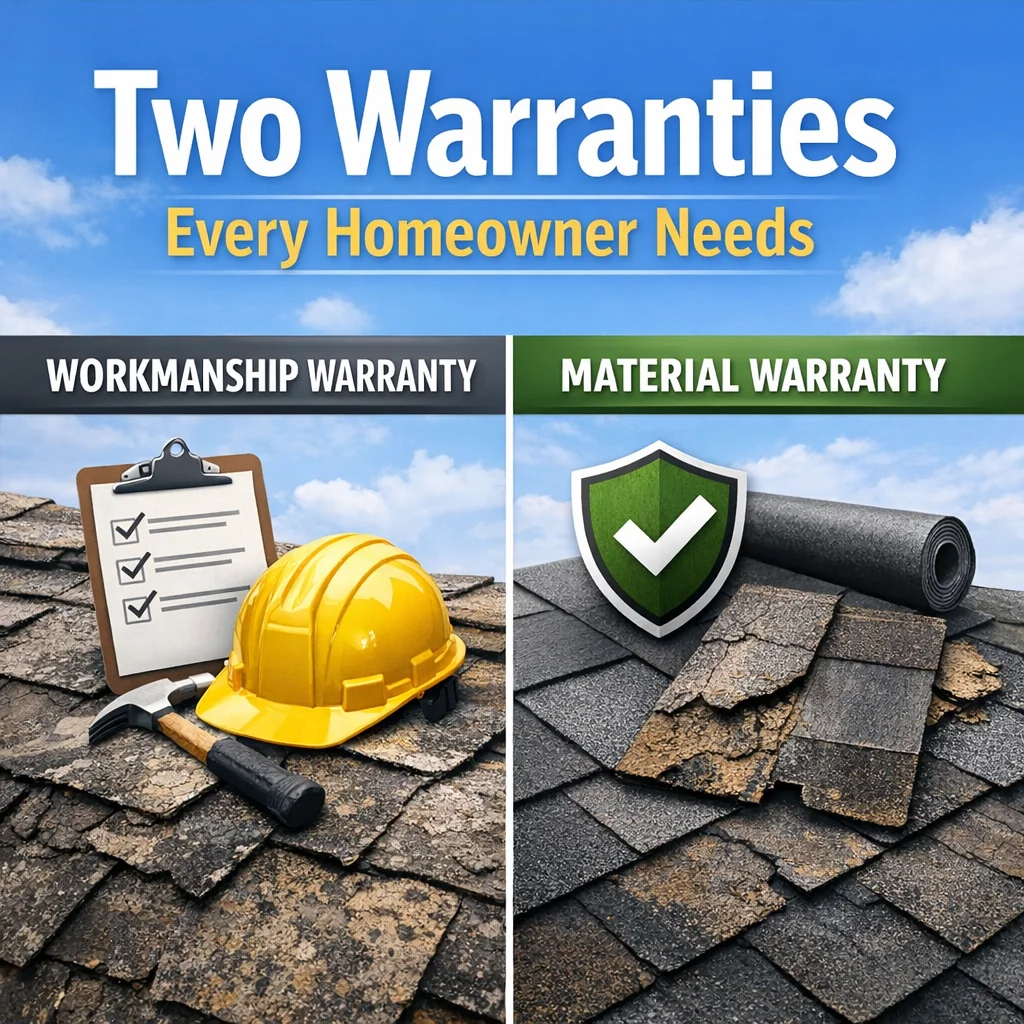
When a certified contractor installs shingles from a premium manufacturer, the homeowner gains access to a material warranty. This warranty covers the shingles themselves. If the product fails due to a manufacturing defect, the manufacturer is obligated to respond. At the higher tiers of manufacturer certification, these warranties extend to what is often described as a limited lifetime warranty with enhanced coverage terms.
The important limitation is this: a manufacturer warranty does not cover how the shingles were installed. If the flashing was set incorrectly, if the starter course was omitted, or if the ridge cap was fastened improperly, those failures are installation errors, not product failures. The manufacturer’s warranty will not help you.
A workmanship warranty covers installation quality. It is the contractor’s personal guarantee that the work was done correctly, and it is their responsibility to return and fix any failure that results from how the job was performed rather than from the material itself.
Not every contractor offers this, and among those who do, the length and terms vary considerably. A homeowner who receives a strong workmanship warranty alongside a manufacturer material warranty has layered protection that covers both what was installed and how it was installed. That combination is what you are actually looking for when evaluating bids.
At Smithrock Roofing, that means a 5-year labor warranty backed by the quality assurance that comes with CertainTeed PREMIER ShingleMark Master Certification, one of the highest credential levels in the industry, paired with CertainTeed’s limited lifetime manufacturer warranty. You can review the full details of our Warranty coverage before making any commitment.
Need a hand with this in Winston-Salem, Greensboro and the Triad? Call (336) 971-0464 or request a free estimate. Honest answers, no pressure.
The roofing industry uses certification programs to distinguish contractors who meet verified standards from those who do not. These programs typically have multiple tiers, and the tier a contractor holds affects what warranties they can offer and what training they have completed.
The key point most homeowners miss: two bids can both come from “certified” contractors, and those certifications may represent significantly different levels of credentialing. The lower tier may require only basic verification. The higher tier typically requires demonstrated volume, customer satisfaction records, insurance minimums, and additional manufacturer training.
When you are comparing bids, ask each contractor which tier of certification they hold with their primary manufacturer, and then ask what warranty coverage that tier unlocks for your specific project. A contractor who holds a higher designation can offer you more because the manufacturer backs their work at a deeper level.
Standard roofing bids are written based on what can be seen before work begins. On an older roof, what is found once the existing shingles come off may require additional scope. Rotten decking, soft rafters, deteriorated ridge boards, and previous water intrusion damage are common findings that were not visible during the estimate.
This is not unusual, and a contractor with real experience will walk you through it clearly when it happens. What it means practically is that your contractor needs to be capable of performing structural repair work, not just surface replacement. Some roofing companies subcontract or decline structural scope. That matters if your older roof turns out to have underlying damage. Our roofing service is structured to handle the full scope of what an older roof can present, from surface replacement through structural repairs, without requiring a separate contractor.
Use this checklist when evaluating any contractor for an older roof replacement:
These are not aggressive questions. Any contractor with real experience and honest business practices will answer all of them without hesitation.
A roof inspection is the starting point for any replacement or repair decision, but its value depends entirely on what comes out of it. An inspection that ends with a vague verbal summary and a prompt to “get on the schedule” is not serving you.
A useful inspection produces written documentation of what was found, photographs of problem areas, and a clear recommendation tied to the findings. It should tell you whether repair or full replacement is warranted, identify any structural concerns discovered from the accessible areas, and explain the reasoning behind the recommendation. At Smithrock Roofing, that consultative approach is standard. The goal is to give homeowners the information they need to make a confident decision, not to create urgency around a sale.
Homeowners across the NC Triad, including Winston-Salem, Greensboro, High Point, Kernersville, roofing in Clemmons, Rural Hall, King, and Mount Airy, can count on a straight answer about what their roof actually needs. That is the foundation of how Smithrock Roofing works, and it is backed by more than 350 five-star reviews and over 60 combined years of experience in this trade.
The answer depends on what the inspection finds beneath the surface. Deteriorated ridge caps are sometimes a localized problem that can be addressed without replacing the entire roof, but if the underlying decking shows rot, if the field shingles are approaching the end of their service life, or if granule loss is widespread, a full replacement is usually the more sound long-term decision. A written inspection report with photographs will give you the clearest picture of what is actually warranted.
It can, depending on your shingle manufacturer and the certification level of the contractor performing the work. Some manufacturer warranties require that all components, including ridge caps, be installed by a certified contractor using approved materials. Using mismatched products or an uncertified installer on any part of the roof can create gaps in your coverage. Before any work begins, confirm that the contractor’s certification tier and the materials being used are compatible with your existing or new warranty terms.
For most residential roofs, ridge cap work alone can be completed in a single day when the crew is properly staffed and materials are staged in advance. A full roof replacement that includes new ridge installation generally takes one to three days depending on roof size, pitch complexity, and the number of penetrations involved. Weather holds and unexpected decking repairs are the most common reasons timelines extend beyond the original estimate.
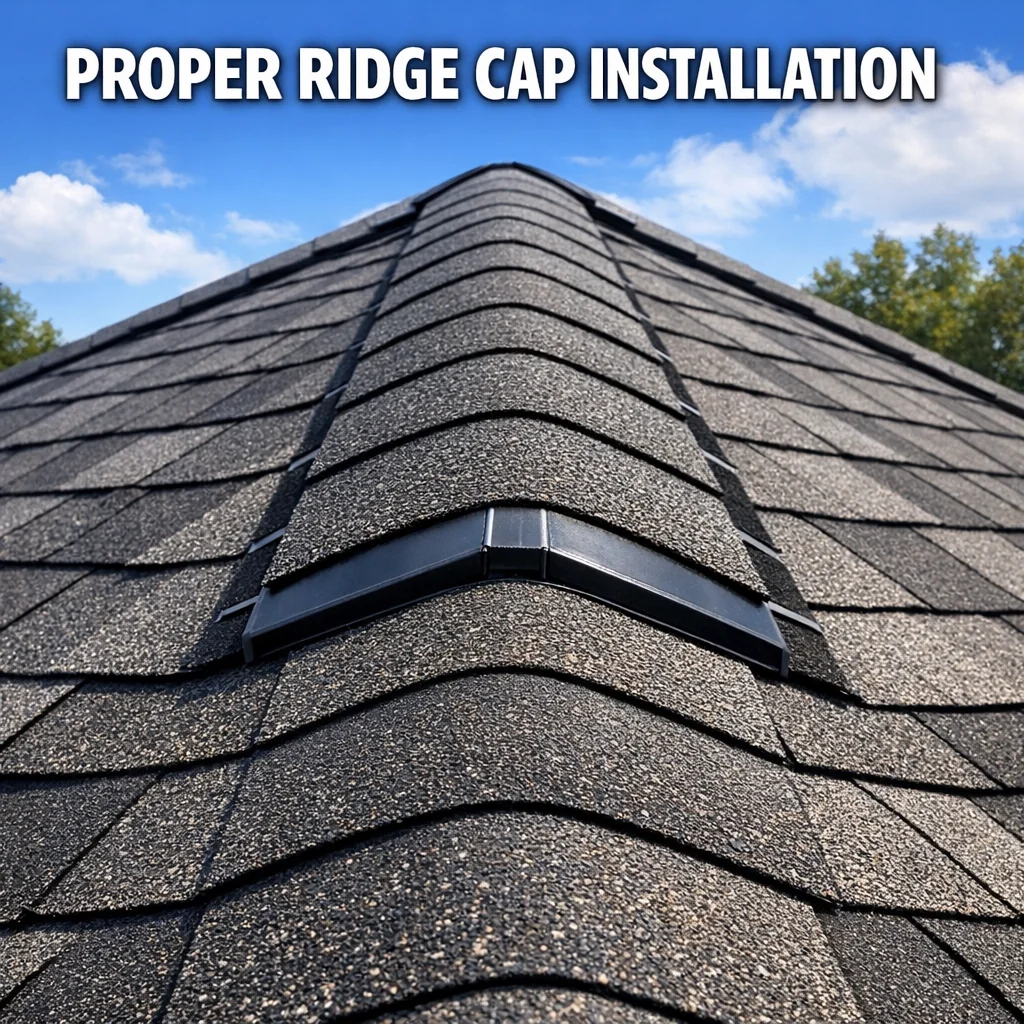
The ridge is the highest and most exposed point on the structure, which means it absorbs more direct UV radiation, bears the brunt of wind uplift, and handles the thermal expansion and contraction that occurs where two roof planes meet. Over time, those conditions accelerate granule loss and shingle brittleness at the ridge before the same wear appears elsewhere on the field. Poor original installation, inadequate nailing, or the use of standard three-tab shingles instead of dedicated ridge cap material can all shorten service life considerably.
When your ridge shows signs of wear, the decision you make about who handles the repair or replacement matters as much as the decision to act. Smithrock Roofing brings over 60 combined years of roofing experience to homeowners throughout Winston-Salem and Kernersville, with the documentation, manufacturer certifications, and transparent communication that give you confidence from the first inspection through the final cleanup. If your roof is ready for a straight answer about what it actually needs, Contact Smithrock Roofing today or call us directly at (336) 971-0464.

Smithrock Roofing © Copyright 2026 • All Rights Reserved • Privacy Policy • Maintained by Mongoose Digital Marketing