A high quality roof is far more than a simple layer of shingles; it is a sophisticated, engineered system that serves as the primary line of defense for your home. It is arguably the most critical investment a homeowner can make, as it protects the structural integrity of the entire building, the safety of the inhabitants, and the value of the assets contained within. A premium roofing system must withstand a relentless barrage of environmental stressors, including torrential rain, high-velocity winds, heavy snow loads, punishing UV radiation, and extreme temperature fluctuations that cause materials to expand and contract daily.
When we evaluate what defines a high-quality roof, we look at several key performance indicators that go beyond mere aesthetics. The difference between a standard roof and a high-performance system often lies in the “Total Cost of Ownership.” While a cheaper roof may save money upfront, a high-quality system reduces long-term expenses by minimizing repair needs, lowering energy bills, and extending the replacement cycle by decades. This financial foresight is what separates savvy property owners from those caught in a cycle of reactive maintenance.
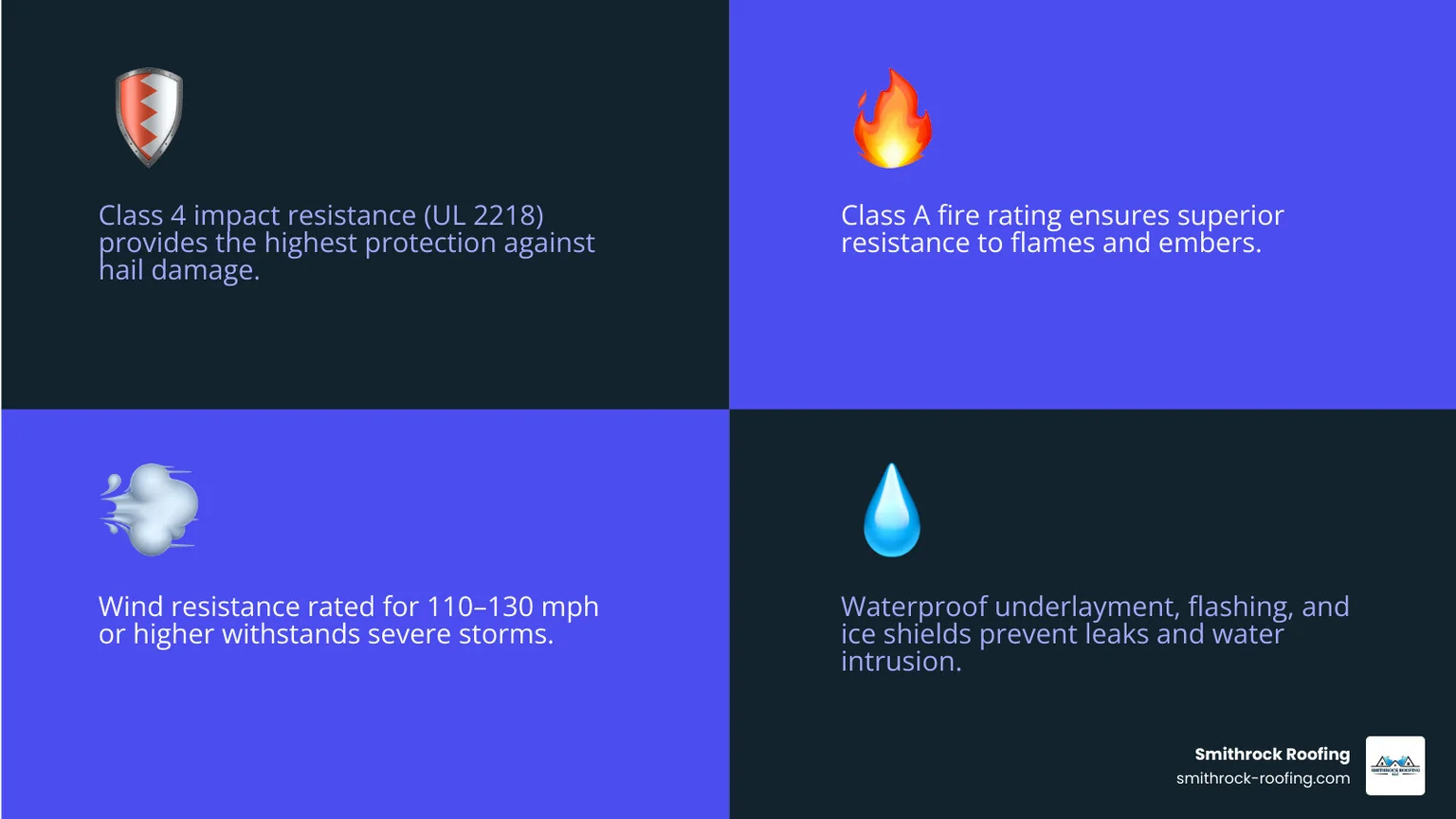
| Feature | What to Look For | Technical Significance |
|---|---|---|
| Durability | Materials rated for 30–100+ years | Long-term resistance to degradation and material fatigue. |
| Impact resistance | Class 4 (UL 2218) | The ability to withstand kinetic energy from hail without fracturing. |
| Fire resistance | Class A | The highest level of protection against external fire spread and penetration. |
| Wind resistance | Rated for 110–130 mph+ | Resistance to uplift forces that can strip shingles during storms. |
| Weather protection | Multi-layered barriers | Use of waterproof underlayment, precision flashing, and ice shields. |
| Energy efficiency | High Solar Reflectance Index | Materials that reflect thermal energy to reduce attic heat gain. |
| Warranty | Comprehensive Coverage | Manufacturer-backed protection for both materials and workmanship. |
Most homeowners tend to overlook their roofing system until a visible failure occurs, such as a ceiling stain or a missing shingle. However, by the time these symptoms manifest, the underlying structure may have already suffered significant moisture damage, mold growth, or wood rot. A high-quality roof is designed to prevent these issues through a proactive “system-based” approach, where every component, from the starter strips to the ridge vents, is engineered to work in perfect synchronization. This synchronization ensures that the roof doesn’t just shed water, but actively manages the microclimate of the attic space, preventing the silent killers of home longevity: condensation and heat-induced material fatigue.
In the following sections, we will explore the intricate anatomy of these systems, the science behind modern roofing materials, and the rigorous standards required for a professional installation. Whether you are planning a full replacement or building a custom home, understanding these technical nuances will empower you to choose a solution that offers maximum longevity and peace of mind. We will delve into the physics of wind uplift, the chemistry of synthetic underlayments, and the architectural considerations that ensure your roof is as beautiful as it is resilient.
Learn more about high quality roof:
When we discuss a high quality roofwe are referring to a multi-layered “building envelope” that manages moisture, heat, and airflow. A common misconception is that the shingles are the only part of the roof that matters. In reality, the shingles are merely the visible “skin” of a much deeper and more complex biological-like system. If any single layer of this system fails, the entire roof is compromised. This systemic approach is what differentiates a professional installation from a temporary patch job.
A professional roof installation begins with the foundation: the roof deck. This is typically composed of CDX plywood or Oriented Strand Board (OSB). During a high-quality installation, the contractor must perform a meticulous inspection of this sheathing. Any signs of delamination, soft spots, or fungal growth must be addressed immediately. A stable deck is essential because it provides the structural substrate for the fasteners; if the wood is compromised, the nails will not hold, leading to shingle blow-offs during high winds. Furthermore, the thickness of the decking matters; high-quality systems often utilize 5/8-inch or thicker panels to minimize deflection under heavy snow loads or foot traffic.
Once the deck is verified, the next layer is the drip edge and the leak barrier. The drip edge is a metal flashing installed along the eaves and rakes to direct water away from the fascia and into the gutters. Without a proper drip edge, water can “wick” back under the shingles, leading to rot in the wooden components of the roof’s edge. In vulnerable areas like valleys, chimneys, and skylights, a self-adhering leak barrier (often called ice and water shield) is applied. This membrane creates a watertight seal around every nail that passes through it, providing a secondary line of defense against ice dams and wind-driven rain. Systems like the CertainTeed Integrity Roof System are designed so that these components are chemically and physically compatible, ensuring they don’t degrade each other over time. You can see the precision required for these transitions in Duro-Last Detail Drawingswhich illustrate how critical the geometry of flashing is to a leak-free home.
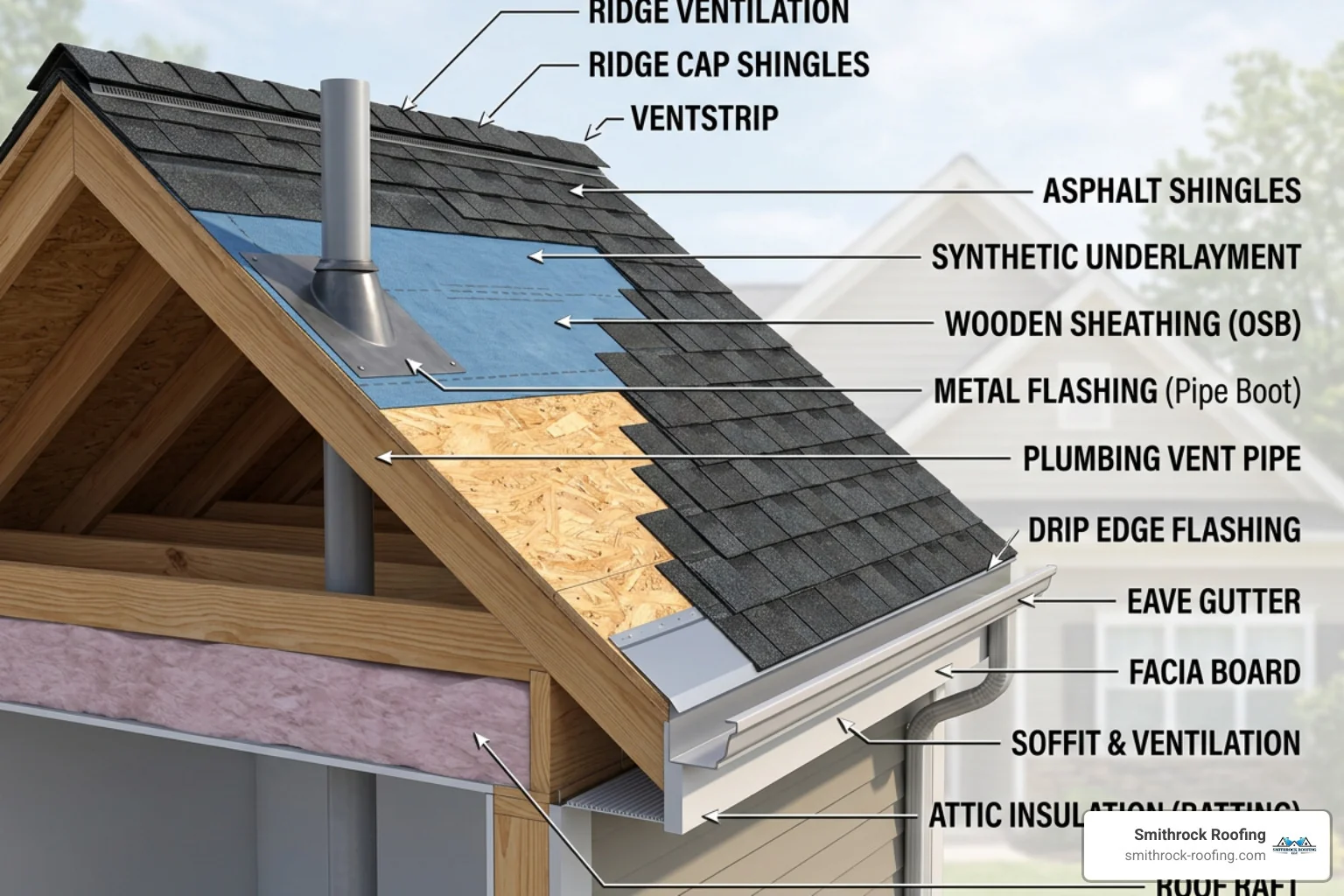
In decades past, the industry standard was “felt paper,” a paper base saturated with asphalt. While functional, felt paper is prone to tearing, absorbing moisture, and becoming brittle over time. Modern durable roofing solutions have transitioned to high-performance synthetic underlayments. These are typically woven from polypropylene or polyester, making them incredibly strong and resistant to UV degradation. Synthetic underlayments act as a breathable yet waterproof barrier, allowing moisture vapor from inside the home to escape while preventing liquid water from entering. This breathability is vital for preventing the “greenhouse effect” in the attic, where trapped moisture can lead to structural decay.
However, even the best materials will fail prematurely without proper GAF Attic Ventilation. Ventilation is a matter of physics: heat and moisture naturally rise into the attic space. If this air is trapped, it can reach temperatures exceeding 150 degrees Fahrenheit in the summer, effectively “cooking” the shingles from underneath and causing the asphalt to lose its volatile oils. This process, known as “thermal shock,” leads to premature curling and cracking. In the winter, trapped moisture can condense on the underside of the roof deck, leading to mold and wood rot. A high-quality roof utilizes a balanced system of intake vents (at the soffits) and exhaust vents (at the ridge) to create a continuous flow of air, regulating the temperature and preserving the structural integrity of the entire system. This airflow is driven by the Bernoulli effect and natural convection, ensuring that the attic remains within a few degrees of the outside temperature.
Flashing is the most technically demanding part of a roof installation. It is used wherever the roof surface meets a vertical plane, such as a wall, chimney, or vent pipe. High-quality installations utilize “step flashing,” where individual pieces of metal are layered with each course of shingles, and “counter flashing,” which is embedded into the masonry of a chimney. This creates a redundant system that uses gravity to direct water over the shingles rather than under them. Many leaks attributed to “roof failure” are actually failures of the flashing, often caused by installers using caulk as a primary sealant rather than proper metalwork.
Using specialized products like Duro-Last PVC Accessories or CertainTeed WinterGuard ensures that these high-stress areas are reinforced. Furthermore, the use of high-quality pipe boots, the seals around plumbing stacks, is vital. Standard rubber boots often crack within 10 years due to UV exposure, but a high-quality roof will use lead or heavy-duty silicone boots designed to last as long as the shingles themselves. Every detail, no matter how small, contributes to the overall resilience of the structure. The integration of these components requires a deep understanding of thermal expansion; as different materials expand at different rates, the flashing must be designed to allow for movement without breaking the waterproof seal.
Need a hand with this in Winston-Salem, Greensboro and the NC Triad? Call (336) 971-0464 or request a free estimate. Honest answers, no pressure.
Selecting the appropriate material for a high-quality roof requires an understanding of the specific environmental challenges of your region. For Winston-Salem homes the climate demands materials that can handle heavy rain, temperature shifts, and occasional severe storms. The material choice is the first step in tailoring a defense strategy against the local elements.
Asphalt shingles remain the most prevalent choice due to their excellent balance of performance and versatility. However, within the category of asphalt, there is a wide spectrum of quality. Architectural or “laminated” shingles have largely replaced the older three-tab style. These shingles consist of two or more layers of asphalt-coated fiberglass bonded together, creating a thicker, more durable product with a three-dimensional appearance. GAF Timberline Shingles are a prime example of this technology, utilizing proprietary Dura Grip adhesive to withstand winds of up to 130 mph. Furthermore, products like CertainTeed XT 25 incorporate copper-containing granules that inhibit the growth of cyanobacteria (the cause of black streaks), ensuring the roof maintains its aesthetic appeal for decades. Modern asphalt technology also includes SBS-modified shingles, which incorporate rubber-like polymers to provide superior flexibility and impact resistance, allowing the shingle to “bounce back” from hail strikes.
For homeowners seeking the ultimate in longevity and environmental sustainability, metal and tile represent the pinnacle of roofing technology. A standing seam metal roof is engineered with vertical ribs and concealed fasteners, creating a continuous surface that is virtually impervious to water penetration. The metal roof cost reflects its status as a lifetime investment; while the initial outlay is higher than asphalt, the lifespan of 50 to 80 years provides a superior long-term value proposition. According to the Freedonia Group Metal Roofing Studymetal roofing is increasingly favored for its fire resistance and its ability to be fully recycled at the end of its life. Metal roofs also offer the advantage of low weight, which reduces the stress on the home’s structural frame compared to heavier materials.
Clay and concrete tiles offer a different set of advantages, particularly in terms of thermal mass. These materials are exceptionally good at insulating the home from solar heat gain. Westlake Royal Roofing products, for instance, are designed to allow air to circulate under the tiles, further enhancing energy efficiency. While these materials are incredibly durable, often lasting over a century, they are significantly heavier than other options. A high-quality installation of tile or slate requires a structural engineer to verify that the home’s framing can support the additional load, ensuring the safety and stability of the entire building. In many cases, the rafters must be reinforced to handle the 800 to 1,200 pounds per square (100 sq. ft.) that tile can impose.
Natural slate is often referred to as the “forever roof” because of its incredible lifespanwhich can exceed 150 years. It is a metamorphic rock that is split into thin layers, providing a unique, natural texture that cannot be perfectly replicated by man-made materials. However, slate is brittle and requires specialized artisans for installation. The cost of natural slate is high, but its ability to withstand fire, rot, and insects is unmatched in the natural world.
To bridge the gap between the beauty of natural materials and the need for modern performance, synthetic composites have emerged as a leading choice. Brands like DaVinci Roofscapes utilize engineered polymers to create shingles that mimic the look of hand-split cedar shakes or natural slate. These synthetics are often rated for Class 4 impact resistance and Class A fire resistance, making them ideal for areas prone to wildfires or severe hailstorms. For those who want the look of a luxury estate with the benefits of modern material science, CertainTeed Grand Manor shingles offer a multi-layered, staggered design that provides the depth and shadow lines of natural stone while maintaining the ease of installation found in high-end asphalt products. These composite materials are also significantly lighter than natural slate, often allowing for installation on standard roof frames without additional reinforcement.
A high-quality roof is an exercise in advanced engineering. In our area, roofs must be prepared for a diverse array of weather events, from humid summer heatwaves to freezing winter storms. Engineering for these extremes involves rigorous testing and adherence to international safety standards that go far beyond basic building codes.
Fire safety is a paramount concern for any high-quality roofing system. A Class A fire rating is the gold standard, indicating that the roofing material can withstand severe fire exposure from outside the building. This testing involves three distinct evaluations: the spread of flame test, the intermittent flame test, and the burning brand test. Technical specifications for these safety measures can be found in the Duro-Last Fire Protection SDS. For homeowners in wooded areas, this rating provides a critical layer of protection against wind-blown embers. Similarly, impact resistance is measured by the UL 2218 standard. In this test, steel balls of varying sizes are dropped from heights of up to 20 feet to simulate the impact of large hail. Westlake Royal Weather Protection products are often engineered to meet Class 4 standards, ensuring that the shingles do not crack or lose their protective granule layer during a storm. This protection is vital because even small cracks in the asphalt can allow water to reach the fiberglass mat, leading to rapid degradation.
The roofing industry is currently undergoing a technological revolution, with a focus on “smart” materials and energy integration. “Cool roofing” technology involves the use of specialized granules that have a high Solar Reflectance Index (SRI). These granules reflect a significant portion of the sun’s infrared radiation back into the atmosphere, rather than absorbing it as heat. Homeowners can verify the performance of these materials through the Cool Roof Rating Council. As noted by the DOE Energy Saver program, implementing a cool roof can significantly reduce the load on air conditioning systems, leading to enhanced indoor comfort and lower energy consumption. In some climates, a cool roof can reduce peak cooling demand by as much as 15%.
Furthermore, the integration of photovoltaics directly into the roofing material is becoming a mainstream reality. Rather than mounting heavy solar panels on top of an existing roof, which can create leak points and structural stress, homeowners can now opt for integrated solar shingles. Systems like Tesla SolarGAF Timberline Solarand the CertainTeed Solstice Shingle serve as both the primary water barrier and a power generation system. These shingles are installed using standard roofing techniques and are designed to be walked upon, making them a seamless and durable addition to a high-quality roof. This integration represents the future of residential construction, where the roof is not just a passive shield but an active energy-producing asset.
Even the most advanced roofing system requires periodic maintenance to ensure it reaches its full design life. We strongly advocate for the benefits of regular roof inspections as a form of preventative healthcare for your home. A professional roof inspection should be conducted at least twice a year, ideally following the transition from winter to spring and autumn to winter. These inspections allow for the early detection of minor issues before they escalate into costly repairs.
Modern maintenance often utilizes drone roof inspectionswhich provide high-resolution imagery of every square inch of the roof surface without the risk of damaging shingles through foot traffic. During these inspections, technicians look for signs of granule loss, debris accumulation in valleys, and the integrity of the flashing seals. Keeping gutters clear is also essential; clogged gutters can cause water to back up under the eaves, leading to rot in the fascia and soffit. For homes in shaded areas, products like CertainTeed StreakFighter provide long-term protection against algae, but keeping overhanging branches trimmed is still the most effective way to prevent physical damage and organic growth. A well-maintained roof is a long-lived roof, and the small investment in annual check-ups can save tens of thousands of dollars in premature replacement costs.
Because the roof can represent up to 40% of a home’s exterior visual profile, its aesthetic impact is profound. A high-quality roof should complement the architectural language of the house while enhancing its overall curb appeal. The right choice can significantly increase the resale value of the property, often providing a high return on investment (ROI) compared to other home improvements.
To assist in this selection process, tools like the CertainTeed ColorView Visualizer allow homeowners to see a digital rendering of their home with various roofing styles and colors. It is important to consider the “color temperature” of the materials; for example, a home with warm-toned brickwork may look best with a weathered wood or earth-toned shingle, while a stone-faced home might require the cool grays of a slate-style roof. When searching for roofing contractors in winston salemit is vital to find a partner who understands these design principles and can provide a portfolio of local projects that demonstrate their aesthetic range. A contractor should be able to explain how different colors will affect the thermal performance of the home as well.
The quality of the materials is irrelevant if the installation is flawed. Vetting a contractor is the most important step in the roofing process. Start by consulting the Better Business Bureau to review the company’s history of dispute resolution and customer satisfaction. It is essential to hire experienced roofing contractors who hold top-tier manufacturer certifications. For example, a GAF Master Elite contractor or a CertainTeed Select ShingleMaster has undergone rigorous training and must maintain high levels of insurance and licensing. These certifications are not merely marketing badges; they are the only way to access the highest level of manufacturer-backed workmanship warranties, which can protect the homeowner for up to 25 years against installation errors.
Before finalizing an agreement, request proof of both general liability insurance and workers’ compensation insurance. A professional contractor will provide a comprehensive, written proposal that details the specific brands and lines of materials to be used, the ventilation plan, the flashing details, and the debris removal process. This proposal should also include a clear timeline and payment schedule. For commercial or specialized projects, the Duro-Last Contractor Portal can be used to verify that an installer is authorized to work with high-performance PVC membrane systems, ensuring that the warranty remains valid and the installation meets the manufacturer’s exacting standards. Never settle for a verbal agreement; a high-quality roof deserves a high-quality contract that protects both parties.
The expected lifespan of a roof is primarily determined by the material and the quality of the installation. Standard asphalt shingles typically provide 20 to 30 years of service, while premium architectural shingles can last up to 50 years under ideal conditions. Metal roofing systems are designed for 50 to 80 years of performance, and natural materials like slate or clay tile can easily exceed 100 years. It is important to review your Duro-Last Warranty Information or other manufacturer documents to understand the specific maintenance requirements needed to keep these long-term warranties in effect. Factors such as local weather patterns and the amount of shade on the roof can also influence these timelines.
Both ratings are derived from the UL 2218 impact test, but they represent different levels of resilience. In this test, a steel ball is dropped from a specific height onto the roofing material. To achieve a Class 3 rating, the material must withstand a 1.75-inch steel ball without showing signs of fracture or penetration. A Class 4 rating, the highest possible, requires the material to withstand a 2-inch steel ball dropped from 20 feet. Choosing GAF Impact Resistance Class 4 materials is a wise decision in hail-prone areas, as many insurance providers offer significant premium reductions for homes protected by these high-performance materials. Over time, these insurance savings can often pay for the price difference of the premium shingles.
While some local building codes allow for a “recover” (installing a second layer of shingles), this is generally not recommended for a high-quality installation. Adding a second layer traps heat between the shingles, which can lead to premature degradation of the new material. Furthermore, it adds thousands of pounds of additional weight to the home’s structure and prevents the contractor from inspecting the roof deck for rot or damage. If you want a roof replacement cost that maximizes your return on investment, a full “tear-off” is the only way to ensure that every component of the system is installed correctly and that the manufacturer’s warranty is fully enforceable. A clean deck is the only foundation for a truly high-quality roof.
Beyond visible leaks, you should look for “alligatoring” (cracking that looks like reptile skin), significant granule loss in your gutters, or shingles that are curling or buckling. If you notice daylight through the roof boards in your attic, or if your energy bills have spiked unexpectedly, these are signs that the roofing system’s integrity has been compromised. Prompt action can often prevent a full replacement if the damage is localized.
Most major manufacturers, including GAF and CertainTeed, require a specific amount of ventilation to honor their full warranty. If a roof is installed without adequate intake and exhaust vents, the excessive heat buildup can cause the shingles to fail prematurely. In such cases, the manufacturer may deny a warranty claim, citing “improper installation.” This is why a professional ventilation calculation is a mandatory part of any high-quality roofing project.
Investing in a high quality roof is a decision that yields dividends for decades. It is an investment in the safety of your family, the efficiency of your home, and the long-term preservation of your property’s value. By moving beyond the surface-level aesthetics and focusing on the engineering, material science, and installation precision that define a premium system, you ensure that your home remains a secure sanctuary regardless of the weather outside. A roof is not just a purchase; it is a long-term commitment to the health of your building’s structure.
From the advanced moisture-wicking properties of synthetic underlayments to the energy-generating potential of modern solar shingles, the roofing industry offers more protection and value than ever before. The transition from traditional materials to high-performance, engineered systems represents a significant leap forward in residential durability. At Smithrock Roofing, we are committed to delivering this level of excellence in every project we undertake. Whether we are performing a roof replacement in Winston-Salem or providing expert guidance in Kernersville, Clemmons, or Mt. Airy, our focus remains on quality, integrity, and the long-term satisfaction of our clients. Do not settle for a temporary fix or a cut-rate installation; choose a high quality roof that is engineered to stand the test of time and provide the ultimate peace of mind for you and your family for generations to come.
See also: Mobile Home Roof Repair Cost: What You Need to Know

Smithrock Roofing © Copyright 2026 • All Rights Reserved • Privacy Policy • Maintained by Mongoose Digital Marketing