For decades, the standard for residential windows was a single sheet of glass held in a wooden or aluminum frame. While these served their basic purpose of letting in light and keeping out the rain, they were notoriously poor at managing temperature. In the modern era of home construction and renovation, double pane low-E vinyl windows have emerged as the gold standard for homeowners seeking a balance of performance, durability, and aesthetic appeal. This technology represents a significant leap forward in building science, transforming the window from a simple opening into a sophisticated thermal barrier. The evolution of window technology has been driven by a growing understanding of thermodynamics and the need for sustainable living practices. In the mid-20th century, windows were often the weakest link in a home’s insulation, but today, they are engineered components that contribute actively to the building’s energy balance.
Understanding the value of these windows requires a look at the specific challenges faced by homes in the North Carolina Piedmont Triad. From the humid, sweltering summers in Greensboro to the biting winter winds in Mount Airy, our local climate puts immense pressure on a home’s building envelope. Standard windows often fail under these conditions, leading to uncomfortable drafts, high energy consumption, and even structural issues like wood rot or mold growth. Double pane Low-E vinyl windows are specifically engineered to mitigate these risks by utilizing multiple layers of defense against the elements. The Piedmont Triad experiences a wide range of temperatures, often fluctuating significantly within a single 24-hour period. This thermal cycling can cause materials to expand and contract, leading to seal failure in inferior products. High-quality vinyl windows are designed to handle these stresses while maintaining their airtight integrity.
| Feature | What It Does | Technical Benefit |
|---|---|---|
| Double pane glass | Two panes of glass with a sealed insulating air space between them | Increases R-value from ~1 to R-3 or R-5 |
| Low-E coating | A microscopically thin layer that reflects heat and blocks UV rays | Reduces solar heat gain and protects interiors |
| Vinyl frame | Durable, low-maintenance material that resists rot and warping | Provides superior thermal break compared to metal |
| Gas fill (argon/krypton) | Inert gas between panes that slows heat transfer | Denser than air, reducing convection currents |
| Fusion-welded construction | Frame corners are heat-welded for a stronger, airtight seal | Eliminates air infiltration at the frame joints |
| Warm-edge spacers | Non-metallic spacers that separate the glass panes | Reduces condensation and improves edge-of-glass U-factor |
| Multi-chambered frames | Internal pockets of air within the vinyl profile | Enhances structural rigidity and adds extra insulation layers |
The statistical reality of home energy loss is staggering. Building scientists estimate that roughly 70% of a home’s energy loss occurs through windows and doors. Within that figure, approximately 90% of window heat loss happens directly through the glass itself via radiation and conduction. This means that if your windows are outdated, you are essentially trying to heat or cool your home while leaving the “thermal door” wide open. Furthermore, the impact of air infiltration—the physical movement of air through gaps in the window assembly—can account for a significant portion of your heating and cooling bills. Modern vinyl windows address both the conductive loss through the glass and the convective loss through the frame.
By upgrading to modern double pane Low-E vinyl units, you are not just replacing a piece of glass; you are installing a high-performance appliance designed to regulate your home’s internal environment. These windows slow the transfer of heat, block up to 95% of damaging ultraviolet rays, significantly dampen exterior noise pollution, and require virtually zero maintenance over their long lifespan. This guide provides a comprehensive deep dive into the engineering, benefits, and selection process for these essential home components. We will explore the physics of Low-E coatings, the chemistry of vinyl frames, and the practical considerations of installation to ensure you make an informed decision for your property.
Double pane low e vinyl windows terms you need:
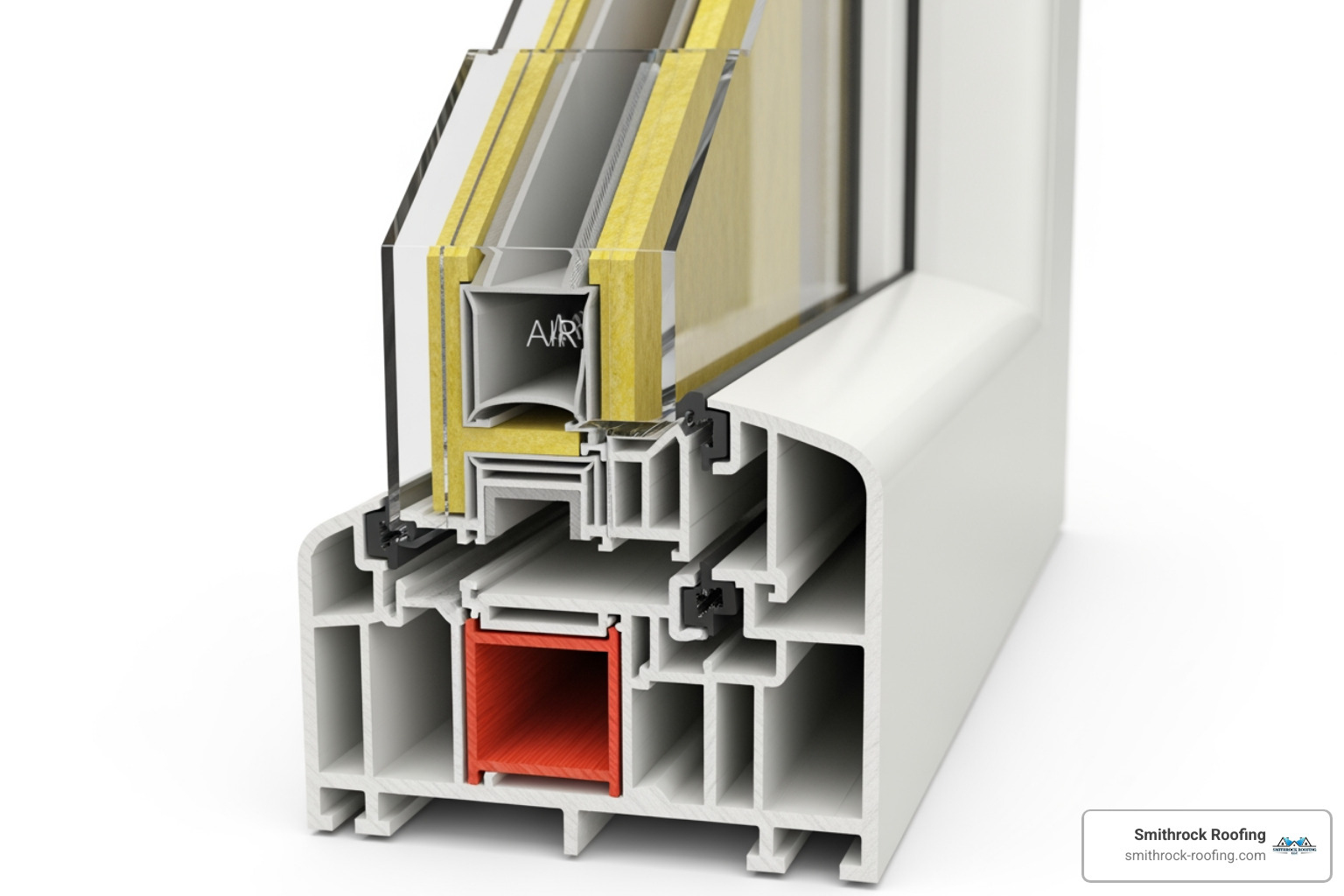
To truly appreciate the “magic” of these windows, we must look at the precision engineering hidden within the frame. A high-quality window is a complex assembly of components working in harmony to combat thermal transfer, air infiltration, and structural degradation. Every millimeter of the window’s design is optimized for performance, from the chemical composition of the vinyl to the molecular structure of the glass coatings.
At the heart of the system is the Insulated Glass Unit (IGU). This is the sealed “sandwich” of two glass panes separated by a spacer. Vitro (formerly PPG) Glass Education Center explains the mechanics of Low-E coatings as a method of managing solar energy through emissivity. Emissivity refers to the ability of a surface to radiate energy. Standard glass has high emissivity, meaning it absorbs and radiates heat easily. The Low-E (low-emissivity) coating is a microscopically thin, transparent metallic layer—often containing silver or tin oxide—applied to the glass surface.
This coating acts as a thermal mirror. During the winter, it reflects the long-wave infrared energy (heat) from your furnace back into the room. During the summer, it reflects the sun’s short-wave infrared heat back toward the outside, keeping your interior cool. Because the coating is thinner than a human hair, it remains virtually invisible to the naked eye, allowing natural light to flood your home without the accompanying heat. The application of these coatings is a marvel of modern manufacturing, often involving a process called Magnetron Sputter Vacuum Deposition (MSVD), where atoms of silver are literally blasted onto the glass surface in a vacuum chamber to create a uniform, high-performance layer.
The space between the two panes is not just empty air. In high-performance units, this gap is filled with an inert gas like Argon or Krypton. These gases are significantly denser than regular air, which means they move more slowly. This sluggishness reduces the convection currents within the IGU, making it much harder for heat to travel from one pane to the other. Argon is the most common choice due to its excellent performance-to-value ratio, while Krypton is often used in thinner glass packages where maximum insulation is required. The presence of these gases also helps to dampen sound, as the denser medium is less efficient at transmitting acoustic vibrations than standard atmospheric air.
Separating the panes is the warm-edge spacer. Older windows used aluminum spacers, which acted as a thermal bridge, conducting cold directly to the edge of the glass and causing condensation. Modern spacers are made of composite materials, structural foam, or stainless steel with thermal breaks that resist heat flow, keeping the edges of the glass warmer and reducing the risk of moisture buildup. This is critical because condensation can lead to mold growth on the window sill and damage to the surrounding wall structure. You can find more info about insulated low-e glass and how these components interact to create a stable thermal barrier.
The frame itself is just as important as the glass. High-quality vinyl (uPVC) is an excellent insulator by nature, but its performance is enhanced through multi-chambered designs. If you were to cut a vinyl frame in half, you would see a series of internal pockets. These chambers trap air, providing additional layers of insulation and increasing the structural rigidity of the window. Unlike wood, vinyl will not rot, peel, or require painting. Unlike aluminum, it does not conduct heat or cold into the home. The vinyl used in modern windows is also treated with UV stabilizers to prevent the material from becoming brittle or yellowing after years of exposure to intense sunlight.
Furthermore, modern vinyl units feature fusion-welded sashes and frames. In this process, the vinyl components are heated to a molten state and pressed together, creating a single, monolithic piece of material. This eliminates the mechanical fasteners (screws and glue) that can loosen over time, ensuring the window remains airtight and structurally sound for decades. This welding process creates a joint that is actually stronger than the surrounding vinyl material itself, providing a level of durability that mechanical joints simply cannot match.
Not all Low-E coatings are created equal. Depending on your specific needs in the Piedmont Triad, the type of coating matters:
For residents in Winston-Salem or Kernersville, soft-coat Low-E is typically recommended because it provides the best balance of winter insulation and summer heat rejection. You can check out more info about well-insulated windows to see which technology fits your specific neighborhood’s micro-climate. The choice between these technologies can have a significant impact on your HVAC system’s workload and your overall comfort levels.
When evaluating windows, the NFRC (National Fenestration Rating Council) label is your most reliable tool. It provides standardized data that allows you to compare different brands and models accurately. Understanding these numbers is key to selecting a window that will actually perform in your specific environment:
Reputable windows will also carry the ENERGY STAR certification. ENERGY STAR certified options and requirements ensure the window meets strict efficiency guidelines for our specific climate zone (the North-Central or Southern zone, depending on your exact location in NC). Choosing ENERGY STAR certified products can also make you eligible for federal tax credits and local utility rebates.
The primary motivation for installing double pane low e vinyl windows is often financial, but the impact on daily comfort is equally profound. The most immediate change homeowners notice is the elimination of the “thermal draft.” In homes with single-pane glass, the interior surface of the window becomes extremely cold in winter. This creates a convection current where warm air hits the glass, cools rapidly, and drops to the floor, creating a draft even if the window is perfectly sealed. Dual-pane Low-E glass keeps the interior pane much closer to the room’s air temperature, maintaining a consistent environment. This phenomenon, known as Mean Radiant Temperature (MRT), is a major factor in how humans perceive comfort; when the surfaces around you are warm, you feel warmer even if the air temperature is the same.
Standard glass is almost transparent to ultraviolet (UV) radiation. These rays are responsible for the “photodegradation” of organic materials. This is why hardwood floors fade, expensive upholstery loses its color, and artwork becomes brittle over time. High-performance Low-E glass acts as a high-SPF sunblock for your home, blocking up to 95 percent of UV rays. This preservation of your interior assets provides significant long-term value that goes beyond simple energy savings. Imagine the cost of refinishing hardwood floors or replacing custom drapery; these expenses are often overlooked when calculating the ROI of new windows. By protecting your home’s interior, you are effectively extending the life of every piece of furniture and flooring exposed to natural light.
Noise pollution is an often-overlooked factor in home comfort. The dual-pane construction, combined with the insulating gas fill, creates a multi-layered barrier that disrupts sound waves. This significantly improves the Sound Transmission Class (STC) rating of your home. Whether you live near a busy road in High Point or just want to block out the neighbor’s barking dog in Clemmons, these windows provide a much quieter indoor sanctuary. The different thicknesses of glass used in some high-end double-pane units can further enhance this effect by breaking up sound waves at different frequencies. For homeowners with extreme noise concerns, laminated glass options can be integrated into the double-pane unit. This involves a thin layer of polyvinyl butyral (PVB) sandwiched between glass layers, which provides maximum sound dampening and an added layer of security against break-ins. You can read more info about the best windows for insulation to see how these features impact your living experience.
Choosing these windows is one of the most effective energy-efficient window upgrades because it addresses thermal, acoustic, and aesthetic needs simultaneously. The reduction in noise can lead to better sleep quality and lower stress levels, making your home a true refuge from the outside world.
Modern vinyl windows have moved far beyond the basic white plastic frames of the past. Today, they offer a level of customization that allows them to complement any architectural style, from historic farmhouses in Bethania to modern builds in Lewisville. The versatility of vinyl allows for a wide range of shapes, sizes, and decorative options that were previously only available in expensive wood windows.
For more inspiration on how to style your home, see more info about replacement windows for homes. The right combination of color, grid, and hardware can transform your home’s curb appeal and increase its market value significantly.
In the world of home improvement, there is often a temptation to assume that “more is always better.” However, when it comes to window panes, the choice should be based on a careful analysis of climate, structural requirements, and performance goals. The decision between double and triple pane is one of the most common dilemmas for homeowners looking to maximize their investment. While triple pane offers the highest theoretical insulation, the practical benefits must be weighed against the increased cost and weight.
| Window Type | R-Value (Insulation) | Best Use Case |
|---|---|---|
| Single Pane | ~R-1 | Obsolete; only suitable for unheated outbuildings or sheds |
| Double Pane Low-E | R-3 to R-5 | The optimal choice for North Carolina’s climate |
| Triple Pane | R-6 to R-9 | Extreme northern climates (Canada/Dakotas) or high-noise zones |
For the vast majority of homeowners in the Piedmont Triad, double pane low e vinyl windows represent the ideal balance. Single-pane windows are effectively obsolete in residential construction due to their total lack of insulating value. They offer almost no resistance to heat flow and are prone to heavy condensation. On the other end of the spectrum, triple-pane windows offer even higher R-values, but they come with several trade-offs that may not make sense for our region:
Triple-pane is usually reserved for homeowners facing extreme environmental noise (like living next to an airport) or those pursuing “Passive House” certification, where every fraction of a U-factor counts. If you are currently dealing with old, drafty glass, you might want to look at more info about the cost of replacing single glazed windows to understand the massive jump in performance you’ll experience with a dual-pane upgrade. The transition from single to double pane is often the single most impactful change you can make to your home’s thermal efficiency, providing the best return on investment for the average North Carolina homeowner.
The performance of a window is only as good as its installation. Even the most technologically advanced double pane low e vinyl windows will fail to save energy if air is leaking around the frame. At Smithrock Roofing, we emphasize a precision-based approach to window replacement, ensuring that every unit is perfectly level, square, and plumb. Proper installation is a multi-step process that requires attention to detail and an understanding of how different building materials interact. A poorly installed window can lead to water leaks, air drafts, and even structural damage over time.
During installation, we pay close attention to the “rough opening” preparation. We use high-quality flashing tapes and backer rods to create a multi-layered defense against water penetration. We then use low-expansion foam to fill the gap between the window frame and the house framing. This step is crucial for preventing the air infiltration that leads to drafts and high utility bills. Unlike standard expanding foam, low-expansion foam will not bow the vinyl frame, ensuring the window operates smoothly. For more details on the process, check out more info about window installation services. We also ensure that the exterior caulking is applied correctly, using high-grade silicone or polyurethane sealants that remain flexible over time.
One of the greatest advantages of vinyl is its low-maintenance nature. Unlike wood, which requires regular sanding, painting, and sealing to prevent rot, vinyl is naturally moisture resistant. To keep your windows looking new, a simple cleaning with mild soap and water is usually all that is required. You should avoid using abrasive cleaners or high-pressure washers, as these can damage the vinyl surface or the Low-E coating if applied directly. Regularly cleaning the tracks and lubricating the moving parts with a silicone-based spray will ensure the windows continue to operate effortlessly for years.
Most modern double-hung windows feature tilt-in sashes. This allows you to unlock the sash and tilt it inward, giving you easy access to the exterior glass from inside your home. This is a significant safety benefit, especially for second-story windows, as it eliminates the need for ladders. It also makes it much easier to keep your windows sparkling clean throughout the year, regardless of the weather.
While vinyl frames can last 30 years or more, the seals on the IGU are the most common point of eventual failure. If you notice a “foggy” or “misted” appearance between the two panes of glass that cannot be wiped away, it means the seal has broken and the insulating gas has escaped. This is often referred to as a “blown” window. While the window still functions, its insulating value is greatly reduced, and the moisture can eventually lead to mineral deposits that permanently stain the glass. You can find more info about replacing misted double glazed units if you’re seeing signs of moisture in your current windows. Early detection of seal failure can help you address the issue before it impacts your energy bills significantly.
Most modern, high-quality vinyl windows are designed with a service life of 20 to 30 years. The longevity of the seal depends on the quality of the spacer system and the environment. Windows on the sunny, south-facing side of a house may experience more thermal expansion and contraction, which can eventually stress the seals. However, modern “warm-edge” spacers are much more flexible and durable than the metal spacers used in the 1990s. Many manufacturers now offer lifetime warranties on their seal systems, providing peace of mind for the homeowner.
While aftermarket “Low-E films” are available, they are not a substitute for factory-applied coatings. Factory Low-E is a metallic layer bonded to the glass inside the sealed unit, where it is protected from scratches, cleaning chemicals, and oxidation. Aftermarket films can peel, bubble, and may even cause glass breakage by trapping too much heat against a single pane of glass. Furthermore, films do not address the lack of an insulating gas fill or the poor performance of an old frame. For genuine energy efficiency and long-term durability, a full window replacement is the superior choice.
Yes, significantly. Sound travels through vibrations in the air. By having two panes of glass of different thicknesses separated by a gas-filled space, the window breaks up the sound waves as they attempt to pass through. This is particularly effective for high-frequency noises like sirens or birds, as well as low-frequency rumbles like distant traffic. The combination of the vinyl frame’s multi-chambered design and the airtight seals further prevents sound from leaking into your home. For those living in exceptionally noisy areas, specialized acoustic glass can be used to achieve even higher levels of sound reduction.
Argon is an abundant, cost-effective inert gas that is about six times denser than air. It is the standard for most double-pane windows because it provides excellent thermal performance at a reasonable price. Krypton is even denser and more efficient but is much rarer and more expensive. Krypton is typically used in triple-pane windows or very thin double-pane units where the space between the glass is too small for Argon to be effective. For most residential applications in North Carolina, Argon gas provides the best balance of performance and value.
This is a common concern, but the answer is generally no. Most houseplants require “visible light” for photosynthesis, which Low-E glass allows to pass through. The coatings primarily block infrared light (heat) and UV rays (which cause burning and fading). In fact, many plants thrive better behind Low-E glass because the temperature near the window remains more stable, preventing the plant from getting “chilled” at night or “scorched” during the day. The reduction in UV rays can also prevent the leaves of sensitive plants from getting “sunburned.”
Exterior condensation is actually a sign that your windows are working perfectly. It occurs when the outside surface of the glass is cooler than the dew point of the air. Because your Low-E windows are so efficient at keeping heat inside your home, the exterior pane remains cool. On humid mornings, moisture from the air condenses on that cool surface. This is the same phenomenon you see on a cold soda can in the summer. As the sun rises and warms the glass, the condensation will evaporate. This is a clear indicator of a high-performance thermal barrier.
Modern vinyl windows are incredibly secure. The fusion-welded frames are extremely strong and difficult to break. Additionally, most high-quality vinyl windows feature multi-point locking systems and reinforced meeting rails. The double-pane glass itself is also harder to break through than single-pane glass. For added security, you can opt for tempered or laminated glass, which is much more resistant to impact. When combined with professional installation, vinyl windows provide a robust defense for your home.
Investing in double pane low e vinyl windows is one of the most impactful decisions you can make for your home’s long-term health and value. It is a rare home improvement project that offers a “triple threat” of benefits: it immediately lowers your monthly utility expenditures, it significantly increases the resale value of your property, and it fundamentally transforms the daily living experience by creating a quieter, more comfortable, and more stable indoor environment. The long-term savings on energy bills alone can often pay for the cost of the windows over their lifespan, making it a financially sound investment for any homeowner.
For homeowners in the Piedmont Triad—from the historic streets of Bethania to the growing communities in Rural Hall and Midway—these windows are an essential defense against our varied and often unpredictable weather. They protect your furniture from the sun, your ears from the noise of the street, and your family from the discomfort of seasonal drafts. In an era where energy costs are rising and environmental sustainability is becoming increasingly important, upgrading your windows is a proactive step toward a more efficient and responsible lifestyle. The reduction in your home’s carbon footprint is a benefit that extends beyond your own property lines.
At Smithrock Roofing, we are committed to helping our neighbors navigate the technical details of window technology to find the perfect fit for their specific needs. We believe in the value of education and quality craftsmanship, ensuring that every window we install provides decades of reliable service. Our team of experts is trained in the latest installation techniques and is dedicated to providing a seamless, stress-free experience for every client. Whether you are looking to solve a specific problem like a failed seal or are ready for a whole-home energy transformation, we are here to provide the expertise and high-quality products you deserve. Don’t let your hard-earned money leak out through old, inefficient glass.
Schedule a consultation for window replacement with Smithrock Roofing today!

Smithrock Roofing © Copyright 2026 • All Rights Reserved • Privacy Policy • Maintained by Mongoose Digital Marketing