If you’re dealing with chimney cap problems, understanding the common issues can save you a lot of headache and expense. Here are the main problems homeowners often face:
Your chimney cap might seem small, but it plays a big role in protecting your home. Often called the “unsung hero” of your chimney system, it’s the first line of defense against many costly issues. Think of it this way: a chimney without a cap is like a house without a roof. Ignoring problems with this crucial component can lead to serious damage, from water leaks to animal infestations and even fire hazards.
This guide will explain why your chimney cap is so important and how to spot the signs that it needs attention.
Chimney cap problems further reading:
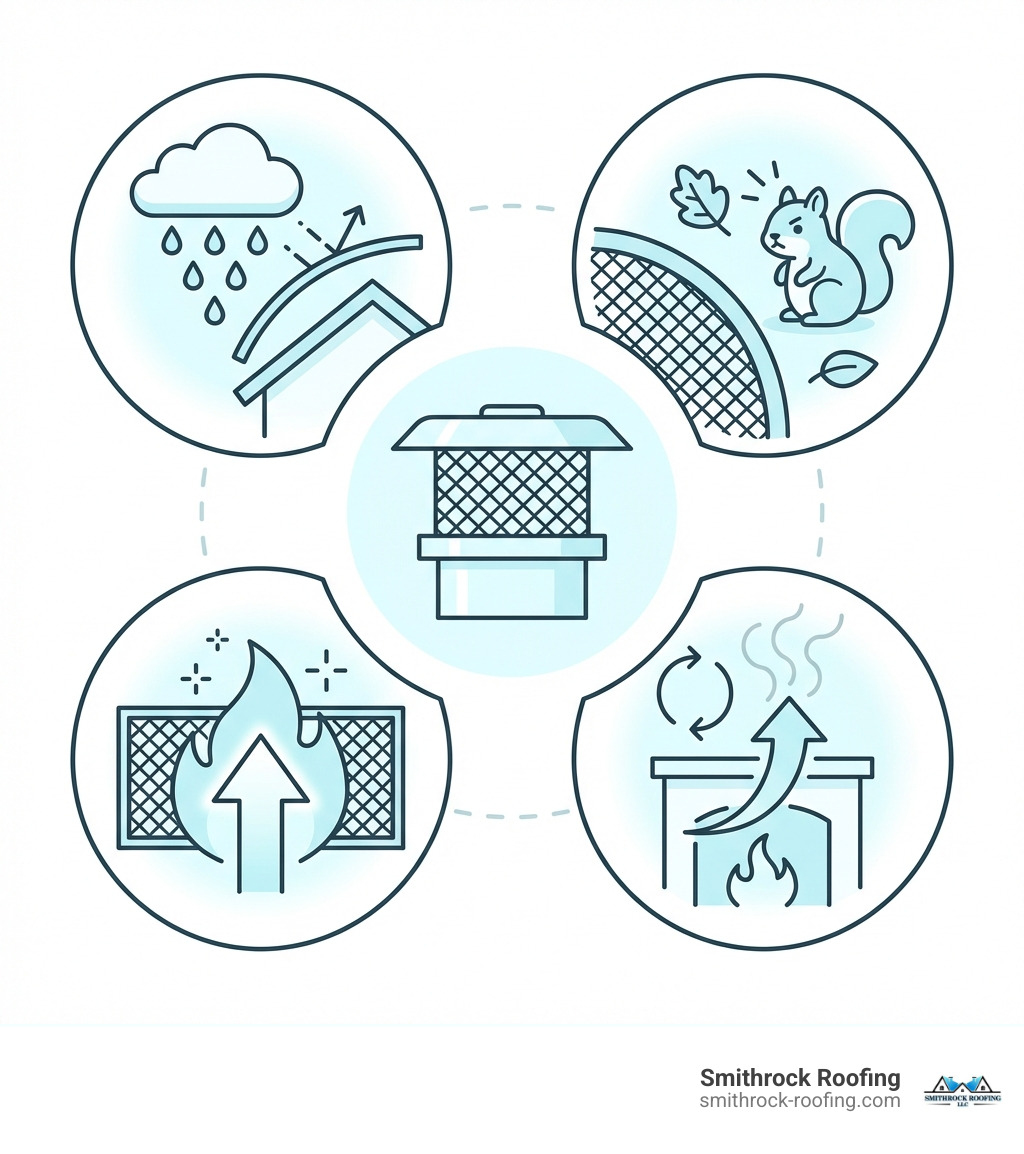
When we consider the components of our home that work tirelessly to keep us safe and comfortable, the chimney cap might not be the first thing that comes to mind. Yet, this often-overlooked fixture perched atop your chimney is one of the most important parts of your entire fireplace system. It performs multiple essential functions, acting as a silent guardian against a host of potential issues. Understanding these roles helps us appreciate why addressing chimney cap problems promptly is non-negotiable for homeowners across Winston-Salem, King, Clemmons, Lewisville, Pilot Mountain, and surrounding NC areas.
Water is arguably the biggest enemy of masonry. Our chimneys, typically constructed from brick or stone, are vulnerable to moisture. This is where the chimney cap steps in as your primary defense. Its main job is to prevent rain, sleet, snow, and other precipitation from entering directly into your chimney flue and the internal structure.
Without a properly functioning chimney cap, water can easily seep into your chimney. This can lead to a cascade of expensive and damaging issues. Rainwater allowed to leak into your chimney can result in rust on metal components, mold growth, and even significant damage to your chimney liner. Moisture intrusion can deteriorate masonry, mortar, and liners over time. When water saturates these porous materials, especially during our cold North Carolina winters, freeze-thaw cycles can wreak havoc. A small crack can quickly ramp up into a large leak as water freezes, expands, and then thaws, gradually breaking down the chimney structure. This process can lead to spalling, where the brick face flakes off, necessitating costly repairs. Furthermore, a properly designed chimney crown, which is the cement portion at the very top of the chimney, works in tandem with the cap to seal and divert rain and snow away from the interior masonry, ensuring comprehensive water protection.
You can learn more about the vital functions of this component by visiting our page on Chimney Cap Purpose. For more detailed information on spalling, which is a common issue with water-damaged masonry, please refer to More on spalling brick.
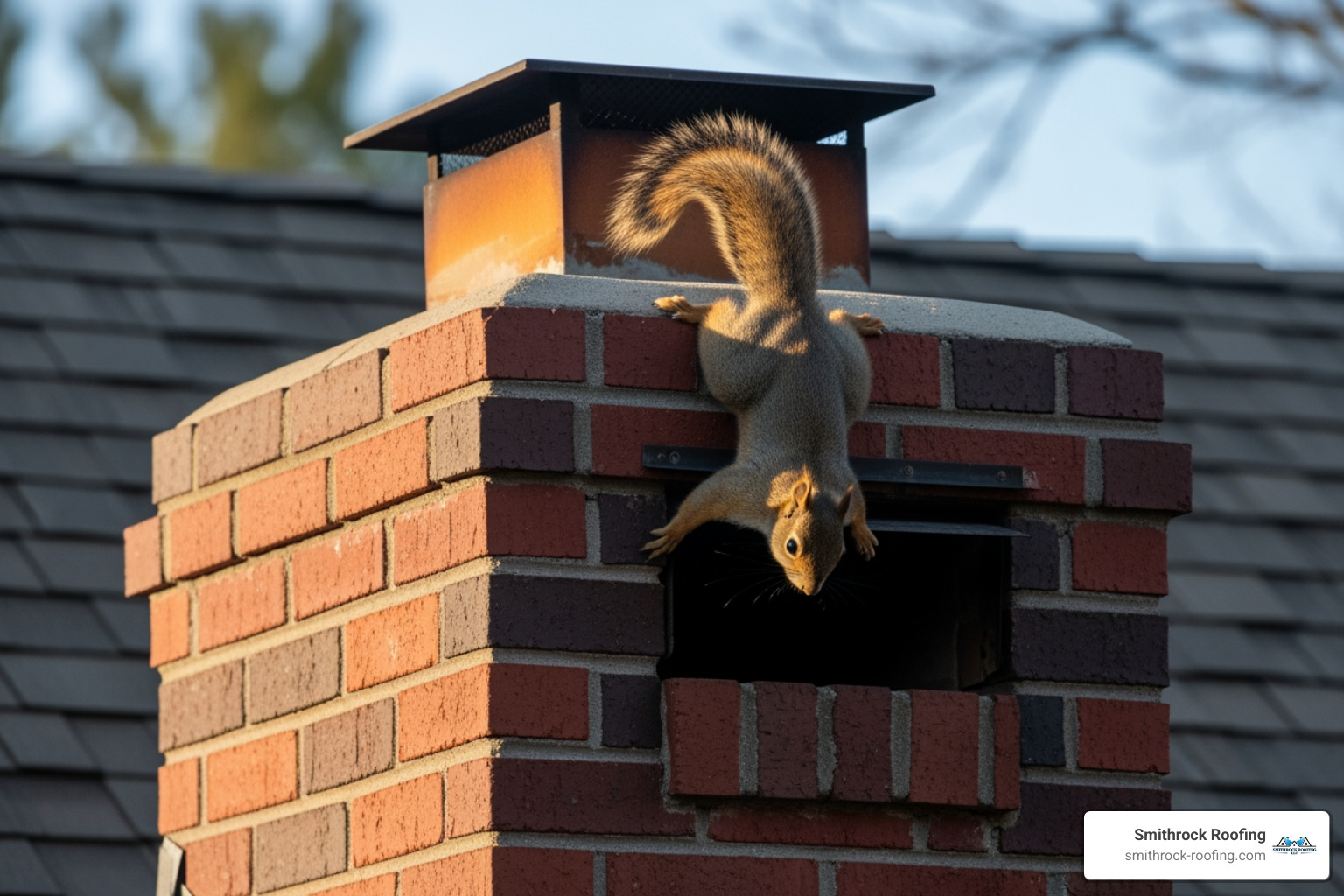
Imagine a cozy winter evening, only to hear scratching or chirping coming from your chimney. This is a common scenario when a chimney cap is missing or damaged. Chimney caps with mesh siding are crucial for preventing critters like raccoons, squirrels, bats, and birds from getting into your chimney. These animals often seek shelter, and an open flue offers an inviting, warm, and secure location. Once inside, they can build nests, which not only create foul odors (especially if an animal dies) but also pose a significant fire hazard. Nesting materials are highly flammable and can easily ignite from sparks exiting the flue, potentially causing a chimney fire.
Beyond preventing animal intrusion, the chimney cap acts as a barrier against falling leaves, twigs, and other outdoor debris. A screened chimney cap prevents debris from blocking the chimney and causing smoke and gases to back up into your house. A clogged flue reduces the efficiency of your fireplace and can lead to dangerous smoke inhalation. Our specialized chimney covers are particularly effective at deterring avian visitors, as detailed on our Chimney Covers to Stop Birds page.
Safety is paramount when enjoying a fire in your home. Hot embers can escape through an uncapped chimney, posing a serious fire risk to your roof, nearby trees, or surrounding property. The wire mesh on chimney caps serves a dual purpose: preventing critter intrusion and operating as a spark deflector. This mesh is designed to catch any hot embers that might float up the flue, preventing them from landing on combustible materials. This feature is especially critical during dry seasons in North Carolina, when stray sparks could quickly escalate into a dangerous fire. A functional chimney cap provides invaluable peace of mind, allowing you to enjoy your fireplace without worrying about accidental fires. For more information on this protective feature, check out our guide on Cap for Fireplace.
A well-functioning chimney relies on a good draft to efficiently pull smoke and combustion gases up and out of your home. When chimney caps aren’t working properly, or if one is missing, they can result in poor draft. This can lead to frustrating downdrafts, which means cold blasts of air are prevented from creating a chilling effect in your home. More critically, poor draft can cause smoke and potentially dangerous carbon monoxide to back up into your living space, creating a health hazard. A chimney cap helps direct smoke away from the firebox and out of the house, ensuring proper ventilation. It also helps prevent those chilling downdrafts that can make your home less comfortable. Understanding the different types of chimney caps, including those designed to optimize draft, can be found on our Types of Chimney Rain Caps Guide.
Despite their robust construction, chimney caps are constantly exposed to the elements and the rigors of your chimney’s operation. Over time, even the most durable caps can develop chimney cap problems. Recognizing these common issues is the first step toward safeguarding your home and fireplace system.
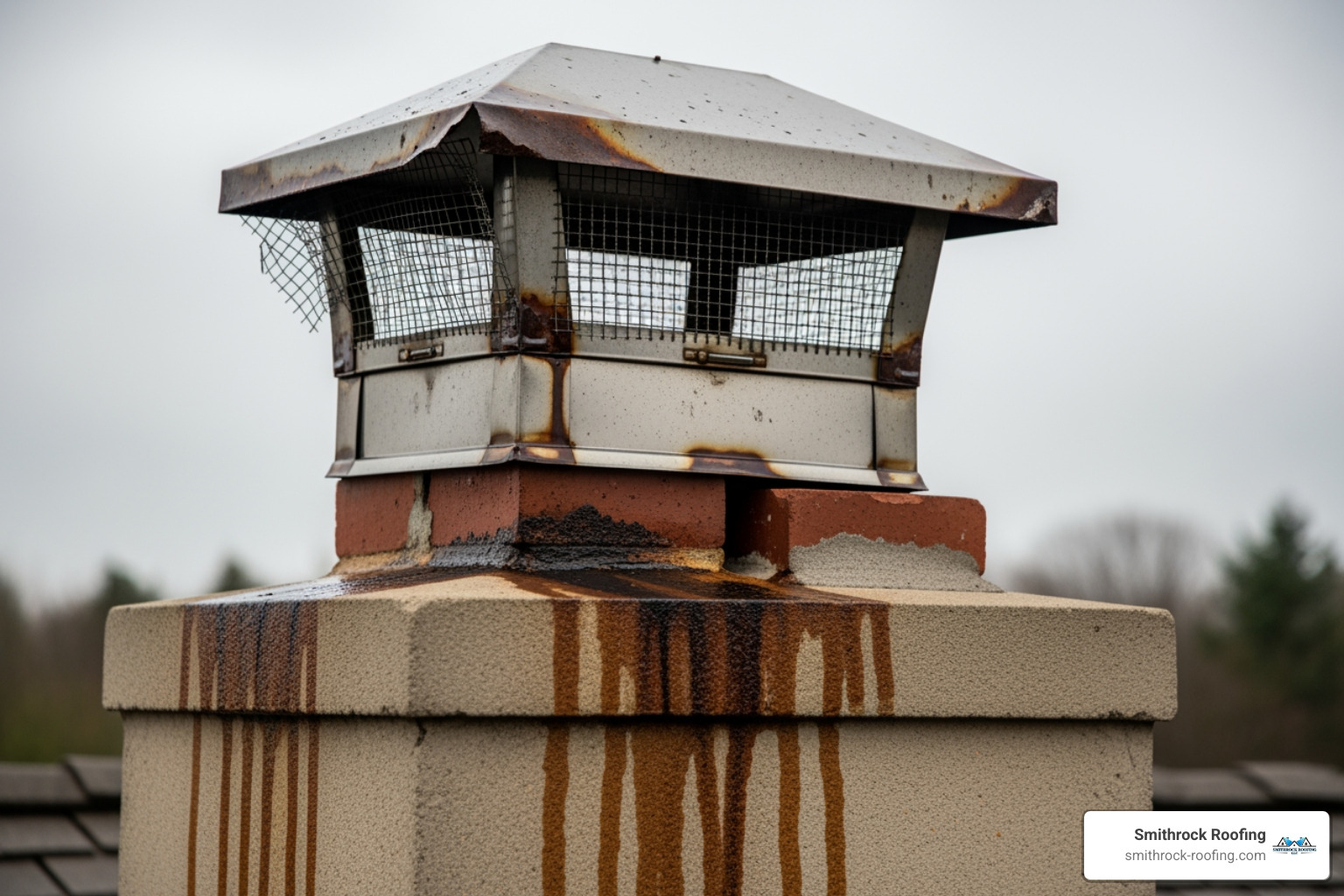
Rust is a common adversary for metal chimney caps, especially those made from galvanized steel or other ferrous metals. Rusting can happen any time that a ferrous metal is exposed to oxygen and moisture, which describes the constant environment at the top of your chimney. Over time, your chimney cap can begin to rust due to this exposure, aging, and a lack of maintenance.
The consequences of rust are more than just cosmetic. Rusting weakens the metal, making the cap brittle and susceptible to further damage. A rusty chimney cap is less effective at performing its protective duties. It can allow water to seep through weakened spots, leading to internal chimney damage, and its mesh may become compromised, allowing animals to break through. You might even notice rust stains streaking down your chimney masonry, which is a clear indicator that your cap is failing. If your chimney cap is rusty, it should be replaced as quickly as possible to prevent further deterioration of your chimney system. For superior rust resistance and longevity, many homeowners in our service areas like Greensboro and High Point opt for a Copper Chimney Cap.
Our North Carolina weather can be unpredictable, and severe conditions can take a toll on any man-made material, including your chimney cap. High winds, heavy rain, hail, and falling tree limbs are common culprits behind physical damage. We’ve seen caps bent, smashed, or even blown off entirely due to strong gusts or impacts from debris.
Physical damage is one of the clearest indicators that your chimney cap needs to be replaced. If you spot cracks, chips, or holes in the cap, or if its mesh screens are broken or bent, it’s important to take action quickly. Even masonry caps, while durable, can sustain freeze-thaw damage, leading to cracks. A damaged cap might have loosened mounts, making it unstable and prone to dislodgement. A compromised cap cannot effectively keep out water, animals, or sparks, leaving your chimney vulnerable. If your cap has suffered significant damage, consider a Chimney Cap Replacement to restore your chimney’s protection.
While a chimney cap is designed to keep debris out, debris can also accumulate on the cap or within its mesh. Leaves, twigs, bird nests, and even excessive soot and creosote buildup can clog the mesh screen. This accumulation leads to significant chimney cap problems.
A clogged chimney cap impedes airflow, creating a poor draft within the flue. This means smoke and gases struggle to exit, potentially backing up into your home. Not only is this a safety hazard (due to carbon monoxide risk), but it also makes your fires inefficient and smoky. Furthermore, a buildup of flammable debris and creosote on the cap can increase the risk of a chimney fire. If you notice debris or water seeping into your fireplace, it’s a clear sign that your chimney cap might not be performing as it should. Addressing blockages promptly can prevent the need for more extensive repairs, such as those that might arise from damage to your chimney liner. In severe cases, extensive buildup and resulting damage might even necessitate a Cost to Replace Chimney Liner.
Even if you purchase the best chimney cap money can buy, failures can happen if it isn’t installed properly. Improper installation or incorrect sizing is a common source of chimney cap problems. An incorrectly fitted cap might have gaps that still allow water, animals, or sparks to enter the flue. An insecurely mounted cap can be easily dislodged or blown off by strong winds, leaving your chimney completely exposed.
Many chimney caps are not built correctly from the outset. For instance, the openings for flue liners should be one-inch larger than the actual flue liner so the gap can be caulked, allowing for expansion and contraction. If a mason pours or creates a cap in place, it should be steel-reinforced and have an overhang that projects beyond the face of the brick by about 1.5 inches, complete with a drip groove to shed water effectively. A membrane flashing should also be placed on the last flat level of masonry before the cap is placed. Without these critical elements, even a new cap can fail prematurely. If your chimney cap is broken, missing, or the wrong size, it’s crucial to talk to a professional to discuss replacement. For specific sizing needs, like a 13×13 Chimney Cap, professional measurement and installation are key. Wondering if you need a professional? Check out Do I Need a Contractor to Replace a Chimney Cap? for more insights, and refer to Details on proper cap construction for an in-depth look at best practices.
While chimney caps are designed to keep animals out, persistent critters can sometimes cause damage themselves, leading to chimney cap problems. Raccoons might bend or pry at the mesh, squirrels might chew through weaker spots, or determined birds could force their way in, especially if the mesh is already compromised. If a chimney cap’s mesh is broken or bent, that cap will need to be replaced, too.
This damage compromises the cap’s barrier, allowing future intrusions and exposing your chimney to all the risks that come with it. Animals can get stuck in your chimney, create foul odors, build nests that pose fire hazards, and block the flue. It’s a frustrating cycle that highlights the importance of a robust, intact chimney cap. For a comprehensive overview, the Everything To Know About Chimney Caps article offers valuable information on preventing animal intrusion.
Of all the chimney cap problems, not having one at all is arguably the most severe. A chimney without a cap is like a house without a roof – completely exposed to the elements and unwanted visitors. Not having a chimney cap can lead to quite a few problems:
Every building with a chimney should have a rain cap installed. It’s a relatively inexpensive component that prevents a host of extremely costly and dangerous issues.
The quality of materials and the design of your chimney cap significantly impact its lifespan and effectiveness. Cheaper chimney caps, often made from thin, less durable galvanized steel, tend to fail quickly. They are more susceptible to rust, weather damage, and animal intrusion. While they might seem like a cost-saving option initially, they often lead to more frequent replacements and repairs in the long run.
In contrast, stainless steel or copper chimney caps should last a long time, with many even coming with lifetime warranties. These materials are highly resistant to rust and corrosion, enduring the harsh outdoor environment much better. Beyond material, design also matters. Many masonry chimney caps are not built correctly; they should be made from precast concrete or cut-stone, and crucially, they need an overhang of about 1.5 inches with a drip groove to properly shed water. Without these design features, water can run straight down the chimney face, causing staining and deterioration. Inadequate mesh size can also be a design flaw, allowing smaller debris or insects to enter. For those considering durable and aesthetically pleasing options, a Limestone Chimney Cap can be an excellent choice, and our Prefabricated Chimney Caps offer reliable, high-quality alternatives.
Identifying chimney cap problems early can save you from extensive damage and costly repairs. While some issues require a professional eye, there are several signs homeowners can look for from the ground or inside their home. Regular vigilance is key to proactive maintenance.
A simple visual inspection from your yard can often reveal early warning signs of chimney cap problems. Grab a pair of binoculars and look up!
Physical damage is one of the clearest indicators that your chimney cap needs to be replaced. If you spot cracks, chips, or holes in the cap, it’s important to take action quickly.
Sometimes, the first indications of chimney cap problems manifest inside your living space. Don’t ignore these subtle (or not-so-subtle) clues:
While a homeowner can spot many issues, a professional chimney inspection provides a comprehensive assessment. Our technicians, serving areas like Winston-Salem and Clemmons, are trained to look for specific details that indicate chimney cap problems:
For any of these issues, especially those requiring a closer look, contacting professionals for Chimney Cap Repair Winston Salem is your best course of action.
Addressing chimney cap problems isn’t just about fixing what’s broken; it’s about proactive prevention and choosing the right solutions for long-term durability. By making informed decisions about materials, installation, and ongoing maintenance, we can ensure our chimneys remain safe and efficient.
The initial choice of chimney cap material significantly impacts its resistance to common chimney cap problems like rust and physical damage, as well as its overall lifespan.
| Material | Pros
The
This is a very long and detailed research document. I will focus on extracting key information for each question and covering all relevant points from the research while maintaining the requested tone and word count. I’ll ensure all provided links are used correctly and that the geographic constraint is followed.
Here’s a preliminary plan for managing the length and detail:
Let’s begin.
Smithrock Roofing © Copyright 2026 • All Rights Reserved • Privacy Policy • Maintained by Mongoose Digital Marketing