As we steer through 2026, the market for metal roofing continues to undergo significant changes, driven by both technological innovation and shifting global economic landscapes. When we analyze the 20 feet roofing sheet price, we are observing a dynamic figure that reflects a complex global supply chain, evolving trade policies, and significant advancements in metallurgical technology. For homeowners and contractors in North Carolina hubs like Winston-Salem, Greensboro, and High Point, staying informed about these drivers is the essential first step toward a successful and cost-effective home improvement project. The year 2026 has brought new standards in energy efficiency and material resilience, making the choice of a 20-foot panel more relevant than ever for those seeking to minimize seams and maximize structural integrity.
In the current market, a 20-foot panel is no longer just a specialty item for agricultural use; it has become a staple in modern residential architecture. The primary appeal lies in the ability to cover a large roof plane with a single, continuous piece of metal, thereby eliminating the horizontal laps that are traditionally the most vulnerable points for water infiltration. However, this length introduces unique pricing variables that differ from standard 8-foot or 12-foot sheets. From the specialized rolling processes required at the mill to the oversized freight requirements for delivery, every step of the journey for a 20-foot sheet adds a layer of cost and value that must be carefully weighed by the property owner.
The cost of a 20-foot metal panel is heavily influenced by global steel demand and the availability of high-quality raw materials. Since high-grade steel is the primary component of these sheets, fluctuations in the price of iron ore and metallurgical coal directly impact the final market rate. According to data from the World Steel Association, global production shifts can cause rapid changes in domestic availability. In 2026, we are seeing a stabilization of prices compared to the volatility of the early 2020s, yet the “floor” for steel prices has risen due to increased labor costs and stricter environmental regulations in manufacturing.
Manufacturing overhead—specifically the energy required to operate the massive industrial rollers that shape these 20-foot lengths—plays a significant role in the pricing structure. In 2026, we are also seeing the impact of carbon-neutral manufacturing initiatives. Many mills are transitioning to electric arc furnaces (EAFs), which, while more environmentally friendly, can influence the initial production costs as companies recoup their capital investments in green technology. Furthermore, the precision required to roll a 20-foot sheet without introducing “camber” (a slight curve in the sheet) requires more advanced machinery and slower production speeds than shorter, more forgiving lengths.
Transportation logistics are particularly critical for 20-foot panels and represent a significant portion of the total 20 feet roofing sheet price. Because of their exceptional length, these sheets require specialized shipping solutions. They cannot be transported in standard box trucks or even small flatbeds; they necessitate extended flatbed trailers and precision handling to prevent “oil canning” (visible waviness) or structural warping during transit. In the Piedmont Triad, local delivery fees are often calculated based on the distance from the fabrication center and the complexity of the offloading process. When buying a metal roof, it is vital to recognize that these logistical complexities are integrated into the regional market rates we see across North Carolina.
A common pitfall for homeowners is budgeting solely for the “base metal.” The 20 feet roofing sheet price often quoted in retail environments typically refers only to the raw, unpainted, or basic-coated panel. However, a high-performing roof is a comprehensive system, not merely a collection of metal sheets. To develop a realistic roof-replacement-cost, one must account for several integrated factors that ensure the system functions as intended for 40 to 70 years:
The “ingredients” of your roofing sheet dictate its lifespan, its aesthetic appeal, and its ultimate price. While steel remains the workhorse of the industry in 2026, other metals offer specialized benefits for different environmental conditions found throughout North Carolina. Understanding the metallurgy behind the 20 feet roofing sheet price allows homeowners to make an informed decision that balances upfront cost with long-term durability.
| Material | Best For | Pros | Cons |
|---|---|---|---|
| Galvanized Steel | Agricultural/Budget | Cost-effective, high impact resistance | Susceptible to rust if coating is breached |
| Galvalume | Residential/Commercial | Superior corrosion resistance, heat reflectivity | Slightly higher upfront cost than galvanized |
| Aluminum | Coastal/High Humidity | Naturally rust-proof, lightweight | Higher expansion rate, prone to denting |
| Copper | Luxury/Historic | 100+ year lifespan, develops beautiful patina | Extremely high initial investment |
| Zinc | Modern/Architectural | Self-healing properties, very durable | Requires expert installation, high cost |
For the majority of residential projects in our service area, Galvalume steel is considered the gold standard. It uses a patented alloy coating of 55% aluminum and 45% zinc, providing the strength of steel with the barrier protection of aluminum. In 2026, the industry has seen the introduction of “Next-Gen Galvalume,” which features enhanced clear-coat resins that further resist finger-printing during installation and provide an extra layer of protection against acid rain.
However, if you are located in a high-moisture environment or near a large body of water, aluminum might be the superior choice due to its inherent resistance to oxidation. While these premium metals can drive the metal-roof-cost higher, they offer a “lifetime” solution that can last 50 to 100 years, significantly outperforming traditional asphalt shingles. Aluminum is also highly valued for its thermal conductivity, reflecting a vast majority of solar radiation away from the home during the sweltering North Carolina summers. This “cool roof” technology can lead to lower cooling costs in cities like Greensboro and Winston-Salem, often paying for the material price difference within a decade of energy savings.
Copper and Zinc remain the “exotic” choices in the 2026 market. While a 20-foot copper sheet is a significant investment, its ability to last for over a century makes it a favorite for historic restorations in areas like Old Salem. These materials are priced by the pound and are subject to the volatility of the commodities market, often requiring a custom quote that is only valid for 24 to 48 hours.
In the metal roofing industry, the “Gauge” is the standard measurement of the metal’s thickness. It is important to remember the inverse relationship: the lower the gauge number, the thicker and stronger the metal. Choosing the right gauge is critical for 20-foot panels because longer spans require more inherent rigidity to prevent sagging, wind-flutter, or the dreaded “oil canning” effect where the metal appears wavy.
Thicker gauges allow for wider purlin spacing (the horizontal supports underneath the roof) and offer superior load-bearing capacity, which is essential for handling the occasional heavy snow loads in the foothills of the Blue Ridge Mountains. When evaluating quotes, always ensure you are comparing “apples to apples” regarding gauge, as a lower price often indicates a thinner, less durable material.
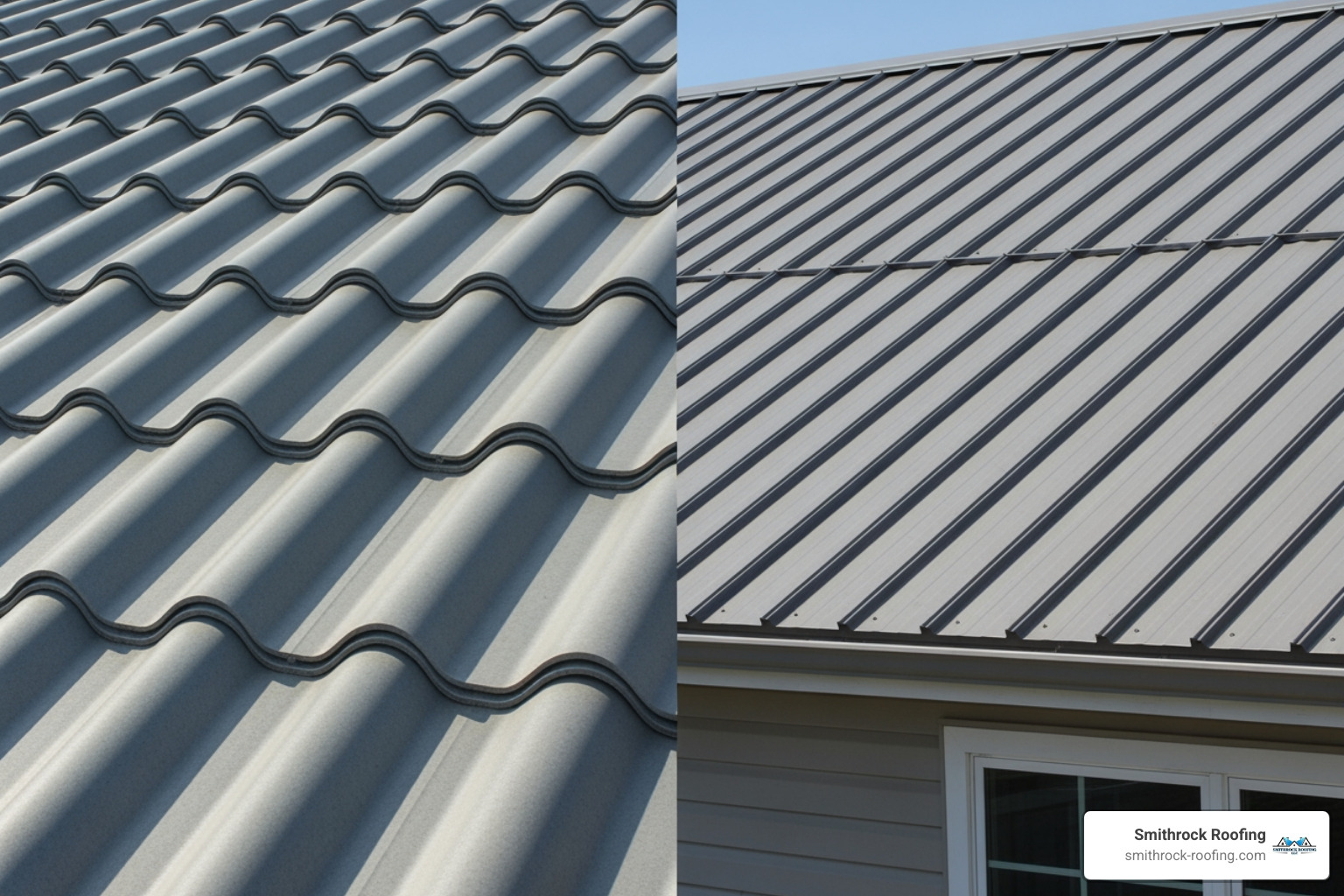
The geometric shape of the metal—known as its profile—is about much more than just visual aesthetics. It determines how the panels are fastened to the structure, how they manage water runoff, and how they respond to the intense thermal cycles of the North Carolina climate. The profile you choose will be one of the largest determinants of the 20 feet roofing sheet price, as more complex shapes require more raw material and more sophisticated manufacturing equipment.
Corrugated metal roofing is the classic “wavy” profile that has been used for over a century. While it remains popular for its nostalgic look and affordability, modern residential construction often favors the R-panel or PBR (Purlin Bearing Leg) panel. PBR panels feature a more sophisticated overlap design that creates a more water-tight seal than traditional corrugated sheets. The “bearing leg” on a PBR panel provides extra support during the fastening process, preventing the metal from dimpling or deforming when the screws are driven in.
This makes PBR panels a superior choice for residential workshops, detached garages, or even modern farmhouse-style homes. The structural ribbing in these panels provides extra strength, allowing for faster installation and potentially reducing the overall labor investment. For a deeper dive into these options, see our corrugated-metal-roofing-guide. In 2026, we are seeing many homeowners opt for “Box Rib” profiles, which offer a more industrial, clean-lined look that complements contemporary architecture while providing the same structural benefits as the R-panel.
For homeowners seeking the pinnacle of protection and modern design, the choice usually comes down to two types of metal roofing systems: exposed fasteners versus concealed fasteners. Standing seam is a concealed fastener system, meaning the screws and clips are hidden beneath the metal surface, protected from rain, snow, and UV degradation. This is particularly important for 20-foot panels, as the metal will expand and contract significantly over such a long distance.
Because the fasteners are not exposed to the elements, the risk of leaks at the screw points is virtually eliminated. Furthermore, standing seam systems are designed to accommodate thermal expansion and contraction. As a 20-foot panel heats up in the afternoon sun, it can expand by as much as 1/4 to 1/2 of an inch; standing seam clips allow the metal to “glide” without stressing the fasteners or causing the metal to buckle. For high-end properties in areas like Clemmons, Advance, or Lewisville, the snap-lock-standing-seam-metal-roof-cost is often justified by the extreme longevity and the minimal maintenance required over the decades. While the initial 20 feet roofing sheet price for standing seam is higher, the reduction in long-term maintenance costs often makes it the more economical choice over a 30-year period.
The color of your 20-foot roofing sheet is not just a cosmetic choice; it is a high-tech protective barrier. In 2026, the two primary resin technologies are SMP and PVDF, and the choice between them will significantly impact both the price and the “fade resistance” of your roof.
Installing a 20-foot metal panel is a complex feat of engineering and teamwork. These are not DIY-friendly materials that a single person can manage on a ladder. The sheer length and weight of the panels require professional handling to ensure the safety of the crew and the integrity of the material. When calculating the 20 feet roofing sheet price, one must always look beyond the material cost and consider the specialized labor and equipment required for a flawless installation.
Handling 20-foot sheets requires a larger crew size to ensure the panels do not bend, crease, or “kink” before they are secured to the roof. A single crease in a 20-foot panel can ruin the entire sheet, leading to expensive waste and delays. Professional crews use specialized handling techniques, such as carrying the panels on their edges rather than flat, to maintain structural rigidity during the transition from the ground to the roof deck.
Specialized tools, such as vacuum lifts, specialized scaffolding, and heavy-duty power seamers, are often required for a proper installation. This complexity is why the new-roof-cost includes a significant labor component. In 2026, labor rates in the Piedmont Triad have adjusted to reflect the high level of skill required for metal roofing. A qualified installer must understand the nuances of thermal movement, fastener torque, and complex flashing details.
The pitch (steepness) of your roof also plays a major role in the installation price. A steep roof in Mt. Airy or King will require more safety equipment, fall protection systems, and significantly more time than a low-slope equipment shed. To understand how these labor factors are trending, you can review the latest roof-replacement-cost-2026 (updated for the current market) to see how labor rates and insurance requirements are impacting total project estimates.
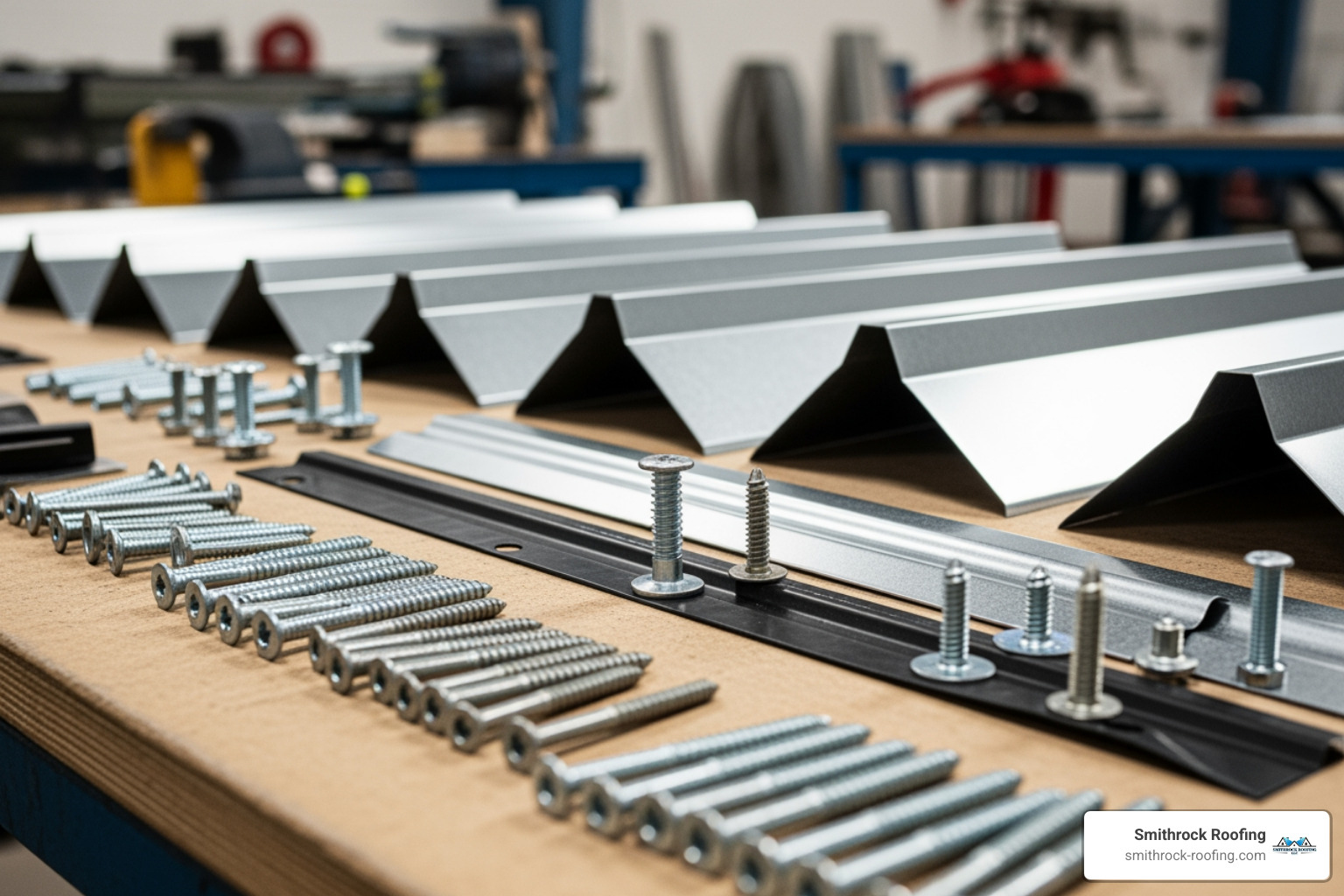
The “hidden” costs of a metal roof often reside in the trim and accessory packages. You cannot simply overlap 20-foot sheets and consider the job finished. A professional installation requires a variety of specialized components that often account for 15-25% of the total material budget:
Using a roofing-calculator can help you estimate the quantities of these parts, but a professional on-site inspection is always the most accurate way to determine the full scope of your project’s accessory needs. Neglecting these components to save on the initial 20 feet roofing sheet price is a recipe for premature roof failure.
At Smithrock Roofing, we are committed to helping our clients achieve the best possible value for their investment. To optimize the 20 feet roofing sheet price, timing, sourcing, and precise measurement are the most critical factors. In a market as competitive as 2026, being a strategic buyer can save you thousands of dollars on a large-scale residential project.
One of the most common misconceptions is that a 3-foot wide, 20-foot long panel provides 60 square feet of coverage. In reality, because panels must overlap to ensure a waterproof seal, the “net coverage” or “effective width” is usually 32 to 34 inches rather than the full 36 inches. This means you need more panels than a simple square footage calculation would suggest. Furthermore, you must account for a waste factor—typically 10-15%—to accommodate custom cuts around valleys, dormers, and chimneys.
For 20-foot panels, the waste factor can be even higher if the roof dimensions aren’t a perfect multiple of the panel length. Our roof-cost-calculator-complete-guide provides a detailed breakdown of how to perform these calculations accurately. We often recommend “nesting” your cuts, where the off-cut from one section of the roof can be used in another, though this requires a high level of planning and skill from the installation crew.
While it may be tempting to source metal panels from large national big-box retailers or international wholesalers, we strongly recommend working with local metal centers or wholesale manufacturers. Local suppliers in the North Carolina region have a deeper understanding of the specific building codes in Forsyth, Surry, and Davidson counties. They are also more likely to stock the specific gauges and profiles that are proven to perform in our local climate.
Furthermore, local sourcing often means shorter lead times and lower transportation costs. When you buy a 20-foot sheet from a local manufacturer, it hasn’t spent weeks on a ship or a cross-country train, reducing the risk of transit damage. While international sourcing might appear cheaper on a per-sheet basis, the lack of quality certifications and the risk of receiving “seconds” (material with minor defects) can turn a perceived “deal” into a logistical nightmare.
Buying locally ensures you receive American-made steel that meets rigorous ASTM (American Society for Testing and Materials) standards for structural integrity and coating thickness. Additionally, local manufacturers are more likely to provide responsive support if a panel is damaged or if you need a small additional order to finish a project in Wallburg, Midway, or Horneytown. In 2026, the “Buy Local” movement in construction is not just about community support; it’s about ensuring accountability and quality in the supply chain.
The most significant advantage is the drastic reduction in seams. On many residential roofs, a 20-foot panel can run continuously from the ridge to the eave. This eliminates horizontal laps, which are the most common points for leaks, capillary action (where water is sucked upward between sheets), and debris accumulation. Beyond the functional benefits, long panels provide a much cleaner, more modern aesthetic that can increase the resale value of your home. The vertical lines of a 20-foot standing seam roof create a sense of height and elegance that shorter, broken panels cannot replicate.
For the majority of homes in our service area, including Winston-Salem and Greensboro, 26-gauge is the standard recommendation. It provides the necessary stiffness for 20-foot spans while remaining cost-effective. However, if your home is located in an area with high wind exposure, such as a ridge-top in the foothills, or if you are installing a premium standing seam system, upgrading to 24-gauge is a wise long-term investment. The 24-gauge steel adds significant structural rigidity and is much less likely to exhibit “oil canning” over the long 20-foot span.
To calculate your needs, start with the total linear width of each roof plane and divide by the effective width of the panel (usually 2.6 to 3 feet). You must also measure the distance from the ridge to the eave to ensure a 20-foot sheet is the appropriate length, allowing for a 1-to-2-inch overhang at the eave. Always factor in a 10-12% waste buffer for mistakes, overlapping, and custom trimming around roof penetrations like plumbing boots and chimneys. For complex roof shapes with multiple valleys and hips, we always recommend a professional measurement to avoid costly ordering errors that can stall a project for weeks.
While it is technically possible in some jurisdictions to install metal over a single layer of shingles using furring strips (purling), we generally recommend a full tear-off. This allows our team to inspect the roof deck for rot, replace any damaged plywood, and install high-quality synthetic underlayment. Furthermore, installing 20-foot panels over an uneven surface like old shingles can lead to “telegraphing,” where the bumps of the shingles are visible through the metal, and it can exacerbate oil canning. A flat, clean deck is essential for the long-term performance of long-span metal panels.
In 2026, the initial cost of a metal roof is typically 2 to 3 times higher than that of a high-quality asphalt shingle roof. However, when you factor in the lifespan (50+ years for metal vs. 15-20 years for shingles), the metal roof is significantly cheaper over time. Additionally, metal roofs can increase a home’s resale value by up to 6% and can lead to insurance premium discounts of 5-15% in some areas of North Carolina due to their fire and hail resistance.
At Smithrock Roofing, we believe that your roof is the single most important protector of your home’s structural integrity and long-term value. Whether you are located in Winston-Salem, Kernersville, or Bethania, choosing the right metal roofing solution involves a careful balance of the 20 feet roofing sheet price against the long-term benefits of durability, energy efficiency, and reduced maintenance. The decisions you make today regarding material, gauge, and profile will resonate for decades, impacting everything from your monthly utility bills to your home’s curb appeal.
A metal roof is not just a purchase; it is a multi-generational investment. While the initial metal-roof-cost is higher than that of traditional asphalt shingles, the fact that a well-installed metal system can last 40 to 70 years makes it the most cost-effective choice over the life of your home. In the climate of North Carolina, where we face everything from humid summers to ice storms and high winds, the resilience of a 20-foot metal panel system is unmatched.
If you are ready to explore how a custom metal roofing system can transform your property, we invite you to reach out to our expert team for a professional consultation. We take pride in our transparent pricing, expert craftsmanship, and deep roots in the Piedmont Triad community. From gutters and siding to windows and chimney caps, we are here to ensure your home is protected from the ridge cap down to the foundation. Contact Smithrock Roofing today to schedule your on-site assessment and take the first step toward a lifetime of protection.
Smithrock Roofing © Copyright 2026 • All Rights Reserved • Privacy Policy • Maintained by Mongoose Digital Marketing