
A note on the numbers: the figures in this guide are national industry averages compiled for research — they are not Smithrock Roofing quotes. Every home and project is different, which is why our in-home assessments and written quotes are always free.
Window replacement cost winston salem nc typically ranges from $360 to $478 per window, with an average cost of $419 per window including installation. For a complete home project, homeowners can expect to pay between $2,678 and $13,840 for replacing 5-25 windows.
Quick Cost Overview for Winston-Salem:
Outdated windows often lead to drafty rooms and high energy bills, a common issue for homeowners in our area. Modern window replacement offers a significant return on investment. New windows can reduce energy bills by up to 13%, increase home value, and improve comfort, which is crucial in any varied climate.
However, the final cost depends on material choices, installation methods, labor rates, and project size. It’s also wise to consider long-term savings, available rebates, and the typical 68.5% return on investment for vinyl window replacement.
I’m Jordan Smith, and with over 15 years in exterior construction, I’ve guided many Winston-Salem homeowners through their window replacement cost winston salem nc decisions. At Smithrock Roofing, we prioritize transparent pricing and quality installations to deliver real energy savings and lasting comfort.
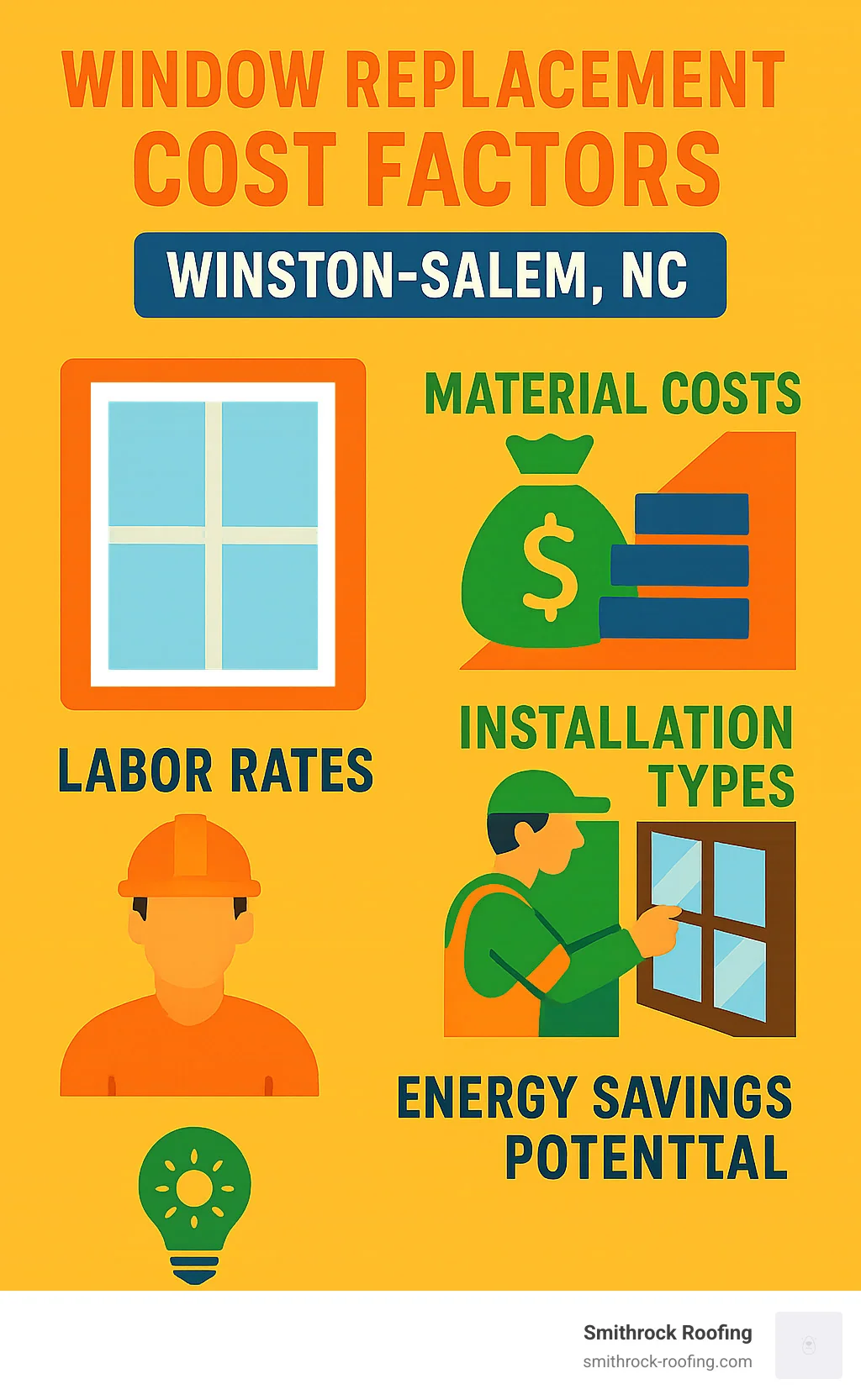
Window replacement cost winston salem nc terms to remember:
For homeowners in Winston-Salem, understanding the real numbers for a window replacement project is the first step. Fortunately, our local market offers competitive pricing compared to state and national averages. Let’s break down what window replacement cost winston salem nc looks like for various project sizes.
In our area, the average cost for a standard double-hung window replacement is around $419 per windowincluding professional installation. Most projects fall within the $360 to $478 per window range for quality, mid-grade vinyl windows.
This price typically covers the window unit, all necessary installation materials like flashing and trim, and the skilled labor required. While specific features or installation challenges can affect the final price, this range provides a solid baseline for budgeting, whether you’re replacing a single window or several.
Replacing all windows at once is often the most financially sound decision. A complete window replacement project in our area generally costs between $2,678 and $13,840depending on the home’s size and the number of windows.
A typical three-bedroom home with 10 to 15 windows might have a total project cost around $4,982 on average. Smaller homes could be closer to $3,000, while larger homes with 20+ windows may exceed $10,000. Whole-house projects often benefit from a lower per-window cost and ensure visual consistency throughout the home.
Winston-Salem homeowners benefit from more affordable pricing than in other areas. While the North Carolina average is about $600 per window and the national average is near $650 per windowour local market is significantly more competitive.
This advantage is due to more reasonable local labor rates compared to larger cities like Charlotte or Raleigh, as well as efficient material supply chains. This competitive environment allows contractors to offer premium products, like Norandex eXtreme 3000S windows, at prices that fit local budgets without compromising on quality.
Need a hand with this in Winston-Salem, Greensboro and the NC Triad? Call (336) 971-0464 or request a free estimate. Honest answers, no pressure.
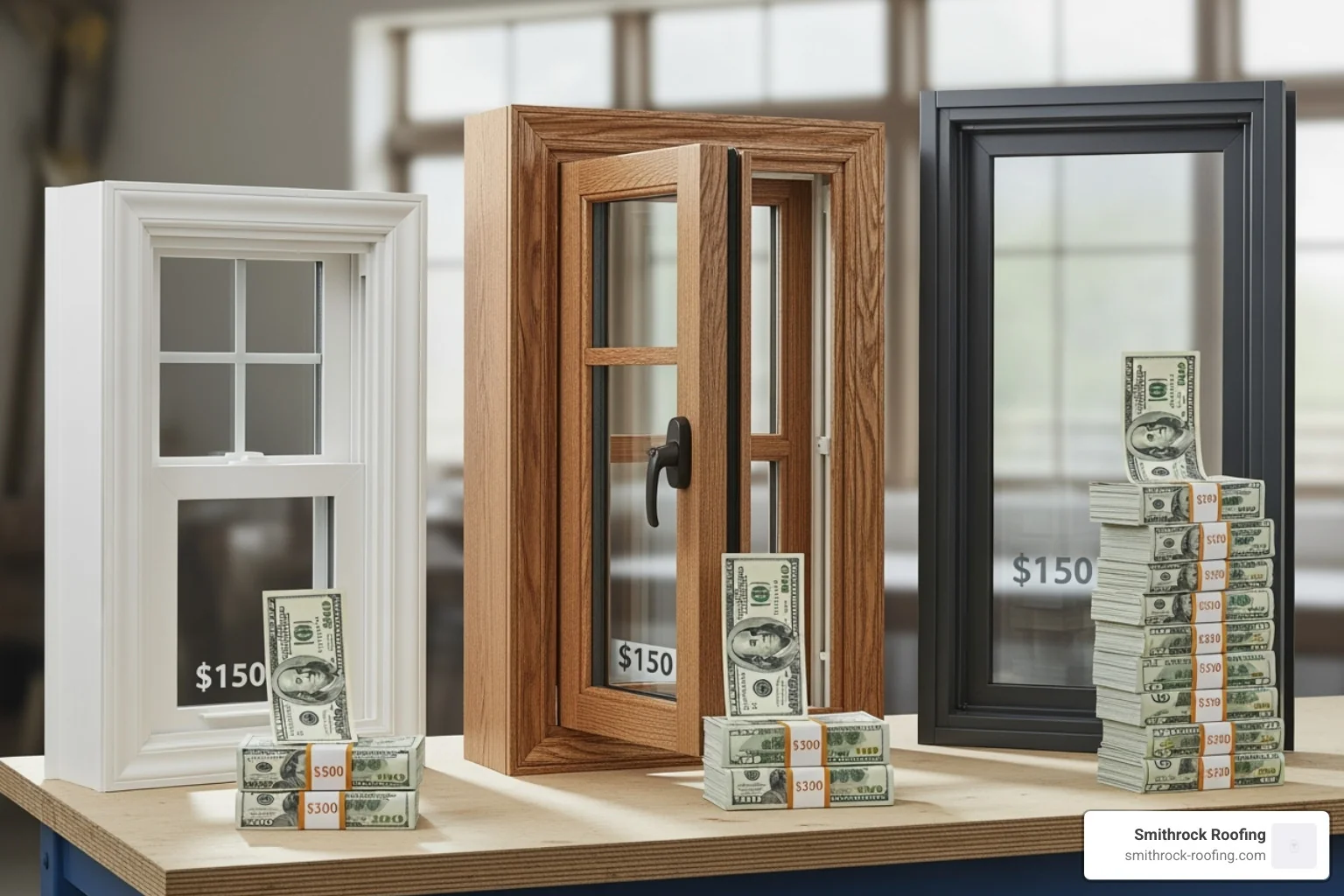
While average costs provide a good starting point, the specific choices you make for your project will determine the final bill. Every decision, from frame material to installation type, impacts your total investment. Understanding these factors will help you align your vision with your budget for your window replacement cost winston salem nc project.
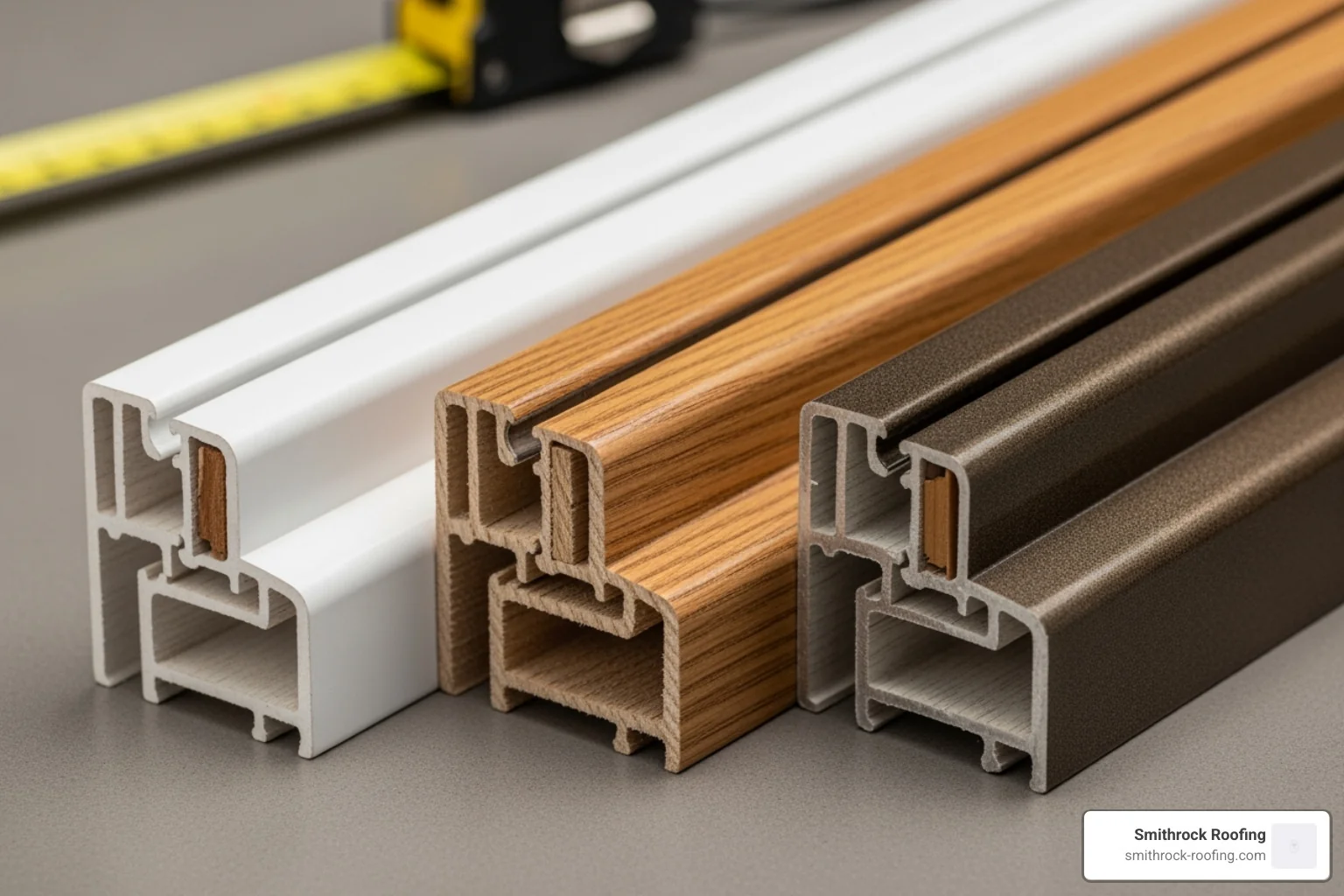
The frame material is a primary cost driver and affects maintenance, durability, and energy efficiency. Choosing the right one for North Carolina’s climate is essential.
Window style affects both aesthetics and cost. Here are some of the most common options:
This choice can alter your window replacement cost winston salem nc by 15-20% and impacts the long-term health of your home.
Labor typically costs $100 to $300 per window but can vary based on the project’s complexity. A professional installer’s expertise is critical for ensuring your windows perform as designed.
Our experienced team at Smithrock Roofing ensures an efficient and meticulous installation. Learn more on our Window Installation and Replacement page.
While the upfront window replacement cost winston salem nc is a key consideration, it’s crucial to view it as an investment that pays back over time. New windows can transform your home’s comfort and finances through energy savings, increased home value, and improved daily living.

In North Carolina, vinyl window replacement delivers a solid 68.5% return on investment. This means if you spend $10,000 on new windows, you can expect your home’s value to increase by about $6,850. Few home improvements offer such a strong and immediate return.
Beyond the numbers, new windows significantly boost curb appeal. For potential buyers, modern, functional windows signal a well-maintained and energy-efficient home. This is a major selling point for today’s eco-conscious buyers. The right window style can also improve your home’s architectural character, whether it’s a historic Colonial in West End, a mid-century Ranch, or a modern Farmhouse. The 2023 Cost vs. Value Report consistently ranks window replacement as a top home improvement for recouping value.
Old, leaky windows are a primary source of energy waste, accounting for 25-30% of a home’s heating and cooling energy use. Upgrading to modern, ENERGY STAR certified windows can reduce your energy costs by up to 13%.
For a typical Winston-Salem home, this can mean $156 in savings annuallyor over $3,000 during the 20-year lifespan of the windows. These savings will likely grow as energy costs continue to rise. New windows also reduce the strain on your HVAC system, potentially extending its life and delaying a costly replacement. The immediate comfort improvements are also significant, eliminating drafts and hot spots while providing UV protection to prevent furniture and flooring from fading. Find out more with our guide to the Best Windows for Insulation.
To maximize savings, it’s helpful to understand the NFRC label on new windows:
Choosing windows that meet or exceed these recommendations for our climate zone ensures you get the best possible performance and savings.
Incentive programs can significantly lower your net window replacement cost winston salem nc.
The federal government, through the Inflation Reduction Act, offers a tax credit of up to 30% of the project cost, capped at $600 annually. This is a direct credit that reduces your tax liability. To qualify, windows must meet specific ENERGY STAR requirements for the South-Central climate zone. Be sure to get the Manufacturer’s Certification Statement from your contractor for your tax records.
Local utility companies, like Duke Energy, may also offer rebates for installing energy-efficient windows. Additionally, window manufacturers often provide seasonal promotions. By combining these incentives, a federal tax credit, a utility rebate, and a manufacturer discount, homeowners can sometimes reduce their effective cost by 40% or more. We help our clients identify and apply for all available savings.
Deciding to replace your windows is a major step, but proper planning can make the process smooth and successful. Unlike purely aesthetic upgrades, new windows provide immediate comfort and long-term financial returns. Here’s how to plan your window replacement cost winston salem nc project effectively.
Your windows will often show clear signs when they need replacement. Addressing these issues early can save you money on energy bills and prevent further damage.
An experienced professional can complete a window replacement project efficiently. Here is a typical timeline:
From the first call to completion, a typical project takes about 2-4 weeks. Custom shapes or structural work may extend this timeline, but we communicate all schedules upfront.
To help the installation go as smoothly as possible, we recommend a few simple steps:
While many homeowners think of spring for home projects, fall and winter are excellent times for window replacement in our area.
Contractor availability is often better during these off-season months, meaning your project may start sooner and be completed without delay. Many contractors and manufacturers also offer seasonal discounts of 10-20% to keep their crews busy, which can significantly reduce your overall window replacement cost winston salem nc.
Worried about the cold? Don’t be. Our professional crews work on one window at a time, removing the old one and installing the new one in a matter of minutes. The opening is never left exposed for long, and the impact on your indoor temperature is minimal. Tackling the project in the off-season means you can enjoy a more comfortable, energy-efficient home when spring arrives. For more details, read our article on Why Fall and Winter Are the Perfect Time for Window Replacements.
It’s natural to have questions when considering a significant home improvement like window replacement. Here are clear, honest answers to the most common questions we hear from Winston-Salem homeowners about window replacement cost winston salem nc.
For most projects, the answer is no. If you are doing a same-size replacementswapping an old window for a new one of the exact same dimensions, a permit is generally not required in our area. This is considered routine maintenance.
However, if you plan to alter the size or location of a window (e.g., making a window larger or adding a new one), a permit is necessary. This is a structural change that must comply with current building codes, including safety egress requirements for bedrooms. Homes in historic districts may also require special approval from the local historic preservation authority even for same-size replacements to preserve the area’s architectural character. As your contractor, we handle any necessary permit processes for you.
This is a common dilemma balancing budget and long-term value.
Whole-house replacement is often the most cost-effective approach. You can benefit from bulk discounts of 10-15% per window on materials and labor, saving thousands on a typical project. It also ensures perfect visual consistency and maximizes your home’s energy efficiency immediately. The project is completed in one go, avoiding prolonged disruption.
However, if a full replacement isn’t in the budget, a phased approach is a practical alternative. We recommend starting with the most problematic windows, those that are drafty, fogged, or inoperable. A phased replacement is far better than continuing to live with inefficient windows that waste energy and money.
The glass package is key to energy efficiency and a significant factor in cost.
Special coatings and gas fills further improve performance:
You can customize these features for different areas of your home. We can help you select the glass package that best fits your home, budget, and performance goals.
This is a critical question. Reputable window replacements come with two separate warranties:
Choosing the right installer is just as important as choosing the right window. Look for a contractor with:
After reviewing the factors that shape window replacement cost winston salem ncit’s clear this project is a wise investment, not just an expense. New windows address common problems like high energy bills and uncomfortable rooms, offering returns that last for decades.
The benefits are comprehensive. You’ll experience improved comfort year-round, enjoy energy savings of up to 13%, and see a substantial boost in your home’s value, with a 68.5% return on investment for vinyl windows. The improved aesthetics improve curb appeal, while modern windows also provide UV protection and noise reduction for a more peaceful indoor environment.
At Smithrock Roofing, we have over 15 years of experience helping Winston-Salem families make this important investment. We are committed to transparent pricing and expert installation, ensuring you understand every aspect of your project without hidden costs.
We proudly install top-tier products like Norandex eXtreme 3000S windowsengineered for North Carolina’s climate to provide exceptional durability and energy efficiency. Our team treats your home with respect, ensuring a flawless installation process from start to finish.
Outdated windows are a constant drain on your finances and comfort. Making the change to beautiful, energy-efficient windows is a straightforward process that improves your quality of life. We are here to guide you every step of the way.
Ready to see how new windows can transform your Winston-Salem home? Contact us for a detailed, no-obligation consultation and quote.
See also: Best Roofing Companies Winston Salem Nc
The average cost of window replacement in Winston-Salem, NC, is $419 per window, including installation.
Replacing all windows in a home in Winston-Salem can cost between $2,678 and $13,840, depending on the number of windows (5-25 windows).
Labor costs for window replacement in Winston-Salem range from $100 to $300 per window, and materials can cost between $200 and $1,200 per window.
Homeowners can expect reduced energy bills by up to 13%, increased home value, and improved comfort from replacing windows in our area.
The typical return on investment for vinyl window replacement is 68.5%.

Smithrock Roofing © Copyright 2026 • All Rights Reserved • Privacy Policy • Maintained by Mongoose Digital Marketing