The Hardie board cost for a full installation is a significant long-term investment that varies based on your home’s size, the siding style you choose, your location, and the complexity of the job. While the upfront expense is typically higher than alternatives like vinylhomeowners and builders consistently choose James Hardie products for their superior long-term value, unmatched durability, and transformative impact on curb appeal. It’s an investment in your home’s future, protecting it from the elements while enhancing its beauty and resale value.
What is Hardie Board?
Hardie board is the most recognized brand of fiber cement siding, a composite material pioneered by James Hardie. It is meticulously engineered by combining Portland cement, finely ground sand, cellulose fibers (derived from wood pulp), and water. This specific blend is pressed into boards and cured through a high-pressure steam process (autoclaving), creating an incredibly stable and durable building material. The result is a siding that masterfully mimics the aesthetic of natural wood siding without the constant scraping, painting, patching, and vulnerability to rot and pests that real wood demands.
One of its most lauded attributes is its fire resistance. Hardie board is non-combustible, meaning it will not ignite when exposed to a direct flame or contribute fuel to a fire. It carries a Class A fire rating, the highest rating available for residential building materials. According to the National Fire Protection Association, fiber cement siding is recognized as one of the most fire-resistant exterior materials available, providing critical protection and peace of mind, especially in areas prone to wildfires. This can also lead to lower home insurance premiums in some cases.
Why Durability Matters for Long-Term Value
Most homeowners choose Hardie board because it can last 30 to 50 years, or even longer, when properly installed and maintained. This longevity can be double or triple the effective lifespan of lower-grade vinyl or poorly maintained wood siding. The cement-based composition is dimensionally stable, meaning it resists the warping, swelling, and shrinking that can plague wood and engineered wood products in climates with fluctuating humidity and temperatures. Its rigidity also prevents the waving or buckling seen in vinyl siding.
Furthermore, Hardie board is engineered to resist common threats that compromise other materials:
This guide breaks down the factors influencing your overall Hardie board investment, including materials, labor, and potential additional costs. You’ll learn which aspects of your project most affect the total Hardie board cost and how to think about long-term value versus initial expenses.
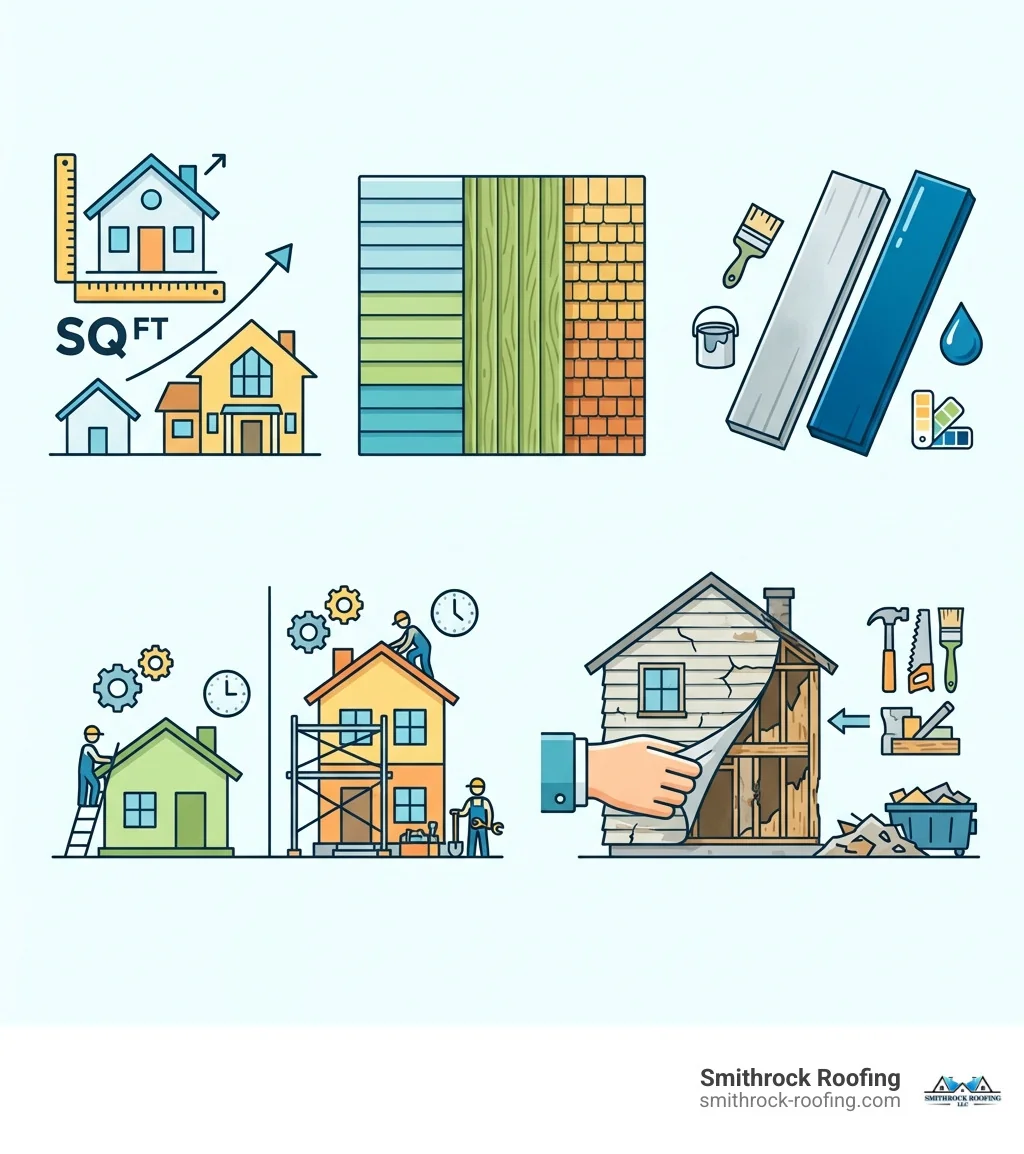
Hardie board cost terms to know:
The material itself typically accounts for 30-40% of the total project cost. The price varies based on the specific product line and finish you select.
Beyond the siding itself, a complete installation requires a system of essential components that are critical for performance and warranty compliance. These include:
Labor is the largest component of the total Hardie board costoften making up 60-70% of the final price. Installing fiber cement is more demanding than vinyl for several reasons:
Key labor factors include crew experience with James Hardie products, project complexity (e.g., number of corners, gables, and windows), multi-story access requirements, and the need for old siding removal. Professional installation by a certified contractor is highly recommended to protect your investment. For experienced professionals in North Carolina, we can help you find the best siding contractors.
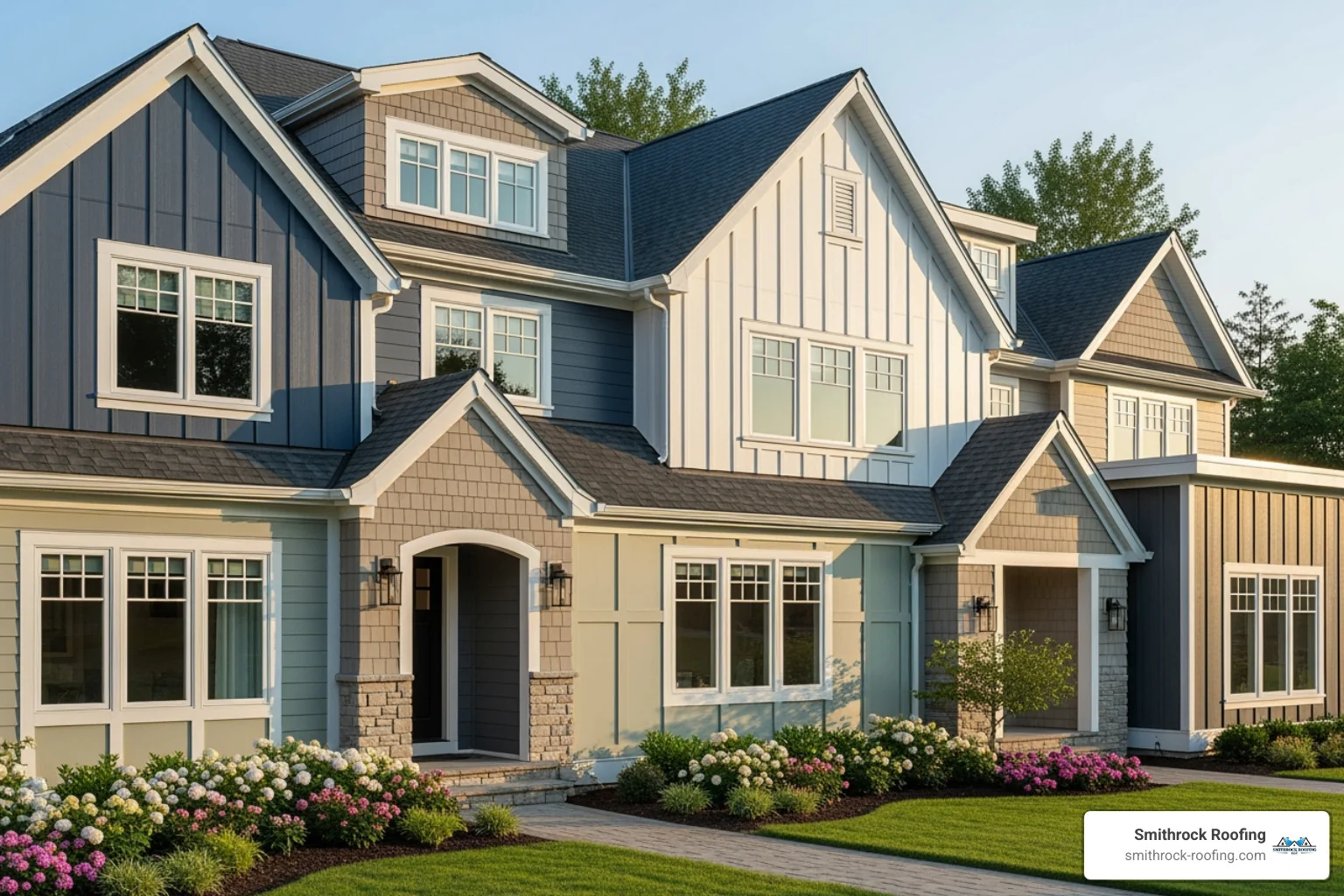
Several key factors significantly influence your total Hardie board cost. Understanding these variables will help you budget effectively and make informed decisions about where to invest in premium options and where you might be able to simplify.
The size and complexity of your home are the primary drivers of cost. A simple, single-story rectangular home will be far less expensive to side than a three-story Victorian with turrets, dormers, and bay windows. Every corner, window, door, and roofline requires precise cuts, additional trim, and careful flashing, all of which add to labor time and material waste.
Your choice of siding style also directly impacts the Hardie board cost:
One of the most significant choices you’ll make is between pre-primed siding and factory-painted ColorPlus® Technology.
Pre-Primed Siding: This option comes from the factory with a coat of primer applied. It has a lower initial material cost. However, you must factor in the immediate and significant cost of having the siding painted on-site by a separate crew. This involves purchasing high-quality exterior paint and paying for the labor to apply two full coats. On-site painting is weather-dependent and must be done within a specific timeframe after installation. Furthermore, field-painted siding will need to be completely repainted every 7-12 years, representing a recurring long-term expense.
ColorPlus® Technology: This siding is painted at the James Hardie factory in a controlled environment. Multiple coats of a proprietary finish are applied and baked on for exceptional durability and adhesion. While the upfront material cost is about 25-35% higher than primed siding, it arrives at your home finished and ready to install. This eliminates the cost, hassle, and scheduling of a separate paint job. The finish is backed by a 15-year warranty covering peeling, chipping, and cracking, and its UV resistance means colors stay vibrant for much longer. Over a 15-20 year period, the total cost of ColorPlus® is often lower than a primed and field-painted job due to the savings on repainting.
Beyond the siding and primary installation labor, a comprehensive budget must account for several other potential expenses:
Need a hand with this in Winston-Salem, Greensboro and the NC Triad? Call (336) 971-0464 or request a free estimate. Honest answers, no pressure.
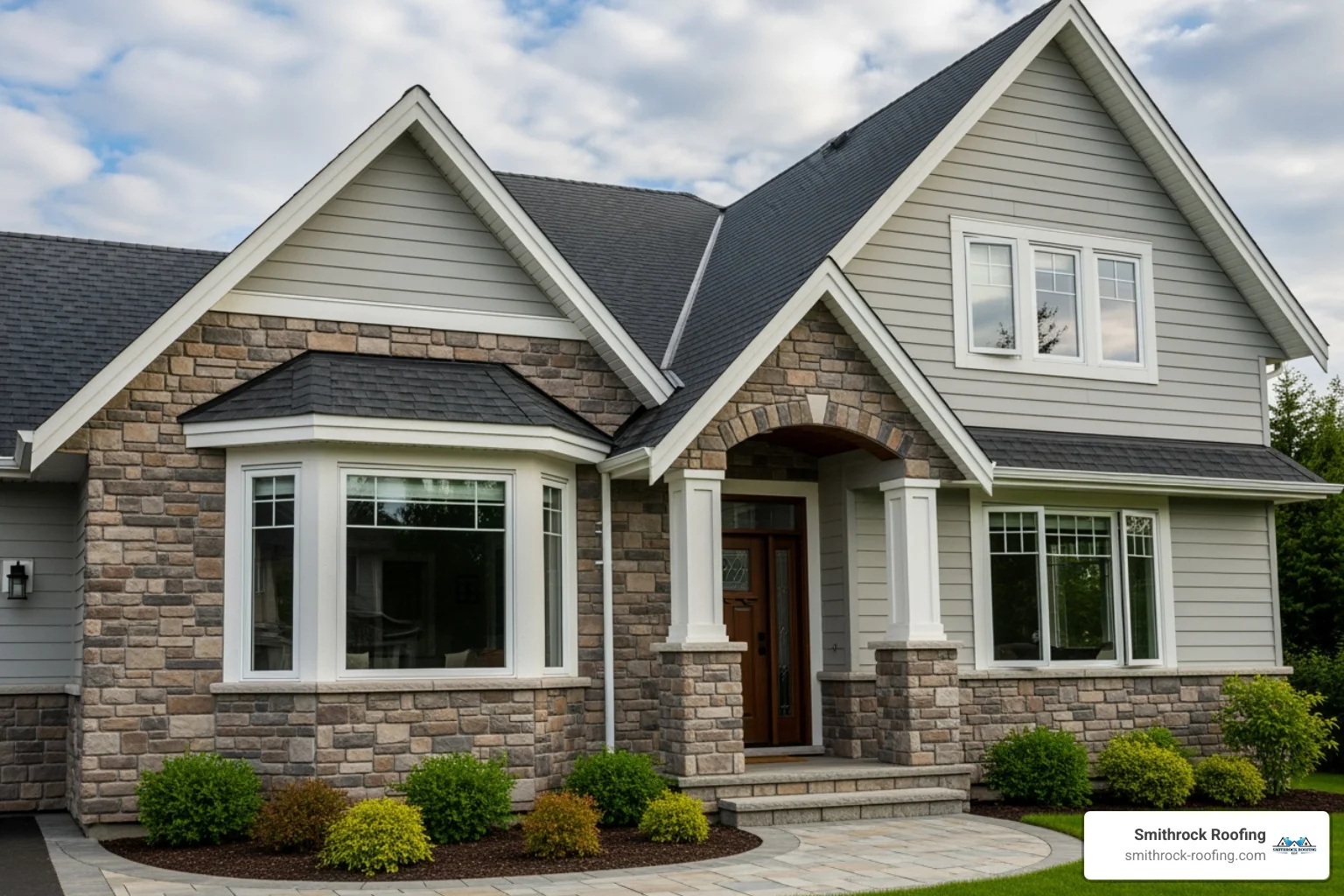
When evaluating Hardie board costit’s crucial to look beyond the initial quote and consider the total cost of ownership. This includes the upfront price, ongoing maintenance expenses, repair likelihood, and eventual replacement cost. A cheaper material can easily become more expensive over time.
This is the most common comparison for homeowners. Vinyl siding has a lower initial cost, which is its primary advantage. However, Hardie board offers superior performance and aesthetics in nearly every other category. It provides a more authentic wood-like appearance with crisp, clean lines, whereas vinyl can look like plastic and may warp or buckle over time. Hardie board is significantly thicker and more rigid, offering better impact resistance against hail, baseballs, and other debris. It also provides better sound insulation. For a detailed breakdown, see our Vinyl vs Hardie Board Siding guide.
Engineered wood, such as LP SmartSide, is another major competitor. It is made from wood strands, waxes, and industrial-grade binders. It is generally lighter and less expensive to install than Hardie board. However, as a wood-based product, it is more susceptible to moisture damage if not perfectly installed and maintained, particularly at cut edges that must be meticulously sealed and painted. While it has good impact resistance, it does not share fiber cement’s non-combustible properties or its immunity to pests like termites.
This table provides a high-level overview of how Hardie board stacks up against common alternatives.
| Material | Typical Lifespan | Maintenance | Fire Resistance | Pest Resistance | Impact Resistance | Long-Term Value |
|---|---|---|---|---|---|---|
| Hardie Board | 30-50+ years | Low | Excellent | Excellent | High | High |
| Vinyl | 20-40 years | Very Low | Poor | Excellent | Low to Medium | Medium |
| Wood | 20-40 years | High | Poor | Poor | Medium | Medium |
| Engineered Wood | 25-40 years | Low to Medium | Poor | Medium | High | Medium to High |
| Aluminum | 20-40 years | Low | Good | Excellent | Low (dents) | Medium |
Investing in your home’s exterior is one of the smartest financial decisions you can make. For years, Remodeling Magazine’s annual Cost vs. Value Report has ranked fiber-cement siding replacement as one of the top exterior remodeling projects for recouping cost at resale. Homeowners can often expect to recover a significant percentage of their initial investment. Why? Because high-quality siding like Hardie board dramatically boosts curb appeal, signals a well-maintained home to potential buyers, and promises them decades of low-maintenance durability. The recognizable James Hardie brand name itself carries weight, assuring future owners of the quality and longevity of their home’s protective shell.
While the initial Hardie board cost is a primary consideration, its low maintenance requirements are a key part of its long-term value proposition. Unlike wood siding, which requires a demanding cycle of scraping and repainting, Hardie board is designed to be relatively hassle-free. Following a simple maintenance schedule will ensure it looks great and performs for decades.
Proper care is straightforward and can be performed by most homeowners:
One of the practical benefits of Hardie board is its repairability. In the event of severe, localized damage, such as from a major impact, individual boards can be replaced without having to reside an entire wall. A qualified contractor can carefully cut out the damaged plank, inspect the weather barrier underneath, and skillfully install a matching replacement, preserving the integrity and appearance of your exterior.
While you should never cut corners on installation quality, there are smart ways to manage your total Hardie board cost:
Properly installed and maintained Hardie board siding is engineered to last 30 to 50 years, and it’s not uncommon for it to last even longer. James Hardie provides a 30-year non-prorated, transferable limited warranty on its siding products, which protects against manufacturing defects. This is a testament to the material’s durability. The ColorPlus® Technology factory finish comes with a separate 15-year limited warranty that covers peeling, chipping, and cracking.
Absolutely. Replacing old siding with new fiber cement siding consistently ranks as one of the exterior remodeling projects with the highest return on investment. It dramatically improves curb appeal, which is a major factor for potential buyers. The James Hardie brand is widely recognized for quality and durability, signaling to buyers that the home is well-protected and low-maintenance, which can justify a higher asking price and lead to a faster sale.
Yes, professional installation is strongly recommended and is a practical necessity for a successful outcome. Hardie board is heavy, requires specialized cutting tools and safety precautions (due to silica dust), and has very specific installation requirements for clearances, fastening, and flashing. Improper installation can lead to water intrusion, cracking, premature failure, and will void the extensive manufacturer’s warranty. Using a James Hardie Preferred Contractor ensures the crew is trained on best practices.
Yes, and it’s one of the few siding products specifically engineered for different climates. The James Hardie HardieZone® System formulates products for two distinct zones. HZ5® products are designed for climates with freezing temperatures, extreme seasonal temperature variations, and snow/ice. HZ10® products are formulated for climates with high humidity, blistering sun, and more tropical storm activity. This ensures you get a product optimized for the weather challenges in your specific region.
While technically possible in some rare cases (e.g., over a single layer of perfectly flat siding), it is almost always a bad idea and is not recommended. Removing the old siding is a critical step that allows the contractor to inspect the home’s sheathing for rot or other structural damage. Installing over old siding can trap moisture, create an uneven surface for the new siding, and complicate the proper installation of trim and flashing around windows and doors.
James Hardie offers one of the strongest warranties in the industry. The siding and trim products are covered by a 30-year non-prorated limited warranty. The ColorPlus® finish is covered by a 15-year limited warranty. “Non-prorated” is a key feature, meaning the coverage doesn’t decrease over time. The warranty is also transferable, which is an attractive feature for potential home buyers.
Hardie board has a mixed but generally positive environmental profile. Its primary ingredients, cement, sand, and water, are natural and low in toxicity. The cellulose fiber is sustainably sourced. The most significant environmental benefit is its exceptional durability; a product that lasts 50 years or more creates far less landfill waste than products that need to be replaced two or three times in the same period. The main drawback is that the manufacturing of cement is an energy-intensive process.
Deciding on the right siding for your home in North Carolina, or anywhere else, requires a careful balance of the upfront Hardie board cost with its significant long-term benefits. While the initial investment for Hardie board is higher than that of vinyl, its exceptional durability, superior aesthetics, fire resistance, and low maintenance needs make it a compelling and financially sound choice for many homeowners.
Throughout this guide, we have explored the major factors that shape the total cost of a Hardie board siding project, including:
When you bring all of these aspects together, a clear picture emerges: Hardie board is an investment product for homeowners who prioritize performance, longevity, and authentic design. Its ability to deliver the warmth and character of wood while being immune to wood’s inherent vulnerabilities (rot, pests, fire) is its defining advantage.
When Hardie Board Makes the Most Sense
Hardie board is likely the ideal choice for your home if you identify with one or more of these profiles:
When Another Material Might Be a Better Fit
For the sake of balance, Hardie board may not be the best option if:
At Smithrock Roofing, we are committed to providing high-quality installation services that maximize the lifespan and performance of your Hardie board siding. We understand the local climate challenges in our area, and we ensure every installation meets or exceeds the stringent requirements set by the manufacturer and local building codes.
Our team can:
For a comprehensive evaluation of your home’s needs and to explore how Hardie board can improve its beauty, durability, and value, we invite you to explore our siding solutions. Our team is ready to help you make an informed decision and invest wisely in your home’s future.
Need a local pro? Learn more about our siding installation and repair in King.
The cost of Hardie Board siding varies based on home size, siding style, location, and job complexity.
Homeowners choose Hardie Board for its superior long-term value, unmatched durability, and positive impact on curb appeal.
Hardie Board is made of Portland cement, finely ground sand, cellulose fibers, and water, pressed into boards and cured through a high-pressure steam process.
Hardie Board siding can last 30 to 50 years or longer when properly installed and maintained.
Hardie Board is non-combustible, does not ignite when exposed to direct flame, and carries a Class A fire rating, making it highly fire-resistant.

Smithrock Roofing © Copyright 2026 • All Rights Reserved • Privacy Policy • Maintained by Mongoose Digital Marketing