
Adding a bay window is one of the most transformative home improvement projects a homeowner can undertake. It is an architectural statement that transcends simple utility, offering a blend of aesthetic elegance, increased interior volume, and an influx of natural light that standard flat windows simply cannot match. While many homeowners begin their journey by looking for a simple price tag, the reality of a bay window installation is a complex interplay of structural engineering, material science, and high-end craftsmanship. To understand the cost to add a bay window, one must look beyond the sticker price of the glass and consider the structural modifications required to support a feature that literally hangs off the side of your home.
There’s a reason bay windows have been a sought-after feature since the Renaissance era. Originally designed as ornamental features in grand manor houses, they evolved into the “oriel” windows of the Victorian age, providing a way for residents to see down the street while maximizing the limited sunlight of northern climates. Today, they serve a similar purpose: they pull in more natural light from multiple angles, open up a room to create a sense of grandeur, add significant curb appeal, and create functional living space—such as a cozy reading nook or a sun-drenched breakfast area—all at once. For homeowners dealing with drafty, outdated windows and rising energy bills, a new bay window can feel like both a comfort upgrade and a smart long-term investment in the home’s structural integrity. The psychological impact of increased natural light cannot be overstated; studies in biophilic design suggest that increasing daylight in living spaces can improve mood, regulate circadian rhythms, and even boost productivity.
But here’s the catch: bay windows are one of the most complex window projects you can take on. Unlike swapping out a standard double-hung window, adding a bay window often means cutting into an exterior wall, dealing with load-bearing structures, and managing intricate interior and exterior finishing work. Hidden issues—like rotting framing, outdated supports, or insufficient insulation in the wall cavity—can surface once the old window comes out, making upfront planning essential. This guide breaks down every technical and logistical factor that goes into the project, from the physics of the cantilevered support to the nuances of local building codes, so you can plan your renovation with total confidence.
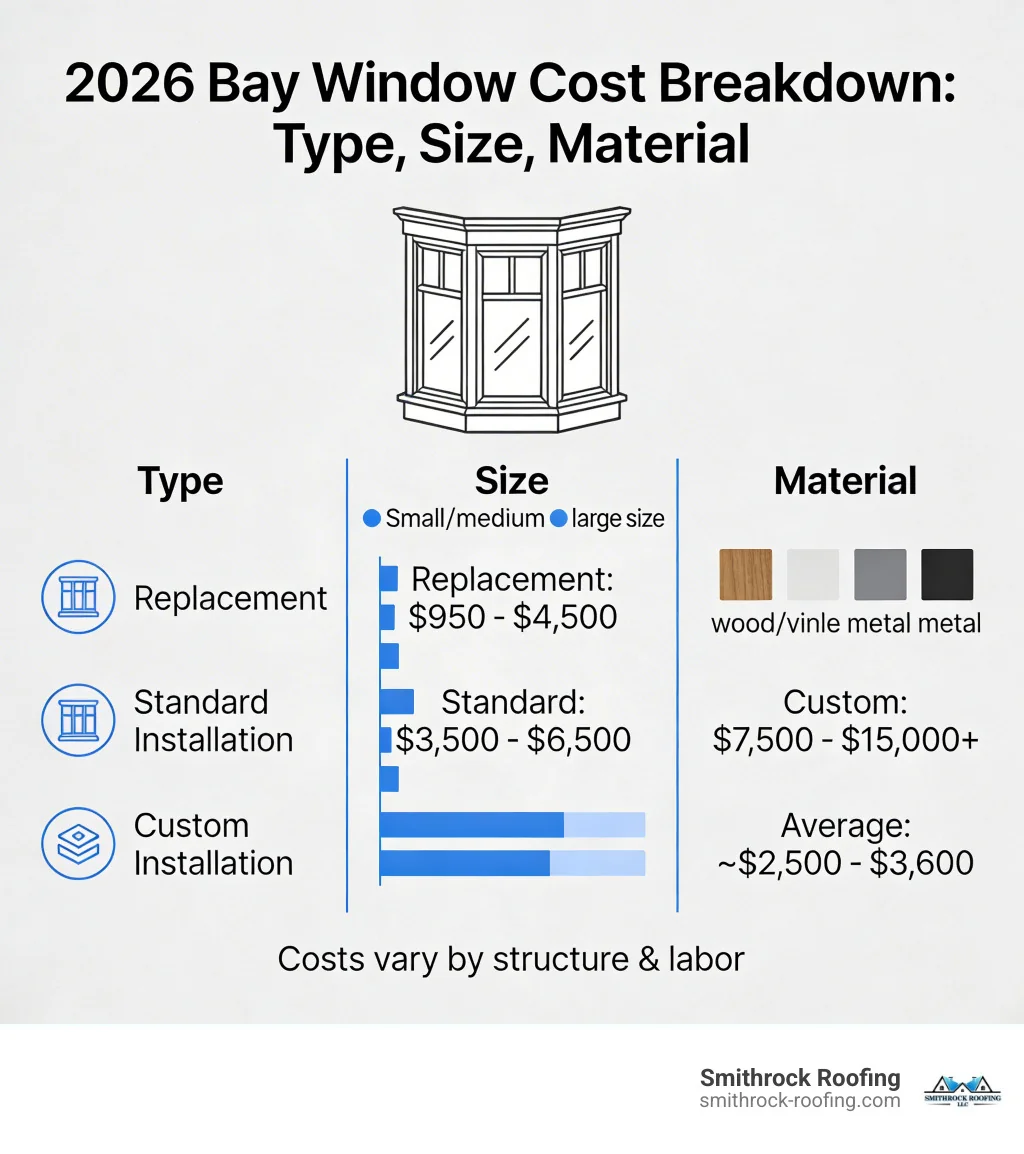
Key Concepts to Remember:
When we talk about the investment required to add a bay window, it is helpful to think of the project as a puzzle with several moving pieces. It isn’t just about the glass and the frame; it is about the expertise required to make sure that window stays part of your house for the next thirty years without leaking, sagging, or losing its thermal efficiency. The total cost is a reflection of the specialized labor, high-performance materials, and the administrative overhead required to ensure the project is safe and legal.
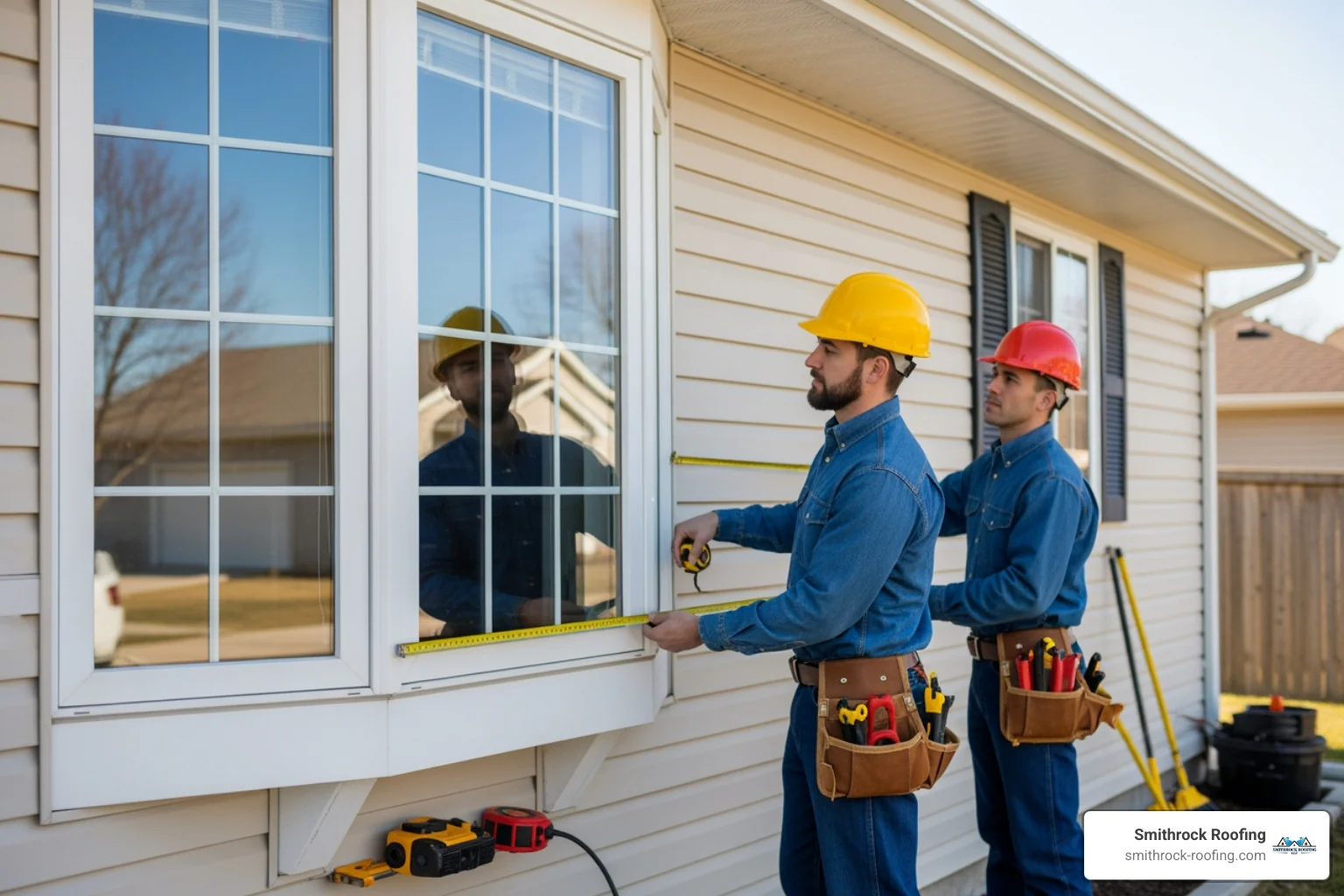
Labor is a massive part of the equation, often accounting for 40% to 60% of the total project budget. This isn’t just a “guy with a ladder” job. Because bay windows project out from the home, they require precise leveling and specialized structural support systems, such as overhead cable supports or heavy-duty knee braces. In our experience serving Winston-Salem and the surrounding Piedmont Triad, labor requirements can fluctuate based on the accessibility of the site. If we are installing a large unit on a second story or over complex landscaping in Clemmons or Lewisville, the specialized equipment, scaffolding, and extra hands needed will naturally impact the project scope. A professional crew must ensure the window is perfectly plumb; even a slight tilt can cause the sashes to stick, the seals to fail prematurely, or water to pool in areas where it should drain away. Furthermore, the labor includes the skill of a master carpenter who must execute complex miter cuts for the interior trim and a siding specialist who must ensure the exterior is watertight.
Beyond the window unit itself, there is a list of “job supplies” that often surprises homeowners. This includes high-quality flashing membranes (often butyl-based for superior adhesion), professional-grade silicone sealants, expanding closed-cell foam insulation, and custom interior trim. We believe in using the best materials available, such as the Norandex eXtreme 3000S series, which offers superior thermal performance and structural rigidity. You can find basic supplies at retailers like Lowes or Home Depot, but for a project of this scale, professional-grade components are essential for a long-lasting seal against the elements. The quality of the “hidden” materials—the flashing and the insulation—is what determines if your window will be draft-free in five years. Cheap sealants can crack under the intense North Carolina sun, leading to moisture intrusion that rots your wall studs from the inside out.
Before the new beauty goes in, the old unit (or the existing wall) has to go. This involves careful demolition to avoid damaging your siding or interior drywall. In many cases, the existing wall must be shored up with temporary supports while the new opening is cut. This is a critical safety step; if a load-bearing wall is not properly supported during the transition, it can lead to structural shifts throughout the house. Once the work is done, there is the matter of debris disposal. Hauling away old frames, glass, and construction waste is a standard part of our professional window installation and replacement services. We ensure that all materials are disposed of responsibly, recycling glass and metal components whenever possible.
Most municipalities, from High Point to Kernersville, require building permits for structural changes. These fees ensure the work is inspected and safe, protecting your home’s resale value. A permit is your guarantee that the header installed above the window is strong enough to hold the weight of your roof. Additionally, if the project is part of a larger renovation, a general contractor might oversee the various trades involved, which includes a markup for supervision and coordination. For those interested in broader trends, the latest data on homeowner expenditures from Harvard University shows that structural upgrades like these remain a top priority for maintaining home value and structural longevity. Investing in a permit and professional management is an insurance policy against future structural failure.
One of the biggest forks in the road for your project planning is whether you are replacing an existing bay window or adding windows to a house where there currently isn’t one. The technical requirements, timeframes, and costs for these two scenarios are vastly different.
If you already have a bay window that is drafty, rotting, or aesthetically outdated, replacing it is generally more straightforward. We call this a “pocket” or “full-frame” replacement. Since the opening is already there, we don’t usually have to worry about moving studs or headers. However, “usually” is the keyword. We often find hidden rot in the support cables or the “knee braces” underneath old bay windows in older homes around Mt. Airy or Danbury. If the wood is soft or the original flashing was poorly installed, the entire rough opening must be rebuilt before the new window goes in to ensure structural integrity. This is why a thorough inspection is the first step in any replacement project. A replacement project typically focuses on upgrading the glass technology and the frame material to improve energy efficiency without altering the home’s structural footprint.
Creating a brand-new opening is a much larger undertaking that requires a deep understanding of residential construction. It is a multi-day process that involves:
For a truly dramatic look, some homeowners opt for a “walk-out” bay window that extends all the way to the floor. Unlike a standard bay that “hangs” off the wall using a cable system, a walk-out bay might require a small foundation extension or additional concrete piers. This significantly increases the complexity of the project, as it involves masonry work and potentially soil excavation. However, it adds actual square footage to your home’s footprint, creating a small alcove that can be used for dining or as an extended living area. The cost for a walk-out bay is substantially higher due to the foundation requirements, but the impact on the home’s value and utility is equally significant.
Size is the most obvious factor in your project planning, but material choice is the one that dictates how much maintenance you’ll be doing ten years from now and how comfortable your home will feel during a North Carolina summer. Choosing the right combination of size and material is a balancing act between your budget and your long-term performance goals.
Bay windows typically come in widths ranging from 3 feet to 10 feet. Choosing a “standard” size from a manufacturer’s catalog is almost always more efficient than ordering a custom-dimension unit. Standard sizes are mass-produced, which keeps the unit cost lower and the lead times shorter. However, many homes in our area have unique architectural quirks or specific wall heights that require custom sizing to fit perfectly. Custom units allow for specific angles (such as a 30-degree or 45-degree projection) that best suit the available exterior space. While custom units can add 20% to 50% to the material cost, they ensure a perfect fit that minimizes the need for extensive framing modifications.
The frame material affects both the initial quality and the long-term energy efficiency of your replacement windows for homes.
Don’t overlook the glass! Double-pane glass is the standard, but triple-pane offers even better noise reduction and insulation—perfect if you live near a busy road in Greensboro. Low-E (low-emissivity) coatings are essential; they are microscopically thin layers of metal that reflect heat while letting light through. In our climate, a Low-E 366 coating is often recommended to block the maximum amount of solar heat gain. Specialty hardware finishes, like brushed nickel or oil-rubbed bronze, provide that perfect finishing touch. You can check out various styles at Menards or through the Brosco Price Catalog. The choice of spacers (the material that holds the glass panes apart) also matters; “warm-edge” spacers reduce condensation and improve the overall U-factor of the window.
Adding a bay window isn’t just a cosmetic upgrade; it’s a significant structural modification. Because most exterior walls are load-bearing—meaning they hold up your roof and second floor—you cannot simply cut a hole and hope for the best. The physics of a bay window are unique because the unit hangs outside the main wall of the house, creating a cantilevered load that must be carefully managed.
If you are significantly enlarging an opening or installing an exceptionally heavy unit, we may recommend a consultation with a structural engineer. They will calculate the “dead load” (the weight of the window itself) and the “live load” (potential snow or wind pressure) and specify the size of the header needed to keep your home from sagging. They also determine the best support method: either a cable system that anchors the window to the house’s top plate or knee braces that transfer the weight back to the foundation wall. According to the U.S. Bureau of Labor Statistics, construction trades require specific certifications for this type of work, and for good reason—safety and structural stability are paramount. A failure to account for these loads can lead to structural cracks in your home’s foundation or exterior walls.
Once the window is physically secured in the wall, the “build-back” begins. This is where the artistry and technical skill of the installer truly shine. It is a multi-step process that ensures the window is both beautiful and functional.
Not all bays are created equal. The style you choose will influence the architectural impact, the cost of installation, and the interior functionality of your room. Understanding these styles helps you choose the one that best complements your home’s existing lines.
This is the classic look. It features a flat front and two angled sides (usually 30 or 45 degrees). It is the most common style because it offers a great balance of extra space and structural simplicity. The angled sides are perfect for catching cross-breezes when the side sashes are opened. Canted bays are versatile and work well on almost any home style, from traditional colonials to modern farmhouses. They provide a significant amount of extra interior shelf space without requiring a massive exterior projection.
Box bays have a flat front and sides that come out at a 90-degree angle. They are often used in kitchens to create a “garden window” effect for herbs and plants. Because the angles are 90 degrees, they provide a deep, rectangular shelf that is highly functional for storage or display. Box bays are often smaller than canted bays and are frequently installed over kitchen sinks. They offer a clean, modern look and are generally easier to trim out on the interior because they don’t involve complex angles.
While often confused with bay windows, a bow window uses four to six window panels to create a gentle curve. They don’t project as far out as a bay window but offer a wider, more panoramic view. Because they involve more individual window units and more complex joining, the installation process is typically more intensive than a standard bay. Bow windows are excellent for large living rooms where you want to maximize the view of a backyard or landscape. For more information on how these different styles affect energy usage, the U.S. Department of Energy provides excellent resources on performance standards and thermal ratings.
We know that adding a bay window is a significant investment in your property. Here is how to make sure you get the most value out of the project, both in terms of daily enjoyment and long-term financial return. By being strategic about your choices, you can offset some of the initial costs through energy savings and increased home equity.
In North Carolina, our summers are hot and humid, and our winters can be surprisingly chilly. Investing in Low-E (low-emissivity) glass coatings and Argon gas insulation is a must. These features reflect heat back to its source—keeping the sun’s heat out in July and your furnace’s heat in during January. Our Norandex eXtreme 3000S windows are specifically designed to meet these high standards, featuring warm-edge spacers and high-performance glass packages. For a deeper dive into these technical aspects, check out our comprehensive window replacement cost guide. Furthermore, look into federal tax credits; the Inflation Reduction Act often provides incentives for installing Energy Star-certified windows, which can put money back in your pocket.
One of our favorite tips for homeowners in the Piedmont Triad is to consider the timing of your installation. Many people wait for the peak of spring, but winter or late fall can be an excellent time for window replacement. Because it’s the industry’s “off-season,” we can often offer more flexible scheduling and more dedicated time for complex custom projects. Plus, getting those energy-efficient windows in before the coldest months will start saving you money on your heating bill immediately. Modern installation techniques allow us to replace windows even in cold weather by working on one opening at a time to minimize heat loss.
A high-quality bay window can recover a significant portion of its cost in home value. It makes a home more marketable and adds that “wow factor” that buyers love. According to real estate experts, natural light is one of the top three features buyers look for. To protect that investment, always look for a strong warranty. We provide comprehensive coverage on both the product and the labor, giving you peace of mind that your new window is protected against leaks, seal failure, or mechanical issues. A warranty is only as good as the company behind it, which is why we emphasize our local roots and long-standing reputation in the community. A transferable warranty can also be a major selling point when you decide to list your home.
In almost every town we service—from Kernersville to Rural Hall—the answer is yes, especially for a new installation. If you are changing the “footprint” of your home or cutting into a load-bearing wall, a permit is required to ensure the structural changes meet local building codes. This protects you by ensuring the work is inspected by a third party for safety. We handle the permit process for our clients to make sure everything is above board and compliant with local regulations. Skipping a permit can lead to issues during a home inspection when you try to sell your property.
We love a good DIY project as much as anyone, but a bay window is not the place to start. The technical complexity is exceptionally high. If the window isn’t perfectly level, the sashes won’t open correctly. If the flashing isn’t perfect, you’ll end up with water damage inside your walls that might not be discovered for years. Furthermore, most manufacturers will void your warranty if the unit isn’t installed by a licensed professional. The risk of structural failure or water intrusion far outweighs the potential savings of doing it yourself. A professional installation ensures that the window is integrated into your home’s drainage plane correctly.
While it varies by neighborhood and the quality of the installation, a bay window is a high-impact upgrade. It increases natural light, which is consistently one of the top features buyers look for in a home. It also adds perceived (and sometimes actual) square footage. On average, high-quality window replacements can see a return on investment of over 70% when it comes time to sell, making it one of the most effective ways to boost your home’s equity. Beyond the financial return, the improved curb appeal can help your home sell faster in a competitive market.
For a replacement, the process can often be completed in a single day. However, for a brand-new installation that requires cutting a hole in the wall and framing a new header, the process usually takes two to three days. This includes the time needed for exterior siding work and interior trim finishing. We always aim to minimize the time your home is “open” to the elements, often using temporary barriers to keep your interior comfortable during the process.
Maintenance depends on the material. Vinyl and fiberglass windows simply need an occasional wipe-down with soap and water. Wood windows require more attention, including checking for paint chips or signs of moisture every year. For cleaning the glass, many modern bay windows feature sashes that tilt in or crank out, allowing you to clean the exterior glass from inside your home. This is a major safety benefit, especially for second-story installations.
Adding a bay window to your home is about more than just a new view; it’s about transforming the way you experience your living space. It is an investment in light, comfort, and architectural beauty. Whether you are envisioning a cozy reading nook in Pfafftown or a bright, airy breakfast spot in Tobaccoville, the key to a successful project is professional craftsmanship and high-quality materials. The cost to add a bay window is an investment in your home’s future, providing both immediate aesthetic rewards and long-term financial benefits.
At Smithrock Roofing, we take pride in our structural expertise and our commitment to using top-tier products like Norandex eXtreme 3000S windows. We understand the local climate and the specific architectural styles of the Piedmont Triad, ensuring your new window is as durable as it is beautiful. We don’t just install windows; we build features that enhance your home’s value and your quality of life. Our team is dedicated to precision, from the initial structural calculations to the final bead of caulk.
Ready to see how a bay window can brighten your home and improve your energy efficiency? Contact us for a detailed window estimate today, and let’s start planning your home’s transformation with the care and precision it deserves. We look forward to helping you create a space that you’ll love for decades to come.
Need a local pro? Learn more about our window replacement in High Point.

Smithrock Roofing © Copyright 2026 • All Rights Reserved • Privacy Policy • Maintained by Mongoose Digital Marketing