Aluminum gutter guards represent the pinnacle of modern home maintenance technology, a necessary evolution in the protection of residential and commercial structures. For decades, homeowners were forced to rely on manual cleaning—a dangerous and repetitive task—to ensure their water management systems functioned correctly. Today, these protective covers or screens are precision-engineered to fit securely over your existing gutter channels, creating a robust barrier that intercepts leaves, twigs, and airborne debris before they can enter the system. By filtering out solid materials while allowing rainwater to flow through at high velocities, these systems ensure that your home’s primary water management tool remains functional year-round, regardless of the season or the intensity of the weather.
The history of gutter protection has seen many materials come and go, from simple wire mesh to foam inserts and plastic covers. However, aluminum has emerged as the gold standard due to its unique metallurgical properties. It offers a strength-to-weight ratio that is ideal for roofing applications, ensuring that the guards do not add excessive weight to the fascia boards while remaining strong enough to withstand the impact of falling branches or the weight of heavy snow. For homeowners in the Triad area, choosing the right system involves understanding the specific challenges posed by our local environment, which includes a dense canopy of deciduous trees and the occasional severe weather event.
Here’s a comprehensive look at the top-rated options currently leading the market, categorized by their specific strengths and ideal applications:
| Product | Best For | Key Feature | Material Grade |
|---|---|---|---|
| Alu-Rex DoublePro | Full-system protection | Dual-membrane, clog-free warranty in pine areas | Heavy-duty Aluminum |
| A-M Aluminum Guard | Heavy-duty DIY | Lifetime quality, USA-made, fits 5″ & 6″ gutters | .019 Gauge Aluminum |
| Peak Pro Pack (Model 5062) | Large projects | 60-piece pro pack, wind removes debris automatically | Powder-coated Aluminum |
| GutterWare (Costco) | Easy retrofitting | Screwless install on 99% of existing gutters | Lightweight Alloy |
| Gutterglove All-Aluminum | Pest & weather protection | .019 gauge punched aluminum, RiserStep® Technology | Surgical Grade Mesh/Alum |
Clogged gutters are far more than a simple nuisance; they are a significant threat to the structural integrity of your property. When water cannot drain through the downspouts, it seeks the path of least resistance. Often, this means overflowing the front lip of the gutter and pooling directly against your home’s foundation. Over time, this saturated soil exerts hydrostatic pressure on foundation walls, leading to cracks, basement leaks, and even catastrophic structural failure. Furthermore, stagnant water in clogged gutters serves as a primary breeding ground for mosquitoes and can lead to wood rot in the fascia boards and roof decking. The implementation of a high-quality aluminum gutter guard system provides a proactive defense, mitigating these risks before they require expensive repairs.
These systems are designed to handle the heavy precipitation common in North Carolina while requiring minimal intervention from the homeowner. Most modern aluminum options are compatible with the gutters you already have, making them a versatile upgrade for any residence. Aluminum is the preferred material for these systems because it offers a unique combination of properties that plastic, foam, and steel cannot match. Unlike plastic or vinyl, aluminum will not become brittle when exposed to UV radiation or crack during the freeze-thaw cycles of winter. Unlike steel, it is naturally resistant to rust and corrosion. Many of these systems are engineered to last for decades, often backed by warranties ranging from 25 years to a full lifetime of coverage.
When we consult with homeowners in Winston-Salem, Greensboro, or Kernersville about long-term home protection, durability is always the central theme. Aluminum gutter guards have ascended to the status of industry standard because they provide an optimal balance of lightweight maneuverability and incredible structural toughness. In the varied climate of North Carolina, where temperatures can swing from freezing winter nights to sweltering summer afternoons, material stability is paramount. The thermal expansion and contraction of materials can cause significant issues if not accounted for; aluminum handles these fluctuations with grace, maintaining its shape and seal against the roofline.
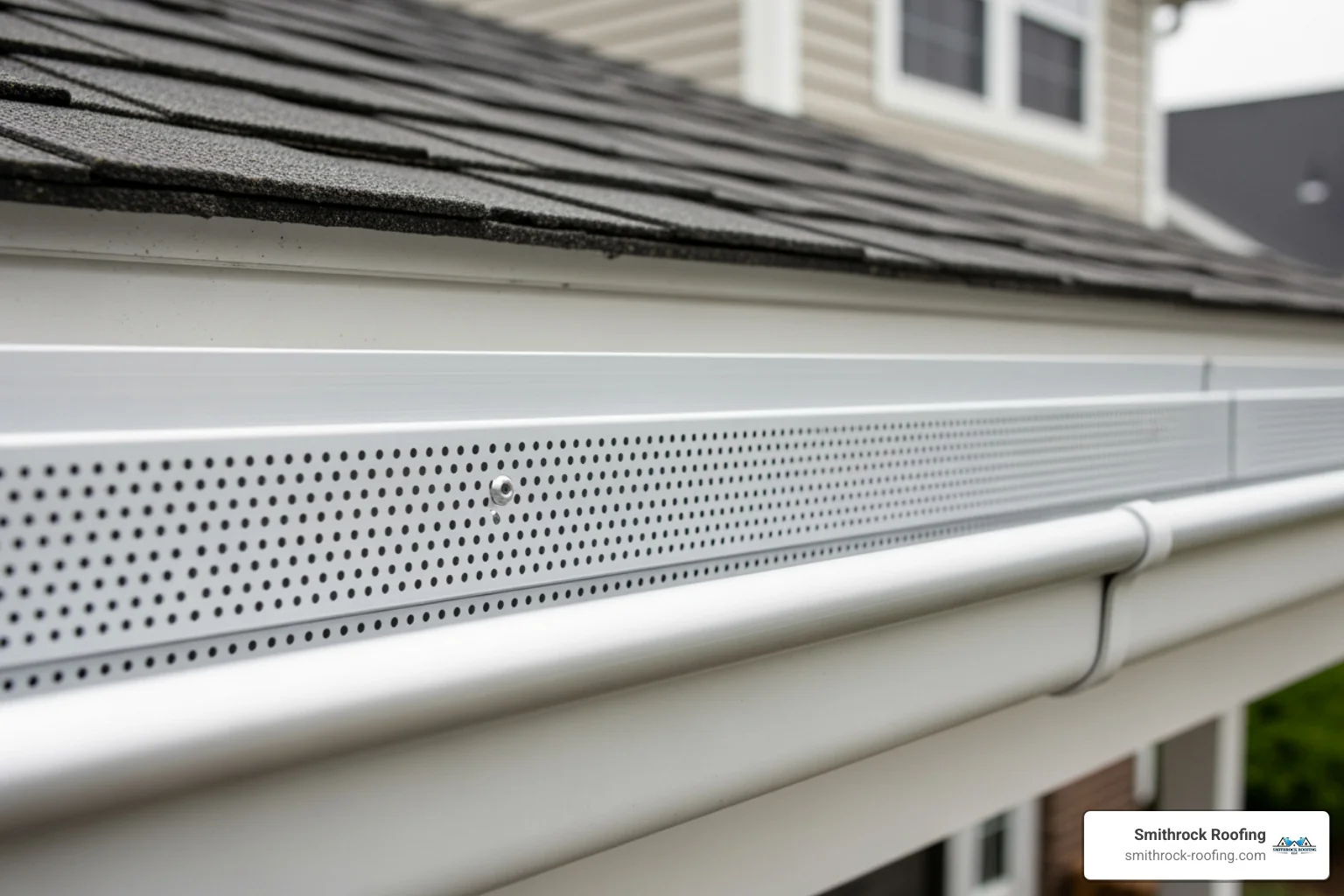
Unlike plastic or vinyl guards, which are prone to warping and cracking after just a few seasons of exposure to the intense Southern sun, aluminum remains dimensionally stable. It does not sag under the weight of water-logged debris in Lewisville, nor does it become brittle in the cold winds of Pilot Mountain. A critical technical specification to look for is the use of .019 gauge aluminum. This specific thickness is the “Goldilocks” of gutter protection; it is thick enough to provide the structural integrity needed to resist bending under heavy snow loads or falling branches, yet it remains flexible enough for installers to achieve a precise, custom fit against the unique contours of your roofline. Thinner materials often fail under the pressure of a heavy ladder or the weight of accumulated ice, whereas .019 gauge aluminum provides a reliable, long-term solution.
Another significant advantage of aluminum is its inherent resistance to oxidation. While steel guards are undeniably strong, they rely entirely on their outer coatings for protection. Once that coating is scratched by a ladder or a falling limb, the underlying steel is exposed to moisture, leading to rapid corrosion and unsightly rust streaks that can stain your home’s siding. Aluminum, conversely, naturally develops a thin, transparent layer of aluminum oxide when exposed to air. This layer acts as a self-healing shield, preventing further corrosion and ensuring that your eavestroughs remain aesthetically pleasing and functionally sound for decades. This chemical property makes aluminum the ideal choice for the humid environment of the Triad, where moisture is a constant presence.
Safety and environmental responsibility are also areas where aluminum excels. For residents in more wooded areas like Clemmons or Advance, fire resistance is a serious consideration. Aluminum is non-combustible, meaning it will not contribute fuel to a fire or melt away when exposed to embers from a nearby brush fire or chimney spark. This makes many aluminum systems compliant with Wildland-Urban Interface (WUI) standards, providing a level of protection that foam inserts or plastic screens simply cannot provide. Furthermore, aluminum is one of the most recycled materials on the planet. Choosing aluminum guards often means you are using a product with high recycled content, and at the end of its long life, the material can be recycled again, reducing the environmental footprint of your home improvement project. If you are considering an upgrade to your home’s exterior defenses, we encourage you to explore our comprehensive guide on Gutter Guard Installation.
The evolution of gutter protection has moved far beyond the rudimentary “chicken wire” screens of the past. Modern aluminum gutter guards incorporate sophisticated engineering principles to manage complex fluid dynamics and debris rejection. These systems are designed to solve the two biggest problems in gutter maintenance: keeping debris out and keeping water in. The science behind these guards involves understanding how water behaves on different surfaces and how airflow can be harnessed to keep the system clean.
One of the most significant breakthroughs in the industry is RiserStep® Technology. This patented design features a series of raised “steps” or ridges on the surface of the guard. These ridges serve a dual purpose. First, they break the surface tension of the water, preventing it from “sheeting” or skipping over the top of the guard during a heavy downpour—a common failure in older, flat-screen designs. Second, they create an air gap underneath wet leaves, allowing them to dry out more quickly so the wind can blow them away. This is often integrated with “Trough Technology,” which creates a secondary drainage path to ensure that even in the most extreme weather, water is directed into the gutter and away from your home’s foundation. This combination of mechanical filtration and aerodynamic design ensures that the system remains effective even when partially covered by seasonal debris.
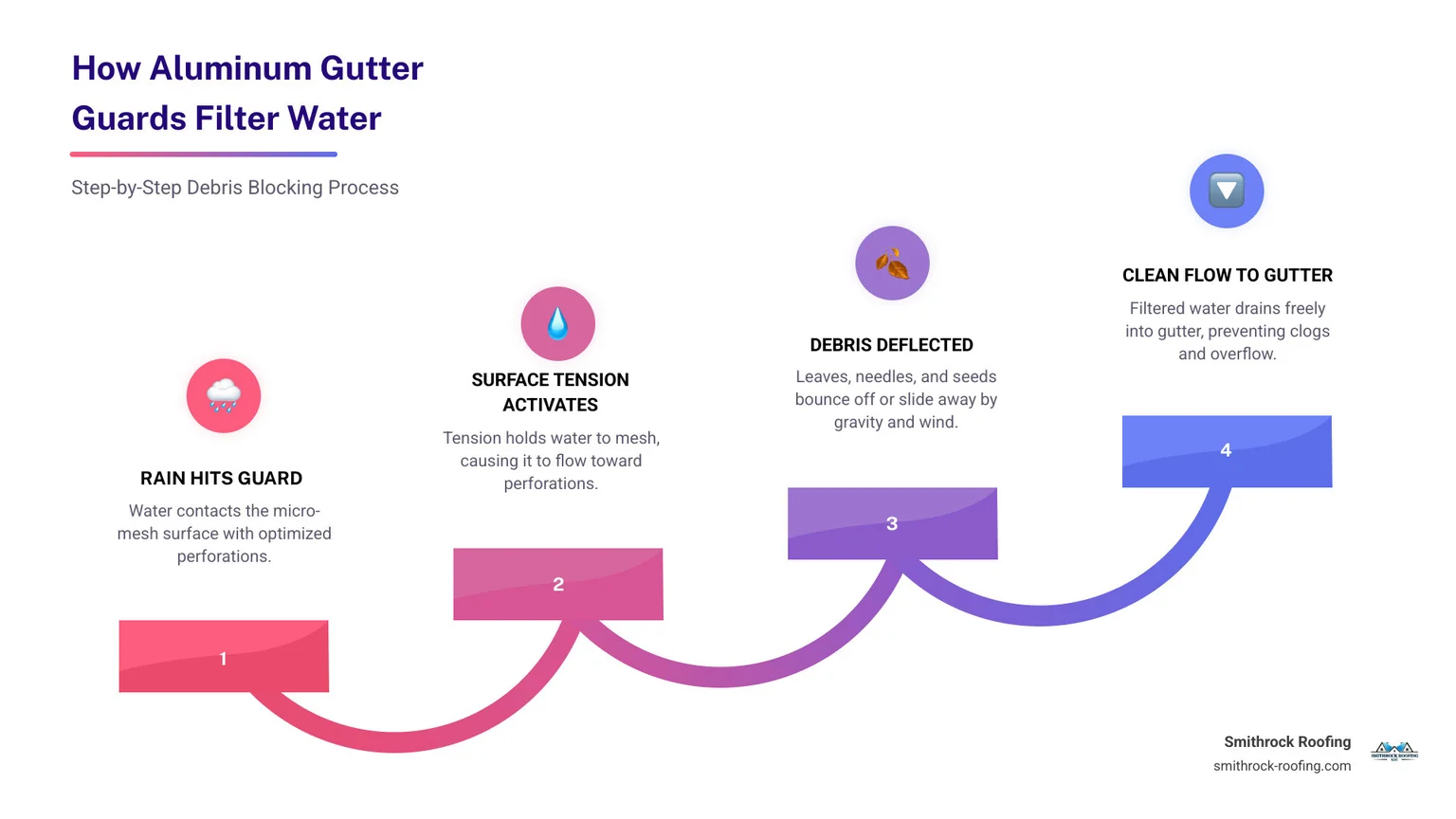
We also see advanced systems utilizing the principle of surface tension through solid-top designs, often referred to as the Coanda Effect. These guards are engineered with a specific curve that allows water to follow the metal’s surface and drop into the gutter, while leaves and larger debris, which cannot follow the tight radius, fall harmlessly to the ground. For homeowners in areas like Bethania or Rural Hall who deal with the fine “helicopters” from maple trees or the stubborn needles of white pines, micro-mesh designs are the ultimate solution. These systems utilize a surgical-grade stainless steel mesh supported by a rigid aluminum frame, ensuring that even the smallest particles of grit and organic matter are filtered out. The mesh is so fine that it can even block sand from asphalt shingles, preventing the “sludge” buildup that often occurs in unprotected gutters.
To see how these advanced technologies can be integrated into your specific roofing system, you can Explore Gutter Protection Solutions to find the perfect match for your home’s architecture.
North Carolina’s weather is notoriously unpredictable, characterized by sudden summer thunderstorms and the occasional winter ice storm. High-quality aluminum gutter guards are built to withstand these environmental stresses. According to data from the National Weather Service, the Southeast can experience localized rainfall rates that exceed several inches per hour. To combat this, systems like the Alu-Rex Vortex™ utilize suction effects to pull water into the gutter at rates up to three times higher than the heaviest recorded rainfall, effectively eliminating the “waterfall effect” over entryways and landscaping. This high-capacity drainage is essential for protecting your home’s perimeter from erosion and basement flooding.
In the winter months, aluminum guards serve as a critical shield against ice and snow. By preventing the gutter from filling with frozen slush, these guards reduce the weight load on your fascia boards. This helps prevent the formation of heavy ice dams, which can pull gutters away from the house and cause water to back up under the shingles, leading to interior leaks. For our neighbors in higher elevations like Pilot Mountain or High Point, wind performance is equally vital. Many aluminum guards are designed so that a breeze as light as 6 mph is sufficient to clear dry debris from the surface. This self-cleaning capability is a hallmark of high-end aluminum engineering. If you live in a heavily wooded area, consulting a High Point Gutter Guard specialist can ensure your system is optimized for the specific types of debris found on your property.
When evaluating different aluminum gutter guards, it is important to look beyond the marketing and focus on the engineering features that indicate long-term quality. Not all aluminum guards are created equal, and the following features are indicators of a superior product:
Understanding the long-term value of these features is essential for making an informed decision. Our Guide to Gutter Guard Investment provides a detailed look at how these features contribute to the overall protection of your home and why the initial investment pays off in reduced maintenance and avoided repairs.
The effectiveness of any gutter protection system is heavily dependent on a proper fit and professional installation. In the Triad region, most residential properties are equipped with either 5-inch or 6-inch gutters. A 5-inch gutter is the standard for most homes, while 6-inch gutters are typically reserved for larger commercial buildings or homes with steep, expansive roof pitches that generate high volumes of runoff. Choosing the wrong size guard can lead to gaps where debris can enter or overhangs that cause water to bypass the gutter entirely.
Most aluminum gutter guards are designed for K-style gutters, which feature a decorative front profile that mimics crown molding. However, if you own a historic property in Bethania or Walnut Cove with Half-round gutters, you will need to source specialized “wraparound” or “drop-in” guards specifically designed for the curved geometry of those systems. It is also important to consider the material of your gutters; while aluminum guards are compatible with most materials, they are particularly well-suited for aluminum gutters as they share the same thermal expansion rates.
For those planning a DIY installation, having the correct tools is essential for both safety and quality. A proper setup ensures that the guards are installed securely and will not blow off during a storm. You will need:
Before installation begins, the gutters must be cleaned to a “like-new” condition. This involves removing all organic matter, flushing the downspouts to ensure they are clear, and checking the pitch of the gutters to ensure water is flowing toward the outlets. If the gutters are not properly pitched, the guards will not solve your drainage issues. For a more detailed look at the professional installation process, you can read about Understanding Gutter Guard Installation Costs.
The choice between a DIY project and a professional installation often comes down to the complexity of the home and the desired level of performance. Many aluminum gutter guards, such as those from the A-M or Peak brands, are marketed for their ease of installation. Some utilize a tension-fit design that requires no screws, while others use simple clips. These are excellent options for single-story homes in Walkertown where the roofline is straightforward and the height is manageable.
However, professional installation offers several distinct advantages that go beyond simple labor. Contractor-grade systems often utilize “continuous hangers,” such as the Alu-Rex T-Rex system. In this configuration, the gutter guard is not just a cover; it becomes a structural component that strengthens the entire gutter system from end to end. This is particularly beneficial in North Carolina, where heavy ice or wet snow can put significant strain on gutter brackets. A professional installation also ensures that the guards are integrated correctly with your roof’s drip edge, preventing water from wicking back behind the gutter and rotting the fascia.
Safety is the most compelling reason to consider a professional team. Working at heights is inherently dangerous, and professional installers are trained in ladder safety and fall protection. If your home in Pfafftown or Greensboro has multiple stories, steep pitches, or a complex roof with many valleys, the peace of mind and the guaranteed fit of a professional installation often outweigh the initial savings of a DIY approach. To understand the broader context of these systems and how they fit into your home’s budget, Learn More About Gutter System Costs.
A common misconception in the home improvement industry is that “maintenance-free” means a product never requires attention. While aluminum gutter guards significantly reduce the frequency and intensity of gutter cleaning, they do require occasional visual inspections to ensure peak performance. Think of them as “low-maintenance” rather than “no-maintenance.” Over time, even the best systems may require a quick check to ensure that environmental factors haven’t compromised their efficiency.
We recommend a quick visual check twice a year, typically in the late spring after the pollen season and in the late fall after the leaves have dropped. In most cases, the wind will naturally clear debris from the top of the guards. However, if you experience a period of heavy, wet rain followed by a calm spell, some debris may “paste” itself to the surface. A specialized gutter maintenance brush on an extension pole can easily clear this from the ground, eliminating the need to climb a ladder. This simple task takes only a few minutes but ensures that your system remains 100% effective during the next big storm.
Yes, this process is known as “retrofitting.” Most high-quality aluminum systems are designed to be compatible with existing K-style or Half-round gutters. As long as your current gutters are structurally sound—meaning they are not sagging, leaking at the seams, or pulling away from the fascia—adding aluminum guards is an excellent way to extend their lifespan and improve their performance. If your gutters are in poor condition, it is often more cost-effective to replace the entire system with a guarded solution. If you are unsure about the condition of your current system, you can Contact Smithrock Roofing for a Consultation.
Pine needles are often considered the most difficult debris for gutter guards to manage because their thin profile allows them to slip through standard perforations. This is where micro-mesh or offset-hole designs, such as the Alu-Rex Eclipse technology, excel. These systems are designed to keep even the smallest needles on the surface, where they can dry and blow away. During the heavy downpours common in Greensboro and Winston-Salem, the patented water-diversion features of these guards use physics to “pull” water into the gutter, preventing overflow even when the surface is partially covered by debris. The combination of micro-mesh and high-flow aluminum frames provides the best of both worlds.
No home improvement product is without its limitations. In extreme winter conditions, you may notice icicles forming along the edge of the guards. This is actually a sign that the guard is working; it is keeping snow out of the gutter, but as that snow melts on the roof, the water has nowhere to go but over the edge. This is generally preferable to having the gutter fill with ice and pull away from the house. Additionally, while these guards block 99% of debris, microscopic particles like oak tassels or fine pollen may still enter the gutter. However, because the guards prevent larger debris from forming dams, these fine particles are typically washed away during the next rain event. For more information on the long-term benefits of this investment, see our post on the Investment in Gutter Protection.
This is a common concern for homeowners. Most high-quality aluminum gutter guards are designed to be “roof-friendly.” They either attach to the gutter lip and the fascia or slide gently under the first course of shingles without the need for nails or staples that penetrate the roof deck. As long as the installation does not involve damaging the shingles or the underlayment, your roof warranty should remain intact. It is always best to choose a system that is approved by major shingle manufacturers and installed by a certified roofing professional who understands the nuances of roof warranties.
At Smithrock Roofing, we have witnessed the extensive damage that a simple clogged gutter can cause to a beautiful home in Winston-Salem, Kernersville, or Greensboro. What begins as a few trapped leaves can quickly escalate into rotten fascia boards, mold growth in the attic, or even a cracked foundation. The cost of repairing these issues far exceeds the investment required for a high-quality gutter protection system. Aluminum gutter guards represent one of the most effective and durable investments you can make to safeguard your home’s structural integrity and maintain its curb appeal for years to come.
By selecting a high-performance aluminum system, you are doing more than just saving yourself a dangerous trip up a ladder; you are implementing a comprehensive defense against water damage, pest infestations, and landscape erosion. The peace of mind that comes with knowing your home is protected during a midnight thunderstorm is invaluable. Whether you choose a DIY-friendly system for a simple ranch-style home or a professional, contractor-grade installation for a complex multi-story residence, the result is a more resilient home and a significantly reduced maintenance burden.
We are proud to serve homeowners throughout the Triad, from Mt. Airy to High Point, providing the expertise needed to keep your home dry and protected through every season. Our team understands the local climate and the specific challenges posed by our regional flora, allowing us to recommend the perfect aluminum solution for your unique needs. Don’t wait for the next heavy rain to discover the weaknesses in your gutter system. For more information on how we can help you achieve a clog-free life and protect your most valuable asset, please explore our full range of gutter services. Investing in your home today ensures a safer, more stable environment for your family tomorrow.

Smithrock Roofing © Copyright 2026 • All Rights Reserved • Privacy Policy • Maintained by Mongoose Digital Marketing