
A note on the numbers: the figures in this guide are national industry averages compiled for research — they are not Smithrock Roofing quotes. Every home and project is different, which is why our in-home assessments and written quotes are always free.
The cost to install leaf guard gutters ranges from $6 to $13 per linear foot for professional installation, with most homeowners spending between $1,500 and $2,500 for a typical home. Here is a quick look at the numbers:
Climbing a ladder to scoop rotting leaves from your gutters is one of homeownership’s least enjoyable and most dangerous tasks. But clogged gutters are more than just an annoyance; they are a financial risk. When gutters overflow, water can damage your foundation, rot fascia boards, and leak into your basement, with average repairs costing around $8,000.
That is where gutter guards come in. These systems keep debris out while letting water flow freely. The math is straightforward: spend $1,500 to $2,500 once on gutter guards, or spend $120 to $500 every year on cleaning, plus risk thousands in water damage. Most homeowners find that a quality installation pays for itself within three to five years.
This guide covers everything that affects gutter guard pricing, how the leading systems actually work at a mechanical level, what a branded LeafGuard installation includes, how LeafFilter compares, and what questions to ask before you sign anything. With over 60 combined years of exterior contracting experience serving homeowners across the NC Triad, we have seen every version of this project and want to give you the complete picture.
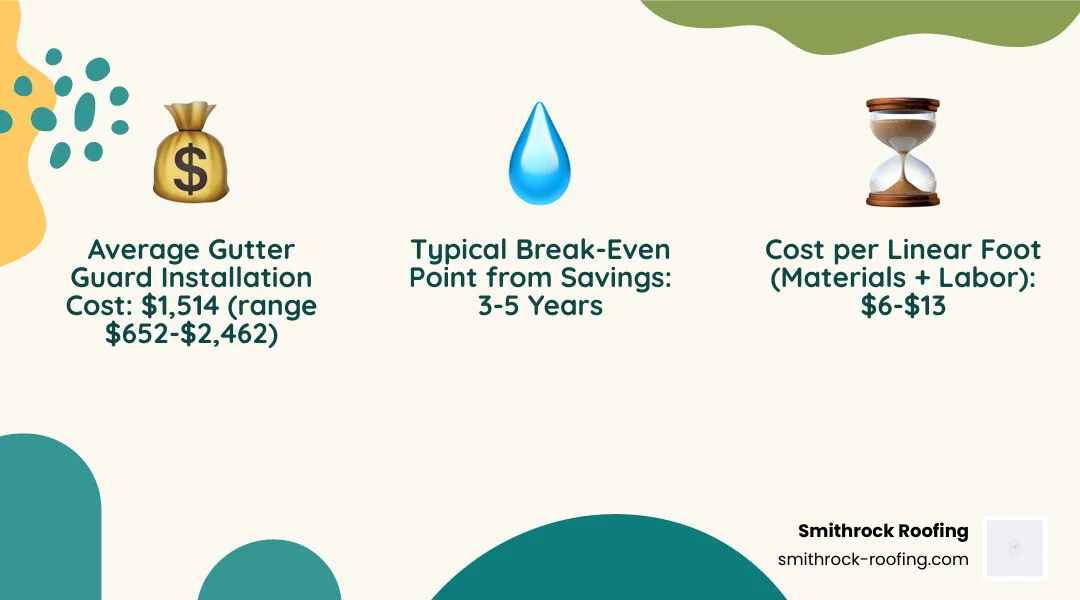
The cost to install leaf guard gutters averages $1,514 nationally, with most projects falling between $652 and $2,462. While a simple DIY job might start around $160, a large home with premium materials could exceed $4,525.
The key metric contractors use is cost per linear foot. For professional installation, expect to pay $6 to $13 per linear foot, which includes both materials and labor. This figure can rise to an average of $16 per linear foot for premium, contractor-grade systems that are not available in retail stores.
Breaking this down: materials alone range from $0.40 per foot for basic plastic screens to over $7.78 for high-end options. Labor typically adds another $2 to $6 per linear foot, covering the installer’s expertise, equipment, and safety measures. Understanding this split helps you see that you are not just buying a product; you are investing in a correctly installed, long-lasting solution.
For a more detailed look at related drainage work, see our guide on the cost to install gutter drainage, and learn more about our full gutter installation services.
Your home’s size is the biggest single factor in your total cost. The typical home has about 200 linear feet of gutters, but measuring your specific roofline is the most reliable way to get an accurate estimate.
To estimate your needs, walk your home and measure each section of existing gutters. A few minutes with a measuring tape gives you a much clearer picture before any contractor arrives, and it prevents you from relying solely on the installer’s measurement during a sales consultation.
Focusing on cost per linear foot is the most useful way to budget and compare quotes because it standardizes price across different home sizes and material types.
Using this metric, you can build a reliable ballpark estimate before your first consultation. Multiply your home’s linear footage by the average cost per foot for each guard type to compare options on equal terms. Ready to move from estimates to actual numbers? A free roof and exterior estimate gives you a precise figure for your specific home.
Need a hand with this in Winston-Salem, Greensboro and the NC Triad? Call (336) 971-0464 or request a free estimate. Honest answers, no pressure.
Understanding the gutter guard installation cost means looking beyond the sticker price on the guard itself. The total you pay on installation day reflects materials, labor, site-specific complexity, and any preparatory work your existing gutters require. This section breaks down each component so that when you receive quotes, you know exactly what you are comparing.
The gutter guard market splits into three broad tiers, each with a different price point and performance profile:
When you see a wide spread in gutter guard pricing between competing quotes, it almost always traces back to which tier each contractor is proposing. An itemized quote that separates material cost from labor makes this comparison straightforward.
Beyond the guard type, several installation variables directly affect your final number:
Getting an itemized quote that lists each of these components separately is the clearest way to understand what you are paying for and to make an apples-to-apples comparison when you have multiple bids on the table.
Before evaluating whether a premium system is right for your home, it helps to understand what separates a one-piece surface-tension product from a standard gutter with a screen snapped over the top. LeafGuard is the best-known example of this category, and its core technology is worth understanding in detail.
LeafGuard’s design relies on what engineers call the Coanda effect — the tendency of a fluid to cling to a curved surface and follow its contour rather than break away. You have seen this principle at work any time water runs down the side of a glass instead of dripping straight off the rim.
In a LeafGuard system, the gutter’s hooded top is curved so that rainwater flows around the bend and into the channel below, while debris — leaves, twigs, pine needles — lacks the weight and surface tension to follow that curve and simply falls off the front edge. The result, when the system is properly installed and performing correctly, is a gutter that sheds debris passively without any screens or filters to maintain.
This is genuinely clever engineering. But it has specific conditions under which it works well, and specific conditions under which it struggles. Any honest discussion of this product has to address both.
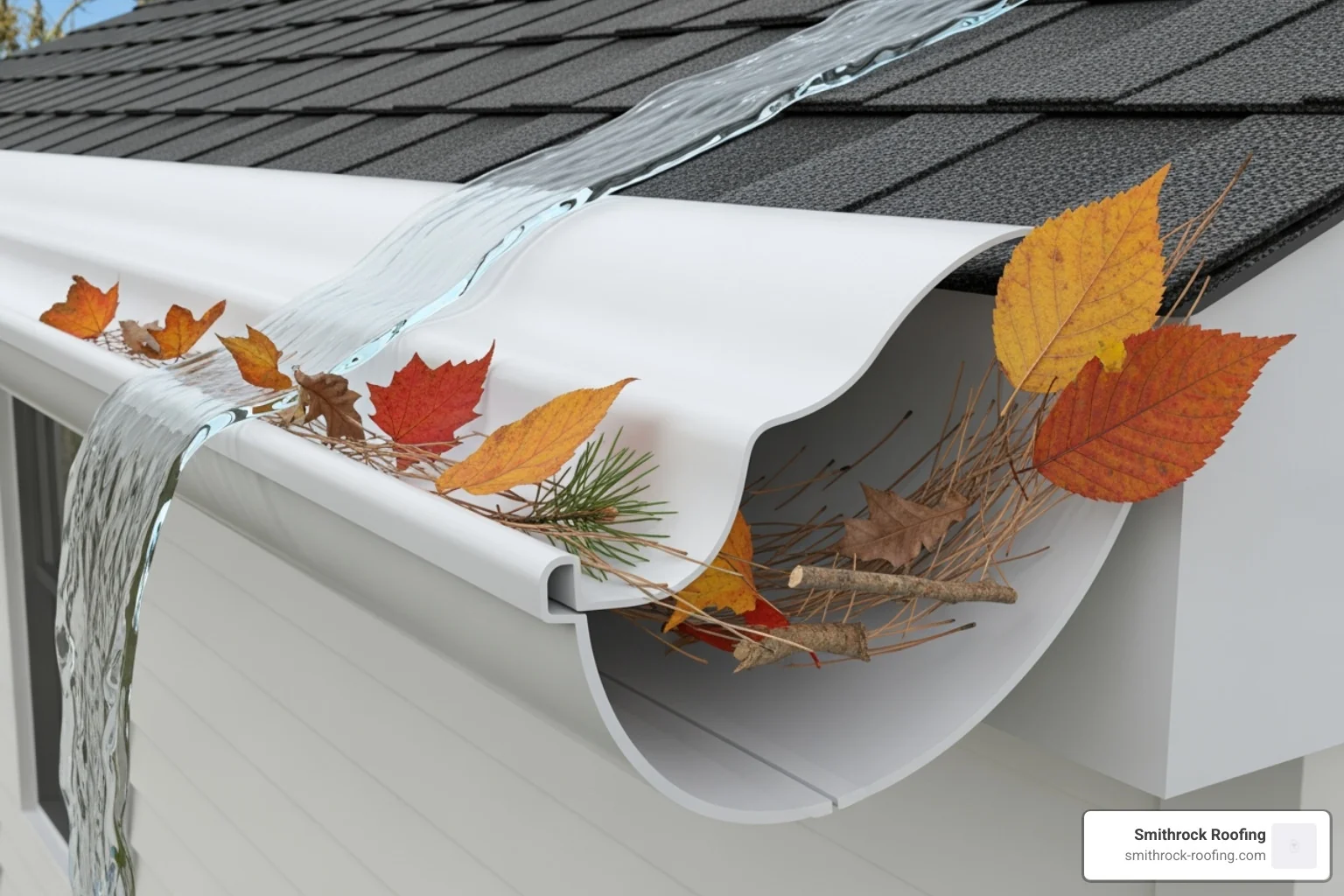
Conditions that support strong performance include moderate to heavy rainfall at typical intensity levels, moderate deciduous leaf coverage, proper hood pitch calibrated to your specific roof angle during installation, and adequately sized downspouts that allow water to exit without backpressure.
Conditions that challenge the system include:
Understanding these conditions is not a reason to dismiss the product. It is a reason to have an honest conversation with your installer about your specific roof environment before you commit.
One phrase appears in nearly every LeafGuard article: “custom-formed on-site by certified professionals.” It sounds reassuring, but most homeowners have no idea what that actually means — and that gap makes it harder to evaluate whether the crew showing up at your house is doing the job right.
LeafGuard installers arrive with a truck-mounted roll-forming machine. This equipment feeds a coil of aluminum stock through a series of precision rollers that progressively bend and shape it into the finished gutter profile. The gutter is extruded continuously at whatever length your home requires, which is why LeafGuard gutters have no seams. The machine makes one long, continuous piece.
This process is meaningfully different from what a traditional gutter crew does. It is closer to light manufacturing than standard installation work. That distinction matters for a few reasons:
Before any forming happens, a proper installation begins with a thorough site assessment covering total linear footage, roof pitch angles at each run, number and placement of downspouts, condition of existing fascia boards, and any unusual roof features such as valleys, dormers, or sections where debris concentration will be higher than average. A crew that skips this assessment and relies on satellite measurement and a quick walkthrough will produce a less accurate quote and potentially a less accurate installation.
Choosing the right type of gutter guard is the most significant decision you will make, directly influencing the final cost and long-term performance. The market offers a wide spectrum of options, from simple DIY screens costing less than a dollar per foot to sophisticated, professionally installed systems that can exceed $40 per linear foot. Each type employs a different method to separate debris from water, and each comes with a unique profile of performance, durability, maintenance requirements, and cost.
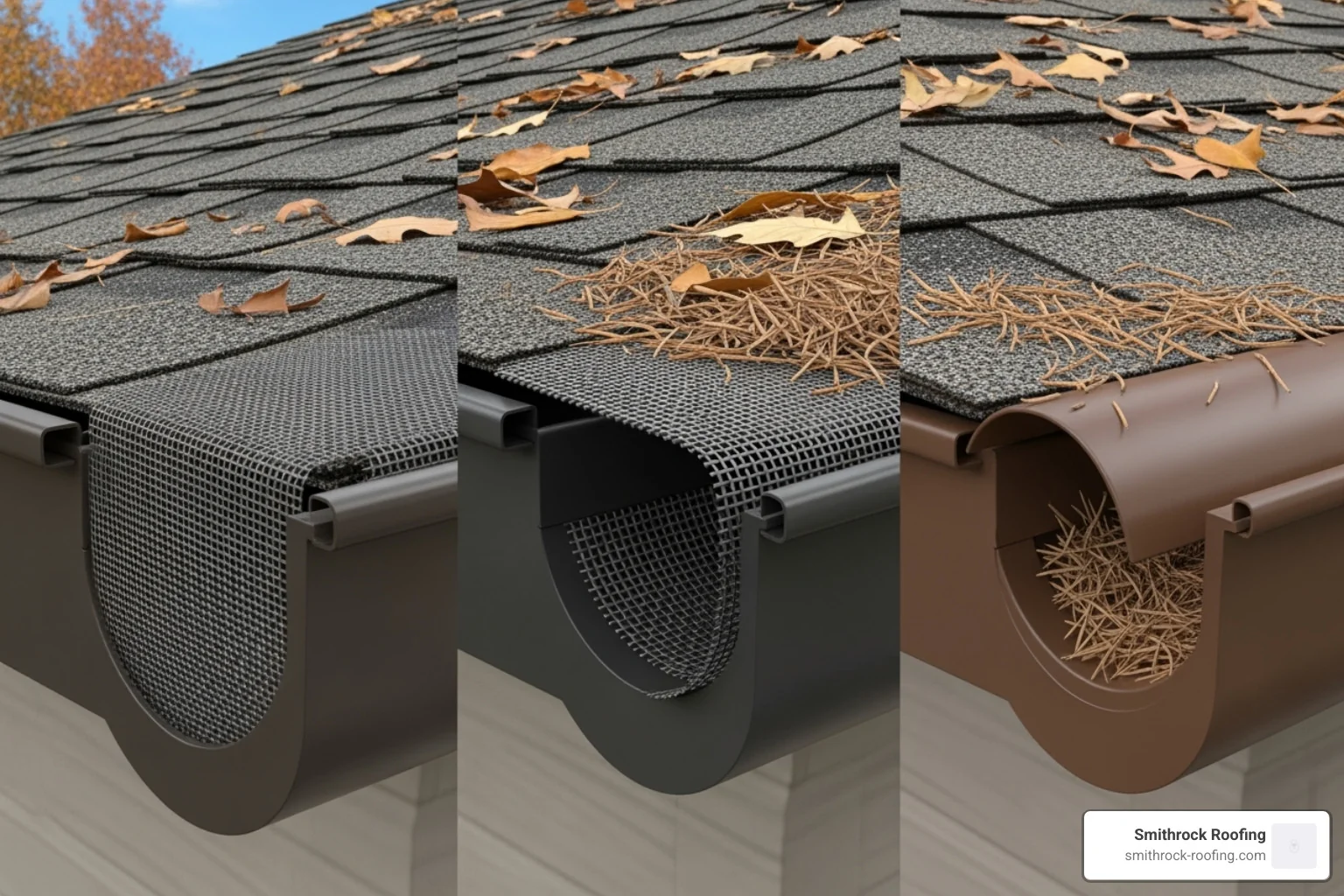
Considered the gold standard by many professionals, micro-mesh guards use a very fine screen, often made of surgical-grade stainless steel, stretched over a rigid aluminum or plastic frame. This technology is designed to block even the smallest debris — sand, shingle grit, and pine needles — while allowing rainwater to pass through the mesh.
These guards employ the principle of water adhesion. They act as a solid, curved hood over the gutter. As rainwater flows down the roof, it clings to the curved surface and follows it around the edge into a narrow slot opening into the gutter. Leaves and larger debris are unable to make this sharp turn and are swept off the edge. LeafGuard is the most widely recognized brand in this category and differs from add-on reverse-curve covers in that it is a complete, one-piece gutter-and-guard system formed on-site as described above.
Screen guards are a common, straightforward, and often budget-friendly option. They are essentially a grid or screen placed over the gutter opening to block large leaves and twigs. The material used is the primary differentiator in terms of cost and durability, ranging from cheap flexible plastic to rigid powder-coated steel or aluminum panels.
Resembling large, cylindrical pipe cleaners, brush guards feature stiff bristles — usually polypropylene — spun around a strong metal wire core. They are inserted directly into the gutter channel, filling the space. Installation requires no tools, which makes them popular for DIY projects. The drawback is that the bristles trap debris rather than shed it, and maintenance requires pulling out heavy, dirty brush sections and cleaning them manually before reinserting.
Foam guards are triangular wedges of porous polyurethane foam designed to fit inside the gutter, allowing water to filter through while debris sits on top. They are inexpensive and completely hidden from view. However, the pores clog quickly with shingle grit and pollen, the foam retains moisture that promotes mold and algae growth, and seeds can germinate on top. They represent the shortest-lived option on the market.
When homeowners ask about gutters with leaf guards, they are often describing two very different products without realizing it. The distinction matters for both cost and performance.
Add-on gutter guards are covers, screens, or inserts fitted to your existing gutter system. The gutter stays; only the protection layer is new. This approach is generally lower cost and works well when your existing gutters are in sound condition. Most of the guard types described above — micro-mesh, screen, brush, foam — fall into this category.
Integrated gutter-and-guard systems replace your existing gutters entirely with a new combined unit. LeafGuard is the most recognized example: the guard is not an accessory bolted onto a gutter; it is the gutter, formed as a single seamless piece on-site. This approach costs more upfront because you are paying for a complete gutter replacement plus the protection system in one step. The trade-off is a tighter, more seamless result with no joints between the gutter and the guard where leaks or debris intrusion can occur.
Which approach makes more sense for your home depends on the current condition of your gutters, your budget, and how long you plan to stay in the house. If your gutters are aging or already showing signs of wear, replacing them and adding an integrated guard at the same time is often more economical than two separate projects. If your gutters are relatively new and in good shape, a high-quality add-on guard is a sound investment that preserves what you have already paid for.
Beyond the type of guard you choose, several factors related to your home’s specific characteristics will influence the final cost. A professional installer will assess these variables when creating your quote.
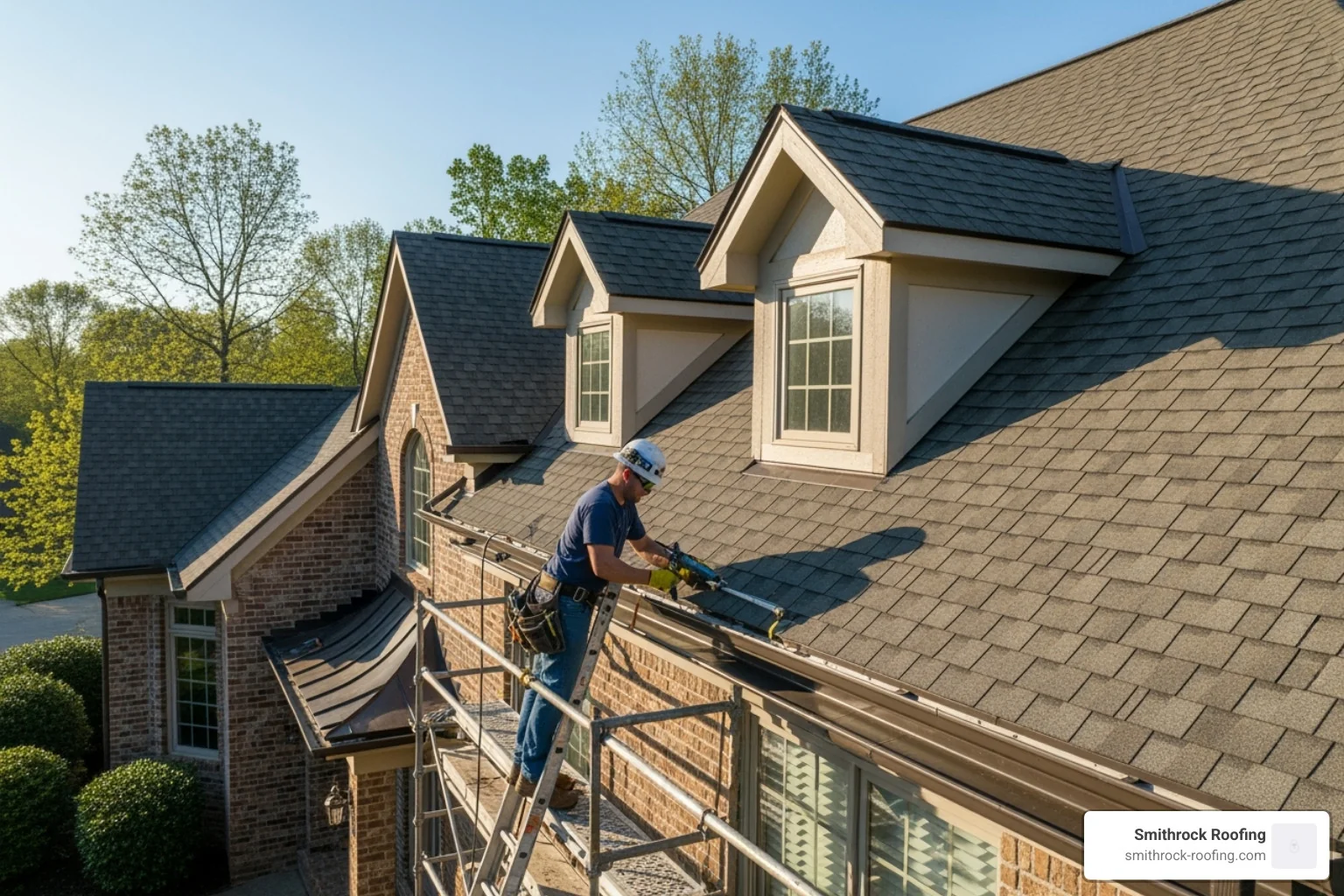
The height of your home directly impacts labor costs. Single-story homes are the most affordable, requiring basic equipment and presenting minimal safety risks. Multi-story homes add complexity and cost, typically an extra $1.00 to $1.50 per linear foot in labor for each additional story. This covers the need for specialized ladders, scaffolding, and advanced safety protocols. Accessibility issues such as steep slopes, dense landscaping, or other obstacles can also increase labor time and your final bill.
A simple, straight roofline is easier and cheaper to work on than a complex one. Corners, dormers, and valleys require more time for precise cutting and fitting, which increases both labor costs and material waste. A steep roof pitch makes the job more dangerous and time-consuming, often requiring specialized safety harnesses and equipment. Your roofing material — asphalt, metal, tile — can also affect the installation method and cost. A professional will know how to install guards without damaging your roof or voiding its warranty.
If there is one cost factor that consistently surprises homeowners during the installation process, it is the condition of the fascia — the horizontal board that runs along the edge of your roofline and serves as the attachment point for any gutter system. This is especially true for premium one-piece systems like LeafGuard, which attach directly and permanently to your fascia with no room for a compromised substrate.
If that fascia is rotted, soft, or otherwise compromised — which is extremely common on homes that have had clogged gutters overflowing for years — it must be repaired or replaced before the new gutter system can be properly secured. This matters for several reasons:
A reputable installer will identify fascia concerns during the site assessment and include them transparently in the project scope. If a quote does not address your fascia condition at all, that is a question worth raising directly.
Gutter guards can only be installed on a sound gutter system. Common additional costs include:
For related reading on protecting your home from water intrusion at the roofline, see our article on preventing roof leaks in Winston-Salem.
Where you live plays a significant role in your total cost. Labor and business operating costs are higher in major metropolitan areas than in rural communities. Regional variations exist even within North Carolina — expect costs in cities like Greensboro or Charlotte to be higher than in smaller communities like King or Pilot Mountain. Seasonal demand also affects pricing. Fall and spring are peak seasons for gutter work. You may find more competitive pricing by scheduling your installation during slower periods like late winter or mid-summer.
When a homeowner asks specifically about LeafGuard gutters, the conversation is about a complete system replacement, not an add-on cover. Understanding what is included in a standard LeafGuard quote — and how the brand’s dealer structure affects pricing and warranty service — helps you evaluate proposals on equal terms.
A comprehensive LeafGuard installation quote should cover every aspect of your new gutter system with no surprises. Expect the following to be included:
One of the most common sources of homeowner confusion with LeafGuard is receiving very different quotes from what appear to be similar installers for what appears to be the same project. This reflects something real about how the product is sold.
LeafGuard Brand Inc. operates through a licensed dealer network, not as a single company with uniform national pricing. Individual dealers set their own pricing within brand guidelines, which means two dealers in the same area can legitimately quote the same home at meaningfully different numbers based on their individual margin structures. “Certified installer” means the individual completed LeafGuard’s proprietary training, but training depth and business practices vary by dealer.
This also has practical implications beyond the initial sale. Warranty service is dealer-administered. If your regional dealer closes — a real scenario in any franchise-style model — navigating a warranty claim becomes more complex, and the national brand’s backstop warranty has terms and limitations that are not prominently featured in marketing materials. None of this is a reason to avoid the product. It is a reason to understand who you are actually buying from and what happens if you need service five years from now.
LeafGuard’s lifetime no-clog warranty is one of its primary selling points. What is rarely explained is what the warranty covers, what voids it, and what its practical limitations are.
None of this makes the warranty worthless. It makes it a real-world document with real-world terms. Any homeowner spending a premium on this system deserves to read those terms before installation day. You can review Smithrock’s own warranty standards to understand what a transparent, clearly documented workmanship commitment looks like before you compare it against what a dealer is offering.
Many homeowners researching gutter protection encounter two similarly named products — LeafGuard and LeafFilter — and assume they are the same or nearly the same. They are not, and the distinction is worth understanding because it affects both how you shop and how you evaluate competing quotes.
LeafFilter is a micro-mesh gutter guard system, not a complete gutter replacement. It installs over your existing gutters rather than replacing them, fitting a fine stainless steel mesh filter over a uPVC frame that sits on top of your current gutter trough. The mesh is designed to let water pass through while blocking debris of virtually any size, from large leaves down to shingle grit and pine needles.
LeafFilter is sold and installed exclusively through its own dealer network, similar to LeafGuard’s model. It is not a product you purchase at a hardware store and install yourself.
The LeafFilter cost per foot is one of the most frequently searched questions in this category, and the answer varies more than most homeowners expect. Because LeafFilter is sold through regional dealers who set their own pricing, quotes can differ meaningfully from one area to the next and even between dealers serving the same market.
Based on widely reported industry data, LeafFilter installation costs typically fall in a range that places it among the higher-priced professional gutter guard options on the market. Factors that push the LeafFilter cost higher include:
How much does LeafFilter cost for a typical home? Based on industry averages, homeowners frequently report all-in quotes that are comparable to or higher than other premium professional gutter guard systems at the $16-per-linear-foot and above range. LeafFilter does not publish a standard national price, which means the only reliable way to know your actual cost is to get a written, itemized quote for your specific home.
When homeowners are comparing these systems, the core differences come down to mechanism, scope of work, and what you are actually buying:
Neither branded system is inherently superior for every home. The right choice depends on the condition of your existing gutters, the type of debris your property generates, and which warranty terms offer the most practical protection for your situation. Getting itemized quotes for more than one system type — rather than accepting a single dealer’s recommendation — gives you the clearest basis for comparison.
Deciding whether to install gutter guards yourself or hire a professional is a major consideration. While DIY seems cheaper upfront, it is important to weigh the true costs and risks against the benefits of a professional installation.
| Factor | DIY Installation | Professional Installation |
|---|---|---|
| Total Cost | $170 to $700 or more (materials only for 200 linear feet) | $1,200 to $5,600 (materials plus labor for 200 linear feet) |
| Time and Effort | Significant time commitment, physically demanding | Minimal time commitment for homeowner, typically completed in one day |
| Tools Required | Ladders, drills, tin snips, safety gear (buy or rent) | Specialized tools, industrial lifting equipment |
| Warranty | Typically material-only, no labor warranty | Material and labor warranties often included |
| Best For | Very handy homeowners, simple rooflines, tight budgets | Multi-story homes, complex roofs, long-term value, peace of mind |
Going the DIY route can save money on labor, with material costs for a typical home ranging from $170 to $700. However, this does not account for the cost of necessary tools such as ladders, drills, and safety gear, which can add several hundred dollars if you do not already own them. The biggest hidden costs are time and risk. A DIY project can easily consume a full weekend, and improper installation can lead to the very water damage you are trying to prevent or void your roof’s warranty. Working on a ladder is inherently dangerous and a leading cause of serious injuries for homeowners.
When you hire a professional, you are paying for more than labor. You are investing in expertise, safety, and peace of mind. Installers have the experience to handle any challenge your roof presents and can spot underlying issues with your gutters or fascia before they become major problems. They also have access to higher-quality, commercial-grade materials. At Smithrock Roofing, our installation methods are designed to protect your existing roof and our work is backed by a clear workmanship warranty — a protection you simply do not get when you do the job yourself. If upfront cost is a concern, explore our financing options.
When looking at the cost to install leaf guard gutters, it is helpful to view it not as an expense but as an investment that pays for itself. Gutter guards are a rare home improvement that offers a clear return through savings and damage prevention.
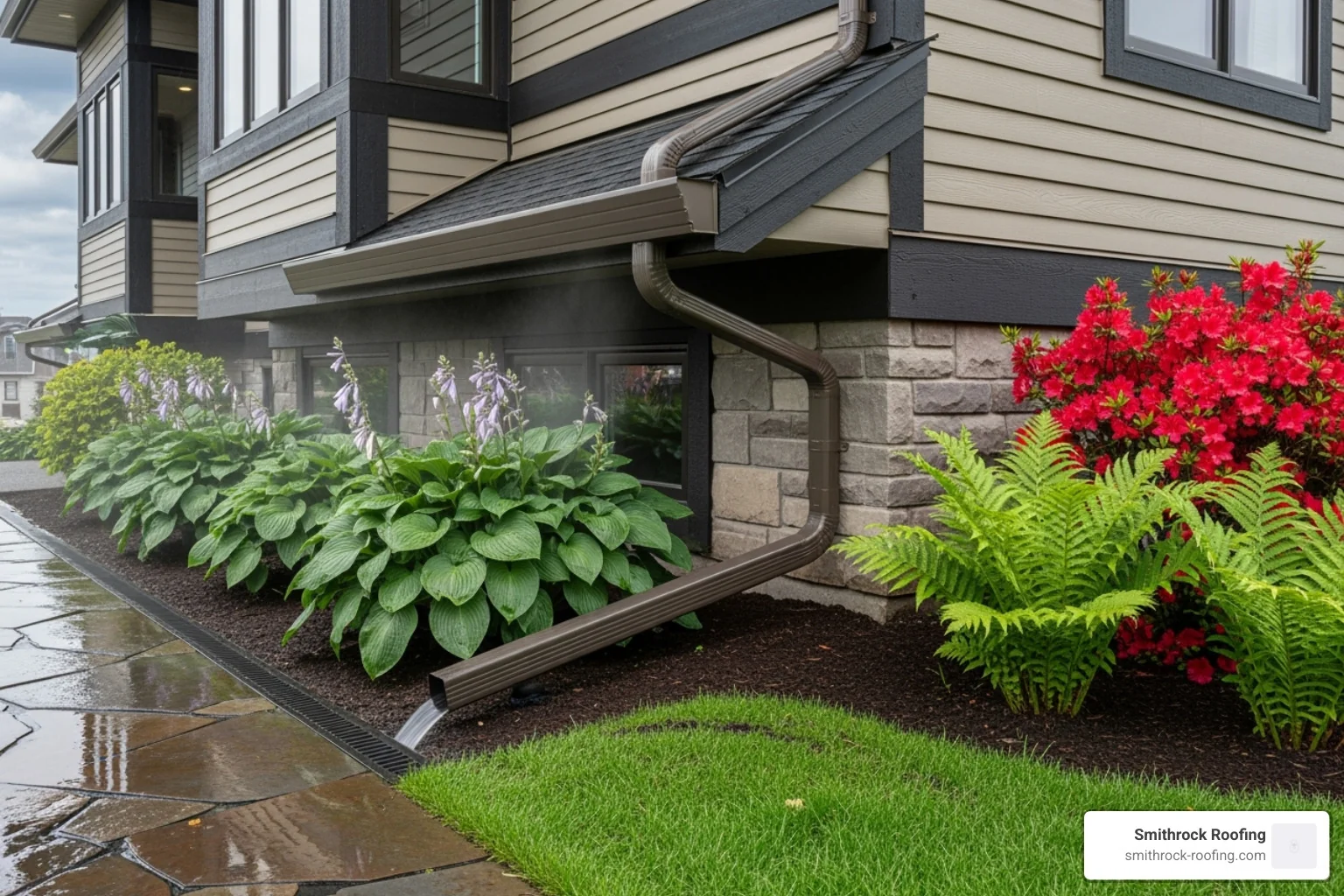
The financial case is compelling. Most homeowners find their gutter guards pay for themselves within three to five years. After that break-even point, the annual savings go directly into your pocket.
The most direct return comes from eliminating gutter cleaning costs. With professional services costing $120 to $230 per visit and most homes needing at least two cleanings a year, you can save $240 to $500 annually. This does not even count the value of reclaiming the four to eight hours you might otherwise spend on this dangerous chore yourself.
This is where gutter guards provide the most significant financial protection. Clogged gutters are a primary cause of water damage. When water overflows, it can lead to foundation damage with repair costs ranging from $5,000 to $25,000 or more, basement or crawl space flooding averaging $2,000 to $10,000 to remediate, and roof and fascia rot that can cost $1,500 to $6,000 to address. The average cost to repair water damage from overflowing gutters is around $8,000. Compared to the typical $1,500 to $2,500 cost of gutter guards, the investment is clearly sound. As the EPA’s Moisture Control Guidance for Building Design, Construction and Maintenance highlights, managing water flow away from the home is critical for its long-term structural health.
For homeowners who have already experienced storm-related damage, see our guide on storm damage roof repair in Winston-Salem for what to do next.
Gutter guards are an attractive feature for potential homebuyers. They signal a well-maintained, low-maintenance home, which is a strong selling point. By preventing overflow, they also protect your siding and paint from unsightly water stains, preserving your home’s curb appeal and value over time.
Before you request a single quote or let a sales representative into your home, these steps will help you make a confident, informed decision.
Before any contractor arrives, walk your home and measure the total linear footage of your existing gutters. This prevents you from relying solely on the installer’s measurement and gives you a baseline for comparison. It also signals to a sales representative that you are an informed buyer, which tends to produce more accurate and straightforward assessments.
Obtain at least three quotes from reputable local installers covering different system types. Request itemized quotes that separate material costs, labor, downspout work, and any fascia repair scope. Having competing bids in hand before any in-home consultation gives you a credible comparison point and prevents single-option framing under time pressure. Off-season scheduling — late winter or mid-summer — can also improve your negotiating position, as many contractors offer better pricing during slower periods.
Ask for the current warranty document in writing — not a summary brochure, the actual terms — before the consultation concludes. Specifically, identify the definition of a qualifying clog event, any non-transferability clause, the labor warranty duration and administrator, and the process for filing a claim if the installing dealer is no longer in business. If a contractor cannot produce this document on the day of consultation, that itself is information worth weighing.
Most homeowners pay between $1,500 and $2,500 for a professionally installed gutter guard system on a typical home, with costs ranging from $652 on the low end to well over $4,500 for large homes with premium systems. The single biggest variable is the type of guard you choose — basic screen guards start around $0.40 per linear foot in materials, while premium contractor-grade micro-mesh or one-piece reverse-curve systems can reach $16 or more per linear foot all-in. After guard type, total linear footage and roofline complexity drive the final number more than any other factor. Getting itemized quotes that separate material costs from labor is the clearest way to understand what you are actually paying for.
The leaf guard price for a typical home with approximately 200 linear feet of gutters generally falls between $1,200 and $3,200 for professional installation, depending on the system type and the specific conditions of your home. Entry-level professionally installed options sit toward the lower end of that range; premium one-piece systems like the branded LeafGuard product sit at the higher end. Factors that push the number up include multi-story height, complex rooflines, fascia repair needs, and the removal and disposal of existing gutters. A free in-home assessment is the only way to arrive at an accurate number for your specific property.
Both LeafFilter and LeafGuard are sold through dealer networks with dealer-set pricing, which means neither publishes a standard national rate and both are known for pricing that sits above the industry average for professionally installed systems. The fundamental difference is what you are buying: LeafGuard replaces your entire gutter with a one-piece seamless system; LeafFilter installs a micro-mesh guard over your existing gutters. If your existing gutters are in good condition, LeafFilter’s add-on approach avoids the cost of a full gutter replacement. If your gutters are aging or in poor shape, LeafGuard’s complete replacement may be more cost-effective in the long run. In either case, request written itemized quotes from multiple installers — including non-branded alternatives — before committing to either system.
Four questions consistently separate a thorough quote from a superficial one. First, is the quote itemized by material cost, labor, downspout work, and any prep work like gutter cleaning or fascia repair? Second, what specific material and gauge is being installed, and is it available in retail stores or contractor-exclusive? Third, what does the warranty actually cover — and who administers a claim if you need service after the installation crew is gone? Fourth, does the installer carry current liability insurance and workers’ compensation coverage? A reputable contractor answers all four without hesitation. Any reluctance to document these details in writing is worth noting before you sign.
No, but they drastically reduce it. Instead of scooping heavy, wet sludge twice a year, maintenance becomes an occasional brushing of the surface to remove accumulated debris. High-quality systems shed most leaves and twigs on their own. However, fine particles like pollen or shingle grit can sometimes settle on top. Most experts recommend a quick inspection and surface cleaning every one to two years, a minor task compared to the semi-annual deep cleaning required for unprotected gutters, as recommended in GSA guidelines on gutter maintenance.
Yes, high-quality systems are engineered to manage heavy water flow. Premium reverse-curve and micro-mesh guards can handle rainfall well beyond what the NC Triad typically experiences. The key is proper installation. Poorly installed or undersized guards can be overwhelmed, causing overflow. In snowy climates, any gutter system can contribute to ice dams if a home has poor attic insulation. Professionally installed guards are designed to minimize this risk, and some systems are compatible with heating cables to manage ice and snow efficiently.
LeafGuard gutters drastically reduce maintenance, changing it from a frequent chore into an occasional, simple task. The one-piece reverse-curve design is exceptionally effective at preventing leaves, twigs, and large debris from entering the gutter trough. You will not be climbing ladders to scoop out heavy sludge. However, fine particles like pollen or shingle grit can sometimes settle on the hood surface. In certain environments, this may require an occasional light brushing or rinsing to maintain optimal water flow. So while you can say goodbye to regular gutter cleaning, a minimal periodic check ensures peak performance.
In most cases, no. LeafGuard’s lifetime no-clog warranty is typically tied to the original purchaser and is non-transferable. This means if you sell your home, the warranty does not convey to the buyer. Homeowners who anticipate selling within a relatively short time horizon should weigh this carefully, as the warranty — one of the system’s primary value propositions — may provide limited practical benefit in that scenario. Always confirm the specific transferability terms in the written warranty document provided by your dealer before signing.
Yes, negotiation is often possible. To get the best value, get at least three itemized quotes from reputable local installers. This gives you a clear understanding of the market rate and provides leverage. Ask about off-season discounts, as many contractors offer better pricing during slower periods like late winter or mid-summer. If you have a preferred installer whose price is higher, show them the competing quotes. Many reputable companies would rather match a competitor’s price than lose the job. If the upfront cost is a concern, ask about available financing options.
While they may not increase appraised value the way a kitchen remodel does, gutter guards add tangible value and are a meaningful selling point. They improve curb appeal and signal to buyers that a home has been well-maintained. The promise of reduced maintenance is highly attractive, and buyers understand that guards protect against costly water damage. In a competitive market, a home with a quality gutter protection system is often more desirable and can sell faster.
The cost to install leaf guard gutters is an investment in your home’s protection and your peace of mind. While the upfront cost of $1,500 to $2,500 may seem significant, it is minor compared to the potential $8,000 or more in water damage repairs from clogged gutters. By saving $240 to $500 annually on cleaning, most systems pay for themselves in just three to five years.
The type of system you choose matters, and so does the quality of the installation. A professional ensures the job is done safely, correctly, and without voiding your roof’s warranty. For homeowners in Winston-Salem, Greensboro, High Point, Kernersville, and the surrounding Piedmont Triad, a quality gutter guard system is one of the best defenses against our heavy leaf fall and intense seasonal storms. Whether you are considering a branded one-piece system like LeafGuard, a micro-mesh product like LeafFilter installed over your existing gutters, or a premium contractor-grade guard from an independent installer, the principles are the same: match the system to your specific tree coverage and debris environment, insist on a thorough fascia inspection before installation begins, read the full warranty terms before signing, and get multiple itemized bids so you know exactly what you are comparing.
Investing in gutter guards protects your foundation, preserves your siding, prevents pest infestations, and improves your home’s curb appeal. It is a smart decision that adds lasting value and saves you from the dangerous, recurring chore of gutter cleaning. Your future self will thank you every time it rains.
Read what our customers have to say on our reviews page, and when you are ready to move forward, explore our full range of gutter services or contact us for a free in-home assessment.
Need a local pro? Learn more about our gutter installation and repair in King.

Smithrock Roofing © Copyright 2026 • All Rights Reserved • Privacy Policy • Maintained by Mongoose Digital Marketing