If you’ve ever watched a winter storm roll through the Forsyth County area and wondered what’s standing between your chimney flue and several gallons of ice water, the answer is — ideally — a properly installed chimney cap. If there isn’t one up there, or if the one you have is a bargain-bin galvanized steel unit from a big-box store, there’s a reasonable chance your chimney is quietly accumulating damage right now.
This guide is written specifically for homeowners in Winston-Salem, Greensboro, High Point, Kernersville, Clemmons, Rural Hall, and the surrounding NC Triad region. The advice here reflects the real conditions your chimney faces: freeze-thaw weather patterns, older housing stock with non-standard flue dimensions, and even a federally protected bird species that can complicate your installation timeline. None of that is covered in the generic articles floating around online, and it should be — because getting this decision wrong leads to water damage, liner replacement, and smoke safety issues that are entirely avoidable.
Let’s walk through everything you actually need to know.
Before anything else, it’s worth clearing up a confusion that costs homeowners money every year: a chimney cap and a chimney crown are not the same thing.
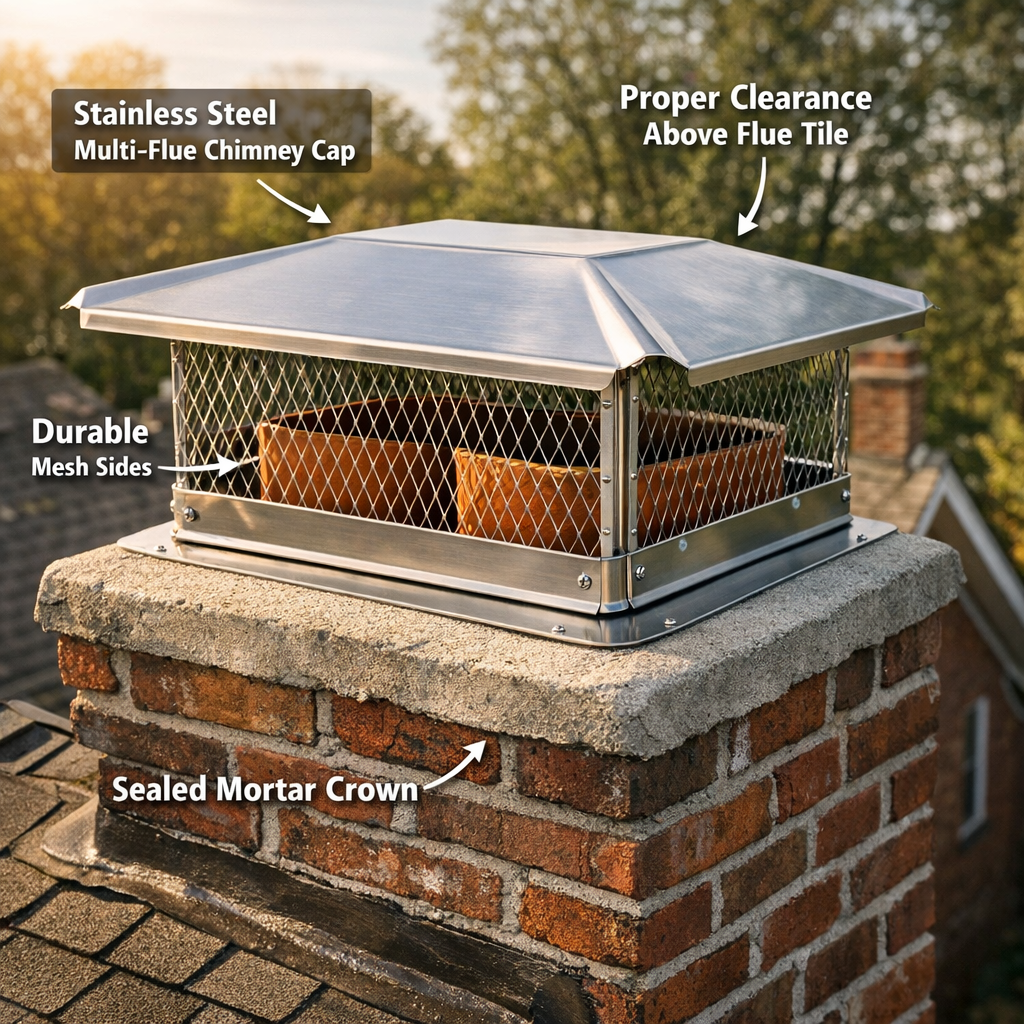
The chimney crown is the concrete or mortar structure that covers the top of the masonry chimney itself, sloping outward to direct water away from the flue opening. It’s part of the chimney structure.
The chimney cap is the metal cover — typically fitted with mesh sides — that sits directly over the flue tile opening. It’s the component that keeps rain, animals, leaves, and debris out of the flue while still allowing combustion gases to escape.
Both matter. Both can fail. But they’re different problems with different solutions, and a contractor who conflates them when explaining your estimate is one worth questioning.
A properly functioning chimney cap does several things:
What it doesn’t do is compensate for a cracked flue liner, a deteriorating crown, or a chimney that hasn’t been inspected in years. This point matters — and we’ll come back to it.
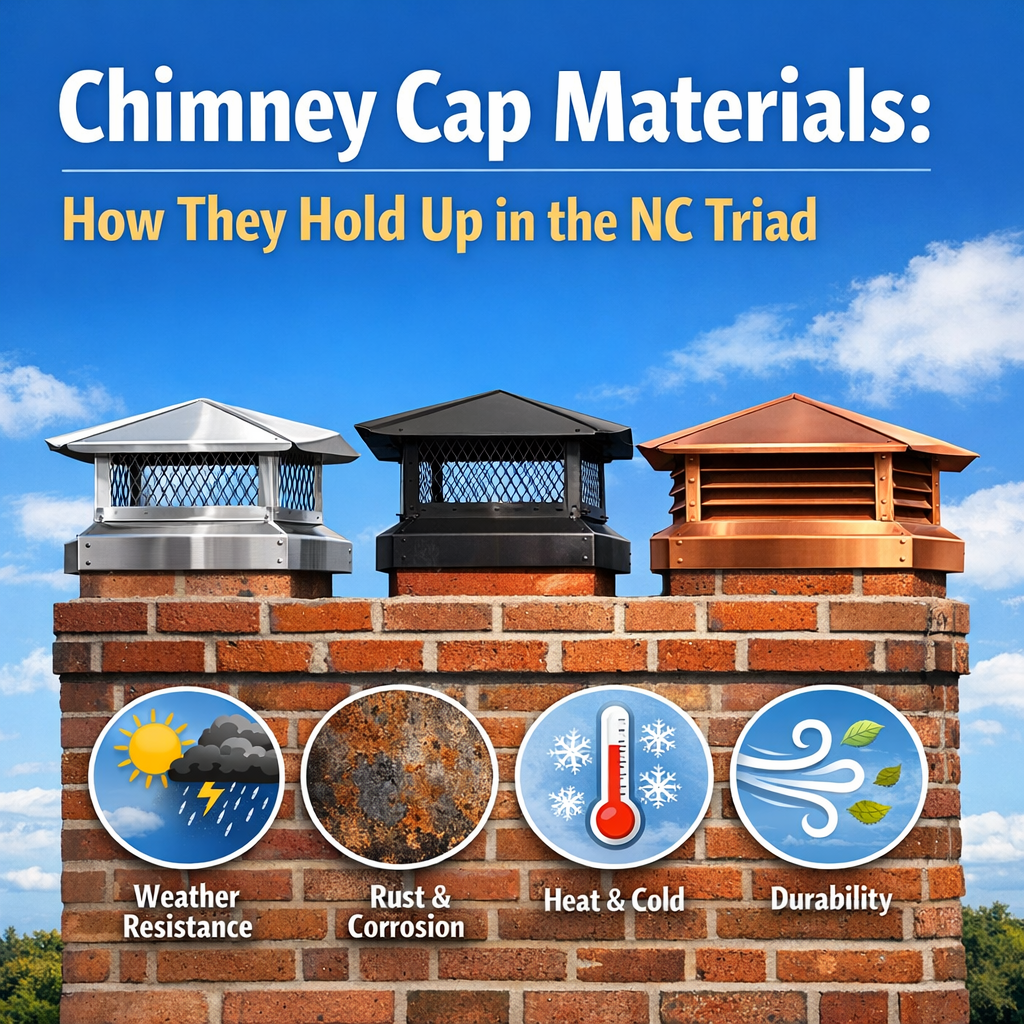
The NC Triad sits in NOAA Climate Zone 4A, a humid mixed climate where winters regularly cycle above and below the freezing mark multiple times per season. That pattern — freeze, thaw, freeze again — is one of the more destructive forces a chimney system faces, and it has direct implications for which cap materials hold up and which ones don’t.
Galvanized steel caps are the most commonly sold option at hardware stores. They’re inexpensive and they look functional when new. But galvanized steel has a meaningful weakness in the Piedmont Triad’s climate: the zinc coating that protects the steel from rust begins to break down under repeated freeze-thaw stress and sustained humidity exposure. Winston-Salem averages over 45 inches of rainfall per year and regularly sees humid summer conditions that accelerate surface oxidation on lesser metals.
The result is a cap that begins showing rust within a few years, eventually developing pinhole corrosion and gaps that allow the very moisture it was meant to block to enter the flue. By the time rust is visible from the ground, water intrusion is typically already occurring.
For Winston-Salem homes, there are two materials that genuinely hold up to local conditions:
Type 304 or Type 316 Stainless Steel — These alloys resist corrosion far more effectively than galvanized steel and are built to handle the humidity and freeze-thaw cycling common to NOAA Zone 4A. Type 316 offers additional resistance to chloride-based corrosion, which matters less in an inland market like Winston-Salem but still contributes to long-term durability.
Copper — Copper caps are the premium option and develop a natural patina over time that actually provides additional corrosion resistance. They’re an excellent match for historic homes in neighborhoods like Ardmore, Buena Vista, or the West End Historic District, where aesthetics and longevity both matter. If you’re weighing whether a copper cap makes sense for your home, our article on custom copper chimney caps covers material grades, patina timelines, and what the long-term investment looks like. Copper is a longer-term investment but one that tends to outlast the chimney it protects.
The short version: if a contractor is recommending galvanized steel for a Winston-Salem home without a clear explanation of why it’s appropriate in your specific situation, ask questions.
Winston-Salem has an unusually rich stock of pre-1950 homes. Neighborhoods like Ardmore, Washington Park, Buena Vista, and the West End Historic District contain homes with original masonry chimneys that were built to different standards — and different dimensions — than what modern off-the-shelf chimney caps are designed for.
Most chimney caps sold at retail are sized for standard modern flue tiles, typically a 13″ x 13″ or similar dimension. Older Winston-Salem homes, however, frequently feature:
When a cap designed for a single standard flue is placed over a double-flue system, several problems emerge. The cap may not seal properly at the cap-to-crown interface, allowing water to penetrate at the edges. More seriously, a cap that partially covers two flues without adequately protecting each opening can create backdraft conditions, where pressure differentials between the two flues cause exhaust gases from one to push back into the living space through the other.
This isn’t a theoretical risk. It’s a documented failure mode in older multi-flue homes, and it’s one that a contractor unfamiliar with Winston-Salem’s historic housing stock might not think to check for.
For multi-flue systems or chimneys with non-standard dimensions, the right solution is either:
Either approach requires accurate measurement before ordering materials — not an estimate, but actual dimensions taken at the chimney top. It also requires an inspection of the crown itself, because a custom cap anchored to a deteriorating mortar crown will fail regardless of how well it fits.
One of the most consistently overlooked aspects of chimney cap selection is its effect on draft — the upward movement of combustion gases through the flue that makes your fireplace or stove function safely.
Every chimney cap creates some degree of restriction over the flue opening. In most situations, this restriction is minimal and acceptable. But in certain conditions common in the Winston-Salem area, cap design choices can meaningfully affect whether your fireplace draws properly or causes smoke to roll back into the room.
Factors that can create draft challenges include:
The takeaway: cap selection isn’t just about keeping rain out. For homes with existing draft challenges, the right cap design is part of the solution. The article on the ultimate guide to different types of chimney caps breaks down wind-directional, rotating, and draft-inducing designs in detail if you want to explore those options further.
This is the part of chimney cap planning that almost no one discusses, and it has genuine legal implications.
Chimney swifts (Chaetura pelagica) are migratory birds that historically nested in hollow trees and have, over the past century, adapted to use masonry chimney flues as preferred nesting sites. Winston-Salem sits directly within the chimney swift’s migratory range and summer nesting territory. These birds typically arrive in the NC Triad between late April and early May and remain through September before migrating south.
Here is the legally relevant part: chimney swifts are protected under the Migratory Bird Treaty Act of 1918, a federal law that makes it illegal to disturb, destroy, or relocate an active nest, eggs, or young birds. This protection applies regardless of where the nest is located — including inside your chimney flue.
If you have an uncapped chimney and suspect swifts may have nested inside, installing a cap between approximately May and August without first confirming the flue is unoccupied is a federal wildlife compliance issue. The correct approach is:
For reference, the U.S. Fish & Wildlife Service provides guidance on chimney swift nesting protections that homeowners can consult directly.
The NC Wildlife Resources Commission also offers local guidance on chimney swift activity in North Carolina.
This isn’t meant to alarm you — it’s simply information that affects your timing, and most homeowners have no idea it applies to them.
A chimney cap is only as effective as the system it’s installed on. This is where a lot of homeowners — and frankly, some contractors — miss the mark.
Installing a new cap on a chimney with a deteriorating crown or cracked flue liner doesn’t protect your home. It seals moisture pathways in ways that accelerate deterioration inside the system, where damage is much more expensive to find and repair.
NFPA 211 — the National Fire Protection Association’s standard for chimneys, fireplaces, and venting systems — establishes two inspection levels relevant here:
At minimum, a Level 1 inspection should precede cap installation on any chimney that hasn’t been professionally examined within the past year. If the home is older, hasn’t had a fire in several years, or shows any visible crown deterioration, a Level 2 is the more appropriate starting point.
Before approving cap installation, confirm the following from your inspection:
| Component | What a Healthy Status Looks Like |
|---|---|
| Chimney crown | No cracks, spalling, or significant mortar loss; proper slope maintained |
| Flue liner | No cracks, missing sections, or significant creosote buildup |
| Mortar joints | Intact between exterior courses of brick; no open gaps or erosion |
| Cap-to-crown interface | Clean, level surface that will allow proper cap seating and anchoring |
| Flashing at roofline | Properly sealed; no gaps where water can travel down behind the chimney |
If any of these conditions are compromised, they should be addressed before or alongside cap installation — not after.
For most standard chimney cap replacements on existing residential chimneys in Forsyth County and surrounding Triad jurisdictions, a separate building permit is not typically required. However, this changes in specific circumstances:
If you’re uncertain whether your project requires a permit, a reputable contractor will know the answer for your specific situation and jurisdiction. If a contractor is vague about permitting requirements or actively discourages pulling permits, that’s a red flag worth noting.
Because the chimney cap installation market — like most trades — includes a range of operator quality, it’s worth knowing what separates contractors who do this work correctly from those who don’t.
A contractor who answers these questions confidently and specifically — rather than with generic reassurances — is one who has actually done this work correctly.
Even good-quality caps fail when installation is done incorrectly. The most common failure modes are preventable, and knowing them lets you verify the work was done right.
To summarize the key decisions and checkpoints in plain terms:
Before installation:
– Schedule a Level 1 inspection (or Level 2 if the home is older or the chimney shows visible wear)
– Confirm the crown is in sound enough condition to anchor the cap properly
– If your chimney is in an older Winston-Salem neighborhood, verify that flue dimensions are measured accurately rather than assumed
When selecting a cap:
– Choose stainless steel (Type 304 minimum) or copper for durability in the Piedmont Triad’s climate
– If draft has been a problem, discuss wind-directional cap options with your contractor
– For multi-flue chimneys, use individual flue caps or a precisely fitted custom cap — not a universal-fit option
Timing:
– If your chimney is uncapped and you’re in the May–August window, have the flue inspected for chimney swift activity before proceeding
– Spring and fall are the ideal seasons for cap installation in the Winston-Salem area — before heating season starts and outside of peak nesting periods
After installation:
– Confirm the cap is level, fully seated, and anchored without visible gaps at the base
– Verify mesh integrity and ensure no material was forced against the flue tile edges
A chimney cap done right is a straightforward, durable solution. Done wrong — or done without the inspection and preparation work that should precede it — it’s an expensive problem deferred rather than solved.
At Smithrock Roofing, we’ve been working on the homes and chimneys of the NC Triad for years. We know the older homes in Ardmore and the newer construction in Clemmons. We know what the Piedmont winters do to inferior materials and what homeowners in this region actually need to protect their investment. If you’re ready to get this handled properly, we’re ready to take a look.
If you’re planning ahead or working through a list of deferred home maintenance, here are three concrete next steps worth prioritizing in the coming year:
1. Book a Pre-Season Chimney Inspection Before Fall 2026
Don’t wait until you need the fireplace to find out something is wrong. Scheduling a Level 1 or Level 2 inspection in late summer gives you enough time to address any issues — crown repairs, mortar work, relining — before heating season arrives. Contractors in the Winston-Salem area are far less booked in August than they are in October.
2. Consider a Whole-Chimney Assessment If Your Home Predates 1980
Older homes in neighborhoods like Ardmore, Buena Vista, and Washington Park often have chimneys built to standards that no longer apply. A comprehensive assessment — not just a cap swap — will tell you what’s actually present: flue dimensions, liner condition, crown integrity, and whether the existing system is compatible with your current appliances. This is especially relevant if you’ve added a gas insert or converted from wood-burning use.
3. Use a Licensed, Locally Experienced Contractor for Any Chimney Work
This sounds obvious, but it matters more than homeowners often realize. A contractor familiar with Piedmont Triad construction patterns, local climate behavior, and the specific challenges of older NC homes will make better material recommendations and catch problems that a generalist might overlook. Ask specifically about their experience with Winston-Salem chimney cap work before committing.
If the mesh is torn, the cap has shifted off-center, or you’re seeing visible rust and corrosion on the frame, replacement is usually the more reliable choice. Minor surface rust on a stainless steel cap may not require full replacement, but any structural deformation, compromised mesh, or loosened anchor points typically mean the cap is no longer doing its job. A quick inspection will clarify which situation applies to your chimney.
Technically, yes — but practically, it’s more complicated than it appears. Accurate flue measurement, proper material selection, and secure anchoring all require access to the roofline and familiarity with chimney construction. In older Winston-Salem homes especially, flue dimensions often don’t match standard catalog sizes. An improper fit creates gaps that allow water, debris, and animals to enter — which is the exact problem the cap is meant to solve. Professional installation ensures the cap is correctly matched and properly seated.
Spring and early fall are the ideal windows. Spring installation gets your chimney protected before summer storm season and well before the fall heating rush, when contractor availability tightens. If your chimney has been uncapped between May and August, it should be inspected for chimney swift nesting activity before any work proceeds, as these birds are federally protected and active nests cannot be disturbed.
It can, depending on the design. A standard cap has minimal effect on draft under normal conditions. However, if your chimney already has draft issues — caused by height, surrounding tree lines, or nearby structures — the wrong cap design can make things worse. Wind-directional caps are specifically designed to address draft problems and may be worth discussing with your contractor if backdraft or smoke spillage has been an issue in your home.
Chimney cap work is one of those jobs where getting it right the first time saves significant hassle down the road — and having a contractor who knows this region, its climate, and its housing stock makes a real difference. Smithrock Roofing has worked on homes throughout Winston-Salem and Kernersville, and we bring that local experience to every job we take on. If your chimney needs attention, we’re glad to take a look and give you a straight answer about what it actually needs. Get a Free Estimate
Smithrock Roofing © Copyright 2026 • All Rights Reserved • Privacy Policy • Maintained by Mongoose Digital Marketing