If you’ve ever pushed on a window screen and felt it sag, noticed a corner pulling away from the frame, or found yourself swatting mosquitoes inside a room with the windows open, you already know the problem. Window screens are one of those home components that get ignored until they fail — and by the time most homeowners notice the damage, it’s been quietly getting worse for months.
In Winston-Salem and across the NC Triad, screens take a beating that homeowners in other parts of the state simply don’t experience in the same way. The combination of intense sun, high summer humidity, and a specific set of local pest pressures means that the generic advice you’ll find floating around online — “replace it if it’s over ten years old,” “fiberglass is always better than aluminum” — doesn’t tell the whole story. Making the right call about your window screens requires a little more nuance than that.
At Smithrock Roofing, we’ve been serving Winston-Salem, Greensboro, High Point, Kernersville, Clemmons, Rural Hall, King, and the surrounding Triad communities long enough to understand how the local environment behaves. Window screens aren’t glamorous, but they’re part of your home’s exterior envelope — and when they’re done right, they earn their keep every single day.
This guide is designed to give you the full picture: the real reasons screens fail, how Winston-Salem’s specific climate affects your material choices, what separates a quality installation from one that pops loose after the first summer storm, and how to know when repair is sufficient versus when full replacement is the smarter move.
Most screen replacement guides treat all climates the same. That’s a mistake — especially for Triad homeowners.
Winston-Salem sits at the transition zone between the Piedmont Plateau and the foothills of the Blue Ridge. That geographic position produces a climate combination that’s genuinely tough on exterior materials. The city averages around 213 sunny days per year, and summer relative humidity regularly climbs above 85%. What that creates is a daily thermal cycling effect — screens expand in the afternoon heat and contract during cooler nights. Over a full season, that repeated stress adds up.
The impact of thermal cycling depends heavily on mesh material:
Aluminum mesh expands and contracts at a different rate than the aluminum frame holding it. At the intersection points where horizontal and vertical strands are woven or soldered together, this differential movement creates micro-fractures over time. These fractures don’t look like holes — the screen can appear intact while the structural integrity of the mesh is already compromised. Once those fractures develop, the mesh weakens quickly and becomes vulnerable to any physical pressure.
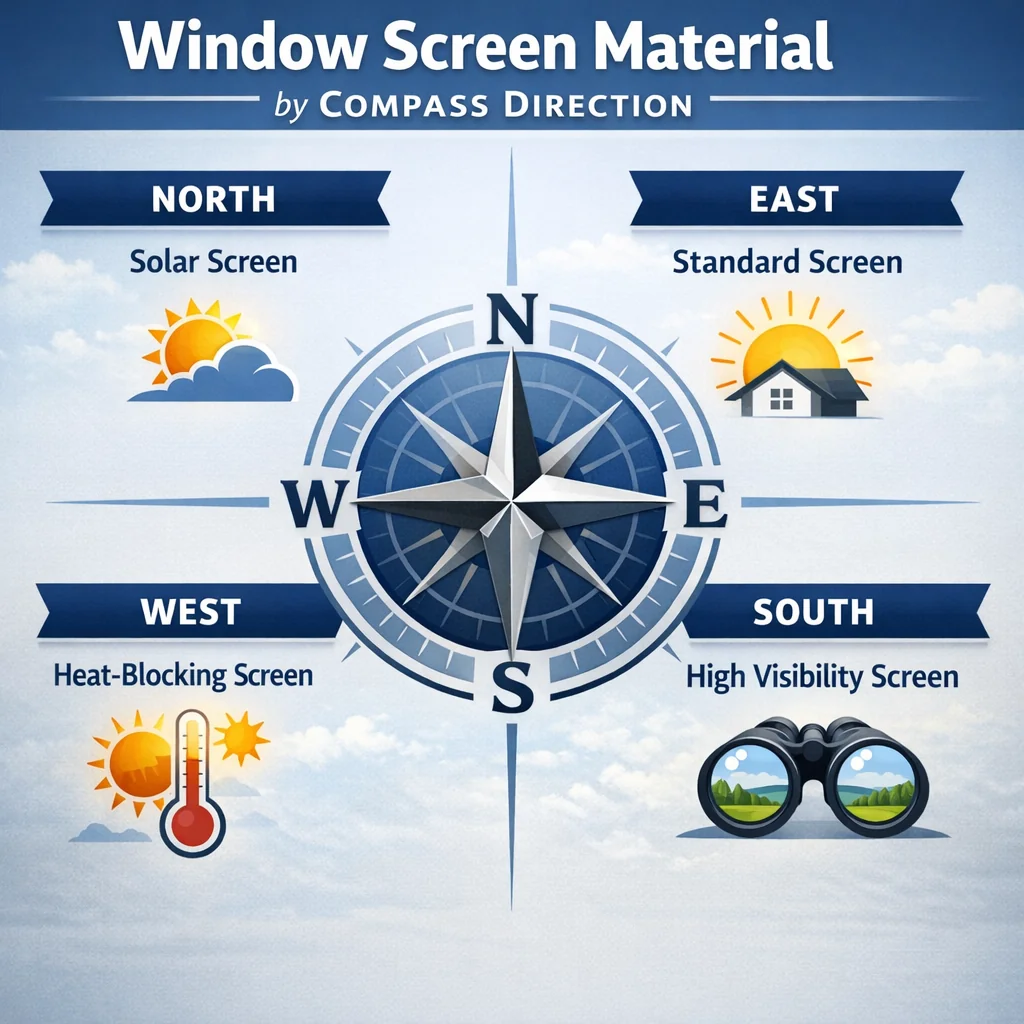
Fiberglass mesh handles thermal cycling better because the material itself is more flexible. It doesn’t crack at the weave points the way aluminum does. However, fiberglass has its own vulnerability in Winston-Salem’s climate: UV degradation. The resin coating that gives fiberglass mesh its color and flexibility breaks down under prolonged sun exposure, leaving the mesh brittle and prone to tearing. In south and west-facing windows — which take the brunt of afternoon sun — fiberglass mesh can show significant UV degradation within a few years.
The practical takeaway: neither material is universally better. Your window’s orientation relative to the sun matters as much as the material itself.
Standard window screens are designed to stop mosquitoes and houseflies. In many parts of the country, that’s sufficient. In Winston-Salem, there are two additional pest pressures that standard 18×16 mesh doesn’t fully address — and understanding them can save you a lot of frustration.
The Brown Marmorated Stink Bug (Halyomorpha halys) has become a persistent fall nuisance throughout the Piedmont Triad. Every autumn, as temperatures drop, these insects seek warmth and find their way into homes in significant numbers.
Here’s the important distinction: stink bugs typically don’t squeeze through screen mesh. Standard 18×16 mesh is fine enough to block them. The real entry point is frame failure — gaps at the corners where the frame has bent slightly, or along edges where the screen no longer seats flush against the window channel. A screen with perfectly intact mesh but a loose or bent frame is an open door for stink bugs.
This makes proper frame-to-channel fit the most important factor in stink bug defense — not mesh density. When a screen replacement is done correctly, the frame sits snug in the window track with no edge gaps. That precision is what actually keeps stink bugs out.
No-see-ums (Culicoides species) are a different problem entirely. These tiny biting insects are common near the Yadkin River basin, Salem Lake, Muddy Creek Greenway, and other greenway corridors that run through and around Winston-Salem. They are small enough to pass directly through standard 18×16 mesh as if it weren’t there at all.
If you live near any of these areas and you’ve been frustrated that your window screens don’t seem to stop the smallest biting insects, this is why. The solution is 20×20 mesh (20 strands per inch in both directions) or finer, sometimes marketed as “No-See-Um screen.” The tighter weave creates a barrier that standard mesh simply cannot.
It’s worth noting that 20×20 mesh does reduce airflow slightly compared to standard mesh — the tradeoff is a small reduction in ventilation in exchange for actual pest protection. For homeowners near greenways and waterways, that tradeoff is typically well worth it.
A window screen isn’t a single material — it’s a system with several components, each of which can fail independently or together. Knowing what you’re looking at helps you ask the right questions and understand what a professional assessment should cover.
1. The frame
Typically aluminum or vinyl. Aluminum frames are durable but can bend if subjected to impact or pressure. The important thing most homeowners don’t know: aluminum frames are often straightenable by an experienced technician, even when they look badly bent. The blanket advice to replace any bent frame oversimplifies the situation. Vinyl frames, on the other hand, tend to develop groove wear over time — the channel that holds the spline compresses and loses its grip, making mesh replacement more difficult without frame replacement.
2. The mesh
The woven material itself — fiberglass, aluminum, pet-resistant, solar-grade, or specialty mesh like 20×20 no-see-um screen. This is the component that most visibly shows wear, but it’s not always the component that needs replacing.
3. The spline
A flexible rubber cord that runs around the perimeter of the frame, seated in a groove, locking the mesh in place. Spline is available in diameters ranging from roughly 0.115 inches to 0.250 inches. Most homeowners have never heard of spline, but it is genuinely one of the most important quality factors in a screen replacement job.
4. The screen track or channel
The part of your window frame — not the screen frame, but the window itself — that the screen slides into and rests against. In Winston-Salem’s older housing stock, particularly homes built before 1980, retrofit replacement windows were often installed into existing openings with non-standard track depths. A screen that fits perfectly in a standard window track may fit poorly or not at all in a shallow retrofit track. This is a compatibility issue that any experienced replacement service should evaluate before starting work. For a broader look at what window replacement involves in this region, the Windows Winston-Salem NC expert replacement guide covers track compatibility and sizing considerations in detail.
Of all the technical details involved in window screen replacement, spline diameter is the one that generates the most repeat service calls — and the one that’s almost never discussed publicly.
Here’s what happens when spline diameter is wrong:
Too small: The spline doesn’t fill the groove adequately, leaving the mesh under-tensioned. The screen appears installed but lacks the rigidity to stay put. Wind pressure, physical contact, or even just the vibration of a closing window can pop the screen out or cause the mesh to buckle and sag.
Too large: The spline is forced into a groove that’s too narrow, over-compressing the mesh at the edges. This creates visible buckling along the perimeter and, over time, causes the mesh to tear at the points where the frame corners press against it.
Winston-Salem’s housing inventory includes a significant number of homes built between 1965 and 1985 — a period when aluminum frame manufacturing wasn’t yet fully standardized. The groove widths on frames from that era vary noticeably, even among homes in the same neighborhood. Measuring the groove width before selecting spline diameter isn’t an optional step — it’s the most important quality-control checkpoint in the entire job.
A professional replacement service should measure groove width as a matter of course. If the person doing your screens doesn’t mention spline at all, that’s worth asking about.
The repair-versus-replace decision gets oversimplified in most guides. “If the frame is bent, replace it. If it’s under ten years old, repair it.” That kind of blanket rule ignores too many variables.
Here’s a more practical way to think through the decision:
The “replace after ten years” rule is a rough average. But south-facing screens in Winston-Salem age significantly faster than north-facing ones — UV exposure and thermal cycling stress on south and west elevations can compress a decade of normal wear into five or six years. If you’re evaluating screens on multiple windows, don’t assume they’re all at the same point in their lifespan just because they were installed at the same time.
The following table compares the most common screen mesh options across the factors that matter most in Winston-Salem’s specific environment.
| Mesh Type | UV Resistance | Thermal Flexibility | Pest Control Range | Best Window Orientation | Notes for Triad Homeowners |
|---|---|---|---|---|---|
| Standard Fiberglass (18×16) | Moderate | Good | Mosquitoes, flies | North, East | Most common; cost-effective; UV degrades coating over time on south/west windows |
| Standard Aluminum (18×16) | Good | Fair | Mosquitoes, flies | South, West | More UV-stable than fiberglass; prone to thermal micro-fractures without quality-grade coating |
| Pet-Resistant (Vinyl-Coated) | Moderate | Fair | Mosquitoes, flies | Any | Heavier mesh; resists physical damage from pets; not recommended where maximum airflow is priority |
| Solar / Sun Screen | Excellent | Good | Mosquitoes, flies | South, West only | Reduces heat and glare effectively; on north-facing windows, reduces beneficial light with minimal thermal gain |
| No-See-Um (20×20 or finer) | Moderate | Good | Mosquitoes, flies, no-see-ums | Any near waterways | Slight airflow reduction; essential for homes near Salem Lake, Muddy Creek Greenway, Yadkin basin |
| Aluminum Pet-Resistant | Good | Fair | Mosquitoes, flies | South, West | Combines UV stability with impact resistance; heavier frame load |
This is a detail that rarely comes up in screen replacement conversations, but it matters in a number of Winston-Salem’s neighborhoods.
Communities like Bermuda Run, Brookberry Farm, and other planned developments with active homeowners associations often have architectural guidelines that govern exterior appearance. Solar screen colors, retractable screen hardware visibility, and even frame colors can fall under these guidelines. Before committing to a solar screen upgrade or a retractable screen system, it’s worth confirming with your HOA that the product and color are compliant.
An experienced local contractor who works regularly in the Triad will be familiar with these considerations and can help you select materials that meet both your functional needs and your community’s requirements.
Since most homeowners haven’t watched a professional screen replacement happen, it’s helpful to know what the process should include. A well-done replacement isn’t just pulling off old mesh and rolling on new. Here’s what the process should involve:
Assessment first: The technician should evaluate the frame condition, measure the groove width for spline selection, check the screen-to-track fit on the window, and identify the window’s orientation before recommending a mesh type.
Frame evaluation and straightening: For aluminum frames showing minor bending, experienced technicians can often straighten the frame before re-rolling rather than recommending outright replacement. This is a sign of honest service — not every bent frame needs replacing.
Correct spline selection: Based on the measured groove width, the right spline diameter is selected. This isn’t a judgment call; it’s a measurement.
Mesh tensioning: The mesh should be tensioned evenly across the frame — flat and taut, but not so tight that it bows the frame sides inward. Proper tension means the screen won’t sag or vibrate in the wind, and won’t create edge gaps that defeat pest control.
Corner bite depth: At each corner, the spline should press the mesh fully into the groove, including the corner radius. Shallow corner installation is one of the most common places where screens start to fail first.
Final fit check: The reinstalled screen should slide smoothly into the window track and seat flush along all edges. No light gaps, no edge lifting.
Smithrock Roofing serves homeowners throughout Winston-Salem, Greensboro, High Point, Kernersville, Clemmons, Rural Hall, King, and the surrounding Triad communities. With more than 60 combined years of exterior experience, an A+ BBB rating, and over 312 five-star reviews, we approach every job — whether it’s a full roof replacement or a window screen assessment — with the same standard: honest recommendations, quality materials, and work that holds up.
Window screens may seem like a small item on the home maintenance list. But they’re part of your home’s exterior system, and when they’re installed correctly with the right materials for your specific windows and your local environment, they do their job without complaint for years. When they’re done wrong — wrong mesh for the orientation, wrong spline for the frame, poor fit in the track — they become a recurring problem.
If your screens aren’t performing the way they should, or if it’s been a while since anyone took a close look at them, we’re happy to start with an honest assessment and give you a clear picture of what’s actually needed. No pressure, no upselling — just straightforward answers from people who know this area and take their work seriously.
If you’re planning ahead on home maintenance, here are three specific steps worth adding to your 2026 exterior checklist:
1. Schedule a Full Window and Screen Assessment in Early Spring
Before pollen season arrives and windows start opening daily, have a professional look at every screen in the home — not just the ones you’ve already noticed are damaged. Early spring is the right window to catch issues before you need them fixed urgently. A systematic check across all openings gives you a complete picture rather than a reactive repair list.
2. Upgrade Solar and Privacy Mesh on West- and South-Facing Windows
If you haven’t already evaluated your window orientations against your current mesh type, 2026 is a practical year to make that adjustment. West- and south-facing windows in the Winston-Salem and Triad area take the hardest afternoon heat load. Switching to a solar-rated mesh on those specific openings can meaningfully reduce indoor temperature gain without sacrificing airflow — and the screens will outlast standard fiberglass in those conditions.
3. Pair Screen Replacement with a Broader Exterior Inspection
Window screens sit at the intersection of your windows, frames, and exterior trim. When a screen fails repeatedly in the same location, it often signals something else — frame warping, track damage, or moisture intrusion. In 2026, consider pairing any screen work with a professional exterior review so that small issues don’t compound into larger ones before you catch them. Our window screen replacement service in Winston-Salem includes exactly this kind of whole-opening evaluation as part of the process.
Small holes or tears in an otherwise solid frame can sometimes be repaired by rerolling the mesh with new spline. However, if the frame itself is bent, corroded, or warped — or if the mesh is brittle, heavily oxidized, or pulling away from multiple edges — replacement is the more reliable solution. A screen that’s been patched or re-tensioned in a damaged frame will rarely hold up through another full season of use.
For most homes in the NC Triad, standard fiberglass mesh is appropriate for shaded or north-facing windows. For windows that receive direct afternoon sun — particularly west- and south-facing exposures — a solar or sun-control mesh provides better performance and longevity. Homes with pets should consider pet-resistant mesh, which is significantly heavier and more puncture-resistant than standard options. The right choice depends on the specific window location, not a one-size-fits-all answer.
Yes, in most cases. Screen frames are separate from the window frame itself and can be replaced independently. As long as the window track and channel dimensions are intact and undamaged, new screen frames built to the correct size will fit and function properly. Measurement accuracy is critical — screens built even slightly off-dimension won’t seat correctly in the track or will be prone to popping out.
With the correct mesh type for the window’s exposure and properly fitted spline and framing, professionally installed screens typically last many years without needing attention. Longevity depends on material quality, UV exposure, physical contact, and whether the screens are removed and stored during harsh weather. Screens left in place year-round on high-sun exposures will degrade faster than those on shaded or low-traffic windows. Periodic inspection — especially after storm season — helps catch early wear before it becomes a full replacement.
Smithrock Roofing has spent decades earning the trust of homeowners across Winston-Salem and Kernersville by doing straightforward work well — whether that’s a full exterior project or something as specific as getting every window screen fitted and tensioned correctly. If your screens are overdue for a look, or if you’re not sure what’s actually going on with them, we’re easy to reach and happy to give you an honest assessment with no obligation. Contact Smithrock Roofing today and let’s figure out exactly what your home needs.

Smithrock Roofing © Copyright 2026 • All Rights Reserved • Privacy Policy • Maintained by Mongoose Digital Marketing