Shingle siding repair is a crucial maintenance task that protects your home from water damage, improves curb appeal, and saves money over a full replacement. Tackling issues like cracked shakes, curled shingles, or rot helps maintain your home’s exterior and prevent costly structural problems.
Quick Answer: How to Repair Shingle Siding
Shingle siding faces a constant assault from wind, rain, and temperature changes, which can cause damage over time. Unaddressed issues allow moisture to seep behind the siding, leading to rot, mold, and structural repairs. Fortunately, most shingle siding repairs are manageable for a confident DIYer. With the right tools and techniques, you can restore your home’s protective barrier. Since cedar shingles can last 30 to 50 years with proper maintenance, timely repairs are a smart investment to prevent small problems from becoming major headaches.
Before starting your shingle siding repair, prioritizing safety is essential. Proper preparation of yourself and your work area prevents accidents and ensures a smooth project.
First, assemble your safety gear. Heavy-duty gloves protect your hands from splinters and sharp edges, while protective eyewear is crucial to shield your eyes from flying debris. Wear non-slip shoes for secure footing, especially when working on a ladder.
Ladder safety cannot be overstated. Ensure your ladder is on stable, level ground and extends at least three feet above your work area. Never stand on the top rungs. For added stability, have someone hold the base of the ladder, and always check for overhead power lines before setting it up. For extensive repairs or work above the second story, renting scaffolding provides a safer and more efficient platform.
Weather is a critical factor. Never attempt repairs during rain, strong winds, or on icy surfaces. Wet conditions are dangerous and prevent sealants from curing properly. Choose a dry, mild day, as extreme temperatures can make shingles brittle or overly flexible and lead to heat-related illness.
Finally, prepare your work area. Move patio furniture, grills, and potted plants from below the repair zone. Lay down tarps or drop cloths over landscaping and walkways to catch debris and simplify cleanup. Ensure pets and children are kept safely away from the work area to prevent accidents with falling objects or sharp tools.
Need a hand with this in Winston-Salem, Greensboro and the NC Triad? Call (336) 971-0464 or request a free estimate. Honest answers, no pressure.
Before beginning a shingle siding repair, you must identify the exact type of siding on your home. Knowing whether you have shingles or shakes, and understanding their profile, is critical for purchasing the correct replacement materials and using the proper techniques. For a deeper look at wood siding options, see this comprehensive guide to wood siding types.
Though often used interchangeably, “shingles” and “shakes” are different. Matching the existing type is essential for a seamless repair.
| Feature | Cedar Shingles | Cedar Shakes |
|---|---|---|
| Manufacturing | Sawn on both sides | Hand-split or sawn on one side, split on the other |
| Appearance | Thin, smooth, uniform, more refined | Thicker, textured, rustic, irregular |
| Edge | Even, straight | Uneven, rough |
| Durability | Good, but generally less than shakes due to thickness | Excellent, thicker material offers greater longevity |
| Installation | Overlapped for a clean, consistent look | Overlapped for a more rugged, natural aesthetic |
Cedar shingles are sawn smooth on both sides, creating a thin, uniform profile for a refined look. Cedar shakes are thicker and often hand-split, resulting in a rustic, irregular texture that is generally more durable. When sourcing replacements, take a sample of your damaged siding to a lumber yard to ensure a perfect match in type, grade, and quality.
It’s also helpful to recognize other wood siding profiles to ensure you’re using the correct terminology.
Correctly identifying your siding profile ensures you can effectively communicate your needs when purchasing materials. If you’re considering modern alternatives, our article on vinyl vs. Hardie Board vs. Everlast siding in Winston Salem offers valuable comparisons.
Successful shingle siding repair begins with early detection. Inspect your siding at least twice a year, ideally in the spring and fall, looking for anything out of place. Spotting moisture damage, rot, and mold before they penetrate your walls can save you from expensive structural issues. After major storms, be extra vigilant for wind-related damage, which can lift shingles and create entry points for water. For more on this, see our article on wind damage to roof shingles. The scope of the damage will help you decide between a simple repair and a larger replacement, a principle that also applies to roofing, as discussed in our guide on roof repair vs replacement in Winston Salem.
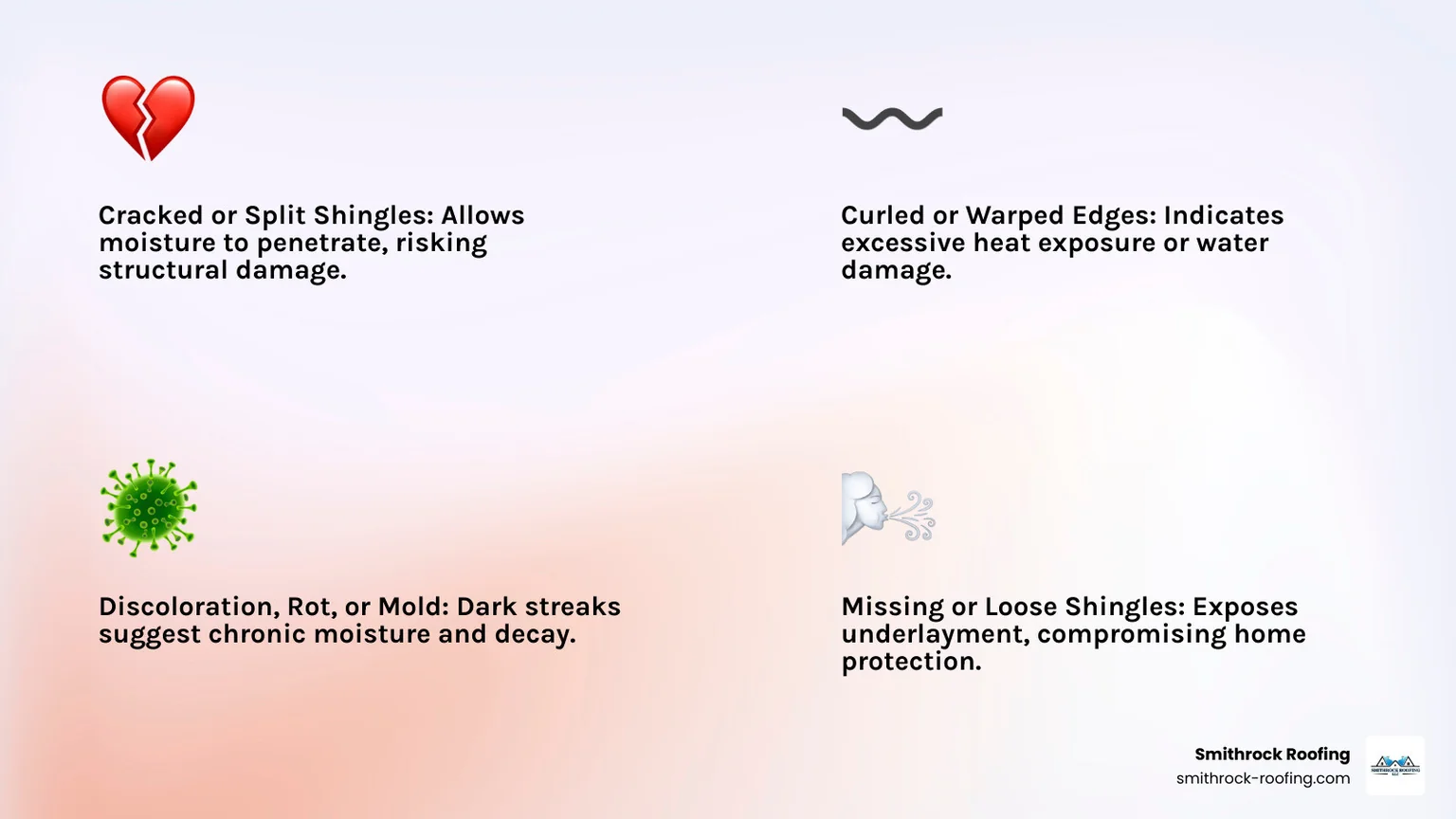
A cracked or split shingle is a direct pathway for water. Caused by temperature fluctuations, impacts, or age, even a small fracture can lead to water infiltration and damage the sheathing beneath. Missing shingles, often torn off by high winds, are an even more urgent problem. They leave the exposed underlayment vulnerable to every rainstorm, compromising your home’s structural integrity if not addressed quickly.
Shingles that no longer lie flat are a clear sign of trouble. Curling shingles, where the edges lift, are often caused by aging materials drying out from sun exposure or moisture getting underneath. Excessive heat can accelerate this process. These gaps invite wind-driven rain to get behind the siding. Loose shingles are typically due to fastener failure, where nails have rusted or worked their way out. A temporary fix with roofing cement can secure a loose shingle until a proper repair can be made.
Dark spots or streaks on your shingles are serious warning signs of prolonged moisture exposure. These marks often indicate mold growth and rot. If you can safely reach the area, press on the shingle. A spongy texture or crumbling wood confirms rot, a clear water infiltration indicator. Rotted wood has lost its structural integrity and requires full replacement; it cannot be patched. A musty smell is another sign of rot. Significant mold or rot may indicate a larger problem with the sheathing underneath, which may require professional assessment and remediation.
Proper preparation is key to a successful shingle siding repair. Having all the necessary tools and materials on hand before you start prevents frustrating interruptions and ensures a durable, professional-looking result.
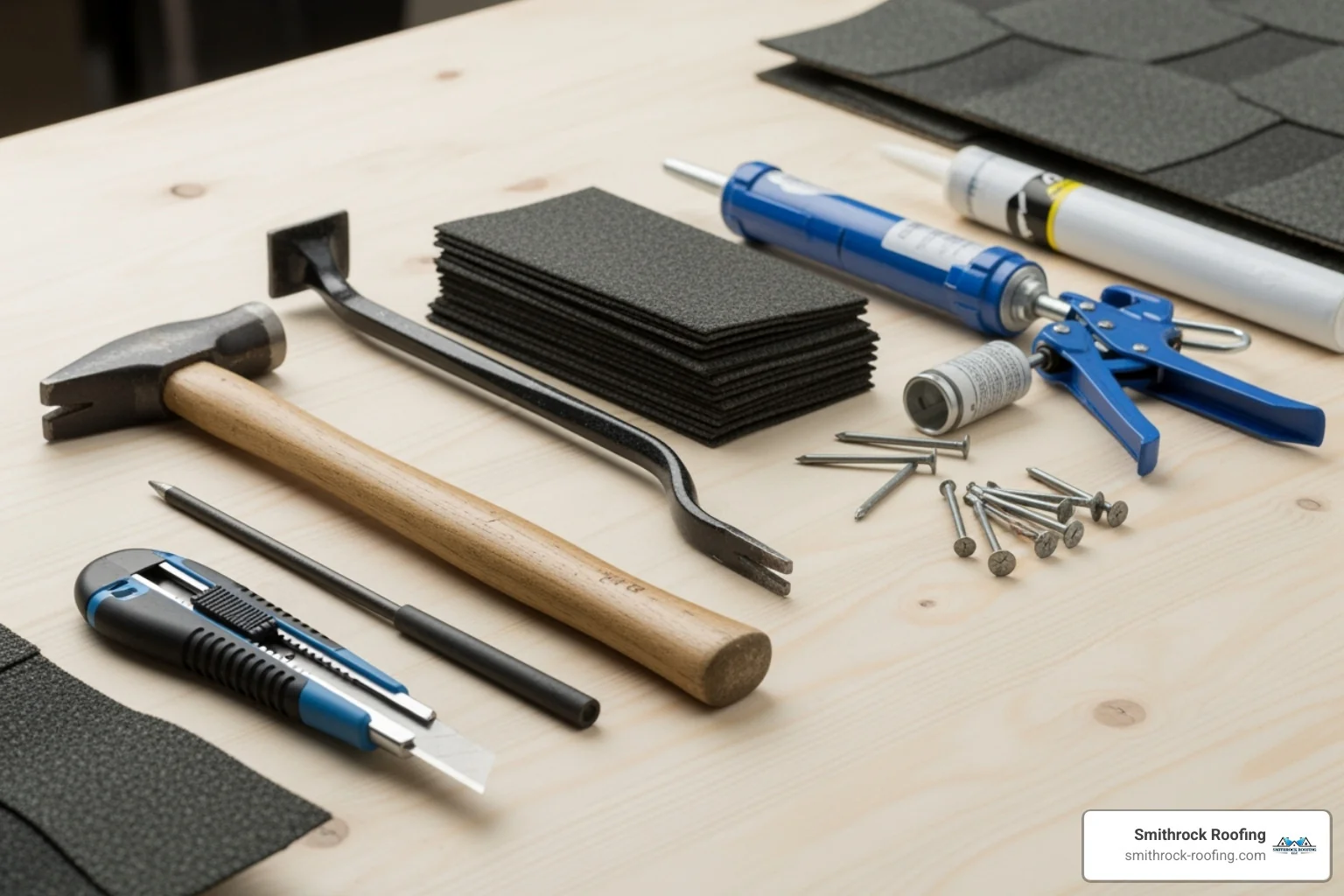
Assemble your toolkit with these essential items:
Sourcing the right materials is critical for a seamless repair:
With your tools and materials ready, it’s time to begin the shingle siding repair. This process requires patience and precision to ensure a durable, weatherproof, and seamless finish.
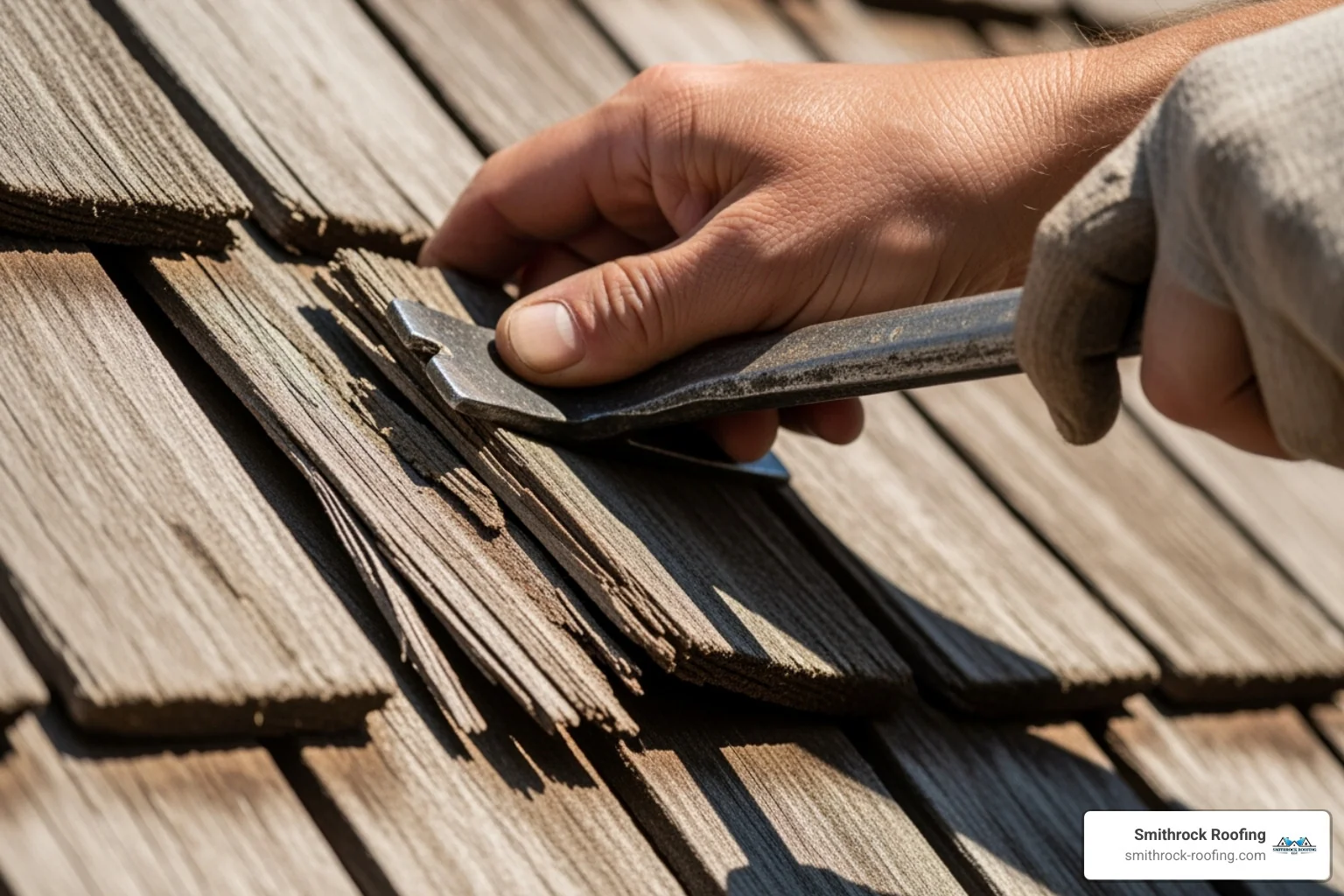
Carefully remove the damaged pieces without harming the surrounding shingles. Start by using a flat pry bar to gently lift the shingle directly above the damaged one. This will expose the nail heads holding the damaged piece in place. Use the claw of your hammer or the pry bar to extract the nails. For stubborn or hidden nails, a Slaters Ripper is the ideal tool. Alternatively, a reciprocating saw with a metal-cutting blade can be used to carefully cut the nail shafts behind the shingle. Once the fasteners are removed, the damaged shingle should slide out. Remove any broken fragments from the cavity.
With the shingle removed, critically inspect the exposed sheathing (the wood layer underneath). Look for any signs of rot, water stains, or mold. Press on the wood; if it feels soft or spongy, it must be repaired. If the sheathing is damp, allow it to dry completely before proceeding. If you suspect an ongoing leak, you must find and fix the source. Our guide on roof leak repair in Winston Salem can help. Secure any loose sheathing boards with galvanized nails. If you find rot, cut out the damaged section and replace it with a new, precisely-cut piece of plywood or board. This step is crucial for the long-term integrity of your repair.
First, ensure the weather barrier is intact. If the housewrap or building paper is damaged, cut a new piece to cover the exposed area, overlapping any existing paper by at least two inches. For wood siding, rosin paper is an excellent choice for underlayment. Staple it securely to the sheathing.
Next, cut your replacement shingle to the correct size. Slide it into place, aligning its bottom edge with the surrounding shingles in the same course. Leave a small gap of about 1/8-inch between adjacent wood shingles to allow for natural expansion and contraction, which prevents buckling.
To nail the shingle, use four-penny galvanized nails. Drive one nail about 3/4 to 1 inch from each side of the shingle. The key is to place the nails so they will be covered by the shingle in the course above. For a professional “secret nailing” technique, slide the shingle into place but stop about 1/2-inch short. Drive two nails at a 45-degree angle just below the edge of the shingle above it. Then, tap the new shingle up into its final position, completely hiding the nail heads.
With the new shingles installed, the final touches will ensure your shingle siding repair is both weatherproof and invisible. These steps separate a good repair from a great one.
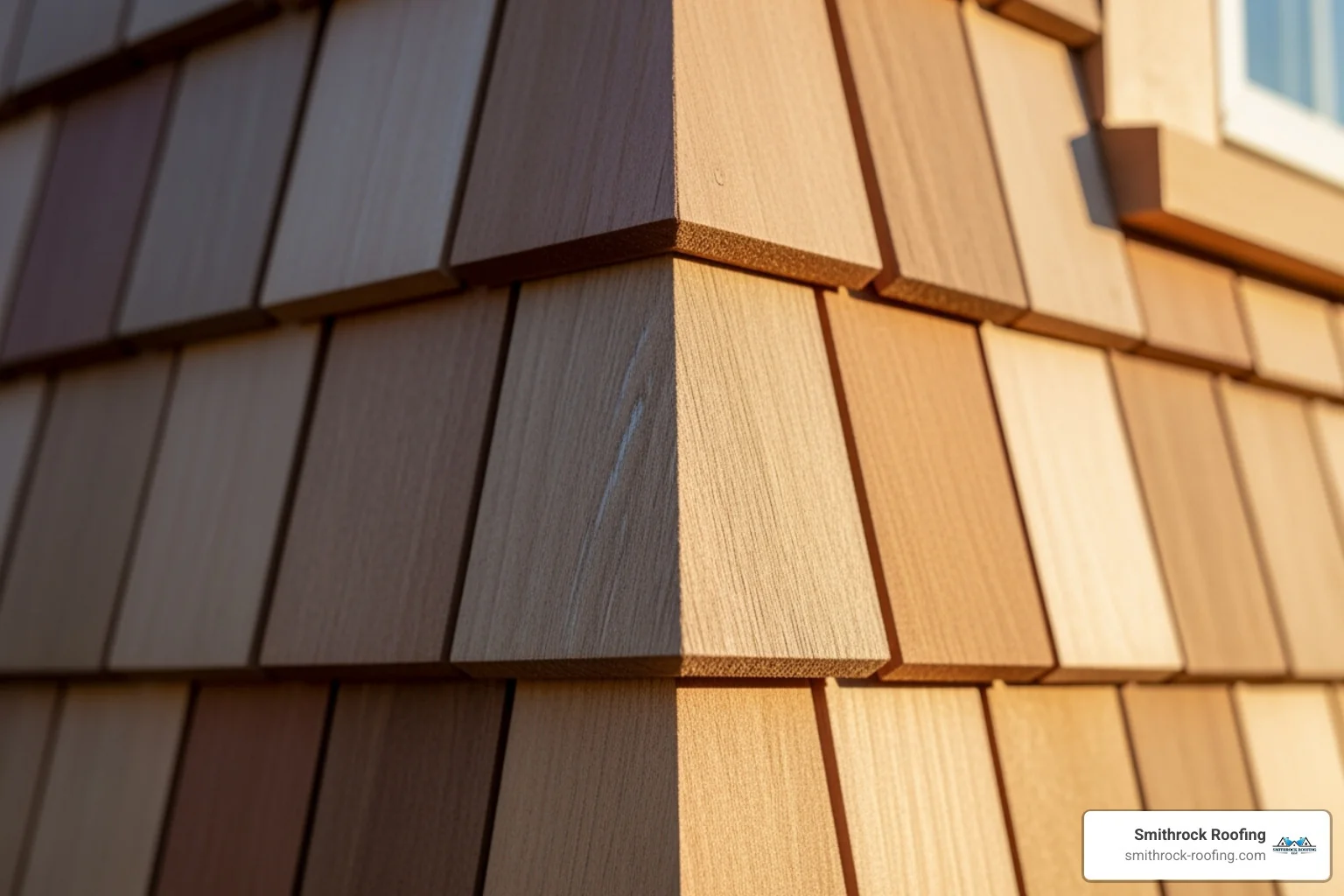
If your repair includes a corner, a woven corner is a superior technique for both aesthetics and water resistance. Instead of using corner boards, you’ll overlap the shingles in an alternating pattern. On one course, the shingle from the first wall extends past the corner; on the next course up, the shingle from the adjacent wall overlaps it. This creates a durable, interlocking “braid.”
Use a block plane to trim the excess material from each overlapping shingle, making it flush with the face of the adjoining wall. Planing with the wood grain will prevent splintering and create a clean, tight joint. This method provides excellent weather protection and a high-end, craftsman-quality finish.
New cedar shingles have a light tan color that contrasts with weathered, silver-gray siding. You have a few options to blend your repair.
The goal is to make the repair invisible, blending protection and aesthetics for a flawless result.
Your shingle siding repair is done, but ongoing care is essential to protect your investment. Proactive maintenance can help cedar shingles last 30 to 50 years by catching small problems before they escalate.
Regular inspections are your first line of defense. At least twice a year (spring and fall), walk around your home and perform a visual check. Look for new cracks, loose shingles, or discoloration that could signal moisture issues. Pay close attention to areas exposed to harsh sun or prevailing winds.
Our article on the benefits of regular roof inspections highlights principles that apply equally to siding.
Take these extra steps to boost your siding’s longevity.
Homeowners often have similar questions when tackling shingle siding repair. Here are answers to some of the most common concerns.
For a temporary fix on a curled shingle, clean underneath it and apply a bead of roofing sealant. Press the shingle down firmly and place a weight (like a wrapped brick) on it for 24 hours to ensure a strong bond. For a loose but otherwise intact shingle, carefully lift it, drive a new galvanized nail in a fresh spot where it will be covered by the shingle above, and then apply a dab of sealant over the nail head and along the shingle’s edges for a watertight seal.
This question is about roofing, but it comes up often. It is sometimes possible to install metal roofing over a single layer of asphalt shingles if the roof deck is sound and local building codes allow it. However, this practice is not recommended for siding. Siding has different requirements for ventilation, moisture management, and installation that make layering materials in this way inappropriate.
While many repairs are suitable for DIY, it’s wise to call a professional in certain situations. You should hire an expert if:
A professional ensures the job is done correctly, safely, and often with a warranty for peace of mind. If you’re unsure, get a free estimate from a pro to make an informed decision.
By following this guide, you are now equipped to handle your own shingle siding repair with confidence. Completing this project yourself not only protects your home and improves its character but also provides the satisfaction of a job well done. These skills will help you spot and address future issues early.
Of course, not every project is a DIY endeavor. Recognizing when to call for help is a sign of a wise homeowner. If you encounter extensive damage, significant rot, or feel the job is beyond your comfort level or safety limits, it’s time to bring in an expert.
For complex or large-scale siding projects, trusting a professional ensures a durable, warrantied result. At Smithrock Roofing, we have helped countless homeowners in Winston-Salem and surrounding areas with repairs and full siding replacements. Our experienced team is committed to quality and protecting your home.
Whether you do it yourself or hire a professional, the most important step is to take action. Don’t let damaged siding compromise your home. If you’re ready to discuss your siding needs or want a professional assessment, we’re here to help. Explore our expert siding services to see how we can keep your home beautiful and protected for years to come.
Need a local pro? Learn more about our siding installation and repair in Clemmons.
See also: Siding Winston-Salem NC | Expert Installation & Repair
See also: Siding Greensboro NC: Expert Guide for Local Homeowners
Shingle siding repair is crucial for protecting a home from water damage, improving curb appeal, and saving money over a full replacement by addressing issues like cracked shakes, curled shingles, or rot.
To repair shingle siding, assess the damage, gather supplies like a pry bar, hammer, replacement shingles, and roofing cement, remove damaged shingles, inspect and repair the sheathing if needed, install new shingles, and blend the repair area with the surrounding siding.
When repairing shingle siding, wear heavy-duty gloves, protective eyewear, and non-slip shoes, ensure ladder safety, avoid working in adverse weather conditions, and consider scaffolding for extensive repairs or work above the second story.
Unaddressed shingle siding damage can lead to moisture seeping behind the siding, causing rot, mold, and potentially costly structural repairs.

Smithrock Roofing © Copyright 2026 • All Rights Reserved • Privacy Policy • Maintained by Mongoose Digital Marketing