Why Drafty Windows Are Costing You Money and Comfort
That persistent, invisible chill you feel near a window on a cold day isn’t just in your imagination. It’s a draft, and it’s the sound of your money and comfort escaping your home. Learning to insulate drafty windows is one of the most effective ways to stop wasting energy, lower your utility bills, and reclaim your living space from the cold. Here’s a more detailed look at what you need to know.
Expanded Answer: How to Insulate Drafty Windows
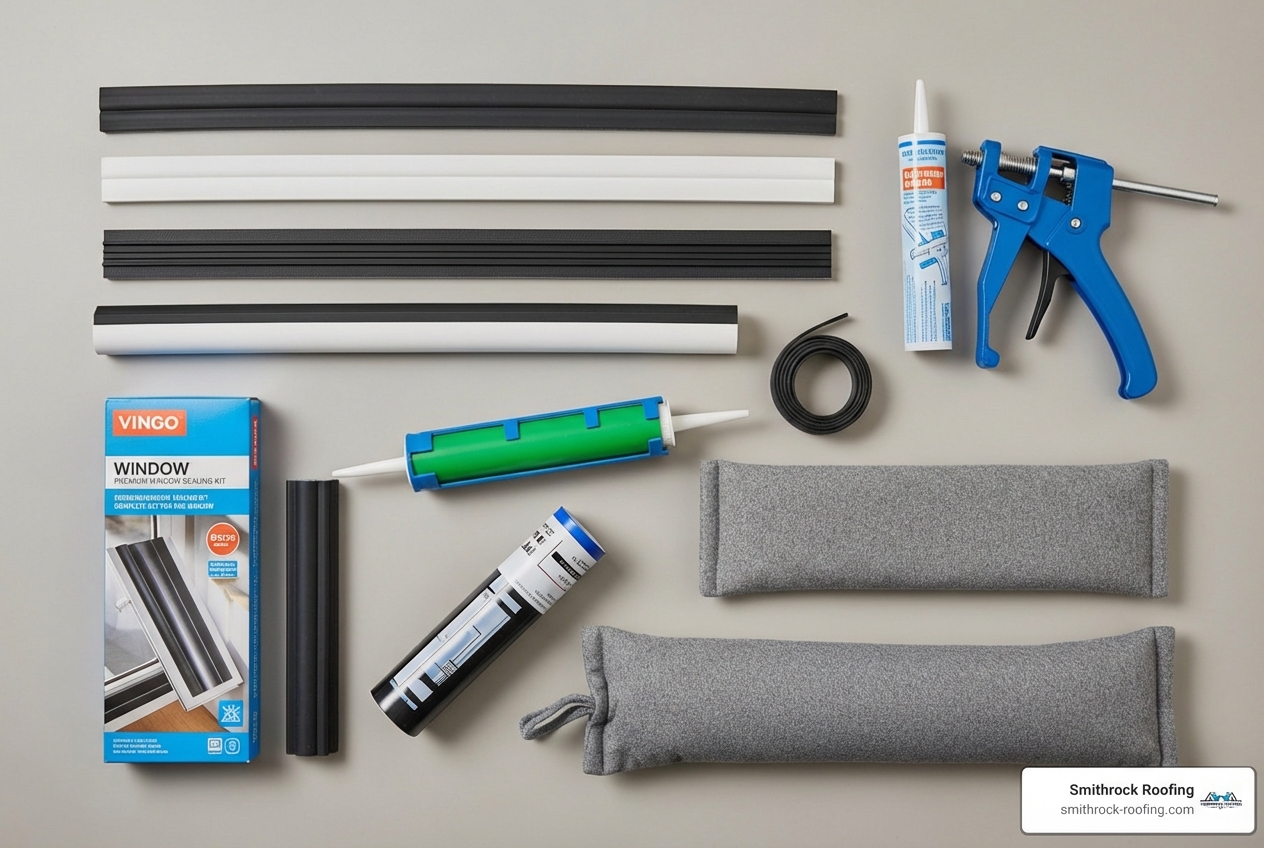
- Weatherstripping: This is your first line of defense for moving parts. Apply self-adhesive foam tape or more durable V-strip vinyl to the channels and contact points of window sashes to block air from seeping through.
- Caulk: For stationary cracks and gaps, caulk is the answer. Use a high-quality, flexible silicone or latex caulk to fill the space between the window frame (trim) and the wall, creating an airtight seal.
- Window Insulation Film: This creates a pocket of insulating air. You apply a thin, clear plastic film to the interior window frame, then use a hairdryer to shrink it tight, making it nearly invisible. It acts like a temporary double-pane window.
- Draft Stoppers (or Snakes): A simple, movable solution. These fabric tubes, filled with an insulating material, are placed on the windowsill against the bottom of the sash to physically block incoming air.
- Thermal Curtains: An upgrade from standard drapes, these heavy, multi-layered curtains have a thermal lining designed to block drafts and reduce heat transfer through the glass itself.
- Interior Storm Windows: A more significant, semi-permanent upgrade. These are clear acrylic or glass panels that you mount on the inside of your existing windows for the season, creating a highly effective second barrier against the cold.
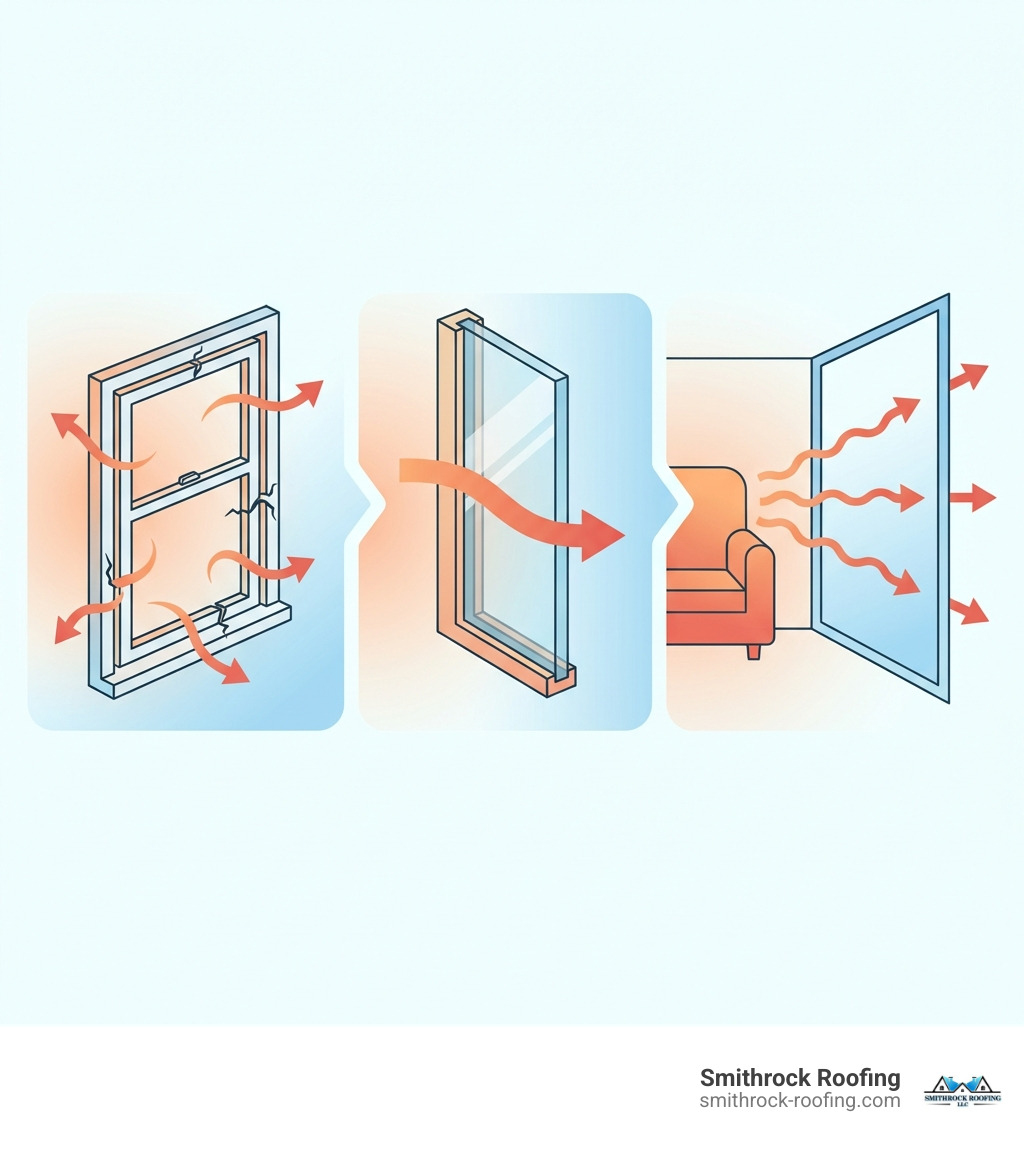
When outdoor temperatures plummet, your heating system works hard to maintain a comfortable environment. However, your efforts could be futile if drafty windows are working against you. According to the U.S. Department of Energy, windows can be responsible for a staggering 25% to 35% of your home’s heating and cooling loss. To put that in perspective, if your monthly heating bill is $300, you could be losing up to $105 directly through your windows each month.
Even a tiny 1/8-inch gap around a window frame can let in as much cold air as leaving a small window wide open. This phenomenon, often exacerbated by the “stack effect” (where cold air enters low in the house, and warm air is pushed out high), forces your furnace to run longer and harder, increasing wear and tear and driving up your energy consumption. The good news is that you don’t need to be a professional contractor or spend a fortune on new windows to make a massive difference.
Most homeowners can effectively combat drafty windows with simple, affordable DIY solutions that deliver immediate, noticeable results. Some of these fixes can be completed in under 30 minutes and for less than the cost of a pizza. This comprehensive guide will walk you through everything from the quickest weekend projects to more substantial long-term upgrades, helping you find practical, effective solutions that fit your budget, skill level, and home’s specific needs.

Basic insulate drafty windows glossary:
Understanding the Chill: Causes and Telltale Signs of Drafty Windows
To effectively insulate drafty windows, you must first become a detective. Understanding why your windows are leaking air and where those leaks are located is the critical first step to choosing the right solution and stopping the chill for good.

What are the common causes of drafty windows?
Drafts are rarely due to a single issue. They often result from a combination of age, material failure, and environmental factors. Here are the most common culprits we see in homes across Winston-Salem, King, and beyond:
- Old Single-Pane Windows: The original standard, these windows offer minimal insulation. Heat easily conducts directly through the single layer of glass. They lack the insulating air or gas-filled pocket found in modern double or triple-pane windows, making them a primary source of heat loss.
- Worn Seals and Gaskets: Windows have a variety of seals designed to keep air and water out. Over time, these components degrade. Pile weatherstripping (the fuzzy strips) can become compressed and worn, while vinyl and rubber gaskets can become brittle, cracked, or deformed from years of temperature cycles, losing their ability to create an airtight barrier.
- Decaying Caulk: The caulk sealing your window frame to the wall is your home’s frontline defense against outdoor elements. Due to sun exposure, moisture, and temperature fluctuations, this sealant can dry out, crack, shrink, or pull away from the surfaces, creating obvious gaps for air to infiltrate.
- Warped or Damaged Frames: Wooden frames are susceptible to moisture, which can cause them to rot, swell, or warp. This prevents the window sash from sitting squarely in the frame, creating uneven gaps. While more stable, vinyl and aluminum frames can also become damaged or bent, compromising the seal.
- Poor Installation: A high-quality window installed improperly will perform poorly. If the original installers didn’t correctly flash, insulate, and seal the rough opening around the window unit, air can leak around the entire frame, no matter how good the window itself is.
- Incomplete Closure and Lock Failure: Sometimes the simplest solution is the right one. If a window isn’t closed completely or the lock isn’t engaged, it won’t be fully sealed. Locking mechanisms are designed to pull the sashes together and compress the weatherstripping, creating a much tighter seal.
How can I identify if my windows are drafty?
Don’t just guess—know for sure. Play detective and find precisely where those drafts are hiding with these simple-to-advanced tests:
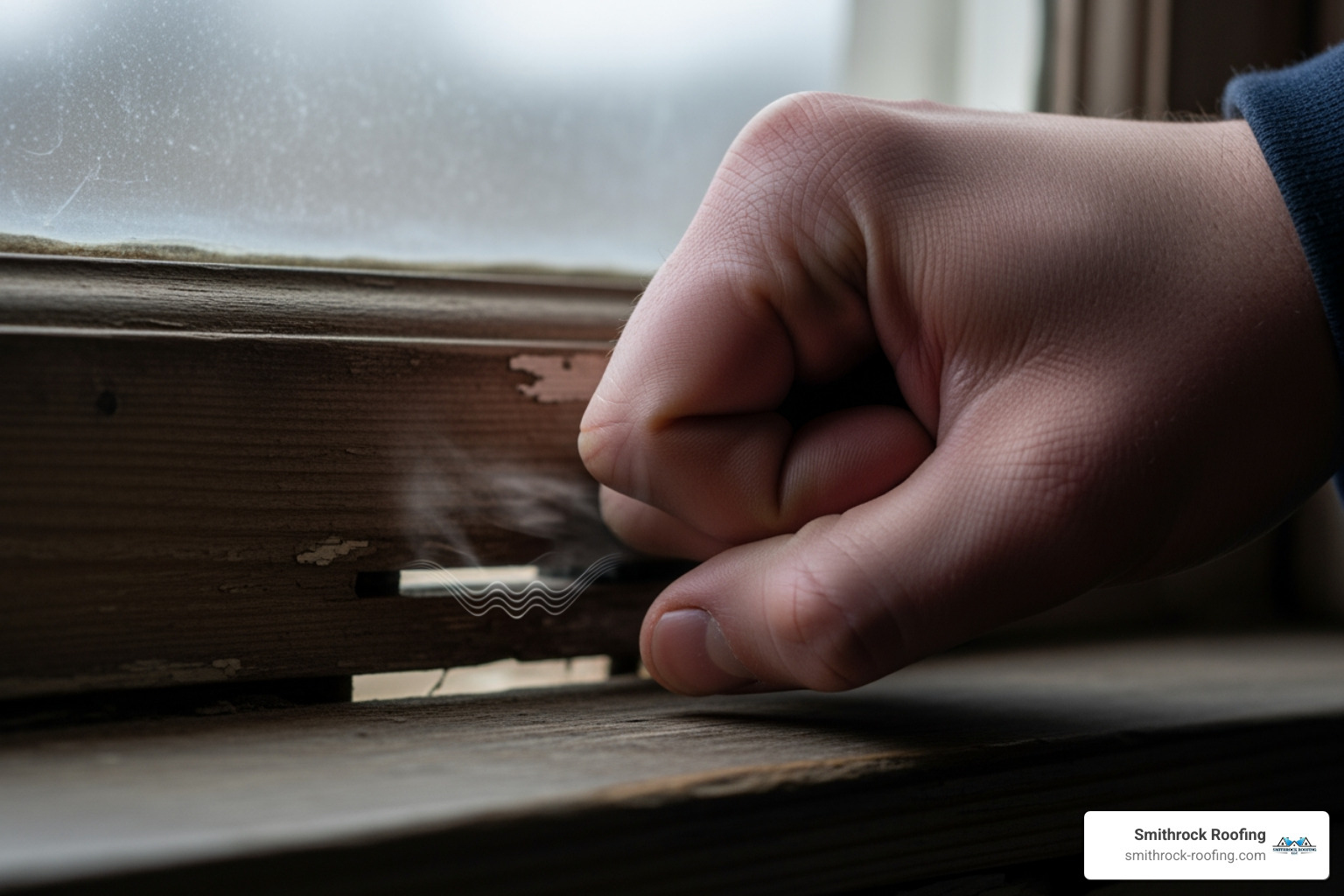
- The Hand Test: The simplest method. On a cold, windy day, slowly move your hand around the entire perimeter of the window frame, sashes, and where the window meets the wall. If you feel a distinct cold breeze, you’ve found a leak.
- The Candle or Incense Test: For a more visual confirmation, carefully hold a lit candle or an incense stick near the window edges (staying a safe distance from flammable materials like curtains). If the flame flickers wildly or the smoke trail is disturbed and swirls into the room, it’s being pushed by an air leak.
- The Paper Test: A great test for checking the compression of your window seals. Place a single piece of paper between the sash and the frame, then close and lock the window. If you can pull the paper out with little to no resistance, your seal isn’t tight enough to block drafts.
- Visible Condensation or Frost Between Panes: This is a critical sign. If you see fog, moisture, or frost between the panes of a double- or triple-pane window, it means the seal has failed. The insulating gas (like argon) has escaped, and the window has lost most of its insulating value.
- The Flashlight Test: This is a two-person job for after dark. Have one person stand outside and shine a bright flashlight around the perimeter of the window. The person inside looks for any light seeping through the cracks. Where there’s light, there’s a path for air.
What are the benefits of insulating drafty windows?
Taking action to insulate drafty windows is a powerful investment in your home’s health, your comfort, and your finances.
- Lower Energy Bills: This is the most immediate and measurable benefit. By sealing air leaks, you reduce the workload on your heating and cooling systems. The US Department of Energy estimates that sealing air leaks can save 10% to 20% on your annual energy bills.
- Increased Home Comfort: A well-insulated home maintains a more consistent and comfortable temperature. It eliminates cold spots near windows and reduces the chilling effect of drafts, allowing you to enjoy every part of your home, even in the dead of winter.
- Reduced HVAC Strain and Longer Lifespan: An efficient thermal envelope means your furnace and air conditioner don’t have to cycle on and off as frequently or run for as long. This reduced wear and tear can extend the operational lifespan of these expensive systems and delay costly repairs or replacements.
- Improved Home Energy Efficiency: Insulating windows is a cornerstone of creating an energy-efficient home. It directly improves your home’s overall performance by lowering the U-factor (the rate of heat loss) of your windows, a key metric in energy audits.
- Reduced Noise Pollution: The same gaps that let in cold air also let in unwanted noise. Sealing those air leaks creates a more effective sound barrier, helping to reduce noise from traffic, neighbors, and other outside disturbances.
- Better Indoor Air Quality: Unfiltered air entering through gaps brings dust, pollen, pollution, and other allergens with it. By sealing your windows, you take greater control over your indoor air quality, which is especially important for families with allergies or respiratory issues.
Want to learn more about saving energy? Check out our energy saving tips to make a difference.
Ready to roll up your sleeves and tackle those drafts? Here are seven effective DIY methods to insulate drafty windows. These solutions range from 15-minute quick fixes to more involved weekend projects, all of which are cost-effective and can significantly improve your home’s comfort by lowering your window’s U-factor (the rate of heat flow).

Method 1: Applying Weatherstripping for a Tighter Seal
Weatherstripping is the most effective way to seal air leaks around the moving parts of your windows (the sashes).
- What it is: A flexible material that compresses to fill gaps between the window sash and the frame. It comes in several varieties.
- Adhesive-Backed Foam Tape: Inexpensive and easy to install. Best for irregular gaps, but has a shorter lifespan (1-3 years).
- V-Strip (Tension Seal): A durable, folded vinyl or metal strip that springs open to bridge gaps. It’s more durable than foam and nearly invisible when installed correctly.
- Materials Needed: Your chosen weatherstripping, tape measure, scissors or utility knife, cleaning cloth, and rubbing alcohol.
- **How to Apply (Foam or V-Strip):
- Prepare the Surface: Open the window and thoroughly clean the surfaces where the stripping will be applied. Use a cloth and rubbing alcohol to remove all dust, grime, and oil. A clean surface is crucial for good adhesion. Let it dry completely.
- Measure and Cut: Measure the height and width of the sash or frame you’re sealing. Cut the weatherstripping to the exact length needed. For corners, it’s best to make two separate cuts that meet, rather than trying to fold the strip.
- Apply: For foam tape, peel back a few inches of the paper backing and press the adhesive side firmly onto the clean, dry surface. Continue peeling the backing as you press the strip into place. For V-strips, place them with the ‘V’ opening facing the direction of the draft.
- Test: Close and lock the window. It should feel snug but still operate smoothly. If the window is difficult to close, you may need a thinner type of weatherstripping.
For a detailed visual guide, see the DIY weatherstripping project guide from the U.S. Department of Energy.
Method 2: Sealing Gaps with Caulk and Glazing
Caulk is for sealing stationary, non-moving parts of the window, specifically the gaps between the window frame/trim and the wall.
- What it is:
- Caulk: A flexible sealant applied with a caulk gun to fill gaps. For windows, use an exterior-grade, paintable silicone or siliconized latex caulk for durability and flexibility.
- Window Glazing: A putty used on older, single-pane wood windows to create a seal between the glass pane and the wood sash.
- Materials Needed: Caulk gun, tube of appropriate caulk, putty knife or caulk removal tool, utility knife, painter’s tape (optional), window glazing compound (if needed).
- **How to Apply Caulk:
- Remove Old Caulk: Use a putty knife or specialized tool to scrape and cut away any old, cracked, or peeling caulk. A clean joint is essential for a lasting seal.
- Clean the Area: Vacuum up any debris and wipe the area with a damp cloth to remove dust. Let it dry.
- Apply: Cut the caulk tube tip at a 45-degree angle, creating a small opening (about 1/8-inch). Puncture the inner seal with a long nail or the gun’s built-in poker. Apply a continuous, steady bead of caulk along the gap. Move at a consistent speed to ensure an even bead.
- Smooth (Tool) the Bead: Immediately after applying, use a caulk finishing tool or a wet finger to smooth the bead. This presses the caulk into the gap for a complete seal and creates a neat, professional finish.
Method 3: How to insulate drafty windows with Insulation Film
Window film kits are a highly effective and affordable way to create an insulating layer of trapped air, essentially turning your window into a temporary double-pane unit.
- What it is: A kit containing a large sheet of clear plastic film and double-sided adhesive tape. When heated, the film shrinks to become taut and virtually invisible.
- Materials Needed: Window insulation film kit, scissors, tape measure, hairdryer, cleaning cloth, rubbing alcohol.
- **How to Install:
- Clean the Frame: Thoroughly clean the interior window frame or trim with rubbing alcohol to ensure the tape will stick securely. Let it dry completely.
- Apply Tape: Carefully apply the included double-sided tape around the perimeter of the window frame. Press it down firmly. Do not remove the outer paper backing yet.
- Attach Film: Measure and cut the film to be about one inch larger than the taped area on all sides. Starting at the top, remove the paper backing from the tape and press the film firmly onto it. Work your way down the sides and then the bottom, gently pulling the film taut as you go.
- Shrink to Fit: Using a hairdryer on a medium-hot setting, hold it 3-6 inches from the film and move it continuously over the surface. The film will magically shrink, removing all wrinkles and creating a tight, clear insulating barrier. Be careful not to overheat one spot, which could melt the film.
This method is excellent for increasing the R-value of single-pane windows. See the ENERGY STAR guide to applying plastic over windows for more tips.
Method 4: Using Draft Stoppers and Snakes
This is the simplest, most flexible way to block drafts at the bottom of a window or door.
- What it is: A weighted fabric tube (often called a “draft snake”) placed along the bottom of a window sill to physically block airflow.
- How They Work: Simply place the draft stopper snugly against the bottom of the window sash. The weight inside (often sand, rice, or kitty litter) holds it in place and ensures a good seal against the sill.
- Best For: A quick, non-permanent, and movable fix for drafts at the bottom of double-hung windows or along the bottom of patio doors. You can even make your own with fabric and a filler material.
Method 5: Leveraging Insulating Window Coverings
Your window treatments can be more than just decorative; they can be a powerful tool for insulation.
- Types of Coverings:
- Thermal Curtains: These are not your average drapes. They are made from heavy, multi-layered fabric, often with a foam or fleece interlining and a reflective backing. To be effective, they should be hung as close to the window as possible and extend to the floor or sill.
- Honeycomb or Cellular Shades: These are the champions of insulating window treatments. Their honeycomb-shaped pockets trap air, creating a significant insulating barrier. Double-cell shades offer even more insulation than single-cell versions.
- How They Work: They trap a layer of stagnant air between the window and the room, which acts as an excellent insulator, reducing both heat loss in winter and heat gain in summer.
- Best Practices: In winter, keep them closed at night to trap heat inside. On sunny days, open them on south-facing windows to take advantage of passive solar heating.
Method 6: Using Removable Caulking
Perfect for renters or for a temporary, seasonal seal on windows you don’t plan to open during the winter.
- What it is: A non-permanent, peelable sealant that comes in a rope form (weatherstrip cord) or a tube like regular caulk.
- How to Apply: For rope caulk, simply unroll a strand and use your fingers to press it firmly into the gaps around the window sash and frame. For the tube version, apply a bead just like regular caulk. It doesn’t require smoothing.
- How to Remove: When spring arrives, you can simply peel it away. It’s designed to come off cleanly without damaging painted surfaces or window finishes.
- Best For: Sealing windows in rental properties, historic homes, or any window you want to temporarily seal shut for the cold season.
Method 7: Applying Bubble Wrap as a Temporary Fix
A surprisingly effective, ultra-low-cost insulator for windows where aesthetics are not a concern.
- What it is: Standard packing bubble wrap applied directly to the glass. The trapped air in the bubbles provides a significant insulating effect (an R-value of around 1.5).
- Materials Needed: Bubble wrap (larger bubbles provide more insulation), spray bottle with water, scissors or utility knife.
- **How to Apply:
- Cut Wrap: Cut the bubble wrap to the exact size of the windowpane.
- Spray Window: Lightly mist the windowpane with a film of water from the spray bottle.
- Apply: Press the bubble wrap onto the wet glass with the bubble-side facing the glass. The surface tension of the water will hold it in place all winter. It’s easily removable and leaves no residue.
- Best For: Basement windows, garage windows, or any utility room where a clear view is not necessary but improved insulation is desired.
Beyond the Quick Fix: Long-Term Solutions for Drafty Windows
While DIY methods offer immediate and often substantial relief, some windows are past the point of a quick fix. If you’ve sealed and weatherstripped but still feel a chill, or if your windows show significant signs of age and damage, it’s time to consider a more permanent, long-term upgrade.
How to permanently insulate drafty windows with Interior Storm Windows
Interior storm windows represent a significant step up from temporary plastic film, offering a durable, reusable, and highly effective solution that bridges the gap between DIY fixes and full window replacement.
- What They Are: A secondary window system installed on the inside of your existing primary window. They consist of a clear panel (typically acrylic, polycarbonate, or glass) set in a frame that seals tightly against your interior window opening. This creates a large, sealed air pocket that dramatically improves insulation and stops drafts.
- Types of Interior Storms:
- Compression Fit: These have a flexible gasket around the edge and are simply pushed into the window opening, held in place by compression.
- Magnetic Seal: These use a magnetic strip on both the storm panel and a corresponding strip on the window frame for a tight, easy-to-remove seal.
- Operable Panels: More complex systems that may slide or hinge, allowing you to open them without removing the entire unit.
- Benefits:
- Significant Draft Reduction: They create a superior airtight seal that virtually eliminates air leakage.
- Improved Thermal Performance: The trapped air pocket can add an R-value of 2-3, effectively doubling the insulating power of a single-pane window.
- Excellent Soundproofing: The extra layer and air gap are highly effective at reducing outside noise from traffic, lawnmowers, and neighbors.
- Durable & Reusable: Unlike film, these are a one-time purchase that can be used season after season for many years. They are also far more resilient to damage.
- Preserves Historic Windows: They are an ideal solution for older or historic homes where you want to preserve the original windows but drastically improve their performance.
- Considerations:
- Higher Initial Cost: They are significantly more expensive than film kits but represent a fraction of the cost of full window replacement.
- Storage: You will need a safe place to store the panels during the warmer months.
- Operation: Depending on the type, you may need to remove the panel to open the primary window for fresh air.
Interior storm windows are a fantastic intermediate step before considering full Window Replacement, extending the life of your current windows while delivering comfort and energy savings.
When to Consider Full Window Replacement
For some homes, especially those in areas like Winston-Salem and King with older housing stock, full window replacement is the most effective and definitive long-term solution to insulate drafty windows.
When considering replacement, explore options like Best Windows for Insulation and understand the benefits of Vinyl Windows Winston Salem. Our team specializes in our Window Replacement Winston Salem Ultimate Guide and can help you find the best options.
Year-Round Maintenance and Cost Implications
The journey to insulate drafty windows doesn’t end after a single project. It’s an ongoing process of maintenance and smart decision-making. Regular checks ensure your efforts continue to pay off, keeping your home comfortable and your energy bills low throughout the year.
How to Maintain Your Window Insulation: A Seasonal Checklist
winterizing your windows is not just a one-time task but an annual process that yields year-round comfort and savings.
Comparing the Costs and ROI of Different Insulation Methods
Cost is a critical factor when deciding how to insulate drafty windows. The goal is to achieve the best return on investment (ROI), whether through immediate bill savings or long-term home value. Here’s a more detailed breakdown.
| Method | Relative Cost | Estimated Cost (per window) | Skill Level | Durability | Payback Period |
|---|
| Draft Stopper | Very Low | $0 (DIY) – $20 | Beginner | Temporary | Immediate |
| Bubble Wrap | Very Low | < $5 | Beginner | Temporary | Immediate |
| Film Kit | Low | $5 – $15 | Beginner | Temporary (1 season) | < 1 Year |
| Caulk | Low | $5 – $20 | Beginner-Intermediate | Semi-Permanent (5-10 yrs) | 1-2 Years |
| Weatherstripping | Low | $10 – $25 | Beginner | Semi-Permanent (3-5 yrs) | 1-2 Years |
| Thermal Curtains | Low-Medium | $50 – $200+ | Beginner | Long-Term | 2-5 Years |
| Interior Storm Windows | Medium | $150 – $400+ | Intermediate | Long-Term (10+ yrs) | 3-7 Years |
| Full Replacement | High | $600 – $2,000+ | Professional | Very Long-Term (20+ yrs) | 7-15+ Years |
Low-Cost, High-Impact (Under $50 per window): Fixes like weatherstripping, caulk, film, and draft stoppers offer immediate relief and the fastest ROI. The energy savings from a single winter can often exceed the minimal upfront cost. These are the essential first steps for any homeowner.
Medium Investment, Greater Durability ($50 – $400 per window): Insulating curtains and interior storm windows represent a more significant investment but provide superior performance, durability, and added benefits like soundproofing. The ROI is still excellent, with a payback period typically under 7 years, making them a very smart upgrade.
Long-Term Investment, Maximum Efficiency ($600+ per window): Full window replacement is the most significant financial commitment but offers the highest possible level of energy efficiency, comfort, noise reduction, and home value. While the payback period from energy savings alone is longer, the immediate improvement in quality of life and the boost to your home’s resale value provide a powerful combined ROI.
We believe that energy-efficient upgrades are a long-term investment in your home’s value, comfort, and sustainability.
Frequently Asked Questions about Insulating Drafty Windows
We hear a lot of great questions from homeowners about how to insulate drafty windows. Here are detailed answers to some of the most common ones.
Can I insulate drafty windows in a rental property?
Absolutely! The key is to use non-permanent, non-damaging methods. Always check your lease agreement for any specific rules, but these solutions are generally safe for renters:
- Window Insulation Film: This is a renter’s best friend. It’s highly effective and removes cleanly at the end of the season with no residue if applied correctly.
- Removable Caulk (Weatherstrip Cord): This putty-like rope presses into gaps and peels off easily in the spring without damaging paint or finishes.
- Draft Stoppers: These simply sit on the windowsill and are instantly removable, requiring no installation at all.
- Tension-Rod Thermal Curtains: You can hang heavy thermal curtains using a tension rod that fits inside the window frame, avoiding the need to drill holes for brackets.
- Compression-Fit Interior Storms: Some companies offer custom-sized interior storm windows that are held in place by compression, requiring no screws or permanent mounting.
Focus on solutions that don’t involve permanent alterations to protect your security deposit while still enjoying a warm, comfortable space.
What is the single most effective DIY way to insulate drafty windows?
This is a great question, but the answer depends entirely on the source of your draft. There is no single silver bullet; a combined approach is usually best.
- For leaks around moving parts (where the sash meets the frame): Weatherstripping is unequivocally the most effective solution.
- For heat loss directly through the glass pane: Window insulation film is the most effective DIY method. It creates an insulating air pocket that significantly reduces conductive heat loss.
- For cracks between the stationary frame and the wall: Caulking is the only correct and effective solution.
For maximum impact, a homeowner should combine methods. A truly effective DIY winterization project on an old window would involve replacing worn weatherstripping, re-caulking the exterior trim, and then applying an interior window film kit. This multi-pronged attack addresses all major sources of heat loss.
Will insulating my windows also help in the summer?
Yes, 100%! This is a crucial point many people miss. Insulation works both ways. The same principles that keep cold air out in the winter also keep hot air out in the summer.
- Sealing leaks with caulk and weatherstripping prevents hot, humid outdoor air from infiltrating your home and keeps your cool, conditioned air from escaping. This reduces the strain on your air conditioner.
- Insulating coverings like thermal curtains and cellular shades, as well as Low-E coatings on new windows, are designed to reflect thermal energy. In the summer, they reflect the sun’s heat away from your windows, preventing solar heat gain and keeping your home cooler.
Insulating your windows is a year-round investment in energy savings and comfort.
What’s the difference between U-Factor and R-Value?
- R-Value measures resistance to heat flow. The higher the R-value, the better the insulation. You often see this used for walls and attics.
- U-Factor (or U-Value) is essentially the inverse of R-Value and is the standard for windows. It measures the rate of heat transfer. The lower the U-Factor, the better the window is at keeping heat in. A good modern window might have a U-Factor of 0.25, while an old single-pane window could be 1.25 or higher.
My windows are new, but they still feel drafty. What’s wrong?
This is a frustrating situation, but it’s often due to one thing: poor installation. A high-performance, expensive window will perform terribly if it’s not installed correctly. The most common issue is that the installer failed to properly insulate and air-seal the rough opening—the gap between the window unit and the house framing. Air can then simply bypass the window frame entirely. If you suspect this is the case, you may need to carefully remove the interior trim (casing) around the window and use low-expansion spray foam or backer rod and caulk to seal that gap.
Conclusion: A Warmer, More Efficient Home Awaits
Tackling drafty windows is one of the most rewarding and financially savvy home improvement projects you can undertake. It’s a direct investment in your daily comfort and your home’s long-term health. By identifying the sources of your drafts and applying the right solutions, you can methodically transform chilly, uncomfortable rooms into the cozy, peaceful havens they were meant to be, all while watching your energy bills shrink.
We’ve journeyed through a comprehensive range of options, proving that there is a solution for every home, budget, and skill level. From the simple, immediate satisfaction of pressing rope caulk into a gap to the transformative power of installing a modern, energy-efficient window, the path to a better-insulated home is clear.
To recap your action plan:
- Become a Draft Detective: Use the simple tests—hand, paper, incense—to pinpoint exactly where your windows are failing. You can’t fix what you can’t find.
- Choose Your Solution(s): Start with the high-impact, low-cost DIY fixes. Seal gaps with caulk and weatherstripping. Add a layer of window film to combat heat loss through the glass. A combination of these methods will yield the best results for a minimal investment.
- Evaluate for the Long Term: If your windows are old, damaged, or have failed seals, acknowledge that DIY fixes are only a temporary bandage. Begin researching and budgeting for more permanent solutions like interior storm windows or a full window replacement.
- Enjoy the Benefits: Revel in a home that maintains a consistent temperature, is quieter, and costs less to heat and cool. This is the tangible reward for your efforts.
While DIY strategies are incredibly effective and empowering, there are times when a problem requires a professional solution. For windows that are severely aged, rotted, or inefficient, a professional installation of high-quality, energy-efficient windows is the single best long-term investment you can make. It permanently solves the draft issue while simultaneously boosting your home’s value, curb appeal, and overall comfort.
If you’re in the Winston-Salem, King, or surrounding North Carolina areas and are ready to solve your drafty window problems for good, we invite you to explore our window services at Smithrock Roofing. Our team of experts specializes in professional window installation and replacement. Contact us today, and let’s work together to end those unwelcome chills and make your home the comfortable sanctuary it should be.