The structural integrity of your chimney system is a fundamental component of your home’s overall health and safety. While many homeowners focus on the aesthetic appeal of their fireplace or the cleanliness of the flue, the chimney chase cover remains one of the most overlooked yet vital elements of the roofing system. The investment in chimney chase cover repair or replacement is influenced by several technical and environmental factors that determine the longevity and effectiveness of the installation. Understanding the chimney chase cover repair cost requires a deep dive into the materials, labor, and potential secondary damages that occur when this component fails.
If you have observed reddish-brown rust streaks descending the sides of your chimney, water pooling within the firebox, or damp spots on the attic rafters, these can indicate that the chase cover is no longer performing as intended. This metal component serves as a primary shield against the elements, helping to prevent moisture damage that can otherwise spread into framing, sheathing, and interior finishes. In the Piedmont Triad, where heavy seasonal rains and high humidity are common, a failing chase cover can lead to rapid deterioration of the home’s building envelope.
A chimney chase cover is specifically designed for prefabricated or factory-built chimneys. It acts as a lid for the “chase”—the framed box that houses the metal flue pipe(s) and is typically wrapped in siding, stucco, or stone veneer to match the home. Industry best practices consistently emphasize that many chimney-related moisture problems are preventable when the chase cover is properly fabricated, correctly sloped to shed water, and sealed at all penetrations. When homeowners ignore the early signs of wear, the eventual chimney chase cover repair cost often includes the price of replacing rotted 2×4 framing and moldy insulation.
One challenge for homeowners is that damage to a chase cover is often not visible from the ground. By the time a leak is noticeable inside the home, moisture may already have affected the wooden framing of the chase, increasing the likelihood of wood decay and microbial growth. Understanding how chase covers work—and why they fail—helps you choose durable, long-term solutions rather than short-lived patchwork. A proactive approach to maintenance can significantly lower the lifetime chimney chase cover repair cost by extending the intervals between major interventions.
A chase cover is sometimes mistakenly treated as a decorative piece of sheet metal, but it functions more like a miniature roof system. When designed and installed well, it:
Many homeowner “repairs” are attempted with caulk, roof cement, or generic flashing tape. While sealants have a place in a proper installation, they are not a reliable long-term substitute for correct fabrication, adequate slope, and durable metal. If the cover is thin, flat, rusted through, improperly fastened, or undersized, surface patching may simply redirect water until the next heavy storm or temperature swing opens gaps again. This temporary fix often increases the ultimate chimney chase cover repair cost because it masks the problem while the internal rot continues to spread.
A professional approach typically includes:
Different metals behave differently over years of heat, cold, rain, and wind. Galvanized steel is common in new construction because it is easy to produce, but thin galvanized covers are prone to early failure when the zinc layer is compromised. Stainless steel is widely used for durability and corrosion resistance, often coming with lifetime warranties that justify a slightly higher initial chimney chase cover repair cost. Copper offers excellent longevity and a distinctive appearance that changes over time, though it is the most expensive option.
Just as important as the metal itself is the design: a cover should include a drip edge, adequate overhang, and a slope that discourages standing water. Water that ponds on a flat top accelerates corrosion, stresses seams, and increases the chance that water finds a path into the chase. By investing in a high-quality design, you ensure that your chimney chase cover repair cost is a one-time expense rather than a recurring headache.
Chimney chase cover repair and installation guide:
In the diverse architectural landscape of the Piedmont Triad—spanning from the historic neighborhoods of Winston-Salem to the modern developments in Greensboro and Kernersville—chimneys generally fall into two categories. Traditional masonry chimneys are constructed from brick, block, or stone and utilize a concrete “crown” at the top. In contrast, prefabricated chimneys utilize a metal venting system encased in a framed structure known as a chase. This chase is typically finished with siding, stone veneer, or stucco to match the home’s exterior. Because these structures are essentially hollow boxes, the chimney chase cover repair cost is a necessary consideration for any homeowner with a factory-built fireplace.
The chimney chase cover is the engineered metal plate that caps this entire structure. Its design is critical: it must not only cover the opening but also provide a slight slope to shed water and a “drip edge” that extends over the sides of the chase to prevent water from running down the siding. Without a functioning cover, your chimney becomes a direct conduit for rainwater, snow, and debris to enter the internal structure of your home. When water enters the chase, it doesn’t just stay there; it migrates into the walls, ceilings, and even the flooring surrounding the fireplace.
The primary objective of a chase cover is moisture exclusion. However, its utility extends far beyond simple rain protection. A well-maintained cover acts as a barrier against animal intrusion. In North Carolina, squirrels, raccoons, and various bird species frequently seek the warmth and shelter of chimney chases to build nests. These nests can block ventilation, create unpleasant odors, and introduce parasites into the home. Furthermore, the cover prevents the accumulation of combustible debris like dried leaves and pine needles within the chase, which significantly reduces the risk of a structure fire. If animals have already breached the system, the chimney chase cover repair cost may also include professional wildlife removal and sanitation services.
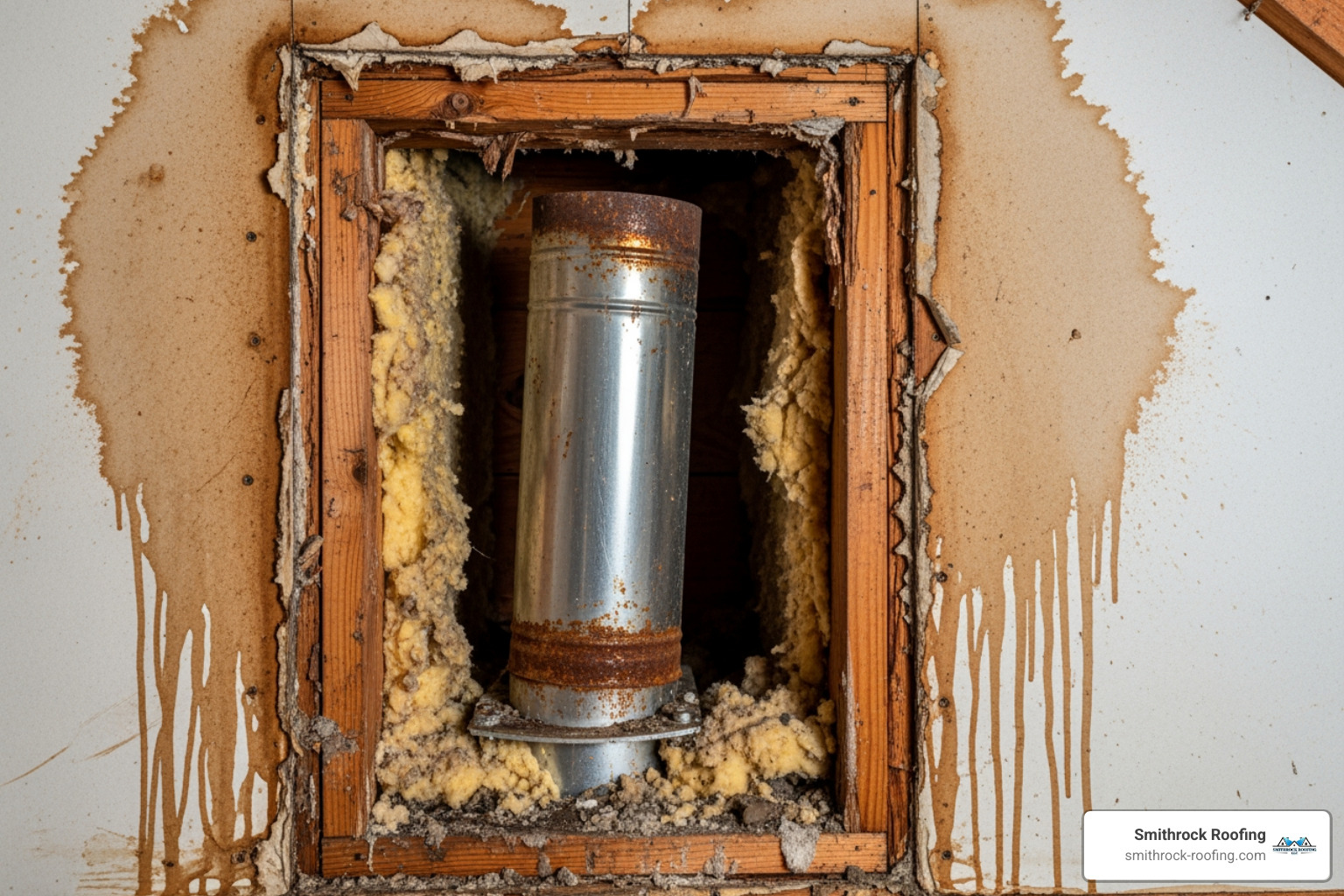
Ignoring a compromised chase cover is a high-risk strategy that often leads to compounding structural issues. The Chimney Safety Institute of America (CSIA) emphasizes that water is the single most destructive element for any chimney system. When a cover fails—usually due to rust-through or improper sealing—the internal wooden framing of the chase is exposed to constant moisture. This leads to several critical failure points that can exponentially increase your chimney chase cover repair cost:
When assessing chimney systems from Clemmons to Mt. Airy, it becomes clear that a one-size-fits-all approach is insufficient. The complexity of a repair is dictated by the chimney’s construction, the roof geometry, and the types of weather exposure the home experiences throughout the year. To accurately estimate the chimney chase cover repair cost, one must look at the specific engineering requirements of the individual home.
Most high-quality chase covers are custom-fabricated to the exact specifications of the chimney chase. This is necessary because small dimensional errors can create gaps at the perimeter or around flue penetrations. Even if a gap appears minor, wind-driven rain can force water sideways and upward under edges, especially during the intense thunderstorms common in the Piedmont Triad.
A thorough measurement process should account for:
Advanced fabrication frequently includes cross-breaking the metal. This involves creating diagonal creases that form a subtle, controlled slope toward the edges. The purpose is not cosmetic; it is functional drainage. A properly sloped cover reduces ponding, lowers the likelihood of seam fatigue, and helps prevent premature corrosion. While custom fabrication adds to the initial chimney chase cover repair cost, it significantly extends the lifespan of the installation.
The logistics of the repair are heavily influenced by roof pitch, chimney height, and how the chimney is positioned on the roof plane. A chimney near the ridge line can be more accessible than one located on a lower roof section above a steep drop. Likewise, multi-story homes, complex rooflines, or limited ground access can require additional setup. Professional crews must account for safe ladder placement, fall protection, and surface protection for your shingles. These safety measures are non-negotiable and are factored into the professional chimney chase cover repair cost.
Material selection is one of the most important durability decisions. Each metal offers distinct performance characteristics:
Understanding how chase covers fail helps explain why some issues recur until the cover is replaced or re-fabricated correctly. Frequent failure points include:
When these details are handled correctly by a professional, the chimney chase cover repair cost becomes a wise investment that protects the home for decades.
While the DIY movement is popular for many home improvement tasks, chimney chase cover replacement is a project that demands professional intervention for several critical reasons. The intersection of heights, specialized tools, and the requirement for a 100% waterproof seal makes this a high-stakes endeavor. Attempting to save on the chimney chase cover repair cost by doing it yourself often results in improper sealing, which leads to even more expensive repairs down the road.
The primary risk of a DIY approach is the margin for error in measurement and sealing. A chase cover that is off by as little as a quarter of an inch can fail to provide the necessary overhang, leading to water wicking back under the cover and into the wooden chase. Additionally, the tools required to properly cut and crimp heavy-gauge stainless steel or copper are specialized and not typically found in a standard home workshop. Professionals use heavy-duty metal brakes to create the necessary cross-breaks and drips that ensure water flows away from the structure.
Safety is the most immediate concern. Working at the peak of a roof requires specialized training in fall protection and ladder safety. Professional roofing and chimney technicians are equipped with OSHA-compliant safety gear and have the experience to navigate various roof types, from asphalt shingles to cedar shakes and metal panels, without causing collateral damage to the roofing material. A single slip or a dropped tool can cause thousands of dollars in damage, far outweighing any savings on the initial chimney chase cover repair cost.
When a professional installs a high-grade stainless steel chase cover, the work is typically backed by both a manufacturer’s material warranty and a labor guarantee. This provides the homeowner with peace of mind that if a leak does occur, it will be addressed at no additional cost. A DIY installation offers no such protection, and an error in installation can void the warranty on the materials themselves. If you are debating the necessity of a professional, consider the technical requirements detailed in our guide: do-i-need-a-contratractor-to-replace-a-chimney-cap.
For those interested in the technical process, you can Watch this installation video for a visual guide to understand the complexity involved in achieving a professional-grade seal. Seeing the process firsthand often clarifies why the professional chimney chase cover repair cost is justified by the level of precision required.
This is a frequent point of inquiry for homeowners in Kernersville and Lewisville. A chimney chase cover is the large, rectangular metal plate that caps the entire chimney structure (the chase). It acts as the roof for the chimney itself. A chimney cap (or rain cap) is a smaller device that sits specifically on top of the flue pipe. The cap usually features a mesh screen to act as a spark arrestor and to keep birds and debris out of the flue. A complete system requires both components to be in good condition to ensure total protection. When calculating your chimney chase cover repair cost, ensure you check if the cap also needs replacement, as they are often replaced together.
North Carolina’s climate is characterized by high humidity, frequent heavy rainfall, and seasonal temperature swings. These conditions can accelerate wear on coatings, sealants, and fasteners. Wind-driven storms can push water into small openings that would not leak under gentle rainfall. Furthermore, the salt content in the air (even inland) and the acidity of local rain can cause galvanized metals to corrode faster than in drier climates. This environmental stressor is a key reason why stainless steel is the preferred material for reducing the long-term chimney chase cover repair cost in this region.
Homeowners should perform a visual inspection from the ground at least twice a year and after major storms when it is safe to do so. Look for:
In most cases, homeowners insurance covers damage that is “sudden and accidental,” such as damage from a fallen tree limb or a severe hail storm. However, insurance typically does not cover damage caused by “wear and tear” or lack of maintenance. If your chase cover has rusted through over ten years, the chimney chase cover repair cost will likely be an out-of-pocket expense. It is always best to consult with your insurance agent to understand your specific policy coverage.
A standard chimney chase cover replacement usually takes between 2 to 4 hours for a professional crew, assuming no major structural repairs are needed. If wood rot is discovered, the process can extend to a full day or more as the framing must be rebuilt. Because the cover is custom-fabricated, there is usually a lead time of 1 to 2 weeks between the initial measurement and the actual installation date.
Sometimes. Minor issues such as a small, isolated seal failure at a storm collar, a few loose fasteners, or localized seam separation may be repairable if the underlying metal is still structurally sound. However, if the metal is thinning or pitted, a repair is only a temporary bandage. Replacement is more likely to be the correct choice when the cover is rusted through, the top is flat and holds water, or the chase top framing is deteriorated. A professional inspection can determine whether a minor repair is reasonable or whether a full replacement is the only way to stop the damage and stabilize your chimney chase cover repair cost.
At Smithrock Roofing, we have witnessed firsthand how a timely investment in a high-quality chimney chase cover can prevent the need for extensive and invasive structural repairs. Whether your home is in Winston-Salem, Greensboro, or the surrounding communities of Tobaccoville and Rural Hall, the chimney is a vulnerable point in your home’s envelope that requires specialized attention. The chimney chase cover repair cost is a small price to pay compared to the thousands of dollars required to remediate toxic mold or rebuild a collapsed chimney structure.
Proactive maintenance and the selection of superior materials are the most effective strategies for long-term home preservation. By opting for custom-fabricated stainless steel or copper covers and ensuring a professional chimney-chase-cover-installation, you are securing your home against the unpredictable North Carolina weather. A well-installed cover not only protects your framing but also enhances the efficiency of your fireplace and maintains the aesthetic value of your property.
Do not wait for a major storm to reveal the weaknesses in your chimney system. If you notice rust stains, hear mysterious drips, or simply haven’t had your chimney inspected in several years, now is the time to act. A professional evaluation can identify minor issues before they escalate into significant structural problems, ensuring your home remains dry, safe, and efficient for years to come. By addressing these issues early, you can control your chimney chase cover repair cost and enjoy the peace of mind that comes with a fully protected home.
Smithrock Roofing © Copyright 2026 • All Rights Reserved • Privacy Policy • Maintained by Mongoose Digital Marketing