Why Understanding Stucco Repair Costs Matters for Your Home
The cost to repair stucco siding is not a single number but a wide spectrum, influenced by the extent of the damage, the type of stucco on your home, and the complexity of any underlying issues. A small, thin hairline crack might only require a simple, inexpensive patch. However, a crack that looks similar on the surface could be a symptom of a much larger problem, potentially costing thousands of dollars to fix if water has been seeping behind the wall system for months or years.
Understanding these cost factors is essential for homeowners. It allows for realistic budgeting, helps in choosing the right contractor, and ultimately protects your home’s structural integrity and market value. Stucco is not just a decorative finish; it’s the visible face of a complex, multi-layered wall assembly. This system includes:
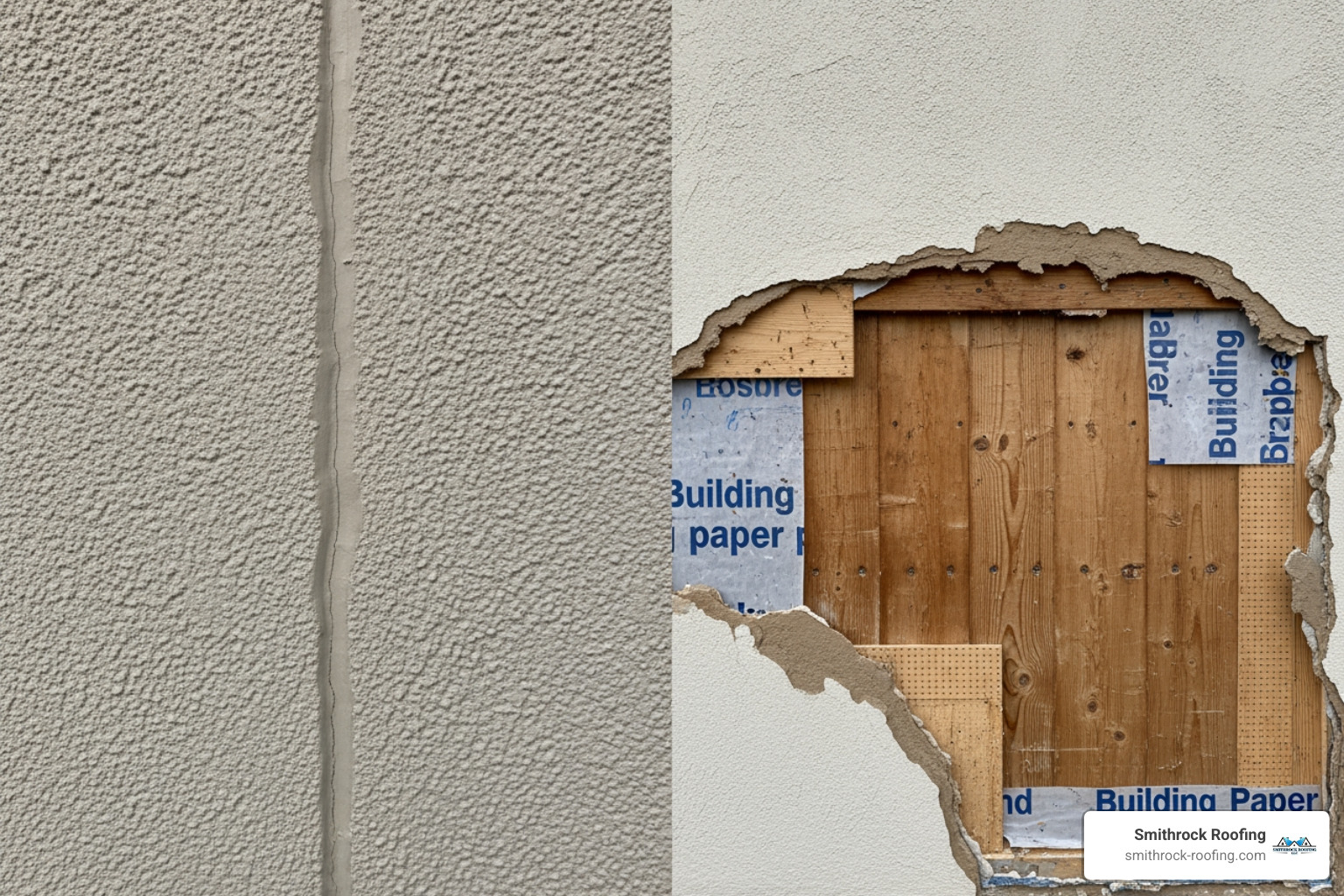
- Weather-Resistant Barrier (WRB): Often called house wrap or building paper, this is the primary line of defense against water that gets behind the stucco.
- Lath: A metal or fiberglass mesh that provides a framework for the stucco cement to adhere to, giving the wall its strength.
- Insulation: In some systems, like EIFS, rigid foam insulation is a core component.
- Sheathing and Framing: The underlying wood structure of the house (typically plywood or OSB sheathing over wood studs) that the entire siding system protects.
When you see damage on the stucco surface, any of these hidden elements could be compromised. This is why a professional assessment is so critical. General damage can be grouped into three main categories:
- Small Repairs: These are typically cosmetic issues like fine hairline cracks or very small chips. They are localized and can often be addressed with simple patching and texture matching, causing minimal disruption.
- Medium Repairs: This category includes larger cracks (wider than 1/16″), holes from impacts or removed fixtures, and areas of crumbling stucco. These repairs require more labor to remove the damaged material, rebuild the stucco layers, and carefully blend the patch with the surrounding wall.
- Large Repairs: This involves extensive water damage, bulging walls, or systemic failures. The repair goes far beyond the stucco itself, requiring the removal of large sections to correct hidden problems like rotted sheathing, mold, or failed flashing before new stucco can be installed.
When properly installed and maintained, a stucco finish can last 50 to 80 years or even longer, offering exceptional durability, fire resistance, and protection from the elements. However, all buildings naturally settle and shift. This movement, combined with seasonal temperature fluctuations and constant weather exposure, creates stress on the rigid stucco cladding, inevitably leading to cracks over time.
A thorough stucco assessment by a qualified professional is a multi-step process that goes beyond a quick glance:
- Visual Inspection: A detailed search for cracks of all sizes, staining (especially dark streaks below windows and rooflines), bulging or soft areas, and crumbling sections.
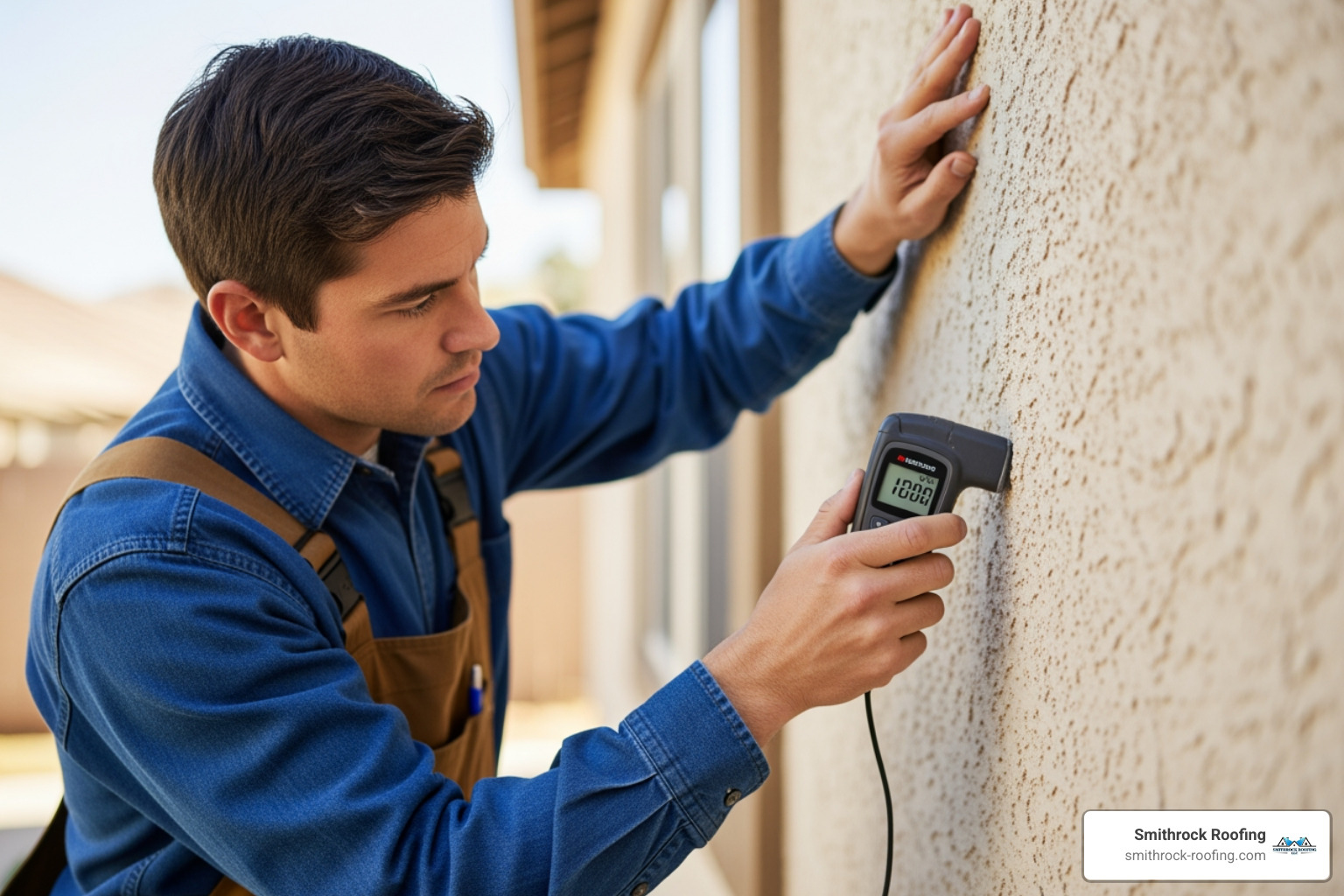
- Moisture Evaluation: The use of professional tools like non-invasive moisture meters to detect elevated moisture levels behind the stucco. In complex cases, an infrared (IR) camera may be used to identify temperature anomalies that can indicate hidden moisture or insulation gaps.
- Component Inspection: A close look at critical transition points, including flashing around windows and doors, roof-to-wall intersections, deck connections, and the weep screed at the base of the wall to ensure proper ground clearance and drainage.
- Review of History: Discussing the building’s history, any prior repairs, and known issues with the homeowner to build a complete picture of the situation.

Related terminology:
- siding repair: The general practice of fixing exterior wall systems, which includes stucco, vinyl, fiber cement, and wood.
- shingle siding repair: The process of repairing individual shingle elements, which shares similar principles of moisture control and integration with the underlying wall system.
- bondo for aluminum siding: An example of a specialized repair method for a different siding type, illustrating that each material requires unique products and techniques.
Understanding the Key Factors That Influence Stucco Repair Costs
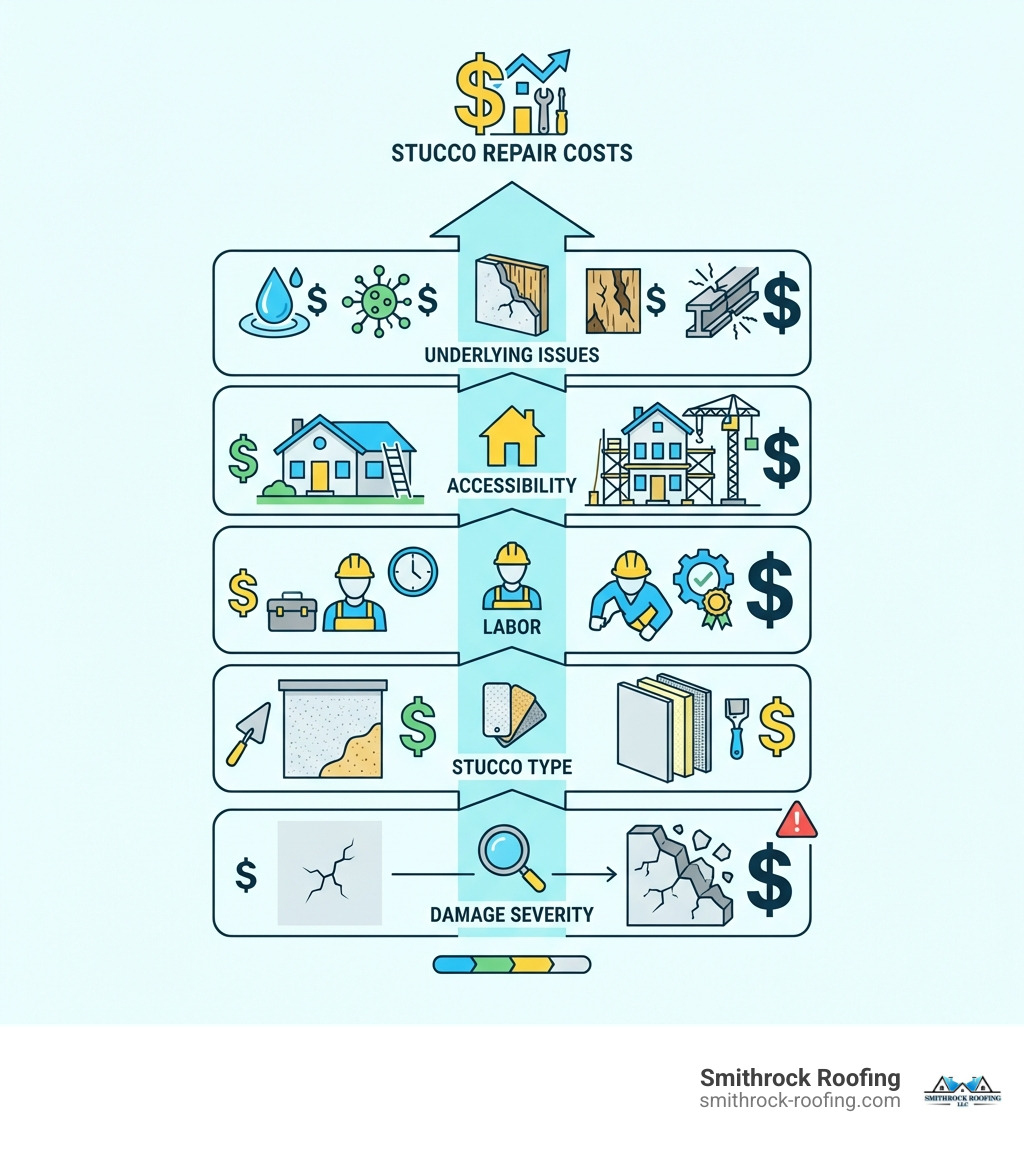
The final cost to repair stucco siding is determined by a combination of interrelated factors. When our professionals in North Carolina assess a project, we perform a deep analysis of four primary areas: the scope of the damage, the specific stucco system installed, the site conditions, and the extent of any underlying damage.

Scope and Severity of Damage
The size and nature of the visible damage are the starting point for any cost estimate.
Hairline Cracks: These are very thin cracks, typically less than 1/16 inch wide. They are often caused by the normal curing and drying process of the cement (shrinkage cracks) or minor thermal expansion and contraction of the building. While usually cosmetic, they should be sealed to prevent future water entry.
Larger Cracks: Cracks wider than 1/16 inch can signal more significant issues, such as foundation settling, structural movement, or prolonged water saturation cycles causing the substrate to expand and contract. Repair requires chiseling out the crack into a ‘V’ shape to ensure the new patch material can bond effectively and rebuilding the stucco layers.
Holes: Caused by direct impact (hail, rocks from a lawnmower), pests (woodpeckers), or the removal of old fixtures like lights or railings. Small holes are simple to patch, but numerous or large holes may necessitate cutting out and replacing a larger section of the wall to ensure stability.
Crumbling or Spalling Stucco: When stucco begins to crumble or flake away, it’s a strong indicator of chronic moisture infiltration. Water trapped behind the stucco can freeze and thaw, breaking down the cement’s integrity from within. This requires removing all loose and deteriorated material back to a solid base before rebuilding.
Bulging or Delamination: A bulge in the stucco wall is a serious red flag. It indicates that the stucco has detached from the lath or that the underlying wood sheathing has become saturated with water and is swelling and rotting. This is not a surface problem; it requires cutting away the entire affected section to inspect and repair the substrate.
The total square footage of the repair area is a primary driver of both material and labor costs.
Type of Stucco System
Not all stucco is the same. The type of system on your home dramatically affects the repair method and cost.
Traditional Three-Coat Stucco: This is the oldest and most common method. It consists of three layers applied over a metal lath and a weather-resistant barrier: a ‘scratch coat’ (about 3/8″ thick, scored to create a key for the next layer), a ‘brown coat’ (another 3/8″ to level the surface), and a thin ‘finish coat’ (about 1/8″) that provides the final color and texture. It’s extremely durable and breathable but requires significant labor and skill to patch seamlessly.
One-Coat Stucco: A more modern system where a single, thick base coat (3/8″ to 1/2″) of fiber-reinforced cement is applied over the lath, followed by a traditional finish coat. It’s faster to install than three-coat but relies heavily on the quality of the weather barrier and flashing, as it can be less forgiving of moisture intrusion.
Synthetic Stucco (EIFS – Exterior Insulation and Finish System): This is not a cement product but a multi-layer composite system. It includes a layer of rigid foam insulation board attached to the sheathing, a fiberglass mesh-reinforced base coat, and a flexible, acrylic finish coat. Early ‘barrier’ EIFS systems were prone to trapping water, leading to catastrophic rot. Modern ‘water-managed’ or ‘drainage’ EIFS include a built-in drainage plane to let incidental moisture escape. Repairing EIFS requires specialized materials and expertise to maintain the integrity of the system.
For more information on siding systems, visit our siding services page.
Labor, Location, and Accessibility
- Regional Labor Rates: The cost of skilled labor varies significantly by location. Major metropolitan areas typically have higher labor costs than rural areas.
- Accessibility: Repairs on the ground floor are the least expensive. Work on second or third stories, or over complex rooflines, requires scaffolding or aerial lifts, which adds significant cost for rental, setup, and insurance.
- Architectural Complexity: Homes with many corners, curves, arches, and window openings require more time-consuming detail work, increasing labor costs.
- Site and Weather Conditions: A constrained work site can slow down progress. Weather is also a major factor, as stucco cannot be applied in freezing temperatures or rain, and proper curing depends on ideal temperature and humidity.
Underlying Issues
What lies beneath the surface is often the biggest variable in the final cost.
- Water Intrusion: The root cause of most major stucco failures. It often originates from improperly installed or failed flashing around windows, doors, decks, and roof-to-wall intersections.
- Mold Growth: Where there is chronic moisture, there is often mold. Black mold (Stachybotrys chartarum) and other species can pose health risks and require specialized remediation by a certified professional, including containment and proper disposal.
- Rotted Sheathing and Framing: Water-saturated OSB or plywood sheathing will lose its structural integrity and turn to mush. This must be cut out and replaced, and any affected framing studs may also need to be repaired or replaced.
- Pest Infestations: Termites and carpenter ants are drawn to moist, soft wood. An infestation must be treated by a pest control company before structural repairs can be made.
- Foundation Settling: If the home’s foundation is moving, it will cause recurring cracks in the rigid stucco. These structural issues must be addressed by a foundation specialist to prevent the cracks from reappearing after the repair.
- Poor Original Installation: Systemic problems like a missing weep screed (a metal flashing at the bottom of the wall that allows water to drain out) or improperly integrated flashing may require a much larger section to be replaced to correct the fundamental flaw.
The Cost to Repair Stucco Siding: A Breakdown by Problem
To accurately forecast the cost to repair stucco siding, it’s crucial to break down the expenses by the specific problem being addressed. The financial scope can range from a minor handyman fix to a major construction project involving multiple trades.
Estimating the Cost to Repair Stucco Siding with Cracks and Holes
For localized, physical damage without underlying water issues, costs are more predictable. Note: The following costs are national averages and will vary based on location, contractor, and job complexity. Most contractors will have a minimum service charge of $400 – $800, regardless of the repair size.
| Repair Type | Description | Estimated Professional Cost |
|---|
| Hairline Cracks | Sealing fine cracks (under 1/16″) with a flexible, paintable sealant. | $5 – $10 per linear foot |
| Larger Cracks | Chiseling out the crack, applying a bonding agent, and filling with patch material. | $15 – $30 per linear foot |
| Small Patch | Repairing a hole or small damaged area up to 1-2 sq. ft. | $250 – $500 (often falls under minimum charge) |
| Medium Patch | Repairing a damaged area of 2-10 sq. ft., requiring rebuilding of layers. | $40 – $75 per square foot |
| Texture & Color Matching | The final step for all patches. Can be included or a separate charge. | Adds 10-20% to the patch cost |
While a basic DIY repair on a tiny crack might seem feasible with a wire brush, chisel, caulk gun, trowel, and patching compound, the real challenge lies in diagnosis and finish. A professional assessment is highly recommended for any crack wider than a credit card, as it may indicate deeper problems. See our siding repair resources for more on professional diagnostics.
The Hidden Cost to Repair Stucco Siding with Water Damage
This is where costs can escalate dramatically. Water damage is a multi-stage problem, and each stage has its own associated cost. The process involves investigation, demolition, structural repair, and finally, rebuilding the stucco system correctly.
Indicators of Water Damage:
- Dark, persistent stains or streaks, especially below windows or where roofs meet walls.
- Soft, spongy spots when you press on the wall.
- Efflorescence: a white, chalky residue left as water evaporates, pulling salts from the cement.
- Visible mold or mildew growth.
- Interior signs like peeling paint, musty odors, or dampness on drywall.
Cost Breakdown for Water Damage Remediation (per square foot):
- Investigation (Initial Cost): A certified stucco inspector using moisture meters and an infrared camera may charge $400 – $800 for a comprehensive report.
- Stucco Removal: Carefully cutting and removing the damaged stucco and lath costs approximately $5 – $10 per sq. ft.
- Substrate & Framing Repair: This is the most variable cost. Replacing rotted OSB or plywood sheathing can cost $10 – $15 per sq. ft. Replacing damaged wooden studs can cost $50 – $100+ per linear foot.
- Mold Remediation: If mold is present, a specialized company must be hired. This can cost $20 – $35 per sq. ft. for containment, cleaning, and treatment.
- Rebuilding the Stucco System: This involves installing a new weather barrier, proper flashing, lath, and a new three-coat stucco system. This is the most expensive part, costing $60 – $110 per sq. ft. due to the intensive labor and detail required for a small, integrated area.
For a hypothetical 10×10 foot area (100 sq. ft.) with significant rot, the total cost could easily range from $8,000 to $15,000 or more, illustrating why addressing small leaks early is so critical.
Fixing Discoloration and Cosmetic Flaws
Sometimes the stucco is structurally sound but looks unsightly. Addressing these issues can be a cost-effective way to boost curb appeal.
- Staining: Environmental dirt, pollutants, and biological growth (algae, mildew) can stain the surface. Rust stains from nails or improperly installed flashing are also common.
- Uneven Color: Fading from sun exposure or blotchy patches from previous, poorly matched repairs can detract from the home’s appearance.
Solutions and Estimated Costs:
- Professional Cleaning: Using a gentle, low-pressure soft wash with appropriate cleaning solutions can remove most organic growth and dirt. Expect to pay $0.50 – $1.50 per sq. ft.
- Painting: A fresh coat of paint can unify the color. It is crucial to use a breathable, high-quality paint designed for masonry, such as an elastomeric or 100% acrylic coating. This allows trapped moisture vapor to escape. Professional painting costs $2.00 – $4.50 per sq. ft., including prep work.
- Fog Coating or Re-dashing: For a more permanent solution, a fog coat (a fine spray of cement-based slurry) can be applied to restore original color, or a whole new finish coat (re-dashing) can be applied over the entire wall for a brand-new texture and color. This is more expensive, costing $4 – $8 per sq. ft., but provides a much more durable and integrated finish than paint.
For home maintenance tips, resources like Clean Your House Like a Pro complement professional stucco care.
Repair or Replace? Making the Right Financial Decision
Homeowners facing stucco problems often grapple with a critical question: is it better to patch the existing system or invest in a full replacement? This decision fundamentally shapes the budget, timeline, and long-term reliability of your home’s exterior. The choice hinges on the extent of the damage, the age and type of the stucco system, and your long-term goals for the property.
When to Choose Stucco Repair
Repair is often the most practical and cost-effective solution under specific circumstances. Opt for repair when:
- Damage is Localized: The problems are confined to a few specific areas, such as isolated cracks, small impact holes, or a single leaky window.
- The System is Fundamentally Sound: The majority of the stucco is well-adhered, and a professional inspection confirms that the underlying weather-resistant barrier and sheathing are intact.
- The Stucco is Relatively Young: The system is less than 20-25 years old and was installed correctly in the first place.
- The Structure is Stable: There are no ongoing foundation settlement issues that would cause new cracks to form after the repair is complete.
- Budget is a Primary Constraint: You need to address an immediate problem to prevent further damage but do not have the capital for a full replacement at this time.
Effective repairs must address the root cause of the failure—simply patching a stain without fixing the leak above it is a temporary fix doomed to fail. For more on assessment principles, see our shingle siding repair complete guide, which covers similar diagnostic logic.
When Stucco Replacement is the Smarter Investment
While more expensive upfront, full replacement becomes the wiser financial choice when the problems are systemic. Consider replacement when:
- Damage is Widespread: You have cracks, crumbling, or soft spots on multiple walls, indicating a pervasive problem.
- There are Multiple Failed Repairs: The walls are a patchwork of previous fixes that don’t match in color or texture, and new problems continue to appear.
- Extensive Water Intrusion is Confirmed: An inspection reveals high moisture readings across large areas, with evidence of significant rot in the sheathing or framing.
- The System is Old: The stucco is approaching the end of its expected lifespan (40-50+ years).
- A Flawed System was Used: The home has an old ‘barrier’ EIFS system known for trapping moisture, and you want to mitigate the risk of future catastrophic failure.
- You Are Planning a Major Renovation: If you’re already replacing windows or adding an extension, it’s the perfect time to address the siding and ensure a properly integrated, weatherproof building envelope.
Advantages of Replacement:
- Complete Problem Resolution: It’s a clean slate to address all hidden rot and mold.
- Modern Weatherproofing: Allows for the installation of a state-of-the-art drainage plane, flashing, and weather barriers.
- Improved Energy Efficiency: An opportunity to add or upgrade exterior insulation.
- Uniform Appearance and Value: A flawless, uniform finish significantly boosts curb appeal and property value.
- Long-Term Peace of Mind: A new system comes with a contractor’s warranty and a decades-long lifespan.
The Process and Cost of Full Stucco Replacement
Full replacement is a major undertaking. The cost for complete stucco removal and replacement with a new traditional three-coat system typically ranges from $12 to $20 per square foot. For a 2,000-square-foot home, this could translate to a project cost of $24,000 to $40,000, not including the cost of repairing any underlying rot.
The process includes:
- Planning and Permitting: A comprehensive inspection is performed, a detailed plan is created, and necessary building permits are secured. The site is prepared to protect landscaping, windows, and hardscaping.
- Demolition and Removal: The old stucco and lath are carefully torn off. This is a messy, labor-intensive process. Debris is collected and disposed of properly.
- Substrate Inspection and Repair: With the wall structure exposed, a thorough inspection for water damage is conducted. This is the critical phase where all rotted sheathing and framing must be replaced to provide a solid, dry foundation for the new system.
- Weather Barrier and Flashing Installation: This is the most important step for long-term durability. A new weather-resistant barrier is installed, along with a complete system of flashing around all windows, doors, and penetrations. A weep screed is installed at the base of the wall to create a drainage path.
- New Stucco Application: The new lath is installed, followed by the application of the scratch, brown, and finish coats (for a traditional system). Each coat must be allowed to cure properly, a process that can take days or weeks depending on the weather.
- Site Cleanup and Final Inspection: All protective coverings are removed, the site is cleaned, and a final walkthrough is conducted to ensure every detail meets quality standards.
For homeowners considering a change, our siding options page explores alternative cladding materials.
DIY vs. Hiring a Professional: A Cost and Risk Analysis
When faced with stucco damage, many homeowners wonder if they can save money by tackling the repair themselves. While a DIY approach can reduce the initial cash outlay, it’s crucial to weigh the potential savings against the significant risks and challenges involved. The decision to DIY or hire a pro for the cost to repair stucco siding is a classic trade-off between money, time, and quality.
| Factor | DIY Stucco Repair | Professional Stucco Repair |
|---|
| Upfront Cost | Lower. Pay only for tools and materials ($100 – $500 for a small job). | Higher. Pay for labor, expertise, insurance, and overhead. |
| Time Investment | High. Includes research, material sourcing, prep, application, curing, and cleanup. | Low. Experienced crews work efficiently to complete the job quickly. |
| Skill & Knowledge | Requires significant learning. High risk of misdiagnosis or improper technique. | Advanced knowledge of building science, material compatibility, and application techniques. |
| Tools & Equipment | Requires purchase/rental of specialized tools (hawk, trowel, mixer, etc.). | Owns commercial-grade equipment for efficient, high-quality work. |
| Identifying Hidden Damage | Extremely difficult. A surface patch can trap moisture and hide serious rot. | Expert diagnosis using moisture meters and infrared cameras to find root causes. |
| Quality of Finish | Very difficult to match texture and color, often resulting in an obvious patch. | Seamless blending of texture and color for an invisible repair. |
| Long-Term Success | High risk of failure, leading to repeated repairs and potentially worse damage. | Durable, integrated solutions designed to last for decades. |
| Safety | Significant risks from working on ladders/scaffolding and handling cement materials. | Adheres to professional safety standards (OSHA), fully insured. |
| Warranty | None. You are responsible for any failures. | Provides warranties on both labor and materials for peace of mind. |
The True Cost of DIY Stucco Repair
While the material cost for a small patch is low, the ‘true cost’ of a DIY repair includes many hidden factors:
- The Learning Curve: You’ll spend hours watching videos and reading articles, and your first attempt will be a practice run on your own home.
- Tool Investment: A proper repair requires more than a tub of pre-mixed patch. You may need a hawk and trowel, a margin trowel, a float, a wire brush, a chisel, and maybe even an angle grinder. These costs can add up.
- The Mismatch Problem: Achieving a perfect match with aged stucco texture and color is an art form. A botched DIY repair can be more of an eyesore than the original crack, potentially lowering your home’s curb appeal.
- The Biggest Risk: Misdiagnosis: The most dangerous and costly mistake is patching a cosmetic crack when the real problem is water intrusion. Sealing the crack without addressing the leak traps moisture inside the wall, accelerating rot and turning a small problem into a catastrophic failure.
In many cases, a failed DIY repair must be chiseled out and redone by a professional, ultimately costing more than if the pro had been hired in the first place.
The Value of Hiring Professional Siding Contractors
When you hire a reputable contractor like Smithrock Roofing, you’re not just paying for labor; you’re investing in a comprehensive solution.
- Expert Diagnosis: Professionals use their experience and specialized tools to identify the root cause of the problem, ensuring the fix is permanent.
- Correct Materials and Techniques: They know which products are compatible with your specific stucco system and how to apply them according to industry best practices for a durable bond.
- Seamless Aesthetics: Experienced plasterers are artists who can replicate aged textures and colors for a repair that is virtually invisible.
- Warranties and Accountability: A professional stands behind their work. If the repair fails prematurely, they will return to fix it. This accountability is invaluable.
- Safety and Insurance: Professionals are insured, protecting you from liability in case of an accident on your property. They have the proper safety equipment for working at heights.
- Efficiency: A professional crew can complete in a day what might take a homeowner several weekends, minimizing disruption to your life.
To understand the difference a professional makes, learn more about our approach at siding contractors.
Frequently Asked Questions about Stucco Repair
Navigating stucco issues can be confusing. Here are answers to some of the most common questions homeowners have about the repair process and costs.
How long does a typical stucco repair take?
The timeline depends entirely on the scope of work and weather conditions:
- Minor Repairs: Sealing a few hairline cracks or patching a very small hole can often be done in a few hours to a single day.
- Moderate Repairs: A medium-sized patch (several square feet) will take several days. This is because traditional stucco is applied in layers (coats), and each coat needs time to cure before the next is applied. A typical three-coat patch might require 3-5 days to allow for application and drying times.
- Extensive Repairs: Large-scale projects involving substrate replacement can take anywhere from one to several weeks. The timeline is affected by demolition, structural repairs, potential mold remediation, and the multi-stage process of reinstalling the entire wall system, with necessary curing time between each step.
Weather is a critical factor. Stucco cannot be applied in the rain or in freezing temperatures, and high humidity can slow the curing process.
Does homeowners insurance cover stucco damage?
Coverage depends on the cause of the damage. It’s essential to read your policy carefully.
- Often Covered: Damage from a ‘sudden and accidental’ event. This includes storm damage (e.g., from wind-driven rain or hail), impact from a falling tree, or fire.
- Often Excluded: Damage that occurs gradually over time. This includes problems arising from poor maintenance, normal wear and tear, slow leaks from improperly installed flashing, foundation settling, and long-term mold growth. Damage from faulty installation by the original builder is also typically excluded.
If you believe your damage is covered, document it thoroughly with photos and dates, and contact your insurance agent immediately to start the claims process.
How can I save money on stucco repair without cutting corners?
Cutting corners on stucco repair almost always leads to higher costs down the road. The best way to save money is through proactive maintenance and smart planning:
- Inspect Regularly: Walk around your home twice a year (spring and fall) and after major storms to look for new cracks or stains.
- Fix Minor Damage Promptly: Sealing a small crack costs very little but can prevent thousands of dollars in water damage later.
- Maintain Your Home’s Water Management System: Keep gutters clean and ensure downspouts direct water far away from the foundation. Adjust sprinklers so they don’t spray on the stucco walls.
- Bundle Projects: If you’re already hiring a contractor for another exterior project like painting or roofing, ask if they can handle the stucco repair at the same time to save on setup and minimum service fees.
- Get Multiple Detailed Quotes: Obtain at least three itemized proposals from reputable, licensed stucco contractors. This allows you to compare not just the price, but the proposed scope of work.
- Schedule During the Off-Season: Contractors may offer slightly better pricing during their slower seasons (typically late fall or winter, weather permitting).
What are those white, chalky stains on my stucco?
This is a phenomenon called efflorescence. It’s a crystalline deposit of salts left on the surface as water evaporates from the masonry. While sometimes it can be a harmless, temporary issue on new stucco, persistent efflorescence is a red flag indicating that water is getting into or passing through the wall system. It’s a sign you have a moisture problem that needs to be investigated.
How do I find a qualified stucco repair contractor?
Finding the right professional is key to a successful repair. Look for:
- Specialization: Hire a contractor who specializes in stucco and EIFS, not just a general handyman or painter.
- Certifications: Ask if they have certifications from industry groups like the EIFS Industry Members Association (EIMA) or the Stucco Manufacturers Association (SMA).
- Local References: Ask for a list of recent, local projects you can drive by and see. Speak to former clients if possible.
- Proper Insurance: Verify that they carry both general liability and worker’s compensation insurance.
- Detailed Proposals: A good contractor will provide a written proposal that clearly outlines the diagnosed problem, the proposed solution, the materials to be used, and the total cost.
Your Next Steps for a Flawless Stucco Finish
Successfully navigating stucco repair comes down to a clear understanding of the factors that influence the cost to repair stucco siding. From a simple cosmetic fix to a full-scale remediation, a thoughtful and informed approach is your best defense against escalating costs and recurring problems. Here are the key takeaways:
A Thorough Assessment is Non-Negotiable: The most critical step is a professional evaluation to distinguish between surface-level blemishes and deeper issues. An expert can identify the root cause of damage, which is essential for a lasting repair.
Damage Severity and Stucco Type Dictate the Work: The scope of work is driven by the problem itself. Simple cracks require localized sealing, while crumbling, spalling, and delamination signal significant underlying problems. The repair methods and materials will differ greatly for traditional three-coat stucco versus synthetic EIFS.
Labor and Accessibility Are Key Cost Factors: The complexity of the job, especially work on upper stories or homes with intricate architecture, directly impacts the labor costs and the need for expensive equipment like scaffolding.
Underlying Issues Are the Biggest Cost Drivers: The discovery of moisture intrusion, mold, rotted wood, or structural movement can transform a seemingly small repair into a major project. Addressing these hidden issues is expensive but absolutely necessary for the health of your home.
Repair vs. Replacement is a Long-Term Decision: Localized repairs are perfect for fundamentally sound systems. However, if the damage is widespread or systemic, a full replacement, while costly upfront, is often the smarter long-term investment in your property’s value and your own peace of mind.
Professional Expertise Provides Invaluable ROI: While DIY is tempting for small fixes, the risk of misdiagnosis is high. Professional contractors bring diagnostic tools, knowledge of building codes, correct materials, aesthetic skill, and crucial warranties that protect your investment.
Your Action Plan for Stucco Health
Take control of your home’s exterior with these proactive steps:
- Perform a Visual Inspection: Walk the perimeter of your home. Look closely for cracks, discoloration (especially under windows), soft spots, or areas where the stucco meets other materials.
- Create a Homeowner’s Maintenance Checklist:
- Twice Yearly (Spring/Fall): Conduct your visual inspection.
- Gutter Maintenance: Clean gutters and downspouts to ensure water is channeled away from walls.
- Landscaping: Trim shrubs and tree branches at least 6-12 inches away from stucco to allow for air circulation and drying.
- Sealant Check: Inspect the caulk around windows, doors, and any wall penetrations (vents, pipes). Rake out and replace any cracked or failing sealant.
- Sprinkler Adjustment: Ensure irrigation systems are not spraying directly onto stucco walls.
- Consult Reputable Professionals: If you find any areas of concern, don’t wait. Contact at least two qualified stucco specialists for a professional assessment and detailed proposal.
- Compare Proposals Carefully: Look beyond the bottom-line price. Ensure the proposed scope of work addresses the root cause of the problem.
- Plan for Future Maintenance: Once repairs are complete, commit to a regular maintenance schedule to keep your stucco in top condition for decades to come.
For a comprehensive evaluation and expert repair of your home’s exterior, trust Smithrock Roofing to deliver durable, attractive results. We serve Winston-Salem, Greensboro, and surrounding North Carolina communities with quality craftsmanship and a deep understanding of building science.
Learn more about protecting and enhancing your home’s exterior through our siding services page.