Why Fiber Cement Siding Is Worth Repairing Right
Fiber cement siding repair is a critical skill for any homeowner with this popular cladding. This remarkable composite material—a precise blend of Portland cement, sand, water, and cellulose fibers—was engineered from the ground up to deliver superior performance and withstand real-world abuse. It resists damage from wind, rain, and insects, and it carries a Class A fire rating, meaning it will not ignite or spread flames. When it does get dinged by a stray baseball, cracked by an impact, or loosened by improper installation, addressing the issue promptly is paramount. A timely repair protects the underlying weather-resistive barrier (WRB), prevents costly water intrusion, and preserves your home’s pristine appearance and value.
The financial incentive for proactive repair is significant. The cost to patch a few cracks or replace a single damaged board is a minor expense compared to the thousands of dollars required to replace an entire wall elevation due to hidden, widespread moisture damage. Neglected issues can lead to rotted sheathing, structural decay, and interior mold growth—problems that are far more complex and expensive to remediate.
A key advantage of fiber cement over materials like vinyl or wood is its dimensional stability and inherent durability. Unlike wood, it doesn’t rot or succumb to termites. Unlike vinyl, it doesn’t become brittle in the cold or warp in the heat. This stability means that minor damage rarely compromises the entire plank or system. Common issues such as chips, small punctures, hairline cracks, loose fasteners, or localized paint failure can often be resolved with straightforward techniques and readily available tools. Even a full-board replacement is a manageable project for a detail-oriented DIYer who follows manufacturer guidelines and prioritizes safety above all else.
Where most repair attempts fail is in skipping a thorough root-cause diagnosis. A patch over a crack caused by a settling foundation is only a temporary fix. The five most common root causes of fiber cement siding failure are:
- Poor Installation: This is the number one cause of premature siding problems. Errors include high nailing (driving fasteners too far from the top edge, reducing holding power), over-driving nails (which fractures the board), missing framing studs, failing to install flashing at butt joints, providing insufficient ground/roof clearances, and leaving cut edges unsealed.
- Extreme Weather Events: While durable, fiber cement is not indestructible. Large hail can create divots or chip edges. Powerful, wind-driven rain can exploit any unsealed gaps, especially at joints or around penetrations.
- Chronic Wetting: Constant exposure to moisture is the enemy of any siding system. Misdirected sprinklers aimed at walls, overflowing gutters, or poor site drainage causing splash-back can saturate the siding, leading to paint failure and eventual surface degradation.
- Physical Impact: Accidental damage from lawnmowers, weed trimmers, ladders leaned carelessly against the wall, or falling tree limbs can easily cause chips, cracks, and punctures.
- Normal Aging: The siding itself is incredibly durable, but the coatings and sealants that protect it are not. Over 10-20 years, UV radiation, temperature cycles, and environmental pollutants will degrade paint and caulk, necessitating maintenance.
With over 60 combined years of exterior construction experience, the team at Smithrock Roofing has seen every variation of fiber cement damage that the NC Triad’s climate can dish out. The most consistent lesson from that experience is this: when fiber cement siding repair adheres strictly to manufacturer best practices—using the correct corrosion-resistant fasteners, maintaining proper clearances, sealing all cut edges with an alkali-resistant primer, and correctly treating every joint—the siding system performs flawlessly and routinely lasts for its full warranty period.
In this comprehensive guide, you’ll learn everything you need to know to identify problems early, assemble the right professional-grade tools, execute lasting repairs, and make an informed decision about when to call a professional. By the end, you’ll have the confidence to:
- Diagnose the true cause and full extent of any siding damage.
- Choose the appropriate repair method: patching, re-fastening, or full replacement.
- Employ safe, manufacturer-approved techniques that protect your warranty.
- Properly prime and paint your repairs so they become invisible.
- Maintain your siding proactively to prevent future problems from occurring.
Identifying Siding Damage: Causes and Telltale Signs
Spotting the need for fiber cement siding repair in its earliest stages is the key to preventing small, inexpensive fixes from escalating into major, costly projects. The sooner you find a hairline crack, an open joint, or a loose fastener, the more likely you are to resolve it with simple patching and sealing rather than a labor-intensive full plank replacement.
What Causes Fiber Cement Damage?
Understanding the underlying cause of the damage is not just academic; it dictates the correct repair strategy. A patch will fail if the board is loose, and a new nail won’t fix a problem caused by chronic moisture.
Improper Installation: This is the most frequent culprit behind siding failures. Installers rushing a job often make critical errors. High nailing (placing the nail more than 1 inch from the top of the plank) significantly reduces its wind load resistance. Nails that miss the studs offer no holding power at all. Missing joint flashing behind butt joints creates a direct path for water to reach the sheathing. Insufficient clearances—less than 6 inches to grade or 2 inches to hard surfaces like decks and roofs—allow moisture to wick up into the siding. Unprimed cut edges act like straws, absorbing water and leading to swelling and paint failure.
Extreme Weather: Hailstorms can leave behind a pattern of crescent-shaped impact marks or chip the bottom edges of planks. High winds can cause boards to flex and rattle, eventually working fasteners loose or breaking off corners, especially on gable ends.
Moisture Exposure: While fiber cement is highly water-resistant, it is not waterproof. The core can absorb moisture if the protective coating is compromised. Prolonged wetting from poorly aimed sprinklers, clogged and overflowing gutters, or constant splash-back from a driveway can saturate the material, leading to discoloration, paint delamination, and a softening of the board’s surface over time.
Physical Impact: This type of damage is usually obvious. A chip from a weed trimmer, a puncture from a ladder foot, a crack from an errant ball, or a gouge from a lawn mower deck are common examples. This damage is typically localized and straightforward to repair, but it must be sealed to prevent water entry.
Age-Related Wear: The paint and caulk on your siding are sacrificial layers designed to protect the substrate. After 10-15 years of exposure to UV rays and harsh weather, paint will begin to chalk and fade, and caulk will dry out, shrink, and crack. This is a normal part of the building’s life cycle and a sign that maintenance is due.
Visual Cues: Signs Your Siding Needs Attention
Conduct a thorough visual inspection of your home’s exterior at least twice a year, ideally in the spring and fall. Use binoculars to get a clear view of upper stories and gable ends. Walk the perimeter in bright, indirect sunlight, viewing the walls from multiple angles to spot subtle issues.
- Visible Cracks: Look for hairline cracks radiating from corners of windows or from fasteners. These can be stress cracks from building movement. Larger, shattered-looking cracks are typically from a direct impact.
- Chipping or Flaking: Localized chips on corners or bottom edges are often from impacts. Widespread flaking or peeling of the surface layer (delamination) is a more serious issue, often linked to manufacturing defects or severe moisture saturation.
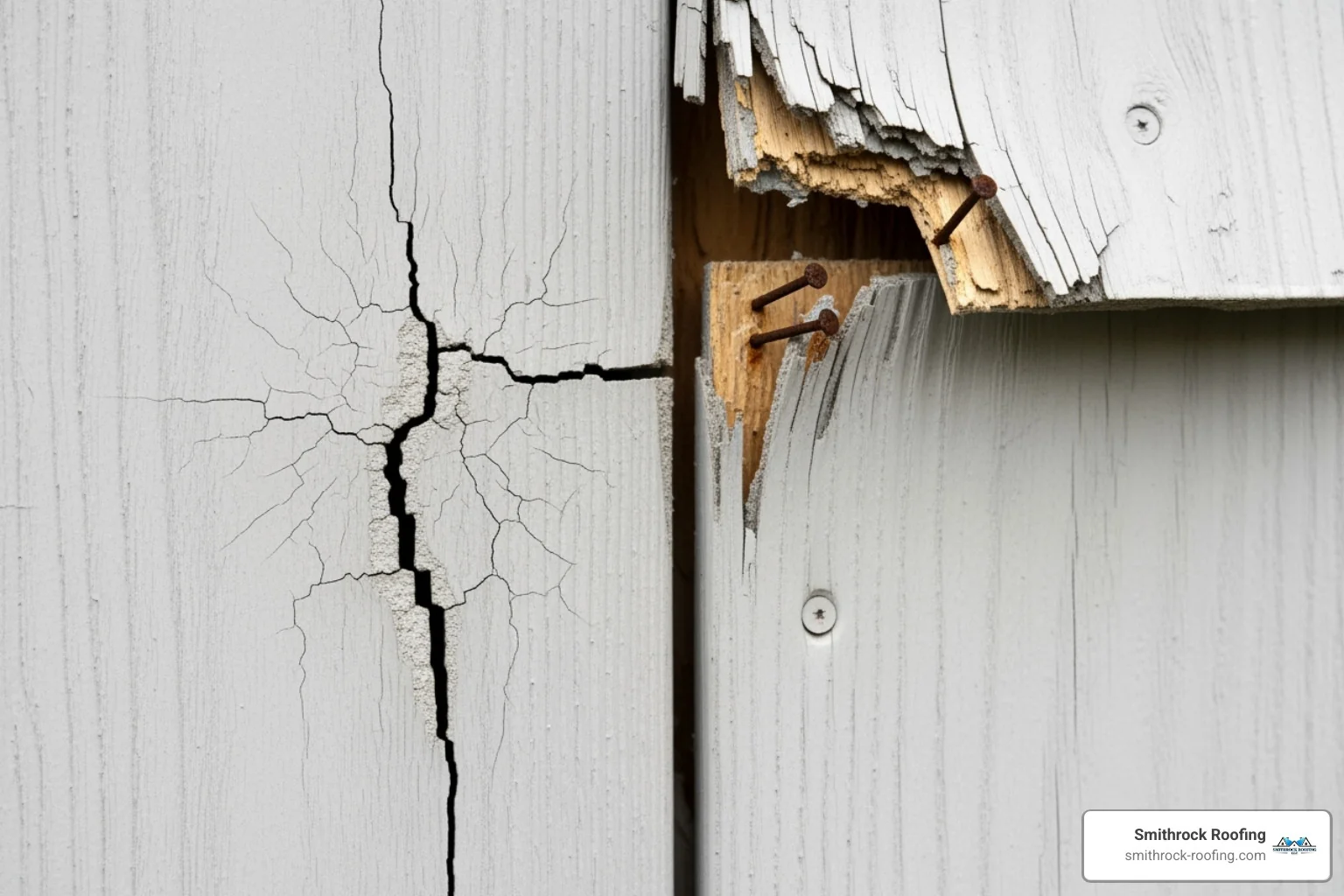
- Small Holes: These are often found near ground level, caused by stones kicked up by lawn equipment, or in some rare cases, by pests attempting to burrow.
- Peeling or Bubbling Paint: This is a classic sign of trapped moisture. Water vapor behind the paint film is pushing it away from the siding surface. The source of the moisture must be identified and corrected.
- Loose or Rattling Planks: Gently push on boards. If they move or rattle, it indicates fastener failure. The nails may have missed the studs, been under-driven, or worked themselves loose over time.
- Gaps at Butt Joints: As the house settles and materials expand and contract, gaps can open up at the vertical joints where two boards meet. If you can see the dark weather barrier behind the gap, it means wind-driven rain can get in.
- Water Stains or Discoloration: Dark streaks or stains, especially below windows, roof-to-wall intersections, or deck ledgers, are red flags for flashing failures or other water intrusion points higher up the wall.
- Mold or Mildew Growth: Green or black growth on the siding surface is common on shaded, damp elevations. While it can usually be cleaned, it indicates an environment that is also conducive to moisture-related siding problems.
For more in-depth technical information about fiber cement properties and installation standards, refer to the official Fiber Cement Association guidelines.
Pro Tip: It is crucial to distinguish modern fiber cement from older asbestos-cement siding, common on homes built from the 1940s to the 1970s. Asbestos siding is typically thinner, more brittle, and often shaped like small shingles. If you suspect your home has asbestos siding, do not cut, drill, sand, or disturb it. Contact a certified asbestos abatement professional for testing and safe handling.
Executing a professional-quality fiber cement siding repair requires more than just good intentions; it demands the right tools and materials. Proper preparation is the difference between a seamless, durable fix and a frustrating, conspicuous failure that needs to be redone. Assembling everything you need before you start will save time and ensure you follow best practices.
Investing in the right gear not only improves the quality of your work but also ensures your safety.
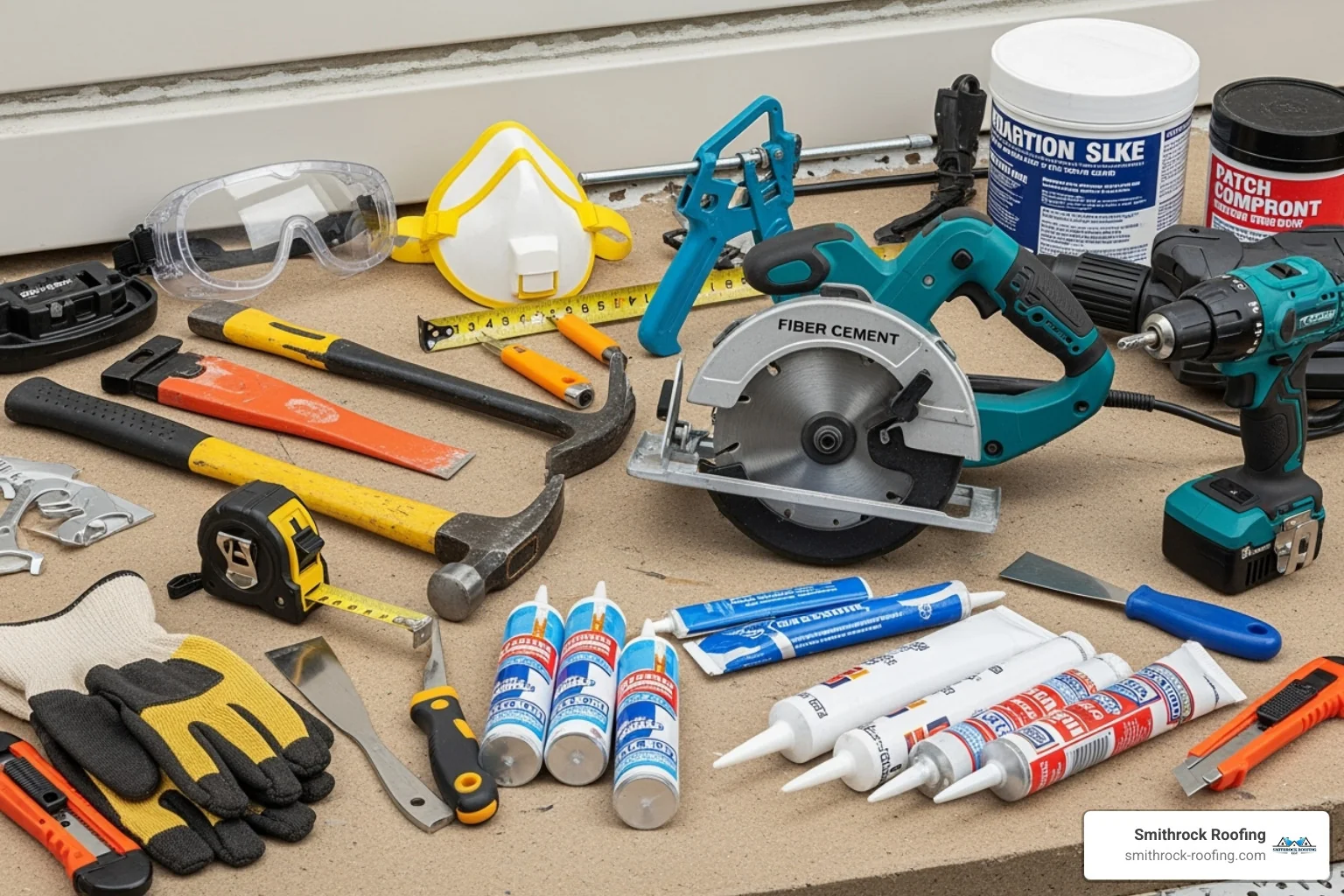
Fiber Cement Siding Patching Compound and Repair Kit Options
Choosing the right patching compound is one of the most important material decisions you’ll make. Using the wrong filler—standard wood putty, interior spackle, or general-purpose caulk—is the single most common reason DIY patches fail within a season or two. Here’s what actually works:
- Cementitious Patching Compound: A cement-based exterior filler is the most compatible option because it shares the same base chemistry as the siding itself. It bonds well, resists shrinkage, and can be sanded and painted. Look for products labeled for exterior masonry or fiber cement use.
- Two-Part Epoxy Filler: Epoxy-based fillers (the kind often used for wood repair) also perform well on fiber cement because they cure extremely hard, resist moisture, and don’t shrink. They are an excellent choice for larger voids or chips on corners and edges. Mix the two components thoroughly and work quickly, as pot life is limited.
- Fiber Cement Repair Kit: Several manufacturers and third-party suppliers offer pre-packaged fiber cement siding repair kits that bundle a compatible patching compound, primer, and application tools into one product. These kits are a convenient option if you’re making a localized repair and don’t want to source individual components. When evaluating a kit, confirm it lists fiber cement compatibility on the label and that the included primer is alkali-resistant.
- What to Avoid: Standard vinyl spackling, latex wood fillers, and general interior/exterior painters’ putty are not appropriate for fiber cement. They lack the durability and moisture resistance required for an exposed exterior surface and will typically crack, shrink, or delaminate within a short time.
- Exterior Sealant: Use a paintable, elastomeric sealant that meets ASTM C920 standards. This ensures it can handle joint movement without cracking. Polyurethane sealants offer the best durability.
- Replacement Boards: Must match the existing siding’s profile, texture (e.g., smooth, wood grain), and thickness.
- Corrosion-Resistant Fasteners: Use hot-dipped galvanized (HDG) or, preferably, stainless steel siding nails. They must be long enough to penetrate the framing by at least 1.5 inches.
- Alkali-Resistant Exterior Primer: This is critical. The high pH of cement will cause standard primers to fail. You must use a primer specifically designed for masonry or fiber cement.
- 100% Acrylic Exterior Paint: High-quality acrylic latex paint offers the best combination of durability, flexibility, and color retention.
Sourcing and Matching Your Siding
- Where to Buy: Big-box home centers carry the most common profiles and sizes (e.g., James Hardie HardiePlank). For less common styles or brands, you may need to visit a dedicated lumberyard or siding supplier.
- Matching Profile and Texture: Take a clear photo and measurements of your existing siding’s height and lap exposure. If possible, bring a small broken piece with you to the store to physically match the texture (e.g., Cedarmill vs. Smooth) and thickness.
- Matching Color: This is the trickiest part. Siding fades over time with sun exposure. The best method is to take a chip of the siding (at least 1-inch square) to a quality paint store and have them use their spectrophotometer to create a custom color match. Even then, you may need to paint the entire repaired wall, from corner to corner, to avoid a noticeable “patch” effect.
- Board Types: You can buy pre-primed boards, which are ready to accept your custom paint color, or factory-finished (ColorPlus) boards. If you have factory-finished siding, you’ll need to order the specific color and touch-up kits from the manufacturer.
For more information on comparing different siding materials, see our guide: More info about siding options.
A Step-by-Step Guide to Fiber Cement Siding Repair
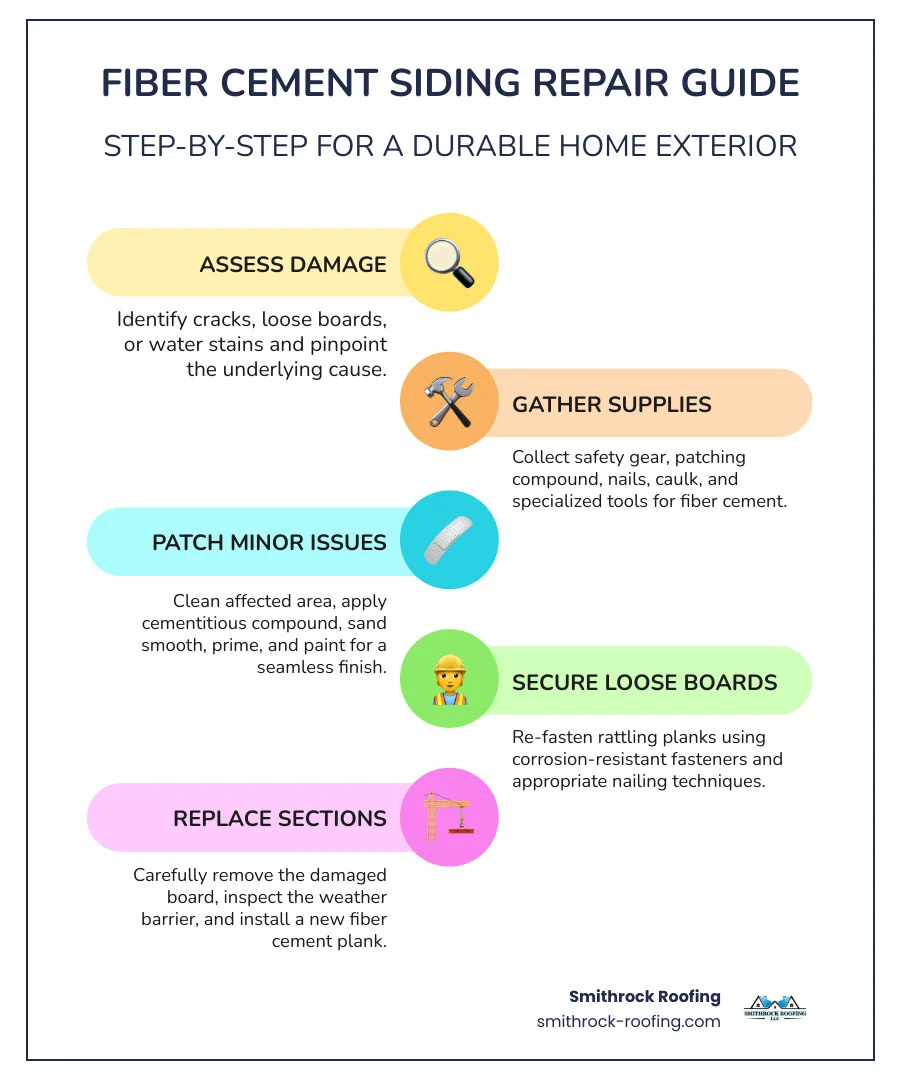
Following manufacturer-aligned practices is not just about achieving a good-looking repair; it’s about ensuring the longevity of the fix and protecting your home’s warranty. This guide breaks down the three most common repair scenarios with detailed, professional-level instructions.
Patching Fiber Cement Siding: How to Fix Small Chips, Holes, and Cracks
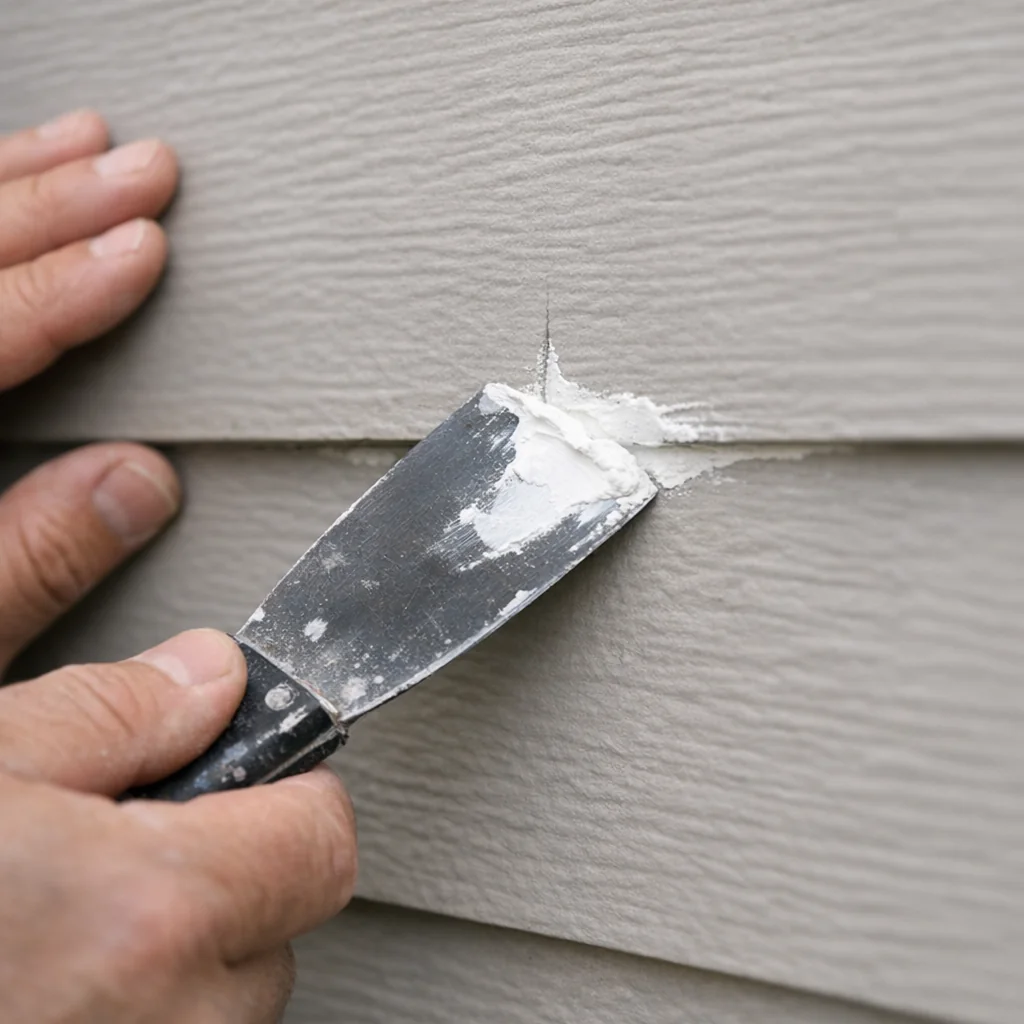
This method is ideal for small holes (under 1/2 inch), chips, and hairline cracks that have not compromised the structural integrity of the board. It is also the correct approach when homeowners ask how to patch cement board siding after localized impact damage.
- Prepare the Area: Clean the damaged spot thoroughly. Use a stiff nylon brush to remove any loose debris, dirt, or flaking paint. If the area is dirty, wash it with a mild detergent and water, then rinse and allow it to dry completely. For cracks, you may need to use a utility knife to carefully bevel the edges into a ‘V’ shape to give the patching compound more surface area to adhere to.
- Apply Patching Compound: Choose a high-quality, exterior-grade cementitious patching compound or a two-part epoxy filler. Mix it according to the manufacturer’s instructions. Using a flexible putty knife, press the compound firmly into the defect. Slightly overfill the hole or crack, as the material may shrink a bit as it cures. Make sure to force the filler deep into the void.
- Match the Texture: This step separates an amateur patch from a professional one. If your siding has a wood-grain texture, you must replicate it in the wet patch material. You can do this by lightly dragging a stiff-bristled brush across the surface, dabbing it with a damp rag, or gently pressing a piece of wood grain against it. The goal is to mimic the surrounding pattern. For smooth siding, simply smooth the patch flush with your putty knife.
- Cure and Sand: Allow the patch to cure completely. This can take anywhere from a few hours to 24 hours, depending on the product and weather conditions—check the product label. Once fully hardened, sand the patch smooth and flush with the siding surface. Start with a medium-grit sandpaper (120-grit) and finish with a fine-grit (220-grit) for a seamless blend. Feather the edges of the sanded area to avoid a visible ridge.
- Prime and Paint: This is a critical, often-skipped step. Wipe away all sanding dust with a tack cloth. Apply a coat of high-quality, exterior-grade, alkali-resistant primer specifically to the patched area. This seals the patch and prevents the high pH of the cement from affecting the topcoat. Once the primer is dry, apply at least two thin coats of 100% acrylic exterior paint, feathering the edges to blend with the existing color.
How to Fix Loose Cement Board Siding
A plank that moves, rattles, or bows out from the wall is a more urgent problem than it might appear. Loose cement board siding can allow wind-driven rain to penetrate the wall system and, over time, can stress adjacent boards enough to crack them. Here is how to fix it correctly.
- Diagnose Before You Nail: Before driving a single new fastener, figure out why the board came loose. Push on the board and note where it flexes. Use a stud finder to confirm whether there is solid framing behind the loose section. If nails pulled through the siding face, the board may have a hairline crack that needs to be patched before re-fastening. If the entire board is loose along its length, the original nails likely missed the studs entirely.
- Locate Framing: Use an electronic stud finder to locate the vertical framing members behind the loose plank. Mark their locations lightly with a pencil on the plank above.
- Re-Secure the Plank: For a loose plank, you can face-nail it to re-secure it. Use corrosion-resistant (galvanized or stainless steel) siding nails. Drive the nails through the face of the siding and into the studs, approximately 1 inch down from the top edge of the plank below it. Do not overdrive the nail—the nail head should be snug and flush with the siding surface. Overdriving can fracture the board.
- When Re-Fastening Isn’t Enough: If the board is cracked through, severely warped, or the sheathing behind it is soft or rotted, re-nailing will not provide a lasting fix. In that situation, the correct repair is a full board replacement, as described in the next section.
- Seal Vertical Gaps: For gaps at vertical trim (like around windows or at corners), carefully remove the old, failed caulk with a utility knife or caulk removal tool. Clean the joint and apply a new bead of high-quality, ASTM C920-compliant exterior sealant. For gaps at butt joints where two planks meet, do not fill the gap with caulk. The proper repair is to install a piece of joint flashing behind the joint, as described in the replacement process below.
Can You Caulk a Crack in Cement Board Siding?
This is one of the most common questions homeowners ask, and the honest answer is: it depends on where the crack is and how significant it is. For hairline cracks at trim interfaces—such as where siding meets a window casing, door frame, or corner board—a high-quality elastomeric sealant that meets ASTM C920 standards is the right tool. These joints are designed to be caulked, and a fresh bead of sealant restores the weathertight seal effectively.
However, caulking is not the right solution for cracks that run through the face of a siding board itself. A crack across a plank typically signals stress from loose fasteners, building movement, or an impact. Simply filling it with caulk addresses the symptom but not the cause. The caulk will stretch and eventually re-open as the board continues to move. The correct approach for a cracked board face is to use a cementitious or epoxy patching compound as described above—and to investigate and correct whatever caused the crack in the first place. If the board is cracked all the way through its thickness, replacement is the only reliable fix.
One place you should never apply caulk is to the horizontal lap between courses of siding. Those gaps are intentional. They allow the wall to drain and breathe, and sealing them traps moisture inside the wall cavity.
The Complete Process for Replacing a Damaged Board
This is for boards that are cracked all the way through, have extensive damage, or are too loose to be re-secured.
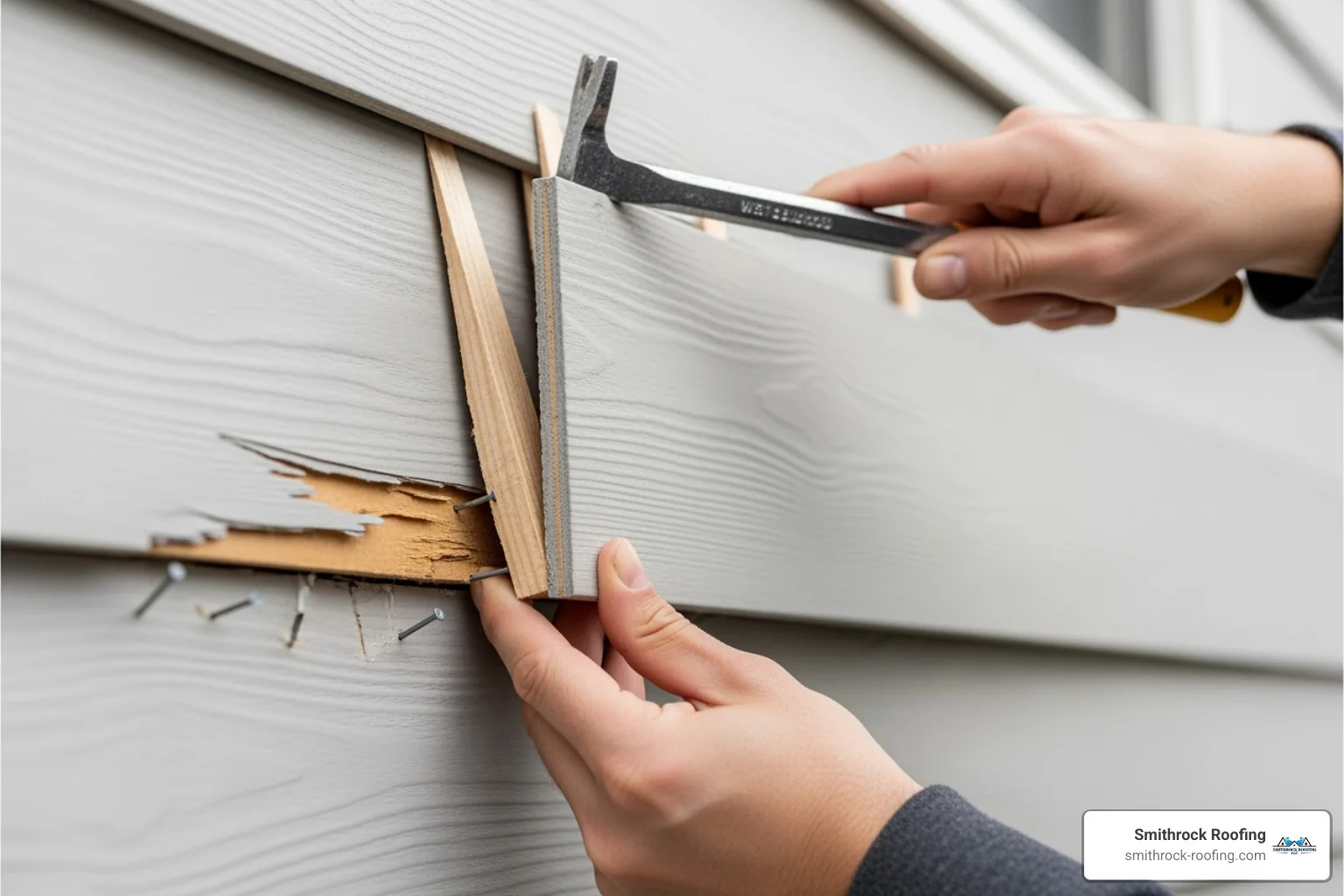
- Lift the Course Above: Gently insert wood shims or a flat pry bar under the bottom edge of the board directly above the damaged one. This will lift it slightly and expose the nail heads holding the damaged board in place.
- Cut the Fasteners: Slide a hacksaw blade, reciprocating saw with a metal-cutting blade, or an oscillating multi-tool with a metal-cutting blade up under the lifted board. Carefully cut through the nails that secure the top edge of the damaged board. Be extremely careful not to damage the surrounding boards or the weather barrier behind them.
- Remove the Damaged Board: Once all the fasteners are cut, the damaged board should be free. Carefully slide it down and out. It may be necessary to cut the caulk at the ends of the board if it abuts trim.
- Inspect and Repair the Weather Barrier: With the board removed, you have a clear view of the weather-resistive barrier (WRB), or house wrap. Inspect it for any holes, tears, or cuts made during removal. Seal any damage with approved house wrap tape (like Tyvek tape).
- Measure and Cut the Replacement: Measure the opening precisely. Transfer this measurement to your new fiber cement board. When cutting, always follow safety protocols for silica dust. Using fiber cement shears is the cleanest, safest method. If using a saw, use a specialized blade, cut outdoors, wear a P100 respirator, and use a HEPA vac for dust collection.
- PRIME ALL CUT EDGES: This is the single most important step for a durable replacement. Using your alkali-resistant primer, seal every edge you just cut. Unsealed edges will absorb water, swell, and cause paint to fail, voiding the siding warranty.
- Install the New Board: Slide the new board up into position, ensuring it has the same exposure as the surrounding courses. It should slide in under the board above it. Make sure it fits snugly against any adjoining boards or trim.
- Fasten the New Board: Using corrosion-resistant siding nails, blind-nail the new board into the studs. This means driving the nails along the top edge, about 1 inch down, so they will be covered by the overlap of the board above. The nail heads should be driven flush with the surface.
- Flash All Butt Joints: If your replacement board creates a new butt joint (where its end meets the end of another board), you must install joint flashing. Cut a strip of WRB or use a pre-made metal flashing (at least 6 inches wide) and slide it behind the joint, centered on the gap. This creates a drainage plane for any water that gets past the joint.
- Finish and Paint: Remove the shims from the board above, allowing it to rest on your new plank. If you had to face-nail anything, dab the nail heads with primer. Finally, prime any unprimed surfaces and apply two coats of your color-matched 100% acrylic paint to the new board and any repaired areas.
Always maintain the manufacturer’s required clearances: a minimum of 6 inches between the siding and the ground (grade) and at least 2 inches above any hard surfaces like decks, patios, or rooflines. Never apply caulk to the horizontal laps between boards, as this traps moisture and prevents the wall system from draining properly.
For highly detailed installation and repair specifications, consult resources like the InspectAPedia guide to Fiber Cement Siding Repair.
Cement Siding Repair: Is It Fiber Cement, Concrete Siding, or Something Else?
Homeowners searching for “cement siding repair” or “concrete siding repair” are often looking at the same type of product but using different names for it. It’s worth a quick clarification, because the repair approach does vary by material.
Modern Fiber Cement Siding (James Hardie HardiePlank, CertainTeed Fiber Cement, LP SmartSide fiber cement) is the cladding this entire guide addresses. Despite being called “cement board siding” or “concrete siding” in casual conversation, it is a composite of Portland cement, sand, and cellulose fibers formed into planks, panels, shingles, or trim. It is the dominant cement-based siding product on the market today and is repaired using the patching, re-fastening, and board-replacement techniques described throughout this article.
Stucco is a true cement-and-sand plaster system applied directly to the wall substrate in multiple coats. While it also contains Portland cement, it is repaired very differently—typically by cutting back cracked or delaminated sections, re-lathing if necessary, and applying new base and finish coats. Stucco repair is a distinct trade skill.
Older Asbestos-Cement Shingles (sometimes called “transite siding” or “Colorbestos”) were a cement-based product manufactured from roughly the 1920s through the 1970s. They look like small, flat shingles and contain asbestos fibers rather than cellulose. As noted elsewhere in this guide, these must never be cut, sanded, or drilled without professional abatement. Do not attempt DIY repair on this material.
If you are unsure which product you have, the easiest way to check is to look for manufacturer markings on the back of a board (visible if one is loose), or to contact a qualified siding contractor for a quick on-site assessment. Here in the NC Triad, the team at Smithrock Roofing encounters all three of these materials regularly and can identify them quickly during a free inspection.
DIY vs. The Pros: When to Call for Backup
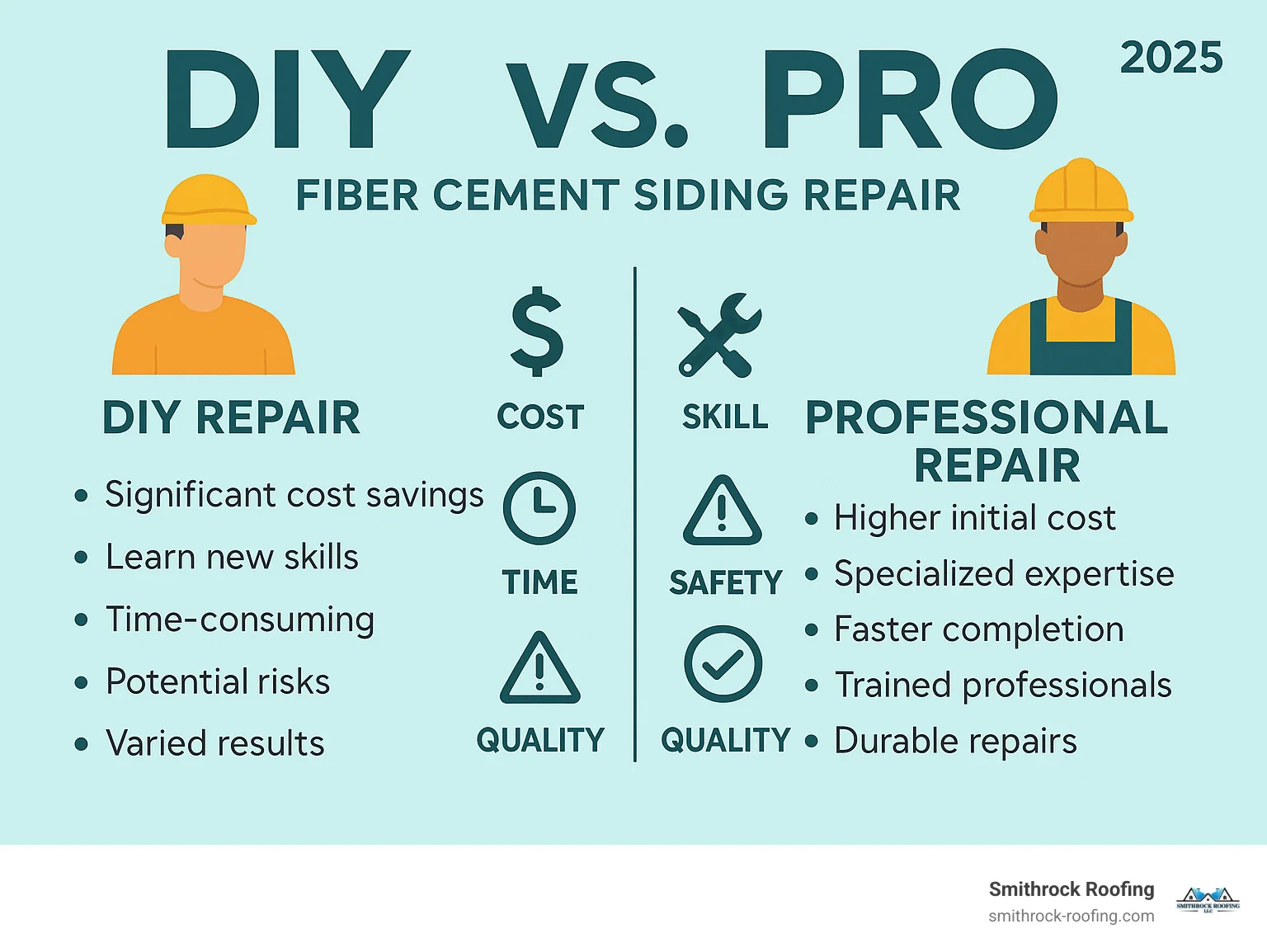
Deciding whether to tackle a fiber cement siding repair yourself or hire a professional is a crucial choice. It hinges on a realistic assessment of the project’s scope, the required tools and skills, safety considerations, and your desired quality of the final result.
Is DIY Fiber Cement Siding Repair Right for You?
A DIY approach can be rewarding and cost-effective for certain types of repairs. You are a good candidate for a DIY repair if the project meets these criteria:
- Small Scale: The job involves patching a few isolated chips, filling hairline cracks, or re-caulking around a window.
- Limited Quantity: You are replacing just one or two damaged boards, not an entire wall section.
- Safe Access: The damage is located on the ground floor or is easily and safely reachable with a stepladder. Any work requiring a large extension ladder, especially on uneven ground, significantly increases risk.
- Clear-Cut Problem: The cause of the damage is obvious (e.g., a rock from a lawnmower) and there are no signs of underlying water damage.
The Advantages of DIY Repair:
- Significant Cost Savings: The primary motivation for most DIYers is cost. Materials for a small patch job might run $20–$60. Replacing a single board yourself could cost under $150, whereas a professional service call for the same job will likely start at $300–$600.
- Flexible Scheduling: You can work at your own pace, fitting the project into your weekends and waiting for ideal weather conditions for painting and curing. You aren’t subject to a contractor’s busy schedule.
- Valuable Knowledge Gain: Successfully completing a repair gives you a deeper understanding of how your home is constructed. This knowledge is invaluable for future maintenance and for spotting potential problems early.
The Disadvantages and Risks of DIY Repair:
- Safety Hazards: This is the biggest concern. Cutting fiber cement creates hazardous silica dust, which requires proper respiratory protection. Working on ladders is inherently dangerous and is a leading cause of home-project injuries. Professionals have the training and equipment (like scaffolding and safety harnesses) to mitigate these risks.
- Risk of Poor Quality: An improper repair can look bad and fail prematurely. Common DIY mistakes include using the wrong patching material, failing to prime cut edges, incorrect nailing that voids the warranty, or creating a new water leak by damaging the weather barrier.
- Hidden Costs and Time: A simple repair can quickly become complex. You may need to purchase specific tools (like fiber cement shears or an oscillating tool) that you’ll only use once. A project that a pro could finish in a few hours might take a DIYer an entire weekend, including multiple trips to the hardware store.
When to Hire a Professional Siding Contractor
For many situations, hiring a qualified professional is the wisest and ultimately most cost-effective choice. You should call a pro when:
- The Scope is Large: The repair involves replacing multiple boards, an entire wall section, or boards in various locations around the house.
- Working at Height: Any repair work that requires a tall extension ladder (above the first floor) or is located in hard-to-reach areas like above a roofline or on a steep gable end.
- Signs of Deeper Issues: You see evidence of moisture behind the siding, such as water stains on interior walls, soft or rotted wood sheathing, or widespread peeling paint. This requires a diagnostic expert, not just a repair person.
- Complex Flashing is Involved: The damage is near critical intersections like roof-to-wall transitions, deck ledgers, or kickout flashing. Improperly repaired flashing is a primary cause of major water damage.
- You Have Pre-Finished Siding: If your home has factory-finished siding (like James Hardie’s ColorPlus products), matching the finish and sheen requires specific materials and techniques to maintain the warranty and appearance.
Budget Expectations for Professional Repair (costs vary by region and job complexity):
- Minor Service Call (Patch & Paint): Expect to pay $250–$600 for a professional to handle small patches, sealing, and touch-up painting.
- Single Board Replacement: Replacing 1–3 boards in one accessible location typically costs $400–$1,200. The price increases with height, access difficulty, and the precision required for color matching.
- Complex Repairs: If the job requires removing siding to repair rotted sheathing and install new flashing, the cost is highly variable and will be based on time and materials. Always get a detailed, itemized quote for this type of work.
Warranty Considerations and Hiring a Qualified Professional
Fiber cement siding warranties (which can be 30 years or more) are contingent on proper installation and repair. Deviating from the manufacturer’s published instructions can void your coverage. To protect your warranty:
- Always Use Correct Materials: This means corrosion-resistant fasteners, alkali-resistant primer on all cut edges, and proper joint flashing at all butt joints.
- Respect Clearances and Gaps: Maintain required clearances from grade and hard surfaces, and never caulk the horizontal lap joints, which would trap water.
- Follow Finishing Guidelines: Use high-quality acrylic paint and follow the manufacturer’s guidance on touch-ups, especially for pre-finished products.
Tips for Hiring the Right Pro:
- Verify Credentials: Ensure the contractor is licensed in your state and carries both general liability and worker’s compensation insurance. Ask for proof.
- Demand Specific Experience: Ask them directly about their experience with fiber cement siding systems, not just general carpentry. Ask to see photos of their previous repair work.
- Get a Detailed Written Scope: The contract should explicitly mention key details like the type of fasteners to be used, the commitment to prime all cut edges, the installation of joint flashing, and the specific paint system they will use.
- Clarify the Finishing Process: Discuss how they will handle paint matching. Will they paint just the board, or the whole wall to ensure a perfect blend? Who is responsible for sourcing the matched paint?
Just as proper roof maintenance protects your home from above, expert siding care is essential for shielding it from the elements. For related services, explore our professional roof repair services.
While minor repairs are excellent projects for a capable DIYer, don’t hesitate to call a seasoned professional when the scope, height, or complexity exceeds your comfort zone. It’s a small investment to prevent costly mistakes and ensure the job is done right the first time.
Fiber Cement Siding Maintenance: Protecting Your Investment Year-Round
The most effective fiber cement siding repair is the one you never have to make. While this material is renowned for its low-maintenance qualities, it is not “no-maintenance.” A simple, consistent maintenance routine can dramatically extend the life of your paint and sealants, prevent common problems before they start, and keep your home looking its best for decades. Think of proper fiber cement siding maintenance as the most cost-effective investment you can make in your home’s exterior.
A Seasonal Maintenance Checklist for Lasting Durability
Think of your siding like any other major component of your home, such as your HVAC system or roof. A little proactive attention goes a long way.
Spring Maintenance Checklist (After the Thaw):
- Detailed Visual Inspection: Walk the entire perimeter of your home on a clear day. Look for any damage that may have occurred over the winter. Pay close attention to areas prone to ice and snow buildup. Check for chips, cracks, loose boards, or failing caulk. Use binoculars for a clear view of upper levels and gable ends.
- Gentle Cleaning: Winter can leave a film of dirt and grime. Gently wash your siding to restore its appearance. Use a soft-bristle brush (like one for washing a car) and a bucket of mild detergent and water, or a garden hose with a low-pressure nozzle. Rinse thoroughly from top to bottom. Crucially, avoid using a high-pressure washer. Power washing can drive water into the wall cavity through laps and joints, potentially voiding your siding warranty and causing moisture damage. For stubborn mildew, use a solution of one part white vinegar to four parts water, or a commercial cleaner specifically labeled as safe for fiber cement.
- Check Sealant Joints: Inspect the caulk around windows, doors, corner trim, and any penetrations like vents or hose bibs. Look for cracks, shrinkage, or loss of adhesion. If the sealant is failing, it’s time to replace it.
Fall Maintenance Checklist (Before the Freeze):
- Gutter and Downspout Cleaning: This is one of the most critical maintenance tasks. Clogged gutters will overflow, sending water cascading down your siding. This chronic wetting leads to paint failure, staining, and potential moisture intrusion. Ensure gutters are clear and downspouts are directing water well away from the foundation.
- Landscaping and Drainage Check: Trim back any trees, shrubs, or vines that are touching the siding. Vegetation traps moisture against the wall and can abrade the paint finish. Ensure the soil grade slopes away from your foundation and that mulch or soil is not piled up against the siding. You must maintain a minimum of 6 inches of clearance between the bottom of the siding and the ground.
- Sprinkler System Adjustment: Check the aim of all sprinkler heads. They should water your lawn and garden, not your walls. Constant spraying is a common cause of localized paint failure and moisture issues.
Ongoing Care and Long-Term Planning
- Maintain Sealant Joints: When you find failed caulk, the proper repair is to completely remove the old bead with a utility knife or specialized tool. Clean the joint of all residue and dust. Apply a new bead of high-quality, paintable, elastomeric sealant that meets ASTM C920 standards. Tool the bead with a wet finger for a smooth, professional finish.
- Paint Care and Repainting: The paint on your siding is its first line of defense. Depending on your climate and sun exposure, a quality paint job should last 10 to 15 years. Signs that it’s time to repaint include widespread chalking (a powdery residue when you wipe your hand on it), fading color, or fine cracking in the paint film. When it’s time to repaint, proper preparation (cleaning and spot-priming) is essential. Always use a premium 100% acrylic exterior paint.
- Respect Clearances: Over the years, landscaping mulch or soil can build up, reducing the critical gap at the bottom of your siding. Periodically check that you still have at least 6 inches of clearance to soil/mulch and 2 inches to hard surfaces like decks, patios, and rooflines. If the grade has crept up, excavate the area to restore the proper clearance.
- Address Issues Early: The moment you spot a small chip or a single loose fastener, fix it. Keep a small repair kit on hand with a tube of good sealant, a small container of patching compound, and a quart of color-matched touch-up paint and primer. A 15-minute fix today can prevent a weekend-long project next year.
A predictable maintenance routine is the secret to maximizing your investment in fiber cement siding. It dramatically reduces the frequency and severity of repairs, extends the life of your coatings, and preserves both the protective performance and the curb appeal of your home.
Fiber Cement Siding Replacement: When Repair Is No Longer Enough
Repair is almost always the first and best option when damage is localized. But there are situations where fiber cement siding replacement—either of a large section or the entire home—is the smarter long-term choice. Knowing the difference can save you from throwing good money after bad.
Signs That Replacement Makes More Sense Than Repair
- Widespread Damage Across Multiple Elevations: When damage is scattered across many boards on several walls, the cumulative cost and disruption of individual repairs can exceed the cost of a full replacement. A full replacement also gives you a uniform, fresh appearance and a new warranty clock.
- Pervasive Paint Failure: If paint is peeling or failing across large sections of the siding rather than in isolated spots, it often indicates systemic moisture issues or that the siding has reached the end of its coating’s useful life. Repainting may be a temporary fix if the underlying siding surface has degraded.
- Extensive Rot or Structural Damage to Sheathing: If removing damaged siding boards reveals widespread rotted or deteriorated sheathing behind the panels, the scope of the repair grows substantially. In these cases, replacing the siding while the wall is open—and simultaneously addressing the sheathing—is often more cost-effective than a piecemeal approach.
- Siding Age and Obsolete Profile: If your fiber cement siding is several decades old and the profile or texture is no longer manufactured, finding matching replacement boards for isolated repairs may be impossible. Full replacement with a current product can be more practical.
- Storm or Hail Damage Across the Whole House: After a significant hail event, your homeowner’s insurance may cover full siding replacement if the damage is widespread and functional—meaning the siding can no longer effectively shed water. A professional inspection and documentation are key to supporting this type of claim.
If you’re evaluating whether your situation calls for repair or replacement, an honest assessment from an experienced contractor is invaluable. At Smithrock Roofing, we provide straightforward inspections and give you the full picture—including when a repair is genuinely the right call—rather than pushing a larger project than you need. When replacement is warranted, we bring the same certified craftsmanship and quality materials to new siding installation as we do to every other aspect of your home’s exterior.
Frequently Asked Questions about Fiber Cement Siding Repair
Here are detailed answers to the most common questions homeowners have about maintaining and repairing fiber cement siding, based on years of professional, in-the-field experience.
How long does a fiber cement siding repair last?
A properly executed repair, where the root cause was addressed, should last for the remaining service life of the siding itself. The key is in the execution. If you simply patch a crack without re-securing a loose board, the patch will fail. If you replace a board but fail to prime the cut edges, that board will fail prematurely. A successful, long-lasting repair depends on using the right materials (cementitious patch, corrosion-resistant fasteners, alkali-resistant primer) and following manufacturer-specified techniques, especially regarding water management (flashing).
Can you paint over a repaired section of fiber cement siding?
Yes, and you absolutely must. Any patched area or new replacement board must be properly primed and painted to protect it from the elements. After the patch material has fully cured, spot-prime it with an alkali-resistant primer. Then, apply at least two thin coats of high-quality 100% acrylic exterior paint. For the most seamless visual result, it is often best to paint the entire affected board from end to end, or even the entire wall section from corner to corner, to avoid a noticeable difference in sheen and color between the old and new paint.
Is it difficult to match the color and texture of existing siding?
Texture matching is usually straightforward if you can identify the manufacturer and profile of your siding. Bring a clear photo or a small piece to a supplier. Color matching is much trickier. Due to UV exposure, your existing siding has faded. The original color code will no longer match. The best approach is to carefully remove a small chip of the siding (from an inconspicuous area) and take it to a professional paint store. They can use a spectrophotometer to create a custom digital match. Even with a custom match, slight variations may be visible, which is why painting a larger section is often recommended.
Should I caulk between horizontal laps or at butt joints?
No, never caulk the horizontal lap joints between siding boards. Fiber cement siding is installed as a type of open-joint cladding or rainscreen system. The small gap at the bottom of each board is designed to allow any water that gets behind the siding to drain out and to allow the wall cavity to dry. Caulking this joint traps moisture, leading to potential rot and paint failure. At vertical butt joints where two boards meet end-to-end, the preferred method is to install a strip of weather barrier or metal flashing behind the joint, not to fill the joint with caulk.
What fasteners should I use for re-nailing or replacement?
Always use high-quality, corrosion-resistant nails, either hot-dipped galvanized (HDG) or, for superior protection especially in coastal areas, stainless steel. The nails should be specifically designed for siding, with a full round head. A typical shank diameter is 0.113 inches, and the length must be sufficient to penetrate at least 1.5 inches into solid wood framing. When driving nails, they should be flush with the siding surface. Never overdrive them, as this can fracture the board and create a weak point.
Need a local pro? Learn more about our siding installation and repair in Kernersville.