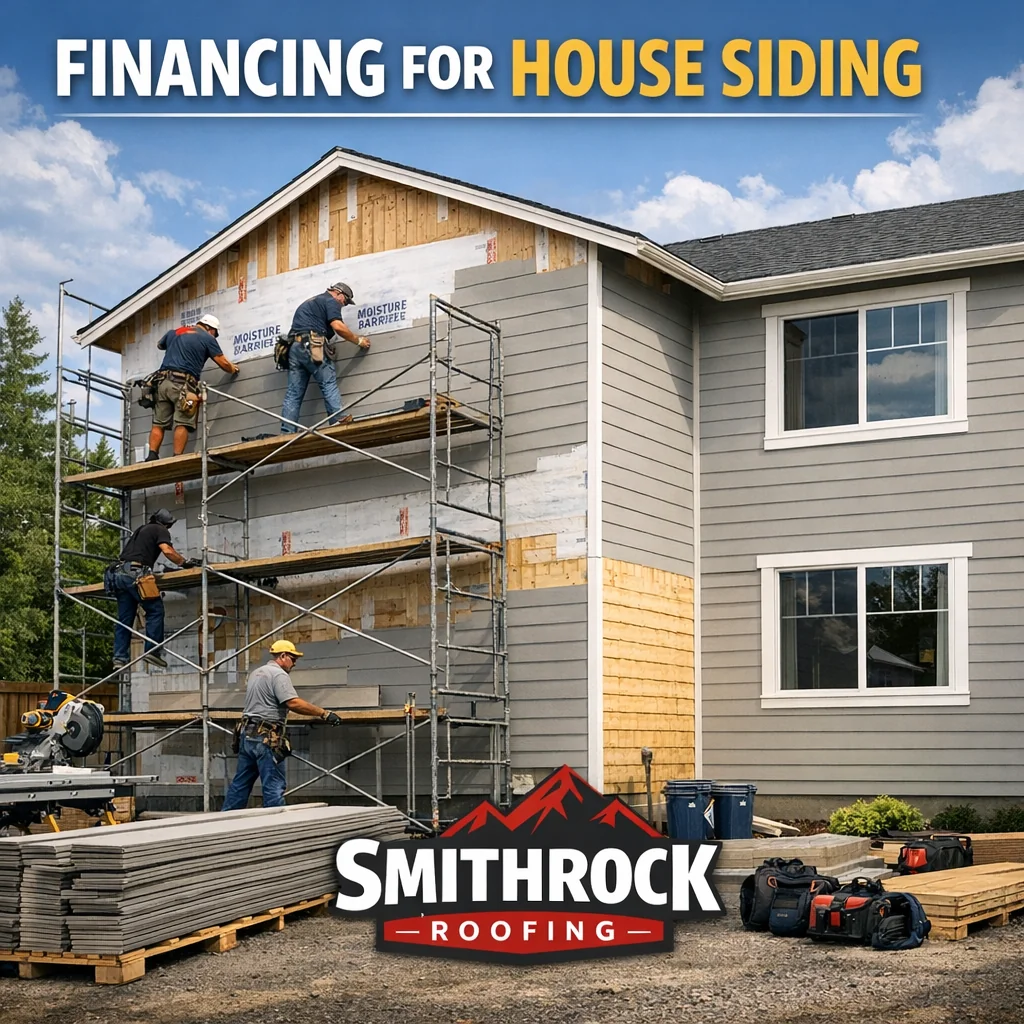
Financing for house siding catches a lot of homeowners off guard, not because the options are complicated, but because the guidance available rarely helps you choose between them. Most sources list the same four or five options in the same order and leave you to figure out which one actually fits your situation. That gap between “here are your choices” and “here is how to think through your choices” is where homeowners end up with the wrong loan type, an unmanageable monthly payment, or a financing arrangement that costs more than it needed to.
This article closes that gap. We will walk through every major financing pathway for siding replacement, explain the conditions under which each one makes sense, and point out the decision steps that most explanations skip entirely. If you are a homeowner in Winston-Salem, Greensboro, High Point, Kernersville, Clemmons, Rural Hall, King, Mount Airy, or the surrounding NC Triad area exploring your options, this is a practical framework you can actually use.
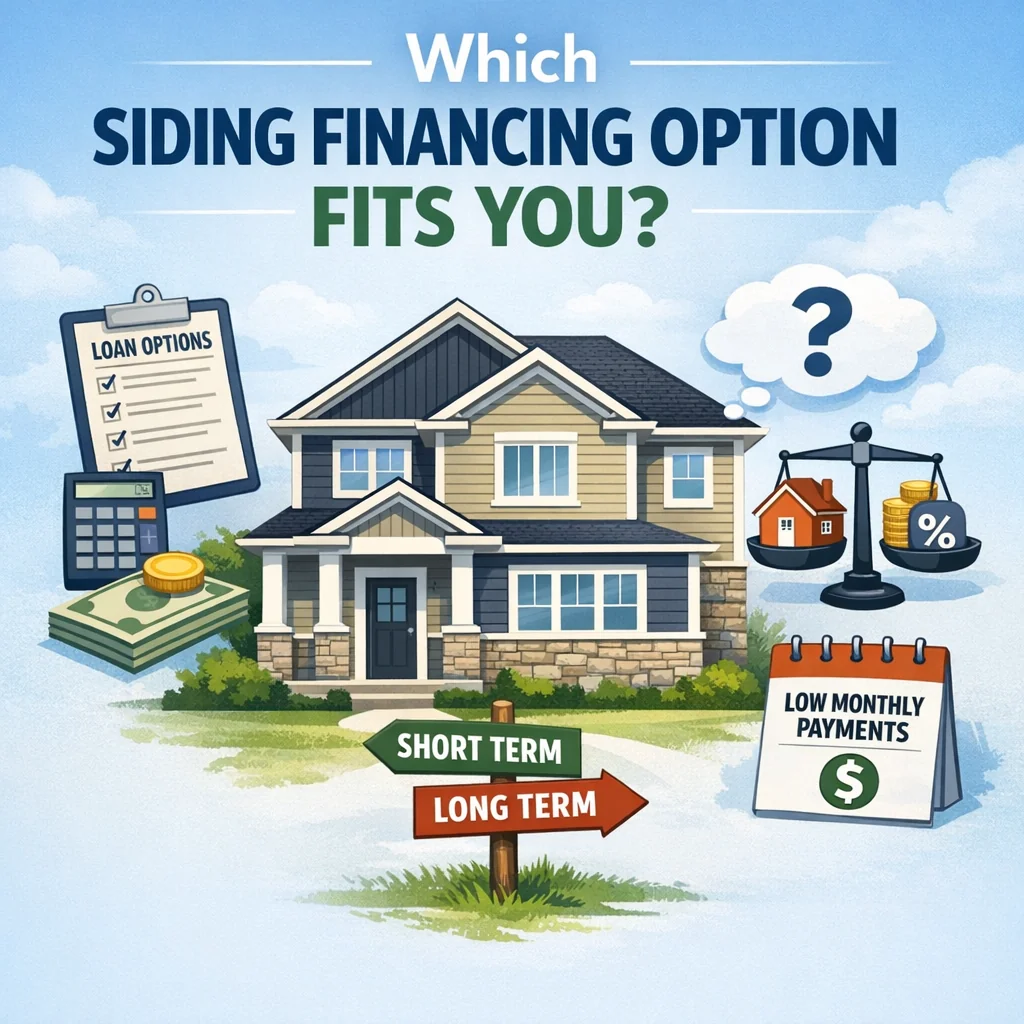
Understanding what each option is built for is the first step. The table below compares the key characteristics of each pathway so you can see them side by side before we dig into the decision logic.
| Financing Type | Collateral Required | Approval Speed | Best For | Key Risk |
|---|---|---|---|---|
| Personal Loan | No | Fast, often same day | Mid-range projects, limited equity, strong credit | Higher rate than secured loans; origination fees affect true cost |
| Home Equity Loan | Yes, your home | Slower (weeks) | Larger projects with substantial existing equity | Home at risk if payments default |
| HELOC | Yes, your home | Slower (weeks) | Phased projects or uncertain total cost | Variable rate; home at risk |
| Promotional 0% Credit Card | No | Fast | Smaller, short-timeline projects with strong cash flow | Deferred interest trap if balance not cleared in time |
| Contractor-Arranged Financing | Varies by lender | Moderate | Convenience; bundled with project | May not carry competitive market rates |
| Insurance Claim | N/A | Depends on adjuster | Storm or hail damage to existing siding | Deductible still owed; potential premium impact |
A personal loan does not require you to put your home up as collateral, which makes it genuinely lower-risk from a property-loss standpoint. Approval is faster than a home equity product, and the rate is fixed, so your monthly payment stays predictable.
What most explanations leave out is the role of the origination fee. Personal loans frequently carry an origination fee ranging from one percent to eight percent of the loan principal. That fee is deducted upfront or rolled into the balance and meaningfully changes the true annual percentage rate. When comparing personal loan offers, always ask for the APR with the origination fee included, not just the stated interest rate.
Debt-to-income ratio matters here, too. A strong credit score does not guarantee favorable terms if you are already carrying significant monthly debt obligations. Lenders evaluate the percentage of your gross monthly income going toward existing payments. If that figure is high, expect either a higher rate or a lower approval amount, regardless of your credit score.
Both home equity loans and HELOCs use your property as collateral. The standard warning is that defaulting puts your home at risk, which is accurate. But the decision is more nuanced than a simple warning communicates.
Siding replacement consistently returns a high percentage of its project cost to home value. When you hold substantial equity and the project itself is raising the value of the asset being collateralized, the net risk profile is different from using home equity to finance, say, a vacation. The collateral rationality rule works like this: the more equity you hold and the higher the project’s return on investment, the more defensible a secured loan becomes. Conversely, if you have limited equity, a secured loan places a much larger share of your home’s value at risk for a smaller return.
A home equity loan gives you a fixed amount at a fixed rate. A HELOC functions more like a revolving credit line, which makes it useful if your project scope is uncertain or will be completed in phases. HELOCs typically carry variable rates, which introduces payment uncertainty over time.
A zero-percent promotional credit card can be a genuinely smart tool for smaller siding projects when used with discipline. The promotional window typically runs between six and eighteen months. After that window closes, the rate reverts to a standard credit card rate that may be substantially higher than a personal loan.
Before you apply, run this test. Take the total project amount and divide it by the number of months in the promotional period. That number is the monthly payment you need to make in order to clear the balance before the high rate kicks in. Compare that figure to your actual available monthly cash flow after all other obligations. If the required monthly payment exceeds what you can reliably commit, the promotional card becomes a high-rate trap rather than a savings tool. This is a self-qualification step that takes less than five minutes and could save you from a costly mistake.
Many siding contractors offer financing through a lending partner as a convenience. This is not inherently problematic, but it warrants scrutiny. Contractor-arranged financing typically comes from a pre-selected panel of lenders with whom the contractor has a referral relationship. That arrangement may not produce the most competitive rates available to you on the open market.
Before committing to contractor-arranged financing, take the loan terms you are offered and compare them against at least one independently sourced personal loan offer. The comparison takes minimal time and ensures you are not paying a premium for convenience. At Smithrock Roofing, we believe homeowners should always enter a financing decision from a position of knowledge, which is why we encourage that comparison rather than discourage it.
If your siding sustained damage from a covered event, your homeowner’s insurance policy may cover the bulk of the replacement. Filing a claim does involve a deductible, and a claim can influence future premium adjustments, so it is not a cost-free path. But it is a meaningfully different decision tree than an elective upgrade, and it should be evaluated first. Our article on hail damage siding walks through how to identify covered damage and what to expect from the claims process.
A practical hybrid scenario: insurance covers the primary replacement while you finance the deductible separately using a personal loan or credit card. This approach reduces the total amount you need to borrow and may allow you to qualify for a shorter repayment term. Zero competitors in this space walk homeowners through this interaction, but it is a real and common situation in the NC Triad.
Need a hand with this in Winston-Salem, Greensboro and the Triad? Call (336) 971-0464 or request a free estimate. Honest answers, no pressure.
A longer repayment term lowers your monthly payment, which feels like a win. It is not always one. Stretching a loan over a longer period means paying interest for more months, and the total amount paid over the life of the loan increases substantially even when the interest rate is identical.
When evaluating loan offers, ask the lender for the total repayment amount across the full term, not just the monthly payment. Compare two offers: one with a shorter term and higher monthly payment, one with a longer term and lower monthly payment. The difference in total cost may shift your decision, especially if you have the cash flow to support the higher monthly amount. This is a standard calculation that loan officers make automatically, but it is rarely shown to borrowers upfront.
At Smithrock Roofing, with more than 350 five-star reviews and 60-plus combined years of experience serving homeowners across the NC Triad, including those seeking roofing in Mount Airy, we believe your siding investment should be protected from the first conversation to the final nail. That means helping you understand not just what we are installing, but how to fund it in a way that genuinely serves your long-term financial health. If you have questions about your project or want to talk through your options, our team is ready to have that honest conversation with you.
Homeowners generally have several paths available, including personal loans, home equity loans, home equity lines of credit, and promotional financing offered through contractors or retailers. Each option carries different terms, interest structures, and qualification requirements, so comparing them side by side before committing is worth the time.
It can be, but it should not be accepted without comparison. Contractor financing is convenient, and promotional periods with deferred interest can work in your favor if you pay the balance before the term ends. The risk comes when that promotional period expires and a high standard rate applies retroactively. Always request the full loan terms in writing and compare them against an independently sourced option.
Your credit score directly influences the interest rates you qualify for and, in some cases, whether you qualify at all. A stronger score generally unlocks lower rates, which reduces what you pay over the life of the loan. If your score is lower than you would like, some homeowners choose to delay the project briefly to improve it, which can result in meaningfully better loan terms.
If your siding was damaged by a storm, hail, or another covered event, filing an insurance claim should always be the first step. A valid claim may cover the majority of the replacement cost, leaving only the deductible as your out-of-pocket expense. Financing becomes most relevant when damage is not covered or when the project is an elective upgrade rather than an insurance event.
Homeowners across Winston-Salem and Greensboro trust Smithrock Roofing because our team brings more than 60 combined years of experience to every project, pairs that experience with honest guidance, and stands behind our work through every stage from the first estimate to the finished installation. Whether you are replacing weathered siding or upgrading your home’s exterior for the long term, we are here to help you navigate both the materials and the financing in a way that makes sense for your situation. Call us at (336) 971-0464 or Contact Smithrock Roofing to start the conversation with a team that genuinely puts your home first.

Smithrock Roofing © Copyright 2026 • All Rights Reserved • Privacy Policy • Maintained by Mongoose Digital Marketing