New vinyl siding is one of the most straightforward exterior upgrades a homeowner can make, and yes, it can increase your home’s value. The more useful question is how much, and under what conditions. Most guides stop at citing a national ROI figure and move on. That number, while real, tells you very little about what your specific home will actually gain in your specific market. Understanding the mechanics behind siding’s effect on value, not just the headline statistic, puts you in a far better position to make a confident decision.
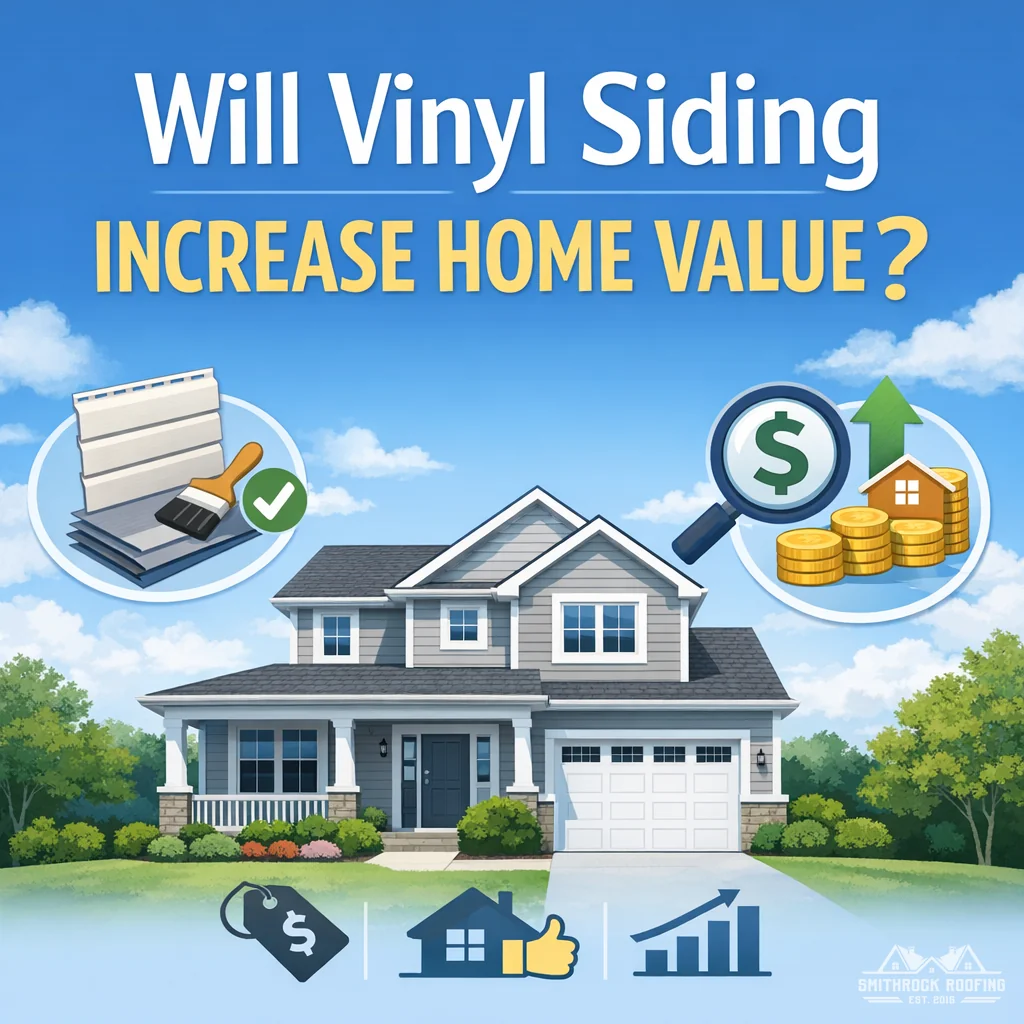
Illustration, not a photograph of a completed client project.
The figure most homeowners encounter when researching siding comes from the annual Remodeling Cost vs. Value Report. This report compares the average cost of common remodeling projects against the resale value those projects add, as estimated by appraisers and real estate professionals across the country. It is a genuinely useful reference, but it is a snapshot, not a rulebook.
Here is why the number moves: the ROI ratio is a relationship between two figures, project cost and added value. When material and labor costs rise faster than home values in a given year, that ratio compresses even if new siding is adding the same real-world curb appeal it always has. The 2023 report placed vinyl siding’s ROI at roughly 95%. The 2024 report brought that figure down to 80.2%. That is a meaningful swing, and it happened not because vinyl siding became less effective, but because the economic inputs changed.
A homeowner using the 2023 figure to plan a 2025 or 2026 project is working from outdated math. The direction the data points, that new vinyl siding returns most of its cost in added value, remains consistent. The precise percentage at any given moment is a moving target tied to construction economics, not a fixed property of vinyl siding itself.
Have a siding question about your home? Send a message with your town, the siding material, affected area, and whether you are considering repair or replacement. Mention this article about will vinyl siding increase home value and ask for a written explanation of possible next steps. You can also review Siding.
This distinction matters more than most guides acknowledge. Studies cited by real estate sources report that homes with updated exteriors can attract offers higher than comparable homes with worn exteriors, a difference that reflects buyer perception, how a potential buyer feels about a home based on its appearance, and what they are willing to offer as a result. That psychological response is real and it affects how fast a home sells and at what initial offer level. According to HomeLight’s Top Agent Insights for End of Year 2024, nearly half of top agents consider enhanced curb appeal to be one of the strongest selling points among key home features.
Appraised value works differently. An appraiser does not feel enthusiasm about fresh siding. They compare your home against recent sales of similar properties in your area and make adjustments based on condition ratings and material quality. If comparable homes in your neighborhood also have newer vinyl siding, your appraiser has a basis for an upward adjustment. If they do not, the path to a confirmed higher value becomes less predictable.
This gap between perceived value and appraised value matters most when a buyer’s financing depends on the appraisal. A buyer may offer more because of your new siding, but if the appraisal does not support that offer, the deal can stall. Understanding this distinction helps you set realistic expectations, particularly if you are planning to replace siding shortly before listing. If you want to explore how material choices affect both buyer perception and appraised value, our guide comparing vinyl vs Hardie Board siding breaks down cost and durability differences in detail.
Most material comparisons focus almost entirely on ROI percentages. That is a reasonable starting point, but the choice between vinyl and fiber cement involves a broader set of considerations.
| Factor | Vinyl Siding | Fiber Cement Siding |
|---|---|---|
| Reported ROI (2024 Cost vs. Value) | 80.2% | 88.4% |
| Upfront investment | Lower | Higher |
| Durability | Good; can warp under extreme heat or reflected sun | Very high; resists moisture, pests, and fire |
| Maintenance requirements | Low; occasional cleaning | Low; may need periodic repainting |
| Appraiser perception | Widely accepted; standard in most markets | Often rated favorably; may affect comparables differently |
| Style range | Wide; many profiles and colors available | Wide; can replicate wood, stucco, and other finishes |
| Fire resistance | Limited; can melt or warp near flame | High; noncombustible when tested per ASTM E84 (source: James Hardie) |
| Long-term value trajectory | Solid for most homes | Strong; especially in higher price tiers |
Vinyl’s lower upfront cost makes it a practical choice for many homes, and its 80.2% return is nothing to dismiss. Fiber cement’s higher ROI percentage reflects both its greater durability and the way some appraisers and buyers in certain price segments perceive premium exterior materials. Neither choice is universally correct. The right material depends on your home’s price tier, your neighborhood’s existing standards, and how long you plan to stay before selling.
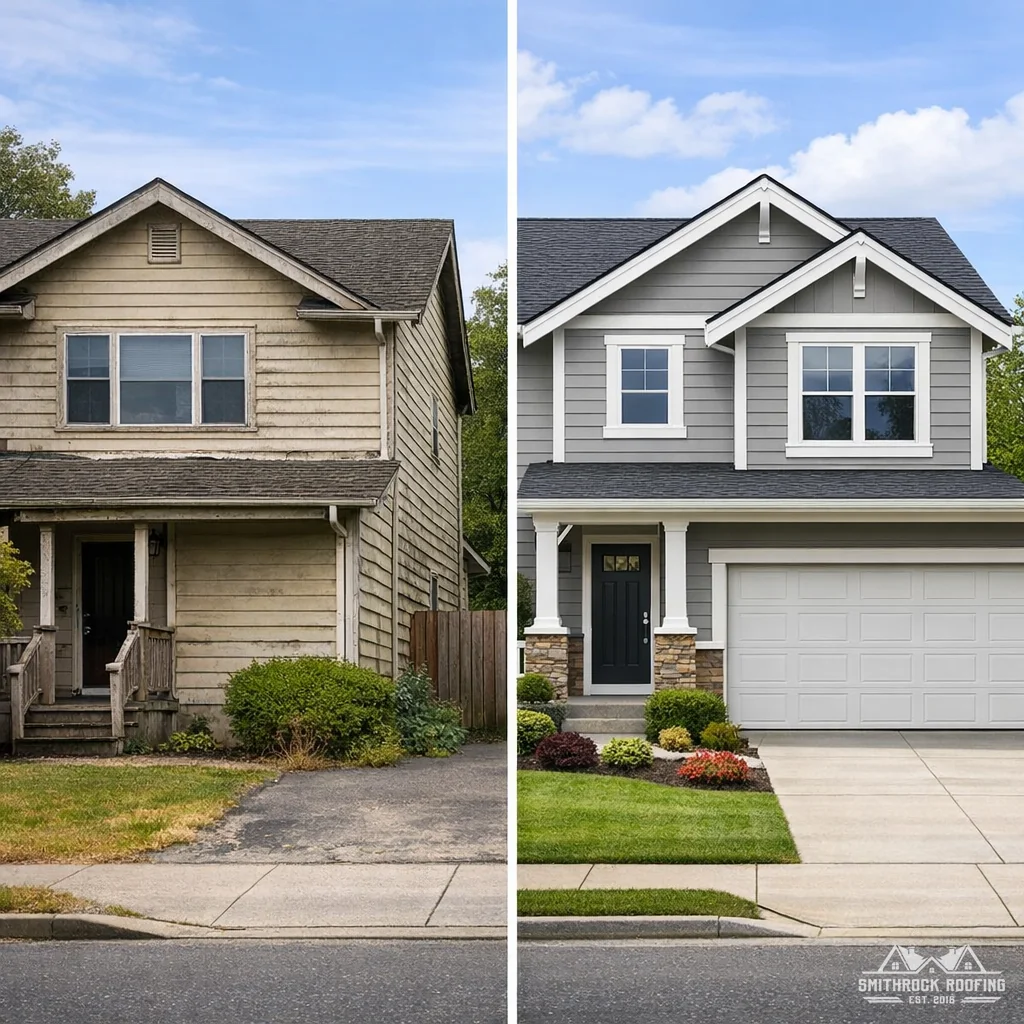
Illustration, not a photograph of a completed client project.
This is where most guides give homeowners a list of damage symptoms without a usable decision framework. Here is a more practical way to think through it.
Replace when:
– Panels are warped, cracked, or missing in multiple areas, not just isolated spots
– You are finding moisture or mold inside walls that traces back to siding failure
– The siding’s age means replacement panels are hard to match or no longer available
– Damage covers a large enough portion of the home that partial repair would look inconsistent
Repair when:
– Damage is genuinely limited to a small number of panels
– The siding’s overall style and condition still reads as well-maintained to a buyer
– Matching panels are available and would blend seamlessly with the existing exterior
Consider a full refresh before cosmetic treatment alone when:
– The siding is structurally sound but the profile or color is visually dated
– This is the point most guides miss entirely
A freshly pressure-washed vinyl exterior from a style that clearly signals a specific decade does not read as move-in ready to most buyers. It reads as well-maintained but old. If the siding’s condition is the problem, cleaning can help. If the siding’s style is the problem, cleaning makes the style more visible, not less. Knowing which problem you actually have changes the entire calculation. For homeowners weighing whether a patch fix is enough or a full replacement is warranted, our vinyl siding patch repair article walks through how to make that call with confidence.
For homeowners across Winston-Salem, Greensboro, High Point, and the surrounding NC Triad communities, Smithrock Roofing offers siding evaluations to help you determine what your exterior actually needs.
Both effects are real, but they operate differently. New vinyl siding can prompt buyers to offer more because a fresh exterior signals a well-maintained home. Whether an appraiser confirms that higher value depends on local comparable sales. If similar homes in your area have also updated their exteriors, your appraiser has a benchmark for an upward adjustment. If comparable homes still carry older siding, the appraised value may not fully reflect what buyers are willing to pay. Understanding this gap matters most when a buyer’s financing relies on the appraisal matching their offer.
No. The figures published in the annual Remodeling Cost vs. Value Report shift year to year because they reflect a ratio between project cost and added resale value, and both sides of that ratio move independently. Material and labor costs, local home values, and regional construction markets all affect the number. The 2023 report placed vinyl siding’s ROI at roughly 95%; the 2024 report brought it to 80.2%. The consistent finding across years is that new vinyl siding returns a meaningful portion of its cost, but the precise percentage at any moment is a moving target, not a fixed property of the material itself.
Cleaning or repainting makes sense when the siding’s structural condition is the only issue, isolated fading, surface dirt, or minor discoloration that genuinely obscures an otherwise well-maintained exterior. Where homeowners most often miscalculate is when the siding’s style, not just its surface, is the problem. A pressure-washed exterior from a profile that reads as visually dated does not read as move-in ready to most buyers; it reads as well-maintained but old. If cleaning makes the style more visible rather than less, replacement addresses the actual problem that cleaning cannot.
Not universally. Fiber cement consistently earns a higher ROI percentage in national reports and may be weighted more favorably by appraisers in certain price segments, but its higher upfront investment changes the calculation for homes where the market does not support premium exterior materials. Vinyl remains a practical, widely accepted choice where cost efficiency matters and where local comparable sales reflect vinyl as the prevailing standard. The right material depends on your home’s price tier, what neighboring homes present, and how long you intend to stay before selling.
New vinyl siding increases home value in a real and measurable way, but the return you actually see depends on conditions that a national ROI figure cannot capture: your local market, the condition and style of your existing exterior, how appraisers weight siding materials relative to nearby comparables, and whether the problem your siding has is one that replacement, repair, or a simple refresh actually solves.
The homeowners who make the most confident decisions are the ones who understand what mechanism they are trying to activate, buyer perception, appraised value, or structural protection, before committing to a project scope. For homeowners across Winston-Salem, Greensboro, High Point, Kernersville, Clemmons, and the broader NC Triad, that starts with an honest read of what your current siding actually needs, not what generates the largest project.

Smithrock Roofing © Copyright 2026 • All Rights Reserved • Privacy Policy • Maintained by Mongoose Digital Marketing