Insulated windows are a crucial upgrade for any home, featuring multiple panes of glass separated by an air or gas-filled space to dramatically reduce heat transfer. This design offers significant advantages for homeowners looking to improve comfort and efficiency.
Key Benefits of Insulated Windows:
If you’re dealing with drafty rooms, high energy bills, or condensation, outdated single-pane windows are often the cause. Modern insulated windows, or Insulated Glass Units (IGUs), solve these issues with advanced engineering, including insulating gases like argon and Low-E coatings that reflect heat.
This guide covers everything you need to know about insulated windows—from how they work to choosing the right options for your home—to help you make an informed decision that improves your home’s comfort, efficiency, and value.

Heat naturally moves from warm to cold spaces, meaning your home is constantly losing heat in winter and gaining it in summer through its windows. This energy transfer costs you money every day. Insulated windows—also known as Insulated Glass Units (IGUs), double-pane, or triple-pane windows—are engineered to stop this cycle. They slow the three forms of heat transfer: conduction (through materials), convection (through air movement), and radiation (as invisible waves).
Unlike single-pane glass, which allows heat to pass through easily, insulated windows create a thermal barrier. The space between the glass panes, filled with air or an insulating gas like argon, is a poor conductor of heat. This sealed space also prevents convective air currents. Special Low-Emissivity (Low-E) coatings reflect radiant heat, keeping it inside during winter and outside during summer. This technology is essential for maintaining comfort and efficiency in places like Winston-Salem, King, and Pilot Mountain, especially during cold weather.

The magic of an IGU lies in its precise construction. Two or more panes of glass are held apart by a spacer, which contains a desiccant (a drying agent) to prevent internal fogging. The entire unit is hermetically sealed to trap air or an inert gas like argon, which is 67% less conductive than air. This sealed chamber is the key to the window’s insulating power. Many modern windows also use warm-edge spacers made of less conductive materials to prevent heat loss around the window’s perimeter.
This advanced design delivers a ripple effect of benefits:
With high R-ratings and low U-factors (typically 0.15-0.18), insulated windows are a powerful investment in your home’s comfort and long-term efficiency.
Understanding the components of a high-performance insulated window helps you make an informed investment. It’s not just about having multiple panes of glass; it’s how the glass, gas fills, coatings, and spacers work together to boost your home’s comfort and efficiency. To compare products effectively, look for the National Fenestration Rating Council (NFRC) label, which provides standardized performance ratings. We encourage clients to learn How To Read The Label to understand what they’re buying.
The core of an insulated window is its glazing and the technology within it:
When comparing windows, focus on these two ratings:
These metrics are used for the ENERGY STAR® rating system, which certifies products that meet strict efficiency guidelines for specific climate zones. Choosing an ENERGY STAR certified window ensures it is optimized for our region’s mix of heating and cooling needs. The Benefits of ENERGY STAR Qualified Windows, Doors, and Skylights include lower energy bills, improved comfort, and protection for your belongings.
Choosing the right insulated windows involves balancing aesthetics, performance, and budget. With a wide array of materials, styles, and upgrades, you can customize windows to perfectly suit your home. For a deeper look at your options, our guide on the Best Windows for Insulation is a valuable resource.

The frame material and window style are just as important as the glass. Each offers a unique combination of efficiency, durability, and appearance.
Frame Materials:
Window Styles:
Further customize your insulated windows with these popular add-ons:
While lower utility bills are a major driver for upgrading to insulated windows, the benefits extend far beyond energy savings. These windows fundamentally improve your quality of life by changing your house into a more comfortable, peaceful, and valuable home.
The long-term financial upside is also significant. According to Remodeling Magazine, window replacement is a top home improvement project for return on investment, with homeowners recouping a large portion of the cost at resale. This makes insulated windows a smart financial decision that adds real equity to your property.

One of the most immediate benefits is significant noise reduction. A single pane of glass does little to block sound, but the multi-layer construction of insulated windows creates a formidable barrier. The multiple panes of glass, combined with the air or gas-filled space, absorb and dampen sound vibrations from traffic, neighbors, and other outside disturbances.
This performance is measured by the Sound Transmission Class (STC) rating. While a single-pane window may have an STC rating around 27, a quality double-pane window can reach the mid-30s, representing a clearly noticeable reduction in noise. This creates a tranquil indoor environment, promoting better sleep, reduced stress, and greater focus.
New insulated windows are a powerful investment that improves both the financial and aesthetic value of your home. For potential buyers, modern, energy-efficient windows are a highly desirable feature that signals a well-maintained and comfortable home with lower future utility costs.
Beyond the numbers, new windows provide an instant facelift. Replacing old, peeling, or foggy windows with crisp, new ones dramatically improves your home’s curb appeal, making it look modern and cared for. This fresh look extends inside, where clear glass and smooth-operating frames create a polished feel and allow natural light to fill your rooms. Whether you plan to sell soon or stay for decades, the pride of ownership that comes with a beautiful, well-maintained home is invaluable.
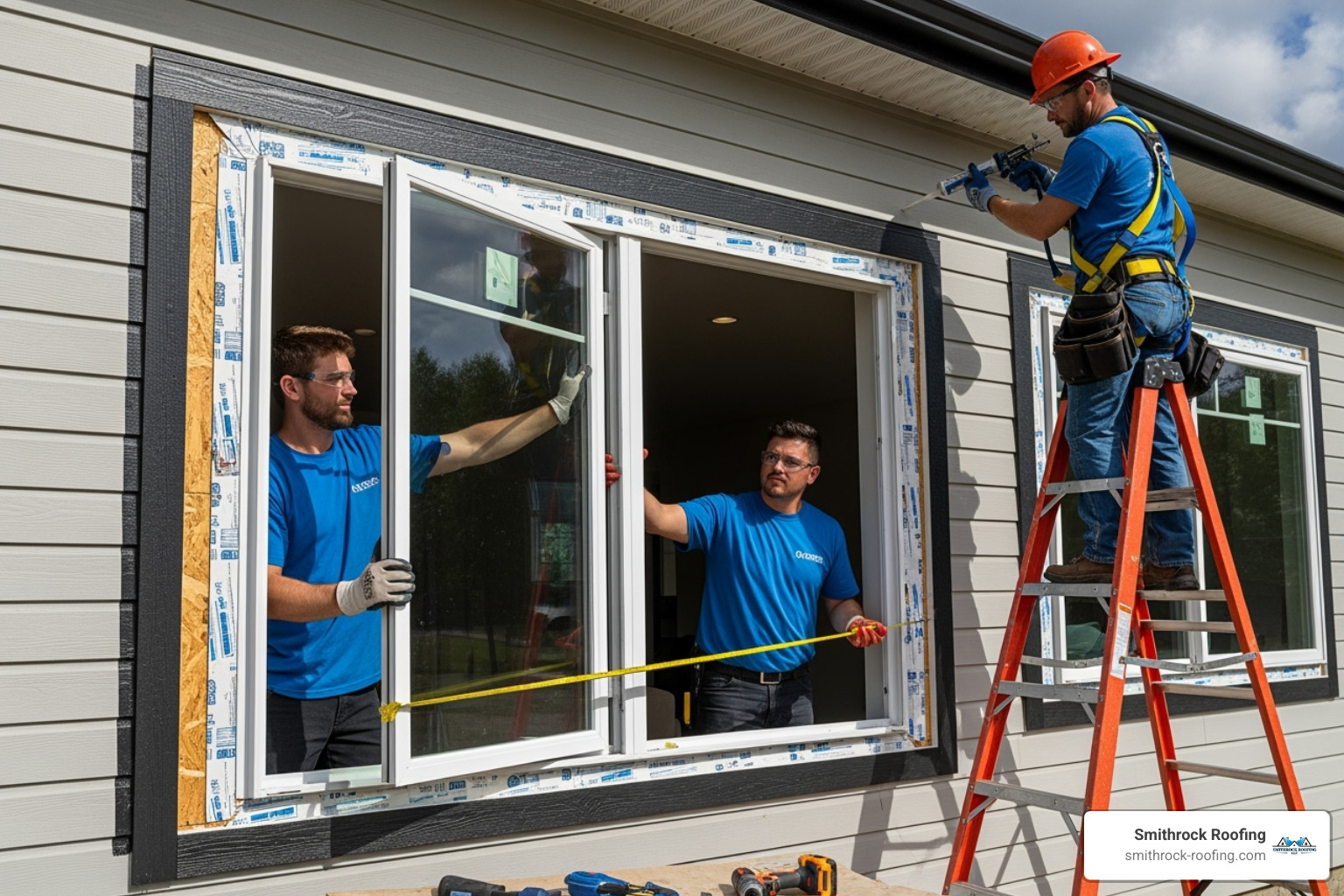
You can choose the best insulated windows on the market, but their performance hinges entirely on the quality of the installation. A window is only as good as its installation, which is why professional service is not an optional luxury—it’s a necessity to protect your investment.
Improper installation can lead to drafts, water leaks, condensation, and operational issues, completely negating the benefits of your new windows. At Smithrock Roofing, our approach to Window Installation and Replacement ensures your windows perform as designed from day one.
A professional installer ensures every aspect of the job is done right:
Choosing the right installer is as important as choosing the right window. Look for a contractor who is fully licensed and insured, has positive local reviews, and provides detailed written estimates. A trustworthy professional will explain the full scope of work, including cleanup and potential repairs to surrounding areas like siding or drywall.
As for timing, window replacement is feasible year-round. In fact, fall and winter can be ideal, as you’ll feel the benefits of your new insulated windows immediately during the heating season. Our guide on the Best Time to Replace Windows offers more detailed advice. The most important factor isn’t the season, but choosing an experienced team that can manage the project efficiently in any weather.
Choosing new insulated windows is a major decision, and it’s normal to have questions. Here are answers to some of the most common inquiries we receive from homeowners in Winston-Salem, King, and surrounding communities.
The lifespan of quality insulated windows is typically 15 to 30 years. Longevity depends on the quality of manufacturing, the climate, and proper installation. The seal of the Insulated Glass Unit (IGU) is the most critical component. Double-pane windows generally last 15-20 years, while more robust triple-pane windows can last 30 years or more. The most common sign that a window is nearing the end of its life is seal failure, which results in permanent fogging or condensation between the glass panes. Other signs include drafts, operational difficulty, or visible damage.
Absolutely. While the upfront cost is higher than for single-pane windows, insulated windows pay for themselves over time. The financial benefits include:
Beyond the financial return, the improvements in comfort, noise reduction, and UV protection provide daily value that makes the investment worthwhile for as long as you own your home.
Foggy windows are caused by seal failure. The airtight seal around the IGU is designed to keep moisture out and insulating gas in. Over time, due to temperature fluctuations and UV exposure, this seal can break down. When the seal fails, moist air enters the space between the glass panes. This moisture condenses on the interior glass surfaces, creating a foggy or cloudy appearance that cannot be wiped away. Inside the window, a desiccant material designed to absorb moisture becomes saturated and can no longer keep the space dry. Once an insulated window fogs internally, the IGU is compromised and has lost its insulating properties. The only effective solution is to replace the glass unit or the entire window.
As this guide has shown, insulated windows are a transformative investment in your home. They deliver a powerful combination of year-round comfort, lower energy bills, and a quieter indoor environment. By understanding the science behind multi-pane construction, gas fills, and Low-E coatings, you can appreciate how these windows effectively combat heat transfer and improve your home’s efficiency.
The benefits go far beyond the financial savings. Insulated windows eliminate drafts, prevent damaging condensation, reduce outside noise, and protect your furniture from fading due to UV rays. They also significantly boost your home’s curb appeal and resale value.
However, even the best windows will underperform without expert installation. At Smithrock Roofing, we pair high-quality products like Norandex eXtreme 3000S windows with meticulous installation to guarantee optimal performance and longevity. Our team ensures every window is perfectly sealed and fitted, protecting your investment for decades. With a lifespan of 20 to 30 years, new insulated windows are a long-term asset for your property.
If you’re ready to make your home more comfortable, efficient, and valuable, our team is here to help. We serve homeowners throughout Winston-Salem, King, Clemmons, and the surrounding areas with expert advice and craftsmanship.
The path to a better home is clear. Contact us today to learn more about our window services! Let’s work together to find the perfect solution for your home and budget.

Smithrock Roofing © Copyright 2026 • All Rights Reserved • Privacy Policy • Maintained by Mongoose Digital Marketing