Why Water Damage Is No Small Matter
Buried downspout installation is the process of channeling roof runoff away from your home’s foundation by directing water from your gutters through underground pipes to a safe discharge point. Here’s what you need to know:
Essential Installation Steps:
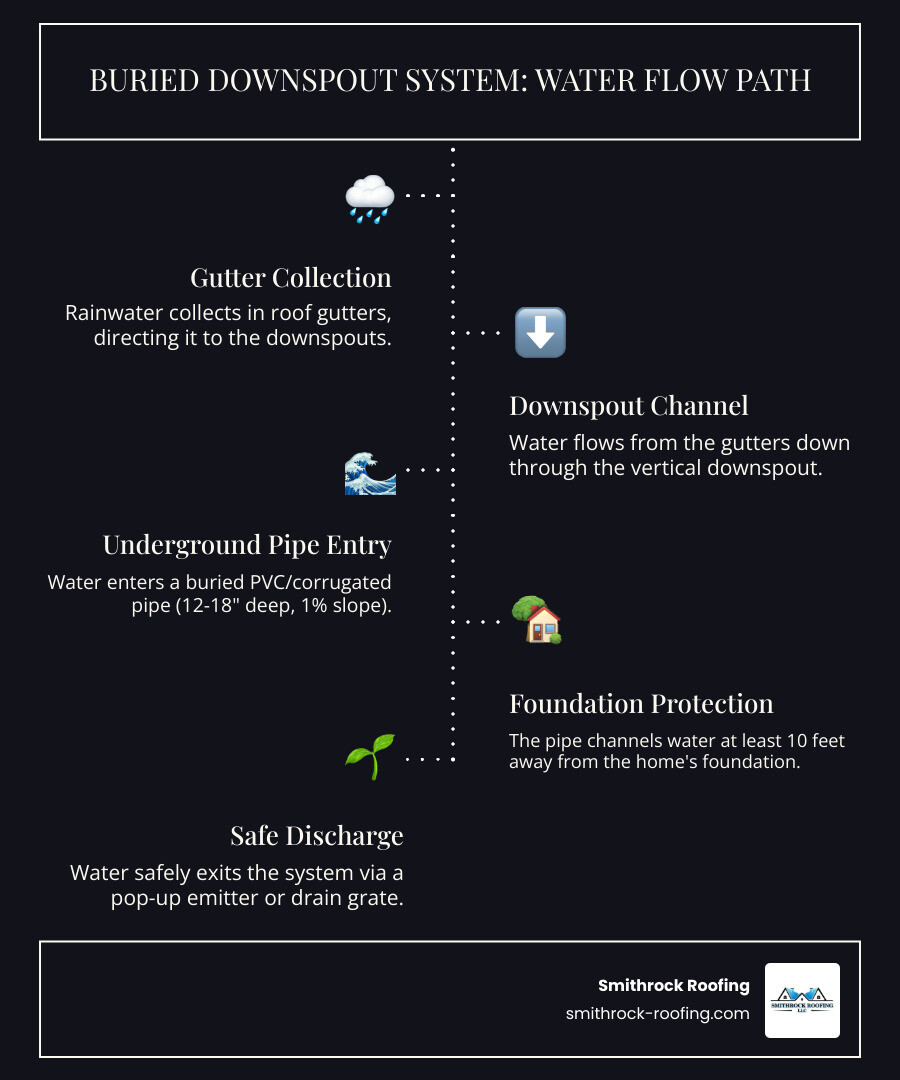
- Plan your route – Map a path at least 10 feet from your foundation with a 1% downward slope
- Dig the trench – Excavate 12-18 inches deep and wide enough for your pipe
- Lay the pipe – Use PVC or corrugated pipe with proper connections and adapters
- Backfill properly – Add gravel, landscape fabric, and compact soil in layers
- Install discharge point – Add a pop-up emitter or drain grate at the end
- Test thoroughly – Run water through to check for leaks and proper flow
The numbers tell a sobering story. Uncontrolled roof runoff can lead to water damage incidents averaging $11,000. Foundation repairs typically cost between $5,000 and $20,000. Basement flooding repairs run around $10,000. These aren’t just statistics—they’re real costs that homeowners face when water finds its way where it shouldn’t.
Your downspouts are doing important work. Every time it rains, they’re moving hundreds of gallons of water off your roof. But if that water just dumps out at ground level next to your house, you’re inviting trouble. Pooling water, saturated soil, basement dampness, eroded landscaping—these problems start small but grow expensive fast.
A buried downspout system solves this by taking water underground and moving it far away from your foundation. The water flows from your gutters, down the downspout, into an underground pipe, and out to a discharge point where it can’t cause harm. It’s out of sight, out of the way, and doing its job 24/7.

Why Bother with Buried Downspouts? (And When Not To)
We’ve all seen unsightly black corrugated hoses snaking across a lawn or a simple splash block next to a foundation. While these might be temporary fixes, they rarely provide the long-term protection your home deserves. That’s where buried downspout installation truly shines.
The benefits of an underground downspout system are numerous, changing not just your home’s protection but also its aesthetic and functionality.
Benefits of Buried Downspouts:
- Foundation Protection: By channeling water at least 10 feet away, buried downspouts prevent soil saturation around your home. This reduces hydrostatic pressure, a primary cause of costly foundation cracks and structural damage.
- Basement Dampness Prevention: With water effectively diverted, the risk of basement leaks, dampness, and flooding is drastically reduced. A dry basement means a healthier home environment and protection for your stored belongings.
- Landscape Erosion Control: Buried systems prevent concentrated water flow from eroding topsoil, washing away mulch, and damaging landscaping. Homeowners in areas like High Point and Greensboro, where heavy rains are common, particularly appreciate this benefit.
- Improved Curb Appeal: Burying downspout extensions creates a clean, uncluttered appearance, significantly enhancing your home’s overall aesthetic.
- Eliminating Tripping Hazards: Underground drainage removes dangerous above-ground extensions, making your yard safer for children and guests.
- Reducing Pest Breeding Grounds: By eliminating standing water near your foundation, buried downspouts remove ideal breeding grounds for mosquitoes and other pests.
However, buried downspouts also have some considerations:
Potential Drawbacks of Buried Downspouts:
- Clogging Risk: Because they are out of sight, pipes can clog with leaves and debris, especially corrugated pipes with ribbed interiors. This means regular maintenance is crucial.
- Maintenance Challenges: Diagnosing and fixing issues like clogs or leaks in a buried system can be more complex, sometimes requiring tools like a camera snake.
- Installation Complexity: A proper buried downspout installation requires careful planning and precise digging to ensure the correct slope. This is why many homeowners in Winston-Salem and King opt for professional installation.
When to Consider an Underground System
How do you know if buried downspout installation is right for your home? We recommend considering an underground system if you notice any of the following signs:
- Water pooling near your foundation: A red flag that your current drainage is failing.
- Saturated soil: If the ground around your house stays soggy long after rain, water isn’t draining away effectively.
- Basement leaks after rain: Water intrusion into your basement or crawl space indicates a serious drainage problem.
- Yard erosion: Washed-out mulch or exposed tree roots show that roof runoff is damaging your landscape.
- You want a cleaner aesthetic: An underground system offers a seamless solution to unsightly pipes.
- You’re tired of moving extensions for lawn care: A buried system eliminates the hassle of repositioning above-ground hoses.
For more information on ensuring your entire gutter system is performing optimally, check out our guide on More info about Gutter and Downspout Installation.
Here’s a quick comparison of various downspout drainage options:
| Feature | Buried Downspouts | Above-Ground Extensions | Splash Blocks | Rain Barrels |
|---|
| Aesthetics | Excellent (invisible) | Poor (unsightly) | Fair (visible but less obtrusive) | Varying (can be decorative) |
| Safety | Excellent (no tripping hazards) | Poor (tripping hazard) | Good (low profile) | Good (if secure) |
| Foundation Protection | Excellent (moves water far away) | Fair (often too short or poorly sloped) | Poor (disperses water too close) | Good (collects water; overflow needs managing) |
| Landscape Protection | Excellent (prevents erosion) | Fair (can cause localized erosion) | Poor (minimal protection) | Good (reduces runoff) |
| Maintenance | Moderate (needs inspection; clogs can be complex to clear) | High (frequent repositioning, easily damaged) | Low (occasional cleaning) | High (regular cleaning and winterization) |
| Installation | Complex (digging, grading, connecting) | Simple (attach to downspout) | Very simple (place under downspout) | Simple (connect to downspout) |
| Cost | Higher upfront | Low | Very Low | Moderate |
| Clog Risk | Moderate (especially corrugated pipes) | Low (visible and easy to clear) | Low (visible and easy to clear) | High (if not filtered) |
| Freezing Risk | Moderate (if not sloped or buried deep enough) | Low (easy to manage) | Low (easy to remove) | High (requires winterization) |
Your Step-by-Step Guide to Buried Downspout Installation
A buried downspout installation is a rewarding project that protects your home. Understanding the process is key, whether you’re a DIYer or hiring a pro.

This is a project where safety is paramount. Before digging, wear appropriate personal protective equipment (PPE), including sturdy work gloves and safety glasses.
Success hinges on thorough preparation. First, gather your tools and materials and map out a strategy.
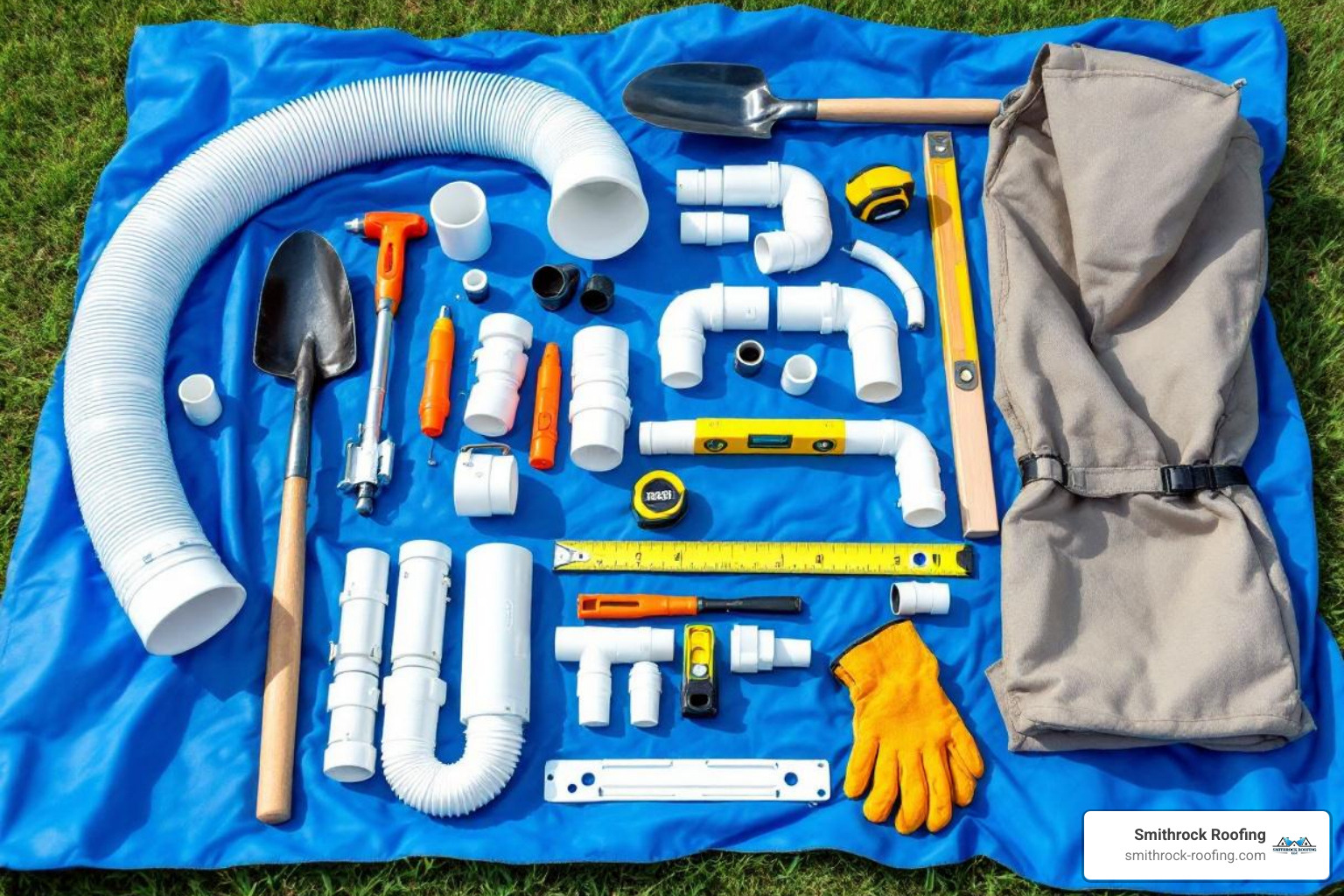
Tools We’ll Need:
- Shovel (round point)
- Trenching tool or pickaxe
- Tape measure
- Level (long or string level)
- Wheelbarrow
- Hacksaw or PVC pipe cutter
- Gutter crimper tool or pliers
- Power drill
- Utility knife
Materials We’ll Need:
- Downspout adapter
- PVC or corrugated pipe
- Connectors and fittings (elbows, Wye fittings)
- Waterproof sealant or PVC cement
- Pop-up emitter or drain grate
- Gravel
- Landscape fabric
- Sheet metal screws
Planning the Route:
Map a trench path that ensures water flows effectively away from your home.
- Mapping the Trench Path: Sketch your property, marking downspouts and discharge points. The goal is to channel water at least 10 feet from your foundation, using the natural slope of your yard where possible.
- Choosing a Discharge Point: This could be a lower area of your yard, a dry well, or a storm drain (check local rules). Ensure the spot can handle the water volume without creating new problems.
- Checking Local Regulations: Before digging, verify municipal or HOA rules in areas like Clemmons, Lewisville, or Pfafftown regarding water discharge.
- Calling 811 Before You Dig: This is non-negotiable. Call 811 (or visit the visit the 811 website) a few days before digging to have underground utility lines marked. This service helps you avoid dangerous and costly accidents.
Key Considerations for Your Buried Downspout Installation
Your choice of pipe is critical for the system’s longevity and effectiveness.
Choosing the Right Pipe Material:
Our Recommendation: For a long-lasting, low-maintenance buried downspout installation, we strongly recommend investing in solid, smooth-wall PVC pipe. It’s a better long-term investment in your home’s health.
Pipe Diameter:
Choose between 3-inch or 4-inch diameter pipes.
- 3-inch pipe: May be adequate for smaller roof sections.
- 4-inch pipe: Generally recommended, as the larger diameter provides better flow and is less prone to clogging, especially if merging lines or in areas with heavy rainfall.
For more insights into keeping your entire gutter system in top shape, explore our resources on More info about Exterior Gutters.
Step 1: Trenching with Precision
With your plan and materials ready, it’s time to dig. This step requires careful attention to the slope.
Digging the Trench:
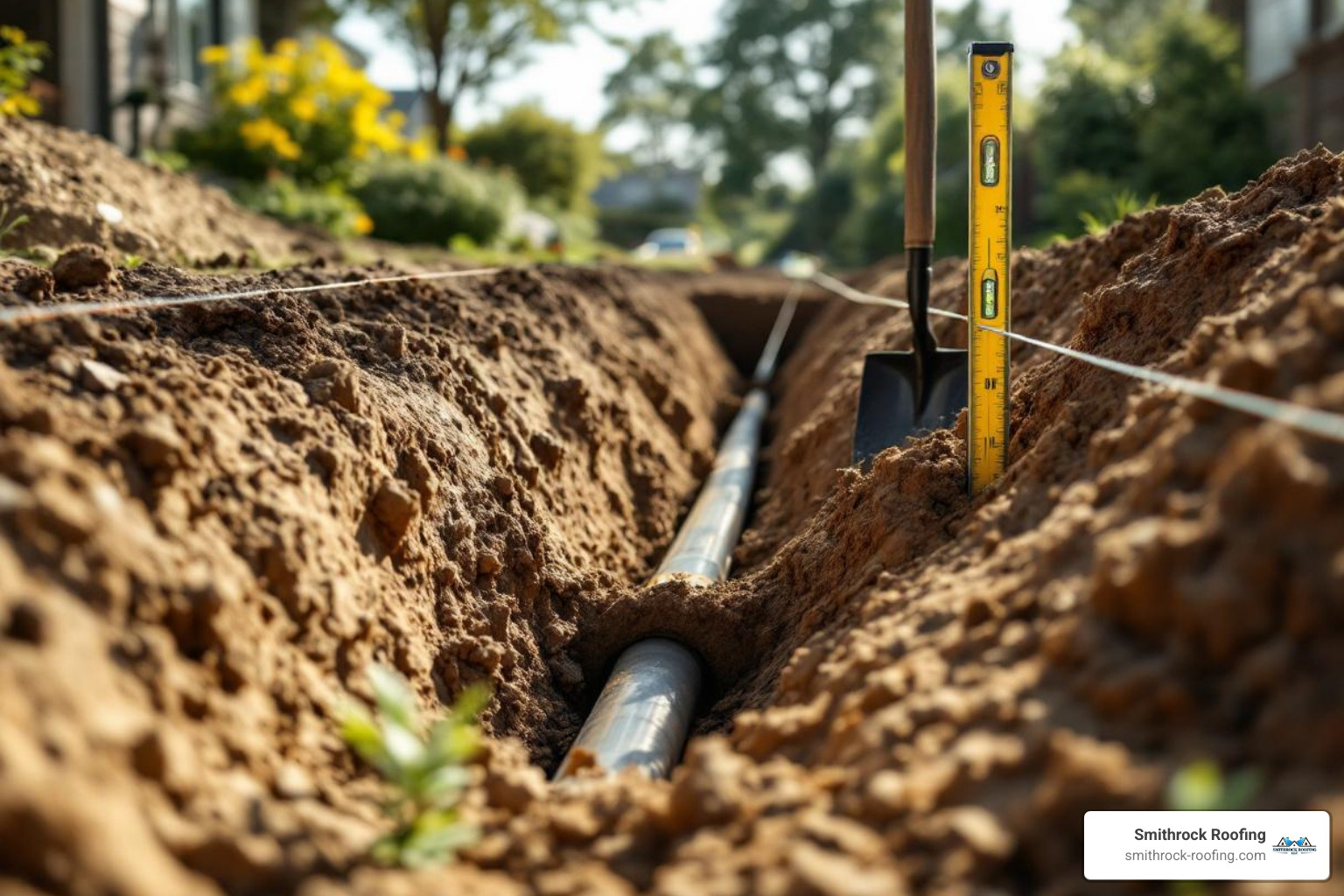
- Depth and Width: Dig the trench at least 12 to 18 inches deep. This protects the pipe and helps prevent freezing in areas like Mt. Airy and Pinnacle. The trench should be wide enough for the pipe plus about 4 inches of space on each side for gravel.
- Ensuring Proper Slope: A continuous downward slope is the most crucial part of trenching. A minimum 1% grade (1/8 inch drop per foot) is required for gravity to move the water.
- Using a Level and String Line: Pound stakes at the start and end of the trench. Tie a level string line between them. Measure down from the string at intervals to guide your digging and use a level to constantly check the trench bottom.
- Navigating Around Utilities and Roots: Carefully dig around any marked utility lines. Try to dig under tree roots. If you must cut a root, assess its size; cutting large roots can destabilize a tree.
Step 2: Assembling and Laying the Pipe
With the trench dug, it’s time to assemble the pipe.
- Connecting the Downspout Adapter: Connect the adapter to the bottom of your existing downspout to transition it to the round underground pipe. Secure it with sheet metal screws.
- Securing Connections: Use appropriate connectors and secure them. For PVC, use PVC cement for permanent, watertight bonds. Watertight connections are paramount to prevent leaks.
- Laying the Pipe in the Trench: Gently place the pipe sections in the trench, ensuring they maintain the established slope. Avoid creating low spots or “bellies” where water and debris can collect.
- Using Wye Fittings to Merge Lines: If combining multiple downspouts, always use a Wye fitting, not a T-fitting. A Wye allows water to merge smoothly and maintain flow.
- Installing Catch Basins for Debris Collection: Consider installing inline catch basins where the downspout connects to the pipe. They trap larger debris, making cleaning easier and protecting the system from clogs.
- Attaching the Pop-Up Emitter or Drain Grate: At the end of the line, install a pop-up emitter or drain grate. Ensure this discharge point is clear of obstructions and far from the foundation.
Step 3: Backfilling, Testing, and Finishing
This final stage ensures your system is robust, functional, and invisible.
Best Practices for Backfilling:
- Adding a Gravel Base: Add a 3-4 inch layer of gravel around and over the pipe to stabilize it and improve drainage.
- Wrapping with Landscape Fabric: Lay landscape fabric over the gravel and pipe. This barrier prevents soil and silt from entering the pipe.
- Backfilling with Soil: Refill the trench with the excavated soil.
- Compacting the Soil in Layers: To prevent the ground from sinking later, compact the soil in layers as you refill the trench. Mound the soil slightly to account for settling.
- Testing the System: Before finishing, test your work.
- Running a Hose Down the Gutter: Run a garden hose into the connected gutter for several minutes to simulate rain.
- Checking for Leaks at Connections: Inspect all connection points for leaks.
- Ensuring Proper Flow and Discharge from the Emitter: Watch the discharge point. Water should flow freely away from your home. If it backs up, there may be a clog or an insufficient slope.
Restoring the Landscape: Once the system passes the test, restore the landscape. Smooth the soil, add topsoil, and plant grass seed or lay sod. Ensure any decorative elements don’t impede water flow.
Long-Term Care: Maintenance and Troubleshooting
A properly installed buried downspout system is long-lasting, but regular, proactive maintenance is key to preventing costly repairs and protecting your investment.
For any gutter-related concerns, including maintenance and repairs, remember we’re always here to help. You can find more information on More info about Gutter Repair Near Me.
Routine Maintenance Checks
Regular checks are essential to keep your buried system running smoothly.
- Annual Inspections: Inspect the system at least once a year, ideally before the heavy rainy season in Winston-Salem or Trinity. Look for pooling water near the entry or discharge points.
- Post-Storm Checks: After heavy rain, verify that water is discharging properly and there are no new signs of erosion.
- Clearing Debris from Gutters and Downspout Openings: Your gutters are the first line of defense. Clean them regularly to prevent debris from entering the downspout.
- Installing Gutter Guards to Minimize Debris: To significantly reduce debris entering your system, consider installing high-quality gutter guards. This addition greatly reduces maintenance efforts.
- Flushing the System with a Hose: Once or twice a year, run a high-pressure garden hose down each downspout to flush out accumulated sediment.
- Keeping the Pop-Up Emitter Clear of Grass and Debris: Ensure the discharge point is clear of overgrown grass, mulch, or other debris so the emitter can open properly.
Common Problems After a Buried Downspout Installation
Knowing how to spot and address common problems can save you stress and expense.
- Clogging from Leaves and Shingle Grit: This is the most common issue.
- How to Clear Clogs: Minor clogs can be cleared by flushing with a high-pressure hose. For stubborn blockages, a plumber’s snake can be effective. Deep or persistent clogs may require professional help with a camera snake to locate and clear.
- Freezing in Cold Climates: Standing water in the pipe can freeze, potentially cracking it.
- Ensuring Proper Slope to Prevent Standing Water: The best prevention is a proper installation with a continuous, adequate slope so the pipe drains completely.
- Digging Below the Frost Line: In colder regions like Pilot Mountain or Danbury, burying the pipe below the local frost line is essential to prevent freezing.
- Pipe Damage from Roots or Soil Shifting: Aggressive tree roots, soil shifting, or heavy surface pressure can damage pipes.
- Prevention: Avoid planting trees or large shrubs directly over or near your buried downspout lines.
- Repair: A camera snake can pinpoint damage. Significant damage or root intrusion usually requires excavating and replacing the damaged pipe section.
- Poor Drainage Due to Incorrect Slope: An incorrect slope from the initial installation will cause poor drainage and backups.
- How to Diagnose and Fix Slope Issues: If water backs up or drains slowly during a test, the slope is likely insufficient. Correcting this typically requires re-excavating the trench and adjusting the pipe’s gradient, which highlights the importance of getting it right the first time.
Frequently Asked Questions about Underground Downspouts
We often hear similar questions from homeowners considering or maintaining a buried downspout system. Let’s tackle some of the most common ones.
How deep should I bury my downspout extension?
A depth of 12 to 18 inches is generally sufficient to protect the pipe. In colder climates, however, you must bury the pipe below the local frost line to prevent freezing and cracking.
Most importantly, regardless of depth, you must maintain a consistent downward slope of at least 1/8 inch per foot. This ensures the pipe drains completely, preventing clogs and ice buildup.
How long does the installation of an underground downspout system typically take?
Installation time varies based on the number of downspouts, trench length, and soil conditions. A DIY project for a few downspouts might take a weekend (4-8 hours per downspout).
Professionals, like our team serving Kernersville and Wallburg, can often complete a standard buried downspout installation in a single day due to specialized tools and experience. More complex projects may take longer.
Do buried downspouts require gutter guards?
While not strictly required, gutter guards are unequivocally the best way to prevent clogs. They act as a first line of defense, blocking leaves, twigs, and shingle grit from entering the underground pipe. This drastically reduces maintenance and the risk of blockages.
Investing in quality gutter guards is a smart move to protect your entire drainage system. Learn more about the benefits and options for your home’s gutters on our dedicated More info about Gutters page.
Protect Your Foundation for the Long Haul
A well-executed buried downspout installation is more than just a home improvement project; it’s a valuable investment in your property’s long-term health and value. By effectively managing rainwater runoff, you’re actively protecting your home against the significant costs and headaches associated with water damage, foundation issues, and basement flooding. Beyond the crucial protection, you’re also enhancing your property’s appearance, eliminating tripping hazards, and preserving your carefully curated landscape.
While a DIY approach can be rewarding, the precision required for correct slope, durable materials, and watertight connections often makes professional installation the most reliable path to long-term performance. Ensuring your system is installed correctly from the start means fewer worries and more peace of mind.
For expert advice, professional buried downspout installation, and comprehensive Gutter Installation Services, trust the team at Smithrock Roofing. We’re dedicated to protecting your home from the top down, ensuring your foundation stays dry and your landscape remains beautiful, serving communities throughout Winston-Salem, Greensboro, High Point, and beyond.