A roof installation is one of the largest investments a homeowner makes, and the decisions surrounding it are more layered than most contractors let on. Choosing the right material matters. Choosing the right contractor matters even more. And understanding what your warranty actually covers, what the inspection process should look like, and how the repair-versus-replace decision really works, matters most of all. This guide walks through all of it plainly, so you can approach any roofing conversation with confidence rather than guesswork.
Smithrock Roofing has served homeowners across Winston-Salem, Greensboro, High Point, Kernersville, Clemmons, Rural Hall, King, and the surrounding NC Triad with more than 60 combined years of experience. What we have learned over that time is that the homeowners who end up happiest are the ones who understood what they were buying before the first nail was driven.
“Roof installation” covers a wider scope than most people picture. At minimum, a full roof installation involves removing the existing roofing material, inspecting the underlying deck, replacing any damaged decking, installing underlayment and ice-and-water barrier at vulnerable points, setting new shingles or panels, and completing all flashing around penetrations like chimneys, vents, and valleys.
Each of those steps carries its own quality standards. Underlayment selection, for instance, affects moisture protection independent of the shingle layer. Flashing done poorly is one of the leading causes of leaks even on brand-new roofs. A contractor who rushes these intermediate steps while installing a premium shingle is not delivering a premium installation.
At Smithrock Roofing, we are CertainTeed PREMIER ShingleMark Master Certified, which means our roofing service meets the standards required by one of the industry’s most rigorous manufacturer programs. That certification is not simply a badge. It determines what warranty tier we can offer on every job.
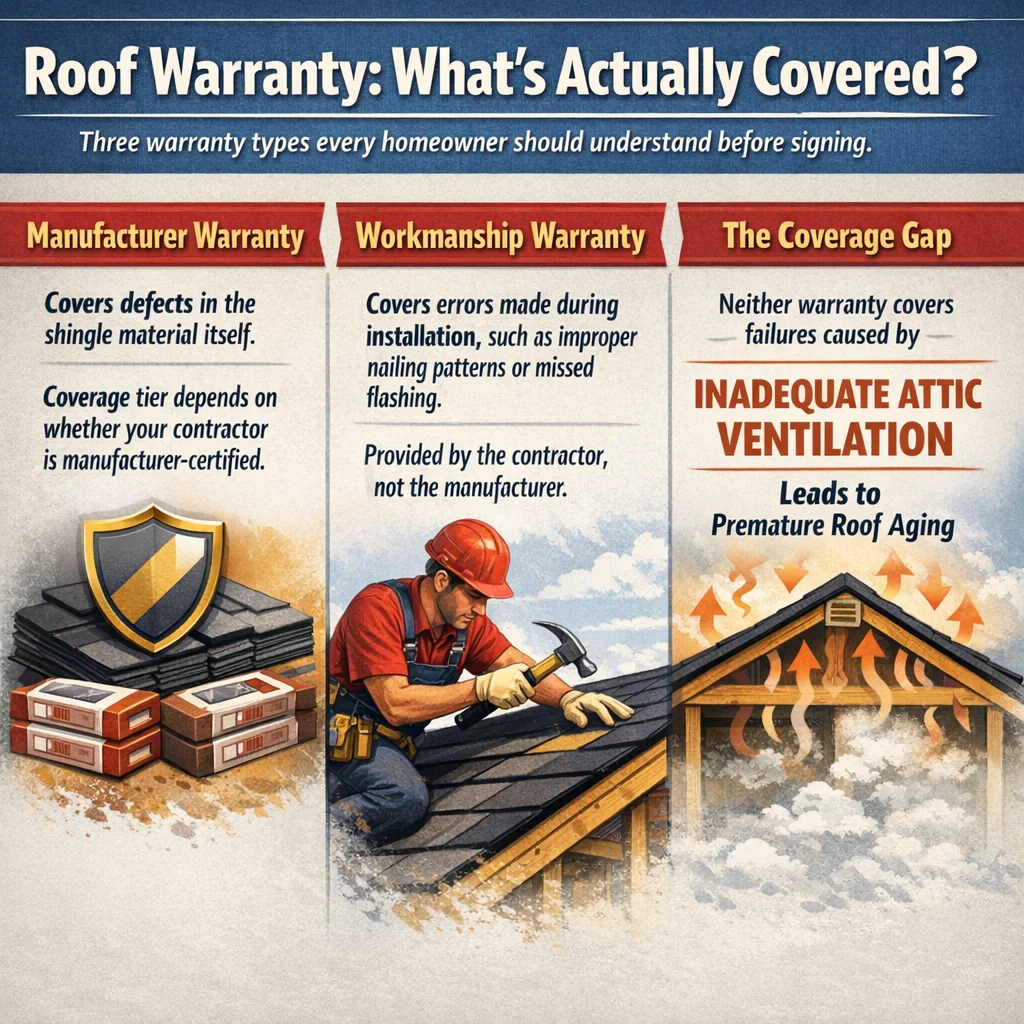
Here is something competitors almost never explain: two contractors can install the exact same brand of shingles and offer meaningfully different levels of warranty protection. The difference comes down to contractor certification.
Manufacturers like CertainTeed structure their warranties in tiers. The base warranty is available to any contractor who uses the product. The highest warranty tier, which typically covers both the material and the installation for an extended period, requires the contractor to be credentialed by the manufacturer, not just familiar with the product.
This means when you compare two quotes and both say “CertainTeed shingles,” you may not be comparing equal products from a protection standpoint. Ask each contractor what warranty tier their certification qualifies them to offer. A non-certified contractor installing premium shingles may only be able to pass along a limited material warranty, while a certified contractor installing the same shingles can back the full package.
Smithrock Roofing’s CertainTeed Master Certification means our customers receive the strongest available warranty coverage on every installation, including a limited lifetime manufacturer warranty alongside our 5-year labor warranty.
Need a hand with this in Winston-Salem, Greensboro and the Triad? Call (336) 971-0464 or request a free estimate. Honest answers, no pressure.
Most contractors present this as a simple binary: either repair it or replace it. The reality is that there are three paths, and choosing the wrong one costs homeowners either money they did not need to spend or protection they thought they had.
Targeted Repair addresses isolated damage, such as a handful of missing shingles after a windstorm or a single failed flashing. It is appropriate when the affected area is small, the surrounding shingles and deck are structurally sound, and the roof as a whole has significant remaining service life.
Partial Replacement replaces a defined section of the roof, typically a slope or quadrant, rather than the entire surface. This option exists and is under-discussed. It makes sense when damage is concentrated in one area but the rest of the roof is performing well, and when the roof is mid-age rather than near the end of its expected life.
Full Replacement makes the most sense when multiple factors compound. Age is one factor. Widespread shingle deterioration is another. Deck condition is the variable most homeowners do not think about until an inspector surfaces it. A roof with soft spots, rot, or prior water intrusion in the decking changes the calculus significantly, sometimes making full replacement more economical than repeated partial repairs that never address the underlying structure.
The table below shows how these factors interact:
| Factor | Lean Toward Repair | Lean Toward Partial Replacement | Lean Toward Full Replacement |
|---|---|---|---|
| Roof age | Under 12 years | 12 to 20 years | Over 20 years |
| Affected shingle area | Under 10% | 10 to 35%, localized | Over 35% or widespread |
| Deck condition | Sound throughout | Sound in undamaged sections | Soft spots, rot, or prior water intrusion |
| Granule loss | Minimal | Moderate in one area | Widespread across slopes |
| Prior repairs | None or one | One to two | Multiple, recurring |
No single column tells the whole story. A 17-year-old roof with 15% shingle damage but a compromised deck may be a worse repair candidate than a 22-year-old roof with 25% damage and a completely sound deck. Weigh the factors together, not independently.
Every roofing company offers a free inspection. What that actually means varies widely.
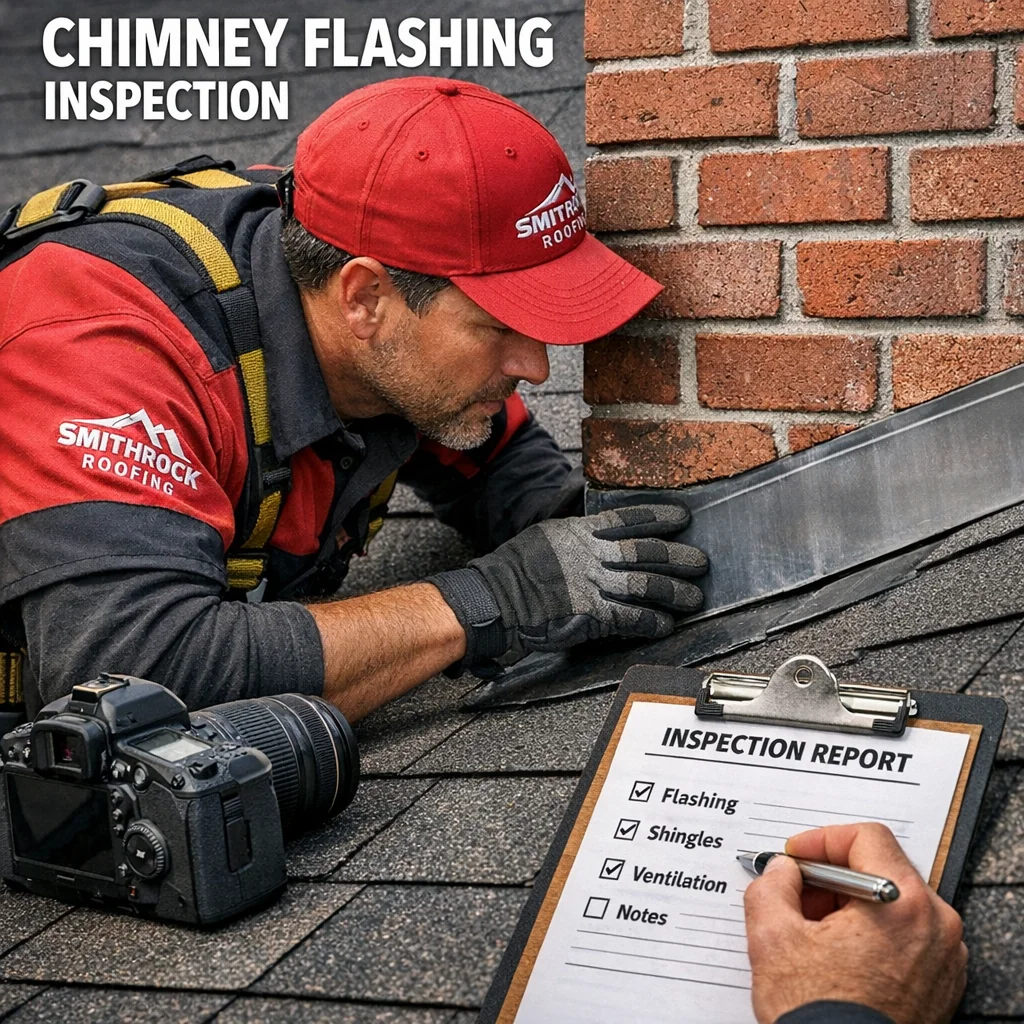
A thorough inspection goes beyond walking the perimeter and glancing at the slope. It should include examination of the field shingles for granule loss, cracking, and lifting; evaluation of all flashing points including pipe boots, valley metal, and chimney step flashing; a check of ridge and hip condition; assessment of soffit and fascia for rot or pest entry; and, when accessible, an attic evaluation to look for signs of moisture intrusion, deck staining, or ventilation deficiency. Our roof inspection services follow this complete process on every visit.
When the inspection is complete, you should receive written findings, not just a verbal summary or a recommendation to replace. Documentation should include photographs of each identified problem area with enough detail to show scope. This matters for two reasons. First, it gives you a way to verify that the recommended scope of work matches actual observed conditions. Second, it creates a baseline record that protects you if a dispute arises later.
If an inspector spends fewer than 20 to 30 minutes on site and hands you a proposal without any supporting documentation, that is a signal worth noticing.
Some roofing companies handle every job with their own trained, licensed crews. Others use subcontracted labor, which is common in the industry and not always obvious to homeowners.
The reason this matters goes beyond general preference for familiar faces. When a subcontractor performs an installation that later shows a defect, the warranty claim path becomes complicated. The homeowner files a claim with the primary contractor. The primary contractor may dispute whether the defect is their responsibility or the subcontractor’s. That back-and-forth can delay resolution or, in worst cases, leave a homeowner with an unresolved claim.
There is also an insurance dimension. The certificate of insurance you receive from the primary contractor covers that company. If the subcontractor carries different coverage or has a lapse, and an injury or property damage occurs on your property during the job, the coverage picture may be different from what you assumed.
The straightforward question to ask any contractor is: will the crew that installs my roof be your direct employees, and are they covered under your policy? The answer should be clear and verifiable.
At Smithrock Roofing, our crews are our own. The people we send to your home are the people we train, supervise, and stand behind.
Asphalt shingles remain the most common roofing material for good reason: they offer a strong combination of durability, aesthetic range, and warranty backing. Within asphalt shingles alone, however, there are meaningful differences between product lines.
Architectural shingles, sometimes called dimensional or laminate shingles, are the standard in quality residential roofing today. They are thicker than three-tab shingles, carry better wind ratings, and qualify for higher warranty tiers. Designer-level shingles within the same brand can offer even greater impact resistance and a heavier profile that resembles wood shake or slate.
Other materials, including metal, tile, and synthetic options, each carry legitimate advantages in specific situations. Metal roofing offers excellent longevity and works well on certain roof pitches and architectural styles. Tile is durable and distinctive but adds significant weight that requires structural verification. Synthetic materials have improved considerably and can mimic premium aesthetics at lower weight.
The practical guidance is this: do not let a materials conversation start and end with brand name alone. Ask which product line within that brand, what the shingle weight and wind rating are, and what warranty tier the contractor’s certification qualifies for. Those three questions will tell you more than the brand name ever will.
Smithrock Roofing installs CertainTeed Landmark shingles as our standard, a product line backed by CertainTeed’s strongest warranty tier when installed by a Master Certified contractor. Homeowners looking for roofing in Clemmons and the surrounding area are welcome to contact us to walk through every option so the choice fits your home, your plans, and your priorities.
See also: Roof Installation Kernersville NC | Expert Guide
See also: Flat Roof Installation Contractor | Smithrock Roofing
Smithrock Roofing serves homeowners across Winston-Salem, Greensboro, High Point, Kernersville, Clemmons, Rural Hall, King, and the surrounding NC Triad. With more than 350 five-star reviews, 60-plus combined years of experience, and CertainTeed PREMIER ShingleMaster Certification, we bring certified craftsmanship and honest guidance to every job. Contact us to schedule your inspection.
Most residential roof installations are completed in a single day, though the timeline depends on the size of your home, the pitch and complexity of your roof, and the material being installed. A straightforward replacement on an average-sized home generally moves quickly when weather cooperates. Your contractor should give you a realistic timeline before work begins, not after.
It is not unusual for contractors to uncover soft spots, rot, or deteriorated decking once the old material is stripped away. A reputable contractor will document what they find, show it to you, and explain what needs to be addressed before new shingles go down. This is a normal part of the process, not a reason for alarm, and it is far better to address it properly at this stage than to cover it over.
In most jurisdictions across North Carolina, a roofing permit is required for a full replacement. The responsibility for obtaining that permit falls on the licensed contractor, not the homeowner. If a contractor suggests skipping the permit to save time or simplify the process, that is a serious red flag. Permitted work is inspected and documented, which protects you when it comes time to sell your home or file an insurance claim.
Your warranty coverage depends on two things: the product line installed and the certification level of the contractor who installed it. Manufacturers reserve their strongest warranty tiers for contractors who have met specific training and installation standards. After your project is complete, your contractor should provide you with documentation that clearly identifies the warranty tier, what it covers, and how to register it if registration is required. Do not accept a vague reference to “manufacturer warranty” without those specifics in writing.
When your roof needs attention, working with a contractor who combines verified credentials, honest communication, and genuine local knowledge makes a real difference in the outcome. Smithrock Roofing has built its reputation across Winston-Salem and High Point by doing the job right the first time, with the certifications and reviews to back it up. Call us at (336) 971-0464 or Contact Smithrock Roofing to schedule your inspection and get straightforward answers from a team that stands behind its work.

Smithrock Roofing © Copyright 2026 • All Rights Reserved • Privacy Policy • Maintained by Mongoose Digital Marketing