Metal roofing earns its reputation honestly. A well-installed metal roof on a residential home can serve for 40 to 70 years, requires far less routine maintenance than asphalt shingles, and performs well in the kind of severe weather that shortens the life of lesser systems. Those are real advantages, and they are why more homeowners across the NC Triad, in communities from Winston-Salem and Greensboro to High Point, Kernersville, and Clemmons, are asking about metal as a long-term investment. The challenge is that choosing the right system and the right installer matters as much as choosing the material itself. This guide explains what separates a durable metal roof from a disappointing one, and what to look for when evaluating metal roof installation contractors.
Most discussions of metal roof types stop at appearance and price. What actually separates systems over a 40-year horizon is how the panels are fastened to the structure beneath them.
Metal expands and contracts with temperature changes. Every afternoon the sun heats a roof panel, and every evening it cools. Over thousands of cycles across decades, this movement is substantial. How a roof system accommodates that movement determines whether it ages gracefully or develops problems.
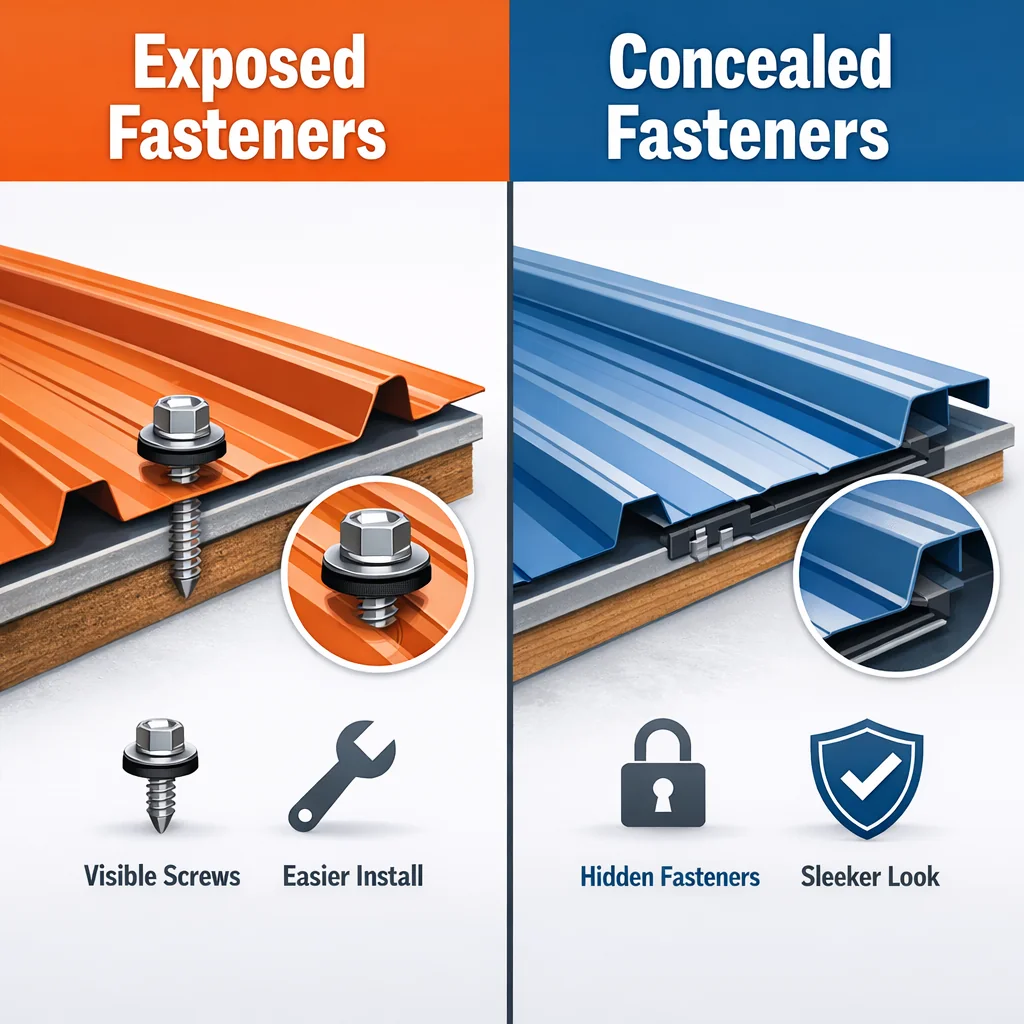
Exposed-fastener systems, used in corrugated and ribbed panel designs, drive screws directly through the face of the metal panel into the decking below. The fastener penetrates the panel, and a rubber washer creates a seal at that point. The problem is that every thermal expansion cycle works against that washer. Over time, the seal degrades, the washer compresses unevenly, and you are left with dozens or hundreds of small penetration points that are potential leak sites. This is not a flaw in a poorly made product; it is a mechanical reality of the design.
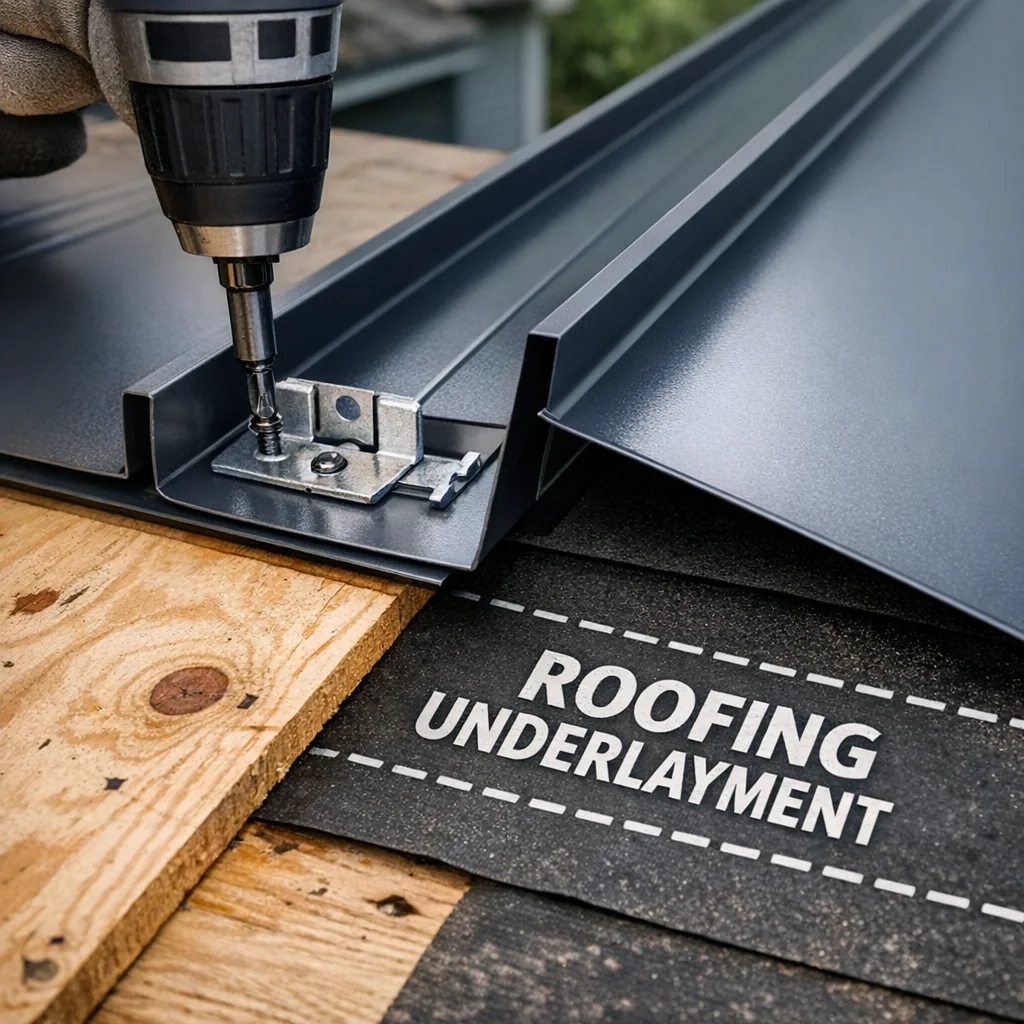
Concealed-fastener systems, the category that includes standing seam metal roofing, attach panels at the seam rather than through the panel face. The fastener is hidden beneath the interlocking seam of adjacent panels. The panels can move freely with thermal expansion without stressing any penetration point, because there are no face penetrations. This is the actual engineering reason standing seam is described as the performance standard for residential metal roofing. It is not primarily about aesthetics, though the clean sight lines are a genuine secondary benefit.
When a contractor recommends one system over another, ask them to explain the fastener logic. A contractor who can answer that question clearly is one who understands what they are installing. If you want to explore the full range of options available, our roofing service covers the systems, materials, and installation approaches we bring to every project.
One of the most frequently misunderstood options in metal roof installation is the layover, installing new metal panels directly over existing shingles without a full tear-off. Multiple contractors present this as a straightforward way to reduce labor and landfill waste. It can be those things. It can also be a serious mistake if the evaluation behind the decision is superficial.
Here is what a proper evaluation must determine before a layover is approved:
Once metal panels are installed over existing shingles, the decking beneath is sealed from view and from air circulation. Any rot, soft spots, or water damage that exists at installation time will continue to develop, invisible and inaccessible, for the life of the metal roof. Identifying and repairing deck damage before covering it permanently is not optional. It is the entire point of the evaluation.
Existing shingles, particularly older ones, can retain moisture. Sealing them beneath a metal panel without adequate ventilation design creates conditions where that moisture has nowhere to go. Over time this accelerates deck deterioration and can compromise the adhesion and performance of underlayment materials.
Many metal roofing manufacturers specify installation requirements that determine whether their material warranty is valid. Some manufacturers require a full tear-off and clean deck as a condition of warranty coverage. A layover installation that voids the manufacturer warranty leaves the homeowner protected only by the contractor’s workmanship warranty, which is a much narrower protection and typically covers a shorter period.
Adding a metal roofing system over existing shingles increases the load on the roof structure. In most residential applications this is within tolerance, but it requires confirmation, not assumption.
The layover option is not inherently wrong. It is sometimes the correct call. The point is that the decision should follow a real structural and decking evaluation, not a cost conversation. For a deeper look at what goes into a proper installation process, the Roof Installation Guide: What Contractors Won’t Tell You is worth reading before you meet with any contractor.
Need a hand with this in Winston-Salem, Greensboro and the Triad? Call (336) 971-0464 or request a free estimate. Honest answers, no pressure.
| System Type | Fastener Style | Typical Slope Requirement | Longevity Range | Best Application |
|---|---|---|---|---|
| Standing Seam | Concealed | 2:12 or greater (varies by panel width) | 40 to 70 years | Residential premium, long-run panels |
| Corrugated / Ribbed Panel | Exposed | 3:12 or greater | 25 to 40 years | Agricultural, light commercial, budget residential |
| Metal Shingles | Concealed or hidden nail | 3:12 or greater | 40 to 50 years | Traditional curb appeal with metal performance |
| Stone-Coated Steel | Concealed clip | 2:12 or greater | 40 to 50 years | Looks like tile or shake, metal durability |
Slope is the factor most homeowners do not think to ask about, and it matters. Every panel system has a minimum slope below which water management becomes unreliable. A contractor who recommends a system without first confirming your roof’s pitch is skipping a fundamental step.
The honest answer is: it depends on the installation stack, not just the metal panel. The layers beneath the panel do the acoustic work.
The deck (typically OSB or plywood sheathing) provides the structural base. Solid decking absorbs significantly more sound than an open framing system. Above the deck, a quality underlayment adds another layer of sound dampening. Attic insulation beneath the deck further reduces the transmission of rain noise into living spaces. When all three layers are present and properly installed, a metal roof in rain is comparable to an asphalt shingle roof. When one or more layers is absent or undersized, rain noise increases noticeably.
Before accepting a contractor’s assurance that their metal roof is quiet, ask them to specify the deck material, underlayment type, and whether the insulation plan is adequate for the installation. If they can answer that specifically, they have thought it through. If they give a general assurance without the details, keep asking.
This one comes with an important qualification that most roofing pages skip. Metal roofing can reduce cooling loads, but the benefit is tied to specific product characteristics: the coating type and the panel color. Metal roofing with an ENERGY STAR-rated cool-roof pigment coating and a lighter color reflects a meaningful portion of solar heat before it enters the home. A dark metal panel without a reflective coating absorbs heat differently and does not deliver the same performance. When evaluating a metal roofing product for energy performance, ask specifically whether it carries an ENERGY STAR rating and what the Solar Reflectance Index value is for the color you are choosing.
Two separate warranties apply to every metal roof installation, and conflating them is a mistake that can be expensive later.
The manufacturer’s material warranty covers defects in the metal panels, coatings, and finishes themselves. It is issued by the company that made the product. Conditions that void this warranty typically include improper installation methods, use of incompatible fasteners or underlayments, layover installations on systems that require a clean deck, and failure to register the warranty within a specified window after installation.
The contractor’s workmanship warranty covers the installation itself: the quality of flashing, seam work, penetration sealing, and all the labor-dependent elements that determine whether the roof performs as designed. This warranty is issued by the contractor and is only as reliable as the contractor who backs it.
A homeowner who hires an uncertified installer at a lower rate may receive a valid material warranty from the manufacturer and discover later that the workmanship warranty is backed by a company that has since closed or cannot be reached. The material warranty does not cover installation errors, and installation errors are where most metal roof failures originate.
At Smithrock Roofing, our installations are backed by a 5-year labor warranty alongside the manufacturer’s material warranty, and our team carries more than 60 combined years of experience in exterior work across the NC Triad. We are fully licensed and insured, and our workmanship reflects the same standard on every job, whether we are working in Winston-Salem, High Point, Rural Hall, or roofing in King.
See also: Steel Roof Over Shingles: What You Must Know First
Most residential metal roof installations are completed within two to five days, depending on the size and complexity of the roof, the pitch, the number of penetrations, and whether a full tear-off is required. Roofs with multiple valleys, skylights, chimneys, or dormers will take longer than a simple gable design. Weather can also affect the schedule. A reputable contractor will give you a realistic timeline during the estimate and communicate clearly if conditions change.
It depends on the type of metal roofing system being installed and the condition of the existing roof. Some systems can be installed over a single layer of asphalt shingles when the deck beneath is structurally sound and local code permits it. Others require a clean deck to ensure proper performance and to preserve the manufacturer’s warranty. Your contractor should inspect the existing roof and explain which approach applies to your specific situation before work begins.
Exposed fastener systems use screws that penetrate the face of the panel and are visible on the finished roof. They are generally more affordable and faster to install, but the fastener penetrations are a potential long-term maintenance point. Concealed fastener systems, such as standing seam, use clips or clips and seams to lock panels together so that no fastener is exposed to weather. Concealed fastener systems typically carry longer material warranties and require more precision during installation, which is why certified installation experience matters.
Look for a contractor who is licensed, insured, and certified by the manufacturer of the product they are installing. Manufacturer certifications indicate that the crew has received product-specific training and that the company meets the standards required to back the full warranty. Ask how long the company has been operating, whether they specialize in metal roofing or treat it as a secondary service, and what their workmanship warranty covers. References from completed local projects are worth requesting.
When a Winston-Salem or Kernersville homeowner chooses a metal roof, the quality of the installation determines how well that investment holds up over the decades ahead, and that makes the contractor selection every bit as important as the product itself. At Smithrock Roofing, our team brings more than 60 combined years of exterior experience to every project across the NC Triad, with licensing, full insurance, and workmanship we stand behind. To talk through your project with a local team that knows this region’s homes and climate, call us at (336) 971-0464 or Contact Smithrock Roofing to get your free estimate.

Smithrock Roofing © Copyright 2026 • All Rights Reserved • Privacy Policy • Maintained by Mongoose Digital Marketing