A roof replacement insurance claim can feel like a daunting and overwhelming journey, but it doesn’t have to be. When a storm strikes or a tree falls, the last thing you want is a complicated battle with your insurance provider. Most standard homeowners insurance policies are designed to cover sudden, accidental damage from perils like wind, hail, fire, and falling objects. However, they explicitly exclude gradual wear and tear, damage from neglected maintenance, or issues arising from faulty installation. A successful claim hinges on a trifecta of preparation: a deep understanding of your policy, meticulous documentation of the damage, and a strategic partnership with experienced professionals who can advocate on your behalf.
Here’s what you need to know to navigate this process successfully:
It’s a well-documented fact that homeowners who seek professional representation, such as from a public adjuster or a claims-savvy roofing contractor, often receive higher claim payouts. This is logical; insurance companies employ a team of adjusters and experts whose primary role is to protect the company’s financial interests. Having an expert working exclusively for you levels the playing field.
Replacing a roof is one of the most significant investments you’ll make in your home, and your insurance policy exists to shield you from this substantial financial burden. Unfortunately, a large number of claims are denied or severely undervalued because homeowners inadvertently miss critical steps, lack proper documentation, or don’t understand the intricate language of their policy. The most common mistakes include filing too late, providing insufficient proof of loss, accepting the first lowball offer without question, and attempting to negotiate a complex claim without expert guidance.
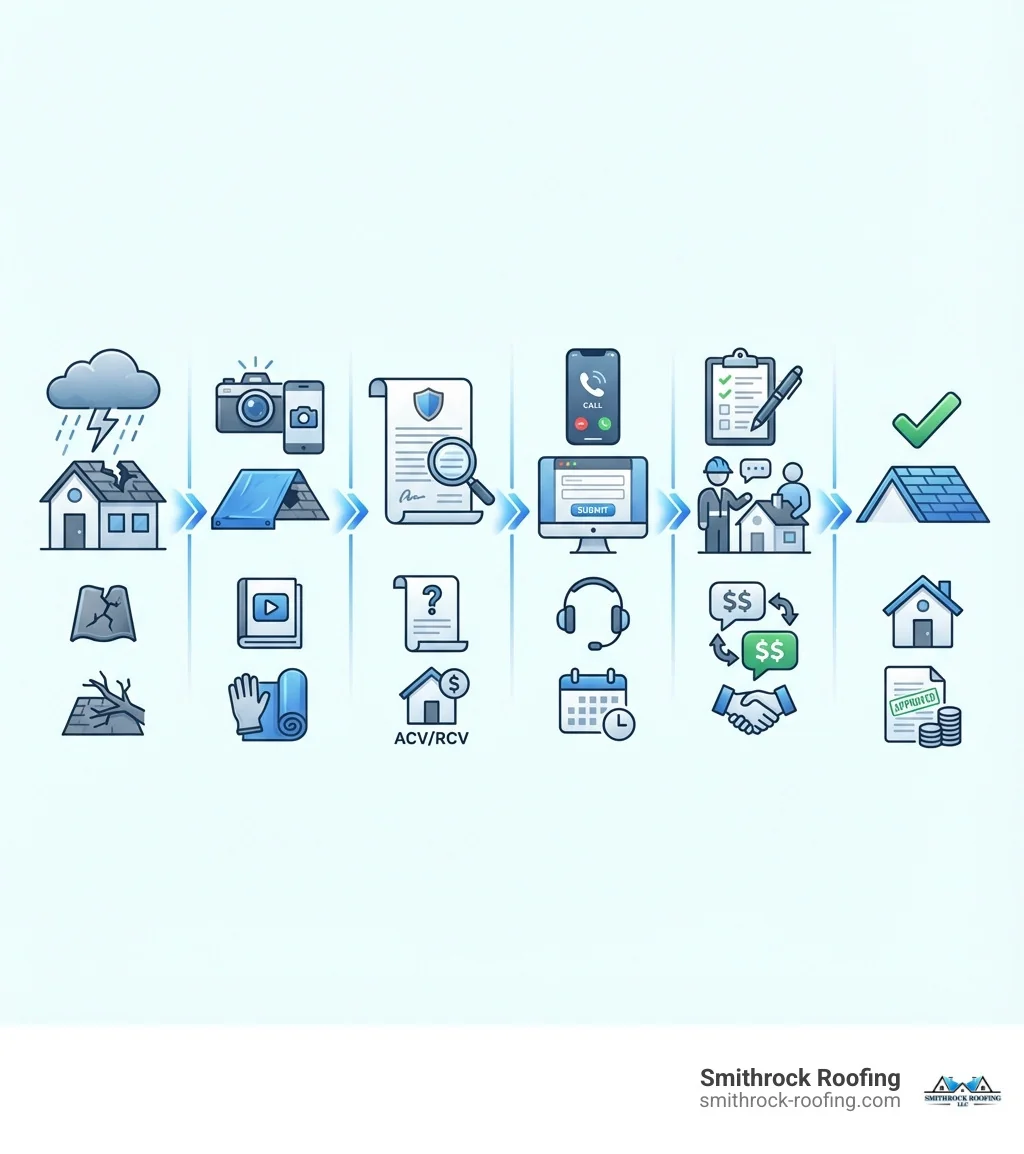
This comprehensive guide is designed to demystify the entire roof replacement insurance claim process. We will walk you through each stage, from the initial damage assessment to the final roof installation, explaining what’s covered, how to document damage like a pro, when to call your insurer versus a contractor, and how to effectively handle disputes if they arise.
You’ve paid your premiums faithfully for years. Now it’s time to ensure you get the full coverage you are entitled to.
Terms related to roof replacement insurance claim:
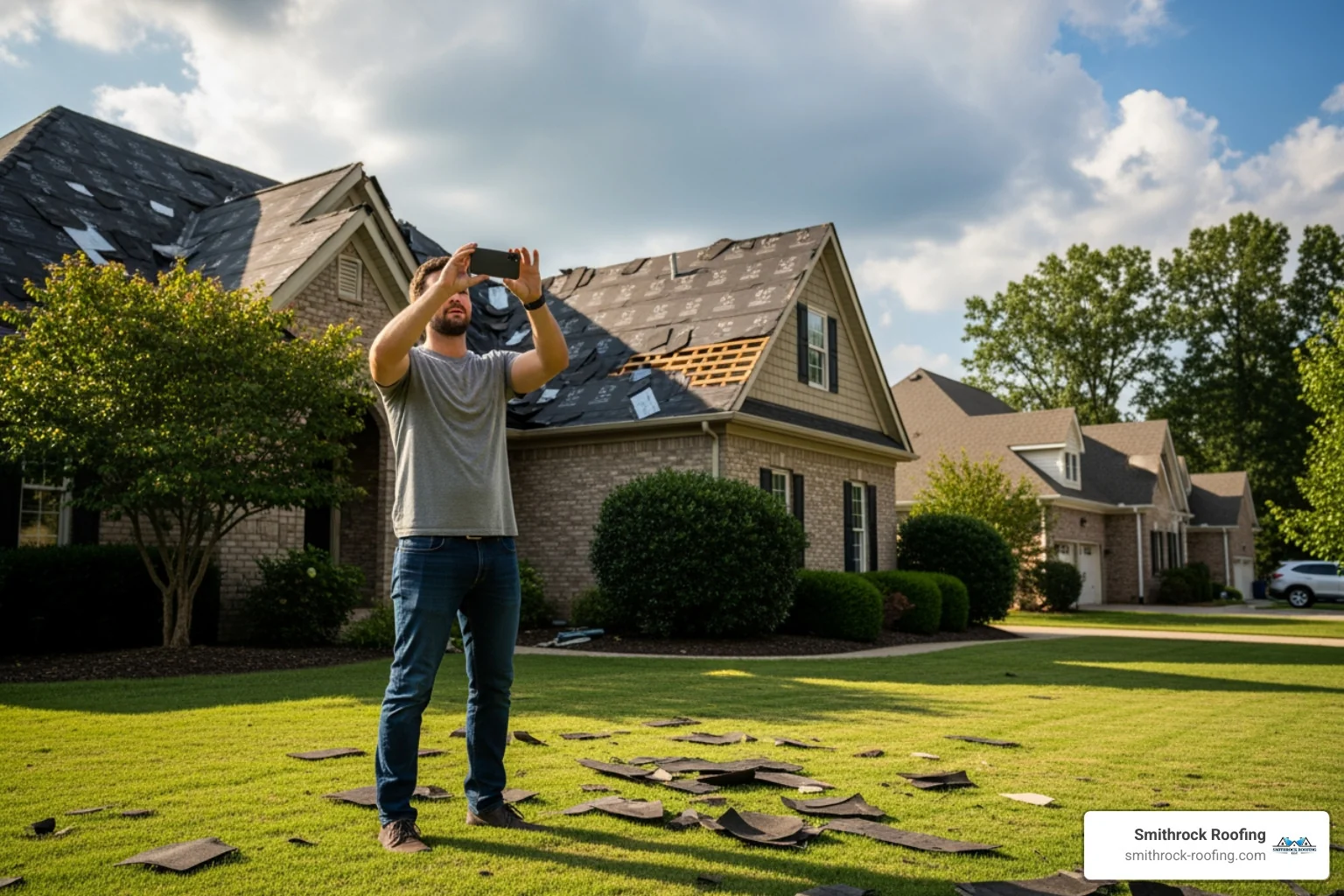
The first and most critical step in any roof replacement insurance claim is to safely and thoroughly assess and document the damage. Your safety is paramount, so never climb onto a potentially damaged or wet roof. All initial inspections should be conducted from the ground or a securely placed ladder. Use a smartphone or camera to take an abundance of clear photos and videos. Capture wide shots of each slope of the roof to show the overall picture, then zoom in for detailed close-ups of specific damage points. Be sure to document the date, time, and the specific weather event (e.g., “hailstorm on May 15th at 4:00 PM”).
Look for these common signs of storm damage:
This documentation is your most powerful tool, creating a clear record that links the damage directly to a specific, covered event.
After documenting, you have a “duty to mitigate” further damage, as required by nearly all insurance policies. This means making reasonable temporary repairs, such as covering holes with a tarp or boarding up broken skylights. Keep every receipt for materials you purchase (tarps, plywood, nails), as these costs are typically reimbursable under your claim. For significant damage, especially from high winds, our team at Smithrock Roofing can provide emergency assistance with Wind Damage Repair Near Me to safely secure your property.
Next, locate and carefully review your homeowners insurance policy. Pay special attention to the “Declarations Page,” which summarizes your coverage, and the sections on “covered perils” and “exclusions.” The key distinction to understand is between “sudden, accidental damage,” which is covered, and gradual deterioration like “wear and tear” or neglect, which is not.
Homeowners insurance is designed to protect you from unforeseen events. For roofing, this generally includes:
Common Covered Perils Checklist:
Policies can have specific limitations, so always verify the details with your specific carrier.
This is the single most important clause in your policy regarding a roof replacement insurance claim. It dictates how much money you will receive.
As the Texas Department of Insurance explains, understanding this difference is crucial. It’s the difference between getting a check that covers most of the project versus one that covers less than half. Look for endorsements on your policy as well, such as “matching coverage” (which may require the insurer to replace undamaged sections to ensure a uniform appearance) or “code upgrade coverage” (which pays for extra costs required to bring your new roof up to current building codes).
Here’s a quick comparison:
| Feature | Actual Cash Value (ACV) | Replacement Cost Value (RCV) |
|---|---|---|
| Coverage | Cost to replace minus depreciation | Full cost to replace with new, like-kind material |
| Example Payout (on a $20k roof with 50% depreciation) | ~$10,000 (before deductible) | ~$20,000 (before deductible) |
| Initial Payout | One-time payment of the depreciated value | Initial payment of the ACV amount |
| Final Payout | No further funds are paid | Second payment for “recoverable depreciation” after work is complete |
| Homeowner Cost | Deductible + All Depreciation | Deductible Only |
Knowing your coverage type is the foundation of a successful roof replacement insurance claim.
Need a hand with this in Winston-Salem, Greensboro and the NC Triad? Call (336) 971-0464 or request a free estimate. Honest answers, no pressure.
Once you have documented the damage and have a basic understanding of your policy, it’s time to formally initiate your roof replacement insurance claim. This phase involves precise communication with your insurance provider, understanding the roles of the various adjusters, and making the strategic decision to bring in a professional roofing contractor as your advocate.
Promptly notifying your insurer is a contractual obligation. Most policies contain a clause requiring you to report damage “as soon as reasonably possible.” Waiting weeks or months can create suspicion and give the insurer grounds to deny the claim. You can typically file a claim through a dedicated 24/7 claims hotline, via your insurer’s website or mobile app, or by contacting your local insurance agent.
When you make the call, be prepared and professional. Have the following information ready:
Important Tip: Stick to the facts. Do not speculate on the extent of the damage or admit any potential fault. Simply state that you have sustained damage from a covered peril and wish to open a claim. The representative will provide you with a claim number, guard this number, as it will be your reference for all future correspondence. The insurer will then assign an adjuster to your case.
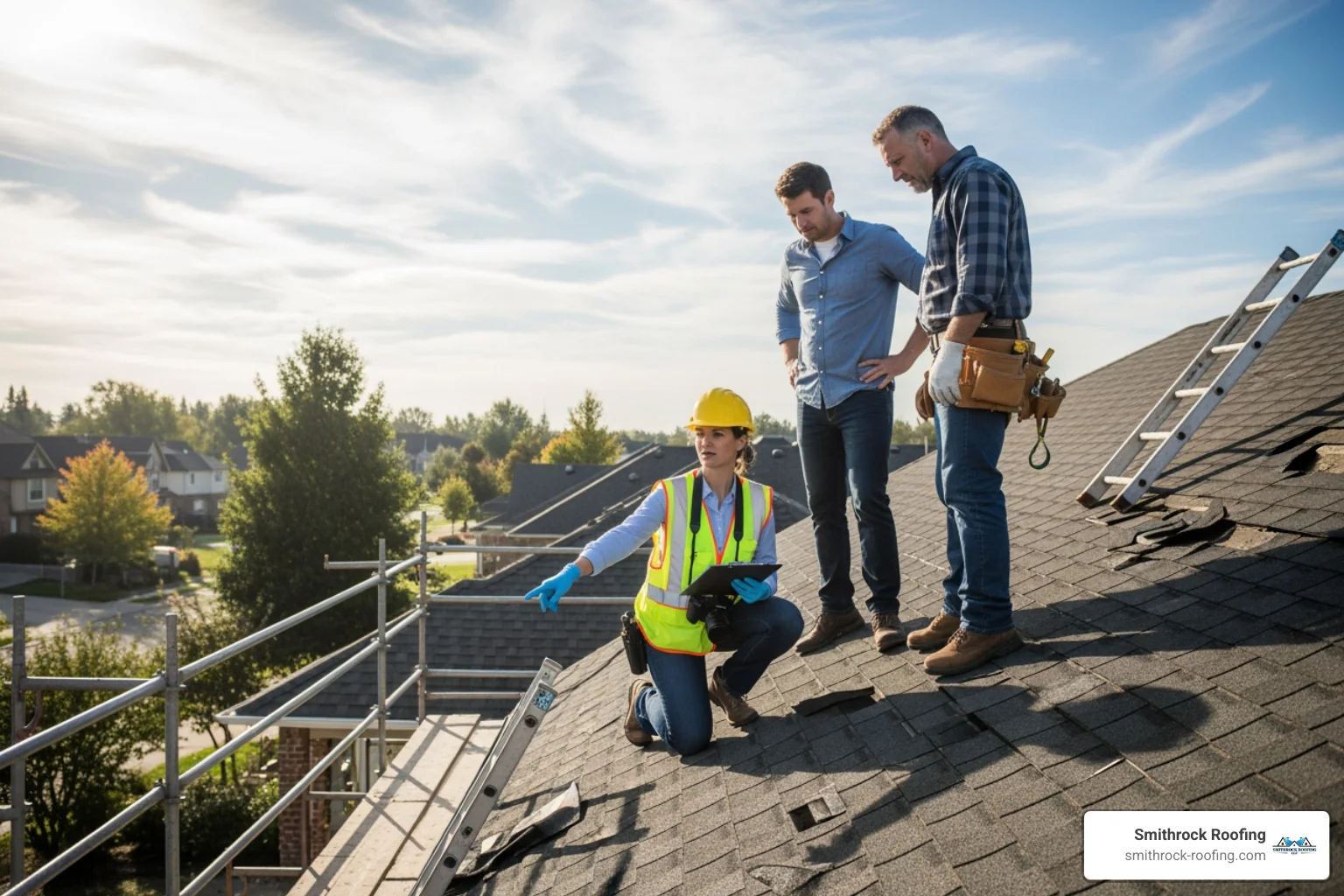
This is a pivotal question with a clear answer: it is almost always in your best interest to have a reputable, local roofing contractor, like Smithrock Roofing, perform a thorough inspection before the insurance adjuster arrives. Here’s why this is a game-changer:
Once you file, the insurer will schedule their adjuster’s visit. It is crucial to schedule your chosen contractor to be present for this meeting. This creates a collaborative environment where your roofer can point out specific damage points, discuss necessary code requirements, and present their findings directly to the adjuster. This simple step can prevent countless back-and-forth negotiations and dramatically increase the likelihood of a fair initial assessment. Our team can provide a detailed Roof Estimate based on this comprehensive inspection, which will serve as a baseline for negotiating the final settlement.
Following the adjuster’s inspection, you will receive a formal document known as a “Scope of Loss” or “Summary of Estimate.” This outlines the damage the insurer has acknowledged and the corresponding settlement offer. It is critical that you review this document with a fine-toothed comb and do not feel pressured to accept the first offer. Initial estimates from insurance companies are notoriously low. They are often generated using standardized software like Xactimate and may omit dozens of necessary line items.
This is where the process of “supplementing the claim” becomes essential. A supplement is a formal request to the insurance company for additional funds to cover legitimate costs that were missed in the original estimate. An experienced, claims-savvy contractor is invaluable here. Our team will meticulously review the adjuster’s scope of work and identify missing items, which commonly include:
We will compile these missing items into a professional supplement request, complete with photos, code references, and pricing, and submit it to your insurer. This negotiation ensures that the final approved amount is sufficient to restore your roof correctly, without cutting corners.
A deductible is the fixed amount of money you are contractually obligated to pay out-of-pocket before your insurance coverage kicks in. This amount is subtracted from the total claim settlement.
Crucially, you are legally required to pay your deductible. Any contractor who offers to “waive,” “cover,” or “absorb” your deductible is asking you to commit insurance fraud. They typically accomplish this by submitting an inflated invoice to the insurance company to cover the difference, which is illegal and can have severe consequences for both you and the contractor.
Even with diligent preparation, a roof replacement insurance claim can be denied. Understanding the common reasons can help you build a stronger case or form the basis of an appeal.
A low offer or denial is not the end of the road. You have several recourse options:
Once your roof replacement insurance claim is approved and you have a fair settlement amount agreed upon, you enter the final and most tangible phase: choosing the right contractor to build your new roof. This decision is just as critical as the claim negotiation itself, as it directly impacts the quality, durability, and longevity of your most important asset.
When vetting and selecting a roofing contractor, prioritize these key qualifications:
Before any work begins, demand a detailed written contract. This legal document should explicitly state the full scope of work, the specific materials to be used (brand, color, type), a clear payment schedule tied to project milestones, and the complete warranty details. Once the work is finished, perform a final walkthrough with the contractor to ensure every detail meets the agreed-upon terms before making the final payment.
A contractor who specializes in insurance claims brings a unique and powerful skill set to your roof replacement insurance claim:
Our team at Smithrock Roofing includes Experienced Roofing Contractors who are deeply versed in the insurance claim process. Many undergo continuous education, such as the GAF Storm Restoration Trainingto master the latest best practices in storm damage assessment and claims negotiation.
Yes, installing a new roof, especially one with enhanced features, can often lead to a reduction in your homeowners insurance premiums. Insurers base their rates on risk; a new, more resilient roof presents a lower risk of future claims.
When planning your replacement, discuss these options with both your insurance agent and our team at Smithrock Roofing. We can help you select materials that not only provide superior protection for your home but also deliver long-term financial savings. Learn more on our More info about our roofing services page.
We understand that the roof replacement insurance claim process is filled with questions and uncertainties. Here are detailed answers to some of the most common questions we hear from homeowners in Winston-Salem and across North Carolina.
Your roof’s age and pre-storm condition are two of the most significant factors in any insurance claim. An insurer will always consider them when assessing liability.
This underscores the value of proactive maintenance and regular inspections. Our Benefits of Regular Roof Inspections can help you maintain your roof’s condition, extending its life and strengthening your position in a future claim.
This is a nuanced question. Coverage for a roof leak depends entirely on the cause of the leak.
It is always critical to address any Roof Leak Repair needs immediately to prevent further damage.
The statute of limitations is the legal deadline for taking action, but in insurance, there are often two timelines to consider:
Best practice is to file your roof replacement insurance claim as soon as you discover the damage. The longer you wait, the more difficult it becomes to definitively link the damage to a specific “date of loss,” which is essential for a successful claim.
This is a common fear. While it’s possible for any claim to affect your future premiums, claims related to widespread natural disasters (often called “Act of God” events) are treated differently than other claims (like liability or theft). An insurer cannot single you out for a rate increase because you filed a claim after a hailstorm that affected your entire neighborhood. They may, however, raise rates for the entire area (zip code) due to the increased risk. The financial risk of not filing a claim and leaving a damaged roof unrepaired, which can lead to major structural issues and interior damage, is far greater than the risk of a potential premium increase.
This is standard procedure if you have a mortgage. Your lender has a financial interest in your home and wants to ensure the property is repaired. You will need to contact your mortgage company’s loss draft department to understand their process. Typically, you will endorse the check and send it to them. They will then release the funds in installments: an initial amount to start the work, and the final amount after you provide proof (like a certificate of completion from your contractor) that the replacement is finished.
This is a very important situation that often leads to a full roof replacement. If a storm damages a section of your roof and the specific shingles are no longer manufactured, a simple repair is impossible. Many state regulations and policy clauses (often related to maintaining a uniform appearance) require the insurer to replace the entire slope or even the entire roof to ensure a reasonable match. An experienced contractor will know how to identify a discontinued shingle and use that fact to properly negotiate for a full replacement when it is warranted.
Navigating a roof replacement insurance claim is undoubtedly a complex and often stressful journey. However, as we’ve detailed, you can take control of the process and achieve a successful outcome. We’ve walked through the essential steps: the critical importance of immediate and thorough damage documentation, the necessity of understanding your policy’s key provisions like ACV vs. RCV, the strategic value of prompt communication with your insurer, and the absolute necessity of partnering with an experienced, local roofing contractor who can serve as your advocate.
The key takeaway is that a successful claim is not a passive process; it is a proactive one. It requires diligence, knowledge, and the right professional support to level the playing field.
At Smithrock Roofing, we are more than just expert roofers; we are your dedicated partners and advocates throughout the entire insurance process. We proudly serve homeowners across Winston-Salem, King, Clemmons, Lewisville, Pilot Mountain, East Bend, Mt. Airy, Kernersville, and the surrounding North Carolina communities. Our deep understanding of local weather, local building codes, and the intricate workings of the insurance industry allows us to provide unparalleled guidance and superior workmanship. Our mission is to manage the complexities of your claim, ensuring you receive a fair, complete, and timely settlement to restore your roof to its optimal condition.
Don’t let the burden of a damaged roof and a confusing insurance claim overwhelm you. Let our team provide you with a fair and complete New Roof Cost assessment based on the full scope of work required. We will guide you through every step of your roof replacement insurance claimfrom the first inspection to the final nail.
For expert assistance with your storm damage and to ensure you get the full compensation you deserve, Contact Us today for a free, no-obligation inspection. We are here to protect your home, your investment, and your peace of mind.
Need a local pro? Learn more about our roofing services in Greensboro.
See also: Average Roof Replacement Cost: What You’ll Really Pay
See also: Roof Replacement Contractor: What Experts Won’t Tell You
See also: Roof Repair vs Replacement: How to Choose
Understanding the roof replacement insurance claim process is crucial because it helps homeowners navigate through what can be a daunting journey, ensuring they are prepared and can advocate effectively for a fair claim payout.
Most standard homeowners insurance policies cover sudden, accidental damage from perils like wind, hail, fire, and falling objects, but exclude gradual wear and tear, neglected maintenance, or issues from faulty installation.
After roof damage, document the damage extensively with photos and videos, review your insurance policy to understand coverage, contact your insurance company promptly, and get a professional roof inspection.
To ensure a fair payout, homeowners should understand their deductible, be prepared to negotiate with the insurance company, and consider seeking professional representation from a public adjuster or claims-savvy roofing contractor.

Smithrock Roofing © Copyright 2026 • All Rights Reserved • Privacy Policy • Maintained by Mongoose Digital Marketing