Choosing among roofing contractors in Waukesha, WI comes down to three things: verified accountability, installation quality, and a clear explanation of what you are actually getting in writing. Most homeowners start by comparing reviews and price. Those matter, but they are downstream of a more important question, will this contractor still be reachable and responsible two years after the job is done, and will their installation hold up well enough that your manufacturer warranty stays intact?
This guide walks through the reasoning behind those questions so you can evaluate any contractor’s recommendation on its own merits, not just take it on faith.
Every roofing company website lists certifications. Few explain what those certifications require of the contractor or what they mean for your outcome as a homeowner.
Take CertainTeed’s PREMIER ShingleMaster designation. This is not a participation certificate. Contractors who hold it must meet installation volume thresholds, pass training requirements, and demonstrate consistent quality. The practical result for you: a ShingleMaster-certified contractor installs your shingles according to the manufacturer’s precise specifications, which is a prerequisite for the enhanced SureStart PLUS warranty to be valid. Without that certification, you may still receive a standard manufacturer warranty, but the coverage terms are shorter and the protection is narrower.
The same logic applies to OSHA safety credentials, NARI membership, and state contractor licensing. Each one represents a verifiable standard the contractor has agreed to be held to. The question is not whether the badge looks impressive on a website. The question is whether you can independently confirm it.
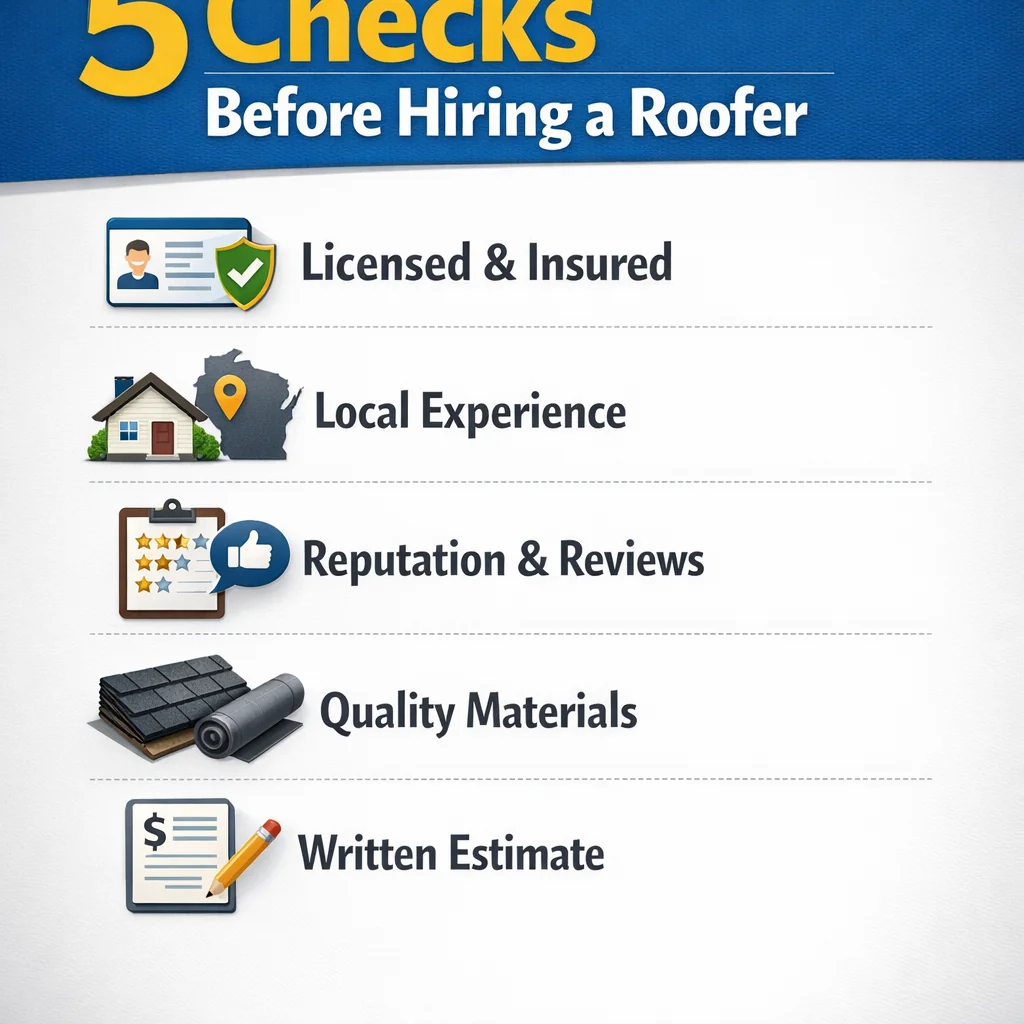
Waukesha County homeowners have several straightforward ways to check a contractor’s standing before committing to a contract:
Warranties are where roofing contracts get misread most often. There are two separate protections in play, and they cover different failure modes entirely.
Workmanship warranty: This covers errors your contractor makes during installation. Improper nailing patterns, inadequate flashing, underlayment that was not sealed correctly, these are installation failures, and a workmanship warranty is what protects you when they surface later. Workmanship warranties vary significantly in duration: some contractors offer one year, others offer ten years, and some offer lifetime coverage. That range is not arbitrary. It reflects how much accountability the contractor is willing to accept for their own work. If you want to understand exactly what’s covered and for how long, reviewing Smithrock’s warranty terms before signing any contract is a practical first step.
Manufacturer warranty: This covers defects in the materials themselves, shingles that crack, granules that shed prematurely, or product that fails to perform within its rated lifespan. CertainTeed’s Landmark shingles, for example, carry a limited lifetime warranty on materials.
Here is the connection most homeowners miss: the manufacturer warranty is conditional. If your shingles were installed incorrectly, wrong nail placement, wrong nail depth, improper overhang, the manufacturer can deny a warranty claim on the grounds that the installation did not meet their specifications. This means your contractor’s workmanship warranty is not just a separate protection. It is the foundation on which the manufacturer warranty rests.
When evaluating contractors, ask these specific questions:
A contractor who can answer these questions plainly and specifically is demonstrating exactly the kind of expertise that separates a reliable roofer from one who will be difficult to reach when a problem shows up.
Need a hand with this in Winston-Salem, Greensboro and the Triad? Call (336) 971-0464 or request a free estimate. Honest answers, no pressure.
No contractor should make this decision for you without explaining their reasoning. Here are the factors that genuinely drive the repair-versus-replacement question, so you can evaluate whatever recommendation you receive. For a deeper look at how to vet the contractors making these recommendations, the article on roofing repair contractors covers how to hire right and avoid costly mistakes.
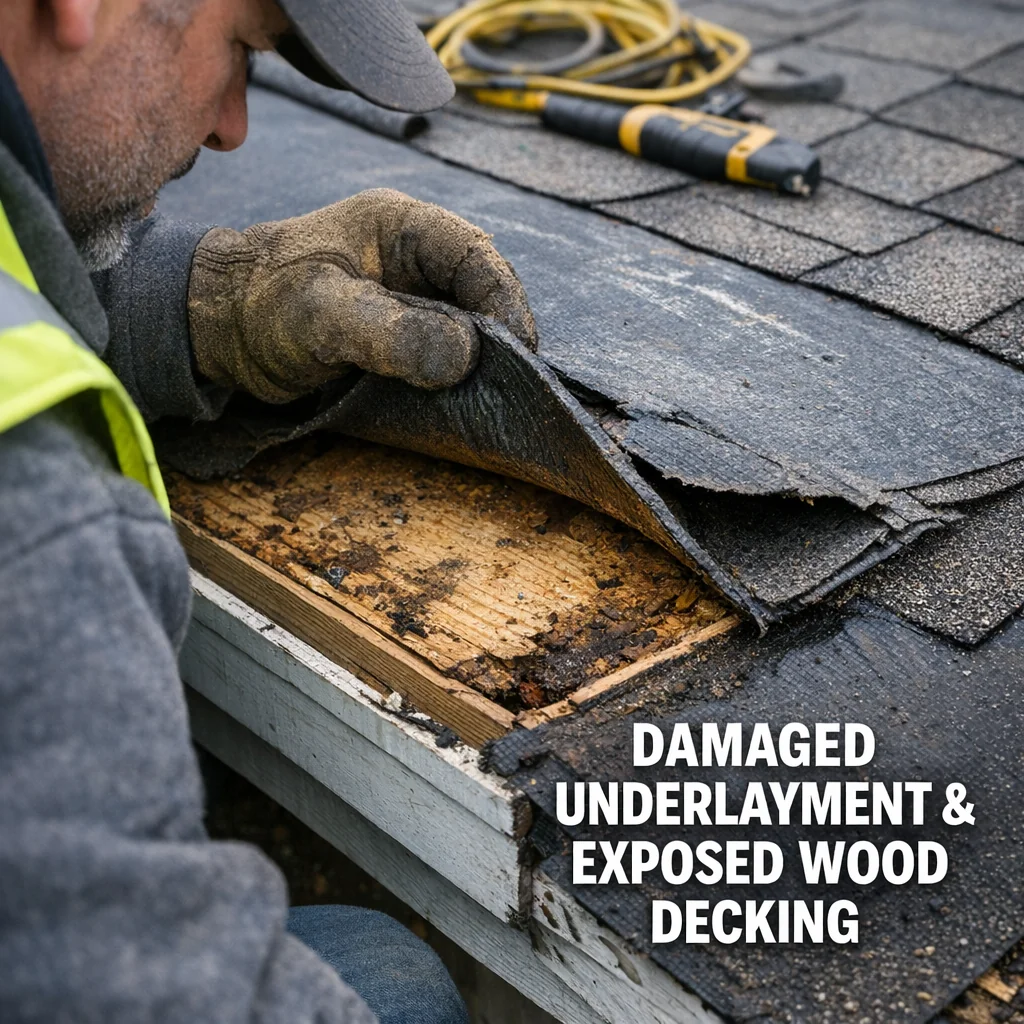
One of the most common gaps in how roofing gets explained to homeowners is treating the shingles as the whole roof. They are the most visible component, but a roof is a layered system, and each component plays a specific role in protecting your home.
| Component | Function | What Goes Wrong Without It |
|---|---|---|
| Decking | Structural substrate shingles attach to | Soft, rotted decking causes fasteners to fail and shingles to lift |
| Ice-and-water shield | Waterproof membrane at eaves and valleys | Ice dams and valley leaks penetrate into the structure |
| Underlayment | Secondary water barrier across the field | Any breach in shingles allows moisture to reach the interior |
| Drip edge | Metal flashing at roof perimeter | Water wicks behind fascia, causing rot over time |
| Flashing | Seals transitions at chimneys, vents, and walls | Most common source of active roof leaks |
| Ventilation | Regulates attic temperature and moisture | Heat and moisture buildup shortens shingle lifespan significantly |
| Ridge cap | Protects the peak and seals the ventilation system | Wind-driven rain enters at the highest point of the roof |
A contractor who discusses only the shingle product you are selecting is giving you an incomplete picture. The underlayment grade, the flashing approach at your chimney, and the ventilation balance in your attic all directly affect how long that shingle will perform. Ask specifically what products and methods will be used for each layer, not just what shingle brand is going on top.
Smithrock Roofing installs CertainTeed Landmark shingles backed by a five-year labor warranty and a limited lifetime manufacturer warranty, and every roofing service addresses the full system, not just the surface. With more than 350 five-star reviews and 60-plus combined years of experience, we are the kind of contractor who can answer your questions plainly before, during, and after the job.
The answer depends on the age of your roof, the extent of the damage, and how many layers are already on the structure. Minor issues like a handful of missing shingles or a flashing failure around a single pipe can often be addressed with a targeted repair. However, if your roof is approaching the end of its expected lifespan, if you are seeing widespread granule loss, or if there is evidence of moisture in your attic, a full replacement is usually the more sound long-term investment. A thorough inspection by an experienced contractor will give you a clear picture of which path makes sense for your specific situation.
Beyond the basics like licensing and insurance, ask specifically how they handle the full roofing system, not just the shingles. Find out what underlayment grade they use, how they approach flashing at chimneys and walls, and what their ventilation strategy is for your attic. Ask about their warranty coverage for both labor and materials, and confirm that their workers are employees rather than day laborers with no accountability to the company. A contractor who can answer these questions clearly and without hesitation is one who actually does the work properly.
Most standard residential replacements can be completed in one to two days, depending on the size and pitch of the roof, the number of layers being removed, and whether any decking needs to be replaced once it is exposed. Weather is always a factor, and a reputable contractor will schedule around conditions rather than push through in ways that compromise the installation. You should receive a realistic timeline before work begins, and the crew should leave your property clean and cleared of debris at the end of each day.
In many cases, yes. A new roof can reduce your insurance premium because it lowers the risk profile of your home, particularly if you are replacing an aging roof that was nearing the end of its rated lifespan. Some insurers also have specific requirements around roofing materials and installation methods, so it is worth checking with your provider before selecting your shingle product. If your roof was damaged by a storm event, your insurance adjuster may be involved in the process, and a reputable contractor will work with you through that claim rather than make the process harder.
Smithrock Roofing has spent more than six decades of combined experience helping homeowners across Waukesha, WI, and those seeking roofing in Clemmons, make confident, informed decisions about one of the most important investments in their homes. Whether you are in the middle of a damage claim, planning ahead for a replacement, or simply not sure what you are dealing with after a rough season, our team will give you straight answers and workmanship you can stand behind. Reach out at (336) 971-0464 or Contact Smithrock Roofing to schedule your free estimate today.

Smithrock Roofing © Copyright 2026 • All Rights Reserved • Privacy Policy • Maintained by Mongoose Digital Marketing