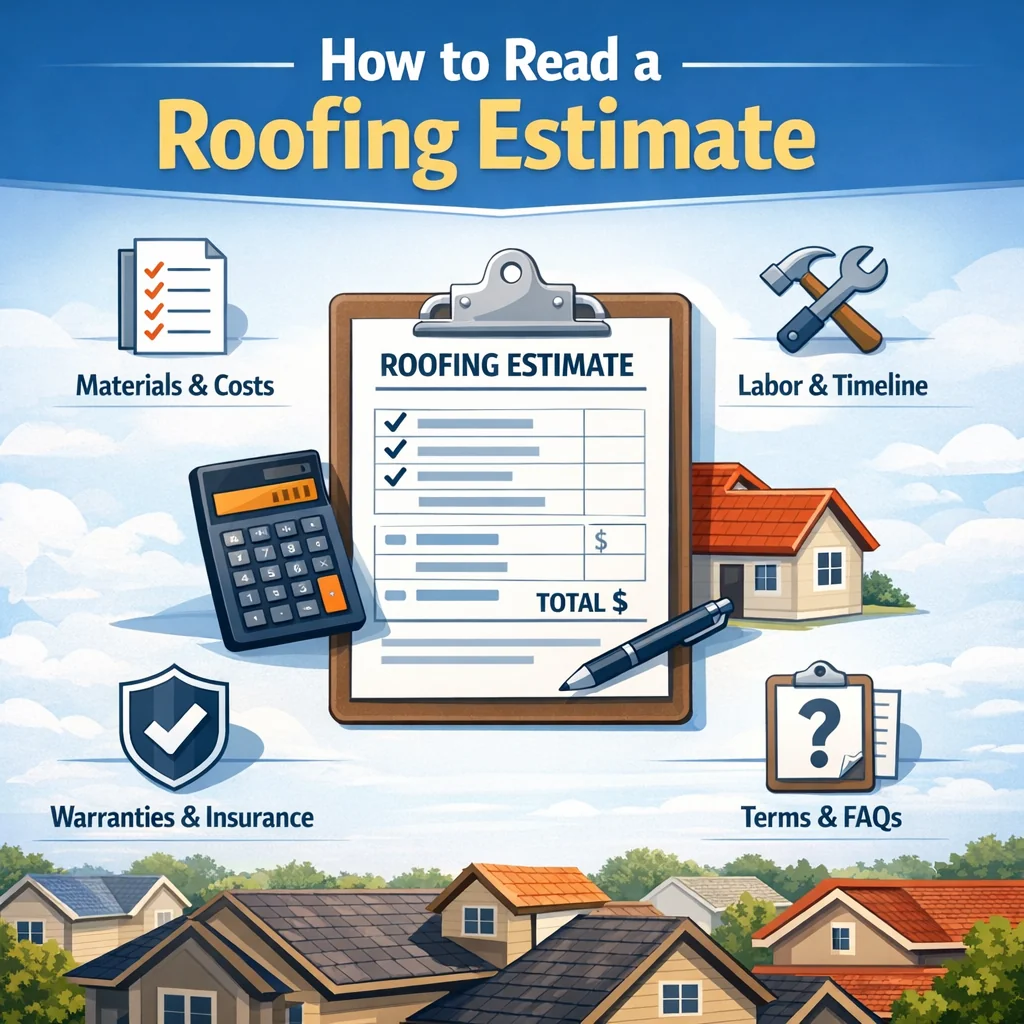
Getting a roofing estimate sounds straightforward until you have two quotes in your hands that are hundreds of dollars apart for what appears to be the same project. The confusion is not a pricing mystery. It almost always comes from comparing quotes that were built on different assumptions about materials, labor, scope, and what happens when the old roof comes off. This article explains what a roofing estimate actually contains, which variables move the number most, and how to read and compare quotes so you are making a real decision rather than just picking the lowest figure.
Most homeowners use the words estimate, quote, and bid interchangeably. Contractors do not, and the difference matters.
A budget estimate is a rough order of magnitude. It is based on your roof’s footprint, a material type, and regional labor averages. It is useful for planning purposes but not for signing contracts.
A scope-based estimate is tied to a defined specification. It lists the material brand and product line, the number of layers being removed, what happens to the decking, how flashing and ventilation are handled, and what warranty applies. This is the type of estimate that allows meaningful comparison between contractors.
A firm bid is a contractually binding proposal. The contractor is committing to deliver a specific result at a specific price. Changes to that scope, such as damaged decking discovered during tear-off, are handled through written change orders.
When a homeowner asks for a roofing estimate, they often receive a budget estimate presented in firm-bid formatting. It looks official, but it may leave scope variables unresolved. That gap between what the paper says and what the project requires is where surprise invoices come from.
At Smithrock Roofing, every estimate we provide is scope-based from the start. We walk the roof, document what we find, specify the materials by product line, and explain exactly what is and is not included before any agreement is signed.
Every roofing estimate is built on the same set of underlying variables. The problem is that most guides list those variables as a flat, equal inventory when some of them move your number far more than others.
Square footage is the most visible driver of cost, but pitch is the variable that multiplies everything else. Roofing is priced in squares, where one square equals 100 square feet of roof surface. A home’s footprint is not the same as its roof surface area, because slope increases the actual surface that must be covered.
A low-slope roof of 4/12 (four inches of rise per twelve inches of run) adds a relatively small amount of surface above the horizontal footprint. A steep roof of 12/12 increases the actual surface area by more than 40% over the same footprint. That difference applies to materials, labor hours, and safety equipment.
Pitch also affects what kind of estimate is physically possible. Satellite measurement tools and aerial estimating software, used by many online estimate platforms, measure horizontal footprint accurately. As pitch increases, the gap between that footprint measurement and actual roof surface grows. On a high-pitch roof, a remotely generated estimate can be materially incorrect before a contractor ever visits the property. This is why estimates on steeply pitched roofs require an in-person inspection, not just a satellite calculation.
Material choice affects both the line items in your estimate and the long-term value calculation behind it. The primary material categories carry meaningfully different characteristics. For a deeper look at how these options stack up, the article on durable roofing solutions comparing slate, metal, and tile covers the performance trade-offs in detail.
| Material Type | Approximate Lifespan | Key Estimate Consideration |
|---|---|---|
| Asphalt shingles (standard) | 20 to 30 years | Most straightforward to estimate; widely available labor |
| Asphalt shingles (architectural/premium) | 30 to 50 years | Heavier product; labor time increases slightly |
| Metal (standing seam or panel) | 40 to 70 years | Specialized installation; fewer qualified crews |
| Wood shake | 25 to 35 years | Requires specific ventilation; some insurers restrict coverage |
| Slate (natural or synthetic) | 75 to 150 years (natural) | Structural load assessment required; highly specialized labor |
Smithrock Roofing uses CertainTeed Landmark shingles as a standard, backed by a limited lifetime manufacturer warranty and our own 5-year labor warranty. The reason we specify materials by product line rather than by category is that “asphalt shingle” covers a wide range of products with very different performance profiles. An estimate that says “architectural shingle” without naming the product is leaving a variable open.
Industry averages place labor at approximately 60% of a total roofing project cost. This figure is widely cited, but it is more useful as a diagnostic ratio than as a benchmark.
If a quote shows labor well below 40% of total cost, something in the pricing structure warrants a closer look. Possible explanations include lower-grade materials being substituted for premium ones, subcontractor arrangements that are being absorbed differently in the pricing, or scope items being omitted. If labor exceeds 75%, the project likely has genuine complexity driving that figure: a steep pitch, a multi-story home, significant staging requirements, or a difficult tear-off condition.
Subcontractor use deserves specific attention. A general roofing contractor who subs out installation to a separate crew introduces a layer of accountability that affects both quality control and cost structure. Ask directly whether the crew installing your roof is employed by the company you are contracting with.
Need a hand with this in Winston-Salem, Greensboro and the Triad? Call (336) 971-0464 or request a free estimate. Honest answers, no pressure.
The standard advice to collect multiple quotes is sound in principle. In practice, it only works if the quotes you are comparing were built on the same foundation of assumptions.
Two contractors quoting the same house can legitimately arrive at different numbers based on how they each handle these variables:
That is nine scope variables before labor rates and overhead are even considered. Choosing the lower of two quotes without aligning these variables is not saving money. It is accepting unknown risk.
Before you request quotes from any contractor, write down these nine items and ask each contractor to respond to all of them in writing. If a contractor declines to specify, that is information worth having. Our roofing service documentation addresses each of these variables explicitly so homeowners know exactly what they are agreeing to before work begins.
Tear-off is the removal of your existing roofing material before new installation begins. It is often treated as a simple line item, but it carries meaningful risk implications that rarely appear in estimate paperwork.
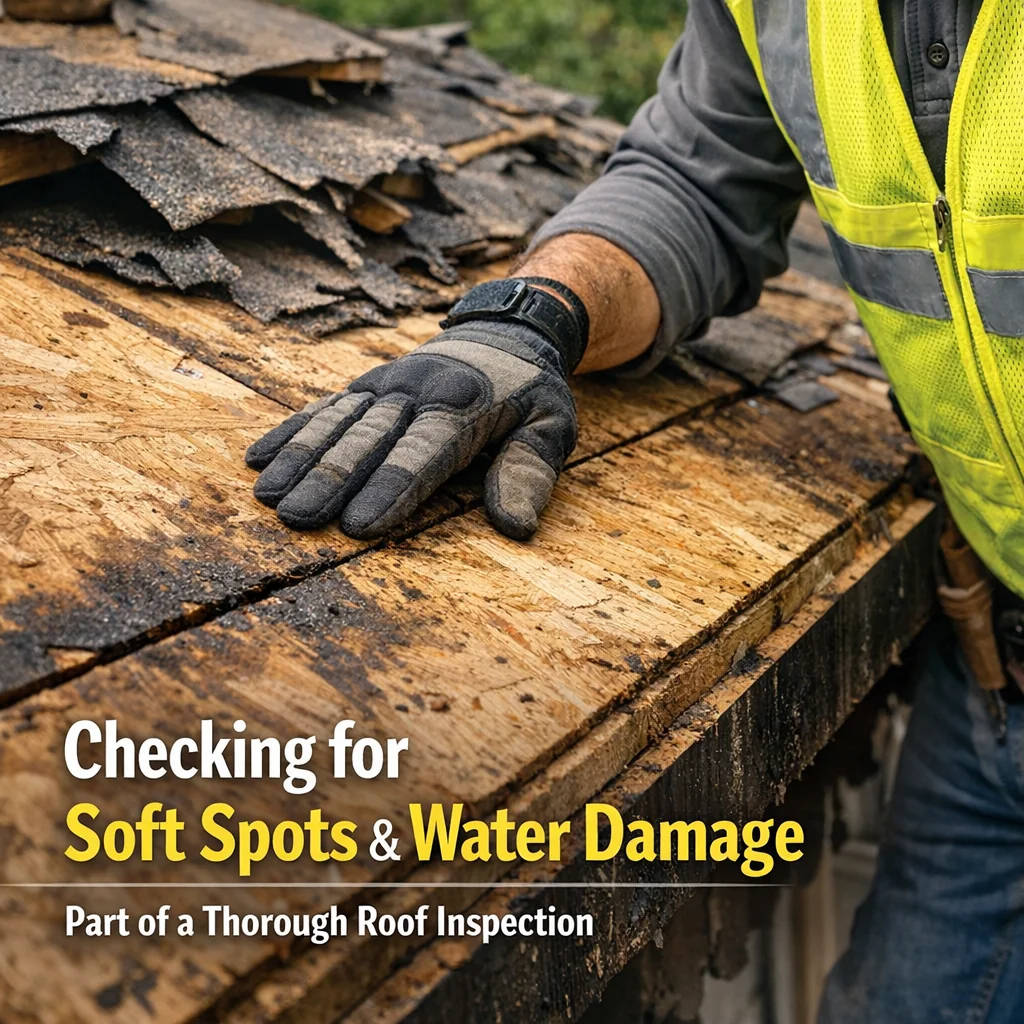
When old shingles are removed, the decking beneath them is exposed for the first time in years or decades. Rot, soft spots, delamination in OSB panels, and improperly repaired areas all become visible at that moment. If the estimate did not include a clear protocol for how decking damage is handled, you are entering a live cost variable the day installation begins.
The two questions to ask every contractor before signing:
Question one: Is decking inspection included in the scope, and will I receive a written report of what was found before any replacement work begins?
Question two: How is decking replacement priced, and at what point do I authorize additional work if damage is found?
A contractor who has a clear, documented answer to both questions is managing that variable professionally. A contractor who says decking replacement is rare and probably not necessary is not addressing the question.
A roofing estimate from a reputable contractor reads like a specification document, not a single-line price. It names the product, defines the scope, documents what happens when unexpected conditions arise, and commits the warranty terms in writing.
Smithrock Roofing brings more than 60 combined years of experience to every estimate we provide across Winston-Salem, Greensboro, High Point, roofing in Kernersville, Clemmons, Rural Hall, King, and Mount Airy. We are CertainTeed PREMIER ShingleMaster Certified, fully licensed and insured, and carry an A+ BBB rating alongside more than 350 five-star reviews from homeowners who started exactly where you are right now.
When you request an estimate from us, you receive a clear scope document, an honest conversation about what we find on the roof, and a straightforward explanation of how we handle anything unexpected. No pressure, no vague line items, and no surprises on the final invoice.
A complete roofing estimate should specify the exact materials being used by brand and product line, define the full scope of work including underlayment, flashing, ridge cap, and ventilation, explain how decking damage will be identified and priced if found during tear-off, and state the warranty terms in writing for both materials and labor. A single-line price with no supporting detail is not a complete estimate.
Variation often comes down to what each contractor has actually included in the scope. One estimate may cover code-required ice and water shield, new drip edge, and proper ventilation adjustments while another covers shingles only. Before comparing totals, confirm that every estimate is quoting the same materials, the same scope of work, and the same approach to handling unexpected conditions like damaged decking.
A reputable contractor will inspect the decking after tear-off is complete, document what was found, and present a written account of any damaged sections before asking you to authorize additional work. You should never be surprised by decking charges on a final invoice. Ask every contractor upfront how decking replacement is priced and at what point your written approval is required before that work begins.
Manufacturer certifications such as the CertainTeed PREMIER ShingleMaster designation are awarded only to contractors who meet training, installation, and business practice standards set by the manufacturer. Certified contractors can offer enhanced warranty coverage that non-certified contractors cannot, and the certification provides an independent verification that the contractor has demonstrated a higher level of product knowledge and installation competency.
Homeowners in Winston-Salem and Greensboro deserve a roofing estimate that gives them the full picture, not a number without context. Smithrock Roofing brings more than 60 combined years of experience, CertainTeed PREMIER ShingleMaster Certification, and a straightforward process designed to make every step clear before, during, and after installation. Call us at (336) 971-0464 or Contact Smithrock Roofing today to schedule your free estimate.

Smithrock Roofing © Copyright 2026 • All Rights Reserved • Privacy Policy • Maintained by Mongoose Digital Marketing