Replacing your home’s siding is one of the more consequential decisions you’ll make as a homeowner. It affects how your home looks, how well it’s protected from the elements, how much energy you use, and what a future buyer’s first impression will be. It’s also a decision where the wrong contractor or the wrong material can cost you years of headaches.
Here in Greensboro and across the NC Triad, we see the results of those decisions every day — both the good ones and the ones that didn’t hold up. What we’ve noticed is that most of the information available to homeowners treats siding as a generic national topic. Material lists. Credential claims. A few before-and-after photos. What’s missing is the honest, specific knowledge that actually helps you make the right call for a home in this climate, in this region, in your particular neighborhood.
That’s what this guide is for. We’re going to cover how Greensboro’s weather actually affects siding performance, what a proper installation involves (and how to tell if yours is being done right), and what you need to know when old siding comes off and the real condition of your exterior is revealed. No fluff, no pressure — just the kind of straightforward guidance we’d give a neighbor.
Most siding conversations start with material comparisons. We want to start somewhere more useful: the climate your siding has to survive.
The Piedmont Triad sits in a genuinely demanding zone for exterior building materials. You’re not dealing with the relentless coastal salt air of Wilmington or the sustained cold of the mountains near Boone — but Greensboro has its own combination of stressors that put real wear on a home’s exterior year after year.
Greensboro averages over 47 inches of rainfall annually, and summer relative humidity regularly pushes above 70%. That sustained moisture load is the primary enemy of improperly installed or moisture-vulnerable siding. Wood siding absorbs and releases moisture with every seasonal shift, which means expansion, contraction, cracking, and eventual rot if the finish coat isn’t maintained on a strict cycle. In a drier climate, a homeowner might get away with delayed maintenance. In Guilford County, that delay shows up fast.
Fiber cement handles this environment well because it doesn’t absorb moisture the way wood does. It dimensionally stable under humidity swings, which means it holds paint longer and resists the warping and cracking cycle that wood is susceptible to here. That’s not a sales point — it’s a material science reality that matters specifically in this region.
Greensboro winters occasionally dip below 20°F, while July and August regularly push into the mid-90s. That’s a temperature range of 75 degrees or more between seasonal extremes, and it matters enormously for vinyl siding.
All vinyl expands in heat and contracts in cold. The question is whether your installer accounted for that. Proper vinyl installation requires deliberate expansion gaps at every J-channel connection and at the ends of each panel. When those gaps are skipped — either because the installer was rushing or didn’t know better — the panels have nowhere to go when temperatures climb. The result is visible buckling, warping, and a wall that looks wavy in the summer sun.
Premium insulated vinyl products perform better across this temperature range than standard thin-gauge vinyl, partly because the foam backing moderates the rate of expansion and contraction. But even the best vinyl panel will fail early if the installation doesn’t account for movement. In Greensboro’s climate specifically, this isn’t a minor detail — it’s one of the most common causes of premature siding failure we see on homes throughout the Triad.
Greensboro doesn’t get the sustained freezing temperatures of mountain communities, but it does experience enough freeze-thaw cycling through late winter to expose vulnerabilities that were hiding all summer. Water that worked its way into a gap around a window trim or behind an improperly lapped section of house wrap will freeze, expand, and push damage further into the wall assembly.
This is why flashing details at windows and doors matter so much — more on that in the installation section. Greensboro’s pattern of mild-cold-mild weather can actually accelerate moisture damage compared to climates that stay frozen all winter, because the freeze-thaw cycling keeps the intrusion process active.

With climate context in place, material selection becomes a much more grounded conversation. Here’s a straightforward comparison of the primary options — their real strengths, their real limitations, and how each one performs in conditions specific to this region.
| Material | Humidity Resistance | Thermal Stability | Maintenance Demand | Typical Lifespan (Triad Conditions) | Best Fit |
|---|---|---|---|---|---|
| Vinyl (Standard) | Moderate | Moderate — gaps required | Very low | 20–30 years with quality install | Budget-conscious homes; investment properties |
| Vinyl (Insulated) | Moderate–Good | Better than standard | Very low | 25–35 years | Homes where energy efficiency matters |
| Fiber Cement | Excellent | Excellent | Low–Moderate (paint cycle) | 30–50 years | Most Triad homes; high-humidity exposures |
| Wood (Cedar/Pine) | Poor without maintenance | Good | High | 15–25 years (with consistent upkeep) | Historic or character homes; owners committed to maintenance |
| Engineered Wood | Good | Good | Low–Moderate | 25–35 years | Homes wanting wood aesthetics with better durability |
Lifespans reflect typical Piedmont Triad performance under normal conditions with professional installation. Actual results vary based on installation quality, maintenance, and site-specific exposure.
Vinyl is the most commonly installed siding material in the Triad, and for good reason — it’s durable, low-maintenance, and available in a wide range of profiles and colors. Done right, it performs well for decades. Done wrong, it’s one of the more visible failure stories we see on houses throughout Greensboro.
The distinction between standard and insulated vinyl is worth understanding. Standard vinyl panels are hollow. Insulated vinyl has a foam backing bonded to the panel, which does two things: it moderates the expansion-contraction cycle, and it adds a measurable layer of thermal resistance to the wall. In a climate where summer cooling costs are significant, that added R-value is a practical benefit, not just a marketing feature.
Profile selection matters here too. Dutch lap, beaded, and smooth horizontal profiles all carry the same functional requirements, but they read very differently on a house. Board-and-batten and vertical panel configurations add architectural interest and can suit certain home styles — particularly craftsman or farmhouse designs — better than traditional horizontal lap. If you’re still weighing your options, our article on how to compare vinyl siding options breaks down the key differences across profiles and product tiers.
Fiber cement is a composite of cement, sand, and cellulose fiber. It doesn’t rot, it resists insects, it holds paint well, and it’s dimensionally stable in humidity — all qualities that matter specifically in Guilford County’s climate.
It does require a paint maintenance cycle, typically every 8–15 years depending on sun exposure and the quality of the original coating. That’s a real maintenance commitment that homeowners should understand going in. But for homes where longevity and low-risk performance in wet conditions are the priority, it’s difficult to argue against fiber cement in this region.
One area where fiber cement genuinely earns its reputation is in older Greensboro neighborhoods with architectural character. Homes in Irving Park, Fisher Park, or the historic areas near downtown often have profiles and trim details that need to be matched closely to preserve the home’s character. Fiber cement can be milled and finished to replicate wood trim profiles in a way that vinyl cannot, which makes it the preferred choice when authenticity to the original construction matters.
Wood siding is beautiful, and in the right hands it lasts a long time. But in Greensboro’s climate, it demands a maintenance commitment that many homeowners underestimate. The humidity here is harder on wood finish than in drier climates — paint adhesion fails faster, moisture finds its way into end grain, and untreated exposed wood begins absorbing moisture within a single wet season.
If you have a historic home with wood siding you want to preserve, that’s a reasonable choice — but go in knowing what the maintenance schedule actually looks like. If you’re replacing siding primarily for lower upkeep, wood is the wrong direction for the Piedmont Triad.
This is where most of the information available to homeowners completely falls short. Every contractor says they do quality work. Very few explain what quality work actually looks like. Here’s what should be happening on your property — the steps that separate an installation that lasts 40 years from one that starts failing at 15.
Before a single panel is installed, the condition of the existing wall assembly needs to be evaluated. The sheathing — typically OSB or plywood on homes built in the last 40 years, or older board sheathing on pre-1970s construction — has to be structurally sound. If it’s compromised by moisture damage, it cannot provide solid fastener holding for new siding, and it will continue to degrade behind the new material.
On Greensboro homes from the 1960s through the 1980s, we frequently find OSB sheathing that has begun to delaminate at the edges or face, particularly on north-facing walls and areas around windows where water management was less sophisticated than modern standards. This isn’t always obvious from the outside — which is exactly why a proper pre-installation assessment matters.
What does compromised sheathing look like? Soft spots when pressed, visible darkening or staining at corners, areas that have swelled or bowed outward. A knowledgeable contractor will identify this before the siding goes on — not pretend it isn’t there, and not cover it up.
House wrap is the moisture management layer between the sheathing and the siding. When it’s installed correctly, it stops bulk water from reaching the wall. When it’s rushed or done improperly, it can actually trap moisture inside the wall assembly — which is worse than having no wrap at all.
Correct house wrap installation requires:
A house wrap that’s been installed backwards, poorly lapped, or left with unsealed penetrations provides a false sense of security. The wall looks protected. It isn’t.
For vinyl siding, the nailing requirements are specific and non-negotiable. Each panel has a nailing hem — a slotted area at the top designed to allow the panel to slide horizontally as it expands and contracts. The nail should be centered in that slot and driven straight, leaving a small gap between the nail head and the panel surface.
Overdriven nails lock the panel in place and prevent thermal movement. When the panel tries to expand in summer heat, it has nowhere to go — it buckles. This is the single most common installation error we see producing visible failure on Greensboro homes, and it shows up within the first summer after installation.
Underdriven nails leave panels loose, creating wind vulnerability and allowing panels to shift out of alignment. In a Triad thunderstorm with gusts hitting 50 mph or more, loose panels can be lifted off the wall.
For fiber cement, nailing requirements differ — face nailing versus blind nailing, and fastener specifications matter for holding through the product’s weight. Using incorrect fastener types voids most manufacturer warranties.
The starter strip is the first piece installed at the bottom of the wall, and it establishes the angle and level for every course above it. A starter strip that isn’t perfectly level will produce a cascading misalignment that becomes increasingly visible as panels stack up. By the time you’re at the second-story line, a small error at the bottom of the wall can produce a highly visible wave pattern across the facade.
Proper installation requires a chalk line established at true level before the starter strip is fastened — not eyeballed, not assumed. This adds time. It’s not optional.
This step prevents more moisture problems than any other single element of the installation, and it’s also where the most corners get cut. Poor flashing at windows and doors — not the siding material itself — is the root cause of the majority of moisture intrusion complaints on sided homes.
Correct sequencing involves:
When this sequence is reversed or skipped, water enters the wall every time it rains and channels behind the sheathing. You won’t see it immediately. You’ll see it in two to five years when the drywall inside begins to show moisture staining, or when the window begins to feel drafty in winter. By then, the repair involves opening the wall.

There’s a part of the siding replacement process that almost nobody talks about in advance, even though it shapes how almost every project actually unfolds. When old siding comes off — particularly on homes built before 1990 — what’s underneath it frequently determines how the project needs to proceed.
This isn’t a reason to avoid replacing your siding. It’s a reason to work with a contractor who will tell you what they found and explain your real options.
Rotted sheathing cannot be left in place. Siding fastened to compromised sheathing will not hold properly, and the rot will continue spreading behind the new material. When we find damaged areas, we replace them — full stop.
The question is scope. Sometimes rot is isolated to a single corner where a flashing failure directed water to one spot for years. That’s a manageable repair. Occasionally, particularly on homes where previous siding was installed over existing material without addressing underlying problems, the damage is more extensive. A contractor who tells you the sheathing looks fine without actually pulling a panel to check isn’t doing you any favors.
Greensboro has a large stock of ranch-style homes built through the 1960s and 1970s that were constructed with wall assemblies that weren’t particularly well insulated by modern standards. When siding comes off these homes, the cavity behind the sheathing often reveals gaps, settling, or absent insulation — particularly in rim joist areas and around window rough openings.
A siding replacement project is one of the more accessible opportunities to add insulated sheathing or continuous foam insulation to the exterior of these homes. It adds to the project scope, but it’s a significantly less invasive way to improve the thermal envelope than interior approaches. It’s worth the conversation.
Homes built before approximately 1980 in Guilford County may have asbestos-containing siding materials — most commonly asbestos cement shingles, which were widely used through the mid-1970s. This isn’t cause for alarm in itself; intact asbestos siding that isn’t being disturbed poses minimal risk. The issue arises when that material needs to be removed.
North Carolina has specific regulations governing the handling and disposal of asbestos-containing materials. If your home was built before 1980 and you haven’t confirmed what the existing siding is, this is a question worth raising with your contractor before any work begins. Our guide to asbestos siding replacement cost in the NC Triad covers what to expect from the process, including testing, handling requirements, and how removal affects overall project scope. A responsible contractor will either test suspect materials or assume they’re asbestos-containing and handle them accordingly — not just rip them off and sort it out later.
How a contractor handles what they find underneath old siding is one of the clearest windows into how they operate. A contractor who discovers rotted sheathing and mentions it casually on a Friday afternoon, asking you to make a quick decision over the phone, isn’t treating you as a partner in the project. A contractor who stops, documents what they found, walks you through it clearly, and explains your options with honest information about implications and timeline — that’s who you want doing this work.
At Smithrock Roofing, this is the standard we hold ourselves to. We’ve been doing this long enough to know that how we handle the unexpected is what homeowners remember long after the project is finished.
Material choice is the first conversation. Profile selection is where the real design work happens, and it’s a step that most homeowners don’t know they have genuine choices about.
Traditional horizontal lap is the most common configuration in the Triad and suits the majority of residential architectural styles — colonials, ranches, traditional two-stories, and most transitional-style homes. Within horizontal lap, you have:
Vertical siding installation — whether true board-and-batten or a vertical panel product — reads very differently than horizontal lap and suits certain home styles far better. Farmhouse, modern, and mixed-style homes benefit particularly from incorporating vertical elements, either as a full-facade approach or as an accent on gables, dormers, or garage bays. In newer Greensboro-area construction in communities like Summerfield and Stokesdale, mixed orientation has become common.
Several established Greensboro neighborhoods — and many of the newer planned communities in the surrounding Triad — have architectural review committees or HOA guidelines that specify approved materials, colors, and profiles. Before finalizing any siding decision, confirm what restrictions, if any, apply to your property. This is particularly relevant in Fisher Park’s historic overlay district, where changes to the exterior are subject to review.
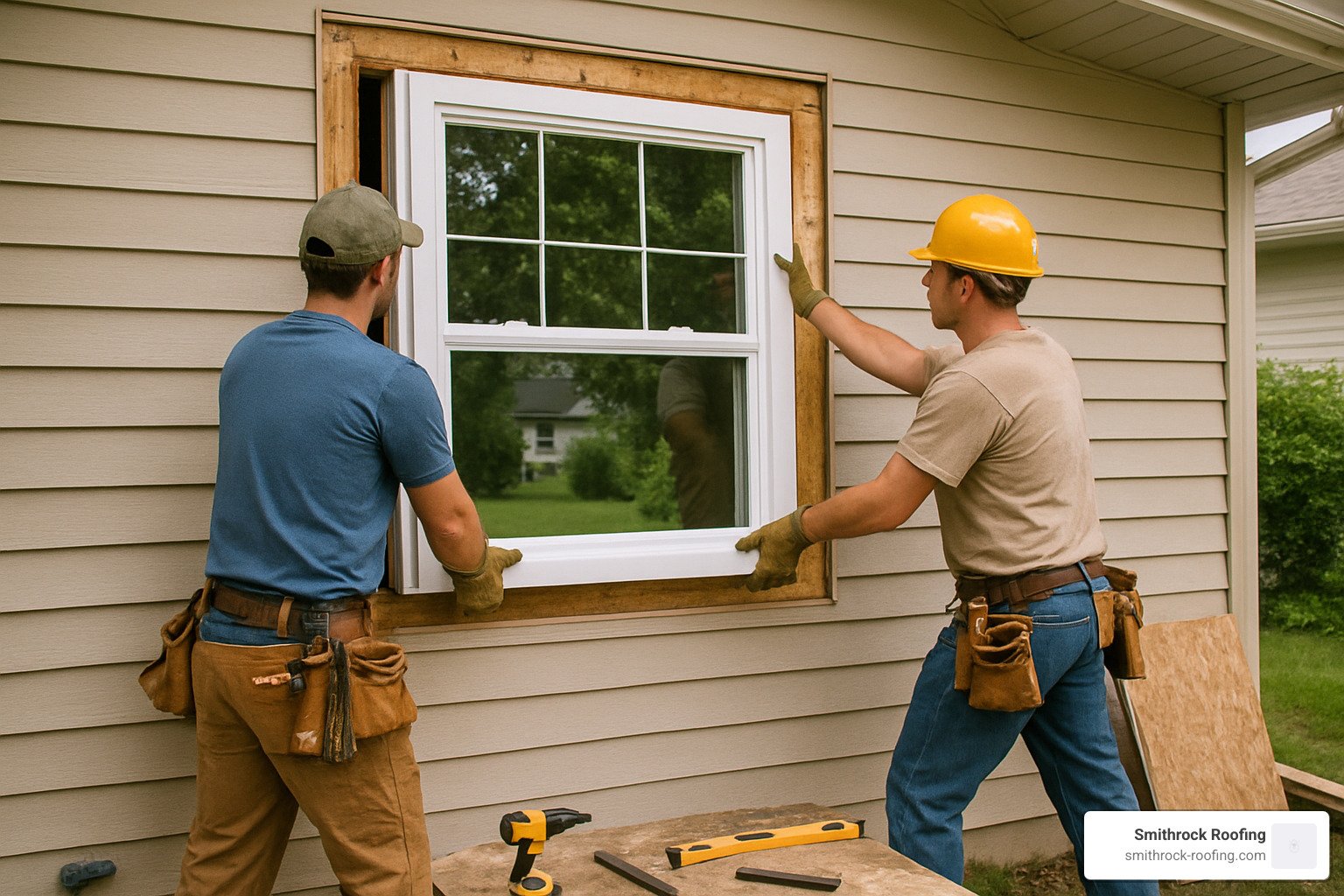
When you hire a siding contractor, it’s worth understanding who will actually be showing up to do the work. Some contractors — including several operating in the Greensboro market — use subcontracted crews rather than direct employees.
This isn’t automatically a problem, but it does create accountability gaps that homeowners should understand:
At Smithrock Roofing, our crews are our crews. The same experienced team that starts your project is the one that finishes it, and their work is backed by our 5-year labor warranty — something we stand behind directly, not through a third party.
The word “warranty” gets used loosely in this industry, and it’s worth understanding the distinction between the two types you’ll encounter.
Manufacturers warranty their materials against defects — failures in the product itself under normal conditions. These warranties vary significantly in length and scope. What voids them matters as much as what they cover: improper installation methods, use of incorrect fasteners, and failure to follow installation specifications are common grounds for manufacturers to deny claims.
This is why hiring a contractor with documented training and certification on the products they install isn’t just a credential — it’s directly tied to whether your warranty is actually enforceable.
A contractor labor warranty covers the work — the installation itself. These warranties are only as reliable as the company standing behind them. A company that won’t be in business in five years can’t honor a lifetime labor guarantee. When evaluating contractor warranties, consider the company’s track record, how long they’ve been operating in the Triad, and whether they have a verifiable history in this specific market.
Smithrock Roofing backs every project with a 5-year labor warranty and has the local reputation and tenure in the NC Triad to make that commitment meaningful.
We’ve served homeowners across Greensboro, Winston-Salem, High Point, Kernersville, Clemmons, Rural Hall, and King for years, and we bring the same approach to every project: honest assessment, quality materials, experienced crews, and communication that keeps you informed at every step.
Our team carries 60+ combined years of experience in exterior work. We’re CertainTeed PREMIER ShingleMaster certified, A+ rated with the BBB, and we’ve built our reputation on the kind of work we’d stand behind in our own neighborhoods — because many of us live in them.
If you’re thinking about new siding for your Greensboro-area home, we’d be glad to take a look, talk through what you’re working with, and give you our honest read on your options. No pressure, no obligation — just a real conversation with people who know this work and know this area.
Reach out to schedule your consultation. We’ll start by asking the right questions.
As you move into planning your siding project, three steps will help you make the most informed decision and avoid common pitfalls:
1. Request a Comprehensive Home Exterior Audit
Before committing to any product or contractor, have a qualified exterior specialist assess not just your siding, but the underlying structure, moisture barriers, and trim conditions. Greensboro’s climate creates specific vulnerabilities — a thorough audit surfaces hidden issues that, if left unaddressed, will compromise even the best new siding installation.
2. Compare Manufacturer Warranty Terms Side by Side
In 2026, leading siding manufacturers have expanded their warranty offerings, but the fine print varies significantly. Ask any contractor you’re considering to walk you through the specific warranty documentation for each product option — not just the headline coverage period, but the transferability terms, pro-rated conditions, and what voids the warranty. This comparison alone will clarify which products are worth the investment.
3. Verify Contractor Certifications Before Signing Anything
With more exterior contractors entering the NC Triad market, certification verification matters more than ever. Confirm that your contractor holds documented manufacturer certifications for the specific products being installed, check their standing with the BBB, and look for verifiable local project history in Greensboro and the surrounding communities. A certification isn’t just a plaque on the wall — it’s the mechanism that keeps your manufacturer warranty intact.
The answer depends on the extent and pattern of the damage. Isolated issues — a few cracked boards, minor gaps, or small areas of water intrusion — are often repairable. But when problems are widespread, when moisture has reached the sheathing or framing behind the siding, or when the material itself is aging out of its useful life, repair becomes a temporary fix on a larger problem. A qualified contractor can assess the full picture and give you an honest recommendation based on what’s actually there, not what’s easiest or most profitable to sell.
North Carolina’s Piedmont Triad presents a challenging combination of hot, humid summers, occasional ice events in winter, and frequent wind and rain throughout the year. Fiber cement siding performs particularly well in this environment because it resists moisture absorption, doesn’t expand and contract as dramatically as wood, and holds paint without peeling. Engineered wood offers a similar performance profile with a more natural appearance. Vinyl remains a low-maintenance option that handles humidity well when installed correctly. The right choice depends on your home’s specific exposure, your aesthetic preferences, and your long-term maintenance goals.
In most cases, yes. The City of Greensboro requires permits for full siding replacement projects. Working with a licensed contractor who pulls the appropriate permits protects you legally and ensures the work is subject to inspection. Homeowners should be cautious of any contractor who suggests skipping the permit process — it can create complications when you sell the home and may void manufacturer warranties that require code-compliant installation.
Most standard residential siding projects in the Greensboro area are completed within a few days to one week, depending on the size of the home, the material being installed, and whether any underlying repairs are needed before installation begins. Homes with significant moisture damage or structural issues discovered during tear-off may require additional time. A reputable contractor will give you a realistic project timeline upfront and communicate clearly if anything discovered during the job changes that estimate.
When you’re making a decision this significant — one that affects your home’s protection, appearance, and long-term value — you want a team with deep roots in the area and a track record you can actually verify. Smithrock Roofing has built that track record across Greensboro, High Point, and the broader NC Triad, and we approach every siding project with the same honesty and craftsmanship we’d expect on our own homes. If you’re ready to talk through your options with a team that knows this region’s homes and climate, Contact Smithrock Roofing and let’s start with a real conversation.

Smithrock Roofing © Copyright 2026 • All Rights Reserved • Privacy Policy • Maintained by Mongoose Digital Marketing